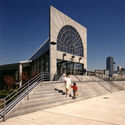
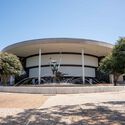
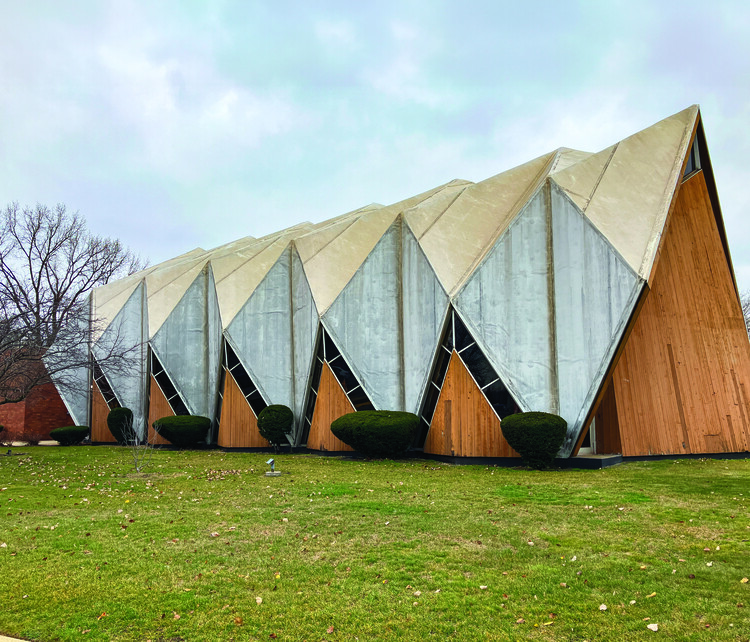
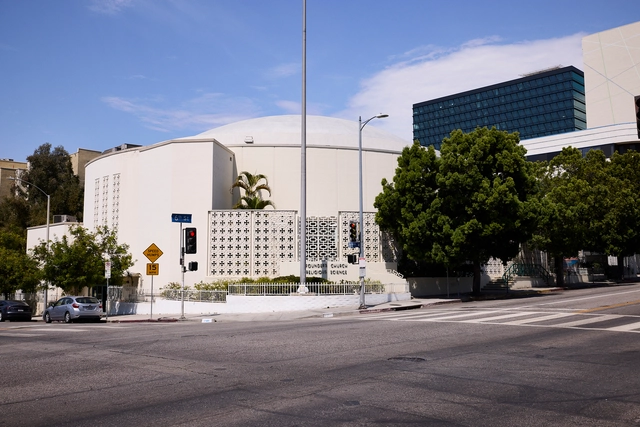
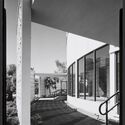
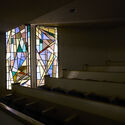
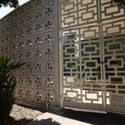
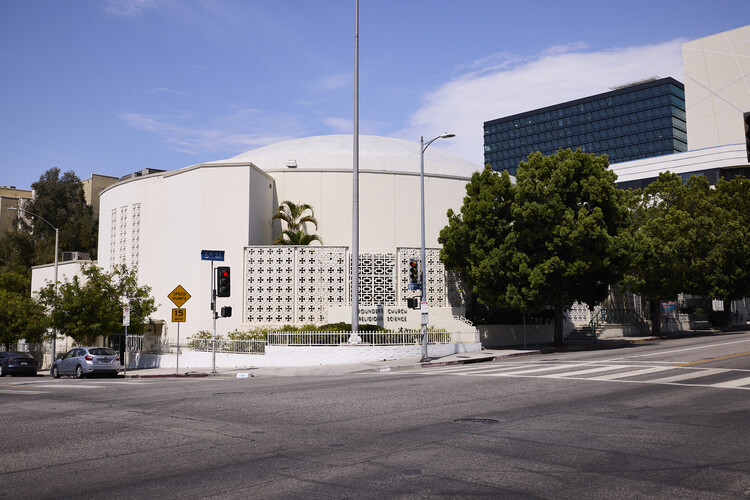
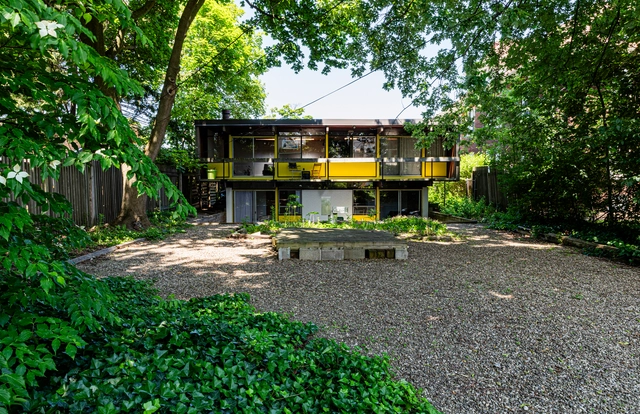
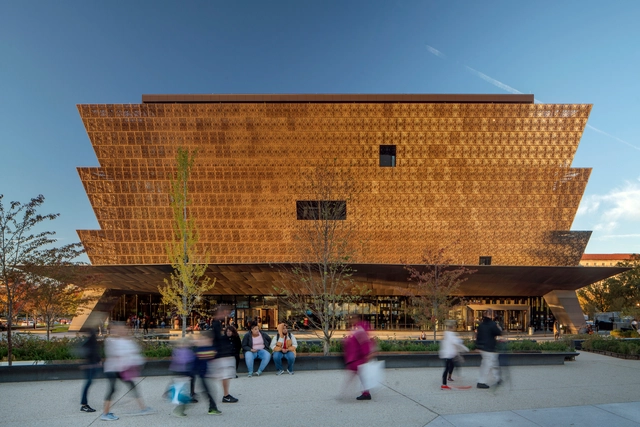
The Getty Foundation's Conserving Black Modernism initiative was launched in 2022 as a grant program to preserve and ensure the legacy of African American architects within the Modernist movement across the United States. In partnership with the National Trust for Historic Preservation's African American Cultural Heritage Action Fund, it supports conservation efforts, training, and educational initiatives to address the historical oversight of significant architectural landmarks and their designers' contribution. For its third funding cycle in 2025, five new buildings will receive critical support, expanding the initiative's reach into new communities with the first projects in Chicago and the Pacific Northwest.
The Getty Foundation's Conserving Black Modernism initiative, launched in 2022, represents a pivotal effort to preserve and celebrate the architectural contributions of African American architects in the Modernist movement. This initiative, a partnership with the National Trust for Historic Preservation's African American Cultural Heritage Action Fund, aims to address historical oversight and ensure the legacy of these trailblazing architects is protected for future generations. Over three funding cycles from 2023 to 2025, the program supports conservation planning, professional training, and storytelling to highlight the cultural and architectural significance of these sites.
Design justice is grounded in personal experience and built through everyday actions. Wandile Mthiyane is an architectural designer that embodies this idea, an activist that grew up in Durban, South Africa during the Apartheid. From an early age he was drawn to building and design, a background directly tied to his childhood. He realized he wanted to build a better future by working to undo the architectural effects of institutionalized racial segregation. Today, Wandile has become recognized for creating social impact, including his work to transform his hometown of Durban.
Designer Paul Wellington, based in Milwaukee, United States, is the author of Black Built: History and Architecture in the Black Community, a book that documents more than 40 works of architecture around the country by Black architects that have had a direct impact on communities of color. He’s now working on a new book that will focus on Black women architects in a field dominated by white males. I spoke with Wellington about the new book, what he learned through his research on Black architects and their work, and the future of increasing the ranks of Black architects in the U.S.
https://www.archdaily.com/949665/hidden-figures-the-historic-contributions-of-black-architects-in-the-united-statesMichael J. Crosbie
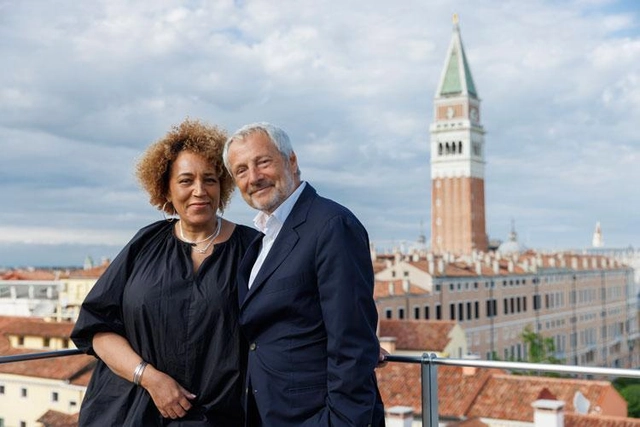
The President of La Biennale di Venezia, Roberto Cicutto, and the Curator of the 18th International Architecture Exhibition, Lesley Lokko by Jacopo Salvi. Image Courtesy of La Biennale di Venezia
Running from May 20th to November 26th, 2023 in the Giardini, at the Arsenale, and at various sites around Venice, the 18th International Architecture Exhibition will be titled: The Laboratory of the Future. Announced today by the President of La Biennale di Venezia, Roberto Cicutto, and the Curator of the exhibition, Lesley Lokko, the theme and title of this edition will consider the African continent as the protagonist of the future. “There is one place on this planet where all these questions of equity, race, hope, and fear converge and coalesce. Africa. At an anthropological level, we are all African. And what happens in Africa happens to us all”, explains Lokko.
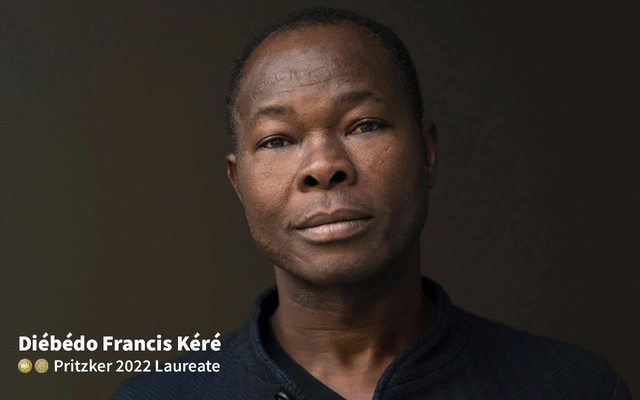
Meet 2022 Pritzker Architecture Prize winner, Francis Kéré, Burkina Faso-born black architect, in an interview about his architectural philosophy, with Louisiana Channel. As the official statement of the Pritzker Architecture Prize notes, “Through buildings that demonstrate beauty, modesty, and invention, and by the integrity of his architecture and geste, Kéré gracefully upholds the mission of this Prize”, continually “empowering and transforming communities through the process of architecture.”
“Through buildings that demonstrate beauty, modesty, boldness, and invention, and by the integrity of his architecture and geste, Kéré gracefully upholds the mission of this Prize,” explains the official statement of the Pritzker Architecture Prize. Announced today by Tom Pritzker, Chairman of The Hyatt Foundation, Francis Kéré is the 51st winner of the award founded in 1979, succeeding Anne Lacaton and Jean-Philippe Vassal. Praised “for the gifts he has created through his work, gifts that go beyond the realm of the architecture discipline”, the acclaimed architect is present equally in Burkina Faso and Germany, professionally and personally.
A little less than two years after the onset of a global pandemic, inclusion in the architecture profession is unfortunately still a limited conversation. A 2020 survey by the UK’s Architects' Journal revealed a sobering amount of obstacles for Black architects in the UK, and in the United States, prominent Black practitioners such as Mabel O. Wilson of Studio & have questioned the Eurocentric nature of a large amount of architectural study.
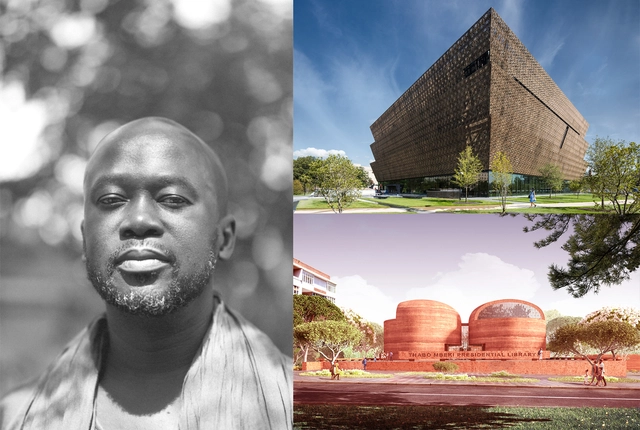
Commended for his impactful contributions to architecture, design, and the community, Sir David Adjaye has been awarded with the inaugural Charlotte Perriand Award, an honor created by The Créateurs Design Awards that recognizes excellence and integrity in the design industry, and inspires future generations in honor of the late female trailblazer. The Ghanian-British 2021 RIBA Gold Medalist and founder of Adjaye Associates was selected for his achievements that "go beyond becoming city landmarks", and his holistic and impactful approach in developing residential, commercial, and cultural typologies.
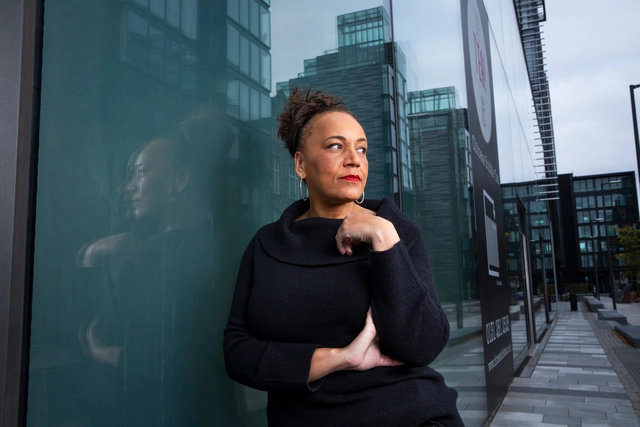
The Board of La Biennale di Venezia, has appointed Ghanaian-Scottish architect, academic, and novelist Lesley Lokko as Curator of the 18th International Architecture Exhibition - La Biennale di Venezia. The 18th International Architecture Exhibition will be held from Saturday 20 May to Sunday 26 November, 2023.
Questioning the new now, especially with the new challenges of Covid-19, around the world, cities are advocating for structural change and collective action. Berlin questions, an annual, multi-day conference and a platform for transdisciplinary dialogue, in its 2021 edition “Metropolis: The New Now”, tackled the immediate present, creating a place for debate. Dedicated to local solutions to global challenges, the event took on a hybrid format, at various locations in Berlin and online, resembling the world we live in.
ArchDaily had the chance to meet up with Lesley Lokko, architect, academic, and novelist at Berlin Questions, to discuss her talk “Africa as the lab for the future”, her visions for the future of architecture education and the future of big cities on a social, cultural and urban level.
Courtesy of Harvard University Graduate School of Design, Studio Barnes
Germane Barnes has won the 2021 Wheelwright Prize from Harvard University Graduate School of Design. The $100,000 prize will fund two years of travel and research for Barnes’s proposal Anatomical Transformations in Classical Architecture, an examination of classical Roman and Italian architecture through the lens of non-white constructors. Barnes will study how spaces have been transformed through the material contributions of the African Diaspora while creating new possibilities within investigations of Blackness.
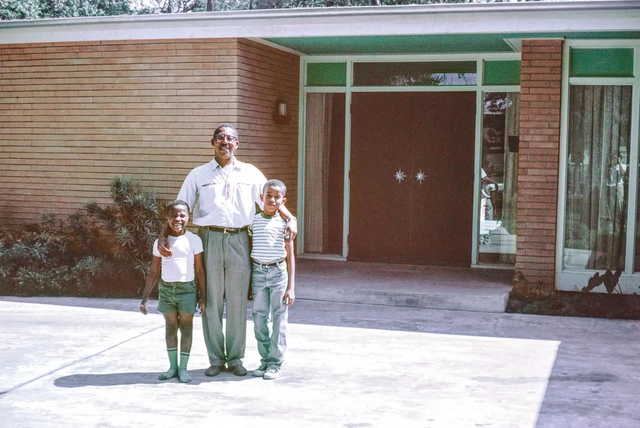
Architect John S. Chase with his sons Anthony (left) and John, Jr. (right). The trio stand in front of the Chase Residence, built in 1959. Image Courtesy of John and Drucie Chase Collection, African American Library at the Gregory School, Houston Public Library
The following text is excerpted fromJohn S. Chase — The Chase Residence(Tower Books, 2020) by architect and University of Texas professor David Heymann and historian and Rice University lecturer Stephen Fox. Richly illustrated with archival materials and new drawings, the book is the first devoted to Chase, who was the first Black licensed architect in Texas. The study is divided into two parts, with Heymann examining the personal, social, and architectural significance of Chase’s own Houston house and Fox describing Chase’s architectural career.
This excerpt draws on Heymann’s analysis and highlights the first incarnation of the Chase Residence (Chase substantially altered its architecture in 1968). It places great emphasis on the house’s remarkable courtyard, a modernist innovation, and a singular statement about domestic living at the time. New section, elevation, and perspective drawings prepared for the book help illustrate the ingenuity of the house’s configuration. Finally, the excerpt was selected in part to honor Drucie (Rucker) Chase, who passed away in January of 2021.
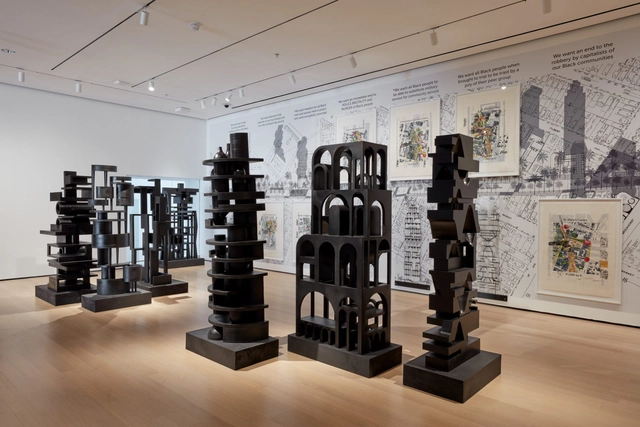
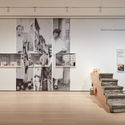
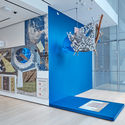
Reconstructions: Architecture and Blackness in America. Image Courtesy of The Museum of Modern Art, Robert Gerhardt
The Museum of Modern Art has launched Reconstructions: Architecture and Blackness in America, the fourth installment of the Issues in Contemporary Architecture series. Investigating the intersections of architecture, Blackness and anti–Black racism in the American context, the exhibition and accompanying publication examine contemporary architecture in the context of how systemic racism has fostered violent histories of discrimination and injustice in the United States.
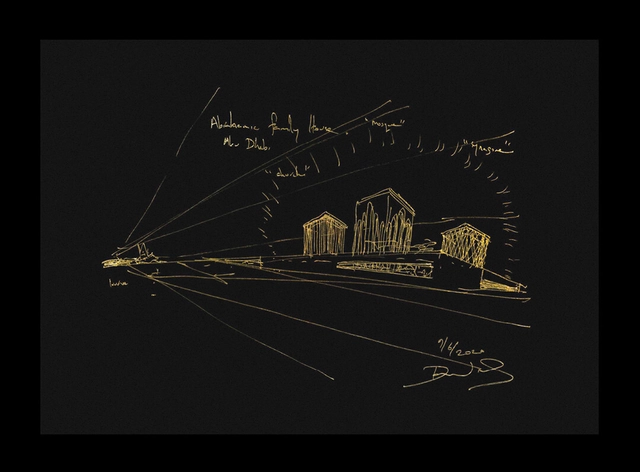
An autographed, 24k gold leaf sketch of the Abrahamic Family House by David Adjaye. Image Courtesy of ARCH
Architecture for Change (ARCH), a newly launched nonprofit initiative dedicated to addressing systemic racism in the architecture and design industry, is kicking off with an online auction featuring donated works—sketches, models, plans, photographic prints, and more—from a host of notable architects including Sir David Adjaye, Daniel Libeskind, Michel Rojkind, David Rockwell, Jennifer Bonner, Trey Trahan, and others.
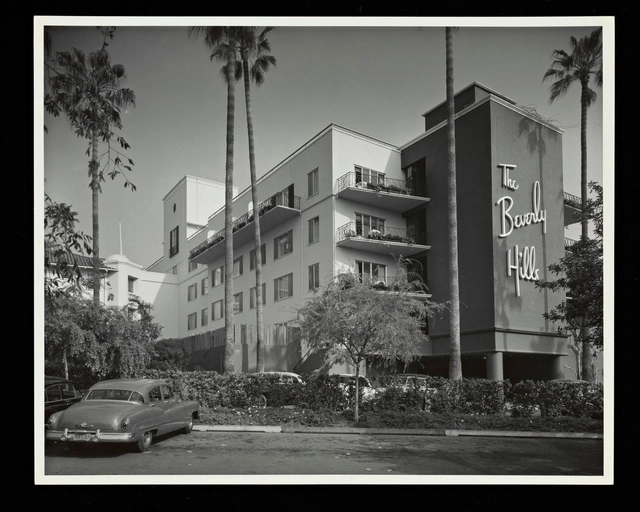
Paul Revere Williams, the late architect who was the first black member of the American Institute of Architects (AIA), has recently been receiving some long-overdue recognition. The AIA awarded him a posthumous gold medal in 2017; a PBS documentary “Hollywood’s Architect: The Paul R. Williams Story” aired in February, and a book titled “Regarding Paul R. Williams: A Photographer’s View” was published in September.
Reflecting on the current global situation, Chicago Architecture Biennial (CAB) has reinvented its 2021 edition, in order to generate conversations about the “intersection of architecture and design and such critical issues as health, sustainability, equity, and racial justice”. The Biennial has also announced the appointment of David Brown, designer, researcher, and educator, based at the School of Architecture at the University of Illinois at Chicago, as the Artistic Director of the fourth edition, entitled The Available City.
Over two days, approximately 500 online participants together set the agenda, formed and dissolved discussion groups, and shared knowledge and resources. With the assistance of an “open space” facilitator, this is how Cut|Fill, a virtual "unconference” on landscape architecture, unfolded.
Organized by the Urban Studio and Ink Landscape Architects, Cut|Fill was meant to “raise questions we all want to discuss,” explained Andrew Sargeant, ASLA, a founder of Urban Studio. One of those important questions: “how can landscape architects design with empathy and end dismissive behavior towards people of color?”
https://www.archdaily.com/949104/landscape-architects-of-color-on-how-to-combat-erasureJared Green