Courtesy of Battersea Power Station Development Company
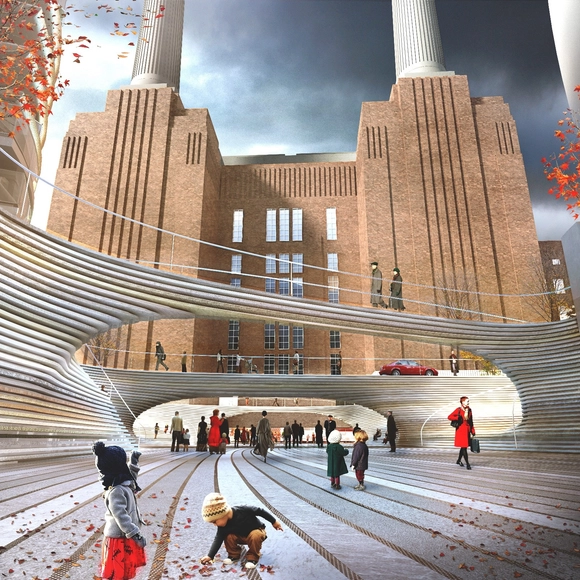
BIG has unveiled the design for their addition to the development at Battersea Power Station, a public square that will link the power station itself with the Electric Boulevard development designed by Norman Foster and Frank Gehry. Called Malaysia Square after the Malaysian development consortium behind the plans, the design features cascading steps that link the main public space at the lower level with the entrance to the power station above. The split-level design also provides for two pedestrian bridges and a road bridge that cross above the "urban canyon" of the public square.
This past month at WIRED by Design, Bjarke Ingels gave a rundown of his most ambitious projects, highlighting one underlining theme: BIG’s mission to “create social infrastructure for resilient cities.” From their Manhattan “BIG U” storm proofing plan, recently awarded $400 million in federal funds, to their “ski slope” waste-to-energy plant currently underway in Copenhagen, the Danish practice is undoubtedly fulfilling their mission in a BIG and infectious way.
Referring to his work as “promiscuous hybrids,” Bjarke Ingels details his vision of “worldcraft” where architecture harnesses the desires, knowledge and technology of its people to transform surreal dreams into reality.
BIG's LEGO House is now under construction, following a one of a kind foundation laying ceremony featuring - what else - supersized lego bricks. Bjarke Ingels himself was in attendance to lay one of the foundation bricks. Constructed in LEGO's hometown of Billund, Denmark, the LEGO House will be a 12,000 square metre "hands-on minds-on experience centre."
More on the LEGO House, and the foundation laying ceremony, after the break
If you like magazines, then you'll love this: the New Yorker, celebrating their recent redesign, have made their archive free for a limited period only. And, making up for their hiatus as they wait for a redesign of their own, Places Journal has gone to the effort of rounding up the best architecture reads from the last few years. Here are our top three:
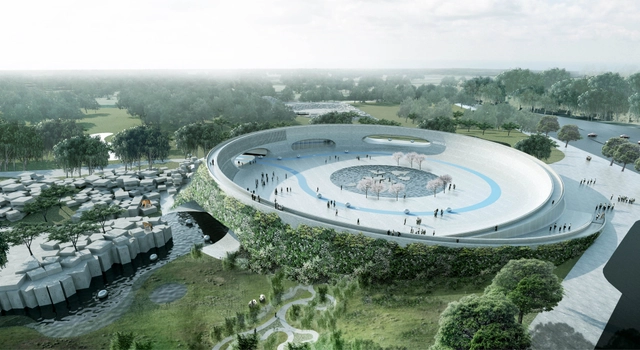
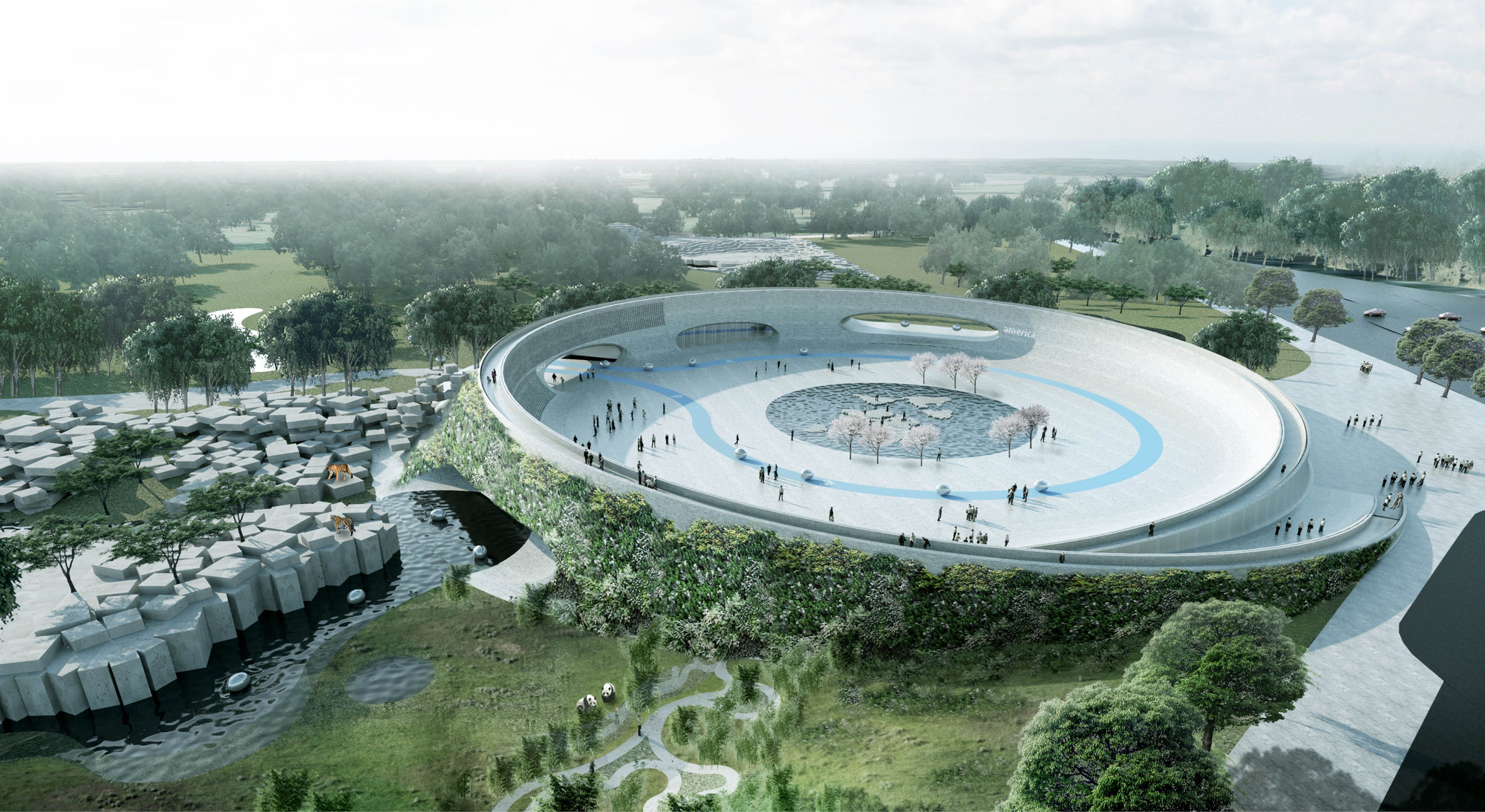
Danish architects BIG (Bjarke Ingels Group) have just released ambitious designs for a zoo in Givskud, Denmark. It's a project that provides an intriguing opportunity for, as BIG explains, the creation of a space with "the best possible and freest possible environment for the animals’ lives and relationships with each other and visitors." The firm has been working for the past two years to make Zootopia what the Danish press is calling "the world's most advanced zoo." According to Givskud Zoo's director Richard Østerballe, the park's transformation will benefit greatly from BIG's fresh approach to design--one that has been characterized by the integration of nature and natural elements into cutting-edge, innovative architecture.
The project will attempt to "integrate and hide buildings" within the landscape. Upon entering the zoo, visitors can either enter a large central square or climb the "building-landscape," allowing them to get a general overview of the layout of the park. From this central element, visitors can access different areas of the zoo. A 4km hiking trail connects the different areas (which represent the continents of Africa, America and Asia).
The first phase is expected to be completed in 2019 to coincide with the park's 50th anniversary.
Read on for more images and BIG's project statement.
Swiss luxury watchmaker Audemars Piguet have announced BIG as the designers for an extension to their headquarters in Le Brassus, near Le Chenit. The design includes gallery spaces for a museum, work spaces and a guest house. Conceived as a spiralling glass pavilion embedded in the landscape, BIG's design - entilted Maison des Fondateurs - will take visitors on a narrative journey through the company's 139-year history.
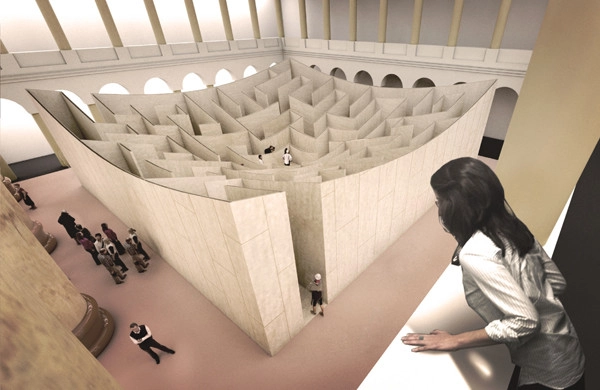
The National Building Museum (NBM) has announced that BIG has designed a 61x61 foot maze to be housed in the building's grand atrium from July 4th to September 1st of this year. According to the NBM's website, the labyrinth's Baltic birch plywood walls, which stand 18 feet high at the maze's periphery, descend as you make your way towards the center. From the core, then, visitors receive a view of the entire layout - and a better understanding of how to get back out.
According to Bjarke Ingels, "The concept is simple: as you travel deeper into a maze, your path typically becomes more convoluted. What if we invert this scenario and create a maze that brings clarity and visual understanding upon reaching the heart of the labyrinth?" Of course, those uninterested in the challenge of figuring out the maze can peek down on it from the Museum's second and third floors - but where would be the fun in that?
More images, diagrams and drawings after the break!
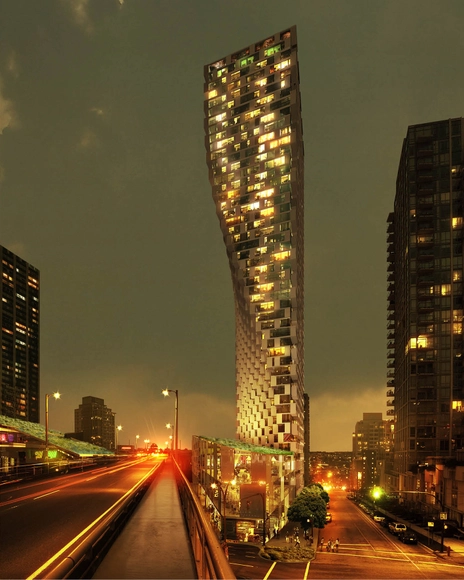
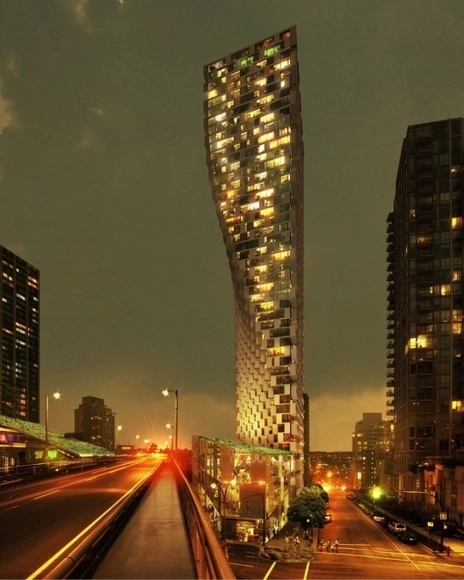
The wisdom of the Old West, New-Mexico based architect Antoine Predock (who designed the Canadian Museum for Human Rights in Winnipeg) and the vitality of the New East, BIG founder and principal Bjarke Ingels (whose office is responsible for the Beach & Howe Tower in Vancouver and Telus Sky in Calgary), are being distinguished by the Royal Architectural Institute of Canada (RAIC) this year with Honorary Fellowships for extraordinary achievement in the field of architecture. More on this news, here.
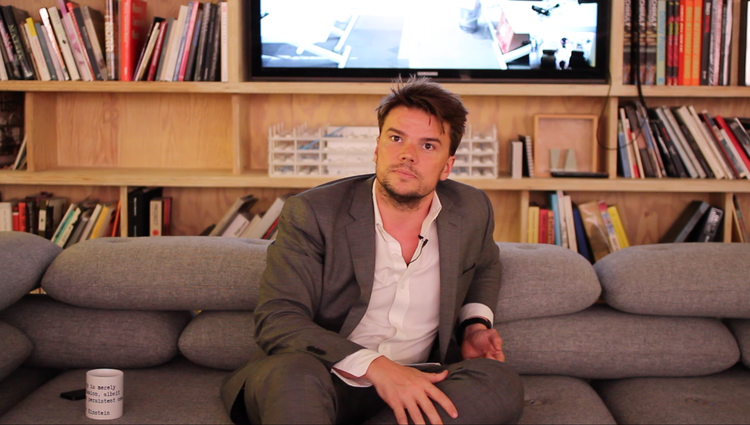
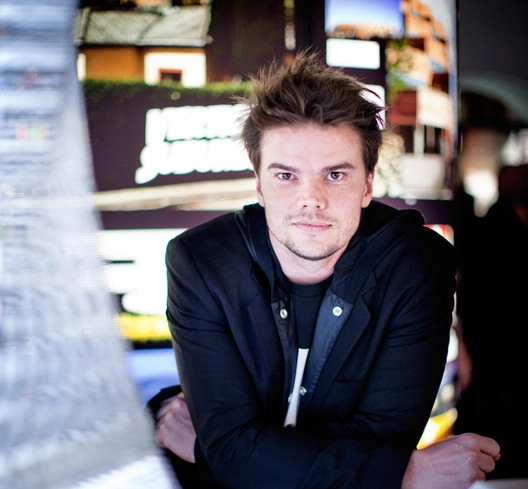
At ArchDaily, we think that Bjarke Ingels is one of the most inspiring architects practicing today. Having found success at a relatively young age, Bjarke has never shied away from embracing his YES IS MORE philosophy. His conspicuous enthusiasm for the potential of architecture and design sets him apart from his peers. And it is precisely this go-to attitude that has allowed him to overcome some of the significant limits that face many young architects today. An impressive portfolio of both built and upcoming projects shows that his approach to design, though sometimes criticized, is profoundly impacting the social environment of architecture.
On running an office, Bjarke says that “you have the opportunity and the responsibility to create the work environment that you would like to work in.” He has modeled his firm as a type of organism that is able to adapt to growth and change. In the interview, Bjarke explains that not only does his own role constantly evolve, but that the success of BIG is contingent on the invaluable contributions of his partners. BIG is more than just Bjarke.
We also asked him to define architecture (“the art and science of making sure that our cities and buildings actually fit with the way we want to live our lives”), and to give students advice about pursuing a career in architecture. Be sure to read the full interview after the break.
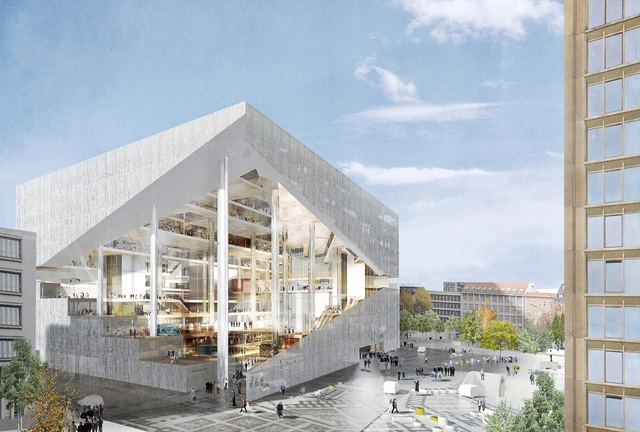
For the recent Axel Springer SE Media Campus in Berlin, OMA's proposal (shown) is up against designs by two of OMA's past employees.. Image Courtesy of Axel Springer SE
It is difficult to even imagine an architectural practice more influential than OMA. Not only has Koolhaas' practice completed high-profile buildings worldwide, but it has also been the incubator for some of the world's most famous architects, with many striking out alone after a period working under Rem. This article in the Wall Street Journal profiles some of the latest crop of "graduates", including Bjarke Ingels and Ole Scheeren, who have founded their own practices in the last decade and are now acting as some of OMA's biggest competitors. You can read the full article here.
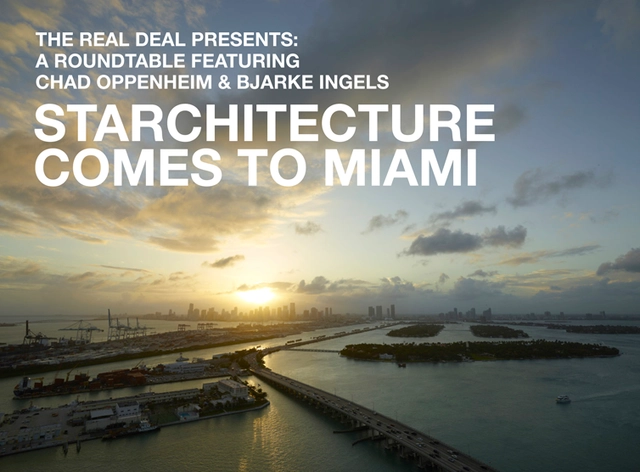
Starchitecture has come to Miami — in a big way. Developers are using the name recognition of some of the world’s star architects to bring in buyers for their posh towers.
The list of architects that have collaborated with Zhang Xin’s development company, SOHO China, reads like the roster of an architectural dream team (which includes Zaha Hadid, Yung Ho Chang, Bjarke Ingels, Kengo Kuma, Kazuyo Sejima, Herzog & de Meuron, Thom Mayne, David Adjaye, Toyo Ito and others). So it’s no surprise that the self-made billionaire lectured to a packed house at Harvard University’s Graduate School of Design last Thursday. Xin spoke about her commitment to and love of design, explaining that her company’s mission is to bring a variety of architectural languages to China. And though SOHO’s projects are certainly experimental, Xin contends that her developer mindset actually helps meliorate the architect’s propensity to take the experiment too far—all without sacrificing the impressive and iconic forms of SOHO’s building portfolio.
WatchZhang Xin link her practice in real estate to larger global issues and catch a glimpse of two Zaha Hadid-designs currently under construction: Wangjing SOHO and Sky SOHO.
Few architects working today attract as much public acclaim and disciplinary head-scratching as Bjarke Ingels. Having recently arrived in New York, this self-proclaimed futurist is undertaking his own form of Manifest Destiny, reminding American architects how to act in their own country.
While his practice is often branded by the architectural establishment as naïve and opportunistic, such criticism is too quick to conflate Ingels’s outwardly optimistic persona with the brash formal agenda it enables. In the current economic climate, there are any number of gifted purveyors of form languishing in New York City. Despite this, Ingels has somehow managed to get away with proposing a pyramidal perimeter block in midtown New York, a looped pier in St. Petersburg Florida, and an art center in Park City, Utah massed as torqued log cabin while maintaining a straight face. Why, then, is his mode of operation considered unsophisticated by so many within the discipline?
Clearly, Ingels has figured something out about harnessing and transforming “the social” that American architects would do well to identify. So, in the manner of any good conspiracy theorist in search for the hidden method, let’s go to the chalkboard, or rather, the diagram...
Part of the answer may lie with Ingels’s brand of populism, which is as much about being social as it is about the social.
Since ArchDaily started, we have interviewed close to two hundred architects to understand the diversity of our profession, and to give you insights from the most successful practices in the world.
What has the internationally awarded Bjarke Ingels Group (BIG) to do with Friederich Nietzsche and Charles Darwin? Quite a lot, according to founder Bjarke Ingels, who has created a powerful mixture of Nietzsche and Darwin as the philosophical foundation of BIG’s architecture.
Read Anders Møller's fascinating article on BIG's unusual philosophy, after the break...






.jpg?1413546606 "Detail of the interior courtyard façade. Image © Field Condition")