

BIG’s first foray into North America, the West 57th Street (W57) Building in New York is approaching completion. After initial releases of renderings, and photographs taken two months after topping out, a new video has surfaced, exhibiting the gradual realization of the firm’s vision. This 32-story tower with 709 apartment units combines a courtyard block and a skyscraper, affectionately dubbed a “courtscraper” by its designer. Reacting to an unorthodox, thin plot of land, the building generates its geometry from a combination of providing natural light, views to the Hudson River and maximizing living space for residents. From one angle, its almost pyramidal structure is clear, and from another, it appears to be glass spire. See the most recent developments in this new video.
Bjarke Ingels: The Latest Architecture and News
See BIG’s W57 Approach Completion in this Stunning Aerial Video
Bjarke Ingels Talks Tech, Entrepreneurship and Modernism in this Podcast with Prehype
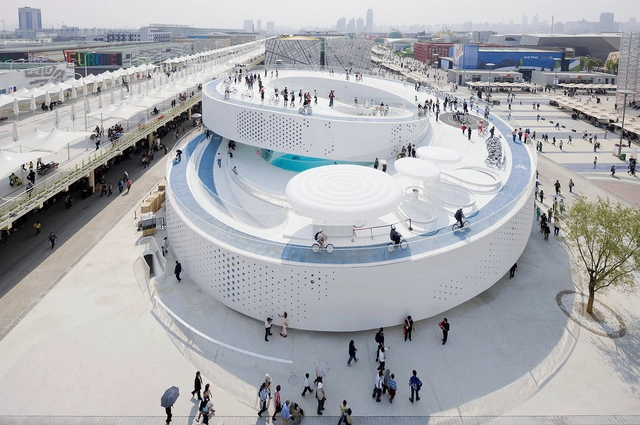
Prehype, a venture development firm, has released its latest in a series of podcasts by partner Henrik Werdelin, featuring Danish architect Bjarke Ingels. Having worked with Prehype on investments into tech development, Bjarke Ingels discusses his experiences and perspectives on the industry, drawing parallels between entrepreneurship, tech development and architecture.
The BIG Steam-Ring Kickstarter: Is There a Limit to What Should Be Crowdfunded?
Update: The Kickstarter campaign launched by BIG to fund the development of their steam ring generator reached its goal of $15,000 in less than a week after it was launched. As of today (24th August) the campaign total stands just short of $25,000, with 19 days still to go.
BIG has launched a Kickstarter campaign, aiming to fund the ongoing research and prototyping of the "steam ring generator" designed to crown the firm's Waste-to-Energy power plant in Copenhagen. The campaign was announced on Friday and picked up a lot of steam (pun intended) in the design press - but at ArchDaily we were hesitant to publish news of the campaign because, in short, it led us into a minefield of questions about the role of invention, public engagement, and money in architecture.
Of course, BIG are far from the first to attempt to crowdfund an architectural project. Previous projects however have generally focused on otherwise-unfundable proposals for the public good, barely-sane moonshots or complex investment structures which depending on your viewpoint may or may not even count as crowdfunding. BIG are perhaps the first example of an established architectural firm attempting to crowdfund the design of a project that is already half-built, causing some people - ArchDaily staff included - to ask: "Why wasn't this money included in the project's budget?"
Excerpt: Conversations with Architects in the Age of Celebrity

No matter what you think of it, these days there is no denying that a celebrity culture has a significant effect on the architecture world, with a small percentage of architects taking a large portion of the spotlight. Questioning this status quo, Vladimir Belogolovsky's new book "Conversations with Architects in the Age of Celebrity" interrogates some of these famous architects to find out what they think of the culture which has elevated them to such heights. In this excerpt from the book's foreword, Belogolovsky asks how we got into this celebrity-loving architectural culture, and what it means for the buildings produced.
How Bjarke Ingels is Reshaping New York City's Architecture
Bjarke Ingels has become know for his “promiscuous hybrids" that are reshaping skylines worldwide. Now, after news of BIG's redesign of the 2 World Trade Center, Ingels is being credited for single-handedly transforming New York City's architecture. At the New York Times' Cities of Tomorrow conference last week, architecture critic Michael Kimmelman sat down with the 40-year-old Danish architect to discuss just how BIG is changing New York.
"Baby Rems" and the Small World of Architecture Internships
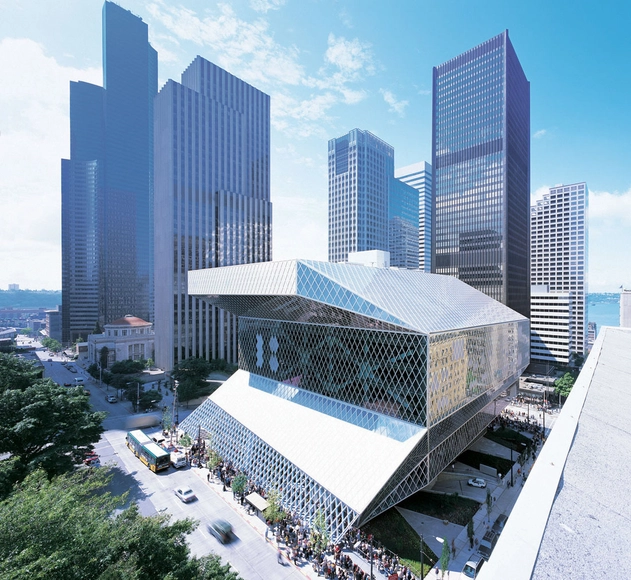
The world of architecture is small. So small in fact, that Rem Koolhaas has been credited with the creation of over forty practices worldwide, led by the likes of Zaha Hadid and Bjarke Ingels. Dubbed “Baby Rems” by Metropolis Magazine, this Koolhaas effect is hardly an isolated pattern, with manifestations far beyond the walls of OMA. The phenomenon has dominated the world of architecture, assisted by the prevalence and increasing necessity of internships for burgeoning architects.
In a recent article for Curbed, Patrick Sisson dug into the storied history of internships to uncover some unexpected connections between the world's most prolific architects. With the help of Sisson's list, we've compiled a record of the humble beginnings of the household names of architecture. Where did Frank Gehry get his start? Find out after the break.



VIA 57 West: Challenging Form and Urban Development in Manhattan

Join the CTBUH New York City Chapter for a discussion on the VIA 57 West building. Guest speakers Bjarke Ingels (BIG), Aine Brazil (Thornton Tomasetti), and Jeff Crompton (Hunter Roberts) will discuss the architecture, engineering and the construction process behind this unique structure. VIA stands tall at 467 feet and is one of the most architecturally distinctive buildings constructed in New York City. The building provides a dramatic visual gateway to Manhattan’s skyline along the Hudson River. VIA is a hybrid between the European perimeter block and a traditional Manhattan high-rise development. The building’s unique shape combines the advantages of both: the compactness and efficiency of a courtyard building providing density, a sense of intimacy, and expansive views. The form of the building shifts depending on the viewer’s vantage point. While appearing like a pyramid from the West Side Highway, it turns into a dramatic glass spire when seen from West 58th Street.
Bjarke Ingels: "Denmark Has Become an Entire Country Made Out of LEGO®"
"In a matter of speaking, Denmark has become an entire country made out of LEGO®," says Bjarke Ingels. Speaking of the importance of prefab in Denmark and how LEGO® inspired his first BIG project - the "LEGO® Towers," which ultimately landed him a commission to design the LEGO® House - Bjarke Ingels discusses his favorite childhood toy and how it has helped him become a better architect.
The clip is part of the documentary, A LEGO Brickumentary which will hit theaters July 31.
Bjarke Ingels Talks About Two World Trade Center

Last week, after a month of speculation, BIG unveiled their plans for New York's Two World Trade Center, replacing Foster + Partners' design which although started on site, was stalled due to the financial crash of 2008. With the building's high profile, in just one week BIG's design has been the subject of intense scrutiny. In this interview, originally published by New York YIMBY as "Interview: Bjarke Ingels On New Design For 200 Greenwich Street, Aka Two World Trade Center," Nikolai Fedak talks to Bjarke Ingels about the design of the tower and why it was necessary to replace the scheme by Foster + Partners.
YIMBY sat down with Bjarke Ingels to talk about his firm’s design for 200 Greenwich Street, aka Two World Trade Center. Despite public outcry following the change from the Norman Foster version of the tower, BIG’s innovative and forward-thinking building will truly respond to the human needs of its tenants, while also punctuating the Downtown skyline with a 1,340-foot take on a classic ziggurat. We’ve also obtained a few additional renderings of the soon-to-be icon’s impact on the cityscape.





Video: Bjarke Ingels on Urban Hybrids and "Courtscrapers"
Bjarke Ingels has built a reputation for formulating new urban hybrids. From merging power plants with ski slopes to reintroducing nature to the workspace, Ingels' well-respected practice BIG is missioned to realize the fictitious world we all dream to inhabit by redefining conventional building typologies. An example of this is the Danish practice's New York "courtscraper" - W57, a clever union of the courtyard building and skyscraper that guarantees sunlight to all its inhabitants. Watch the video above to learn more.
Genre de Vie: A Film About Cycling's Impact On Urban Livability

Today we are facing environmental issues more than ever. While architects, urban designers, policymakers and thinkers discuss the future of our cities, more and more people become aware of their own impact and use of space. Genre de Vie is a documentary film about bicycles, cities and personal awareness. Using the bicycle, Genre de Vie delves into how cycling contributes to the future livability of cities.
Watch the full documentary after the break.
"A Truman Show-Style Nightmare"? Critics React to BIG and Heatherwick's Designs for Google

In their designs for Google's new headquarters, released last week amid much excitement, Bjarke Ingels and Thomas Heatherwick have taken cues from the utopian visions of the past to create a radical solution for the sprawling tech campus in Mountain View, California. Citing the lack of identifiable architecture in the technology sector, a promotional video on Google’s own blog reveals how the company plans to embrace nature, community, and flexibility with the new scheme.
Chief among the company’s concerns was creating a building capable of adapting to future uses in addition to serving as a neighborhood-enhancing environment to welcome visitors from the surrounding community. As with any news related to Google, the design has already attracted the attention of the media - read on after the break for our rundown of the most salient reviews so far.





Here's How BIG's Power Plant Ski Slope Will Blow Smoke Rings
When BIG's proposal for Amager Bakke, a waste-to-energy plant in Copenhagen, was unveiled in 2011, there was a lot for skeptics to pick apart. Is it really possible to run a publicly accessible ski slope on the roof of an industrial building? Would they really be able to make it blow giant smoke (or rather, steam) rings? The whole idea seemed rather too good to be true. The project's ground breaking in 2013 may have silenced some critics, but the video above should convince the rest of the design's feasibility.
Win a BIG Trip to Copenhagen
Daydreaming about a trip to Copenhagen? Now is your chance to go. As part of BIG’s HOT TO COLD exhibition on view at the National Building Museum, Visit Denmark is hosting a sweepstakes for two to see the architectural and cultural sights of Denmark’s capital. All you need to do is watch the video above, find out which seaside museum Bjarke Ingels believes to be one of the world’s greatest (hint: take a look after the break), and enter your answer here (click "Win a trip to Copenhagen!"). Only US residents are eligible.
VIDEO: Bjarke Ingels Walks Us Through The Design of Vancouver House
Taking the urban high-rise “one step further,” BIG’s Vancouver House (formerly known as the Beach and Howe Tower) is a gesamtkunstwerk - total work of art. Detailed to the smallest scale, the grand scheme makes use of a difficult site trisected by the Granville overpass and burdened by setbacks, transforming it into a “lively village” at the city’s gateway.
Learn how Bjarke Ingels plans to revolutionize urban living by watching the video above.
HOT TO COLD: BIG’s “Odyssey of Architectural Adaptation” Opens at the National Building Museum
.jpg?1422556516&format=webp&width=640&height=580)
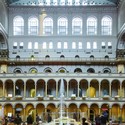
Circle the globe in 800-feet at the National Building Museum’s latest exhibition HOT TO COLD. BIG - Bjarke Ingels Group’s first North American exhibition, HOT TO COLD takes viewers on an “odyssey of architectural adaptation” from the “hottest to the coldest parts of our planet to explore how BIG’s designs are shaped by their cultural and climatic contexts.”
More than 60 architectural models of BIG’s most recent projects, including 20 premiering for the first time, are being suspended from the second floor of the museum’s historic Great Hall. Each project is interpreted through Iwan Baan's "masterful" photography, films by Ila Bêka and Louise Lemoine, and the Grammy Award-winning graphic artist Stefan Sagmeister’s design for the accompanying catalog by Taschen.
A word from Ingels, after the break.
.jpg?1422556566 "© Matt Carbone")


.jpg?1422556516)
Videos: Bjarke Ingels on His Europa City Project for Paris
In 2013, Bjarke Ingels Group came first in Paris' Europa City competition, an 800,000 square meter cultural and recreational facility on the far North-Eastern outskirts of the city. In an attempt to explain the design of this huge project, filmmakers Squint/Opera have enlisted the help of Bjarke Ingels and a green screen to describe the project - Minority Report style - with a combination of live action and futuristic video effects. In a second video, a detailed walkthrough of the building enlists both 2D and 3D graphics "to capture the excitement and energy of this unique centre." Read on after the break for both videos.
Bjarke Ingels' Advice for the Young: "It's Important to Care"
The latest in a series of videos from Louisiana Channel sees Danish architect Bjarke Ingels of BIG dispensing wisdom for a new generation of architects. Speaking with characteristic zeal, Ingels advises young architects "to care, because if you don't care, it doesn't matter." "We're not here to build for other architects," Ingels says, describing architecture as "fundamentally the art and science of accommodating life."