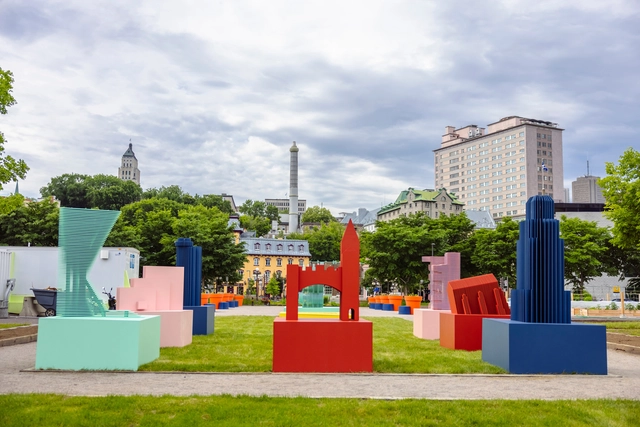
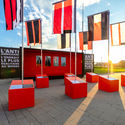
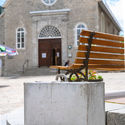
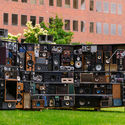
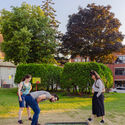
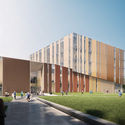
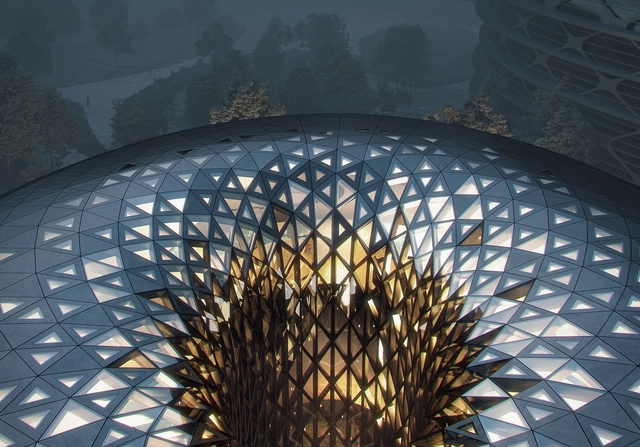
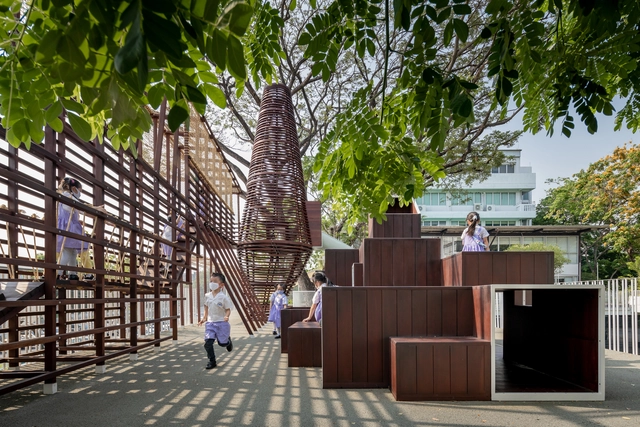
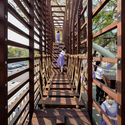
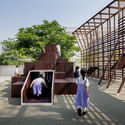
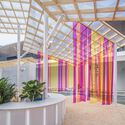
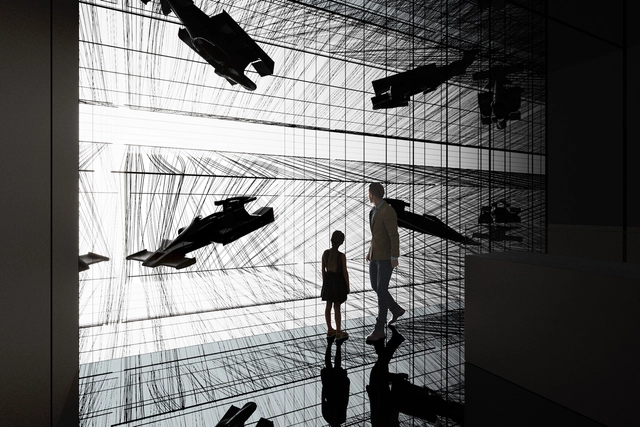
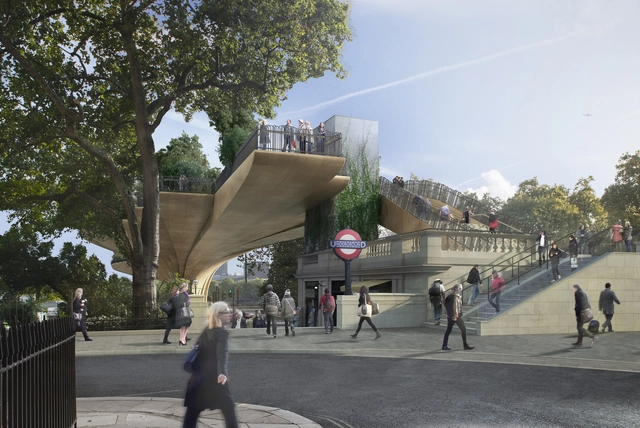
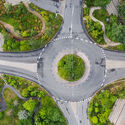
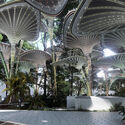
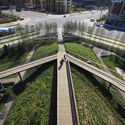
EXMURO arts publics and the Ville de Québec have inaugurated the the 8th annual PASSAGES INSOLITES art event, the annual Quebec City art walk that showcases over 20 unusual urban interventions by local and international artists. The event will run from June 26 to October 11, 2021, and will focus on reimagining the urban fabric and transforming how we see the city and its historic landmarks.
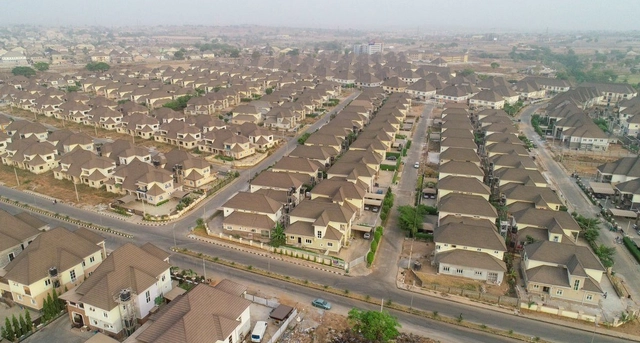
In spite of the lull in the global construction industry over the last couple of years, megacity projects in Africa have continued unabated, as new developments are springing up in major cities all over the continent. Though we’re inspired by the growth of modern African cities and the opportunities offered to city residents, we shouldn’t ignore their shortcomings, the glaring disconnect between the utopian visions of local city officials and the economic and cultural realities of the local populations who live here. Many questions whether these new cities could be built in other ways, or if Africans will ever have an alternative to the current model of placemaking, hodgepodge urbanism foisted on it, largely by colonialists.
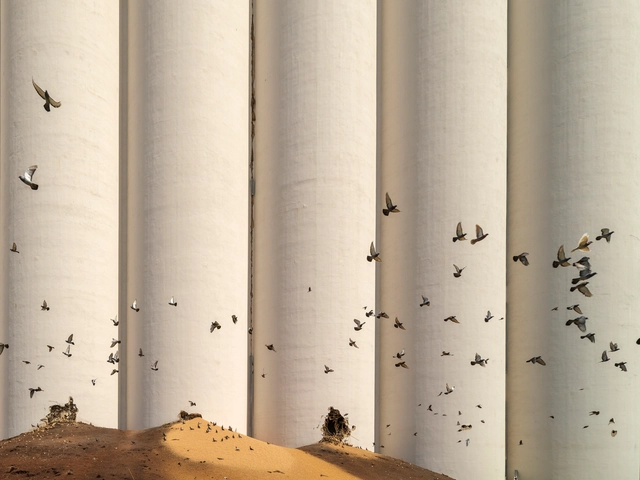
Exactly a year ago, on August 4, 2020, the third-largest non-nuclear explosion ever-recorded destroyed almost half the city of Beirut, ripping through the port and the eastern part of the capital. One of the biggest urban tragedies of modern times, killed more than 200 people, wounded thousands, and left an estimated 300,000 people homeless, damaging over 80,000 commercial, residential and public spaces. Felt across neighboring countries, the blast stripped the city’s constructions of their cladding, framing, and glass elements, while completely tearing down other buildings, leaving around US$15 billion in property damage, in times of Covid, political and social unrest, and economic collapse.
One year later, so little has changed. One year later, it only became harder for the people of Beirut. One year later, everything in the city still reminds them of that day. Major questions remained unanswered, no rescue or action plans have been taken by governmental institutions, instead, civil society rose to take into their own hands, reconstruction efforts, in the total absence of the state.
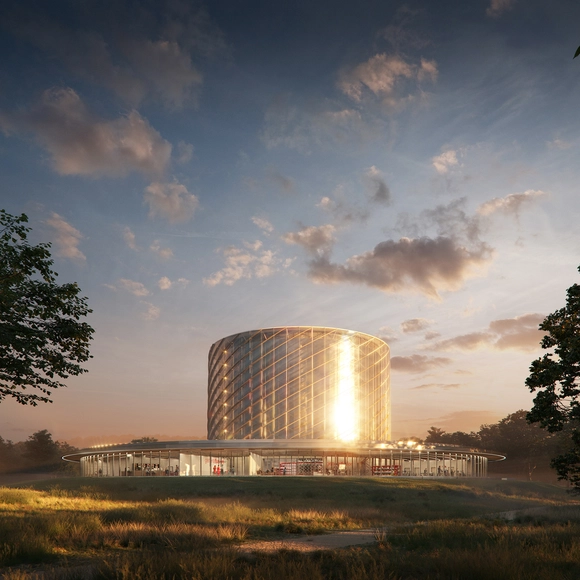
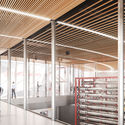
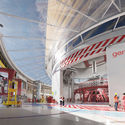
UK-based architecture firm AL_A has collaborated with Canadian energy firm General Fusion to develop the world's first magnetized target fusion facility on the UK Atomic Energy Authority (UKAEA) campus in Culham, United Kingdom. The energy firm wanted to "transform how the world is energized by replicating the process that powers the sun and stars". AL_A's design proposes a first-of-its-kind facility with open spaces and see-through partitions that provides innovative carbon-free energy solutions.
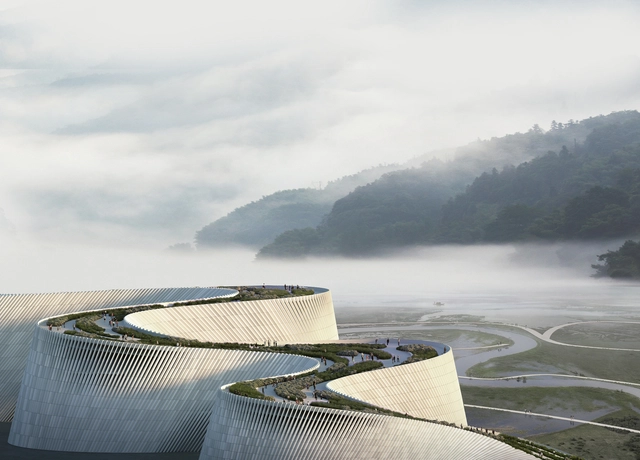
Shenzhen Natural History Museum. Image Courtesy of 3XN
The latest news and reports on China’s construction sector redefine the country’s future architectural landscape. A Cultural Infrastructure Index reflecting the data from 2020 places China and, more specifically, Shenzen as the world leader in investments regarding cultural facilities. Last year saw the announcement of 10 new cultural projects, all designed by world-renowned architects. At the same time, the Chinese authorities announced last month that buildings taller than 500 metres would no longer be approved, marking the end of an era that made the country home to 10 of the tallest 20 buildings in the world.
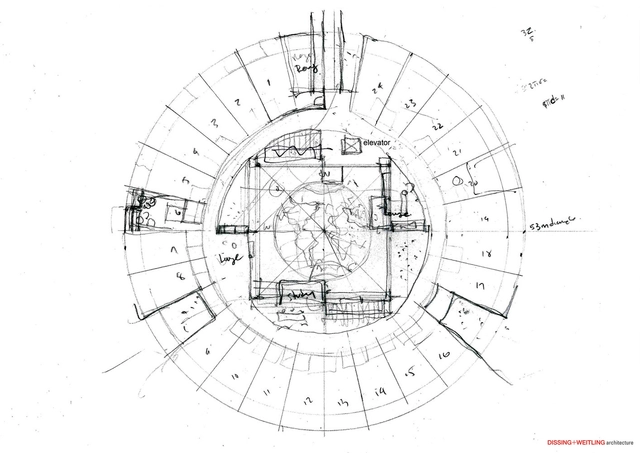
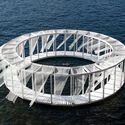
Often, when people think of buildings, they default to imagining rectangular structures—or at the very least, structures with orthogonal floor plans and hard angles, certainly not buildings with circular plans. The rarity of the circular plan comes in part from the fact that poor design choices can lead to wasted space and awkward interior arrangements, especially if furniture and appliances are rectangular in shape. However, strongly designed circular planes can have a dramatic effect, generating extraordinary spatial configurations that meet a variety of aesthetic and functional needs, while challenging the material specification process. Below, we list 18 buildings with circular plans, considering their varying strategies of design.
https://www.archdaily.com/966202/how-to-properly-design-circular-plansLilly Cao
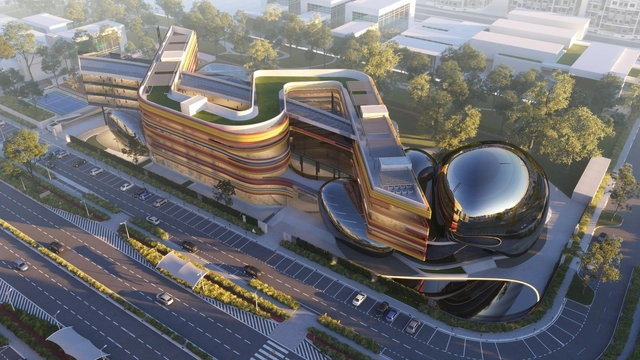
International School. Image Courtesy of CUBE Consultants
This week’s curated selection of Best Unbuilt Architecture highlights educational architecture submitted by the ArchDaily community. From preschools to higher education institutes, this article explores how architects shifted towards fostering individual creativity, critical thinking, and exploration, and presents projects submitted to us from all over the world.
Featuring a secluded kindergarten in the Icelandic mountains, a vibrantly-colored playschool in the industrial city of Shenzhen, and a Florentine high school with a flow of natural sunlight, this round-up explores how architects prioritize student well being and comfort in spaces that promote productivity, learning, and creativity. The selection also includes preschools, high schools, and academies in France, United States, Egypt, Kazakhstan, and Israel.
In May, aec+tech hosted an event on Clubhouse discussing how architects are using generative design in architecture firms today and towards the future. Five guest speakers from reputable architecture and tech start-ups —Zaha Hadid Architects, BIG, Outer Labs, 7fold, and RK Architects— joined the session to share their experiences and insights.
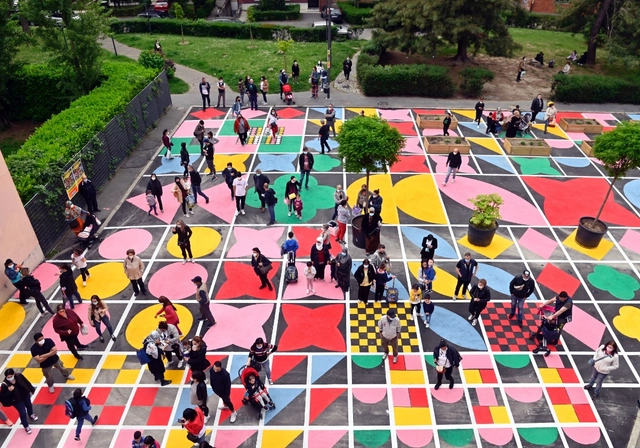
Designer and art director Serena Confalonieri, along with a team of students and volunteers have created “Quadra”, a graphic installation that is part of the initiative “Piazze Aperte” promoted by the Municipality of Milan. The urban intervention is a graphic art project in a former parking lot in the Quarto Oggiaro district that aims to enhance and characterize tactical urban interventions in all cities.
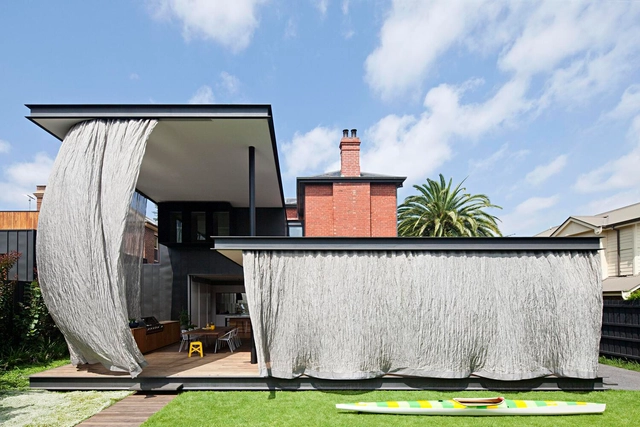
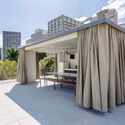
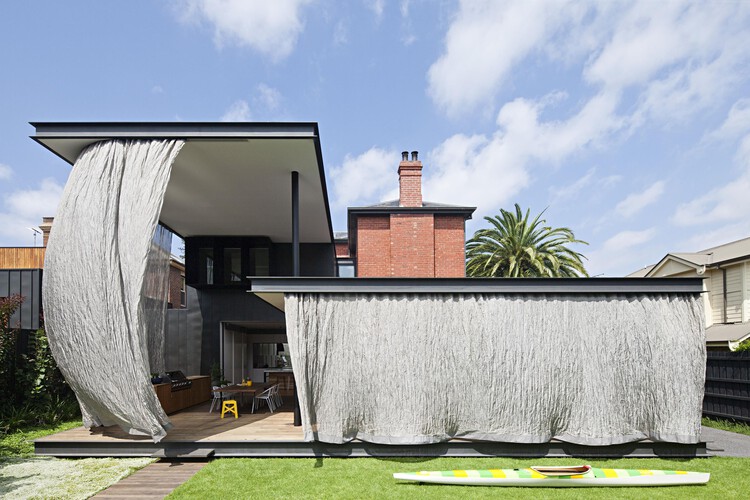
Curtains can provide a freer and more dynamic flow in architecture. These elements are usually intended to protect the interior from sunlight or create visual privacy, but they are also used as decoration or as room dividers. Since they are very movable and flexible, curtains are becoming a popular choice for architects and interior designers, creating layers between interior and exterior spaces that transform the environment through light and shade. Here, we have gathered some examples of projects that use curtains, particularly in the facades, showing how this solution can affect the overall impression of the design.
Courtesy of CHYBIK + KRISTOF Architects & Urban Designers
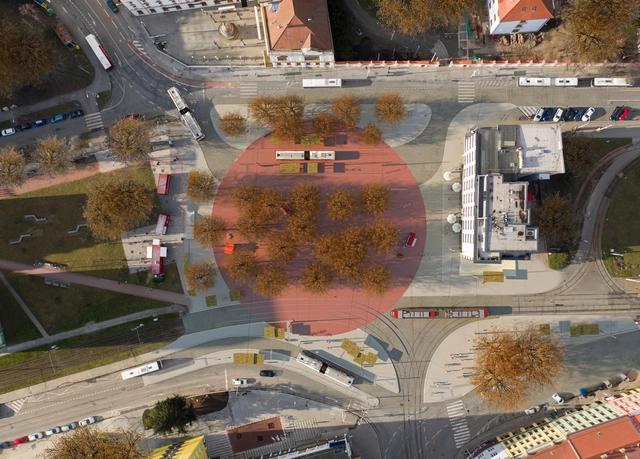
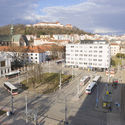
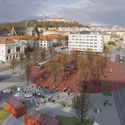
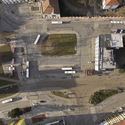
CHYBIK + KRISTOF architects & urban designers and DÍLNA have created a new design for Brno's historic Mendel Square. Part of a large revival plan for the city, the design pays homage to the city's rich cultural past. Partnering with local practice DÍLNA, landscape architect Zdenek Sendler, and engineering firm PK Ossendorf, the team exposed the square’s core functional and historic role to drive change in the urban fabric.
CRA-Carlo Ratti Associati and Italo Rota have designed the new MAE museum dedicated to carbon fiber. Made of the same material, the museum is designed to showcase its ecological potential. As a material that is central to the future of manufacturing, the project will be built largely out of carbon fiber, both new and recycled, pursuing a circular approach to design.
Although disability laws have been put in place decades ago, architects are still struggling with disability requirements. A recent article by CityLab explored how the rise of speed and efficiency-driven cities have overlooked accessibility, neglecting the needs of people who are physically unable to live or keep up with these dense neighborhoods. And while the "15-Minute City", one that allows people to walk or bike to most essential services within 15 minutes of their home, may seem as the future of built environments, it does not cater to disabled individuals or their movements.
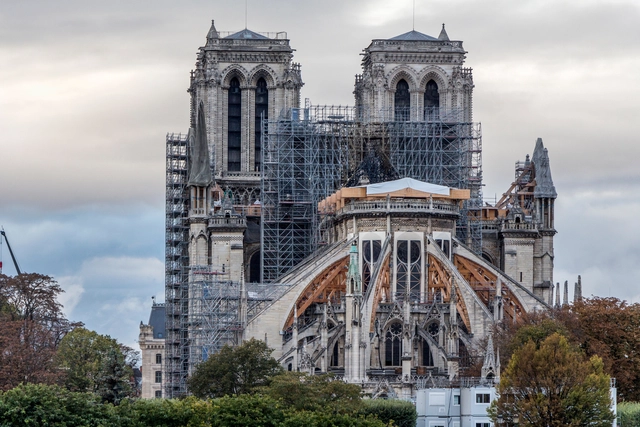
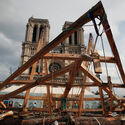
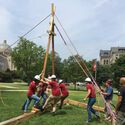
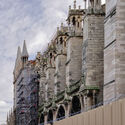
With three more years to go until the 2024 Paris Summer Olympics and the re-opening date announced by French President Emanuel Macron, Notre Dame's restoration work progresses. After a long safety phase and months of work interruption last year due to the pandemic, all burned timber from the roof has been removed, and scaffolding has been installed inside the cathedral. As a homage to the heritage structure and "the collective effort to rebuild Notre Dame", the Catholic University of America is building a replica of one of the cathedral's roof trusses in Washington D.C., using medieval techniques.
Recent extreme weather events and the acceleration of climate change, paired with decarbonization efforts that are not on track, make climate-related disruption unavoidable for urban environments, raising the issue of climate-risk adaptation. Moving past what can be done to prevent climate change, there is a strong imperative to develop strategies to prepare urban environments to cope with inevitable challenges such as sea-level rise, floods, water scarcity or extreme heat. The following discusses how cities can build resilience and adapt to undergoing and expected future climate threats.
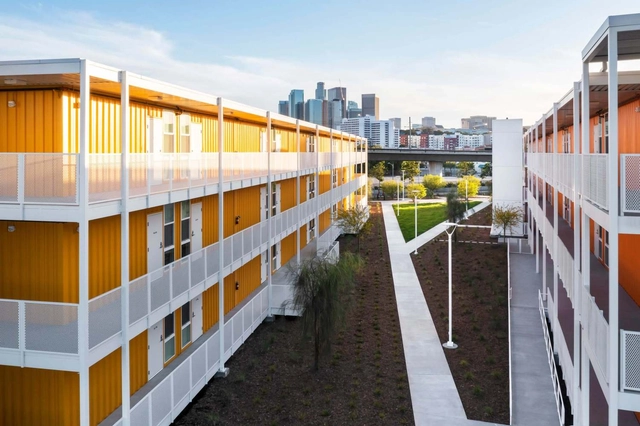
The Hilda L. Solis Care First Village (HSCFV), a large-scale interim housing project providing a wide range of amenities for both the unhoused and those in transition, recently opened in Downtown Los Angeles.