The Second Studio (formerly The Midnight Charette) is an explicit podcast about design, architecture, and the everyday. Hosted by Architects David Lee and Marina Bourderonnet, it features different creative professionals in unscripted conversations that allow for thoughtful takes and personal discussions.
A variety of subjects are covered with honesty and humor: some episodes are interviews, while others are tips for fellow designers, reviews of buildings and other projects, or casual explorations of everyday life and design. The Second Studio is also available on iTunes, Spotify, and YouTube.
This week David and Marina discuss the different reasons for hiring an architect and establishing a good client-architect relationship: The pros and cons of hiring an interior designer or contractor instead of an architect, design-build services, the difference between drafting and designing, whether or not a licensed architect is needed for certain projects, common fee structures, finding the right architect and what to look for in an architect, why the client and architect relationship is important to the project, and common problems that occur when the right architect is not hired and tips for avoiding them.
https://www.archdaily.com/965936/the-second-studio-podcast-on-why-hire-an-architectThe Second Studio Podcast
The Resor House was a hugely pivotal project for Mies van der Rohe, in both his life, and his career. It was his first commission in the United States and prior to landing in Chicago, he lived for two months on the site of the house near Jackson Hole, Wyoming. Its design was unique for Mies in its rural landscape setting and material choices, mainly its wood-clad exterior and interior. While it was never constructed due to cost overruns, the design documents and working models were collected by MoMA in NY, where the client, Helen Resor was on the Board of Directors. This video traces a digital reconstruction of the house — using those archival documents — to serve as the subject of an in-depth tour and analysis. What sorts of discoveries are to be found inside this unbuilt masterpiece?
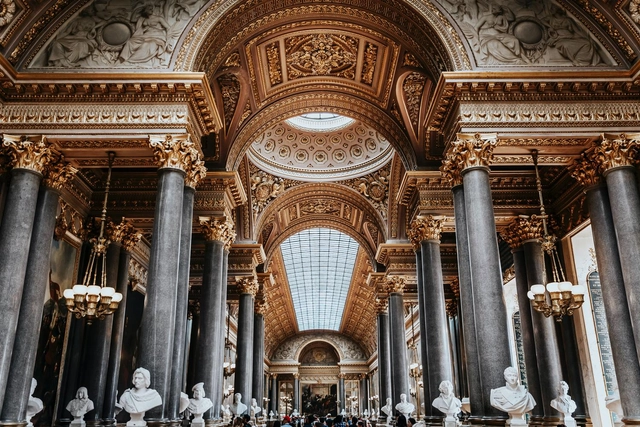
Architecture is perhaps the most expressive forms of culture, representing the zeitgeist of a particular location, and telling the story of how it evolved over time. It allows visitors to transport themselves back in history to understand the influences that shaped the world we once lived in. Baroque architecture, in particular, was one of the most ornamental and decorative architectural styles. Translating to “curious or strange” in French, it was once used as a derogatory word, meaning noisy, eccentric, and excessive- and Baroque architecture was truly just that.
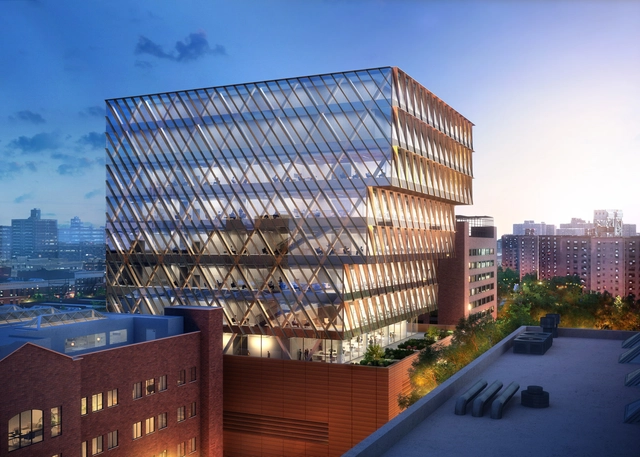
Skidmore, Owings & Merrill (SOM) unveiled its design for the New York City Public Health Laboratory, a ten storey building meant to strengthen the metropole's capability to respond to a variety of public health issues and future challenges. The laboratory is organized within a cubic glass volume stepping outward, which rises from a masonry-clad podium containing community-related functions. In order to give the new facility an active role within the Harlem neighbourhood, the design incorporates a training lab and an auditorium available to the community.
Plan B Guatemala / DEOC Arquitectos. Image Cortesía de DEOC Arquitectos
"Here in the tropics, it's the shade not the stove that refreshes and brings people together," says Bruno Stagno about tropical architecture.
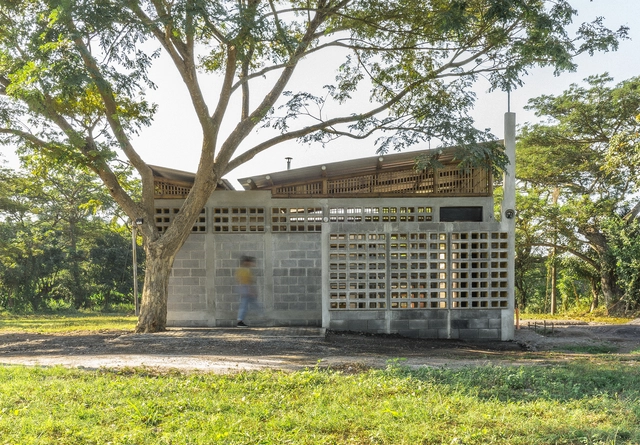
Guatemala ha estado construyendo su sombra a lo largo de los años. Nos encontramos con 3 ejemplos que proponen interesantes respuestas a este clima. Proyectos que materializan tanto grandes cubiertas con pendientes para dar sombra y evacuar el agua de lluvia con rapidez, como fachadas perforadas que permiten el ingreso de la brisa y la ventilación interior.
Jeffry Burchard explores in his essay the "opportunity found by extending the life and purpose of viable existing buildings", that have shaped our cities. Arguing that "we have an abundant supply of buildings", the author proposes four essential steps to transform existing buildings.
How materials move shapes both architecture and how we design. While architects often consider both material sourcing and manufacturing, the physical products and assemblies themselves also move and adapt as they cross geographic and national lines. How materials migrate, and in turn design ideas themselves, tells a story of architecture that transcends construction and climate, as well as borders both real and imagined.
New York Governor Andrew Cuomo has announced that Adjaye Associates and Studio Zewde's proposals have been selected to redevelop the unoccupied part of the Kingsboro Psychiatric Center campus in the East Flatbush section of Brooklyn. The $400 million project is part of the $1.4 Billion Vital Brooklyn Initiative, and will transform 7.2 abandoned acres in central Brooklyn into an ecological development with residential and commercial facilities.
By defining sexuality as one of several sexual technologies, Michel Foucault has expanded our understanding of sex. This way, the relationship between architecture and the body is shaped not only by the built object, with its various spatial mechanisms for the production of bodies, but also by thinking, in the form of academic discourse. And vice versa, since gender and sexuality also impact architectural theory. One way or another, these relationships are very rich and capable of expanding our knowledge about architecture and the creation of generic sexed bodies.
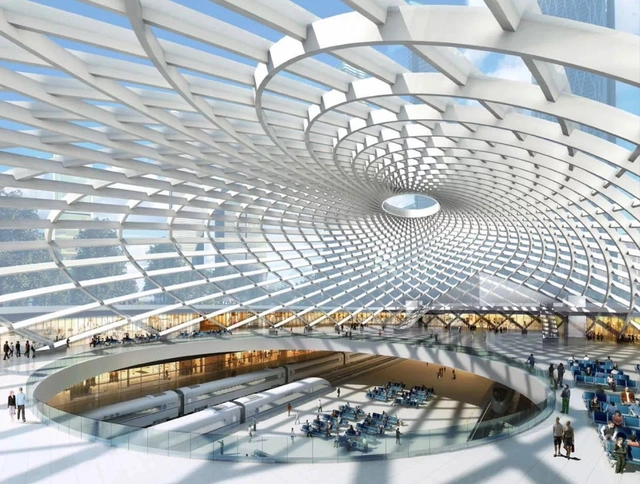
Archdaily had the chance to speak to SOM regarding the Transit-oriented development (TOD) projects. SOM has extensive engagement in planning, design and engineering on various means of conveyance, and TOD is definitely one of the speciality the SOM team has to offer. Through the interview, we will walk through the design strategies and their changes over the years of TOD Development, the challenges and new area of focus of TOD development, and most importantly, the interview will focus on the design strategy in developing TOD in China, where SOM has participated in many TOD projects, including the South Gateway of Guangzhou Central Axis, Guangzhou Nansha Pearl Bay and Xiong'an District Planing.
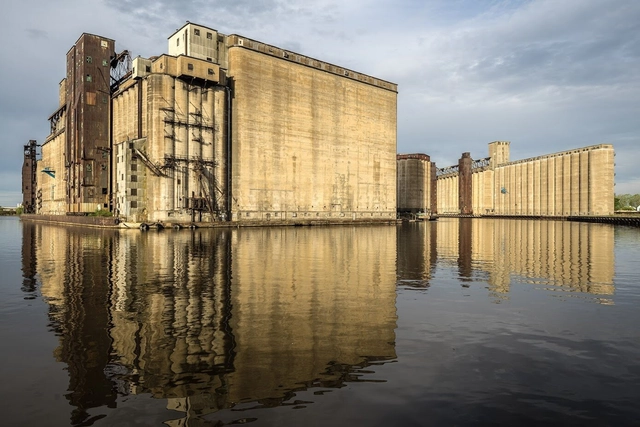
This week's reprint from Metropolis explores the ongoing renovation and transformation of an iconic site in Buffalo, Silo City, in order to create ambitious residential and public projects.
https://www.archdaily.com/965933/the-transformation-of-silo-city-signals-a-new-future-for-buffaloOsman Can Yerebakan
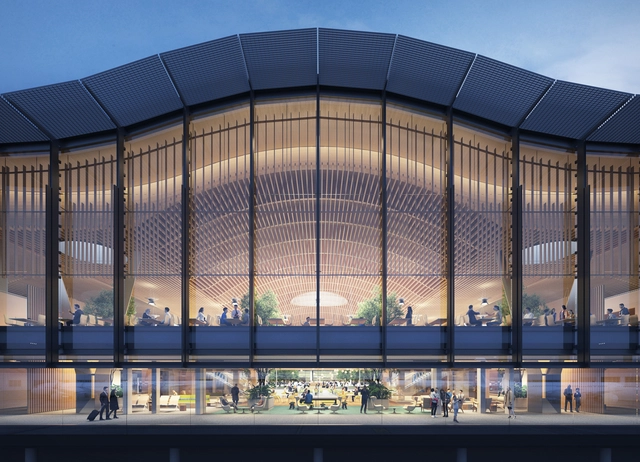
ZGF Architects has shared new visuals showcasing the main terminal of the Portland International Airport (PDX) in Oregon. Inspired by the forest landscapes of the Pacific Northwest, the terminal renovation and expansion emphasizes openness, light and connection to the region’s materials. The structure features a series of skylights and an expansive timber roof made from sustainably sourced regional wood.
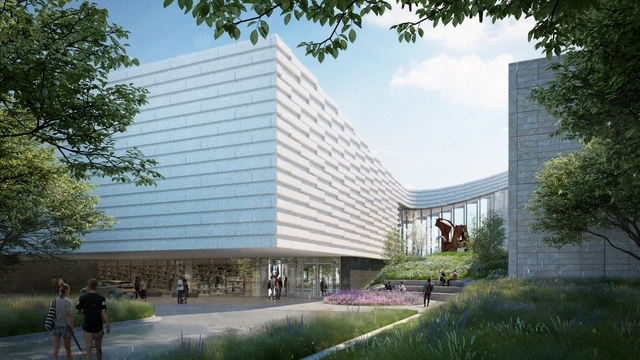
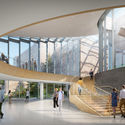
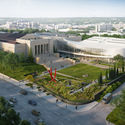
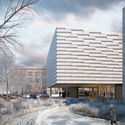
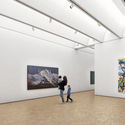
Snøhetta has unveiled his latest project, the expansion and site redesign of the Joslyn Art Museum, in Nebraska. Developed in partnership with local architects Alley Poyner Macchietto Architecture (APMA), the project seeks to add new gallery space, public gardens, and outdoor spaces as well as restore and modernize existing office spaces in the Joslyn Memorial building.
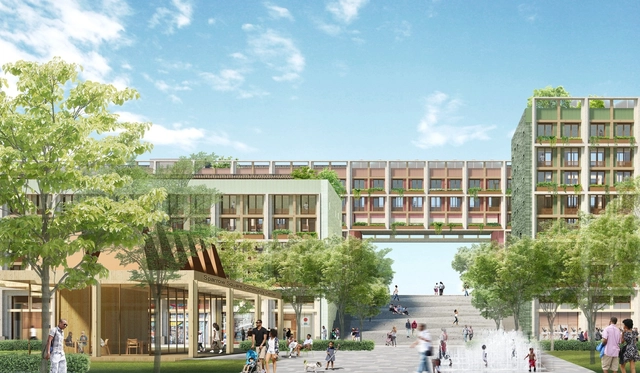
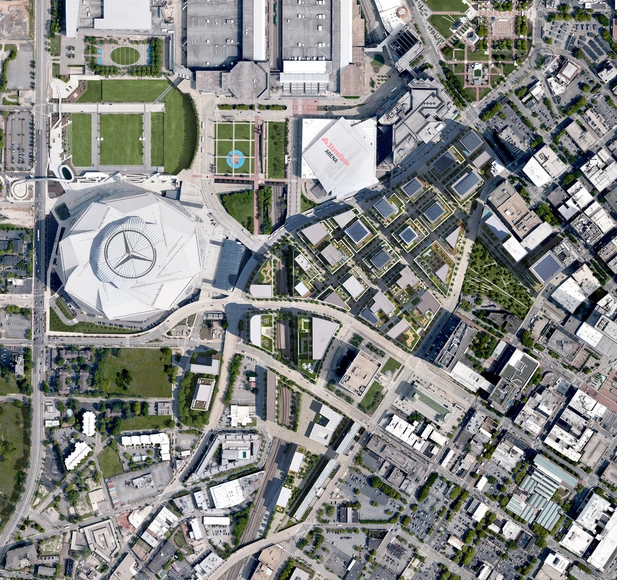
Foster + Partners has revealed the master plan design proposal to regenerate Downtown Atlanta's Centennial Yards site. The 50-acre proposal transforms parking lots and former railyards into a community-oriented and inclusive mixed-use development of state-of-the-art buildings, amenities, and public spaces. The project is part of a $5 billion urban transformation and is being designed in collaboration with architecture firm Perkins+Will.
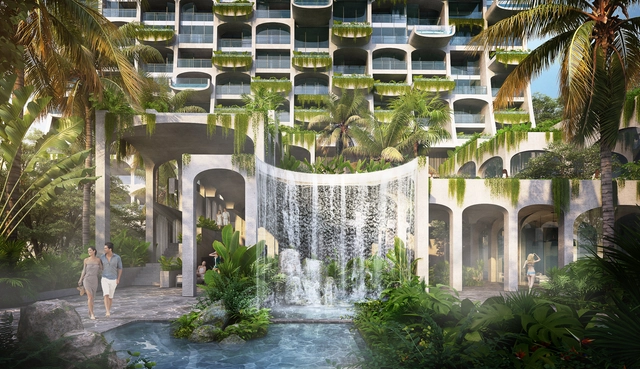
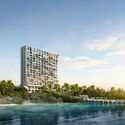
Büro Ole Scheeren has unveiled its design for a hotel resort in Cebu, one of the most popular destinations in the Philippines. Taking inspiration from the island’s natural landscape and traditional architecture, the project brings together lush greenery, pools and waterfalls within a volume wrapped in arches reminiscent of local structures. The design team describes the project as “a journey through the rainforest”, where architecture, interior design and landscape converge into a multi-sensory experience.
The Chicago Architecture Biennial has announced the cultural partners, which will be presenting programming in the form of lectures, panels, workshops or performances within this year's edition. SOM, Studio Gang, the Museum Of Contemporary Art are some of the over 100 museums, architecture studios and community organizations involved in the event. The 2021 edition of the Chicago Architecture Biennial will take place from September 17 until December 18 across various sites throughout the city. The Available City intends to highlight the potential of vacant urban areas as collective spaces through interventions developed in close collaboration with the local community.
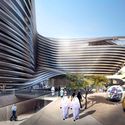
Designed by Foster + Partners, Alif-The Mobility Pavilion at the Expo 2020 Dubai blurs the boundaries between the physical and digital world, and invites visitors to meet the historical icons of mobility, whose innovations helped pave the way for our modern-day technology. The pavilion features the world’s largest passenger lift, which will be able to transport 160+ people at a time, and a semi-underground-semi-open-air 330-meter track which allows visitors to see cutting-edge mobility devices in action.
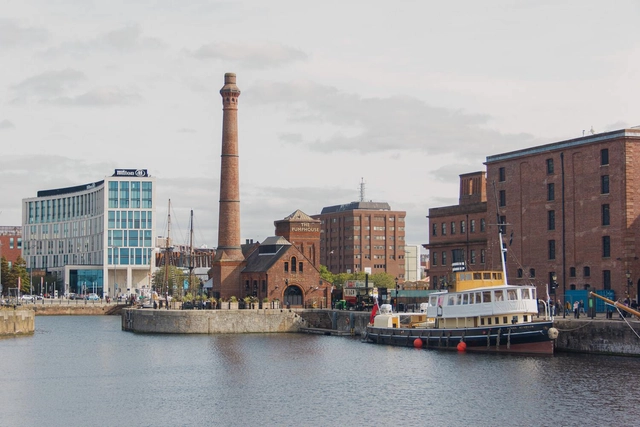
This month, UNESCO has announced a series of decisions concerning important heritage sites, giving rise to conversations around preservation and urban development. Last week, the World Heritage Committee decided to strip Liverpool of its heritage status, as the new developments are considered detrimental to the waterfront's integrity. These projects placed the city on the List of World Heritage in Danger in 2012, a designation which Venice managed to avoid earlier this week, due in great part to the recent ban on cruise ships.






















.jpg?1627371901&format=webp&width=640&height=580)
.jpg?1627371901 "© Expo 2020 Dubai")

.jpg?1627371901)