1. ArchDaily
  2. Architecture

Architecture: The Latest Architecture and News

10 On-Going Projects by David Chipperfield, the 2023 Pritzker Prize Winner

Subscriber Access | 

Sir David Chipperfield has been awarded with the 2023 Pritzker Prize, the highest distinction in the architectural profession. Known for his well-crafted, precise, and sensible response to complex environments, the architect became initially recognized for the skillful restoration and renovation of existing buildings, often cultural institutions, before expanding the range of projects to include new structures. While his built body of works demonstrates many of the core principles of good architecture, the ongoing projects reveal an equally relevant narrative: that of his direction moving forward and the way in which his approach to these principles evolves.

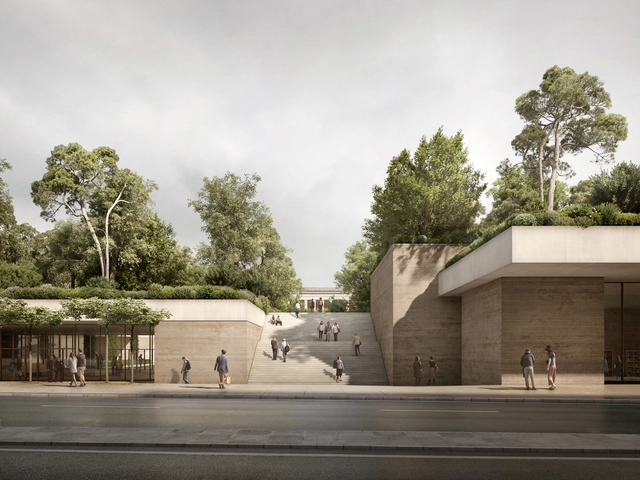
Many of the ongoing projects continue Chipperfield’s interest in museological and cultural institutions, yet he continues to work across a wide array of building types. The latest major project announced tackles one of the most prominent institutions in Greece, the National Archeological Museum. This represents yet another opportunity for the architect to present museums as institutions that offer a transformation of the urban life of the cities where they are located, while also bringing forward the historical layers that define its architecture. Other projects, such as the Santa Giulia Arena in Milano or the Elbtower in Hamburg, expand the range of programs and typologies addressed by Chipperfield.

10 On-Going Projects by David Chipperfield, the 2023 Pritzker Prize Winner - Image 11 of 410 On-Going Projects by David Chipperfield, the 2023 Pritzker Prize Winner - Image 15 of 410 On-Going Projects by David Chipperfield, the 2023 Pritzker Prize Winner - Image 5 of 410 On-Going Projects by David Chipperfield, the 2023 Pritzker Prize Winner - Image 18 of 410 On-Going Projects by David Chipperfield, the 2023 Pritzker Prize Winner - More Images+ 49

ICON and BIG Reveal Design for El Cosmico, a 3D-Printed Campground Hotel in Marfa, Texas

Hospitality expert Liz Lambert has announced a collaboration with ICON, the office that pioneered large-scale 3D printing, and BIG – Bjarke Ingels Group, to rebuild El Cosmico, a campground hotel in Marfa, Texas. The team plans to relocate the venue to a 62 acres plot, where new architectural approaches are made possible by including advanced technologies and 3D-printing elements such as domes, vaults, and parabolic forms. The innovative development will feature guest accommodation and new hospitality programming, including a pool, spa, and shared communal facilities. The project is expected to break ground in 2024.

ICON and BIG Reveal Design for El Cosmico, a 3D-Printed Campground Hotel in Marfa, Texas - Image 1 of 4ICON and BIG Reveal Design for El Cosmico, a 3D-Printed Campground Hotel in Marfa, Texas - Image 2 of 4ICON and BIG Reveal Design for El Cosmico, a 3D-Printed Campground Hotel in Marfa, Texas - Image 3 of 4ICON and BIG Reveal Design for El Cosmico, a 3D-Printed Campground Hotel in Marfa, Texas - Image 4 of 4ICON and BIG Reveal Design for El Cosmico, a 3D-Printed Campground Hotel in Marfa, Texas - More Images+ 4

The Diversity in Architecture-DIVIA Award, Dedicated to Women Architects, Selects Five Finalists

The Diversity in Architecture Award (DIVIA) has selected its 5 finalists, from a list of 29 nominees: Tosin Oshinowo (Nigeria), May al-Ibrashy (Egypt), Marta Maccaglia (Peru), Noella Nibakuze (Rwanda), and Katherine Clarke and Liza Fior (UK). The prize, dedicated to women architects, celebrates female figures by awarding and validating their work. Based in Berlin, the award platform promotes equality between men and women, making the discipline observable to all, and setting an example for the next generation of younger women architects.

The  Diversity in Architecture-DIVIA Award, Dedicated to Women Architects, Selects Five Finalists  - Image 1 of 4The  Diversity in Architecture-DIVIA Award, Dedicated to Women Architects, Selects Five Finalists  - Image 2 of 4The  Diversity in Architecture-DIVIA Award, Dedicated to Women Architects, Selects Five Finalists  - Image 3 of 4The  Diversity in Architecture-DIVIA Award, Dedicated to Women Architects, Selects Five Finalists  - Image 4 of 4The  Diversity in Architecture-DIVIA Award, Dedicated to Women Architects, Selects Five Finalists  - More Images+ 10

Exploring Vulnerable Habitats in the XXII Chile Architecture Biennial

Subscriber Access | 

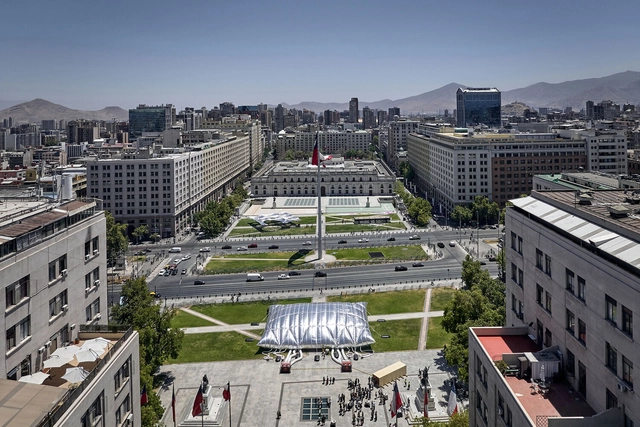
After the interruption of the 2019 edition due to the Social crisis in Chile, the Chilean Architecture Biennial returned to Santiago in January 2023 under the theme of 'Vulnerable Habitats', addressing issues such as "the emergence of the housing deficit in a context in which slums, informality, and illegal land takeovers have increased in recent years" and "the vulnerability and deterioration of public spaces; the urgent protection of tangible heritage; and environmental vulnerability in a context of a climate crisis."

International Women’s Day 2023: Innovative Women at the Forefront of Global Challenges

Subscriber Access | 

Looking back at 2022, last year had seen major female-led stories. Kimberly Dowdell was chosen as AIA’s First Black Woman President, Carol Ross Barney has received the 2023 AIA Gold Medal, Jeanne Gang won the 2023 Charlotte Perriand Award, Frida Escobedo was selected among the 100 Emerging Leaders by TIME 2022, Renée Gailhoustet was presented with the 2022 Royal Academy Architecture Prize, "Infinite Freedom, A World for a Feminist Democracy" opened at the 2022 Biennale of FRAC in France, and ArchDaily presented SkyFrame’s Women in Architecture’s documentary, following Toshiko Mori, Gabriela Carrillo and Johanna Meyer-Grohbrügge, three architects in three different countries, in different contexts, at different stages of their life and career, but with a lot in common. And that's just to name a few...

After arguing in 2021 “why is it still important to talk about "female architects"? and contributing to “rebalancing forces and adjusting narratives” in 2022, for its 3rd edition of the annual International Women’s month coverage, ArchDaily will focus on the achievements of female architects working specifically on global challenges, and finding innovative approaches to the problems of today. Fitting partially with the theme selected by the United Nations for the 2023 International Women’s Day, centered on Innovation and technology for gender equality, ArchDaily will reflect on what is innovation in the face of global challenges.

International Women’s Day 2023: Innovative Women at the Forefront of Global Challenges - Image 1 of 4International Women’s Day 2023: Innovative Women at the Forefront of Global Challenges - Image 2 of 4International Women’s Day 2023: Innovative Women at the Forefront of Global Challenges - Image 3 of 4International Women’s Day 2023: Innovative Women at the Forefront of Global Challenges - Image 4 of 4International Women’s Day 2023: Innovative Women at the Forefront of Global Challenges - More Images+ 10

In the Hood: 11 Projects Built in Favelas and Peripheral Neighborhoods

Subscriber Access | 

It is rare for houses in favelas to be recognized for their architectural qualities. In the history of the ArchDaily Building of the Year Award, this has happened only twice: in 2016 with Vila Matilde House, by Terra e Tuma Arquitetos, and in this year's edition with House in Pomar do Cafezal designed by Coletivo LEVANTE. Located in Belo Horizonte, the house was built for the musician and cultural manager Kdu dos Anjos, who prefers to call it "my shack".

In both cases, the reduced area, simple materials and modest budget were not impediments to a virtuous architectural project that took full advantage of the qualities of the surroundings and the terrain's orientation, proving that limitations can serve as an impetus for higher quality projects.

In the Hood: 11 Projects Built in Favelas and Peripheral Neighborhoods - Image 1 of 4In the Hood: 11 Projects Built in Favelas and Peripheral Neighborhoods - Image 2 of 4In the Hood: 11 Projects Built in Favelas and Peripheral Neighborhoods - Image 3 of 4In the Hood: 11 Projects Built in Favelas and Peripheral Neighborhoods - Image 4 of 4In the Hood: 11 Projects Built in Favelas and Peripheral Neighborhoods - More Images+ 7

15 Interiors that Illustrate the Effectiveness of Indirect Lighting

Lighting is often a numbers game — too much, and interiors lose their edge (literally), too little, and the dim atmosphere can make a space seem bland. Its importance in interior design cannot be overstated: done right, it not only accentuates a space's architectural features but also makes inhabitants feel at ease. As Carmelo Zappulla of Lighting Studio External Reference explains in a recent interview with Architonic, light is a crucial tool to add an emotional element and "animate a space." It follows that a lighting concept gone wrong can have catastrophic consequences for an otherwise perfectly designed room.

15 Interiors that Illustrate the Effectiveness of Indirect Lighting - Image 1 of 415 Interiors that Illustrate the Effectiveness of Indirect Lighting - Image 2 of 415 Interiors that Illustrate the Effectiveness of Indirect Lighting - Image 3 of 415 Interiors that Illustrate the Effectiveness of Indirect Lighting - Image 4 of 415 Interiors that Illustrate the Effectiveness of Indirect Lighting - More Images+ 11

Sir David Chipperfield Selected as the 2023 Laureate of the Pritzker Architecture Prize

Subscriber Access | 

Architecture’s highest honor, the Pritzker Architecture Prize, has named Sir David Alan Chipperfield CH, as laureate of its 2023 edition. “Embracing the preexisting, designing and intervening in dialogue with time and place”, while creating “structures able to last, physically and culturally”, as the official statement of the award explains, David Chipperfield is the 52nd winner of the award founded in 1979, succeeding Francis Kéré in 2022, and Anne Lacaton and Jean-Philippe Vassal in 2021. The 45th Pritzker Prize ceremony, honoring David Chipperfield will be held in Athens, Greece this May.

Leading offices in London, Berlin, Milan, Shanghai, and Santiago de Compostela, the 2023 laureate is a civic architect, urban planner, and activist, with an extensive body of built projects that includes over one hundred works, spanning over four decades, covering 3 continents, and comprising different typologies. Recognized for his “subtle yet powerful, subdued yet elegant” approach, as well as his “commitment to an architecture of understated but transformative civic presence […] done always with austerity, avoiding unnecessary moves and steering clear of trends and fashions”, Chipperfield was knighted for his service to the world of architecture in 2010, received the RIBA Royal Gold Medal in 2011, the European Union Prize for Contemporary Architecture—the Mies van der Rohe Award and curated the 13th Biennale Architettura in 2012.

 Sir David Chipperfield Selected as the 2023 Laureate of the Pritzker Architecture Prize - Image 1 of 4 Sir David Chipperfield Selected as the 2023 Laureate of the Pritzker Architecture Prize - Image 2 of 4 Sir David Chipperfield Selected as the 2023 Laureate of the Pritzker Architecture Prize - Image 3 of 4 Sir David Chipperfield Selected as the 2023 Laureate of the Pritzker Architecture Prize - Image 4 of 4 Sir David Chipperfield Selected as the 2023 Laureate of the Pritzker Architecture Prize - More Images+ 35

David Chipperfield: Get to Know the 2023 Pritzker Winner's Work

Subscriber Access | 

The 2023 Pritzker Prize has been awarded to Sir David Chipperfield, London-born, architect, urban planner, and activist. David Chipperfield, founded his architectural practice in 1985 in London under the name of David Chipperfield Architects, after shaping his career working with renowned architects such as Norman Foster, Richard Rogers, and Douglas Stephen. He studied art and architecture at the Kingston School of Art, graduating in 1976, and continued his studies at the Architectural Association School of Architecture in London, concluding in 1980. Today, David Chipperfield Architects has expanded to include offices in Berlin, Shanghai, Milan, and the latest office opened in Santiago de Compostela.

David Chipperfield: Get to Know the 2023 Pritzker Winner's Work - Image 1 of 4David Chipperfield: Get to Know the 2023 Pritzker Winner's Work - Image 2 of 4David Chipperfield: Get to Know the 2023 Pritzker Winner's Work - Image 3 of 4David Chipperfield: Get to Know the 2023 Pritzker Winner's Work - Image 4 of 4David Chipperfield: Get to Know the 2023 Pritzker Winner's Work - More Images+ 30

Who Is Sir David Chipperfield? 17 Things to Know About the 2023 Pritzker Architecture Laureate

Subscriber Access | 

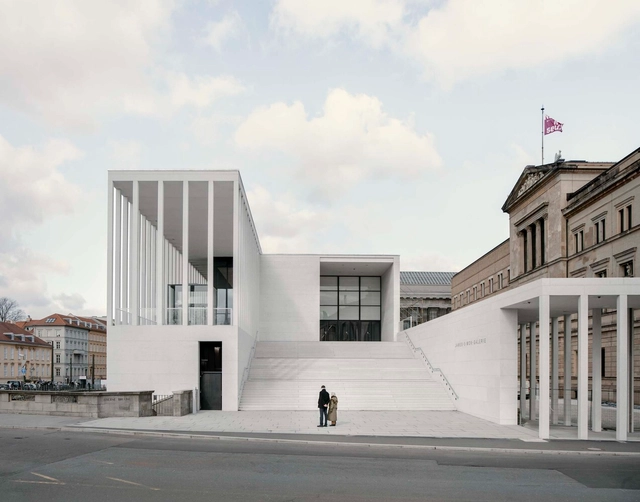
Few architects in history have had the honor and privilege of intervening in the famous St. Mark's Square in Venice — a tourist landmark of incomparable historical value to humanity. Sir David Chipperfield is one of them. As if that was not enough, he also left his mark on another project of inestimable value: the Neue Nationalgalerie, designed originally by Mies van der Rohe in Berlin. The four centuries that separate the design from its restoration seem to pose no difficulties for the 2023 Pritzker Prize winner, who rejects an international style of architecture in search of a trait that highlights local qualities.

Who Is Sir David Chipperfield? 17 Things to Know About the 2023 Pritzker Architecture Laureate - 1 的图像 4Who Is Sir David Chipperfield? 17 Things to Know About the 2023 Pritzker Architecture Laureate - 2 的图像 4Who Is Sir David Chipperfield? 17 Things to Know About the 2023 Pritzker Architecture Laureate - 3 的图像 4Who Is Sir David Chipperfield? 17 Things to Know About the 2023 Pritzker Architecture Laureate - 4 的图像 4Who Is Sir David Chipperfield? 17 Things to Know About the 2023 Pritzker Architecture Laureate - More Images+ 8

Hexagonal Plans: Geometric Sets in the Architectural Composition

Subscriber Access | 

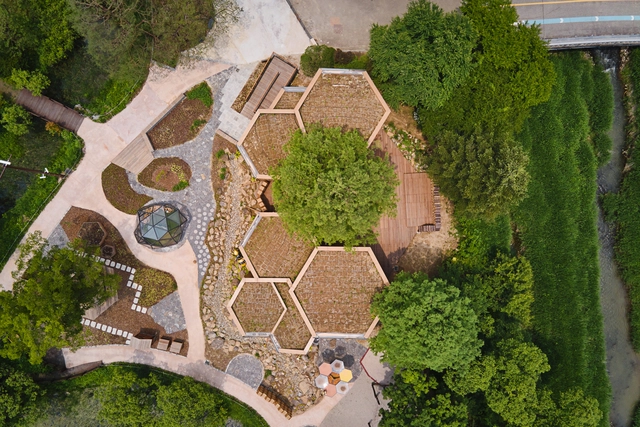
Despite not being found in nature, right angles are the most used by architects. In the search for more functionality and practicality in construction, squares and rectangles emerge as the main option when designing. On the other hand, several vernacular and ancestral architectures adopted arches and circular plans as a solution. The game of geometric shapes in the architectural composition is vast, but we cannot forget a polygon that also stands out: the hexagon.

Hexagonal Plans: Geometric Sets in the Architectural Composition - Image 1 of 4Hexagonal Plans: Geometric Sets in the Architectural Composition - Image 2 of 4Hexagonal Plans: Geometric Sets in the Architectural Composition - Image 3 of 4Hexagonal Plans: Geometric Sets in the Architectural Composition - Image 4 of 4Hexagonal Plans: Geometric Sets in the Architectural Composition - More Images+ 22

A Brief History of The International Style

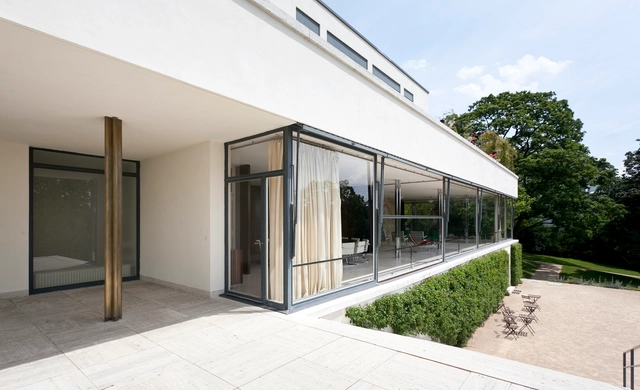
When people describe the modernist movement as a whole, they broadly reference the steel and glass skyscrapers which dot many of our cities’ skylines, or more specifically, the International Style that once emerged from Europe after World War I. The International Style represented technological and industrial progress and a renaissance of social constructs that would forever influence the way that we think about the use of space across all scales. Often designed as politically charged buildings seeking to make a statement towards totalitarian governments, many architects who influenced the style moved to the United States after World War II, paving the way for some of the most iconic buildings and skyscrapers to be built in the 20th century.

The Complex Culture of Nightrise in Jabal ‘Amil, Lebanon

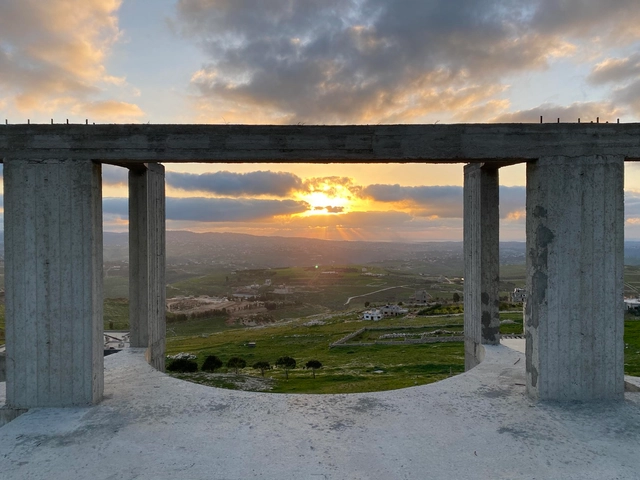
As farmers water crops by moonlight, undocumented children head to school and villagers scan the sky for surveillance airplanes—these are glimpses of a complex culture that emerges in south Lebanon after dark. In collecting some of these nightly practices, Mohamad Nahleh—lecturer in architecture and urbanism at MIT—journeyed across the landscapes of Jabal ‘Amil hoping to build a new alliance between architecture and the night. His "Path of Nightrise" research has turned into a construction to revive a forgotten river path and was published by Places Journal. The interview with Nahleh argues for a new nocturnal imagination in design and reveals, not only how the night has changed in Lebanon over time, but also how he has changed alongside it.

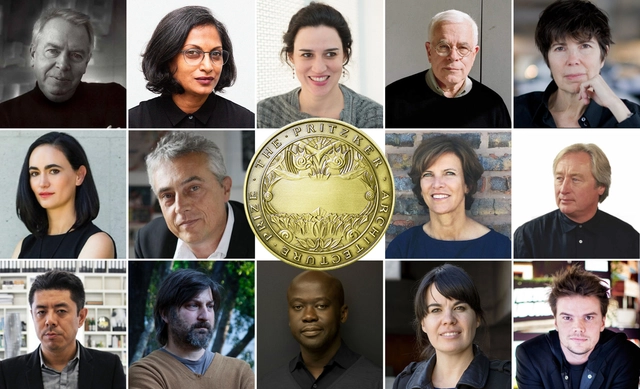
ArchDaily’s Readers Select Who Should Win the 2023 Pritzker Prize

As part of our yearly tradition, we have asked our readers who should win the 2023 Pritzker Prize, the most important award in the field of architecture.

For those who don't know, the Pritzker Prize is funded by Jay Pritzker through the Hyatt Foundation in the United States and has been awarded to living architects, regardless of their nationality, whose built work "has produced consistent and significant contributions to humanity through the art of architecture."

Meanwhile Spaces: Temporary Interventions for Lasting Urban Development

Subscriber Access | 

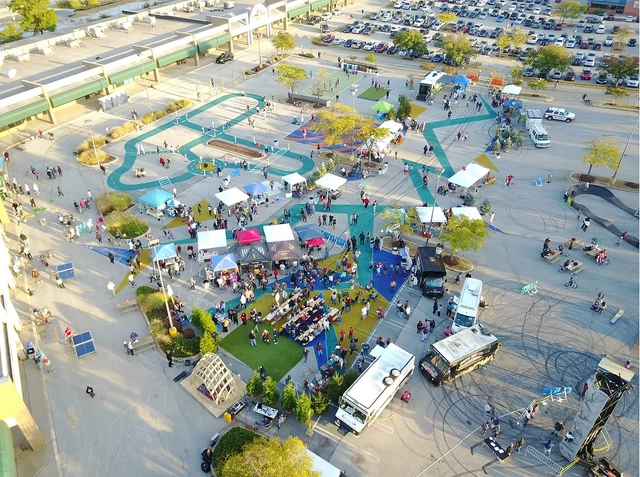
When streets lay empty, sidewalks untouched, and shutters hung heavy, the city seems lost of life. When businesses close, offices go remote and economic activity declines, the mechanisms that operate a city are idle. Vacant space and land are often perceived as “failed”, reflecting urban decline and economic blight. Emptiness, however, holds hope for possibilities and change. When urban voids are at the brink of transformation, what happens in the meanwhile?

Meanwhile Spaces: Temporary Interventions for Lasting Urban Development  - Image 1 of 4Meanwhile Spaces: Temporary Interventions for Lasting Urban Development  - Image 2 of 4Meanwhile Spaces: Temporary Interventions for Lasting Urban Development  - Image 3 of 4Meanwhile Spaces: Temporary Interventions for Lasting Urban Development  - Image 4 of 4Meanwhile Spaces: Temporary Interventions for Lasting Urban Development  - More Images+ 1

Toronto's 9th Annual Winter Stations Reveals Eight Winners at the Woodbine Beach

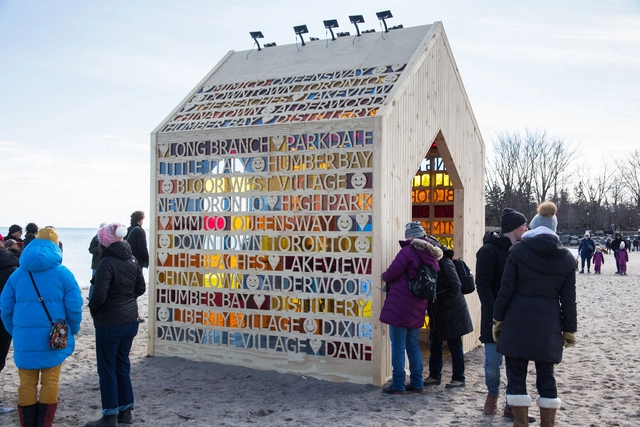
The 2023 Winter Stations has just announced eight winning projects for their 9th annual international competition. The winners were chosen from hundreds of entries from around the world, along with three student designs from Toronto Metropolitan University, Waterloo Department of Architecture, and Guelph University. The competition was first launched at Woodbine beach by RAW design, Ferris + Associates, and Curio, to capture the imagination of designers and architects to create bold designs that spark conversation, transforming lifeguard stations at Toronto’s Woodbine beach. Furthermore, since these lifeguard stations are usually dormant throughout the winter, the exhibition inspires artists to bring the public back outdoors with their unique designs.

Toronto's 9th Annual Winter Stations Reveals Eight Winners at the Woodbine Beach - Image 5 of 4Toronto's 9th Annual Winter Stations Reveals Eight Winners at the Woodbine Beach - Image 1 of 4Toronto's 9th Annual Winter Stations Reveals Eight Winners at the Woodbine Beach - Image 7 of 4Toronto's 9th Annual Winter Stations Reveals Eight Winners at the Woodbine Beach - Image 2 of 4Toronto's 9th Annual Winter Stations Reveals Eight Winners at the Woodbine Beach - More Images+ 4

Architecture Classics: 500 Club / Oscar Niemeyer

Subscriber Access | 

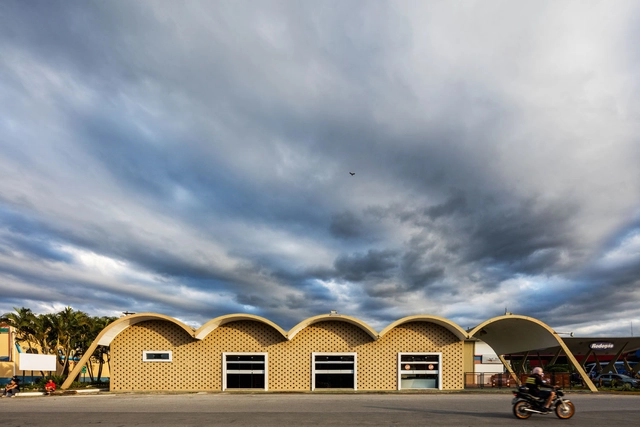
The banker Orozimbo Roxo Loureiro created the 500 Club in the early 1950s. It followed the lines of the former 200 Club, founded by President Washington Luís to bring together influential politicians and businessmen away from the spotlight of capital cities. The initial idea of a social club did not prosper, and Orozimbo decided to develop a commercial and tourist enterprise in the area, which is well positioned between the two largest Brazilian cities.

Architecture Classics: 500 Club / Oscar Niemeyer - Image 1 of 4Architecture Classics: 500 Club / Oscar Niemeyer - Image 2 of 4Architecture Classics: 500 Club / Oscar Niemeyer - Image 3 of 4Architecture Classics: 500 Club / Oscar Niemeyer - Image 4 of 4Architecture Classics: 500 Club / Oscar Niemeyer - More Images+ 31

Mumbai Architecture City Guide: 20 Projects in One of India's Most Populous Cities

Subscriber Access | 

Walking through the streets of Mumbai, India, is an experience unmatched anywhere else. The energy of India’s largest and most populous city is palpable through the people, their activities, and most importantly, the built environment. The city’s dynamic culture is evidently expressed through the structures that dot its landscape.

Mumbai is an eclectic mix of buildings large and small, old and new, and traditional and modern. The city of contrasts boasts an architectural legacy that goes back over 2000 years. Located in the state of Maharashtra along the west coast of India, Mumbai hosts a variety of architectural styles such as Victorian, Gothic, Art Deco, Indo-Saracenic, Modern and Post-modern. The city is characterized by its old charm and liveliness, a diverse stage for people to pursue their dreams.

Mumbai Architecture City Guide: 20 Projects in One of India's Most Populous Cities - Image 1 of 4Mumbai Architecture City Guide: 20 Projects in One of India's Most Populous Cities - Image 2 of 4Mumbai Architecture City Guide: 20 Projects in One of India's Most Populous Cities - Image 3 of 4Mumbai Architecture City Guide: 20 Projects in One of India's Most Populous Cities - Image 4 of 4Mumbai Architecture City Guide: 20 Projects in One of India's Most Populous Cities - More Images+ 17