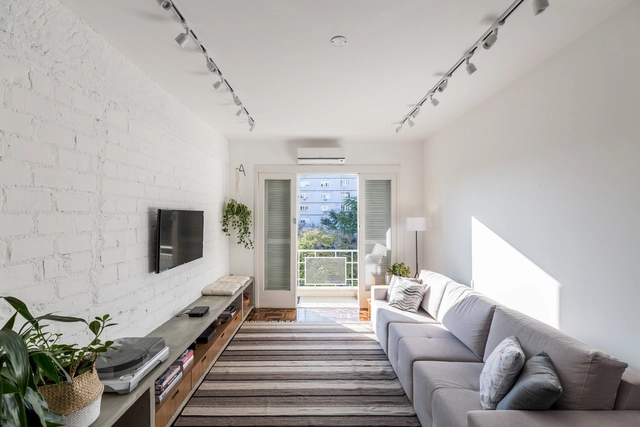
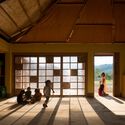
Old and compartmentalized plants, small openings, and lower floors receive scarce natural light. Improving natural lighting in an apartment can be challenging. However, some strategies can help maximize light entry into interiors and bring benefits such as comfort, spaciousness, well-being, and energy savings.
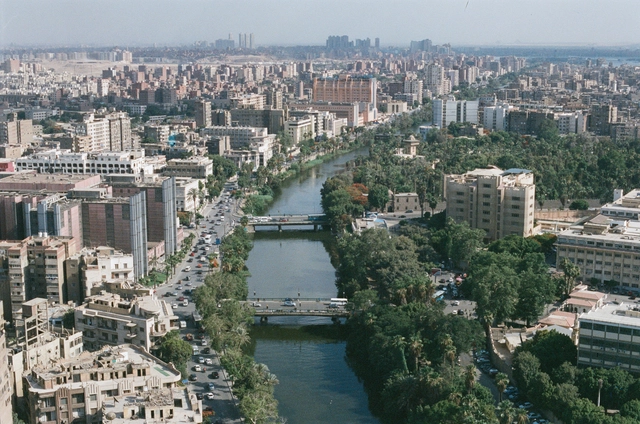
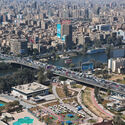
In the center of Cairo, The Nile River, one of the world's most iconic waterways, has shaped the course of civilization for thousands of years. Serving as a vibrant lifeline, connecting neighborhoods, and providing a bustling hub for transportation, the Nile River is an essential natural resource for arid Cairo. Throughout the country’s history, it has often been regarded as the source of life in fertility in its annual flooding, bringing richness to the surrounding lands. Interestingly, this year's edition of La Biennale di Venezia, the Pavilion of Egypt "NiLab" focused on exploring this layered water source and unfolding its effects on the built environment.
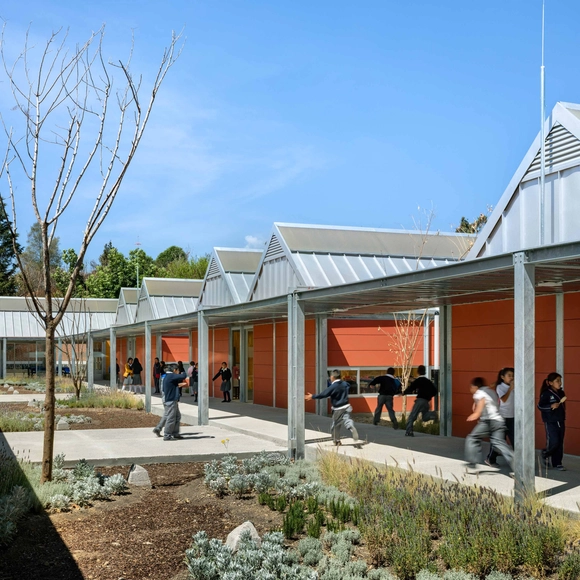
On January 24th, the fifth edition of the 'International Education Day' was celebrated under the slogan "Invest in people, prioritize education". Proclaimed by the United Nations General Assembly, it promotes a strong political mobilization seeking to chart the way and accelerate progress towards the 4th Sustainable Development Goal: Quality Education.
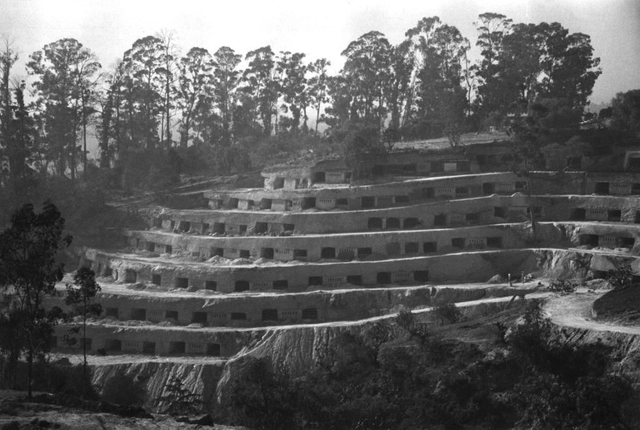
Mexican architect Carlos Lazo's Cuevas Civilizadas project in Mexico City. Image Courtesy of The Isamu Noguchi Foundation and Garden Museum
Contemporary architecture's approach to space is fairly linear: enveloping a specified volume within some form of material construct. But if we take a look at humanity's first intentional dwellings, it becomes clear that they were much less premeditated.
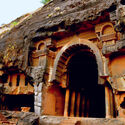
Rather than manmade areas to be furnished with pride, our earliest homes were naturally occurring cave lairs that offered hunter-gatherers temporary protection from the elements and potential predators. It wasn't until the appearance of agriculture that our ancestors took permanent, built residences. To this day, troglodytism — or cave living — continues to be connected to ideas of societal disassociation and a hermetic desire to exist outside of orthodox architectural norms. And yet, from Northern China to Western France and Central Turkey, hundreds of millions of people still choose to spend their lives at least partially underground.
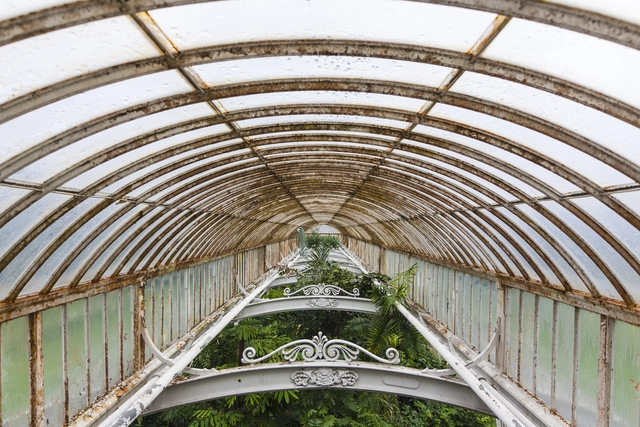
The greenhouse is a commonplace architectural typology, a frequent fixture in a host of cities, built to shield plants from the elements — from excess heat or cold or to prolong the growing season of crops. Evidence of the presence of greenhouses in some form stretches as far back as the 1450s during the Korean Joseon dynasty, but it is in the 1700s that the greenhouse was born as a specific architectural form. Glassmaking improved, and thus the largely transparent, wide-span structures we know today were born. Nestled under the intricate iron metalwork of greenhouses are also wider stories — of control and undeserved wealth, and resistance.
The circular economy concept became more defined in 1990 when it appeared in the article Economics of Natural Resources and the Environment, by British economists and environmentalists David W. Pearce and R. Kerry Turner. At the time, the main purpose of the research was to demonstrate that the traditional economy did not incorporate recycling. In this way, the environment assumed a secondary role, just like a simple waste reservoir. Therefore, the circular economy would gain strength as an opposition to the linear (or traditional) economy, in which the production chain motto is “extract, produce and discard”. A model deeply rooted in our economy that has become unsustainable for several reasons, like the depletion of natural resources and the contamination of the environment resulting from production and disposal.
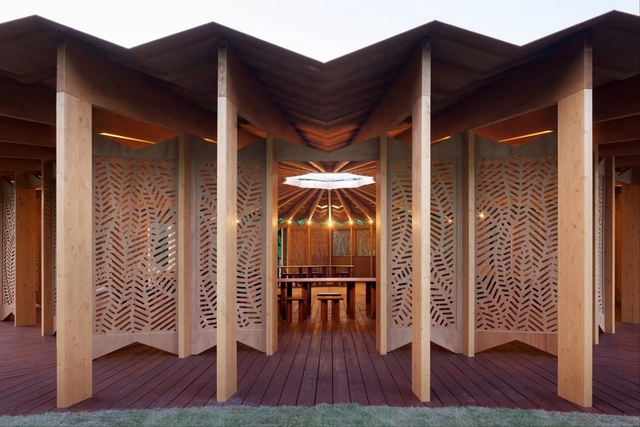
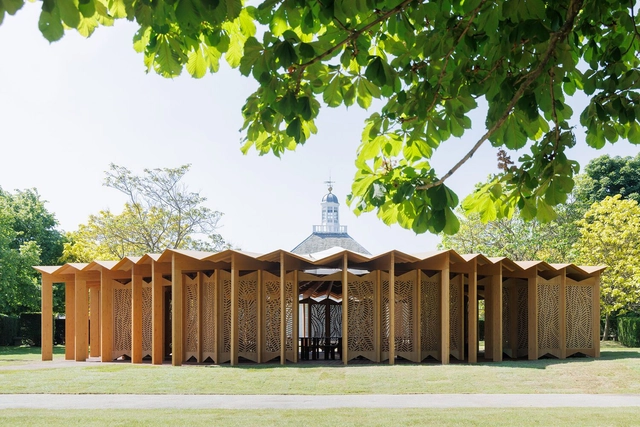
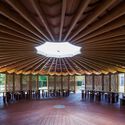
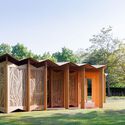
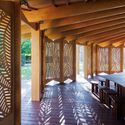
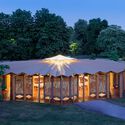
As you make your way through the symphony of wooden colonnades, leafy screen walls, and unfurled roofing, towards the converging veins of flooring and ceiling ribs leading to the light, it feels like a space that was always meant to be there. Part of the park, the pavilion complements the nature around it, reflecting its patterns, and illuminates a main interior feature: a concentric set of tables and stools that inspire people to sit at the moment, hold conversations, and connect with each other. This narrative tells the tale of this year's Serpentine Pavilion, designed by French-Lebanese architect Lina Ghotmeh.
Titled, À table, It draws inspiration from the designer’s connection with nature growing up and is reminiscent of the French call to sit together at a table, share a meal and enter a dialogue. It foregrounds the table as a laboratory of ideas, concerns, joys, connections, and essentially brings people together. It further reflects on the architectural ideals that can provoke and welcome moments of collective conversations.
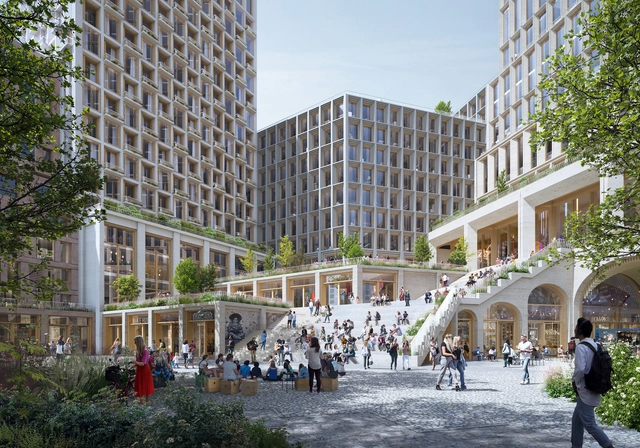
Henning Larsen has been selected as the winner of an international competition for the design of Kurfürstendamm 231, a new mixed-use urban development in western Berlin, Germany. Other finalists in the competition included Cobe, David Chipperfield, and Mäckler Architekten. The winning concept centers the neighborhood around an urban courtyard which acts as a large-scale meeting place for the local community. Nine buildings define the courtyard, including the existing Agrippina House, which is set to be rehabilitated through the project.
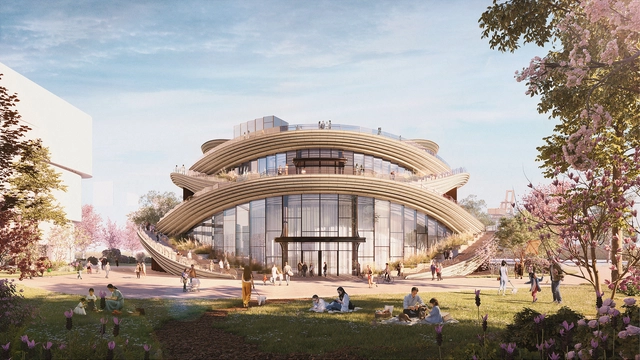
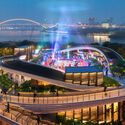
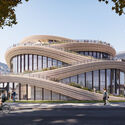
West Bund Orbit. Image Courtesy of Heatherwick Studio
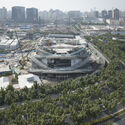
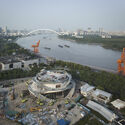
Heatherwick Studio has unveiled the design of an exhibition hall situated on Shanghai's emerging West Bund waterfront, in China. Known as the 'West Bund Orbit,' this building will be the focal point of the new Financial Hub in the Xuhui District. Set to become a prominent landmark along the Huangpu riverside, the project is a pivotal public space for passersby, welcoming visitors to its cultural design program.
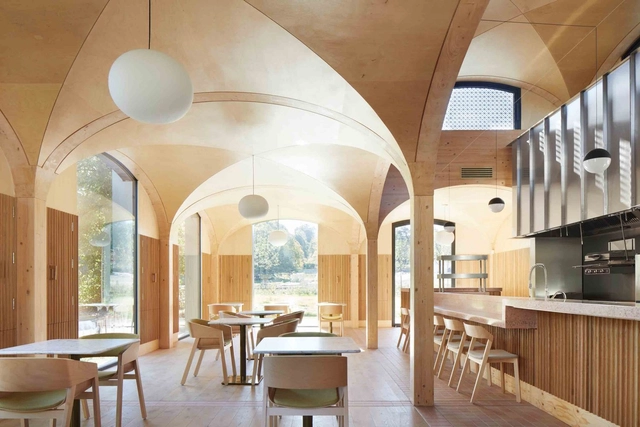
The simplest definition of a vaulted ceiling is a self-supporting arched structure to cover a space. This technique was used extensively during the Roman Empire and the Middle Ages but fell into disuse with the advance of other building solutions that became more practical. However, many contemporary projects still build these elements or highlight the original structures in renovations because of their powerful impact on the building design.
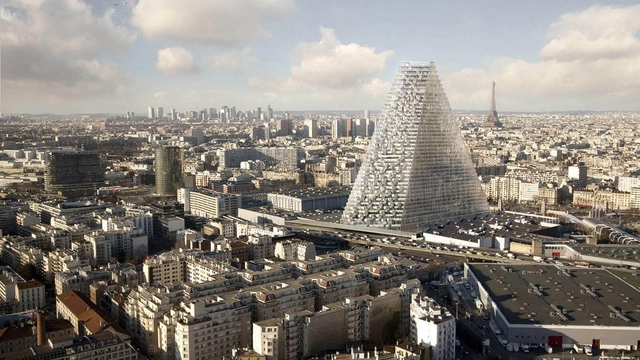
Tour Triangle . Image Courtesy of Herzog & de Meuron
The city of Paris has officially reinstated a rule that limits the height of new buildings in the French capital to 37 meters, or 12 storeys. Among the factors for the decision was the controversy surrounding the construction of the 180-meter-tall Tour Triangle, designed by Herzog & de Meuron, which began in 2021 after more than a decade of legal battles and backlash. The new urban planning regulation is introduced as part of Mayor Anne Hidalgo's Local Bioclimatic Urban Plan, which aims to reduce Paris' carbon emissions.
Asiat-Darse Pedestrian Bridge . Image Courtesy of Counterspace
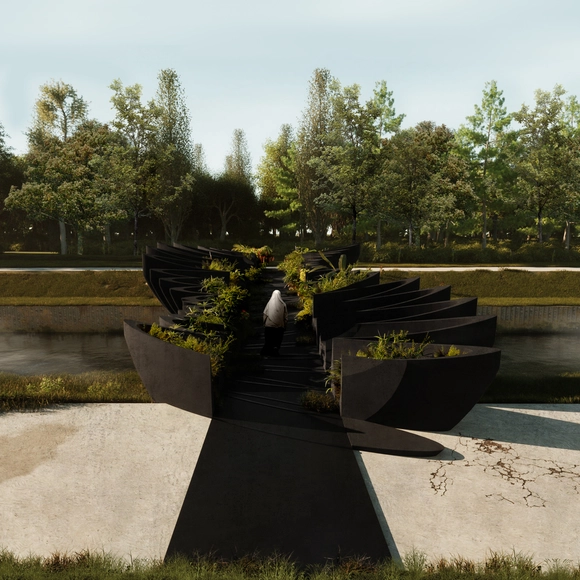
Sumayya Vally, renowned architect and Principal of the Johannesburg/London-based studio Counterspace, won the competition to design the new Asiat-Darse pedestrian bridge in Vilvoorde, Belgium. Counterspace's design concept delved into the history and impact of Paul Panda Farnana, a significant yet under-appreciated figure in the city, who studied the intricate connections between past and future generations of migrant individuals and communities. "The studio has been praised for its research-led approach, which led to the discovery of Farnana and his work, and for shedding light on an otherwise overlooked, vital part of the city’s history". Construction on the Asiat-Darse pedestrian bridge is set to commence in April 2024, with an estimated completion date of December 2025.
In this third feature, we met with co-chairs of Design for Resilient CommunitiesAnna Rubbo, Senior Researcher, Center for Sustainable Urban Development (CSUD), The Climate School, Columbia University, and Juan Du, Professor and Dean of the John H. Daniels Faculty of Architecture, Landscape and Design, University of Toronto.
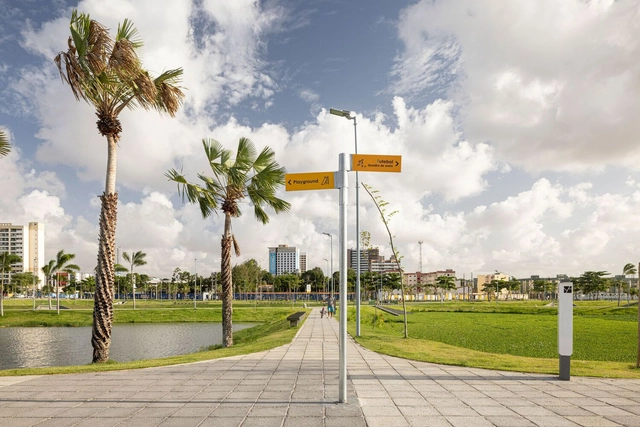
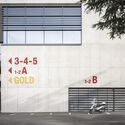
It’s easy to feel lost and anxious in a new environment. Even with the satellite-accurate quality of modern map apps in our back pockets, modern humans still get stressed when their internal map of the immediate area draws a blank.
While digital maps help us to find the fastest route through streets, when our need for direction is most urgent – such as finding the right department in a vast hospital campus, the relief of a toilet in a foreign airport, or the right platform 30 seconds before a train departs – even with innovative IPS technology, digital interfaces still come a distant second to well-placed signs or other, more intuitive, solutions.
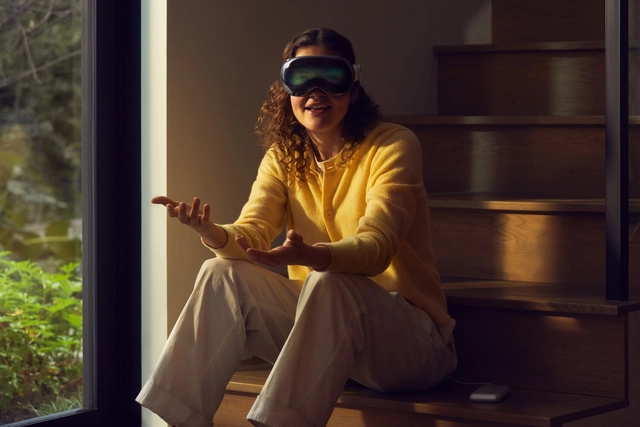
On June 5, Apple launched Apple Vision Pro, a new type of spatial computer that uses augmented reality goggles to allow users to experience a blend between the digital and physical worlds. The device promises to offer its users an infinite canvas for apps, larger and more immersive than traditional displays, while allowing them to stay present and connected to others. It features visionOS, the first spatial operating system to create this new way of interacting with digital content. Previous concepts like the metaverse have promised to transform the way we experience digital worlds, with architects taking the opportunity to delve into the design of restriction-free virtual spaces. Could this new device bring new ways of experiencing three-dimensional spaces, to better integrate architecture with digital environments?
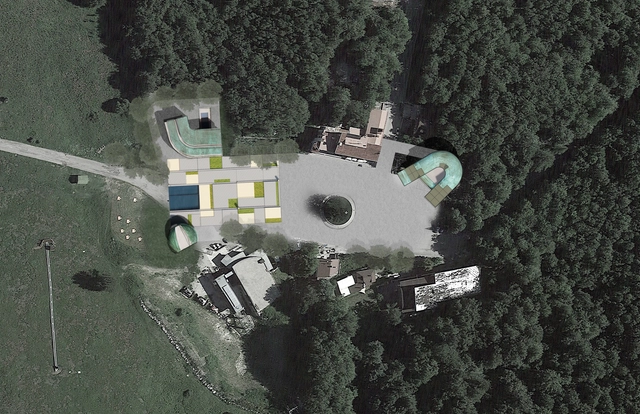
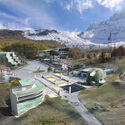
rati di Tivo Piazza at Gran Sasso . Image Courtesy of Steven Holl Architects
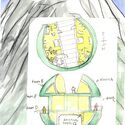
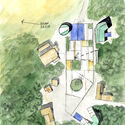
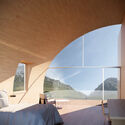
Steven Holl Architects has revealed a plan for the Gran Sasso area in Abruzzo, Italy, specifically in Prati di Tivo. The project aims to develop an area dedicated to tourists and mountaineers, complete with accommodation spaces, pools, spas, a restaurant, and a public plaza with views toward the mountain range. The designs and models of the project, along with the initial watercolor sketches, are presented at the Antonia Jannone Disegni di Architettura exhibition titled "Steven Holl: Half Earth," which will be available for viewing from May 26 to July 14.
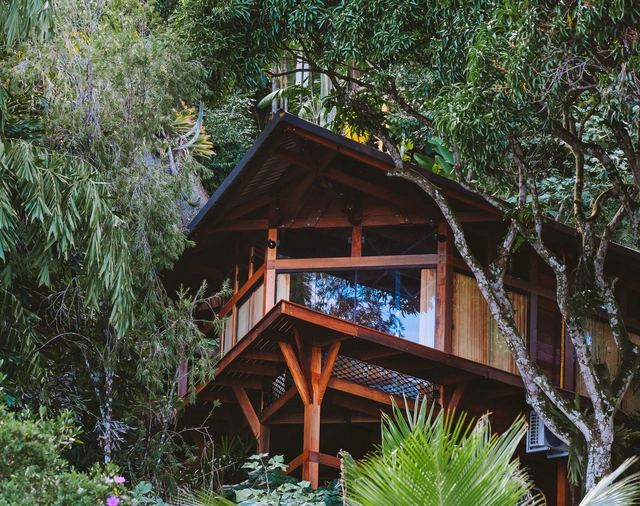
“The first man wanted to build a shelter that would cover him without burying him.” With some logs found in the forest, he built a square covered with straw so that neither the sun nor the rain could enter, and thus, he felt safe. The description above refers, in a simplified way, to the theory of the primitive hut developed by the abbot Marc-Antoine Laugier in the mid-1700s. The small rustic hut described by Laugier is a model upon which he imagined the magnificence of architecture. It provides an important reference point for all speculation about construction foundations and represents the first architectural idea."
The Serpentine has announced the official opening of the 22nd Pavilion, designed by French-Lebanese architect Lina Ghotmeh, at Serpentine South on June 9th, 2023. The Pavilion is titled À table, a French invitation to sit down together at a table and engage in an open dialogue while sharing a meal. The interior space of the pavilion is defined by the large table that encircles the perimeter, offering an opportunity for conviviality and the sharing of ideas, concerns, joys, and traditions. The 300-square-meter structure, inspired by the architect’s Mediterranean heritage, is designed to be lightweight and fully demountable to ensure a minimal carbon footprint. The Serpentine Pavilion will be open and free of charge every day from June to October 2023.