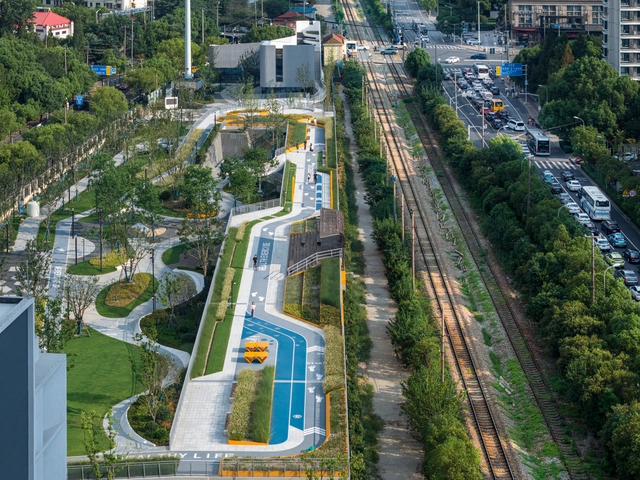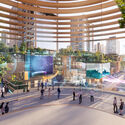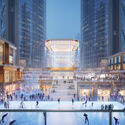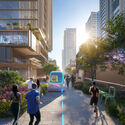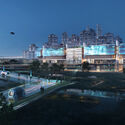
Highway interchanges have evolved from important infrastructures that help distribute traffic to unique landmarks that define cities. As multiple road networks embrace and form distinctive sculptures, these road intersections range from singular bridge connections and roundabouts to numerous, layered and multi-layered interchanges. They twist, turn, loop, and wrap around sparse land, vegetation, or existing structures in a bid to transfer travelers from one roadway to another. However, they also create a moment of enclosure, forming partially bounded areas and a sense of space. These spaces could be viewed as liminal and transitional, with no fixed typology able to be hosted. But that blurring character calls for ideas of urban intervention to disrupt the notion of what these spaces can be. They can be readapted from car-dominant sculptures into more human-friendly places and re-integrated as extended schemes of the city's architecture.
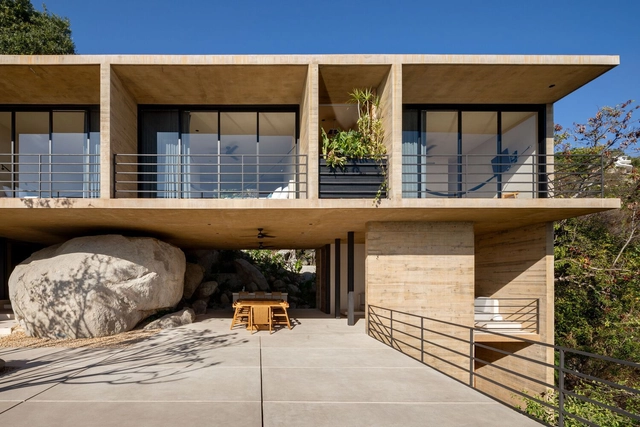
The tropical climate is famous for its exuberant flora. It's no wonder that architectural projects in the region maintain a constant dialogue between nature and the built environment. Biophilia's benefits to users are not news, after all. However, high temperatures, frequent rains, and high humidity levels present unique challenges for reconciling the connection between the interior and exterior with the construction of houses that are comfortable and efficient over time. In the search for solutions that meet needs and demands, we have selected residential projects that appropriate the context to become unique in this environment.
The Graham Foundation has announced the award of 64 new grants to individuals exploring innovative and interdisciplinary ideas that contribute critical perspectives on architecture and design in 2023.
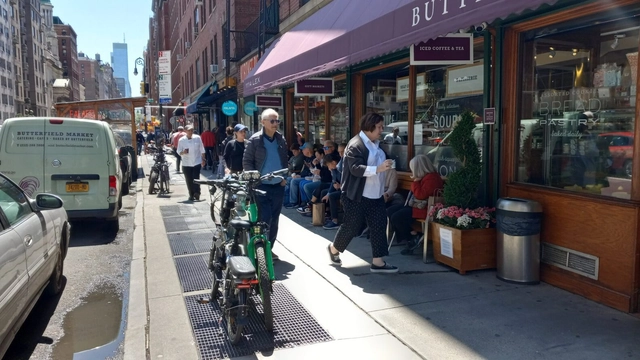
When San Francisco’s MUNI spent big money on a “central subway” to Chinatown, I was doubtful. One recent Saturday, though, I revived the gallery-hopping I did before the pandemic, taking the train from Berkeley into the city, walking to one gallery near Embarcadero Station, then taking a tram past the ballpark to the CalTrain Station, where I switched to another tram to head south to Minnesota Street’s Dogpatch cluster of galleries and artists’ studios.
https://www.archdaily.com/1001256/consider-the-15-mph-cityJohn J. Parman
One of the primary functions of architecture is to provide shelter, fulfilling the physiological and safety needs at the base of Abraham Maslow's hierarchy of human motivation. Throughout history, the need for shelter has been evident in our ancestors’ behavior, who sought refuge in caves to protect themselves from weather conditions and predators. As societies shifted from a nomadic to a sedentary lifestyle and basic needs were easily met, shelters became more advanced, evolving into purpose-built spaces. These early shelters withstood the elements of their time and laid the foundation for modern architecture as we know it today.
Today, extreme weather conditions due to climate change are testing cities, buildings and materials. Venice is flooding, and the Svalbard Global Seed Vault is experiencing melting ice. Without action, conditions will continue to worsen, increasing the need for efficient strategies that allow us to coexist with the environment and to develop more resistant materials for our buildings. An example of these materials of the future is NATURCLAD-B, a high-quality, maintenance-free wood panel system designed for architecture, interior design and construction.
https://www.archdaily.com/1000043/climate-proof-architecture-supertextured-cladding-for-extreme-conditionsEnrique Tovar
Though lesser known, the Hungarian city of Veszprém is one of the oldest and most important cities in the country. Designated as the European Union Capital of Culture for 2023, Veszprém boasts a longstanding history, visible through its evolving, yet well-preserved architectural monuments. In fact, one of the first notable observations as one walks through the city streets is its eclecticism and layers of historically diverse buildings, that sporadically arise. Despite the difference in styles and architectural languages, they collectively tell the story of the county and its spiritual and political relevance. Its pedestrian-friendly streets, many parks and public spaces, connect the Veszprém monuments, as one delves into a historic promenade.
The infamous Unite d' Habitation, the first in Le Corbusier's new line of housing projects that emphasized community living for all the residents, was completed in 1952. For its 70th anniversary, world-renowned photo artist Paul Clemence reveals a unique photo series of the building as it stands today. The photographs honor the construction that initiated the brutalist movement and showcase the infamous project's current condition.
Making a space more practical, facilitating daily tasks, creating unity in interior design, providing different possibilities for an area without modifying it, and adding beauty are not easy tasks. Still, some elements are essential for achieving them: cabinets and shelves.
On the occasion of the sixth edition of the AHI European Heritage Intervention Award, the 26 selected projects within the categories of Built Heritage and Outdoor Spaces have been announced, among a total of 241 projects submitted from 28 different European countries.
The weather across the northern hemisphere is getting warmer, and with rising temperatures comes the urgent need for many of us to spend as much time outside as possible. While a variety of outdoor activities bring with them their own sense of accomplishment and relaxation, one in particular combines feelings of leisure, indulgence and community: outdoor cooking. But how did this tradition start? And what has it evolved into?
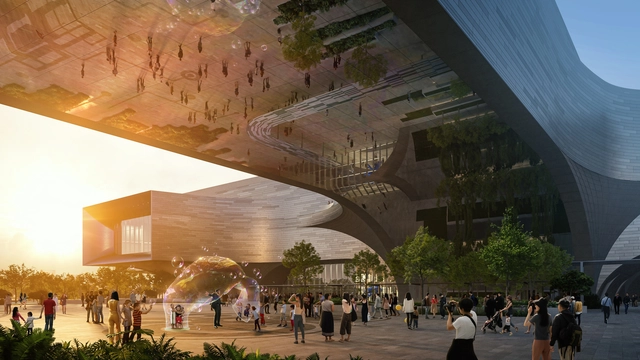
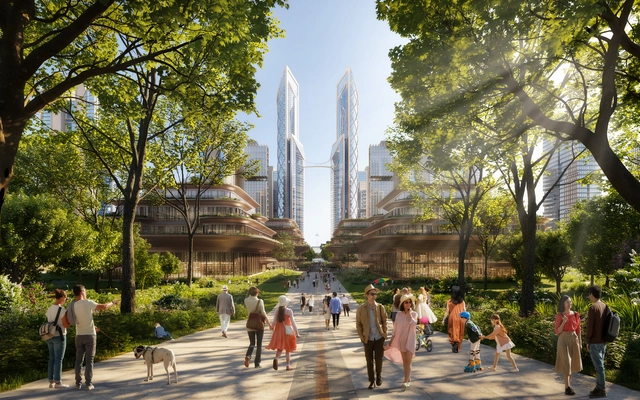
Following an international competition, MVRDV has been selected to lead the design of the Hangzhou Oil Refinery Factory Park, an extensive project aiming to transform the former industrial district into a cultural center set in a green environment. Complete with a new art and science museum, offices, retail, and a wide variety of cultural offerings, the redevelopment demonstrates a way forward from an oil-based infrastructure to more sustainable alternatives, while retaining the memory of the past technologies. The park sits alongside the southern end of China’s Grand Canal, the world’s longest and one of the oldest man-made waterways created to strengthen economic connections between the south and the north of the country.
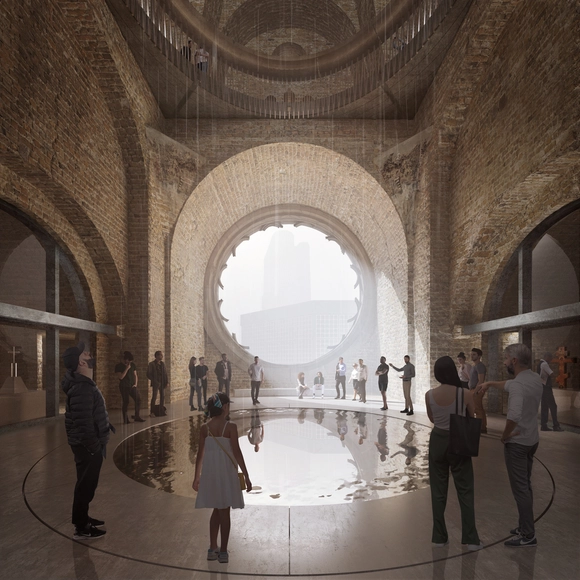
The Natural History Museums of Los Angeles (NHMLAC) announced the selection of Kossmanndejong (KDJ) as the firm that will lead the design of exhibition spaces and develop visitor experiences to reimagine the La Brea Tar Pits. As the world’s only active paleontological research site in an urban setting, KDJ will work through many design verticals, such as architecture, landscaping, and programming. KDJ, based in Amsterdam, the Netherlands, was chosen through an international search and competitive process to provide creative and interpretive strategies for the site-wide redesign in Hancock Park. KDJ will collaborate with the architectural and landscape design team led by WEISS/MANFREDI and Los Angeles-based Gruen Associates, who NHMLAC recently named Executive Architect of the Year.
The concept of sustainability emerged at the United Nations Conference on the Human Environment (UNCHE) in Stockholm in 1972 and was coined by Norwegian Gro Brundtland in the report "Our Common Future" (1987). According to this definition, the sustainable use of natural resources should "meet the needs of the present generation without compromising the ability of future generations to meet their own needs." However, despite the urgency of the concept and the constant evolution it has undergone over time, its application is often restricted to the controlled use of natural resources and the preservation of wildlife. In other words, it treats the situation from the perspective of "man versus nature," as a dichotomous view, with the loss of a holistic perspective.
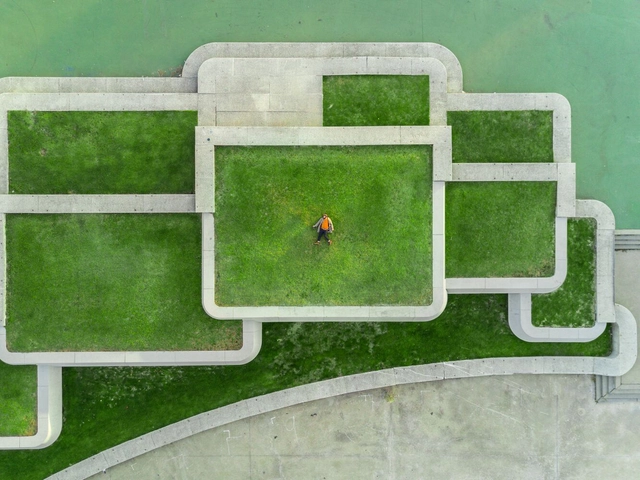
Las Palmas, Canary Islands. Drone photo by @sebastien.nagy
Fascinating and photogenic, colorful cities often catch the eye not only of the thousands of tourists visiting every year but also of many architects around the world. From an aerial viewpoint - which happens to be how many visitors get their first glimpse of these cities from the window of an airplane - one can see the colorful picture created by the many different shades of roofs and rooftops.
There are many different reasons for this diversity of colors. Some cities use specific colors on roofing as a climate strategy, while others simply have a tradition of painting houses in a certain way. In any case, these colorful cities are unquestionably very visually appealing.
In April 2023, India achieved a significant milestone that will shape the trajectory of its urbanization going forward. According to data from the United Nations, the South Asian subcontinent is now home to over 1.4286 billion people, overtaking the former leader China’s count of 1.4257 billion. With a population boom that is estimated to grow at a 0.7% rate annually, India faces several challenges and opportunities in its path to becoming a global power.How will India’s rising demography influence its built environment?
Every year since 1996, the Royal Institute of British Architects (RIBA) has hosted the RIBA London Awards to celebrate outstanding works of architecture from across the United Kingdom. This year, the list of winners includes 52 buildings ranging from a senior day-care center in Blackheath to a cultural hub in Greenwich and a subtle intervention in Hackney’s de Beauvoir conservation area. All RIBA London Awards winners will be considered for the RIBA National Award, scheduled to be announced on June 22nd.
In tropical countries like Brazil, external areas are highly valued in residential projects. The backyards are used differently and configured according to the architectural project. Whether large or small, landscaped, with a pool, or equipped with other features, Brazilian families seek to make the most of their outdoor areas when possible.
Cities are complex ecologies of intersecting natural systems and urban infrastructure. Environmental degradation has brought attention to the asymbiotic relationship between man-made and natural systems. A new economy is emerging where interdependence and environmental stewardship are valued. Designing for a circular economy requires consideration of human habitats not as towns or cities, but as bioregions.