1. ArchDaily
  2. Architecture

Architecture: The Latest Architecture and News

SHoP Architects Completes First Stage of Hudson’s Detroit Mixed-Use Development

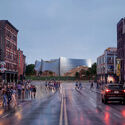
Detroit-based Bedrock development group has announced the completion of the first phase of its Hudson's Detroit mixed-use project in the city center. The project was first unveiled in 2017, when the company presented plans for a 1.2-million-square-foot development designed by SHoP Architects to be built on one of downtown Detroit's long-abandoned sites, formerly occupied by the J.L. Hudson's Department Store. Once the tallest department store in the world and a central gathering place for the city throughout much of the 20th century, the site has now been reimagined as a contemporary urban destination. After nearly a decade of planning and construction, Hudson's Detroit aims to bring new activity and public space to a location emblematic of the city's commercial and cultural past.

SHoP Architects Completes First Stage of Hudson’s Detroit Mixed-Use Development - 1 的图像 4SHoP Architects Completes First Stage of Hudson’s Detroit Mixed-Use Development - 2 的图像 4SHoP Architects Completes First Stage of Hudson’s Detroit Mixed-Use Development - 3 的图像 4SHoP Architects Completes First Stage of Hudson’s Detroit Mixed-Use Development - 4 的图像 4SHoP Architects Completes First Stage of Hudson’s Detroit Mixed-Use Development - More Images+ 11

From Iran to Argentina: 9 Unbuilt Contemporary Residences Exploring Form, Context, and Identity

Subscriber Access | 

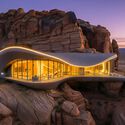
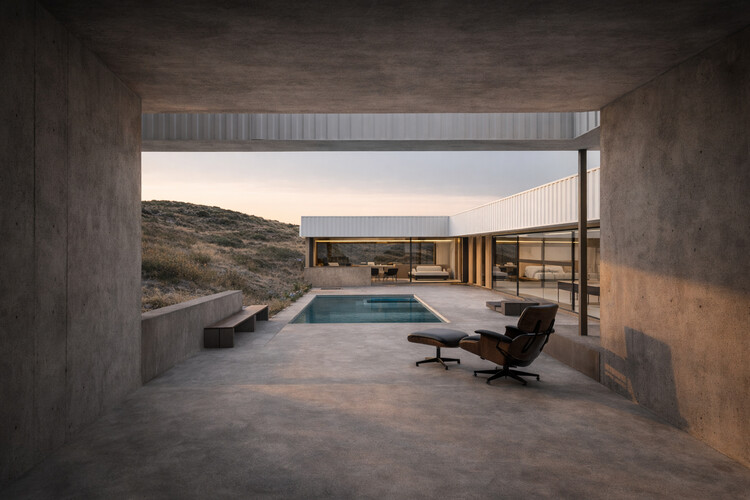
Across geographies and generations, architects are rethinking the idea of home, balancing personal expression, contextual sensitivity, and material clarity. These contemporary residential proposals, submitted by the ArchDaily community, reveal how the house continues to evolve as both an architectural statement and an intimate landscape for living. From the sculptural and futuristic to the grounded and vernacular, they explore how built form balances between identity, environment, and lifestyle in an increasingly complex world.

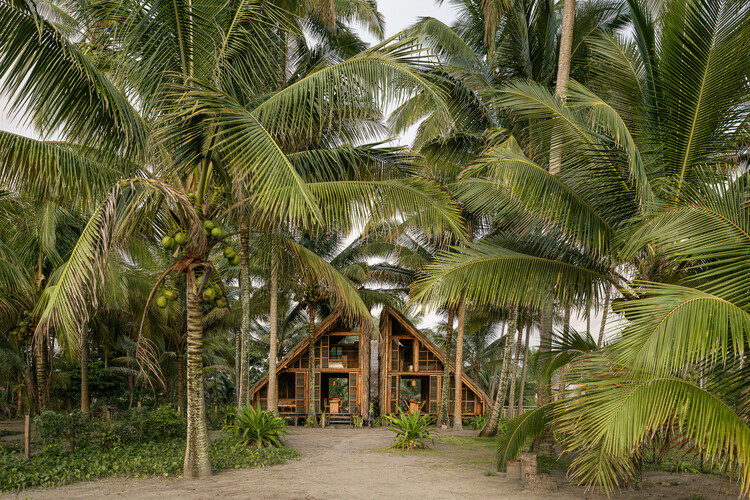
From Iran to Argentina: 9 Unbuilt Contemporary Residences Exploring Form, Context, and Identity - 7 的图像 4From Iran to Argentina: 9 Unbuilt Contemporary Residences Exploring Form, Context, and Identity - 15 的图像 4From Iran to Argentina: 9 Unbuilt Contemporary Residences Exploring Form, Context, and Identity - 28 的图像 4From Iran to Argentina: 9 Unbuilt Contemporary Residences Exploring Form, Context, and Identity - 38 的图像 4From Iran to Argentina: 9 Unbuilt Contemporary Residences Exploring Form, Context, and Identity - More Images+ 47

Rising Architectural Voices and New Commissions: The Week’s Review

This week, architectural conversations were shaped by themes of resilience, equity, and cultural relevance, brought into focus by World Architecture Day. Across global contexts, the discipline continues to expand its understanding of strength, not only as structural endurance but as a framework for inclusive, adaptable, and environmentally conscious design. From strategies for gender-equitable public space to new commissions grounded in memory and reconciliation, recent developments reflect how architecture is increasingly positioned as a tool for social engagement and long-term stewardship in the face of ongoing global challenges.

Rising Architectural Voices and New Commissions: The Week’s Review - Imagen 1 de 4Rising Architectural Voices and New Commissions: The Week’s Review - Imagen 2 de 4Rising Architectural Voices and New Commissions: The Week’s Review - Imagen 3 de 4Rising Architectural Voices and New Commissions: The Week’s Review - Imagen 4 de 4Rising Architectural Voices and New Commissions: The Week’s Review - More Images+ 3

From Saudi Arabia to Uzbekistan: AlMusalla Pavilion Reinstalled for the Inaugural Bukhara Biennial 2025

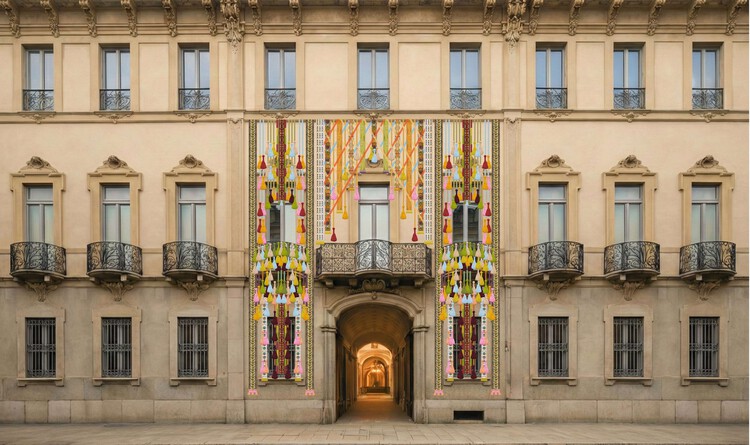
In April 2024, the Diriyah Biennale Foundation announced the AlMusalla Prize, an international architecture competition focused on designing a musalla: a flexible space for prayer and reflection accessible to people of all faiths. The winning project, designed by EAST Architecture Studio in collaboration with artist Rayyane Tabet and engineering firm AKT II, is a modular structure built with materials derived from local date palm waste, including fronds and fibers, and inspired by regional weaving traditions. Installed in the Western Hajj Terminal of King Abdulaziz International Airport in Jeddah, Saudi Arabia, the musalla served for four months during the Islamic Arts Biennale as a space for prayer, welcoming both Muslim and non-Muslim visitors. Conceived to be dismantled and reassembled, the structure was recently relocated to Uzbekistan for the inaugural Bukhara Biennial 2025.

From Saudi Arabia to Uzbekistan: AlMusalla Pavilion Reinstalled for the Inaugural Bukhara Biennial 2025 - Imagen 1 de 4From Saudi Arabia to Uzbekistan: AlMusalla Pavilion Reinstalled for the Inaugural Bukhara Biennial 2025 - Imagen 2 de 4From Saudi Arabia to Uzbekistan: AlMusalla Pavilion Reinstalled for the Inaugural Bukhara Biennial 2025 - Imagen 3 de 4From Saudi Arabia to Uzbekistan: AlMusalla Pavilion Reinstalled for the Inaugural Bukhara Biennial 2025 - Imagen 4 de 4From Saudi Arabia to Uzbekistan: AlMusalla Pavilion Reinstalled for the Inaugural Bukhara Biennial 2025 - More Images+ 58

São Paulo Architecture Biennial Points to Possible Futures for a Planet in Crisis

Subscriber Access | 

There are places in the world where temperatures already exceed fifty degrees, and others where water levels rise meters above expected levels. Meanwhile, in the heart of São Paulo, architects, researchers, artists, and communities come together to ask: how can we inhabit the Earth in times of extremes? This question drives the 14th International Architecture Biennial of São Paulo, held at the Oca in Ibirapuera Park, focusing on the theme Extremes: Architectures for a Hot World. More than an exhibition, it is a call to confront the climate crisis, social inequality, and the urgent need to reinvent ways of living.
Unlike previous editions, which were spread across multiple locations in the city, curators Clevio Rabelo, Jera Guarani, Karina de Souza, Marcella Arruda, Marcos Certo, and Renato Anelli chose to concentrate this year’s edition under a single roof, allowing the curatorial narrative to unfold clearly and directly. The entire journey is there, organized into sections that weave together ancestral practices and emerging technologies, material experiments and critical perspectives, local projects and global debates. The Oca thus becomes a crossroads: a space where diverse architectural visions overlap, offering a platform for collective reflection on society and the environment.

São Paulo Architecture Biennial Points to Possible Futures for a Planet in Crisis - Image 1 of 4São Paulo Architecture Biennial Points to Possible Futures for a Planet in Crisis - Image 2 of 4São Paulo Architecture Biennial Points to Possible Futures for a Planet in Crisis - Image 3 of 4São Paulo Architecture Biennial Points to Possible Futures for a Planet in Crisis - Image 4 of 4São Paulo Architecture Biennial Points to Possible Futures for a Planet in Crisis - More Images+ 20

Architects as Mediators: Three Cases of Dialogue Between Communities, Governments, and Businesses in the Global South

In contemporary times, architectural practice goes far beyond designing buildings or materializing ideas; it has become a multidimensional field, taking on broader and more complex roles. In contexts marked by inequality, environmental crises, and territorial disputes, architecture becomes a tool for negotiation, capable of mediating interests among diverse actors. In this scenario, architects also assume the roles of cultural translators, social facilitators, and, often, advocates for collective rights.

Architects as Mediators: Three Cases of Dialogue Between Communities, Governments, and Businesses in the Global South - Image 1 of 4Architects as Mediators: Three Cases of Dialogue Between Communities, Governments, and Businesses in the Global South - Image 2 of 4Architects as Mediators: Three Cases of Dialogue Between Communities, Governments, and Businesses in the Global South - Image 3 of 4Architects as Mediators: Three Cases of Dialogue Between Communities, Governments, and Businesses in the Global South - Image 4 of 4Architects as Mediators: Three Cases of Dialogue Between Communities, Governments, and Businesses in the Global South - More Images+ 12

Bridging Past and Future: Uzbekistan’s Expanding Cultural Landscape

Uzbekistan's architectural and artistic heritage reflects a layered history shaped by centuries of cultural exchange along the Silk Road. From the monumental ensembles of Samarkand and Bukhara to the scientific and educational institutions of the Timurid era, architecture has long been a vessel of identity and knowledge across the region. In the twentieth century, Tashkent emerged as a new urban laboratory, where modernist ideals met local craft traditions and environmental pragmatism. The city's reconstruction following the 1966 earthquake became a defining moment, fusing Soviet urbanism with regional aesthetics to produce a distinctly Central Asian expression of modernity, one that translated cultural continuity into concrete, glass, and light.

Bridging Past and Future: Uzbekistan’s Expanding Cultural Landscape - Image 1 of 4Bridging Past and Future: Uzbekistan’s Expanding Cultural Landscape - Image 2 of 4Bridging Past and Future: Uzbekistan’s Expanding Cultural Landscape - Image 3 of 4Bridging Past and Future: Uzbekistan’s Expanding Cultural Landscape - Image 4 of 4Bridging Past and Future: Uzbekistan’s Expanding Cultural Landscape - More Images+ 4

Make Space for Girls Launches Strategy for Gender-Inclusive Public Spaces

Make Space for Girls (MSFG) is a London-based charity that campaigns for public spaces and parks in the United Kingdom to be more inclusive of teenage girls. The organization conducts research on how public spaces are used and designed, raises awareness about perceived inequalities in their use, and collaborates with public and private institutions to promote the representation of teenage girls in the planning and design of outdoor environments. Their research indicates that their exclusion from the design of parks and public spaces often leaves them without places where they feel welcomed or valued, and that parks and public spaces for older children and teenagers are currently designed for the default male. From 8 to 15 October, the organization is running a fundraising campaign to support the implementation of its new three-year strategy aimed at promoting more inclusive public spaces.

Make Space for Girls Launches Strategy for Gender-Inclusive Public Spaces - Image 1 of 4Make Space for Girls Launches Strategy for Gender-Inclusive Public Spaces - Image 2 of 4Make Space for Girls Launches Strategy for Gender-Inclusive Public Spaces - Image 3 of 4Make Space for Girls Launches Strategy for Gender-Inclusive Public Spaces - Image 4 of 4Make Space for Girls Launches Strategy for Gender-Inclusive Public Spaces - More Images

CarbonSpace: Designing with Carbon from the First Sketch

Subscriber Access | 

Every act of building begins with the transformation of raw materials, energy, and land, and this inevitably entails environmental impact. This encompasses all the changes a process triggers in the natural world: from resource extraction to pollutant emissions, from energy consumption to biodiversity loss. Measuring this is complex, as it spans multiple dimensions. Carbon has emerged as the common metric, translating these effects into greenhouse gas emissions (CO₂ equivalent) directly linked to global warming. This standardization has made it omnipresent and comparable across materials, systems, and sectors. Reducing carbon emissions, therefore, means addressing the root of global warming, which is a particularly urgent task in the construction industry, responsible for about 39% of global emissions. In response to this challenge, MVRDV NEXT, the innovation and digital tools division of the Dutch architectural firm, launched CarbonSpace, a free, open platform that brings carbon accounting to the architect's desk, right at the napkin sketch stage.

CarbonSpace: Designing with Carbon from the First Sketch - Image 1 of 4CarbonSpace: Designing with Carbon from the First Sketch - Image 2 of 4CarbonSpace: Designing with Carbon from the First Sketch - Image 3 of 4CarbonSpace: Designing with Carbon from the First Sketch - Image 4 of 4CarbonSpace: Designing with Carbon from the First Sketch - More Images+ 19

Age of Nature: New DAC Exhibition Explores the Future Relationship Between Architecture and Nature

Opening on World Architecture Day, October 6, 2025, "Age of Nature" is a new exhibition at the Danish Architecture Center (DAC), on view until May 17, 2026. Presented in DAC's largest exhibition space, the show examines how architecture can evolve to support both human life and biodiversity, addressing one of the most pressing challenges of the time: redefining the relationship between the built environment and the natural world.

Age of Nature: New DAC Exhibition Explores the Future Relationship Between Architecture and Nature - Image 1 of 4Age of Nature: New DAC Exhibition Explores the Future Relationship Between Architecture and Nature - Image 2 of 4Age of Nature: New DAC Exhibition Explores the Future Relationship Between Architecture and Nature - Image 3 of 4Age of Nature: New DAC Exhibition Explores the Future Relationship Between Architecture and Nature - Image 4 of 4Age of Nature: New DAC Exhibition Explores the Future Relationship Between Architecture and Nature - More Images+ 7

Zaha Hadid Architects and Bureau Cube Partners Design Mixed-Use Alta Bank Tower in New Belgrade, Serbia

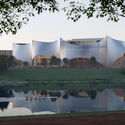
Zaha Hadid Architects, in collaboration with Bureau Cube Partners, have won an international competition to design a new tower for Alta Bank in New Belgrade, Serbia. Conceived as a mixed-use development, the project integrates the bank's new headquarters with residential units, rental office spaces, and retail and dining areas within a public plaza. The design aims to provide a future-oriented base of operations that reflects evolving patterns of work and urban life, continuing the collaboration between the two firms following their winning proposal for the new Nikola Tesla Museum in Belgrade in 2025.

OUALALOU+CHOI Wins Competition for the New Casa Sud Train Station in Casablanca

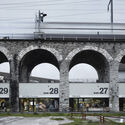
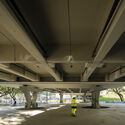
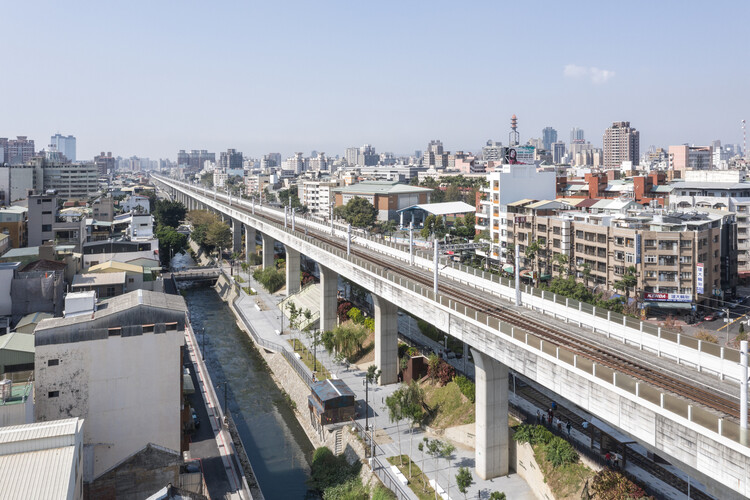
OUALALOU+CHOI has won the international competition for the design of the new Casa Sud Train Station in Casablanca, Morocco. Based in Paris and Casablanca, the architecture and urban design practice led by Tarik Oualalou and Linna Choi is recognized for its work exploring the relationship between architecture, infrastructure, and public life. The winning proposal envisions the new station as both an infrastructural hub and a civic landmark, addressing the needs of a rapidly expanding metropolis while contributing to the urban and social fabric of Morocco's economic capital.

OUALALOU+CHOI Wins Competition for the New Casa Sud Train Station in Casablanca - Imagen 1 de 4OUALALOU+CHOI Wins Competition for the New Casa Sud Train Station in Casablanca - Imagen 2 de 4OUALALOU+CHOI Wins Competition for the New Casa Sud Train Station in Casablanca - Imagen 3 de 4OUALALOU+CHOI Wins Competition for the New Casa Sud Train Station in Casablanca - Imagen 4 de 4OUALALOU+CHOI Wins Competition for the New Casa Sud Train Station in Casablanca - More Images+ 2

Foster + Partners and MANICA to Design New Stadium as Milan Approves Sale of San Siro

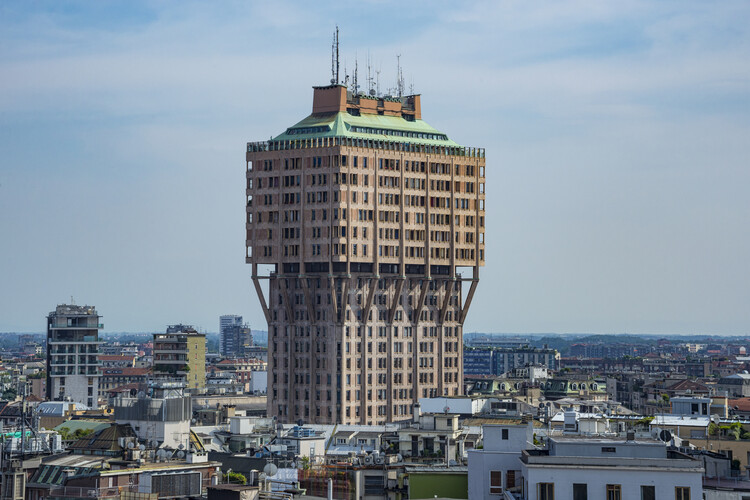
On September 30, 2025, AC Milan and Internazionale Milano football clubs announced that the Milan City Council had given preliminary approval for the sale of San Siro Stadium, officially named the Giuseppe Meazza Stadium, one of the city's most recognized sports venues. Located about six kilometers from central Milan, the stadium is among the largest in Europe and was spared from demolition in 2023 after the Regional Commission for the Cultural Heritage of Lombardy recognized its cultural significance.

According to the clubs' joint statement, the City Government's latest decision will enable the design of a new international-standard stadium alongside an urban regeneration project for the surrounding area, reportedly led by Foster + Partners and MANICA. The announcement comes only months before the Milano-Cortina 2026 Winter Olympics, an event that will initiate the farewell period for San Siro as an active venue.

Foster + Partners and MANICA to Design New Stadium as Milan Approves Sale of San Siro - Image 1 of 4Foster + Partners and MANICA to Design New Stadium as Milan Approves Sale of San Siro - Image 2 of 4Foster + Partners and MANICA to Design New Stadium as Milan Approves Sale of San Siro - Image 3 of 4Foster + Partners and MANICA to Design New Stadium as Milan Approves Sale of San Siro - Image 4 of 4Foster + Partners and MANICA to Design New Stadium as Milan Approves Sale of San Siro - More Images

In alliance with Architonic
Check the latest In ArchitectureCheck the latest In ArchitectureCheck the latest In Architecture

Check the latest In Architecture