


Dafa Canal Tourist Information Center / ZJJZ


https://www.archdaily.com/908179/dafa-canal-tourist-information-center-zjjz舒岳康
OMA's Latest Fails to Live Up To Its Own Pedagogy
This article was originally published on Metropolis Magazine as "In His Latest Residential Building, OMA's Reinier de Graaf Doesn't Practice What He Preaches".
Last month in Stockholm, OMA partner Reinier de Graaf took a not-so-sly swipe at Bjarke Ingels: “I’m not a reincarnation of Harry Potter,” he said to a packed lecture theater at Stockholm’s KTH University.

https://www.archdaily.com/908027/omas-latest-a-pedagogical-failureGeorge Kafka
The Project in a Small Japanese Village Setting the Standard for Zero-Waste Architecture
_(1).jpg?1543159550&format=webp&width=640&height=580)
Nestled in the steep gorges and river valleys of Japan’s Tokushima prefecture is Kamikatsu - a small town seemingly like any other. But Kamikatsu, unlike its neighbors (or indeed, most towns in the world), is nearly entirely waste-free.
Since 2003 - years before the movement gained widespread popularity - the town has committed to a zero-waste policy. The requirements are demanding: waste must be sorted in more than 30 categories, broken or obsolete items are donated or stripped for parts, unwanted items are left in a store for community exchange. But the residents’ efforts over the years have paid off- nearly 80% of all the village’s waste is recycled.
.jpg?1542631996&format=webp&width=230&height=230&crop=true)
.jpg?1542632034&format=webp&width=230&height=230&crop=true)
.jpg?1542631779&format=webp&width=230&height=230&crop=true)
.jpg?1542631887&format=webp&width=230&height=230&crop=true)
_(1).jpg?1543159550)
https://www.archdaily.com/906114/the-project-in-a-small-japanese-village-setting-the-standard-for-zero-waste-architectureKatherine Allen
Modern as Metaphor: Where the Tate Stands in a Post-Brexit World
.jpg?1467325496&format=webp&width=640&height=580)
Editor's Note: This article was originally published on 30 June, 2016. While the debate surrounding the terms of the UK's exit from the European Union continues to rage, the Tate remains a steady icon for London and the UK. But the building has also become a symbol in a new fight: one between the capital's elites and the general public. As the political sands in Britain continue to shift, it may be interesting to see how - and with whom - the building aligns in the future. - Katherine Allen, Managing Editor
https://www.archdaily.com/790590/modern-as-metaphor-where-the-tate-stands-in-a-post-brexit-worldVladimir Gintoff
Coal Drops Yard Photographed Through the Lens of Laurian Ghinitoiu
.jpg?1542134519&format=webp&width=640&height=580)
Photographer Laurian Ghinitoiu has released new images of Heatherwick Studio’s Coal Drops Yard in London’s King's Cross. Unveiled to the public last month, the project includes two heritage rail buildings from the 1850s brought together as a new shopping district. The design extends the inner gabled roofs of Victorian coal drops to link the two viaducts together around shopping and public space.
.jpg?1542036899&format=webp&width=230&height=230&crop=true)
.jpg?1542037166&format=webp&width=230&height=230&crop=true)
.jpg?1542036783&format=webp&width=230&height=230&crop=true)
.jpg?1542036858&format=webp&width=230&height=230&crop=true)
.jpg?1542134519)
https://www.archdaily.com/905706/coal-drops-yard-photographed-through-the-lens-of-laurian-ghinitoiuEric Baldwin
Bjarke Ingels' Burning Man ORB Captured through the Lens of Laurian Ghinitoiu
.jpg?1542028753&format=webp&width=640&height=580)
One of the star attractions of 2018’s Burning Man Festival was the ORB, designed and overseen by Bjarke Ingels, Iacob Lange & Laurent de Carniere. The 1/500,000 scale sphere of the Earth’s surface was designed to conceptually reference earth and human expression, intending to leave no trace following its deflation.
The designers wanted the giant sphere to act as a guiding landmark for festival-goers, and set up an Indiegogo campaign back in July to raise the remaining funding for the installation. In total, the team invested 30 tons of steel, 1,000 welding and sewing hours, and $300,000 of their own funds to make the ORB a reality.
https://www.archdaily.com/905681/bjarke-ingels-burning-man-orb-captured-through-the-lens-of-laurian-ghinitoiuNiall Patrick Walsh
79&PARK / BIG
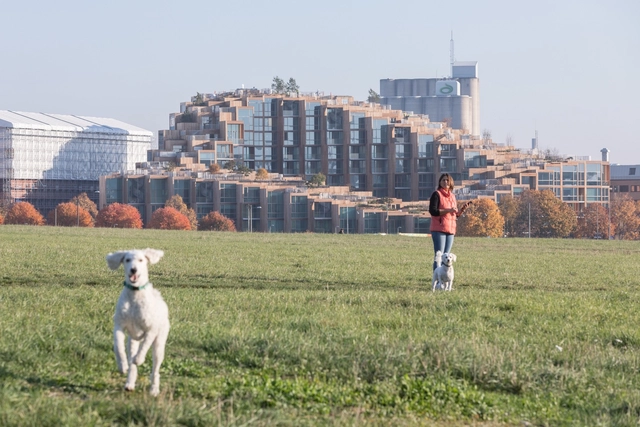


-
Architects: Bjarke Ingels Group
- Area: 25000 m²
- Year: 2018
-
Manufacturers: HB Trapper
https://www.archdaily.com/905534/79-and-park-bigDiego Hernández
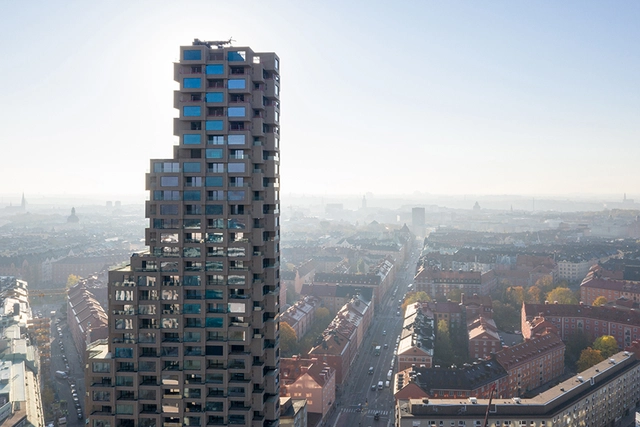
Norra Tornen / OMA | Reinier de Graaf
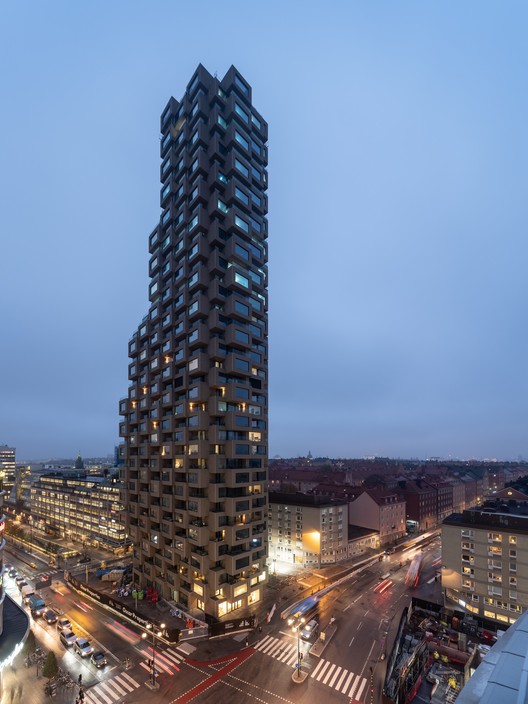


https://www.archdaily.com/905500/norra-tornen-oma-reinier-de-graafDiego Hernández
WeGrow / Bjarke Ingels Group
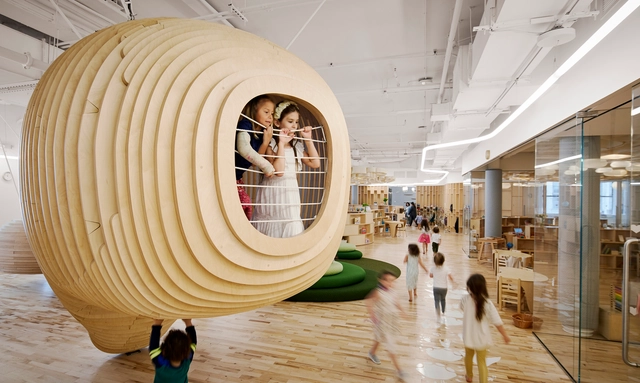


-
Architects: Bjarke Ingels Group
- Area: 930 m²
- Year: 2018
https://www.archdaily.com/904957/wegrow-bigMaría Francisca González
Best Small Chapel Architecture & Design


This week we’ve selected the best chapels previously published on our site. They reveal different ways of designing a small and sacred space. For inspiration on how to create these atmospheres, integrate different materials, and make proper use of light, we present 32 remarkable examples.
https://www.archdaily.com/891601/best-small-chapel-architecture-designMaría Francisca González
This Week in Architecture: More than Visual
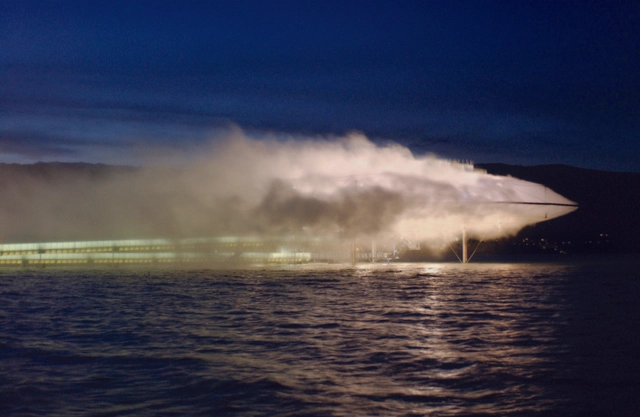
Architecture is a profession deeply dependent on the visual. It’s imagined, sold, critiqued and consumed almost entirely on the strength (or lack thereof) of drawings. We pick and prod at images presented at angles we’ll never be able to see, admiring the architectonic qualities of elements we’ll never actually experience.
https://www.archdaily.com/904318/this-week-in-architecture-more-than-visualKatherine Allen
Life after Serpentine: Second Lives of Architecture's Famed Pavilions
.jpg?1539856634&format=webp&width=640&height=580)
If the surest sign of summer in London is the appearance of a new pavilion in front of the Serpentine Gallery, then it’s perhaps fair to say that summer is over once the pavilion is taken down. The installations have gained prominence since its inaugural edition in 2000, acting as a kind of exclusive honor and indication of talent for those chosen to present; celebrated names from the past names include Zaha Hadid, Rem Koolhaas, and Olafur Eliasson.


.jpg?1539856634)
https://www.archdaily.com/903223/life-after-serpentine-second-lives-of-some-of-architectures-famed-pavilionsKatherine Allen
AD Classics: New Museum / SANAA
.jpg?1463595741&format=webp&width=640&height=580)
This article was originally published on July 22, 2016. To read the stories behind other celebrated architecture projects, visit our AD Classics section.
The New Museum is the product of a daring vision to establish a radical, politicized center for contemporary art in New York City. With the aim of distinguishing itself from the city’s existing art institutions through a focus on emerging artists, the museum’s name embodies its pioneering spirit. Over the two decades following its foundation in 1977, it gained a strong reputation for its bold artistic program, and eventually outgrew its inconspicuous home in a SoHo loft. Keen to establish a visual presence and to reach a wider audience, in 2003 the Japanese architectural firm SANAA was commissioned to design a dedicated home for the museum. The resulting structure, a stack of rectilinear boxes which tower over the Bowery, would be the first and, thus far, the only purpose-built contemporary art museum in New York City.[1]
.jpg?1463596013&format=webp&width=230&height=230&crop=true)
.jpg?1463595919&format=webp&width=230&height=230&crop=true)
.jpg?1463596094&format=webp&width=230&height=230&crop=true)
.jpg?1463595878&format=webp&width=230&height=230&crop=true)
.jpg?1463595741)
https://www.archdaily.com/787779/ad-classics-new-museum-new-york-city-sanaa-kazuyo-sejima-ryue-nishizawaBart Bryant-Mole
AD Classics: Master Plan for Chandigarh / Le Corbusier
.jpg?1487999073&format=webp&width=640&height=580)
On August 15, 1947, on the eve of India’s independence from the United Kingdom, came a directive which would transform the subcontinent for the next six decades. In order to safeguard the country’s Muslim population from the Hindu majority, the departing colonial leaders set aside the northwestern and eastern portions of the territory for their use. Many of the approximately 100 million Muslims living scattered throughout India were given little more than 73 days to relocate to these territories, the modern-day nations of Pakistan and Bangladesh. As the borders for the new countries were drawn by Sir Cyril Radcliffe (an Englishman whose ignorance of Indian history and culture was perceived, by the colonial government, as an assurance of his impartiality), the state of Punjab was bisected between India and Pakistan, the latter of which retained ownership of the state capital of Lahore.[1] It was in the wake of this loss that Punjab would found a new state capital: one which would not only serve the logistical requirements of the state, but make an unequivocal statement to the entire world that a new India—modernized, prosperous, and independent—had arrived.
.jpg?1487999184&format=webp&width=230&height=230&crop=true)
.jpg?1487999406&format=webp&width=230&height=230&crop=true)
.jpg?1487999574&format=webp&width=230&height=230&crop=true)
.jpg?1487999153&format=webp&width=230&height=230&crop=true)
.jpg?1487999073)
https://www.archdaily.com/806115/ad-classics-master-plan-for-chandigarh-le-corbusierLuke Fiederer

.jpg?1537159215&format=webp&width=230&height=230&crop=true)
.jpg?1537159199&format=webp&width=230&height=230&crop=true)

.jpg?1537159222&format=webp&width=230&height=230&crop=true)
.jpg?1537159294)
Shortlist for the 2018 Architectural Photography Awards Revealed
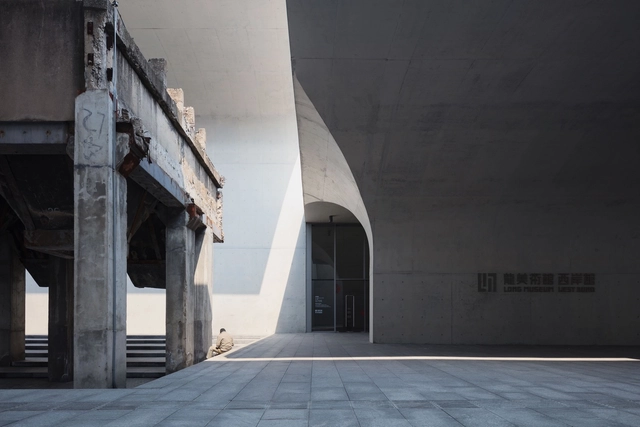
The shortlist for the 2018 Architectural Photography Awards have been revealed, bringing together 20 atmospheric images of the built environment. Categories this year ranged from a “portfolio of an individual building to a single abstract: with a professional camera or on a mobile phone.”
The 2018 edition saw a record number of entries, with photographs from 47 countries, including the UK (28%), USA (20%), Germany (6%), and China (5%). The 20 photographs were selected from four categories: exteriors, interiors, sense of place, and buildings in use.
https://www.archdaily.com/903008/shortlist-for-the-2018-architectural-photography-awards-revealedNiall Patrick Walsh
Block+Void House / Bundschuh Architekten


-
Architects: Bundschuh Architekten
- Area: 1100 m²
- Year: 2017
https://www.archdaily.com/902003/block-plus-void-house-bundschuh-architektenPilar Caballero
The Technology Before the Wheel: A Brief History of Dry Stone Construction
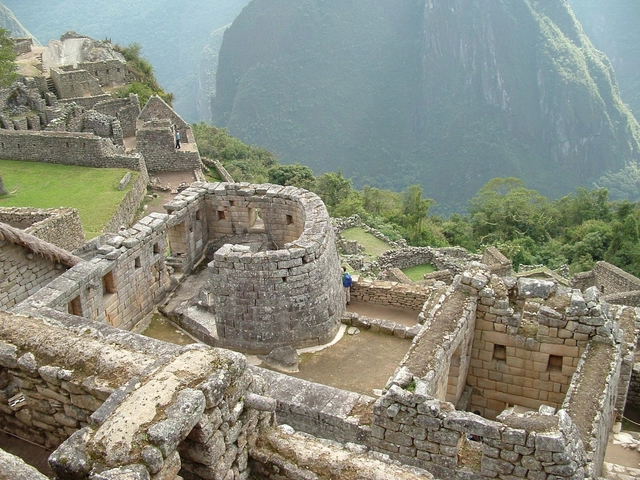
A collection of stones piled one on top of the other, dry stone is an iconic building method found just nearly everywhere in the world. Relying solely on an age-old craft to create sturdy, reliable structures and characterised by its rustic, interlocking shapes, the technique has deep roots that stretch back even before the invention of the wheel. Its principles are simple: stack the stones to create a unified, load-bearing wall. But the efficient, long-lasting results, coupled with the technique’s cultural significance, have lead to continued use and updated interpretations all the way to contemporary architecture today.


https://www.archdaily.com/899616/pre-dating-writing-and-the-wheel-a-brief-history-of-dry-stone-constructionTom Dobbins