Photographer Laurian Ghinitoiu has captured the latest photos of BIG's courtscraper, VIA 57WEST. Exploring the urban context of this unconventional high-rise, the images illustrate how the building's swooping facade and peak appear from different sight lines.
One of the most controversial stories to hit the architectural news last week was the revelation by Blair Kamin of the Chicago Tribune that one of the winners of the AIA Chicago chapter's Design Excellence Awards was given on the basis of an image in which unsightly elements of the building's design had been removed in Photoshop.
The "war on reality" (as one commenter ironically referred to it) is a topic that polarizes even the most level-headed people, with many arguing over the effect that such Photoshop trickery has on our perception of our world. However, with many people unaware of what goes on behind the scenes, we decided to reach out to some photographers for a candid look at exactly what role Photoshop has in the everyday processes of architectural photography, and where they draw the line regarding the ethical documentation of buildings. Read on to find out what they had to say.
For its fall season of architecture events, the Royal Academy’s working theme is “Architecture and Freedom: a changing connection,” in a program conceived and organized by Architecture Programme Curator, Owen Hopkins. One of these events was a recent lecture by Patrik Schumacher, Director of Zaha Hadid Architects, and ardent promoter of Parametricism. In his lecture, what starts out with a brief exercise in damage control over the barrage of criticism recently endured by the firm, emerges as an impassioned discussion of architectural politics, design philosophies, and social imperatives.
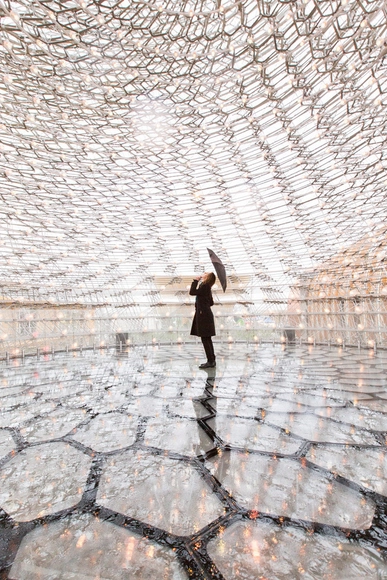
As the Milan Expo 2015 comes to a close, the winners of its best pavilions are being revealed. Wolfgang Buttress' UK Pavilion has taken top honors being named the exhibition's "Best Pavilion for Architecture & Landscape." A crowd favorite, the pavilion caught the attention of the world with it's mesmerizing (and photogenic) "beehive" made of 169,300 individual aluminium components that allowed visitors to experience the life of a bee.
Photographer Laurian Ghinitoiu has shared with us images of OMA's recently completed Garage Museum of Contemporary Art in Moscow. The museum project repurposed the 1960s Vremena Goda restaurant in Gorky Central Park and transformed it into a modern exhibition space adorned with Soviet era tiles, mosaics and bricks preserved from its previous life.
"The building offers a wide range of interior conditions for the exhibition of art beyond the ubiquitous “white cube,” described OMA in the project's description. Scroll down for more images of the museum by Ghinitoiu.
“There is a certain tradition, history, and continuity that you can read in European architecture” - Spela Videcnik, OFIS arhitekti
A product of context and history, Europe has influenced the architecture world in a way that perhaps no other continent has. The continent is the topic of the latest video from the Fundació Mies van der Rohe, produced in relation to their European Union Prize for Contemporary Architecture, in which prize-nominated architects from 16 European cities are interviewed on what they believe brings them together, and what makes them different.
As a US citizen who has previously lived in Europe for two years, I was struck by the essential question prompted by the video: “Is there a European identity in architecture?” And if so, what exactly is it? To try to answer this question, I sat down with ArchDaily’s managing editor Rory Stott - a Brit - to debate differing perspectives.
Photographer Laurian Ghinitoiu has shared with us this sneak peek of Zaha Hadid Architects' latest completed work, the Dominion Tower in Moscow. Led by Project Director Christos Passas, the building's eight rectilinear stories are each staggered and cantilevered over the one below and feature ribbon windows with a trademark Zaha Hadid twist, while the interior features a dramatic top-lit atrium criss-crossed by stairs. Read on to see Ghinitoiu's full photo set.
In May, OMA celebrated the opening of Fondazione Prada. Set out to “expand the repertoire of spatial typologies in which art can be exhibited and shared with the public,” the project resulted in an “unusually diverse environment” staged within a historic 20th-century distillery south of Milan’s city center that goes beyond the traditional white museum box.
The Jewish Museum in Berlin opened its doors 14 years ago today. Inspired by a lecture given by Daniel Libeskind, Berlin-based photographer Laurian Ghinitoiu captured the building and its dramatic plays of light and texture in a series of 20 photographs.
https://www.archdaily.com/773361/daniel-libeskinds-jewish-museum-berlin-photographed-by-laurian-ghinitoiuAD Editorial Team
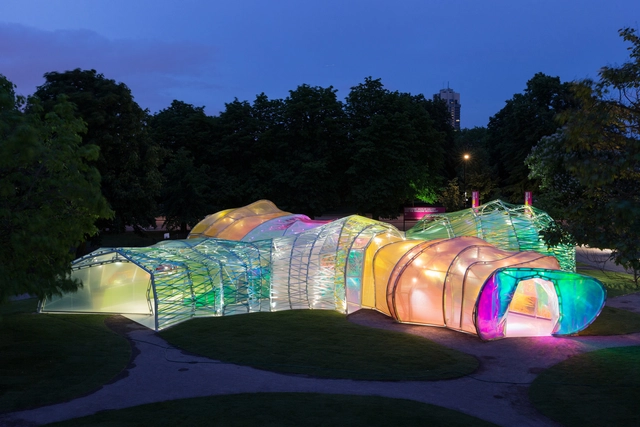
We're just three days into the four-month display of SelgasCano's 2015 Serpentine Gallery Pavilion and the comments it has generated from ArchDaily readers have already been as colorful as the pavilion itself - with criticisms ranging from "worst Serpentine Gallery Pavilion ever" to "trash bag monster" and a few other comparisons that I'd rather not even repeat. This may surprise some people, but at ArchDaily we do actually read the comments section, and we get it: unless you're the brave and persistent soul who comments as "notyourproblem," who thinks "it must be exciting getting inside those tunnels," there's a good chance that you hate this pavilion - and I don't use the word "hate" lightly.
But is this violent dismissal warranted? In short, is SelgasCano's pavilion as bad as you probably think it is? Fortunately, we're not the only publication giving the pavilion extensive coverage: as usual the Serpentine Gallery has attracted a number of the UK's most well-known critics. Find out what they thought of the pavilion after the break.
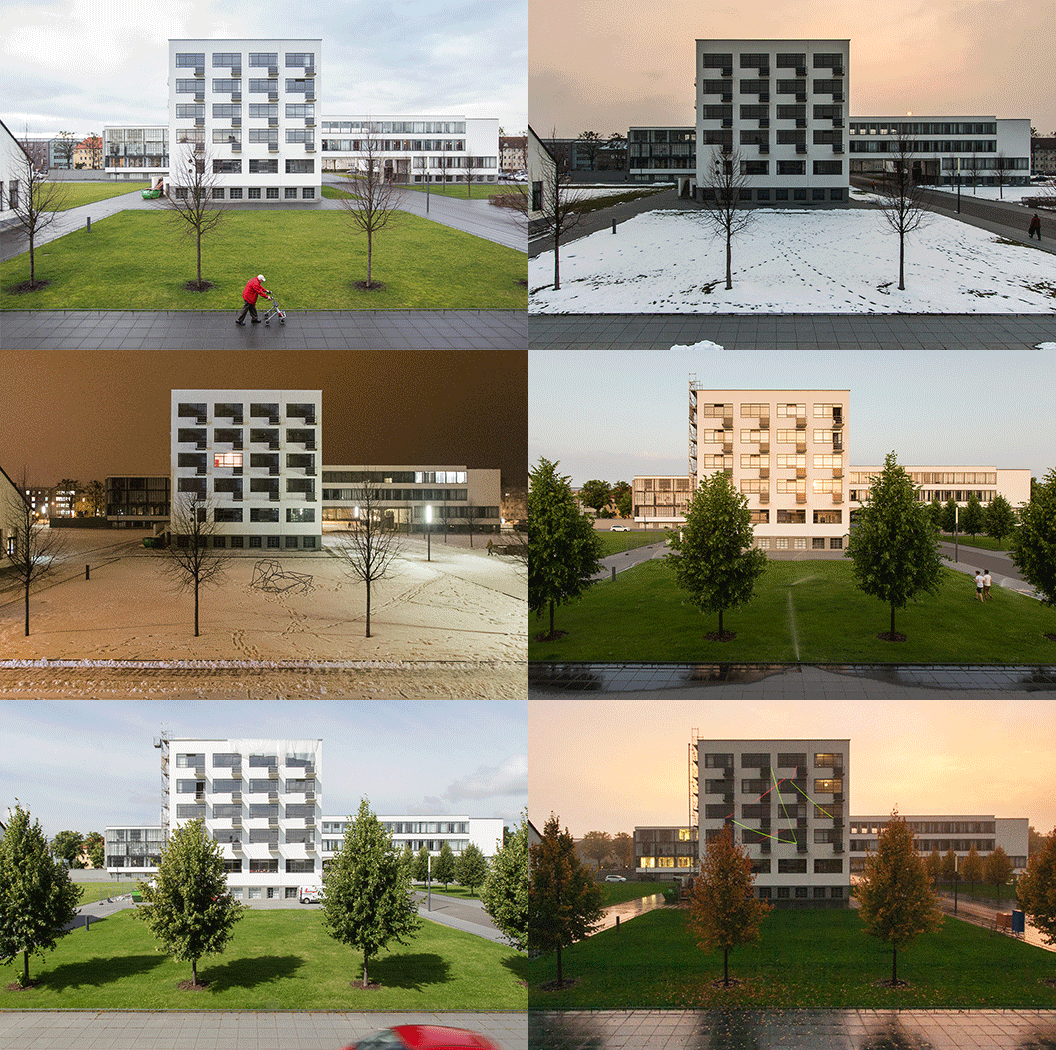
While studying for his Masters in Architecture at DIA (Dessau International Architecture), Romanian photographer Laurian Ghinitoiu was inspired to capture Walter Gropius’ Dessau Bauhaus at different times of the day and throughout the four seasons. Taken from the same vantage point over the course of two years (September 2012-July 2014), Ghinitoiu’s photos show the school as snow covers its perfectly-manicured lawn and skateboarders and construction workers come and go.
“The building has been framed in direct relation with the dynamic process of daily life. Lights and shadows, changing during the day and during the year, underline the always-different elements of the silent, but potent building. It almost protrudes out of the scene, imposing its strict lines, its regular rhythm and the functionalism of its geometries. The surroundings play the most important role of the entire photo project: they create the atmosphere, establishing an intimate connection between the architecture and its context." - Francesca Lantieri
View the full photo series after the break.
https://www.archdaily.com/633532/a-bauhaus-facade-study-by-laurian-ghinitoiuAD Editorial Team


.jpg?1459794350)

.jpg?1444180136&format=webp&width=640&height=580)
.jpg?1444182984 "Garage Museum of Contemporary Art / OMA. Image © Laurian Ghinitoiu")
.jpg?1444181210 "Garage Museum of Contemporary Art / OMA. Image © Laurian Ghinitoiu")
.jpg?1444182886 "Garage Museum of Contemporary Art / OMA. Image © Laurian Ghinitoiu")
.jpg?1444181258 "Garage Museum of Contemporary Art / OMA. Image © Laurian Ghinitoiu")
.jpg?1444180136)
.jpg?1444043084&format=webp&width=230&height=230&crop=true)


.jpg?1444043084)
.jpg?1443197394&format=webp&width=640&height=580)
.jpg?1441049385&format=webp&width=640&height=580)
.jpg?1441049458&format=webp&width=230&height=230&crop=true)
.jpg?1441049469&format=webp&width=230&height=230&crop=true)
.jpg?1441049908&format=webp&width=230&height=230&crop=true)
.jpg?1441050301&format=webp&width=230&height=230&crop=true)
.jpg?1441049385)
.jpg?1441827111&format=webp&width=640&height=580)
.jpg?1435226672&format=webp&width=230&height=230&crop=true)
.jpg?1435226660&format=webp&width=230&height=230&crop=true)

.jpg?1435226627&format=webp&width=230&height=230&crop=true)

.jpg?1435151136&format=webp&width=640&height=580)
.jpg?1441138553&format=webp&width=640&height=580)
.jpg?1441138106&format=webp&width=230&height=230&crop=true)
.jpg?1441138131&format=webp&width=230&height=230&crop=true)
.jpg?1441138429&format=webp&width=230&height=230&crop=true)
.jpg?1441138529&format=webp&width=230&height=230&crop=true)
.jpg?1441138553)