

-
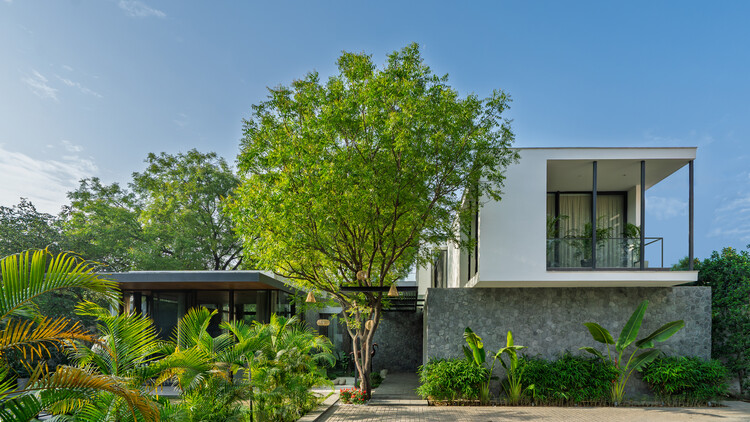
Architects: Goldstein Heather
- Area: 244 m²
- Year: 2025
-
Manufacturers: Bauwerk Colour, CAD , Hempblock, Lime Green, London Brick Co, +2
-
Professionals: Maddox Planning, Float Structures, IC&T, Metrum Consulting LLP

In Six Memos for the Next Millennium, Italo Calvino explores lightness from a literary perspective and argues, "Opposed to lightness is weight. Removing weight produces lightness; it is a value, not a defect." Drawing on Greek mythology, he reflects on one of Perseus's feats after severing the head of the terrible Gorgon Medusa without being turned to stone. Assisted by the gods Hades, Hermes, and Athena, Perseus flies with his winged sandals and uses a bronze shield as a mirror to reflect her image. Relying, like many architects, on what is lightest—the wind and the clouds—he also fixes his gaze on what is revealed through indirect vision: an image reflected in a mirror.
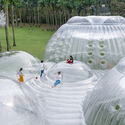
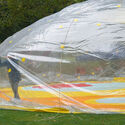
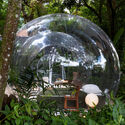
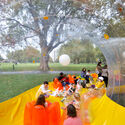
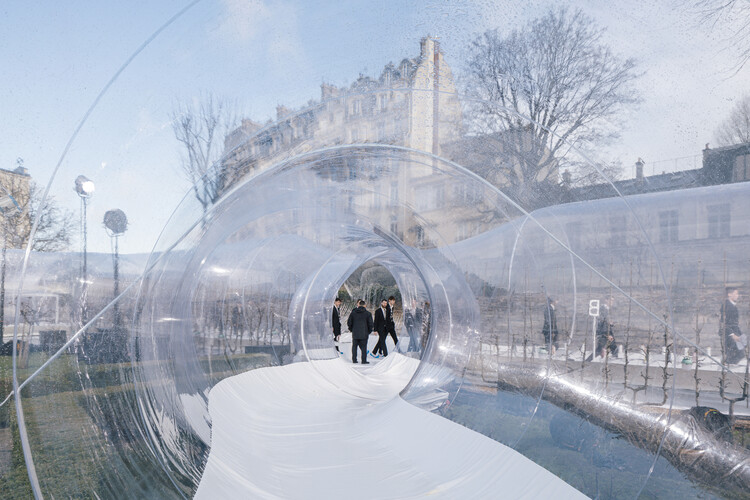
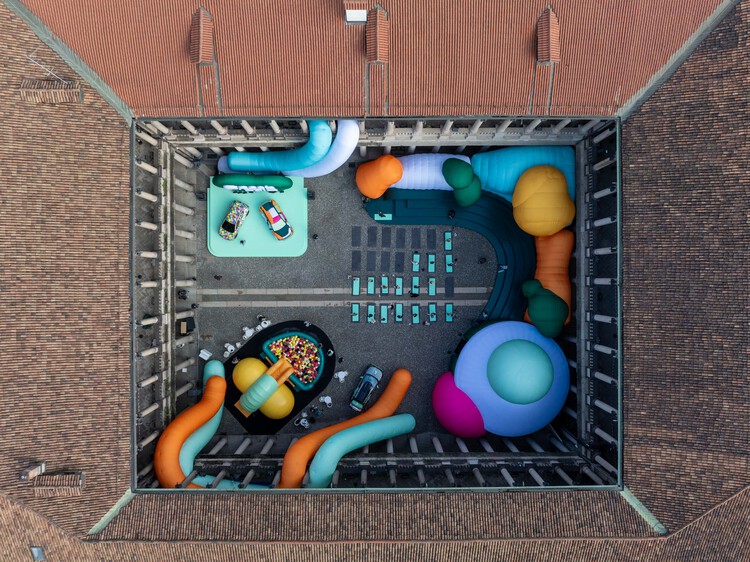
Historically, transparency has been naturalized as an inherent condition of modern architecture. With the shift from the heavy load-bearing wall to the lightweight glass envelope, glass was introduced into the discipline, blurring the boundaries between interior and exterior spaces. In connection with inflatable architecture, transparency is linked to lightness and impermanence, leaving temporary traces on the landscapes it inhabits. By using textiles or plastics as main materials and air as a structural system, the search for lightness in the built environment now recognizes more than a single atmosphere of application.


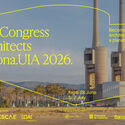
The UIA World Congress of Architects 2026 Barcelona has released its full program, outlining the structure, participants, and range of activities scheduled to take place from June 28 to July 2, 2026. Expanding on the previously introduced theme, Becoming. Architectures for a Planet in Transition, the Congress is conceived as a distributed event across multiple venues and urban contexts rather than a single-site conference. Organized by the International Union of Architects (UIA) in collaboration with the Higher Council of the Colleges of Architects of Spain (CSCAE) and the Architects' Association of Catalonia (COAC), the event is expected to gather approximately 10,000 participants and 250 speakers from more than 130 countries.


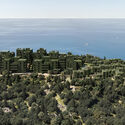
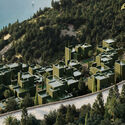
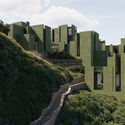
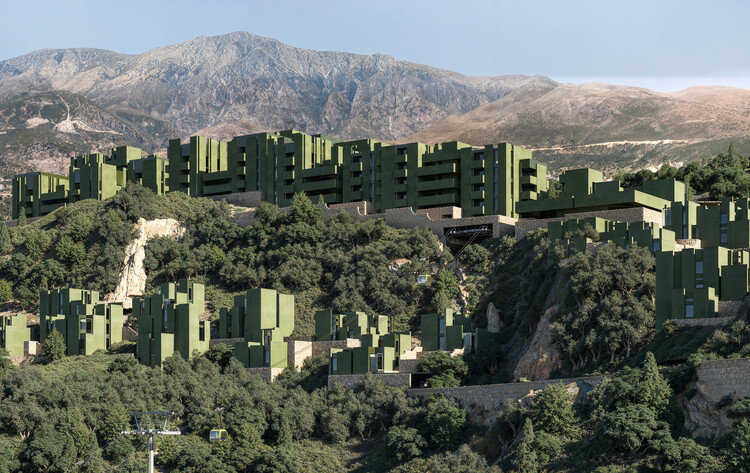
Bofill Taller de Arquitectura has revealed the final images of a new resort in Dhërmi, Albania, currently under construction. The project was first announced in 2024, in the context of the numerous developments proposed across the country over the past decade. This time, the project is neither a skyscraper nor an institutional building in Tirana, but a resort set along the mountainous coastline in the south of the country. The design responds to the existing landscape conditions, a coastal, mountainous area surrounded by forests that cover a significant portion of Albania's land surface. The project aims to preserve the character of the forest while engaging with the rugged terrain, jagged rocks, steep mountainsides, and dense pine and cypress forests.


Design teams are not short on tools; they're short on continuity. Project data remains fragmented across files, and decisions often lose context as work moves from planning to design to construction. As a result, teams spend valuable time reconnecting information instead of advancing projects.
This points to the need for workflows that preserve design intent and carry knowledge forward across each stage of the process. Within this framework, the idea of "design and make intelligence" can be understood as a shift toward continuity, where data, decisions, and lessons from planning, design, construction, and operations remain embedded in the project rather than stopping at handover. In this context, AI and automation operate with greater relevance, building on accumulated information instead of isolated inputs.


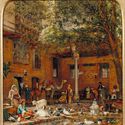
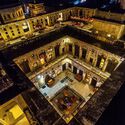
The courtyard is often remembered as a figure from the past, an inward-looking space of nostalgia, culture, and domestic ritual. But this framing misses its primary role. Before it was symbolic, the courtyard was operational. It organized air, moderated light, and absorbed heat. It did not decorate architecture; it made it habitable. In contemporary housing, these functions are normally delegated to mechanical systems, applied after form is fixed. In courtyard houses, they are resolved spatially, before a wall is even built.
What appears as a recurring typology across regions is, in fact, a set of highly specific responses to climate. The courtyard in Egypt does not behave like the courtyard in Morocco, nor like the courtyard in India. Each is calibrated to a different environmental problem, using the same spatial device. To read them as a single type is to flatten their intelligence. To compare them is to understand how climate can be embedded directly into form.

Bringing together a week of exhibitions, installations, and industry exchange, Milan Design Week 2026 and the 64th edition of Salone del Mobile.Milano concluded on April 26, following six days of programming across the fairgrounds and the city. Held from April 20 to 26, this year's events reaffirmed Milan's central role within the global design calendar. The Salone itself drew over 316,000 visitors from 167 countries. With 1,900 brands represented and a strong international presence, the week once again operated as both a cultural platform and an economic engine, navigating a context marked by market uncertainty while maintaining its capacity to convene designers, institutions, and industry leaders at a global scale.