The ruestungsschmie.de architectural collective has shared with us their latest video mapping project on the façade of the Karlsruhe Palace in Karlsruhe, Germany. Designed to celebrate the city’s 300-year anniversary, the projection illuminates all 300 meters of the building’s façade.
The Karlsruhe Palace is the architectural and urban center of the city, from which 32 streets stem out, structuring the urban design of Karlsruhe. This unique city design served as part of the inspiration behind the audiovisual work. The project was created in partnership with Sound Selektor, who composed the soundtrack using only noises recorded from inside the castle, including doors, switches, stairs and the sounds of specific exhibits.
In this edition of Section D, Monocle 24's weekly review of design, architecture and craft, David Plaisant speaks to Daniel Libeskind about the art and architecture of memory, with particular focus on his designs for his Ground Zero Masterplan and memorial in New York City. The show also discusses plans to transform John F. Kennedy airport's iconic TWA Terminal, and head to Singapore to meet the team at Ministry of Design.
Creative Industries and Performing Arts Development. Image Courtesy of Liminal Architecture
Liminal Architecture is partnering with WOHA and Arup Acoustics and Theatre on a new cultural and performance development for the University of Tasmania. Planned for the corner of Campbell and Collins Streets in Hobart, the building will envelope the existing Theater Royal and create a backdrop to the historic Hedberg Garage.
So far only one image of the schematic design has been released, revealing a porous structure that will, as the architect's describe, "evoke a sense of the activities happening within."
A few weeks ago, during the opening of the Chicago Architecture Biennial, we eagerly awaited our opportunity to speak with Joseph Grima, the co-artistic director of the first Chicago Architecture Biennial. In an exhibition with such an open theme, we wanted to understand the driving forces behind the assembly of the participants, in addition to how the city of Chicago itself influenced decisions in the planning of this largest gathering of architecture in North America. Watch the video above and read a transcript of Grima's answers below.
https://www.archdaily.com/775633/ad-interviews-joseph-grima-chicago-architecture-biennialAD Editorial Team
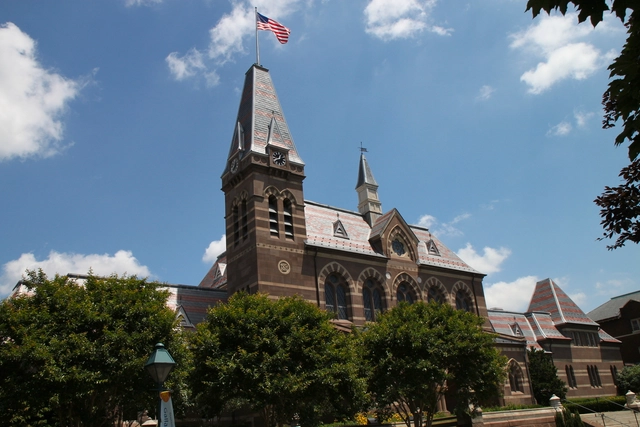
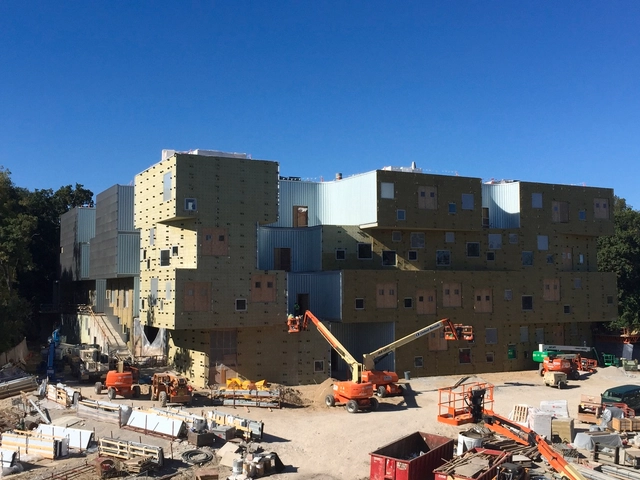
It is no secret that, in the last 10 years, a majority of the big budget construction projects have been centered in newly emerging world markets like China. But now, the markets may be turning. Steven Holl Architects is a strong example of this trend: with the groundbreaking of the Glassell School of Art in Houston on the 15th, the firm now has 8 projects under construction in the western world - 7 in the United States, and one in the United Kingdom. Owing to the steady strengthening of the US dollar over recent years, clients seem to be investing in high ticket architecture once again. After completing projects abroad such as the Sliced Porosity Block in Chengdu, and Nanjing’s Sifang Art Museum, Holl will now be working in cities like Richmond, Iowa City, New York and London.
Holl’s recent work also reflects a change in design scale. In projects such as the Linked Hybrid in Beijing and the Vanke Center/Horizontal Skyscraper in Shenzhen, design began at the urban level, resulting in inward-looking superstructures. In the firm’s return to the west, projects are usually designed as an object or extension of an existing environment, such as in their expansion project for the Kennedy Center. The reduced sense of scale is also evident in the square-footage in some of their recent designs, including a residence to be built at under 1000 square feet.
For most students of architecture, the first few years of learning involve a demanding crash course in architectural jargon. From learning terms as obscure as "gestalt" to redefining your understanding of ideas as simple as "space," learning the architectural lexicon is one of the most mind-bending processes involved in becoming a designer.
This challenge is clearly a universal experience as well: when we asked our readers last month to suggest their picks for the "weirdest words that only architects use," we were inundated with suggestions - including 100 comments on the post itself and over 400 comments on our first Facebook post. Perhaps even more striking, though, was the fact that in all of these comments, there was remarkably little overlap in the words and phrases people were suggesting. The huge variety allowed us to select a list of 150 words - just a fraction of the total suggested.
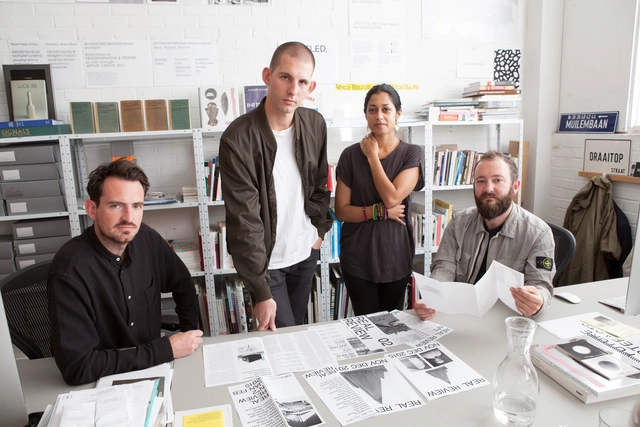
A Kickstarter campaign recently launched by Jack Self and Shumi Bose of the Real Estate Architecture Laboratory (REAL) has reached its funding target in only twenty days. Produced by an independent team of editors and designers, this bi-monthly magazine intends to "revive the review as a writing form" to a general readership within the architectural sphere and its orbital subjects, with a particular focus on politics and economics. Their campaign has so far seen considerable support from the architectural community and beyond — testament to their 'no-ads policy' and dedication to paying their contributors.
In a statement to those who have pledged so far, the editors have said that "the Real Review will happen, and it is directly and completely due to your commitment, your vision and your generosity. We can’t thank you enough for getting us here!" They are now looking to surpass this crowdfunded milestone, with Kickstarter remaining the only way to subscribe.
Museum of Modern Art; New York, United States of America. Image Courtesy of The Leading Culture Destinations Awards
The winners of the 2015 Leading Culture Destinations Awards have been announced at a ceremony in London. The Awards recognize the success of “museums, art organizations, and cultural destinations from around the world [that] are investing in iconic architecture, cross-sector collaborations, [and] audacious programming […] to diversify the experiences offered to visitors and establish their global reputations.”
"When you put many children in a quiet box, some of them get really nervous," says Japanese architect Takaharu Tezuka, founder of Tezuka Architects. "In this kindergarten, there is no reason for them to get nervous. There is no boundary." Speaking at TEDxKyoto on his design for an open-air kindergarten in Tokyo, Tezuka discusses his playful and unorthodox approach to the creation of the eccentric building. The unconventional space blurs interior with exterior while accommodating a varied program of athletic, educational and relaxed space. According to Tezuka, the concept was based on a progressive philosophy employed by the school administration: "The principal says: if the boy doesn't want to stay in the room, let him go. He will come back eventually." On children, Tezuka's own philosophy is one of empowerment: "Don't control them. Don't protect them too much. They need to tumble sometimes. They need to get injured. That makes them learn how live in this world."
Tucked away on a 1.3 acre lot, this house in Los Altos, California was renovated by Bart Prince -- transformed from a rectangular cabin into an eclectic combination of forms, inspired by the owners, Dale and Margo Seymour’s, love of math, art and geometry. The newly built structure is composed of steel and glulam, creating angular forms with generous glazing to create open, day-lit spaces. To navigate the California law that glass cannot be installed in non-vertical positions, an acrylic substitute was used for many of the home’s irregular windows.
The Knight Foundation has announced their second Knight Cities Challenge – a grant with a pool of $5 million to be awarded for city-improving ideas. Applications can be submitted by anyone, professional, student or amateur. Projects must take place in, or benefit one or more of the 26 knight communities across the United States, and focus on one or all of three key drivers of city success: attracting and retaining talent, expanding economic opportunity, and creating a culture of robust civic engagement.
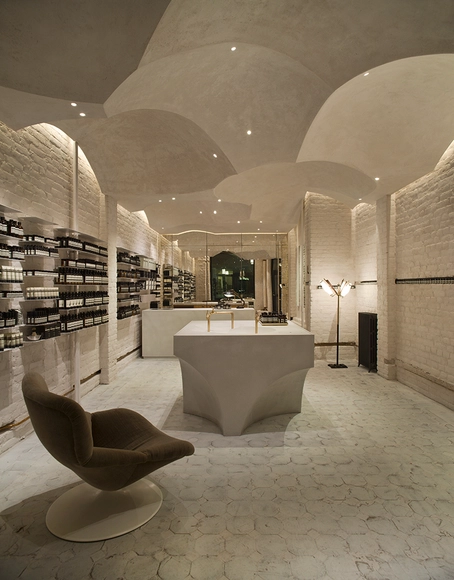
To pay "tribute to the creative processes, materials and features" that characterize each of its store designs, Aesop has a launched a new website called Taxonomy of Design. Inspired by the compendium, we’ve rounded up some of the best Aesop store designs, each of which is distinctly developed, largely by local designers who are inspired by the location of the store. Read on for nine Aesop shops that revitalize architectural simplicity.
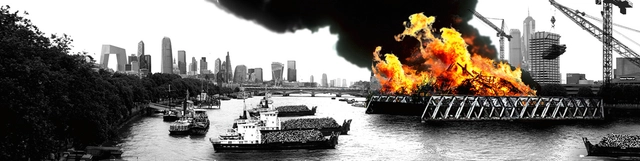
The Green Fire of London. Image Courtesy of A Folly for London
London is in the throes of an architectural identity crisis, compounded by a severe shortage of housing. While politicians and public figures debate various solutions to the city's design dilemmas, a London-based artist has conceived of a "satirical competition for architecture of the absurd." Known as A Folly for London, the free open-call for solutions to London's architectural conundrums was created in response to Arup and Heatherwick Studio's proposal for the yet to be built, and highly controversial, Garden Bridge.
Unlike traditional architectural competitions, A Folly for London sought to ignite debate on the current state of architecture in London. Presented with a distinctly British sense of humour, the competition received more than fifty entries. Winning proposals include the systematic burning of London's forests, construction of a massive inhabitable light bulb and the creation of a catacomb of submerged signature double-decker buses at the centre of the River Thames.
See the winners of "A Folly for London" after the break
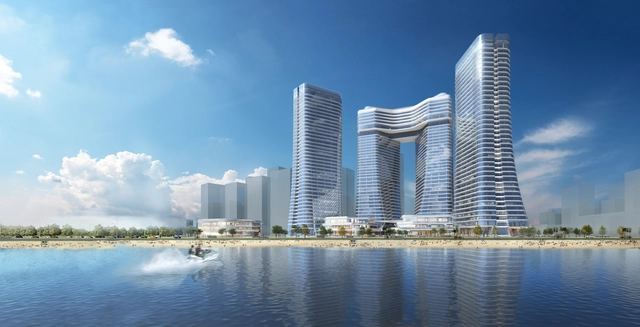
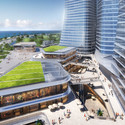
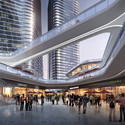
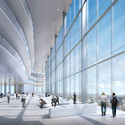
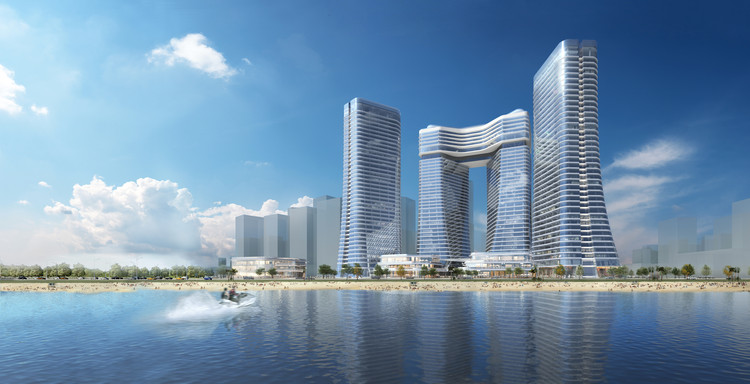
TFP Farrells have been selected by Winland Group in an international competition to design "the pioneer project of an emerging financial district," the Xiamen Cross Strait Financial Center. Located on the eastern coast of Xiamen Island, the 500,000 square meter project will comprise four high-rise towers containing office buildings, a serviced apartment tower, a 5-star hotel and retail space.
In this interview with the Louisiana Channel, José Selgas of Spanish architecture firm SelgasCano discusses his design philosophy, emphasizing the importance of connecting a building with its surroundings through the use of color and light materials. “Every relation with architecture I’ve had was a relation with nature,” he says.
Videos
Still from "Concrete Love" showing Gottfried Böhm's Neviges Mariendom. Image Courtesy of New York Architecture & Design Film Festival
October has become a busy month in the design world. If you’re living in the United States, New York specifically, it means Archtober: a portmanteau that means the city is flooded with architecture activities, programs and exhibitions, piled onto an already rich design calendar. One of these events is the New York Architecture & Design Film Festival, which started on Tuesday night and runs through Sunday October 18th, and will screen 30 films from around the world in 15 curated, themed programs.
This week, I was able to visit the festival to absorb the atmosphere and speak to the festival's director Kyle Bergman, to learn the ins and outs of this year’s festival, how things got started, and where it will go in the future.
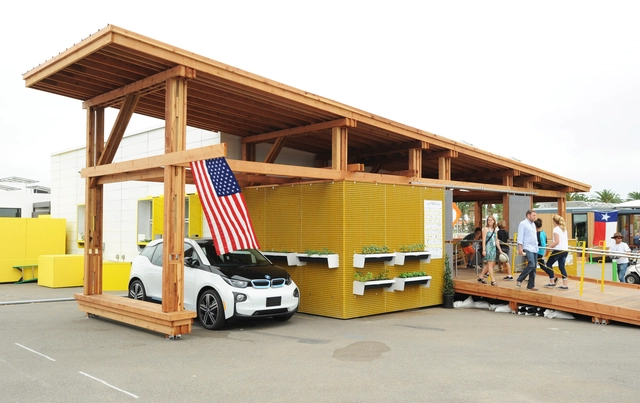
Is the Solar Decathlon Still Relevant? The short answer is “yes,” but probably not for the reasons the United States Department of Energy intended.
The Solar Decathlon, currently underway at Orange County Great Park, in Irvine, California, “challenges collegiate teams to design, build, and operate solar-powered houses that are cost-effective, energy-efficient, and attractive.” The overall goal of the competition is to demonstrate the viability of solar power to the public, while also providing the participating students with hands-on design, engineering, and construction experience. When the first Solar Decathlon took place in 2002, the viability of solar power was anything but certain, and the venue on the National Mall in Washington DC gave credence to the pursuit of energy efficiency and renewable energy sources.
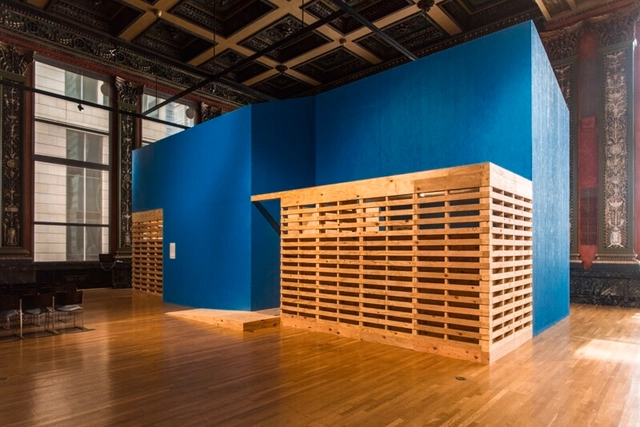
Centered on the theme “The State of the Art of Architecture,” the Chicago Architecture Biennial offers a look at the issues surrounding contemporary architecture around the globe. Featuring interventions from over 100 different architects from more than 30 different countries, the Biennial seeks to “demonstrate that architecture matters at any scale.”
Tatiana Bilbao’s project for the Chicago Biennial offers a solution to Mexico's affordable housing shortage. Her full-scale, Sustainable Housing prototype offers a flexible design that can respond to the different needs of each family. The house can be constructed for as little as $8,000 and up to $14,000 depending on a variety of factors including the location, the construction phase selected, and local regulations.
View images and learn more about her prototype after the break.
A total of 51 teams, consisting of 320 architectural practices, responded to the call for submissions, and 13 semi-finalist teams were highly commended for their designs. The four shortlisted firms will participate in a design forum at the university next week and will submit their final concept designs by January 2016.
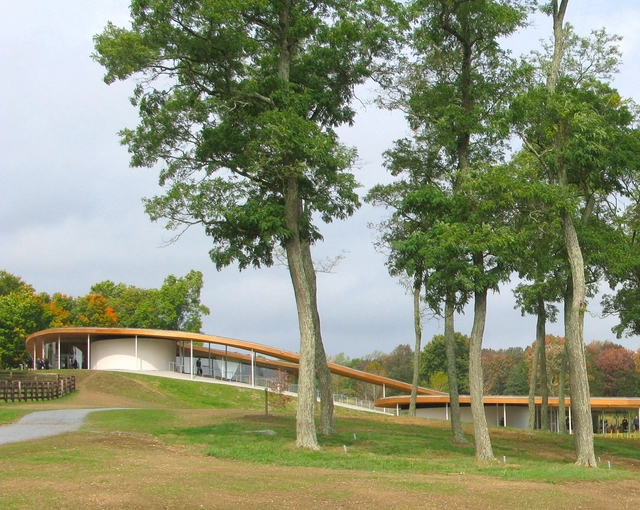
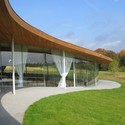
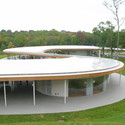
Photographer Paul Clemence of ARCHI-PHOTO has shared with us images of SANAA's latest completed work, Grace Farms in New Canaan, Connecticut. Known as "The River" for the way it flows through the site across a level change of almost 44 feet (13.4 meters), the building was conceived to "become part of the landscape without drawing attention to itself, or even feeling like a building" in order to give visitors a greater appreciation of the surrounding natural space that will be preserved by the Grace Farms Foundation. The building itself, meanwhile, will be made available to Grace Community Church and other nonprofit and community groups for a wide range of community and cultural events. Read on for Paul Clemence's full photoset.
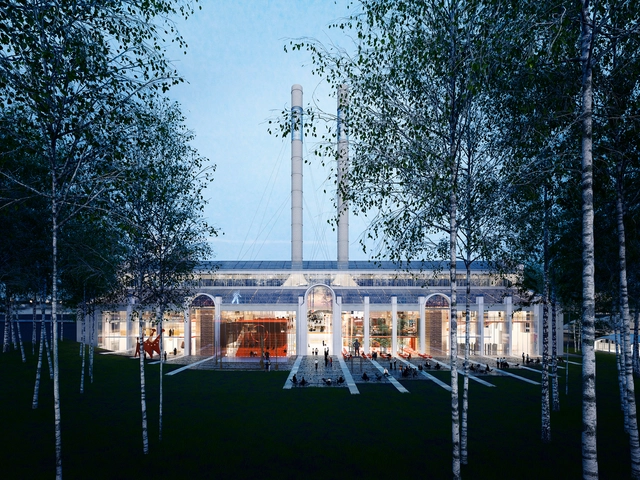
Rendering View of the Building from the Birch Forest, RPBW, 2015. Image Courtesy of V-A-C Foundation
The V-A-C Foundation has selected Renzo Piano Building Workshop to re-develop a two-hectare area in Moscow, converting a former power station into a center for contemporary arts and culture. Located on the Moskva river in the city’s Red October district, the GES2 power station was built in the early 1900s and once supplied energy to the city. The project envisions the recuperation of the power station’s original form as well as the reconfiguration of the entire site into a 150 meter by 150 meter square.
Managing your own architecture firm is hard, and while pretty much every architect starts with a strong idea of the type of firm they want to be, without constant care it can be easy to get sucked into doing jobs you need to do to keep the lights turned on, rather than the jobs you wanted to do from the start. In this article, originally published by Archipreneur as "9 Creative Business Development Strategies For Architects and Designers," Sabrina Wirth explores the ways you can not only keep work coming in, but make sure it is the right type of work too.
Whether you’re a large architecture firm or a small, boutique design studio, everyone needs a plan for generating new business. The prospect of working on RFPs (Request For Proposals) and RFQs (Request For Qualifications) to win a place on the shortlist, however, is daunting and something very few people look forward to.
Fortunately, it’s not the only path to attracting new projects. In fact, the most effective business development strategies involve more time spent on proactive relationship-building (before the project is made public), and less time on responding to RFPs and RFQs, which are available to anyone.
Below are 9 strategies that can help you define a good business development approach to get you ahead of the competition and win more clients and projects:
https://www.archdaily.com/775410/9-ways-to-find-more-business-for-your-architecture-firmSabrina Wirth for Archipreneur.com





.jpg?1444925222&format=webp&width=640&height=580)



.jpg?1445011714&format=webp&width=640&height=580)