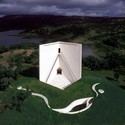
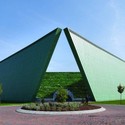
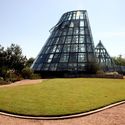
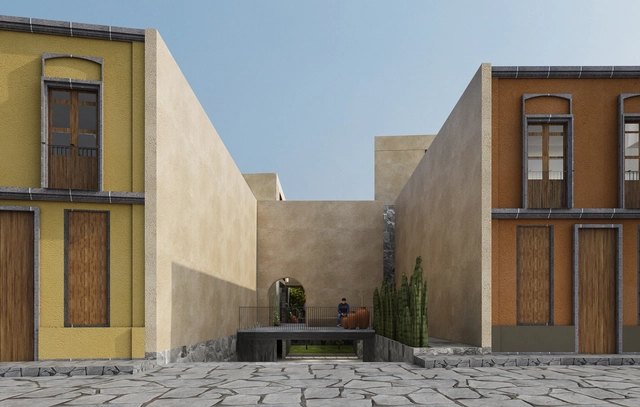
Places are physical spaces imbued with cultural significance, to which values are assigned. In Brazil, the term was permanently integrated into the heritage vocabulary in 2000, following Decree No. 3,551—which established the four Registry Books, including the Registry of Places—and the implementation of the National Inventory of Cultural References. Within this framework, Place is, therefore, a category for classifying cultural assets.
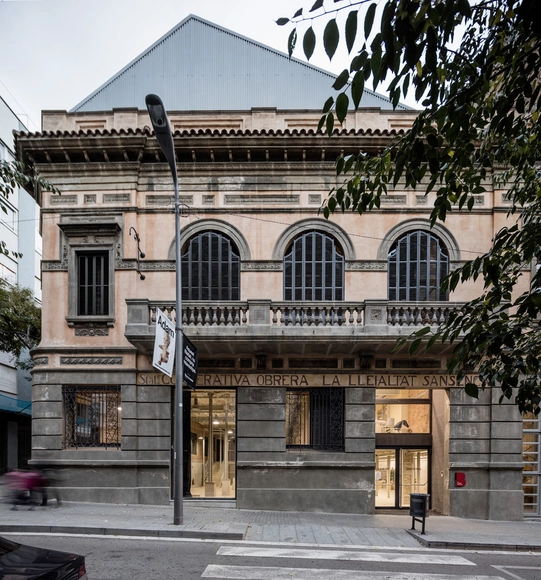
Twelve finalist projects, one honorable mention, and five winning works were announced yesterday in Barcelona, marking the results of the 4th edition of the AADIPA European Award for Architectural Heritage Intervention.
https://www.archdaily.com/1120673/these-are-the-winners-of-the-european-award-for-architectural-heritage-intervention-aadipa-2019ArchDaily Team
Today, discussing infrastructure means discussing geopolitics and connectivity as a key driver of global competitiveness. Connectivity, however, should not be understood solely as physical infrastructure, even if we are talking about roads for autonomous vehicles or hyperloop tunnels.
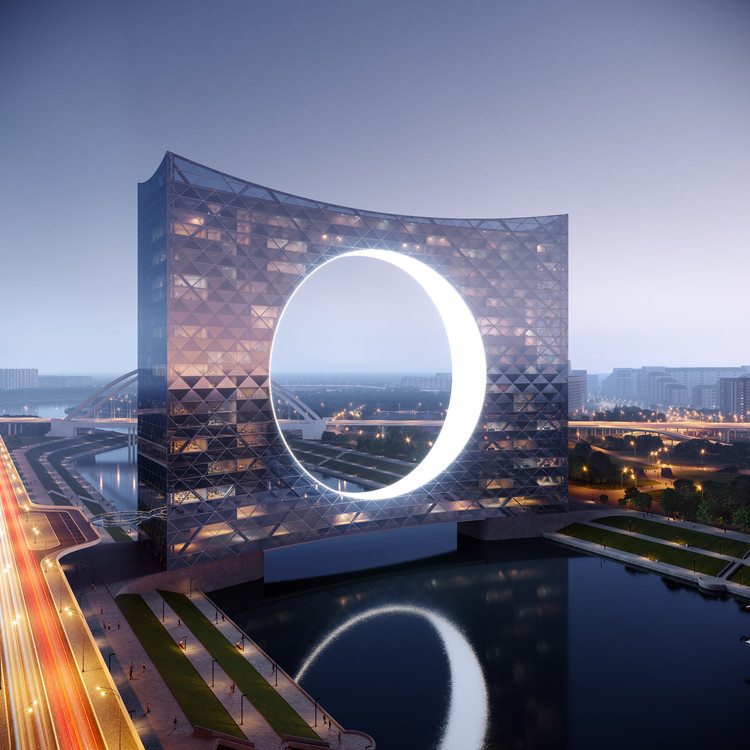
Rotterdam-based Fundamental Architects and Omega Render have designed an iconic high-rise and bridge over Ishim River in Kazakhstan. Made for the country's largest developer, BI GROUP, the 75.000 sq. meter mixed-use building is sited in the heart of Astana. Reaching a height of 121 meters over the river Ishim, the building is set to become a new home for residential, office, hotel and commercial functions as an infrastructural hub.
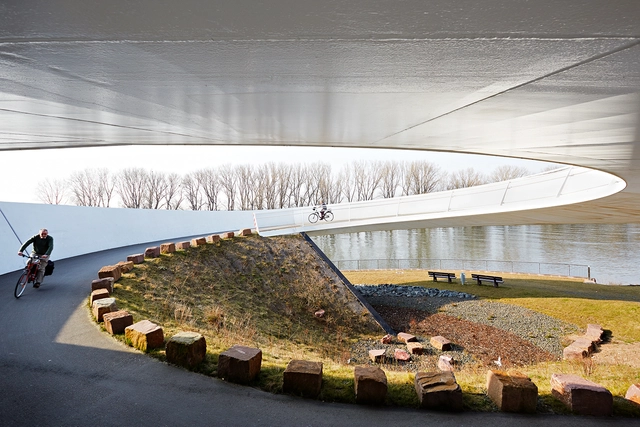
NEXT architects has curated the second annual Bicycle Architecture Biennale as a showcase of buildings that transform cities through cycling. Opening in Amsterdam, the BAB shows the work of international designers from around the world and explores urban design through social, economic and environmental projects. It was conceived by BYCS as a way to inspire people to imagine new possibilities for human-centric cities.
Scandinavian firm White Arkitekter has won an architectural competition for a landmark 12-meter-tall observation tower, hosted by the municipality of Varberg, Sweden. The winning proposal will form part of the development of the region’s new ecological recreation area at the Getterön nature reserve.
https://www.archdaily.com/919091/white-arkitekter-create-lattice-observation-tower-in-swedenNiall Patrick Walsh
As architects, we are on an endless journey of discovery, open to new experiences that fuel our creativity. We explore our surroundings and beyond, we travel to expand our views and open our mind, being often exposed to the unexpected. All these experiences are stored in our mental hard drive until the inspiration moment comes, drawing random non-linear connections between them and putting us into a state of divergent thinking, from where new ideas appear.
House in Boliqueime. Image Courtesy of bak gordon arquitectos
Past, Present, Future is an interview project by Itinerant Office, asking acclaimed architects to share their perspectives on the constantly evolving world of architecture. Each interview is split into three video segments: Past, Present, and Future, in which interviewees discuss their thoughts and experiences of architecture through each of those lenses. The first episode of the project featured 11 architects from Italy and the Netherlands and Episode II is comprised of interviews with 13 architects from Spain, Portugal, France, and Belgium.
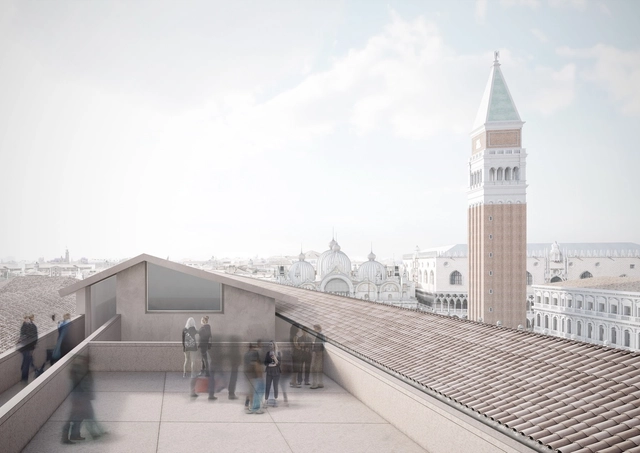
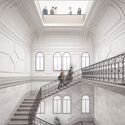
David Chipperfield Architects Milan’s renovation of the historic Procuratie Vecchie building in Venice is set to get underway, following a granting of permission by the Superintendency of Archaeology, Fine Arts and Landscape earlier this year. For the first time in 500 years, a large portion of the Procuratie Vecchie on the Piazza San Marco will be made accessible to the public to host activities of The Human Safety Net, supporting vulnerable communities.
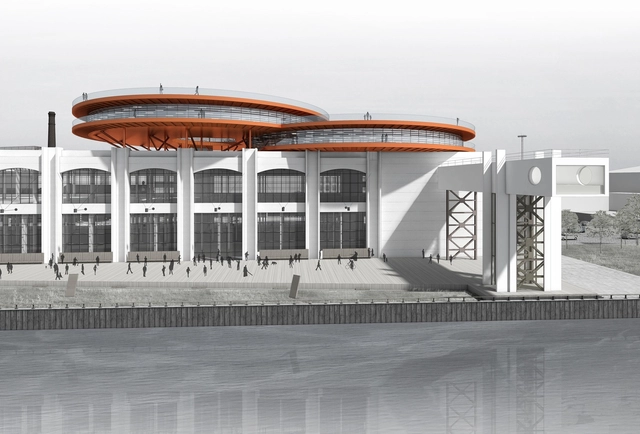
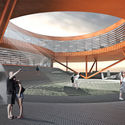
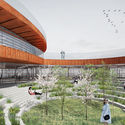
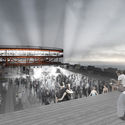
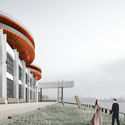
Architecture practice DNKag has designed two corten discs as a rooftop extension to a seaside production facility in Saint Petersburg, Russia. Dubbed Harbor Sea Infinity, the project will become a social and business center overlooking Sevkabel Port. In a short time, Sevkabel Port has become a new point of attraction for urban activities and a popular destination for citizens and tourists in the city. The new rooftop addition aims to bring new life to the industrial warehouse.
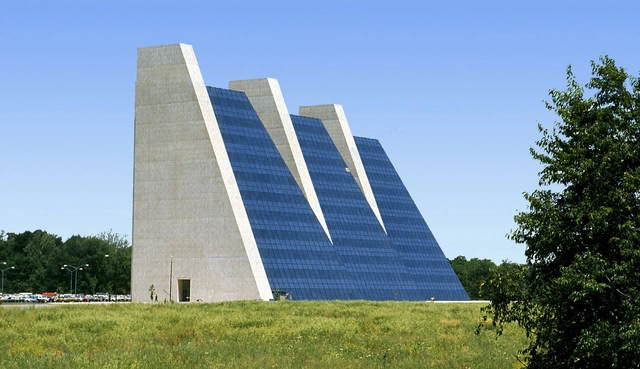
College Life Insurance Company Headquarters. Image Courtesy of KRJDA
Known for his progressive aesthetics and vast body of work, 1982 Pritzker Prize laureate Kevin Roche (born June 14, 1922) has headed numerous projects of varying program and scale as the design principal of his firm Kevin Roche John Dinkeloo and Associates. In 1980, shortly before the death of Roche's business partner John Dinkeloo, the firm was described by critic C. Ray Smith in 1980 as "the most aesthetically daring and innovative American firm of architects now working."
We revisit an old interview conducted by Teleproyecto with Tucumán-born architect and educator Víctor Saúl Pelli, who has based his career on participation, not only in the field of social housing design but also in his teaching. In both cases, the architect encouraged those involved—users and students—to become an essential part of the search for solutions to a given problem, from conception to consensus-building.
'What I did was work outward and work inward. Step out of the classrooms and work with people, very deliberately; build prototypes that went beyond our university sphere, [and allow] material to come out. What we were doing was, in a way, pushing the university structure in a good sense. We never thought of it as a service, but rather as exploratory work that ultimately delivered a service.'
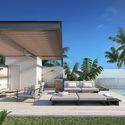
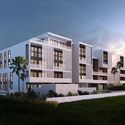
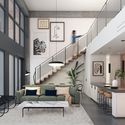
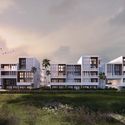
Austin and Punta Cana-based practice Atelier Reach Architects have broken ground on a new residential community development in the Dominican Republic. Located on the west side of Punta Cana Village, the project brings together community activities with private residences and amenities. Called The Flats, the new housing model was designed to raise awareness about design and construction methods along the country’s eastern coast.
Visual artist Leonardo Portus has designed a sensory art installation inspired by the iconic COPELEC Building in Chillán. In 'Soplos de Luz' [Breaths of Light], the modern architecture of this historic monument takes on a new quality, where curved and organic forms break the orthogonal paradigm of architecture through movement generated by light projections on models.
The Polytechnic University of Valencia offers a free online course on sustainability in architecture. Available through the edX platform, registration is now open for Sustainability in Architecture: An Interdisciplinary Introduction, which begins on July 9. The four-week course requires three to four hours of study per week.
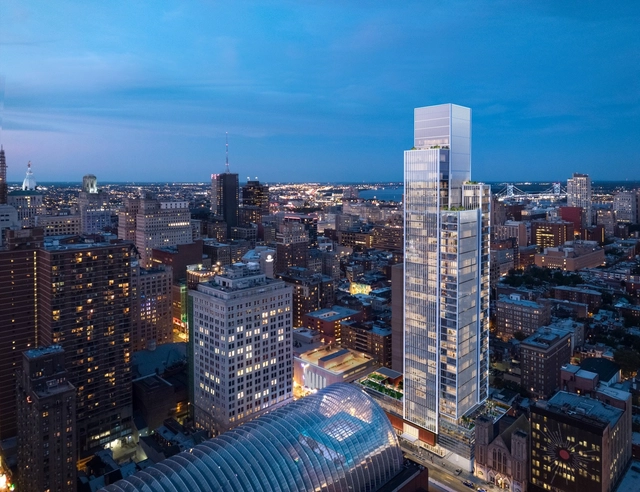
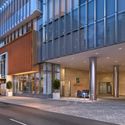
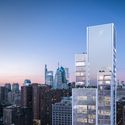
Kohn Pedersen Fox Associates (KPF) has celebrated the groundbreaking of their first residential tower in Philadelphia, titled Arthaus. The 47-story condominium tower is situated at Broad and Spruce streets along the famed Avenue of the Arts, and directly across the street from the Kimmel Center for the Performing Arts. The scheme aims to create a rich, holistic experience from top to bottom, inside and out, an in the interiors for all residences and amenities.
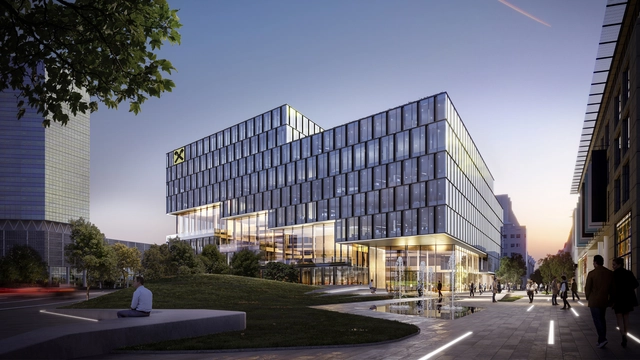
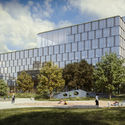
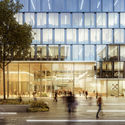
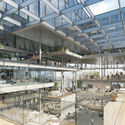
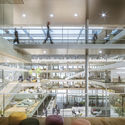
HENN has released details of their proposed CAMPUS ’25 in Linz, Austria. Designed for the Raiffeisenlandesbank Oberösterreich banking institution, the scheme is defined by principles of openness, flexibility, and multi-functionality, with a range of services open to the wider public. The central cornerstone of a new campus, the new building will contain co-working zones, shops, restaurants, and exhibition spaces.
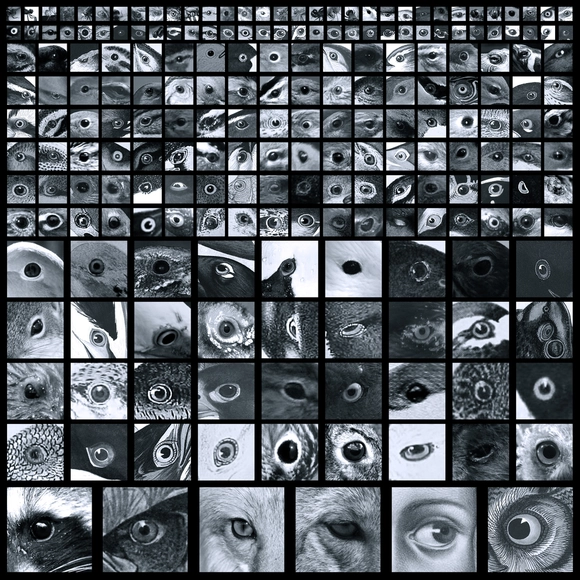
The eyes of the more than 250 animal species who have been observed at Studio Gang’s Nature Boardwalk at Lincoln Park Zoo in Chicago. Image by Studio Gang
What happens when the sensor-imbued city acquires the ability to see – almost as if it had eyes? Ahead of the 2019 Shenzhen Biennale of Urbanism\Architecture (UABB), titled "Urban Interactions," ArchDaily is working with the curators of the "Eyes of the City" section at the Biennial to stimulate a discussion on how new technologies – and Artificial Intelligence in particular – might impact architecture and urban life. Hereyou can read the “Eyes of the City” curatorial statement by Carlo Ratti, the Politecnico di Torino and SCUT.
“We all live in an ecosystem; we just don’t know it. When it comes to urban areas, people have an ecological blind spot.” — Seth Magle, Director, Lincoln Park Zoo Urban Wildlife Institute, Chicago.
The advance of AI technologies can make it feel as if we know everything about our cities—as if all city dwellers are counted and accounted for, our urban existence fully monitored, mapped, and predicted.
https://www.archdaily.com/918968/eyes-of-the-city-seeing-and-designing-beyond-the-human-jeanne-gang-for-the-shenzhen-biennale-uabb-2019Studio Gang
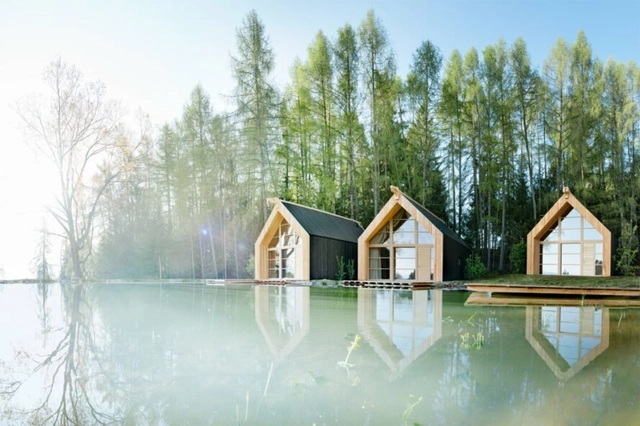
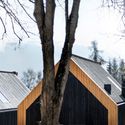
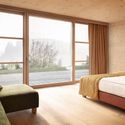
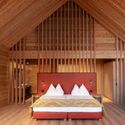
The Adler Hotel Group have completed construction on a new, minimalist eco-hotel in Italy’sDolomites mountain range. Called Adler Lodge Ritten, the project is located on the Ritten plateau, a short walk from the region’s historic narrow-gauge railway. The retreat was designed to blend into the surrounding forest by taking the form of rural alpine structures.
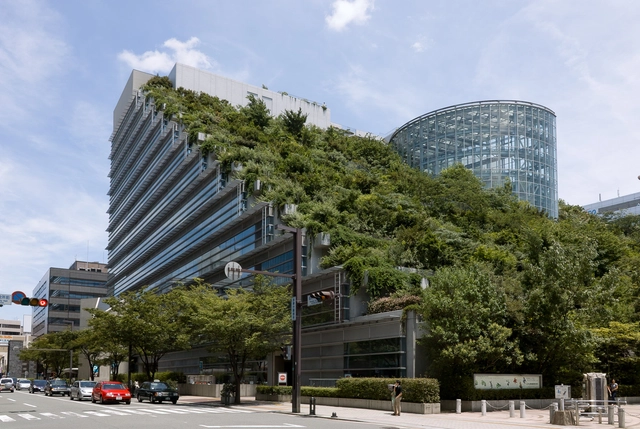
As early as the 1970s, Emilio Ambasz (born 13 June 1943) initiated a discussion on sustainability through his work with green spaces and buildings which is arguably more important today than ever, and contributed to theoretical and design discourse outside of architecture through his wide variety of interest and career pursuits. Ambasz’s work has crossed several disciplines; he has been a curator, a professor, an industrial designer, and an architect, and is highly regarded in all of these varied pursuits.









_0001.BOLIQUEIME.PUB-FG01.06.jpg?1560477890&format=webp&width=640&height=580)
_0001.BOLIQUEIME.PUB-FG01.06.jpg?1560477890 "House in Boliqueime. Image Courtesy of bak gordon arquitectos")
_Teatro_Romano_N.Central_Entrada.jpg?1560477635 "FUTURE: Teatro Romano. Image Courtesy of bak gordon arquitectos")
_Casa_na_Costa_do_Castelo_RBG_37.jpg?1560477725 "Casa na Costa do Castelo. Image Courtesy of bak gordon arquitectos")
_School_Romanshorn_BER04.jpg?1560477676 "School Romanshorn. Image Courtesy of bak gordon arquitectos")
_0001.BOLIQUEIME.PUB-FG01.06.jpg?1560477890)






.jpg?1560291948)