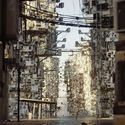
Postcards from Quarantine is a series of illustrations by Alvaro Palma y Alvaro Bernis inspired by touristic postcards that analyze the purpose of travelling and the desire to share the experience--a topic that has been brought to the forefront in times of quarantine during the COVID-19 outbreak.
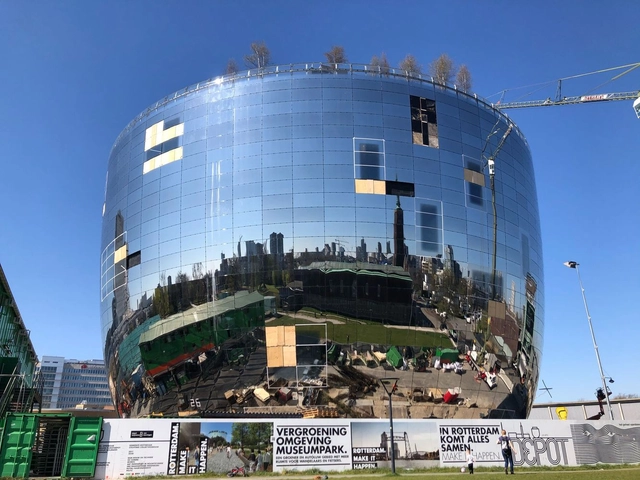
The public art depot for the Museum Boijmans van Beuningen, designed by MVRDV is nearing completion in Rotterdam. Scheduled for opening in September 2021, recent images showcase the installation of the first of 75 trees on the roof garden.
1st prize winner: The Year Without a Winter. Image Courtesy of Tamás Fischer and Carlotta Cominetti
Blank Space, the online platform has announced the winners of its annual ‘Fairy Tales’ competition. The seventh edition of the contest selected top entries that offer tales of warning and hope during uncertain times.
Design practice WEISS/MANFREDI has won the 2020 Thomas Jefferson Foundation Medal in Architecture. Presented by the University of Virginia and the Thomas Jefferson Foundation at Monticello, the award is one of four honors recognizing achievements in architecture, citizen leaderships, global innovation, and law. The Thomas Jefferson Foundation Medals recognize the exemplary contributions of recipients to the endeavors in which Jefferson excelled and held in high regard.
In Mexico, 40 million used tires are thrown away each year and only 12% are recycled. Tires are a difficult waste product to address, due to the sheer volume produced as well as their durability and the components within tires that are bad for the environment. According to specialists, in Mexico about 5 million tires are recycled in organic products and in the cement industry.
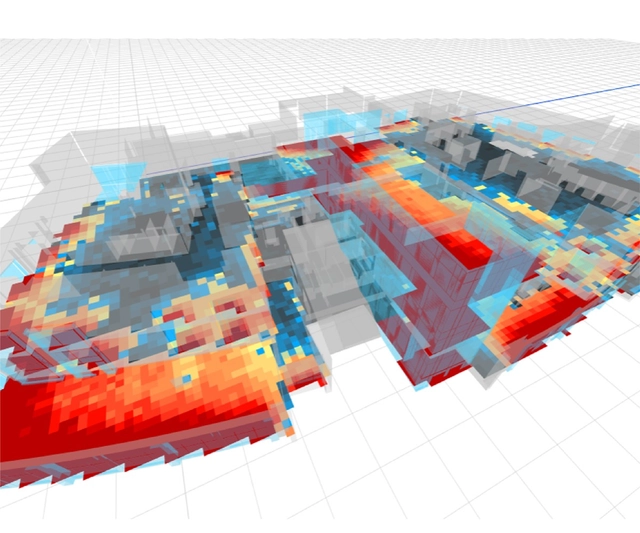
In the highly connected world we live in, technology influences and impacts almost every decision we make. Big Data, Artificial Intelligence (AI), and the Internet of Things (IoT) have enhanced our connected world and helped us understand more about the spaces we inhabit. Aside from the smart homes and smart appliances we have become accustomed to, the modern day office is being redesigned and reprogrammed to include a variety of smart technology systems. The goal of these systems is to put our offices to work and empower businesses to better understand their design decisions, real estate investments, and most importantly- their own employees.
From the famous Kitchen Debate between Nikita Khrushchev and Richard Nixon to the popularity of Henry Ford within the USSR, the hundreds of factories designed by Detroit engineer Albert Kahn for Soviet Russia, and skyscrapers erected in Moscow, the Cold War had a peculiar side to it, that is the Russian fascination with American culture and technology.
Miami’s tallest luxury condominium, the recently completed Brickell Flatiron tower is designed by architect Luis Revuelta, with interiors created by Italian design architect Massimo Iosa Ghini. Standing tall at 736-feet-high, the residential building is the newest icon of Brickell's Financial District
Harvard GSD is presenting during the month of April 2020, an online series of talks and webinars via Zoom, where attendees can interact and submit questions. Accessible for everyone who registers, the events are also streamed live to the GSD's YouTube page.
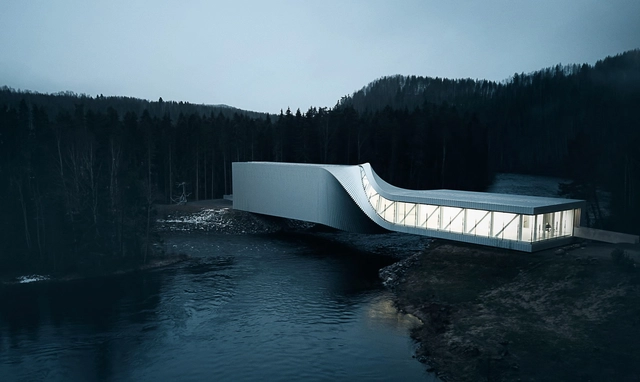
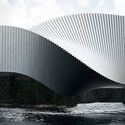
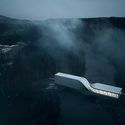
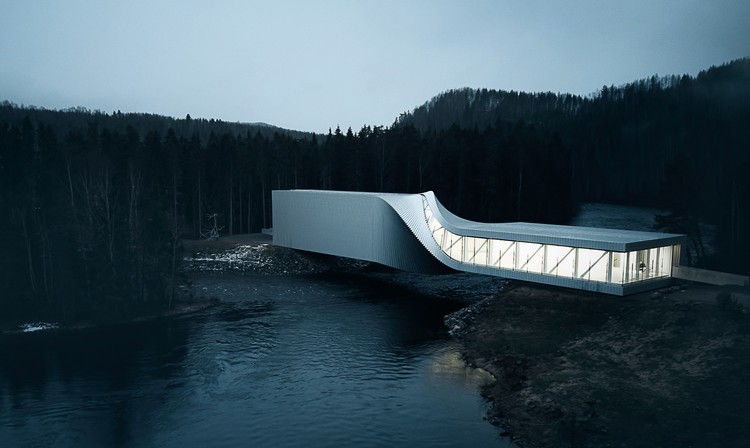
The new Twist Museum by Bjarke Ingels Group is open in Norway. Traversing the winding Randselva river, the inhabitable bridge is torqued at its center, forming a new journey and art piece within the Kistefos Sculpture Park in Jevnaker. The project was recently captured through a series of images by photographer Jacob Due. The photos explore the museum's formal approach and place the design in its larger natural context.
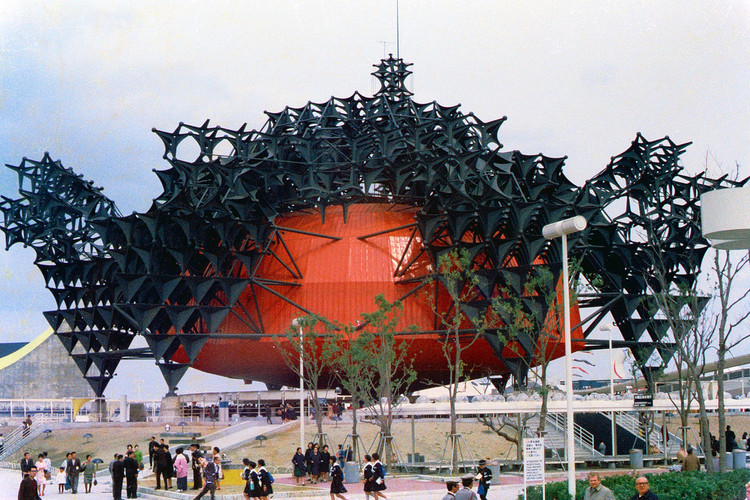
Kisho Kurokawa (April 8th 1934 – October 12th 2007) was one of Japan's leading architects of the 20th century, perhaps most well-known as one of the founders of the Metabolist movement of the 1960s. Throughout the course of his career, Kurokawa advocated a philosophical approach to understanding architecture that was manifest in his completed projects throughout his life.
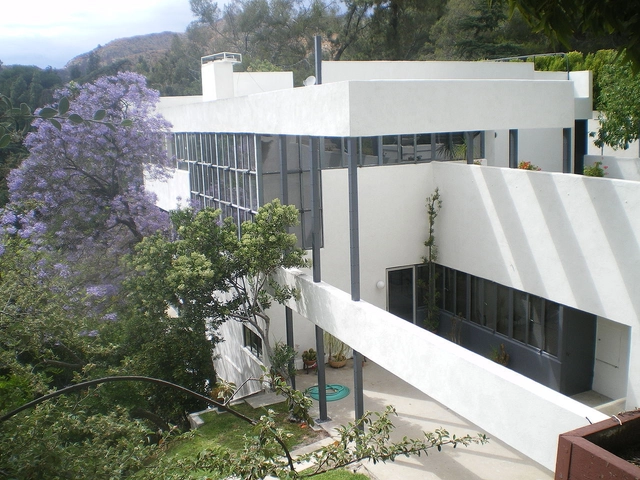
Though Modernism is sometimes criticized for imposing universal rules on different people and areas, it was Richard J. Neutra's (April 8, 1892 – April 16, 1970) intense client focus that won him acclaim. His personalized and flexible version of modernism created a series of private homes that were—and still are—highly sought after, making him one of the United States' most significant mid-century modernists. His architecture of simple geometry and airy steel and glass became the subject of the iconic photographs of Julius Schulman, and came to stand for an entire era of American design.
A figure whose work blurred the line between the mathematical and the aesthetic, French industrial designer, architect, and engineer Jean Prouvé (8 April 1901 – 23 March 1984) is perhaps best remembered for his solid yet nimble furniture designs, as well as his role in the nascent pre-fabricated housing movement. His prowess in metal fabrication inspired the Structural Expressionist movement and helped to usher in the careers of British High-Tech architects Richard Rogers and Norman Foster.
From Wuhan to New York, the epicenter of the coronavirus is moving from east to west and leaving a staggering number of corpses behind. We read of alarming reports, contradictory news, and reminded every day that we live in unprecedented and difficult times. One good news, however: emissions in cities are on the decline, and nature is running its regenerative course. But how long will this last?
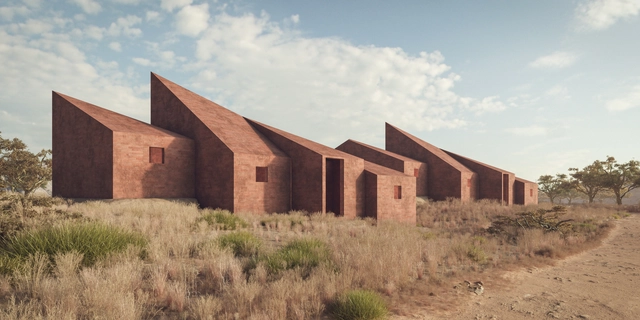
Marc Thorpe, New York-based architect and multidisciplinary studio, has designed the Dakar Houses for the workers of Moroso M’Afrique furniture collection. Located on the outskirts of the Senegalese capital in West Africa, the prototype houses are made from earth bricks.
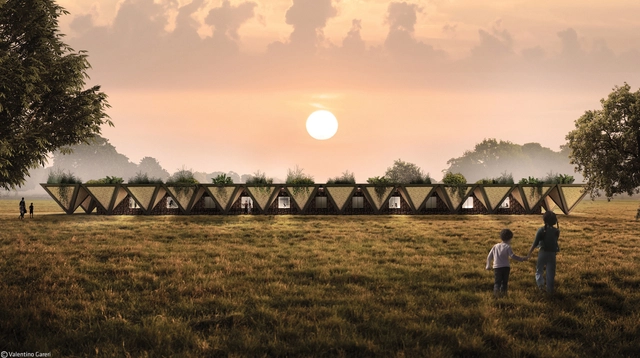
The World Bank believes that urbanization will be “the single most important transformation that the African continent will undergo this century”, with over half of the population set to live in cities by 2040. This will manifest as 40,000 people moving to cities every day for the next 20 years. While much of the architectural discourse around Africa's future focuses on cities, rural areas are often ignored. This has however been the preoccupation of Italian architect Valentino Gareri, founder of Valentino Gareri Architectural Atelier and Senior Designer at Bjarke Ingels Group.
https://www.archdaily.com/936910/in-africa-a-modular-prototype-school-combines-the-practical-and-utopianNiall Patrick Walsh
Since their founding in Bangkok in 2013, Space Popular have offered an eclectic series of architectural spaces, objects, and events that cross digital and physical space, speculating on how the two realms could blend together in the near future. Directed by Lara Lesmes and Fredrik Hellberg, both graduates of the Architectural Association in London, Space Popular has completed buildings, exhibitions, artworks, furniture collections, and interiors across Asia and Europe, as well as engaging works of virtual architecture.
https://www.archdaily.com/936914/interview-space-popular-on-the-future-of-digital-architectureNiall Patrick Walsh
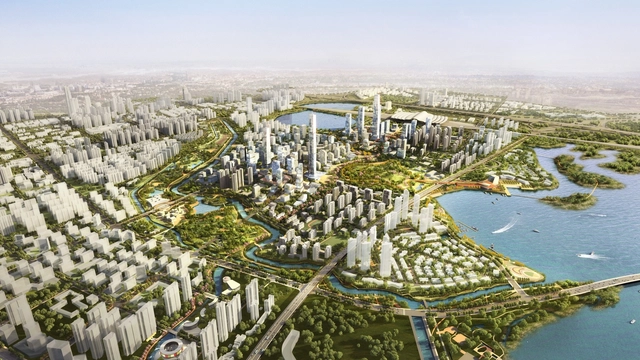
Designed by Sasaki in collaboration with an interdisciplinary team including Arup, JLL, and the Wuhan Planning Institute, the Wuhan Yangchun Lake Business District master plan was approved by the city. Imagining “a progressive yet realistic vision for the district”, the project, a landscape-forward urban blueprint, will define Wuhan’s next generation of growth.
Harvard Graduate School of Design (Harvard GSD) has announced three shortlisted architects for the 2020 Wheelwright Prize. Now in its eighth cycle, the Wheelwright Prize supports innovative design research, crossing both cultural and architectural boundaries, with a $100,000 grant intended to support two years of study. The 2020 Wheelwright Prize drew 168 applicants from over 45 countries.
In the past, sustainability initiatives were coordinated by a few key sustainability-focused professionals in the office. These team members would take charge and corral the rest of the project collaborators in conference calls, emails chains, and boardroom meetings making sure building performance targets were discussed, decided, pursued, and implemented.
Present circumstance makes this process, which was not too efficient, very challenging to begin with. With that in mind, here are some tips from cove.tool and AEC leaders that have mastered remote work and the best ways to coordinate building performance while stuck at home.
https://www.archdaily.com/936939/5-expert-tips-to-help-you-coordinate-building-performance-while-you-are-working-remotelySponsored Post
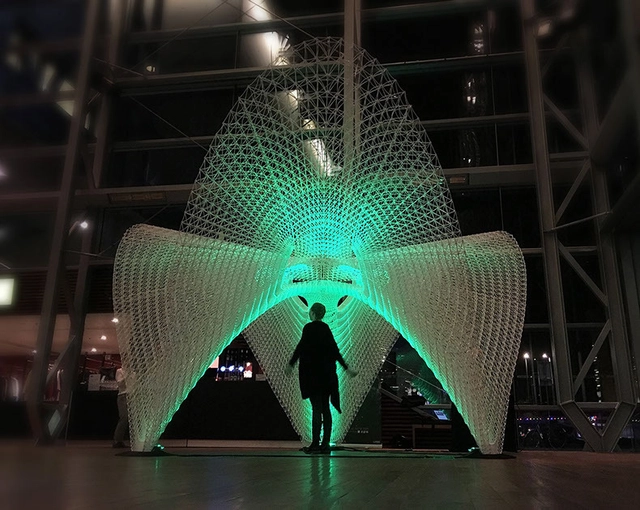
In this article, we tap into how AI could be augmenting, changing design processes, and how architects and other professionals are responding and incorporating these technological advancements into their design work. What kind of innovation can AI bring to this industry, and what has been experimented with so far? This selection of projects can help form an opinion on the architectural application of AI.
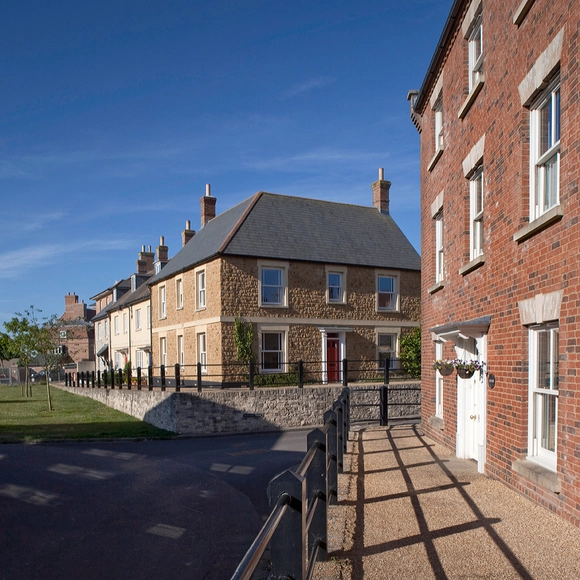
One of the most boldly dissenting voices of our time, architectural and urban theorist Léon Krier (born 7 April 1946) has throughout his career rejected the commonly accepted practices of Modernist Urbanism, and helped to shape the ideals of the New Urbanism movement. Through his publications and city designs, Krier has changed the discourse of what makes a city successful and returned importance to the concept of community.
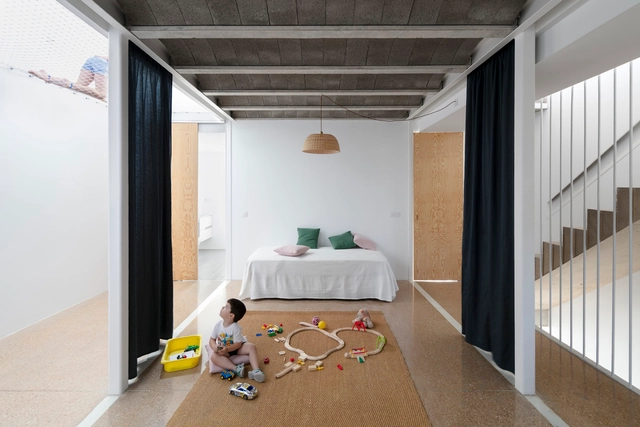
Over the past few decades, interior spaces have become increasingly open and versatile. From the thick walls and multiple subdivisions of Palladian villas, for example, to today's free-standing and multi-functional plans, architecture attempts to combat obsolescence by providing consistently efficient environments for everyday life, considering both present and future use. And while Palladio's old villas can still accommodate a wide variety of functions and lifestyles, re-adapting their use without changing an inch of their original design, today, flexibility seems to be the recipe for extending the useful life of buildings as far as possible.
How, then, can we design spaces neutral and flexible enough to adapt to the evolving human being, while still accomplishing the needs that each person requires today? An ancient element could help redefine the way we conceive and inhabit space: curtains.
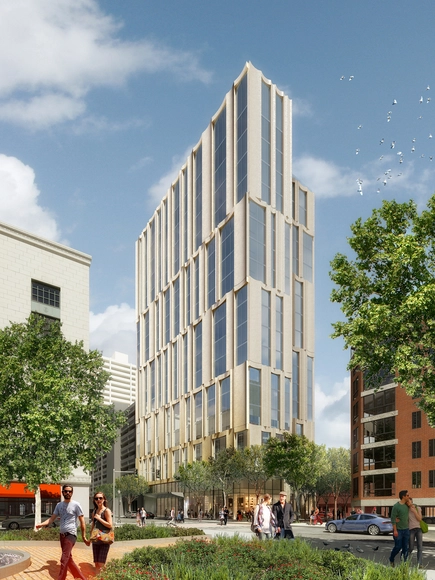
Höweler + Yoon Architecture and Sasaki have announced the groundbreaking for new construction on 212 Stuart Street, in the historic Bay Village neighborhood in downtown Boston. The residential tower is a 19-story building containing 126 units with two townhouses and retail space on the ground level.

















_Golden_Dusk_Photography.jpg?1586260356&format=webp&width=640&height=580)
_Golden_Dusk_Photography.jpg?1586259969 "© Golden Dusk Photography")
_Golden_Dusk_Photography.jpg?1586260024 "© Golden Dusk Photography")
_Golden_Dusk_Photography.jpg?1586259696 "© Golden Dusk Photography")
_Golden_Dusk_Photography.jpg?1586260139 "© Golden Dusk Photography")
_Golden_Dusk_Photography.jpg?1586260356)
.jpg?1586335550&format=webp&width=640&height=580)