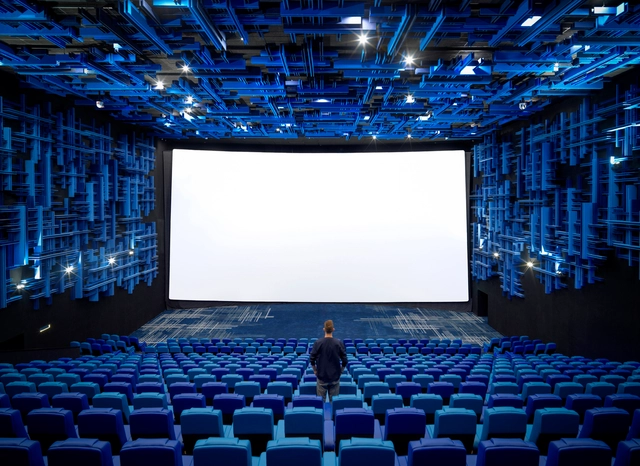
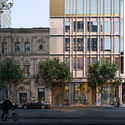
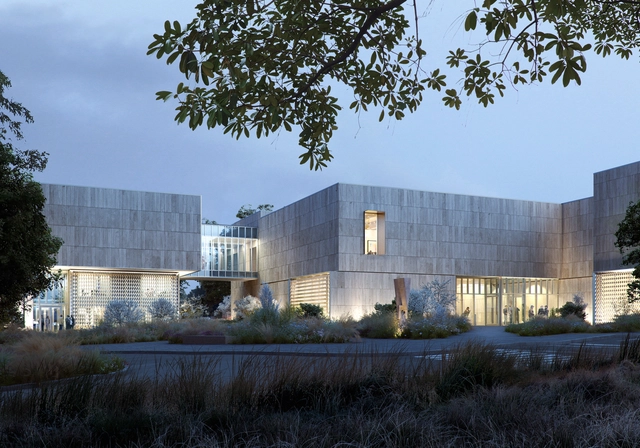
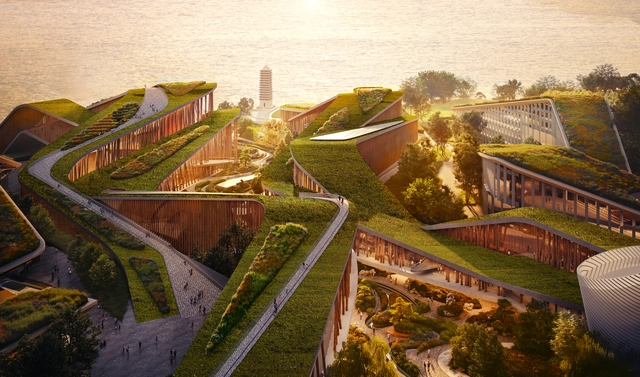
Jinan Cultural Sport and Archives, Public Center, Muchuan Xu, Minxi Cai, Xin Yan, Jingyi Zhao, Qijun Lu, Shangzhao Yang, Xiaofeng Li, Zhongning Zhang, Guanbao Ye / Vantree Design / . Image Courtesy of A' Design Award & Competition
The A' Design Awards - the world's leading annual international juried design competition - were established to promote and recognize the best design work in all countries and in all creative disciplines. The Award has 100 main categories, including Architecture, Building and Structure Design,Interior Space and Exhibition Design, and Furniture Design, in addition to others related to the world of Lighting, Landscape, Building Materials, and some "Super Categories" such as Good Industrial Design, Good Architectural Design, and more. Next year's edition is now open for entries; designers can register their submissions here.
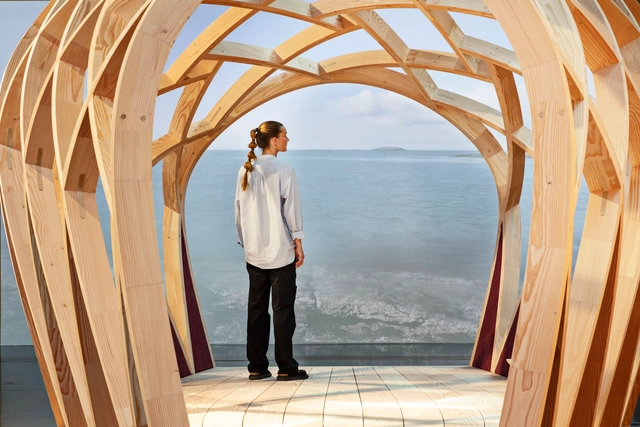
The “Women in Architecture “exhibition by the Danish Architecture Center aims to open the conversation about women in architecture and showcase their often overlooked, yet substantial contributions to the field. The historical part of the exhibition celebrates untold stories and forgotten accomplishments of women in Denmark from the 1920s to the 1970s. The exhibition also gives the floor to contemporary architects, asking them to share their experiences as architects in Denmark today. To further explore this position, Tatiana Bilbao Estudio, Siv Helene Stangeland from Helen & Hard , and Ensamble Studio explore the theme of the event inspired by Virginia Woolf’s 1929 essay, “A Room of One’s Own”, in which she asserts that women must be financially independent if they are to be able to create works of significance. They must have a room of their own, in both a physical and metaphorical sense.
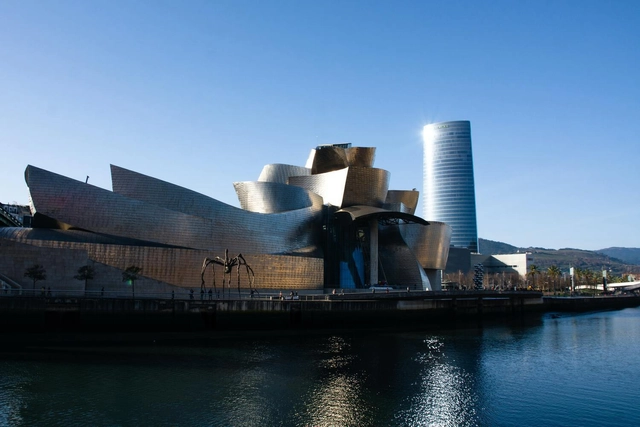
The Guggenheim Museum in Bilbao is celebrating its 25th anniversary this October 2022. Set on the edge of the Nervión River in the Basque Country, Spain, Frank Gehry's Guggenheim boosted the city's economy with its astounding success and changed the museum's role in city development. Twenty-five years on, the Bilbao Effect continues to challenge assumptions about urban transformations and inspires the construction of iconic pieces of architecture that uplift cities' status, calling investors and visitors.
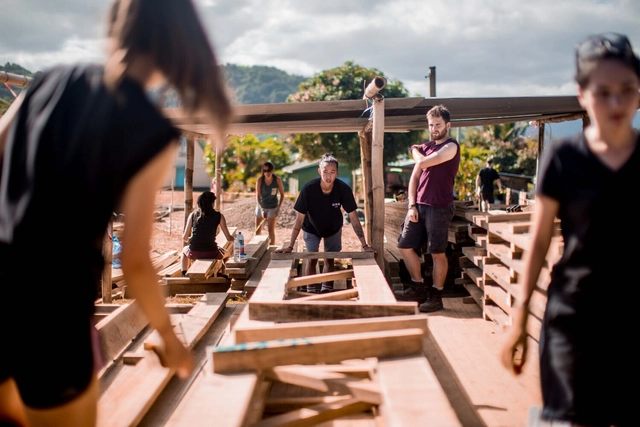
With the construction sector getting back into full swing and major upcoming projects being announced, a larger workforce is getting ready to take on these colossal works. Accordingly, on-site presence and inspections are critical and essential to creating good architecture and constitute significant learning instances for architects or engineers looking to build expertise. But despite all these new endeavors that promise new technologies, a more sustainable future, and better ways of living, one old issue prevails the presence of gender discrimination on the construction site.
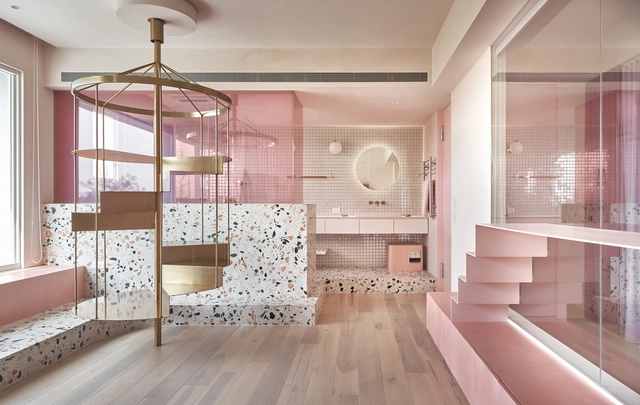
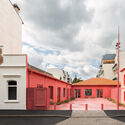
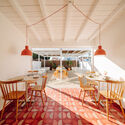
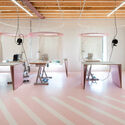
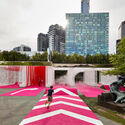
In many countries around the world, October is dedicated to raising awareness for breast cancer. Pink ribbons that represent this cause, are a tribute to Susan G. Komen, responsible for the Cure's 1990 campaign in the USA. To celebrate this month and add spread awareness efforts, ArchDaily selected some projects that incorporate the color pink into façades, interiors, and details.
Climate is one of the key factors to take into consideration when designing a space. Of course, this can present a challenge, especially when dealing with extreme climates and the need for insulating materials that are able to adapt to a wide range of conditions. Luckily, for architects operating in Mexico, the country's privileged climate facilitates the creation of microclimates and spaces that blur the line between interior and exterior.
Cinemas mirror architecture. While the coronavirus pandemic shuttered theaters across the world for months, the industry is looking to the future as it aims to rethink the movie-going experience. As crowds flocked to the cinema after the 1918 pandemic, so too will the industry change shape again as it respond to new modes of watching films together.
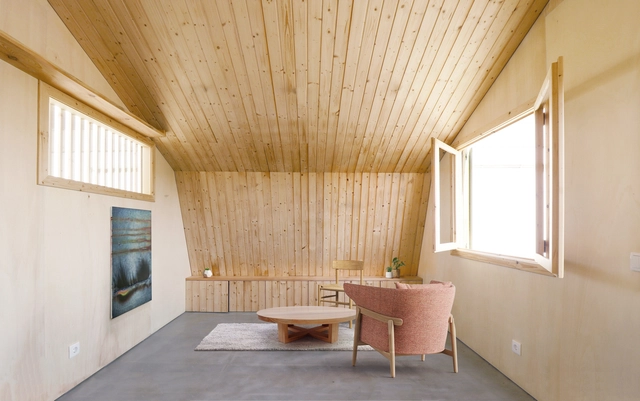
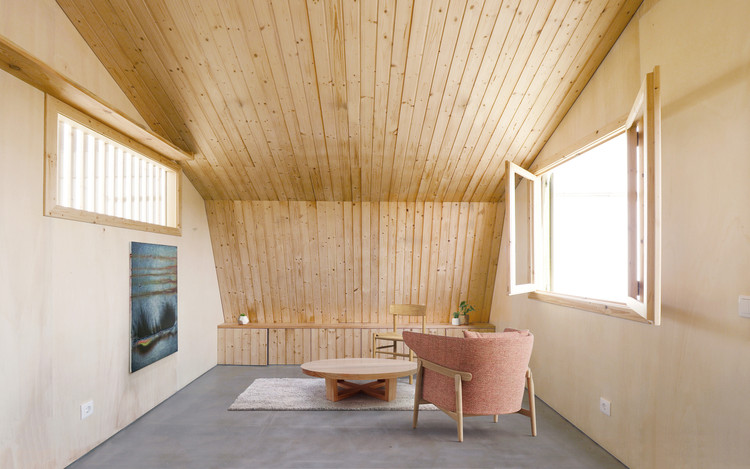
It is becoming a priority for architects to optimize projects that require increasingly smaller spaces, especially when building in urban areas where land value is often the most critical factor. This happens in countries like Portugal, for example, where urban plots are scarce and the properties available for remodeling are usually very small.
Working on a small scale offers somewhat playful flexibility. From adaptable interiors to urban installations and treehouses, one must use the imagination to solve the issues of limited space or budget. Check out the following 15 projects in Portugal —from stores to small pavilions— that show that spatial limitations do not diminish the quality of architecture.
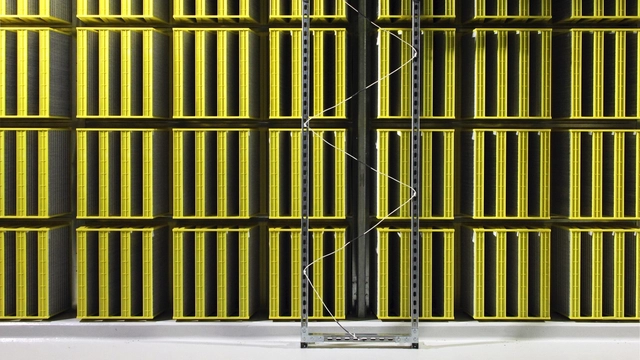
Facebook Data Centre. Image Courtesy of Liam Young
Data centers, automated assembly lines, telecommunications facilities, and warehouses represent a very utilitarian aspect of the built environment, and yet they compose a particular kind of infrastructure within contemporary society, one that is fundamental to the development of everyday life. Rarely discussed within the profession, these new typologies have more recently penetrated the architectural discourse, raising questions about the architectural significance and design potential of the spaces sustaining the mechanics of today's world.
Although there is much conflict surrounding the term Brutalist, there are certain constants and patterns within the movement that offer a concrete idea of the movement and its place in contemporary architecture.
The buildings that adhere to Brutalism—an off-shoot of the Modern Movement that erupted between 1950 and 1970— stand out in part to their constructional sincerity- that is, keeping no secrets about the materials that went into their creation, their bold geometry, and the asperity of their textures and surfaces. Reinforced concrete is the predominant material in Brutalist works thanks to its prominent and dramatic texture, which is put on full display.
When building near the sea, a project’s design strategy must pay special attention to the effects of marine corrosion. The salt content in the environment provokes a chemical and physical process which incites a material breakdown or degradation, compromising the durability of the building’s infrastructure.
As a response to the demands for ocean-side buildings, and the corresponding façade components that go along with them, air-lux has developed a system that aims to perform reliably in maritime conditions. By virtue of its corrosion-resistant materials, improved surface coatings, and technically optimized components, the system withstands marine climates and minimizes salt water damage.
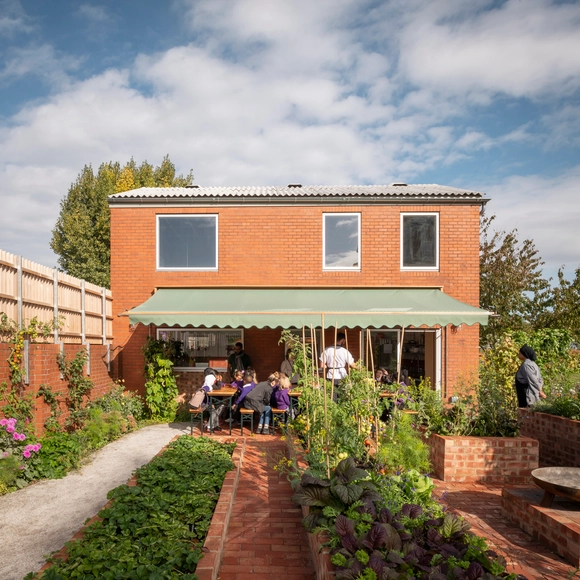
The Royal Institute of British Architects (RIBA) has announced the Hackney School of Food, designed by Surman Weston, as the winner of the Stephen Lawrence Prize 2022. The award aims to encourage new architectural talent and to reward projects with a budget of less than £1 million. RIBA has also awarded the Neave Brown Award for Housing 2022 to the Hackney New Primary School and 333 Kingsland Road by Henley Halebrown. The award is given in honor of social housing pioneer Neave Brown (1926-2018) and it recognizes affordable housing initiatives in the UK.
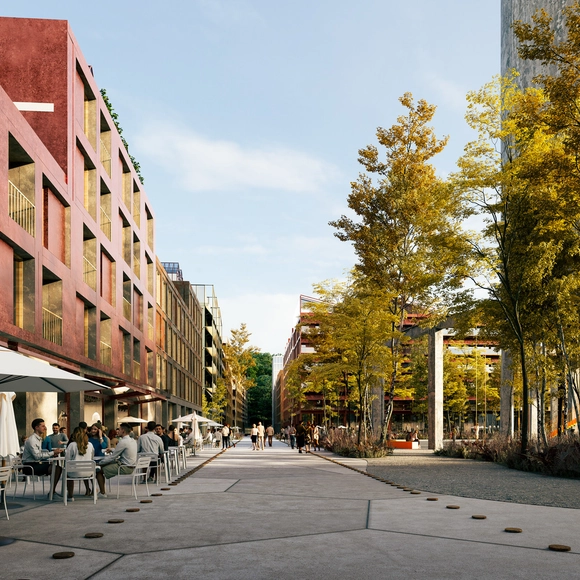
Courtesy of Urban Agency | COBE | LuxPlan |Urban Creators
Urban Agency, in partnership with COBE, won in 2019 a competition to transform a former steel factory into an 850,000 square meters car-free mixed-use district. The industrial site is planned to become a mixed-use district, with housing for over 8,000 new residents, office spaces, schools, workshop spaces, and 268,000 square meters of landscape, including a reactivated river area. The master plan strategies focus on urban nature, renaturalization, preservation and reuse, car-free streets, and an adapted dense mix of buildings and functions.
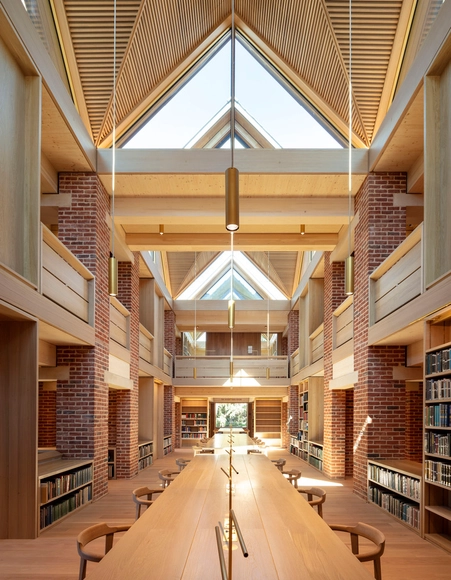
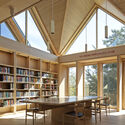
Designed by Níall McLaughlin Architects, the Magdalene College Library was just selected as the winner of the 26th edition of the RIBAStirling Prize. Selected from a pool of shortlisted projects, the outstanding new building replaces a library gifted to Magdalene by Samuel Pepys 300 years ago and provides the students of the University of Cambridge with a new space that includes an archive and an art gallery.
Writer Eva Hagberg and I have known each other for a long time. Way back, in a year I can’t remember, I assigned her one of her first magazine assignments. Literally, dozens of other assignments followed. So it was with some anticipation, and a bit of surprise, that I received her new book When Eero Met His Match: Aline Louchheim Saarinen and the Making of an Architect (Princeton University Press), an intriguing hybrid text, one-part Aline and Eero biography, one part memoir of Hagberg’s experiences as a design writer and publicist. (I am briefly mentioned in the book.) The book’s main argument is that Aline Saarinen largely invented the role of the architectural publicist. Recently I traveled out to the Brooklyn Navy Yard to talk to a very pregnant Eva about the impetus for her new book, its dual structure, and the journalistic ethics of Aline Saarinen.
As our collective conscience challenges the ethics of mass production and the manufacturers of high-end furniture make moves towards more mindful and individually specified making, a design-and-make mentality is becoming ever more present in the industry. It’s new but old. It’s workshops coming to the fore and it’s happening when design entrepreneurs are committed to the very 2022 preoccupations of waste-free production, individualisation and durability.
https://www.archdaily.com/990465/trella-and-the-rise-of-the-designer-makerEmma Moore
From the first traces of a sketch to the ribbon cutting at the official inauguration, a building and its construction process goes through numerous steps. From understanding client demands, complying to local regulations, staying within budget, getting the necessary approvals for development and construction details, a lot of time, resources and decisions are involved. To this end, it is essential to have a workforce that knows and understands the correct processes inside-out, are well informed and have experience and availability. Finding and training this workforce isn't always easy though, and this is where Aligned Studios comes in: a service that creates and manages teams composed of qualified designers for US architectural and construction companies.
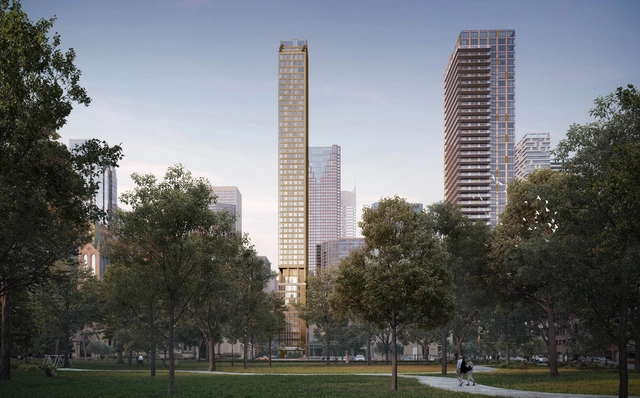
BDP Quadrangle has revealed the design of a 54-storey, mixed-use tower in downtown Toronto, Canada. The project will replace an existing 10-storey office tower built in the 1960s. The new tower will contain office and residential units, with amenities and outdoor terraces on the 11th floor and at the ground floor. The building is planned to accommodate a total of 278 apartments with penthouses on the 52nd and 53rd floors. The project is currently in the pre-construction phase.
The construction of the new building of Palmer Museum has begun. Located at Penn State, USA, and scheduled to open in the spring of 2024, the new 6600 square meters complex will expand nearly double the space of the current gallery to host the growing collection of more than 10,000 pieces. The design features a series of pavilions, educational areas, and courtyards to boost accessibility to the art collections for students, staff, and the public. The construction aligns with the 50th anniversary of the museum along with a multitude of events, including the exhibition of Allied Works' pieces of the design process for the new Palmer Museum.
Although we usually think of climate change as something that should be addressed by research institutes, governments or official reports, private companies also play a key role in affecting change, as they are on the front lines of production and innovation. This is especially true in the field of construction, as it is an industry that moves a significant amount of resources and people, but also exerts a huge impact on the environment. Unfortunately, not all companies take on this challenge, although this is slowly changing and can be seen in a number of successful examples. One of these is the case of Rieder, which embarked on a journey to become “Climate Positive” by 2030 and, more notably, set the example when building its new headquarters.
Büro Ole Scheeren has designed a new campus and experience center located in the historical city of Yibin, a region known for its rich cultural heritage and the geographical source of the Yangtze River. The campus was commissioned by Wuliangye, one of China’s leading winemakers. The project represents a large development inspired by the shape of a natural canyon, with two dynamic parallel structures defining a central space. On either side of this structure, called the Wuliang Interstice, are the Wuliangye World and the Wine Culture Exhibition Center respectively. Wuliangye World is an experience center where visitors can engage with the tradition of winemaking, while the exhibition center tells the story of wine culture through a series of themed exhibition halls.
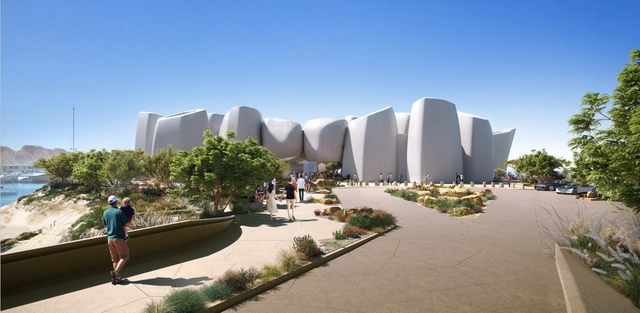
Foster + Partners has revealed the designs of the Marine Life Institute on Saudi Arabia's northwestern coast. As part of Triple Bay development AMAALA, a luxury tourist destination on the Red Sea coastline, the project will accommodate a research center, labs, galleries, and educational spaces to give visitors a glimpse into the wonders of the marine environment of the coastline. Reproducing the forms of coral formations, the building will be the world's first fully immersive marine institution where visitors can walk underwater, snorkel with rare species and experience a coral exhibit inside the building.
The Global Challenge is an annual competition organized by A--D that recognizes the most sustainable architectural projects around the world, and helps accelerate their development.
https://www.archdaily.com/990382/4-ways-the-global-challenge-accelerates-the-development-of-do-it-together-architectural-practicesArchitecture in Development
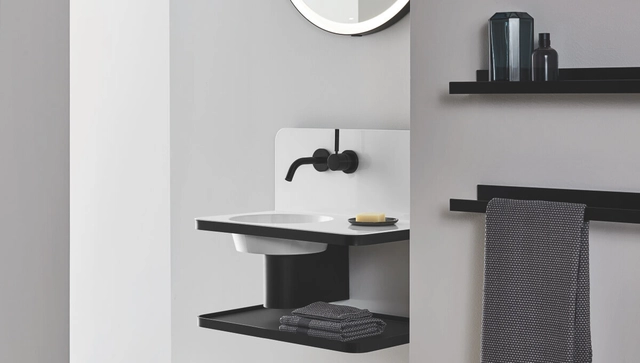
Much more than a merely utilitarian and functional space, the bathroom can be a relaxing place of privacy, solitude and self-care. It can be approached as an oasis of tranquility within one's home, a space to create bold combinations and highlight originality, or even as a room to surprise visitors and escape the usual designs, with different textures, colors and accessories. To achieve the desired effect of each project, specifying the most appropriate parts for each bathroom accessory is essential, which includes toilets, storage devices, walls and fittings such as taps and showers.


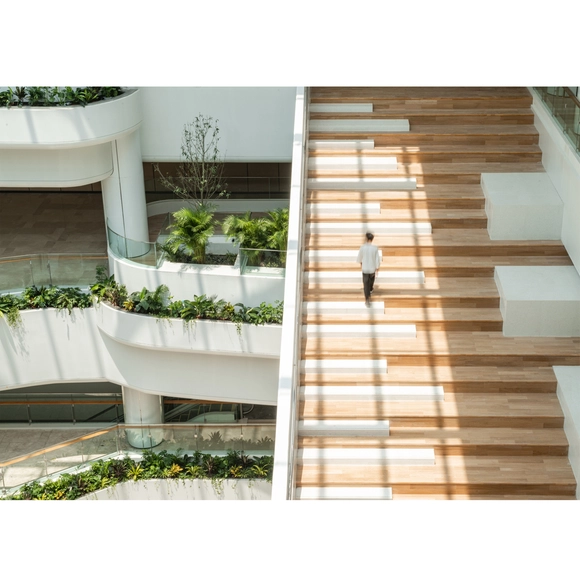







.jpg?1587612590&format=webp&width=640&height=580)
.jpg?1587612634 "MO47 Building / ZD+A. Image © Jaime Navarro")
.jpg?1587612590)