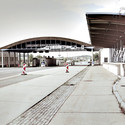
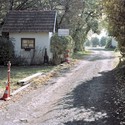
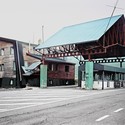
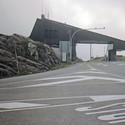
Citizens of central Europe, perhaps uniquely in the world, are used to a life of no borders and free movement between nations. Following two devastating wars fought primarily on European soil, the formation of the early European Union in the 1950s paved the way for a more liberal, less isolated continent. It was not until the signing of the Schengen Treaty in 1985 (which came into effect in 1995) that the majority of borders were truly dissolved and travelling between nations, cultures, and communities became as simple as walking down the road.
Ignacio Evangelista's series of photographs entitled After Schengen examine the remnants of the old, abandoned crossing points that still exist across the Union. No longer necessary to maintain a country's independent sovereignty, and almost twenty years since the revolutionary pact was ratified, these palimpsests of border control remain as striking today as when they when delineated the closed boundaries between nations.
See a selection of the collection after the break...
The European Union Prize for Contemporary Architecture - Mies van der Rohe Award is one of the most important and prestigious prizes for architecture within Europe. First established in 1987, the prize is awarded every two years, and a look at the projects over the years offers unique insight into the development of architecture across Europe. To better understand the significance and uniqueness of the award we spoke with two previous award winners – Kjetil Trædal Thorsen and Craig Dykers from Snøhetta and Dominique Perrault from Dominique Perrault Architecture – as well as Peter Cachola Schmal, an architect, critic and the director of DAM, the German Architecture Musuem, and Josep Lluís Mateo of Mateo Arquitectura and a professor of Architecture and Projects at ETH-Eidgenössische Technische Hochschule/ Swiss Federal Institute of Technology Zurich.
“This is the special thing about the Mies jury, that they do visit the top 5 projects, and see first-hand what this piece of architecture is about. And then they vote, which means the jury really knows what they’re voting about,” Peter Cachola Schmal noted.
“It’s a prize for a project, rather than a prize for an architect,” Kjetil Trædal Thorsen added.
Read on after the break for more on the Mies van der Rohe award and to see what the architects had to say about the importance of archives...
A major competition for reuse has just been announced for the Malagrotta Landfill, one of the European Union's biggest landfill sites. After Malagrotta was closed in August 2013 due to its controversial size and negative impact on the surrounding community, the Municipality of Rome began a process of redevelopment through community engagement. Multi-displinary teams are tasked with a creating a proposal to reinvent the sprawling 240-hectare property while considering its original purpose. The competition is designed to begin a conversation on the long-term vision for the property.
The search for the 2014 Young Architect of the Year Awards (YAYA), organised by BDOnline, has begun. Now in its 16th year, YAYA "recognises the most promising new architectural practice in the European Union." Open to fully qualified architects who have been practising for twelve years or less, the winner of this year's YAYA will be announced at the Architect of the Year Awards gala dinner on the 2nd December 2014 at The Brewery, London.
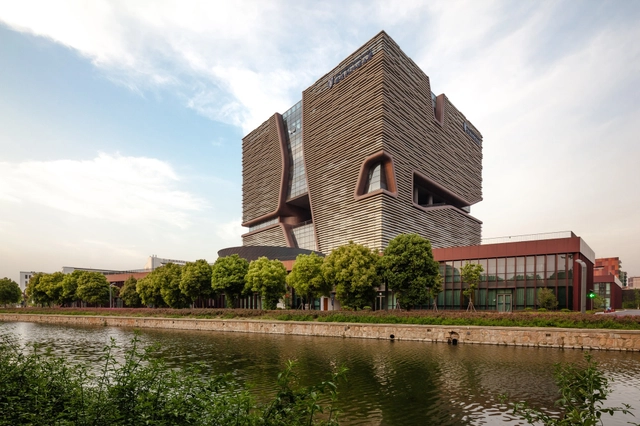
Xi'an Jiaotong-Liverpool University Administration Information Building. Image Courtesy of Aedas
As of this week Aedas, which was recently ranked as the 5th largest and influential practice in the UK by the Architects' Journal, has demerged into two separate practices. The thirteen offices in China, South-East Asia, the Middle East and the US, will continue to operate under the Aedas brand whilst the eight UK offices and the offices in Russia, Poland and Kazakhstan will operate under a new name: AHR. According to the outgoing board, the demerger "will allow both companies to focus on their respective strengths and will enable them to grow the businesses in different directions." The intention is that both groups will continue to work together on projects in the future.
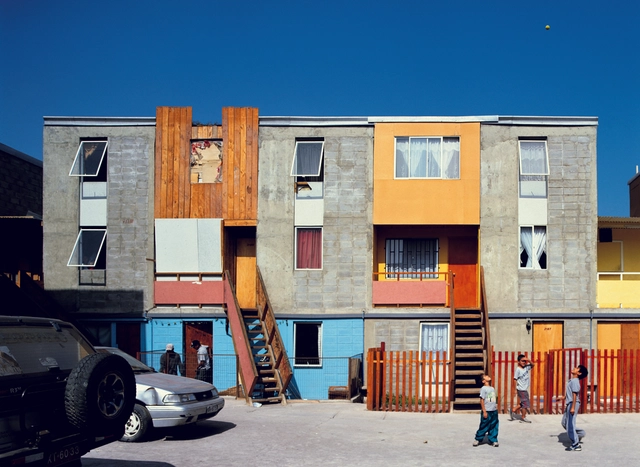
In Radical Cities,Justin McGuirk travels across Latin America in search of the people and ideas shaping the way cities are evolving: "after decades of social and political failure, a new generation has revitalised architecture and urban design in order to address persistent poverty and inequality. Together, these activists, pragmatists and social idealists are performing bold experiments that the rest of the world may learn from." The following is an excerpt from Radical Cities on PREVI - the great, but all-but-forgotten experimental housing project in Lima that counted James Stirling and Aldo van Eyck among its contributors.
In a northern suburb of Lima is a housing estate that might have changed the face of cities in the developing world. Its residents go about their lives feeling lucky that they live where they do, but oblivious to the fact that they occupy the last great experiment in social housing. If you drove past it today, you might not even notice it. And yet the Proyecto Experimental de Vivienda – PREVI for short – has a radical pedigree. Some of the best architects of the day slaved over it. Now it is largely forgotten.
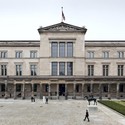
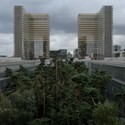
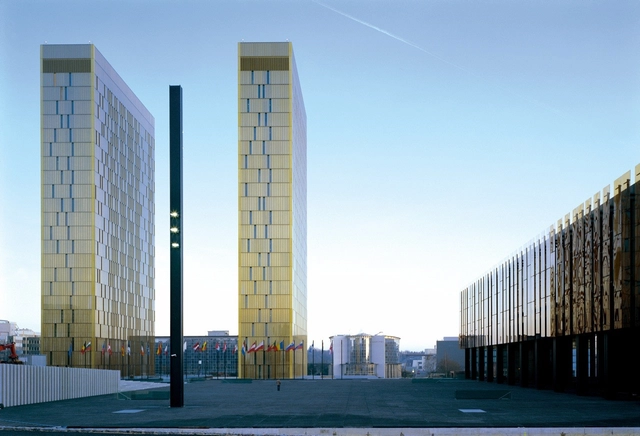
Today is Europe day in the EU, and to celebrate we're rounding up some of the best Europe-inspired architecture. First, two buildings designed for European institutions, the Court of Justice of the European Communities by Dominique Perrault and the Council of Europe by Art & Build Architect. Next, we've got a building which celebrates the achievements of Europeans, the Cultural Centre of European Space Technologies. Finally, two buildings which promote the very notion of Europe: the EU Pavilion by Senat Haliti, a message of hope for the 72% of Kosovans who wish to join the EU; and Le Monolithe by MVRDV, which has the first article of the European Constitution imprinted on the facade - expounding a belief in "a society in which pluralism, non-discrimination, tolerance, justice, solidarity, and equality between women and men prevail."
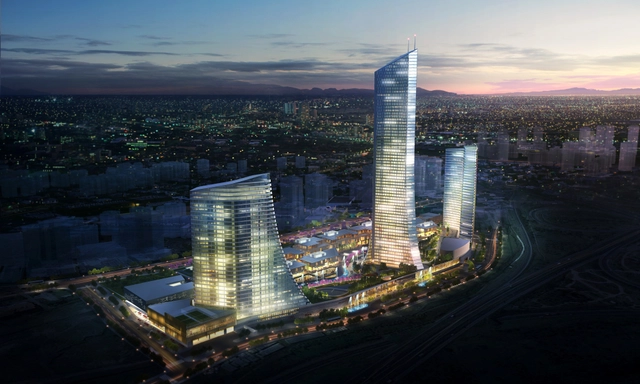
A study conducted by Emporis, the international provider of building data, has revealed that Moscow is set to retain its title as the skyscraper capital of Europe. Already home to 4 of Europe's top 5 - including the Mercury City Tower, Europe's current tallest at 338m - Moscow is also home to 6 of the 10 tallest European Buildings under construction. Three of these buildings will also surpass the height of the Mercury City Tower.
However, despite having the greatest concentration of supertall buildings, Moscow is set to lose its crown for the tallest building in Europe to St Petersburg, with the 463m Lakhta Center due for completion in 2018. Also making the top 10 list with 3 buildings being constructed over 250m is Istanbul. You can see the full top 10 list after the break.
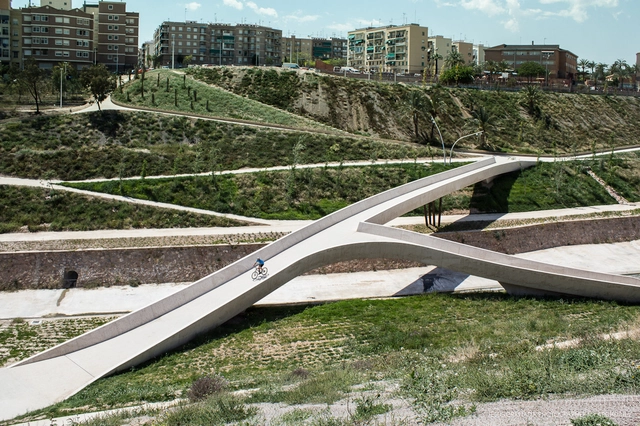
The results of the 2014 European Prize for Urban Public Space have been announced. The prize organized by the Centre of Contemporary Culture of Barcelona (CCCB) rewards both the designers and the facilitators (such as councils or community groups) that have contributed to the best urban interventions of the year. The award is given for ingenuity and social impact, regardless of the scale of intervention, meaning that small, relatively unknown practices can rub shoulders with some of the best-known practices in Europe.
See the 2 Joint Winners and 4 Special Mentions after the break
What do you think the North American, Asian and Western European tall building communities most need to learn from each other? This is precisely what the Center on Tall Buildings and Urban Habitat (CTBUH) sat down to ask five leading architects, whose responses formed an eclectic and meaningful overview on the state of tall building worldwide. As Rem Koolhaasnoted, each region has their own journey that is worth understanding, such as the Arab world’s transition from “extravagance to rationality” or Asia’s hyper-focus on project realization. But, as James Goettsch points out, “not every building has to be something remarkable." It’s alright for some buildings to be nothing more than “good citizens.”
Aside from the environmental and health benefits provided by biking, cycle cities are proving to be profitable, which has begun to attract support from many US business leaders. Not only do bike-friendly streets increase the visibility and desirability of real estate, they also reduce the need to waste money (and space) on ample parking. In addition to this, as the Guardian’s Michael Andersen points out, bicyclists are the “perfect customer: the kind that comes back again and again.” Learn why else biking is good for business here.
First Place / Caterina Spadoni, Valentina Brunetti. Image Courtesy of YAC
The results for the latest Young Architects Competition (YAC), Post-Quake Visions, have been announced. The competition aimed to discover innovative ways to overcome the effects of a seismic catastrophe over a medieval Mediterranean town. Participants were encouraged to rethink and redesign the quake-inflicted gaps left inside ancient urban tissues. With 356 enrolled teams comprising of 808 designers, see the winning results and Gold Mentions after the break.
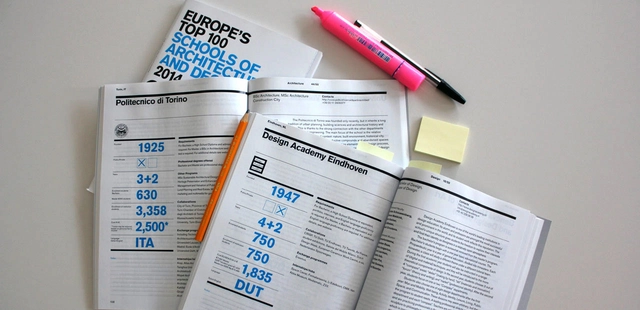
Picking a university to study at can be an incredible challenge, especially with architecture courses which can last up to 7 years at some institutions - and knowing what to expect can take hours of research. That's why the Italian magazine Domus has helpfully made its 2014 supplement of Europe's top 50 schools in both architecture and design available for free online. It's sure to be an invaluable resource for anyone considering their options for architecture or design courses in Europe.
With the help of crowdfunding, Luke Shepard journeyed with a friend through 36 cities in 21 countries over the course of three months to capture over 20,000 images of some of Europe’s greatest structures. The end product resulted in a four-minute film entitled Nightvision, which aims to inspire appreciation for the "brilliance and diversity of architecture found across Europe".
The list of buildings featured in this film can be found on Shepard's site here.
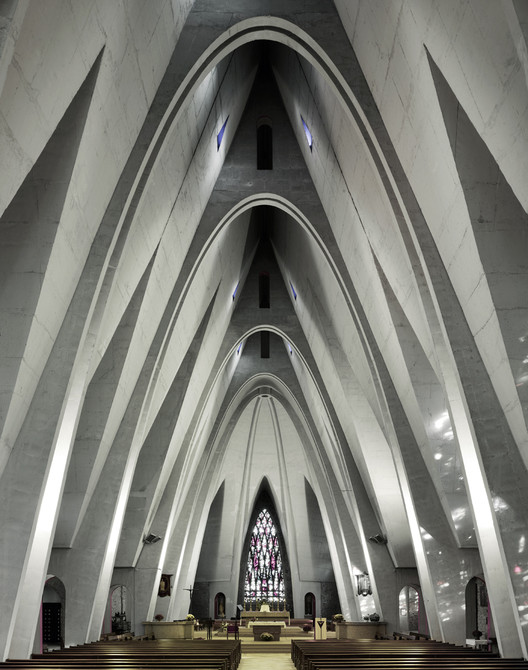
As Europe recovered from the death and destruction of World War II, countries got back to the business of rebuilding their communities and, of course, their churches. The need to make sense of the madness of the War was palpable - as was the need to express this modern-day spirituality in a form that broke from the past and embraced this new world.
The result was a bevy of European churches that - although often misunderstood by practitioners - represent some of our best-preserved examples of Modernist architecture. Photographer Fabrice Fouillet made it his mission to photograph these beauties in a series he calls "Corpus Christi." You can see the images - as well as Fouillet's description of the work - after the break...
In 010, the European Centre for Architecture, Art, Design and Urban Studies will inaugurate the first “European Architecture Prize.” The European Architecture Prize is to be given annually to any living architect whose built work exemplifies the highest ideals of European civilization and embodies vision, commitment, and a profound respect for humanity and for the social and physical environment.
A month and a half ago we presented you Roadmap 2050, a proposal to set in motion an invisible revolution in the energy sector which would stabilize the Earths climate.
AMO is a design and research studio inside OMA, a think tank operating on the boundaries of architecture: media, politics, sociology, sustainability, technology, fashion, curating, publishing and graphic design. Some of their works include the barcode flag for the EU and a study for Wired magazine.
And while OMA covers sustainable strategies on a building or master plan scale, AMO is approaching it on en European scale as one of the five consultants conducting technical, economic and policy analyses for Roadmap 2050, an initiative by the European Climate Foundation which looks to chart a policy roadmap for the next 5-10 years based on the European leaders’ commitment to an 80-95% reduction in CO2 emissions by 2050. You can download a brief of Roadmap 2050 in PDF.
The goal is to achieve a 2% energy efficiency saving per year in order to meet this goal, with power and vehicle transportation being the most important areas.
Through the complete integration and synchronization of the EU’s energy infrastructure, Europe can take maximum advantage of its geographical diversity. The report’s findings show that by 2050, the simultaneous presence of various renewable energy sources within the EU can create a complementary system of energy provision ensuring energy security for future generations.
AMO’s work focuses on the production of a graphic narrative which conceptualizes and visualizes the geographic, political, and cultural implications of the integrated, decarbonized European power sector.
On their study you can find an interesting approach to a diverse european energy grid, including energy trade and the use of new non-traditional sources.
The image of “Eneropa” appears as a new continent based on its energy production: Biomassburg, Geothermalia, Solaria, the Tidal States… are part of this new territory. Other branding concepts are introduced on the study, creating a tangible image of this ambitious plan, which reminds the powerful (yet simple) idea behind the barcode flag.