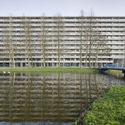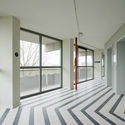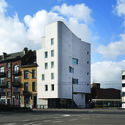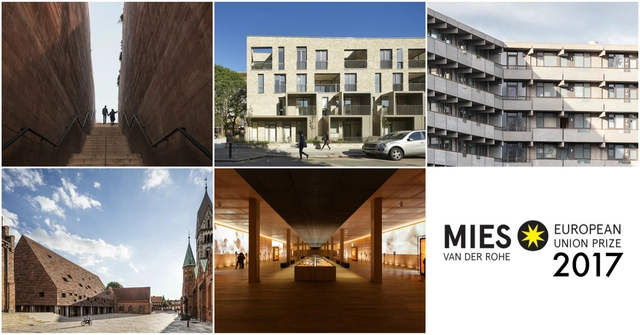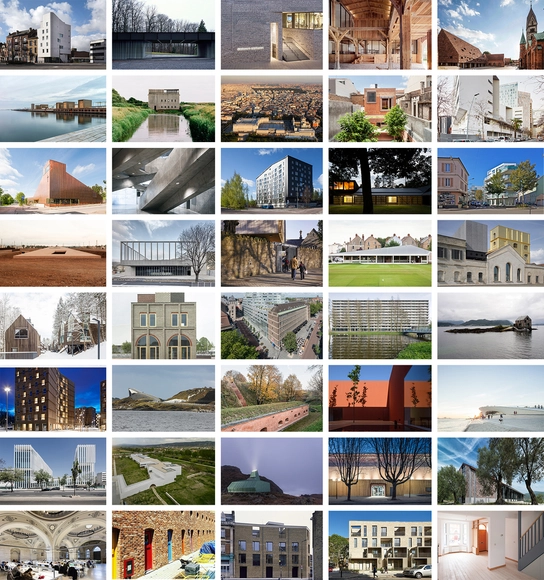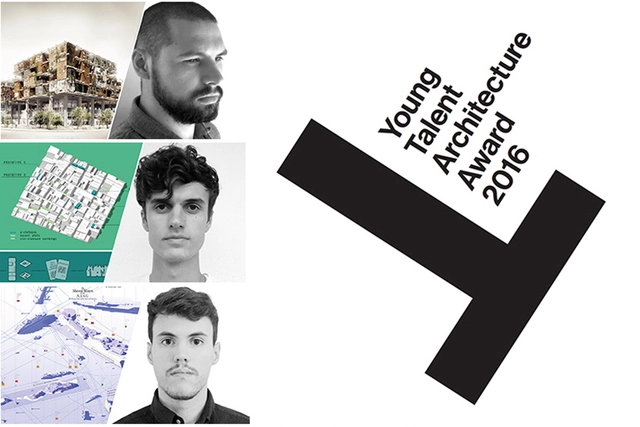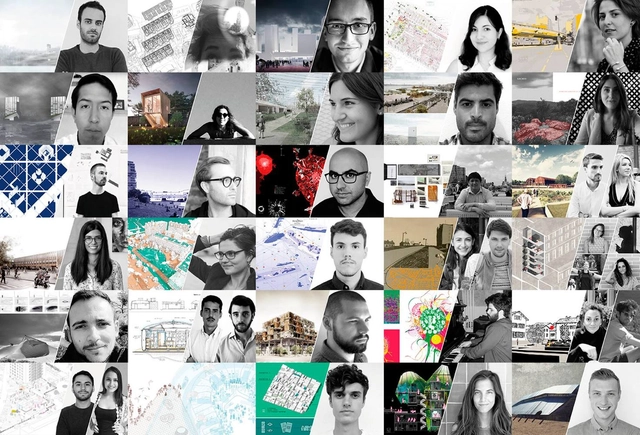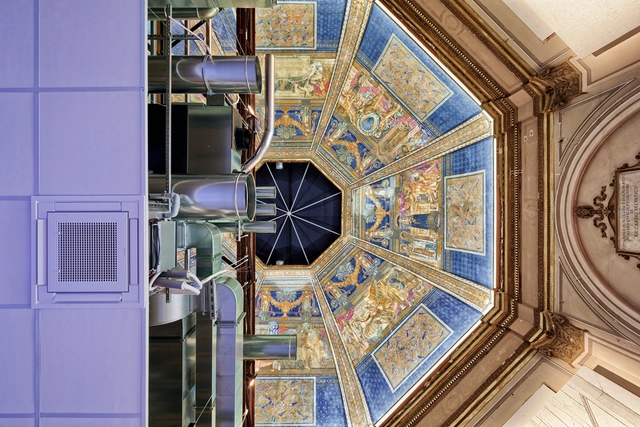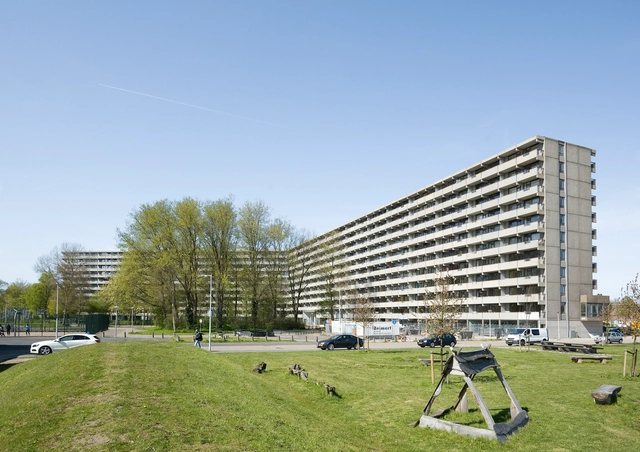
The Fundació Mies van der Rohe has announced the three winners of the inaugural Young Talent Architecture Award (YTAA) 2016. Established this year to “support the talent of recently graduated Architects, Urban Planners and Landscape Architects who will be responsible for transforming our environment in the future,” 9 finalists were selected from a shortlist of 30 projects, which was then narrowed down to 3 winners.
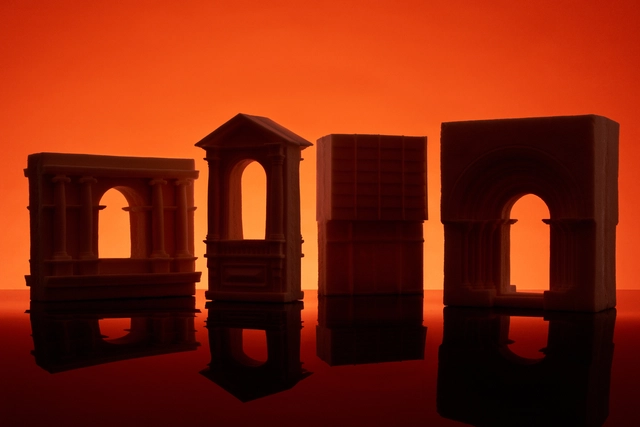
One of the key challenges faced by the European currency union, the Euro, was that of their design. In 2002, when the banknotes entered circulation across large parts of the European Union, the imagery that they possessed had to represent a continent of cultures. The answer: to create fictitious illustrations or, as the European Central Bank states, "stylised illustrations [of windows, doorways and bridges], not images of, or from, actual constructions." In a recent exhibition architect Anna Pang, in collaboration with Johan Holkers and Rolf Stålberg, have attemped to present the "fictive architecture" of the Euro as sugar sculpture.
https://www.archdaily.com/797607/the-fictive-architecture-of-european-banknotes-sculpted-from-sugarAD Editorial Team
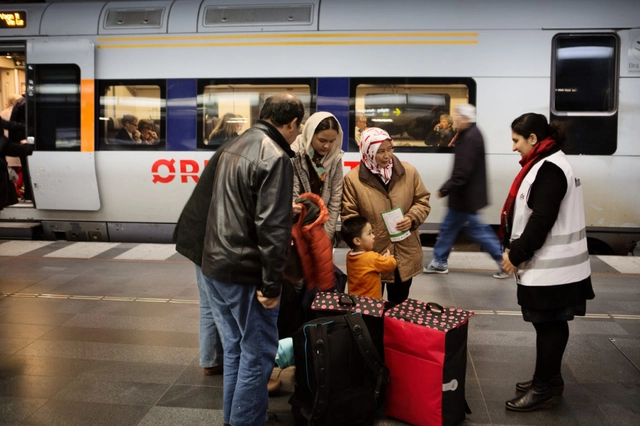
New arrivals at Malmö Central Station. Photo: Johan Bävman
Europe’s migration crisis has intensified the need for cities to develop new tools and strategies to help people build skills, earn a living, and establish their place in society. To address this challenge, New York-based design nonprofit Van Alen Institute has launched Opportunity Space, a competition inviting multidisciplinary teams to propose a temporary mobile structure in Malmö, Sweden that will support a wide range of social programs.
The winning team will receive a $10,000 prize, a $5,000 travel budget, and up to $25,000 to implement their proposal in and around Malmö’s Enskifteshagen Park for two months in spring 2017.
The Fundació Mies van der Rohe has announced a list of 30 projects that will compete for the inaugural Young Talent Architecture Award (YTAA) 2016. The award was established this year to “support the talent of recently graduated Architects, Urban Planners and Landscape Architects who will be responsible for transforming our environment in the future,” and joins the Foundation's European Union Prize for Contemporary Architecture – Mies van der Rohe Award “in promoting high quality work amongst emerging and established architects through the acknowledgement of the value of good buildings.”
More than 200 projects were submitted from over 100 European architecture schools, which were narrowed down to a shortlist of 30 projects by an esteemed jury of architects and curators. Three winners will be selected at the Teatro Piccolo Arsenale in Venice on October 28th 2016 as part of the 2016 Venice Biennale.
Installation in the Central Pavilion of the Giardini at the 2014 Venice Biennale, directed by OMA/AMO. Image Courtesy of OMA
The following interview with Reinier De Graaf was first published by Volume Magazine in their 48th issue, The Research Turn. You can read the Editorial of this issue, Research Horizons, here.
Architectural practice requires a degree of intimacy and insight into complex sets of forces. While building is architecture’s bread and butter, it’s not always the best format to make a statement. It’s sometimes not even the most appropriate language to respond to a brief. Volume spoke with Reinier de Graaf of OMA/AMO about how research and media can become a vessel for political agendas.
https://www.archdaily.com/789832/ulterior-motives-oma-amos-reinier-de-graaf-on-research-europe-and-the-2014-venice-biennaleReinier de Graaf
On June 11th, the European Biennial of Contemporary Art, also known as Manifesta, began its 100-day stint in this edition's host city, Zurich, Switzerland. The festival's center-piece is a timber raft floating on Lake Zurich, known as the Pavilion of Reflections. The temporary structure was designed and realized by Studio Tom Emerson and a team of thirty students from ETH Zurich. Constructed primarily of timber, Christian Jankowski, curator of Manifesta 11, describes the exhibit “as a floating multi-functional platform with a giant LED screen, a stand for spectators, a swimming pool and a bar.”
In a recent interview with the BBC, Rem Koolhaas (OMA) has spoken out against the campaign seeking to remove the United Kingdom from the European Union, upon which the British people will vote in a referendum next week. Reflecting on his time spent at London's Architectural Association (AA) in the 1960s and '70s, Koolhaas fears that advocates for withdrawal may be looking at the past through rose-colored glasses.
If you look at the arguments to leave you can see this is a movement of people who want to fundamentally change England back into the way it supposedly was before.
MAD’s first residential project in Europe was revealed by Paris Mayor Anne Hidalgo earlier today. The building, called UNIC, will be located in the newly developed neighborhood of Clichy-Batignolles, a former brownfield site in the northeast of the seventeenth arrondissement, covering over fifty hectares. The tower will be adjacent to Martin Luther King Park and a courthouse by Renzo Piano that is currently under construction. MAD was awarded the design through an international competition, and the project is being developed in collaboration with Biecher Architectes.
European Expressionism in architecture has, until now, suffered from neglect. Following a successful campaign for the first volume in a planned seven-part series which focused on Berlin, a new version of the Fragments of Metropolis series—which covers with the Rhein-Ruhr region of Europe—will document 155 buildings from Bochum, Bottrop, Dortmund, Duisburg to Düsseldorf, Cologne, Münster and Oberhausen. This latest volume is currently being crowdfunded.
On the 20th anniversary of its MSc Urban Design Program, the METU Faculty of Architecture is organising an international symposium on urban design to be held between the 4th and 5th October 2016 in Ankara, Turkey: 'Designing Urban Design: Towards a Holistic Perspective'.
“Twin Phenomena” Proposal by ArenasBasabePalacios, one of the winners of Europan 12. Image Courtesy of ArenasBasabePalacios
With 1,305 projects submitted, 44 winners, 49 runner-ups and 61 special mentions have been selected in the Europan 13 competition. Held annually, Europan is a Europeancompetition to design urban and architectural projects for implementation. Europan 13 was done in partnership with governing bodies of cities across Europe in collaboration with 15 European structures, under the theme “The Adaptable City: Self-Organization – Sharing - Project”, with participants called on to address the economic and ecological issues of sustainability in European cities.
Funded through Kickstarter, Luke Shepard’s short film Night Vision is a “visual exploration of European buildings, monuments and landmarks after dark.” The film travels through 36 cities across 21 European countries, “creating image sequences of some of the most awe-inspiring European buildings.”
Shepard has also created a series of GIFs in conjunction with Night Vision, revealing in just a few seconds the beauty of 10 European heritage landmarks, ranging from the Metropolis building in Spain (featured above) to the Brandenburg Gate in Berlin.
Cloisters at University of Glasgow (courtesy of People Make Glasgow)
At its 2017 Annual International Conference in Glasgow, Scotland, SAH will offer a total of 36 paper sessions. The Society invites its members, including graduate students and independent scholars, representatives of SAH chapters, and partner organizations, to chair a session at the conference. As SAH membership is required to chair or present research at the Annual International Conference, non-members who wish to chair a session will be required to join SAH at the time of submitting a session proposal.
“There is a certain tradition, history, and continuity that you can read in European architecture” - Spela Videcnik, OFIS arhitekti
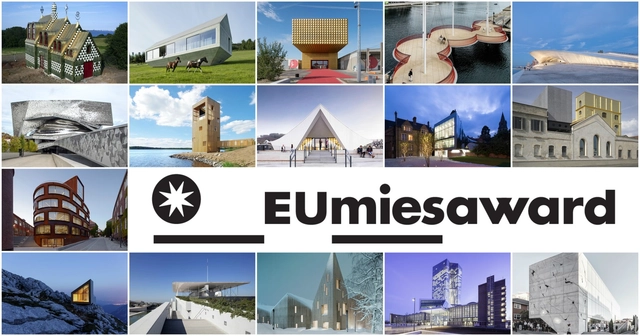
A product of context and history, Europe has influenced the architecture world in a way that perhaps no other continent has. The continent is the topic of the latest video from the Fundació Mies van der Rohe, produced in relation to their European Union Prize for Contemporary Architecture, in which prize-nominated architects from 16 European cities are interviewed on what they believe brings them together, and what makes them different.
As a US citizen who has previously lived in Europe for two years, I was struck by the essential question prompted by the video: “Is there a European identity in architecture?” And if so, what exactly is it? To try to answer this question, I sat down with ArchDaily’s managing editor Rory Stott - a Brit - to debate differing perspectives.
Imagine that Eurasia has been brought to absolute destruction - by wars over religion, ethnicity or countries, or maybe even nuclear destruction. Cities, towns and villages across the super-continent are left in rubble or abandoned; all forms of organization are a fairy tale from a bygone era. Thousands of years of culture and civilization, gone.
What if a new Eurasia could arise from the remnants of this destruction? What artifacts and memories would remain, to seed the creation of a new Eurasia? Imagining New Eurasia, commissioned by Asia Culture Center in Gwangju, South Korea, invites anyone living in, or from Eurasia to submit their ideas, in the form of drawings, sketches, text, artwork, found objects, photographs, maps, memorabilia or any other kind of artifact, on how the future of a New Eurasia may pan out.
Exhibitions, much like publications and films, are one of the key contemporary methods for the communication of architectural concepts and ideas. They allow the practice, curator or educative body to edit and present information and visuals in a way which narrates a story, provokes new ideas, or feeds into a wider discourse. For many, exhibitions are an invaluable source of inspiration and an engaging way of gaining new, or reaffirming old, knowledge and design precedents. Intimately linked to the space or place in which they are displayed, the best exhibitions also remind us that the practice of architecture is both a profession and a discipline; a valuable way of understanding the built, and unbuilt, world we live in.
If you're traveling to, living or studying in Europe this summer then dive into our compilation of what we consider to be some of the most informative and exciting exhibitions on show in between June and October 2015. If you visit them, or any other exhibitions that you enjoy, share a photograph on Instagram or Twitter with the hashtag #archdailyexhibitions.
Check out our favourite exhibitions on architecture, urbanism and design, from Jyväskylä to Milano, after the break.