1. ArchDaily
  2. Built Environment

Built Environment: The Latest Architecture and News

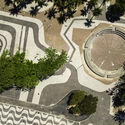
Lessons from Roberto Burle Marx: Designing Resilient and Evolving Urban Landscapes

Audio available

Roberto Burle Marx is often celebrated as a pioneering figure in landscape architecture, particularly for his innovative approach to integrating nature within urban environments. His work, characterized by a deep respect for native flora and a commitment to ecological balance, offers valuable lessons for contemporary landscape architects. At a time when climate change and biodiversity loss are pressing global concerns, revisiting Burle Marx's principles provides insight into creating urban spaces that are not only functional and aesthetically pleasing but also resilient and sustainable.

From the 1930s to the 1990s, Burle Marx's work anticipated many of today's concerns about sustainability and urban well-being. Long before terms like "sustainable design" or "green infrastructure" became commonplace, Burle Marx was already advocating for the use of native plants, recognizing their role in creating self-sustaining ecosystems that required minimal intervention. His projects often transformed neglected urban areas into vibrant, ecologically balanced spaces that not only improved the environment but also enhanced the quality of life for city dwellers.
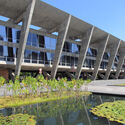

Lessons from Roberto Burle Marx: Designing Resilient and Evolving Urban Landscapes - Image 26 of 4Lessons from Roberto Burle Marx: Designing Resilient and Evolving Urban Landscapes - Image 1 of 4Lessons from Roberto Burle Marx: Designing Resilient and Evolving Urban Landscapes - Image 3 of 4Lessons from Roberto Burle Marx: Designing Resilient and Evolving Urban Landscapes - Image 7 of 4Lessons from Roberto Burle Marx: Designing Resilient and Evolving Urban Landscapes - More Images+ 23

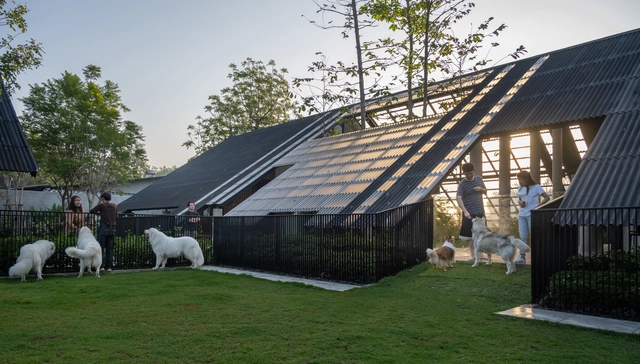
Architecture Beyond Humanity: Designing for Non-Human Species

Are humans the only stewards of the built environment? For many architects and planners, spaces are designed with a focus on the needs, comfort, and health of humans. A spatial ordering, in constructed spaces and the urban fabric, designates humans as the default, singular user in this scenario. However, as much as humans have influenced the trajectory of the world, other species play a crucial role in designing, forming, and maintaining the urban landscapes of the twenty-first century.

Architecture Beyond Humanity: Designing for Non-Human Species - Image 1 of 4Architecture Beyond Humanity: Designing for Non-Human Species - Image 2 of 4Architecture Beyond Humanity: Designing for Non-Human Species - Image 3 of 4Architecture Beyond Humanity: Designing for Non-Human Species - Image 4 of 4Architecture Beyond Humanity: Designing for Non-Human Species - More Images+ 30

Subscriber Access

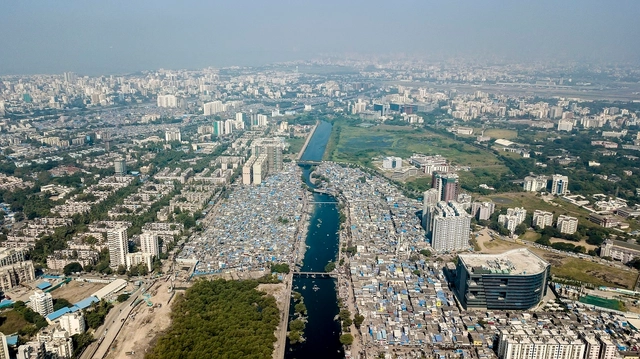
Progress and Reparations: Unpacking the Loss and Damage Fund from COP27

In November of 2022, the coastal city of Sharm El Sheikh, Egypt, hosted the 27th convention of the United Nations Conference of the Parties, known as COP27. Since signing the Paris Agreement in 2015, the nearly annual conference has gained momentum as a global leader in sharing knowledge and developing frameworks to mitigate climate change worldwide. While the more recent COP28, held in Dubai in 2023, focused on conversations of energy production, this previous conference focused on urban contexts, as they deal with the urgent need for incorporating loss, damage, and climate reparations into climate action plans. As two years have now passed since COP27, it is important to revisit these discussions and hold governing bodies accountable for the promises made and the benchmarks set for climate change mitigation. One of the most ambitious plans from COP27 highlights an urgent debate in our urban environments: how will we define loss, damage, and climate reparations in the twenty-first century?

Progress and Reparations: Unpacking the Loss and Damage Fund from COP27 - Image 3 of 4Progress and Reparations: Unpacking the Loss and Damage Fund from COP27 - Image 5 of 4Progress and Reparations: Unpacking the Loss and Damage Fund from COP27 - Image 2 of 4Progress and Reparations: Unpacking the Loss and Damage Fund from COP27 - Image 4 of 4Progress and Reparations: Unpacking the Loss and Damage Fund from COP27 - More Images+ 7

Subscriber Access

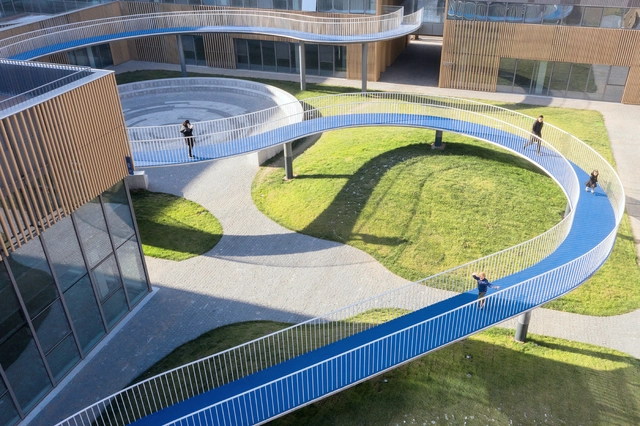
How Do the 7 Principles of Universal Design Help Us Create Better Architecture?

Audio available

When addressing accessibility in architecture, codes set the baseline, while design defines the ceiling. Although numerous guidelines exist, creating spaces for everyone goes beyond mere adherence to standards. It requires a deep understanding of the environment and a broad perspective, recognizing that what we design will be used by people with diverse bodies, abilities, and conditions far beyond those traditionally considered typical users.
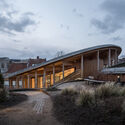
Furthermore, designing environments poses the challenge of inclusivity, ensuring that individuals who do not fit the standard profile—such as people with disabilities, pregnant women, those using assistive devices, and individuals of varying ages, body types, etc—are not excluded. The principles of Universal Design, established in 1997 by the NC State University College of Design and led by Ronald L. Mace, offer a transformative perspective in this context. This approach influences various design fields, including the built environment, products, and communications. When applied to architecture, it fosters the creation of spaces that work for everyone, minimizing the need for adaptations or specialized design.

Environmental Urbanism and Urban Geographies: Medellín 2024-2027 Urban Plan

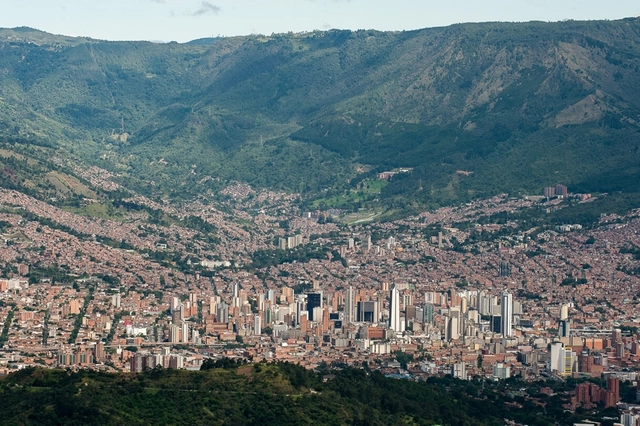
CityMakers, The Global Community of Architects Who Learn from Exemplary Cities and Their Makers, is working with ArchDaily to publish a series of articles about Barcelona, Medellin, and Rotterdam. The authors are the architects, urban planners, and/or strategists of the projects that have transformed these three cities, which are visited in the "Schools of Cities" and studied in the "Documentary-Courses" made by CityMakers. On this occasion, Alejandro Restrepo Montoya, Director of Urban Planning and Architecture of Medellín, presents his article "Environmental Urbanism and Urban Geographies, Medellín 2024-2027"
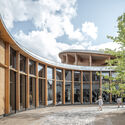
Medellín's urban plan focuses on answering how urban planning can improve people's quality of life. By developing its proposal, the city is promoting the social benefits that these urban planning practices can generate. Medellín emphasizes the use of natural and environmental conditions, such as valleys, streams, rivers, mountains, and hills, to develop urban planning criteria that address social needs.

Environmental Urbanism and Urban Geographies: Medellín 2024-2027 Urban Plan - Image 1 of 4Environmental Urbanism and Urban Geographies: Medellín 2024-2027 Urban Plan - Image 2 of 4Environmental Urbanism and Urban Geographies: Medellín 2024-2027 Urban Plan - Image 3 of 4Environmental Urbanism and Urban Geographies: Medellín 2024-2027 Urban Plan - Image 4 of 4Environmental Urbanism and Urban Geographies: Medellín 2024-2027 Urban Plan - More Images+ 7

Top-Rated Universities for Studying Architecture in 2024, According to QS World Rankings

QS, Quacquarelli Symonds World University Rankings, has announced the annual list of the top universities to study Architecture and the Built Environment in the year 2024. The ranking evaluates over 1,500 institutions from over 100 locations. The evaluation system has been updated this year to include new metrics such as sustainability, employment outcomes, and international research networks.
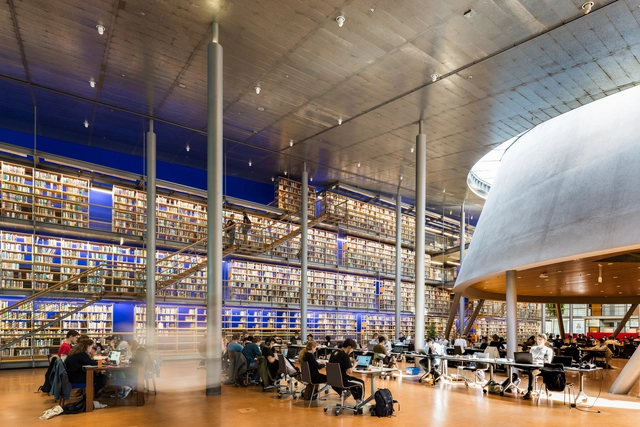
The top three contenders, the Bartlett School of Architecture, MIT, and Delft UT, have maintained their ranking from 2023, with ETH Zurich showing a slight decrease from an equal third position to the fourth. In the sixth position, Harvard University stands out as the top university for employer reputation in this subject. Among the top 10 universities, Politecnico di Milano had the greatest advancement in rankings, moving from the 10th position last year to the 7th.

Top-Rated Universities for Studying Architecture in 2024, According to QS World Rankings - Image 1 of 4Top-Rated Universities for Studying Architecture in 2024, According to QS World Rankings - Image 2 of 4Top-Rated Universities for Studying Architecture in 2024, According to QS World Rankings - Image 3 of 4Top-Rated Universities for Studying Architecture in 2024, According to QS World Rankings - Image 4 of 4Top-Rated Universities for Studying Architecture in 2024, According to QS World Rankings - More Images

Watch Riken Yamamoto, David Chipperfield, Francis Kéré, and Anne Lacaton Live at the 2024 Pritzker Prize Laureate Lecture & Panel Discussion

The Pritzker Architecture Prize and the Illinois Institute of Technology’s College of Architecture present "Community: The Architect as Catalyst for Change", the 2024 Laureate Lecture and Panel Discussion, on Thursday, May 16th at 6:00 pm CDT, in partnership with the Chicago Architecture Center.

The Pritzker Architecture Prize 2024 Laureate Riken Yamamoto will deliver the lecture, "uncovering his journey in the discovery of communities throughout the world, inspiring his socially-driven architecture that blurs the boundaries between public and private dimensions". Following the lecture, Yamamoto will be joined by recent Laureates, Sir David Chipperfield CH (2023), Francis Kéré (2022), and Anne Lacaton (2021), who share a similar commitment to the value of the social system." They will discuss the responsibility of the architect as a catalyst for change and debate respective challenges of creating and bridging communities as they shape new approaches to the design of the built environment."

Architecture Matters 2024: Crisis vs. Crisis

Another edition of the conference Architecture Matters will take place on May 15-16 in Munich, Germany, bringing together architects, city officials, developers, and more professionals who care about the built environment (you can read our report of the 20223 edition). Amidst the current state of affairs, the conference is titled “Crisis vs. Crisis”, to reflect on how the interconnected pressing challenges of housing, climate, and geopolitical issues need to be addressed in order to have positive consequences, and not creating yet another crisis.

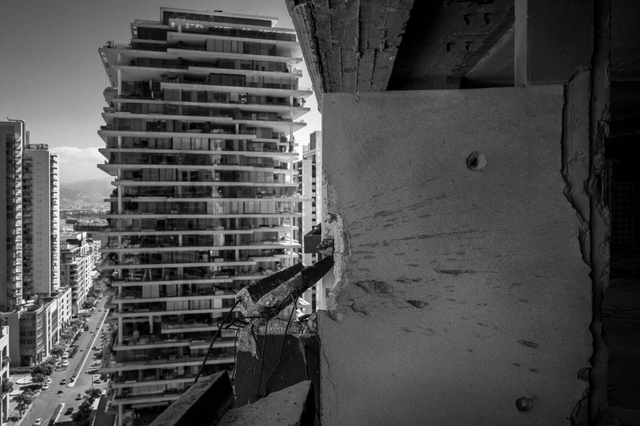
Hosted at the House of Communication, recently refurbished by HENN, the conference starts with a thought provoking talk by Linus Neumann, hacker and spokesperson of the Chaos Computer Club, on the state of Cybersecurity and Infrastructure. Among the speakers this year we find Odile Decq (Studio Odile Decq), Anupama Kundoo (Anupama Kundoo Architects), Kåre Stokholm Poulsgaard, (3XN - GXN), Elisabeth Merk (Planning Director City of Munich), among others, including along with a special photo reportage of Beirut by Sergey Pomonarev, and how its current crisis is reflected on the built environment.

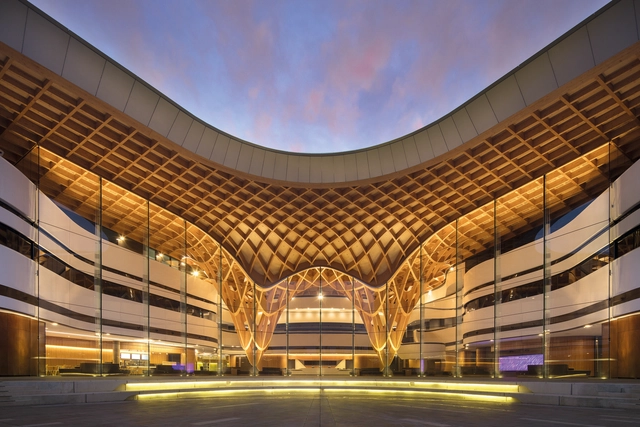
Is Mass Timber the Key Element in a Low Carbon Future?

This article was originally published on Common Edge.

Chinese temples have stood for centuries, battered by wind and earthquakes, without a crack or timber out of place. They employ an ancient technique called “bracket set construction” that requires no nails or metal parts to connect wooden structural elements. Scandinavian stave churches are nearly as durable. Unsurprisingly, there are plenty of trees in Sweden and all over China.

So what is with the hype about innovation in “mass timber” construction over the past few years? As Boyce Thompson argues in his thoughtful new book, Innovations in Mass Timber: Sequestering Carbon with Style in Commercial Buildings (Schiffer Publishing), this will be the next big thing in “green” tech for architects feeling guilty about their costly titanium skins and outsized carbon footprints. The color photos show some impressive buildings in places where the wood industry has always been healthy, such as the Pacific Northwest and Scandinavia. The Japanese build log cabins with imported material that might as well be gold.

Is Mass Timber the Key Element in a Low Carbon Future? - Image 1 of 4Is Mass Timber the Key Element in a Low Carbon Future? - Image 2 of 4Is Mass Timber the Key Element in a Low Carbon Future? - Image 3 of 4Is Mass Timber the Key Element in a Low Carbon Future? - Image 5 of 4Is Mass Timber the Key Element in a Low Carbon Future? - More Images+ 1

How Landscape Architects are Taking on Embodied Carbon

“Landscape architects have started conversations about embodied carbon. There is a realization that we can no longer ignore the grey parts,” said Stephanie Carlisle, Senior Researcher, Carbon Leadership Forum and the University of Washington, during the first in a series of webinars organized by the ASLA Biodiversity and Climate Action Committee.

The grey parts are concrete, steel, and other manufactured products in projects. And the conversations happening are laying the foundation for a shift away from using these materials. The landscape architect climate leaders driving these conversations are offering practical ways to decarbonize projects and specify low-carbon materials.

How Landscape Architects are Taking on Embodied Carbon - 1 的图像 4How Landscape Architects are Taking on Embodied Carbon - 2 的图像 4How Landscape Architects are Taking on Embodied Carbon - 5 的图像 4How Landscape Architects are Taking on Embodied Carbon - 3 的图像 4How Landscape Architects are Taking on Embodied Carbon - More Images+ 1

How Madagascar Is Confronting Climate Change

This article was originally published on Common Edge.

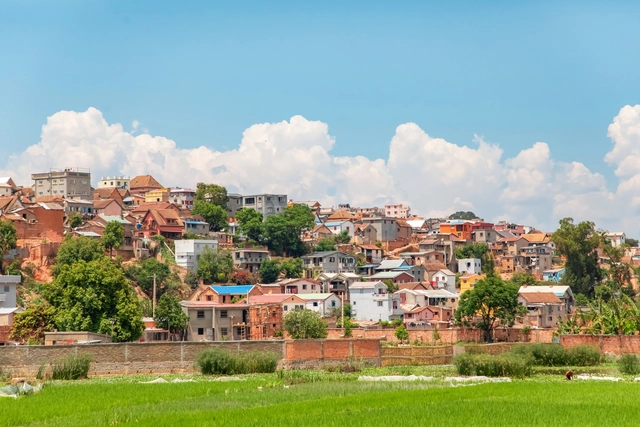
Madagascar is an island nation off the southeast coast of Africa that, despite its lush vegetation and unique flora and fauna, grapples with formidable environmental challenges, from rising sea levels to the excessive exploitation of natural resources. Joan Razafimaharo is an architect deeply involved in sustainability, climate change, and adaptation efforts in Madagascar and the broader Indian Ocean region. Razafimaharo is also one of only about sixty architects in the country, serving a population of 28 million.

Recently I spoke to her about environmental activism in the face of climate change, curbing the exploitation of natural resources, the role of architects in resource-scarce societies, and empowering women in isolated areas. The interview, originally conducted in French, has been translated and edited for length and clarity.

How Madagascar Is Confronting Climate Change - 1 的图像 4How Madagascar Is Confronting Climate Change - 2 的图像 4How Madagascar Is Confronting Climate Change - 3 的图像 4How Madagascar Is Confronting Climate Change - 4 的图像 4How Madagascar Is Confronting Climate Change - More Images

Subscriber Access

“An Architect’s Traditional Lane is Pretty Limiting”: In Conversation with Johanna Hurme of 5468796 Architecture

What about architecture in North America – its history, policies, but also building codes – makes it particularly vulnerable to the global housing crisis? And how can those inherent flaws be counteracted with purposeful residential design and a more inclusive approach to the architecture discipline?

In a presentation at World Architecture Festival 2023 under the programme theme 'Catalyst', Johanna Hurme and Sasa Radulovic, Co-Founders of Winnipeg-based 5468796 Architecture, showcased how these and other questions are key to their building style and also addressed in their forthcoming book platform.MIDDLE: Architecture for Housing the 99%.

“An Architect’s Traditional Lane is Pretty Limiting”: In Conversation with Johanna Hurme of 5468796 Architecture - Imagen 1 de 4“An Architect’s Traditional Lane is Pretty Limiting”: In Conversation with Johanna Hurme of 5468796 Architecture - Imagen 2 de 4“An Architect’s Traditional Lane is Pretty Limiting”: In Conversation with Johanna Hurme of 5468796 Architecture - Imagen 3 de 4“An Architect’s Traditional Lane is Pretty Limiting”: In Conversation with Johanna Hurme of 5468796 Architecture - Imagen 4 de 4“An Architect’s Traditional Lane is Pretty Limiting”: In Conversation with Johanna Hurme of 5468796 Architecture - More Images+ 5

How Environmental Neuroscience is Shaping Architecture and Urban Planning

Environmental neuroscience is an emerging field devoted to studying the impact of social and physical environments on brain processes and behaviour. From the various opportunities for social interaction to noise levels and access to green spaces, the characteristics of the urban environment have important implications for neural mechanisms and brain functioning, thus influencing our physical state. The field paints a different image of how cities impact our health and well-being, thus providing a new, scientific layer of understanding that could help architects, urban planners, and decision-makers create more equitable urban environments.

How Environmental Neuroscience is Shaping Architecture and Urban Planning - Image 1 of 4How Environmental Neuroscience is Shaping Architecture and Urban Planning - Image 2 of 4How Environmental Neuroscience is Shaping Architecture and Urban Planning - Featured ImageHow Environmental Neuroscience is Shaping Architecture and Urban Planning - Image 3 of 4How Environmental Neuroscience is Shaping Architecture and Urban Planning - More Images

Radical Rituals: Studio forty five degrees Searches for Local Space-Making Practices Across Europe

When talking about space-making practices, architects and urban planners are usually thinking about participatory planning and collaborative processes, often overlooking the ways in which the communities themselves can become their own agents of change. As the people poses an intimate knowledge of not only their environment, but also of social and cultural norms, the needs of their communities and latent opportunities within their surroundings, they are often the ones initiating actions, supporting their peers and contributing positively to their locality. Research-focused office forty five degrees set out to explore these grass-roots initiatives, to meet the locals and gather their stories in an effort to gain a better understanding of the complex and diverse cultural territories across Europe. Their journey, organized under the “Radical Rituals” project, follows the 45°N parallel line that transverses Europe from East to West. The office has been selected as part of ArchDaily's 2023 New Practices, an annual survey aimed at showcasing those who adress the ever-growing challanges of our times and take architecture to new directions.

Radical Rituals: Studio forty five degrees Searches for Local Space-Making Practices Across Europe - 1 的图像 4Radical Rituals: Studio forty five degrees Searches for Local Space-Making Practices Across Europe - 2 的图像 4Radical Rituals: Studio forty five degrees Searches for Local Space-Making Practices Across Europe - 3 的图像 4Radical Rituals: Studio forty five degrees Searches for Local Space-Making Practices Across Europe - 4 的图像 4Radical Rituals: Studio forty five degrees Searches for Local Space-Making Practices Across Europe - More Images+ 6

Architecture Always Reflects the Values of Its Current Culture

This article was originally published on Common Edge.

What we build can be metaphoric—often intentionally, sometimes subliminally. But architecture is seldom the intentional commentary of architects, crafting symbolism; more often it is a direct reflection of its time and the culture that made it.

Looking Forward to COP28: Can Decisions About the Built Environment Save Us From the Climate Crisis?

The 2023 United Nations Conference of the Parties, more frequently referred to as COP28 is a joining of over 160 countries that intrinsically agree to combat harmful human impacts on the climate. The International Climate Summit takes place annually, bringing together heads of state, delegates, and representatives from various countries to negotiate actions and agreements related to climate mitigation. Last year, COP 27 was held between November 6 and November 18, 2022, in Sharm El Sheikh, Egypt. As the upcoming COP 28 in the United Arab Emirates is around the corner, it is worth looking at the conference’s impact and what to expect.

COP 28 will convene from November 30 to December 12 2023 in Dubai, United Arab Emirates. In this year’s COP28, the program will be geared towards responding to the Global Stocktake and “closing the gaps to 2023.” The COP presidency has launched a consultation on thematic areas, encouraging international stakeholders to highlight the most pressing issues that should be prioritized in COP28. The themes for this year are Technology & Innovation, Inclusion, Frontline Communities, and Finance.

Looking Forward to COP28: Can Decisions About the Built Environment Save Us From the Climate Crisis? - Image 1 of 4Looking Forward to COP28: Can Decisions About the Built Environment Save Us From the Climate Crisis? - Image 2 of 4Looking Forward to COP28: Can Decisions About the Built Environment Save Us From the Climate Crisis? - Image 3 of 4Looking Forward to COP28: Can Decisions About the Built Environment Save Us From the Climate Crisis? - Image 4 of 4Looking Forward to COP28: Can Decisions About the Built Environment Save Us From the Climate Crisis? - More Images+ 3

WilkinsonEyre Designs a New Campus for the College of North West London in Wembley, London

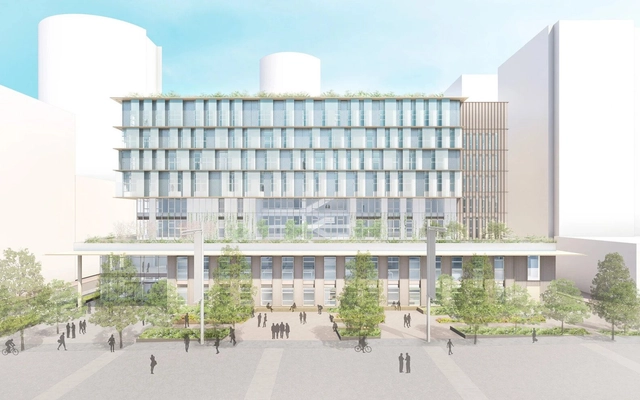
WilkinsonEyre has been selected to design a new college campus on the Olympic Way in Wembley, London, to serve as the new educational facility for the College of North West London. The project is designed to cater to over 300 students per week in addition to the 250 staff members. The new facility will offer classes in engineering, the built environment, and green skills, as well as digital technology, computing, health, and social care. The new campus scheme has recently been granted planning permission at the Council’s Planning Committee meeting and has now been passed to the Greater London Authority for final approval.

“I Want to Go beyond What Is in Front of Me:” In Conversation with Photographer Roland Halbe

Roland Halbe came into photography entirely by accident, discovering it at the age of 15 in a class on optics. His physics teacher presented camera obscura effects, which immediately triggered his fascination. He then started borrowing his father’s old camera quite regularly. While still in high school, Roland worked part-time at a camera shop, eagerly discovering everything there is to know about photography. Those were the circumstances that kindled Halbe’s lifelong romance, first with black and white, and, eventually, color photography with a focus on the built environment.

“I Want to Go beyond What Is in Front of Me:” In Conversation with Photographer Roland Halbe - Image 1 of 4“I Want to Go beyond What Is in Front of Me:” In Conversation with Photographer Roland Halbe - Image 2 of 4“I Want to Go beyond What Is in Front of Me:” In Conversation with Photographer Roland Halbe - Image 3 of 4“I Want to Go beyond What Is in Front of Me:” In Conversation with Photographer Roland Halbe - Image 4 of 4“I Want to Go beyond What Is in Front of Me:” In Conversation with Photographer Roland Halbe - More Images+ 30