"Domingos Libro" is hosted by Carmelo from Enorme Studio, delving into forgotten architectural publications, books, and architecture magazines from the 1960s, 70s, and 80s that hide the most fascinating stories behind them.
After a hiatus in 2022, the series returned with episode 19, titled “Always Young,” which tells the story of Ettore Sottsass Jr. Now, it presents "No One Is a Prophet in Their Own Land," a tribute to the recently deceased master of architecture Ricardo Bofill.
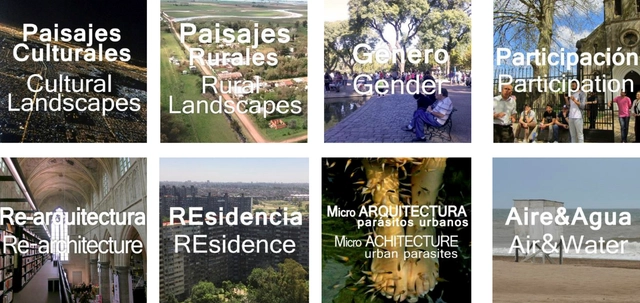
Founded in 2018 and based in Argentina, LINA Plataforma (Laboratory > Intervention + Architecture) presents itself as a global research and experimentation platform linked to cultural heritage, aiming to reflect on the relationship between heritage, sustainability, and design education.
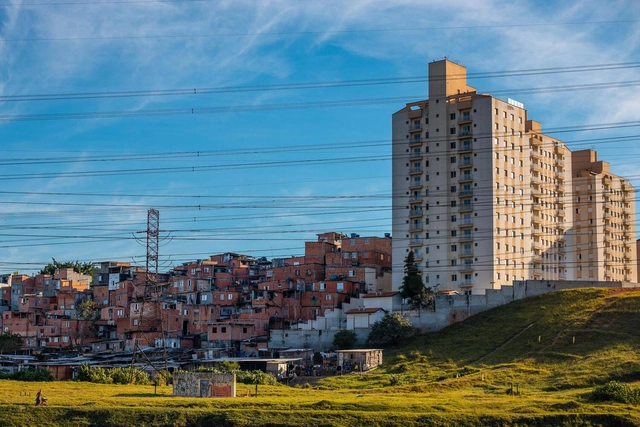
We know that Brazilian cities are exclusionary. They fail to prioritize public transit, which disproportionately harms the poorest residents. They segregate wealthier neighborhoods, driving the working class to live on the urban peripheries. And even there, a large part of the population can only afford housing in the informal market.
https://www.archdaily.com/1132104/how-many-people-can-afford-to-buy-a-property-in-brazilEnrico Costa
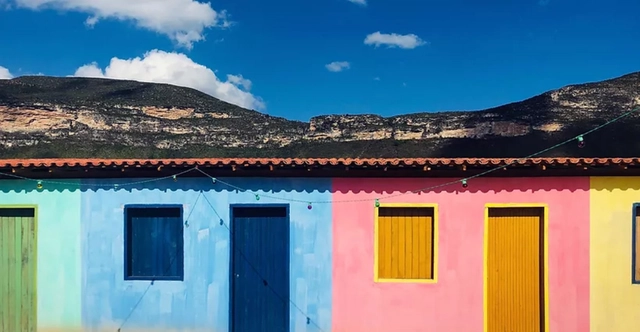
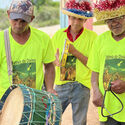
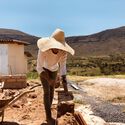
Reclaiming ancestral techniques and materials to forge new spaces of coexistence. This is the guiding principle born from a desire to "create openings for freedom, joy, love, and empowering affects, which propose to rethink ways of inhabiting in harmony with the Earth and ancestry." It is a concept materialized—and still under construction—at Terra Afefé: a micro-city in Ibicoara, in Bahia's Chapada Diamantina region, created by artist Rose Afefé.
1. Via gustavhistory. 2 and 3. Courtesy of Manuel Velazco Clark personal archive. Image
Doris Mary Clark Núñez is considered the first female Peruvian architect. With a life marked by difficulties, scrutiny, and restrictions solely due to being a woman in a professional world that had traditionally been male, Clark Núñez stands as a model of activism and resistance, as well as a pursuit of subversion and paradigm shifts in traditional debates and structures. Her life was dedicated—through teaching, political action, and academia—to laying the foundation for expanding the field of influence for women in architecture.
https://www.archdaily.com/1131900/doris-clark-nunez-the-first-female-peruvian-architect-activism-and-resistanceCarolina Velásquez y Wiley Ludeña
The Little Book of Color: How to Use the Psychology of Color to Transform Your Life
A practical guide to discovering the incredible power of color and how to apply it to our daily lives. A practical guide to discovering the incredible power of color and how to apply it to our daily lives.
Book: "Ricardo Graham Ferreira: O ebanista" by Editora Olhares
The dynamic Brazilian design scene has seen a prominent trend in recent years: self-production in wood, where designers develop and craft their creations by hand in their own workshops. The book Ricardo Graham Ferreira: O Ebanista offers an intimate look at the work of one of this generation's leading figures, encouraging readers to form their own formal and emotional interpretations through a collection of records and testimonials from those who are part of the designer's life. Rather than providing a chronological or technical guide, the intention is to let the gaze wander, discovering what attracts and moves the reader. For this very reason, it was essential that each piece be presented within its creative context—the workshop—so that the narrative extends between the work and its environment, between inspiration and result. It is a reflection of the symbiosis between body and raw material, the union of distinct lives and cycles in an object meant to endure.
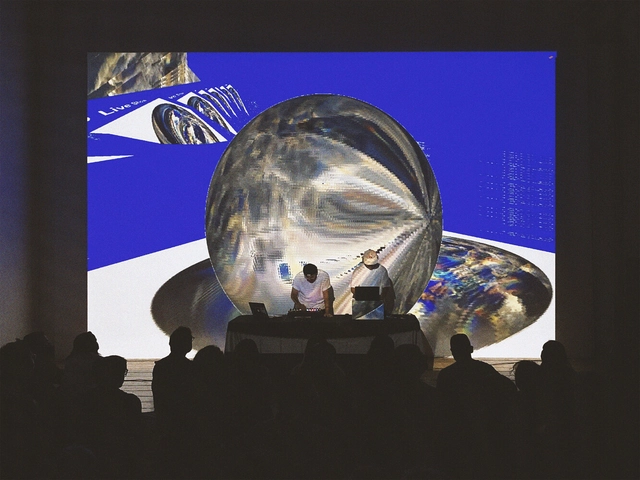
On August 31, the Laboratorio Arte Alameda in Mexico City hosted "30/30," an audiovisual performance divided into two 30-minute segments. Blending sounds ranging from drone, noise, and techno to dream pop with live digital image processing, the performance explores the concept of memory, conceptualized as an architectural-digital space in constant motion and transformation.
At a time when a lack of public safety daily plagues Brazil's major cities, impacting how we behave in the urban environment, we must examine not only how we act within this space, but also how we build it and with what intentions we modify it.
High walls, fences, cameras, alarms, and razor wire are already part of a landscape that feels fearful, constantly seeking to "protect" private property, often to the detriment of public space appropriation.
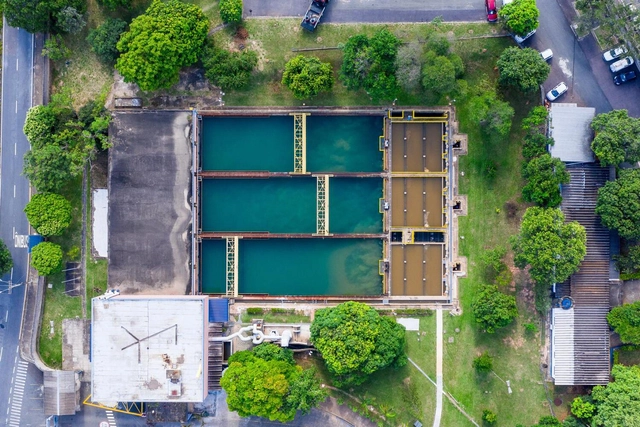
Sanasa Water Treatment Plant in Campinas, São Paulo. Photo: Renan Pissolatti/WRI Brasil
The Metropolitan Region of Campinas is one of Brazil's largest urban centers. With more than three million inhabitants and an annual GDP exceeding R$ 150 billion, it is one of the country's most dynamic economic regions.
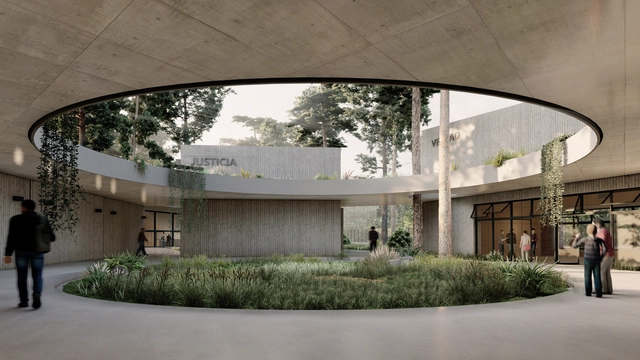
With the aim of bringing visibility to the state terror committed during the Argentine civic-military dictatorship that began in 1976, the Secretariat of Human Rights of the National Ministry of Justice and Human Rights commissioned the Institute of Architecture and Urbanism of the National University of San Martín (IA-UNSAM) to develop an architectural proposal for a new memory space on the grounds of Campo de Mayo, in the province of Buenos Aires.
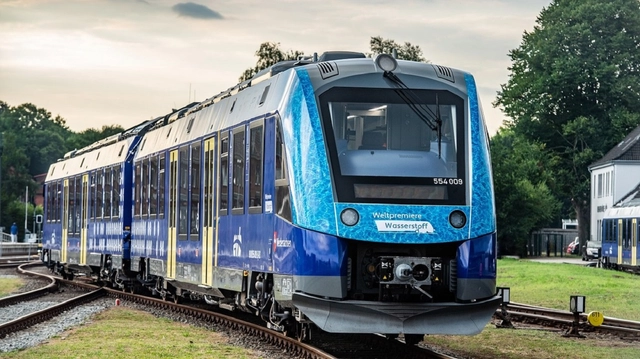
The world’s first hydrogen-powered passenger train service has begun operations in Germany. The 100% hydrogen-fueled rail line debuted in the small town of Bremervörde, near Hamburg. A total of 14 trains will replace diesel locomotives across nearly 100 kilometers of track in the northern part of the country. In addition to Bremervörde, the regional line serves the cities of Cuxhaven, Bremerhaven, and Buxtehude.
Book: The Practice of Urban Sketching, Olhares Publishing
"More than just a drawing book, you are holding a definitive practical guide featuring 25 exercises and simple tricks that will help you dive headfirst into the world of urban sketching. How do you create sketches without being intimidated by a sketchbook you have just bought? How do you produce quick drawings? How do you achieve spatial depth? What should you consider when coloring a sketch? How do you find the best spot to draw?
Book: Politics and Architecture, Olahres Publishing
Nearly a decade after the first edition of Arquitetura e política and following their tenure in institutional politics, the authors revisit the key postulates of contemporary architecture—its responsibility toward society—in this second volume, adapting them to new forms of political engagement that center feminism as a primary component. To this end, they provide a historical and thematic overview of the social role of architects and urban planners, tracing its evolution into the current era of globalization. Drawing on issues such as community life, participation, gender equality, and sustainability, the book identifies and analyzes the contemporary vulnerabilities of architecture.
Book: Architecture and Criticism, Olhares Publishing
Focusing on the relationship between architecture and criticism, this introduction to architectural theory provides the necessary context to understand the mechanisms, limitations, and objectives of the field. It spans from the pioneers of 20th-century architectural criticism to key figures in modern historiography, such as Sigfried Giedion, and the writings of leading architects like Adolf Loos and Le Corbusier. The text explores various interpretations derived from existentialism, phenomenology, iconography, and structuralism, leading up to the current post-structuralist landscape—highlighting figures such as Peter Eisenman, Rem Koolhaas, and Kenneth Frampton. This journey through the 20th century offers a comprehensive understanding of the critical frameworks employed from the field's origins to the present day.
"Architecture and urbanism have the opportunity to offer solutions that involve looking beyond the discipline itself, so that the margins and boundaries of necessity lead us to seek actions outside of standard practice. Positioning ourselves on the margins allows us to see new alternatives, expand the practice, and have a perspective that is not central, but peripheral," say Anna Vergés and Guillem Augé (UNDO), curators of the XII Ibero-American Biennial of Architecture and Urbanism, whose central theme is "Habitar al margen" (Living on the Margins).
OHM Edición 2021. Image Cortesía de Open House Madrid
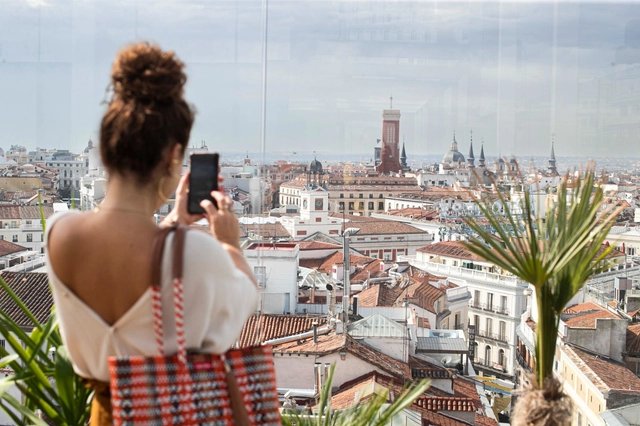
The eighth edition of the Open House Madrid festival returns with a program that includes 93 buildings, 33 studios, 8 routes, 7 activities, and 10 itineraries. Titled "More Open Than Ever," it aims to reflect the welcoming character of the city and, at the same time, its openness to the world.