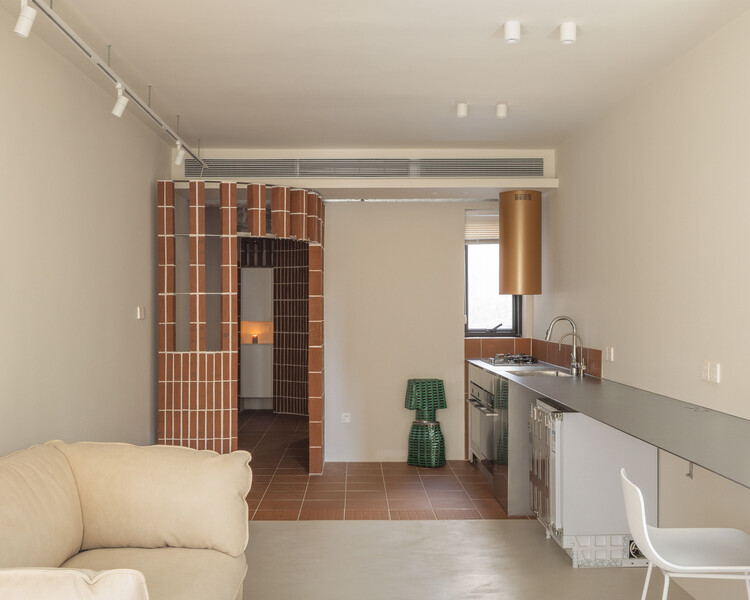
-
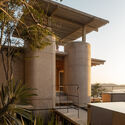
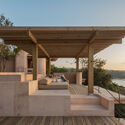
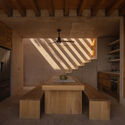
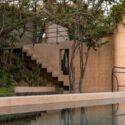
Architects: Johnsen Schmaling Architects
- Area: 3306 ft²
- Year: 2023
-
Manufacturers: Geolam Soleo, StoQuik Silver, Western Window Systems


Every democracy eventually confronts the same question: where can its citizens speak?
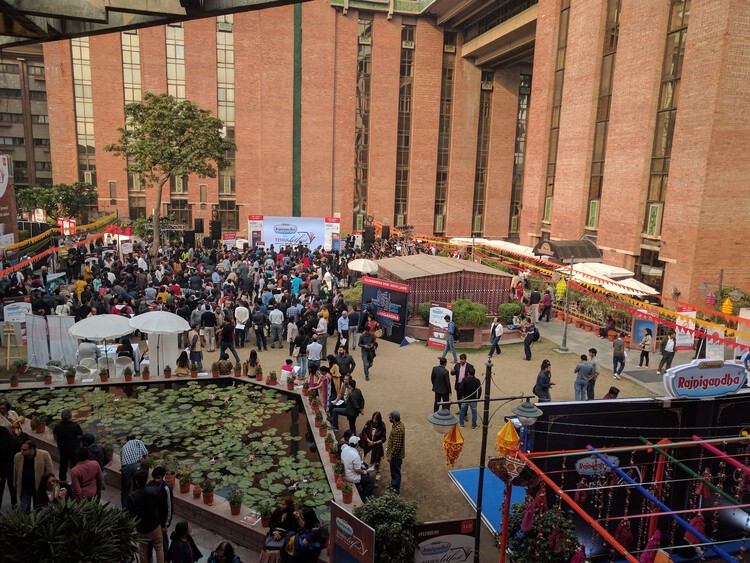
Public squares, marches and demonstrations have served as the most visible and impactful expressions of collective opinion. There persists a growing desire among citizens to be seen and heard in the public domain. Demonstrations, by their very nature, are moments of urgency, emerging when conversations have reached an impasse. While essential to democracy, they cannot be its only language.



Few conditions have shaped contemporary architectural discourse as profoundly as uncertainty. Across international biennials, exhibitions, and forums, architecture increasingly imagines its relationship to the world through flexibility, reversibility, and responsiveness—qualities intended to engage with climate emergencies, political instability, and unprecedented human mobility. Buildings are designed to transform, infrastructures to evolve, and cities to accommodate conditions that appear increasingly unpredictable. This emphasis on agility has expanded the discipline's capacity to engage with environmental change, offering valuable strategies for a world in constant transformation.
Yet this evolution points to a deeper shift in how architecture mediates the human condition. Architecture has long functioned as a mechanism for existential orientation—a way for human consciousness to carve an intelligible coordinate out of an indifferent cosmos, anchoring memory and identity to a fixed point. Within much contemporary architectural discourse, uncertainty increasingly appears less as an external condition to be mitigated than as the horizon from which architectural thinking begins. Spatial experience is increasingly shaped by environments designed around the persistence of flux, where static reference points give way to conditions of continuous transformation.

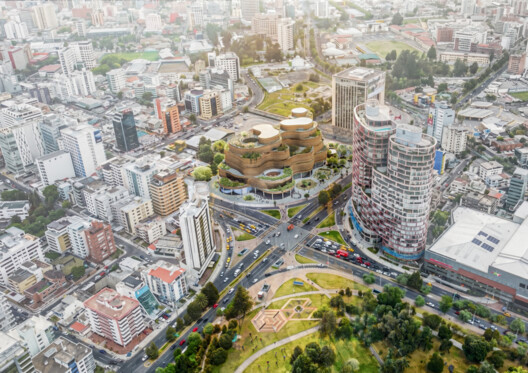
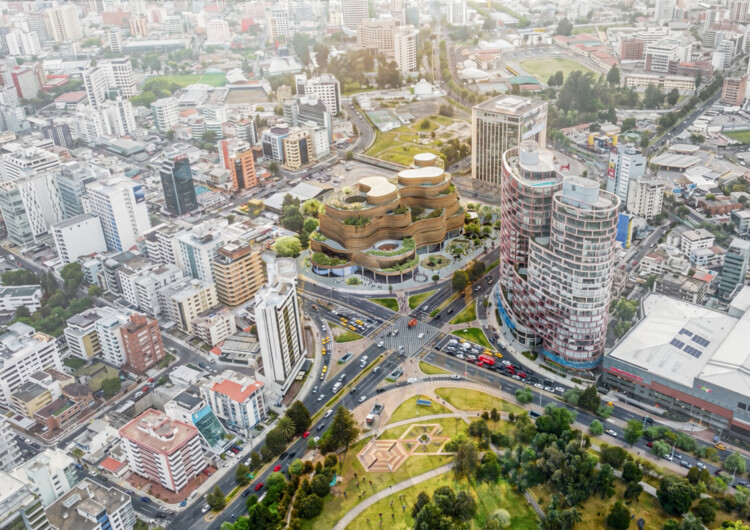
An international team led by SANAA, in collaboration with Estudio A0, Caá Porá Arquitectura, Jerome Haferd Studio, and Taller Capital Landscape, has been selected to design the new Museo Nacional del Ecuador (MuNA) in Quito. Titled "Living Strata," the proposal was chosen following the competition's revised final evaluation phase, which combined jury deliberation with a public voting process, and envisions the museum as a civic landscape that integrates exhibition spaces, public programs, and open green areas. The announcement concludes the international competition launched to design Ecuador's future national museum.

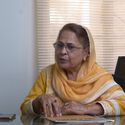
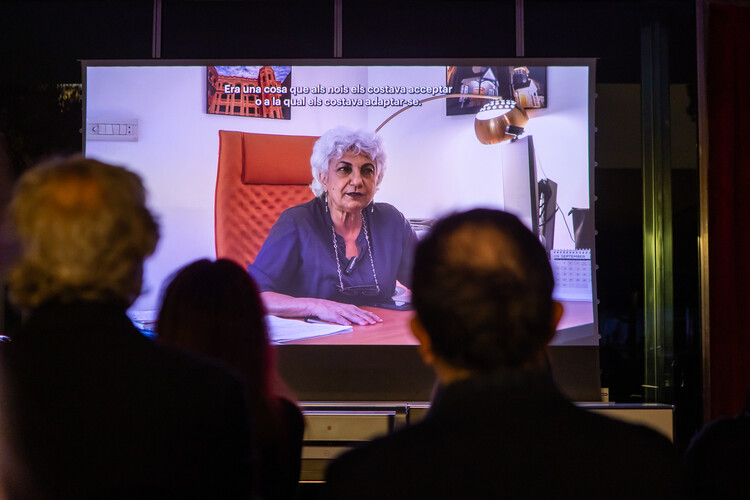
"Gender equity remains an ongoing problem in architecture. Women architects are roughly one-third of the profession or less worldwide." This is the opening statement of the documentary Transnational Narratives: A Documentary Celebrating South Asian Women in Architecture, a result of the 4th Lilly Reich Grant for Equality in Architecture. The grant, an initiative by the Fundació Mies van der Rohe, promotes equal access to opportunities in architectural practice and supports the study and dissemination of contributions to architecture that have been unfairly rendered invisible. Within this context, the documentary, created by Dr. Igea Troiani, Dr. Mamuna Iqbal, artist and researcher Paula Roush, and filmmaker Rime Tsujino, brings visibility to the experiences of six architects of South Asian origin: Sumita Singha, Chitra Vishwanath, Sara Khan, Fauzia Qureshi, Sajida Vandal, and Neelum Naz, whose professional careers span India, Pakistan, and the United Kingdom.


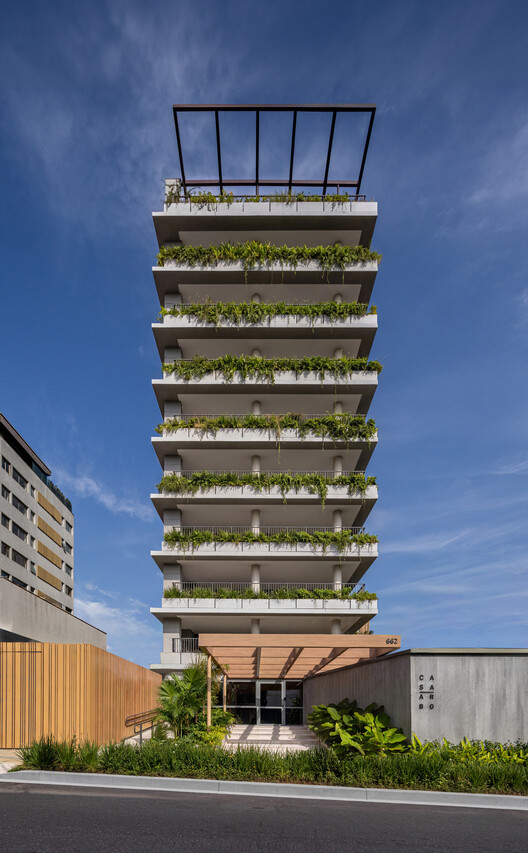


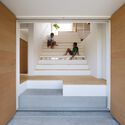
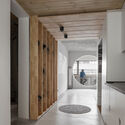
In many homes, the entry is treated as leftover space or a narrow strip transition before the living room begins. Yet in dense Asia-Pacific interiors, sometimes despite the small sizes, the entrance often performs far more work than its size suggests. It is the threshold that dictates the transition: street is filtered, body adjusts, shoes are removed, guests are received, privacy is negotiated, and domestic order begins. Before the living room became recognizable as interior, the entry sequence and space had already staged the first act of inhabitation.
The Japanese genkan is perhaps the most familiar version of this condition, but the logic extends far beyond Japan. Across apartments, terrace houses, public housing units, and compact urban homes, the entry threshold becomes a small but charged architectural device. It manages hygiene as well as spatial sequencing through various deliberate architectural elements. It can be a recessed floor, a thickened wall, a compressed corridor, a screen, or a small foyer between public circulation and private life. Its importance lies not in its size, but in the number of transitions it holds.