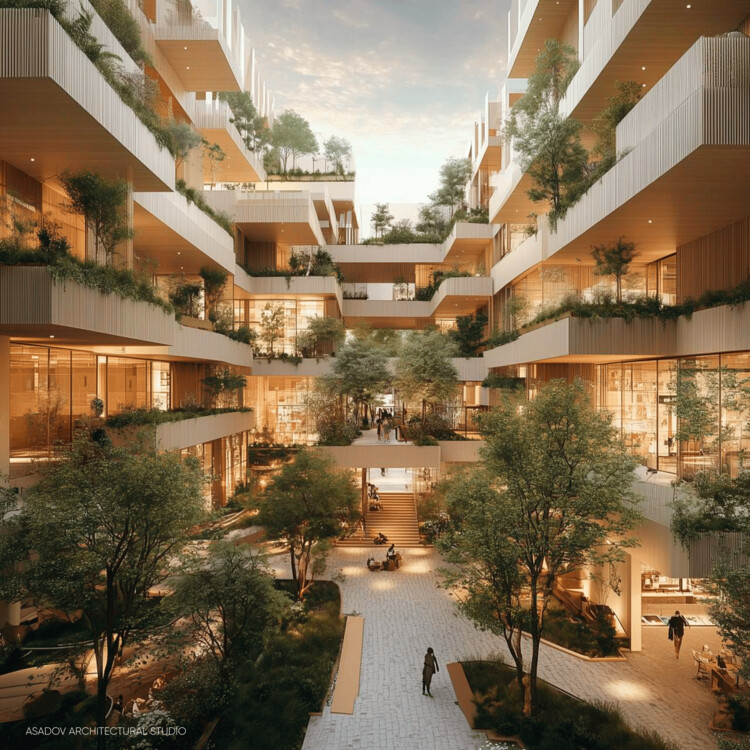
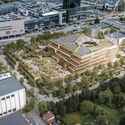
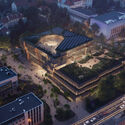
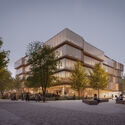
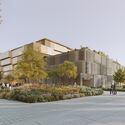
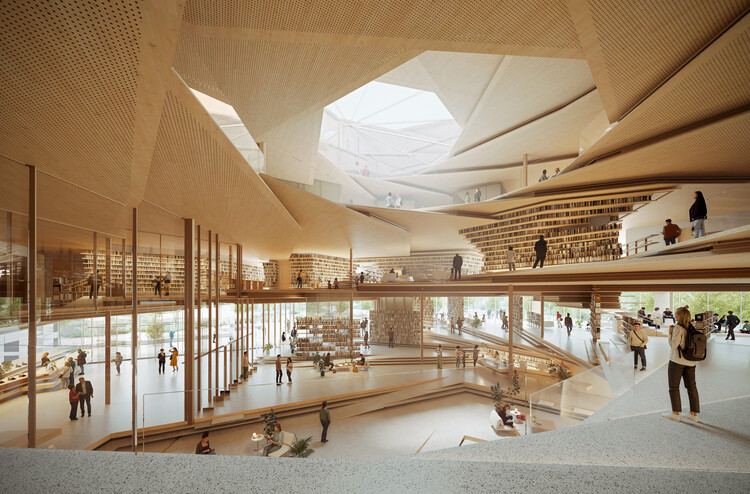
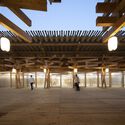
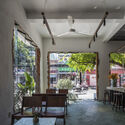
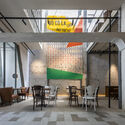
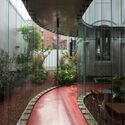
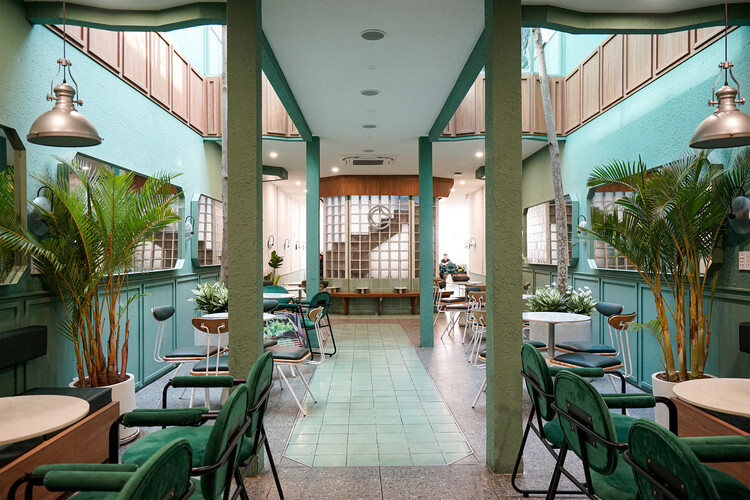
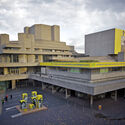
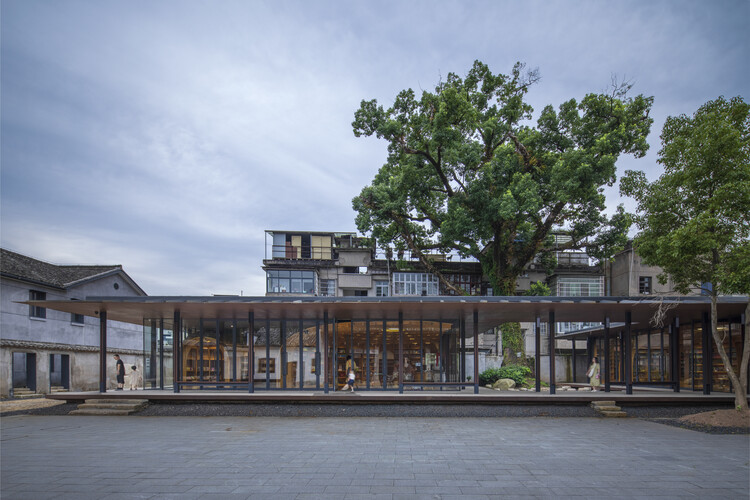
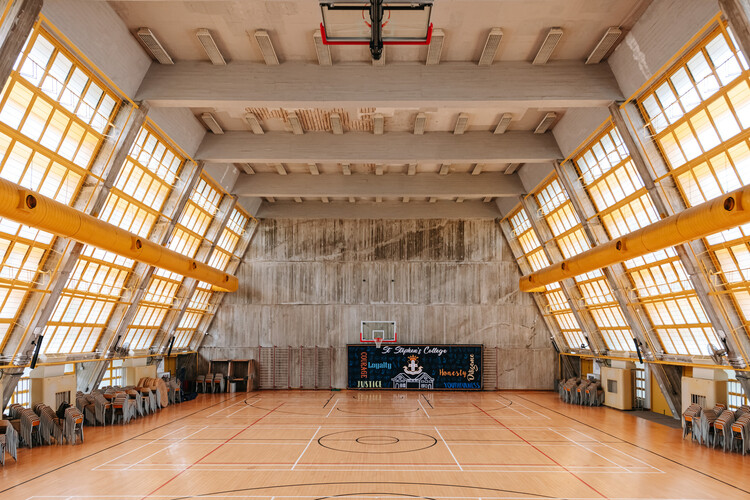
Designing for comfort—especially acoustic comfort—is a somewhat thankless task, as we typically only notice it when it fails to function properly. Common complaints abound: hearing a conversation from the next room more clearly than the one in your own space, having to shout to be understood by someone right next to you, or dealing with excessive echoes that make staying in a room exhausting. This last issue in particular is very common in spaces with exposed structures that lack finishing materials. Because materials like concrete, glass, or metal are typically not acoustically absorbent, spaces with industrial aesthetics often suffer from high reverberation times. This means that emitted sounds take longer to dissipate, continuing to bounce off surfaces and merge with other sounds, which creates disruptive noise and reduces speech intelligibility.
Extremamente versáteis, não só por sua variedade de cores e padrões, mas também por suas possibilidades de aplicação, os ladrilhos hidráulicos podem ser encontrados, nos projetos residenciais, em ambientes que vão desde áreas molhadas a salas e quartos. A orientação das peças e a área em que são aplicadas também são fatores que contribuem para a diversidade de conformações possíveis no uso do ladrilho hidráulico: quando são restritos a determinada área de um ambiente, por exemplo, podem funcionar como “tapetes” fixos.
The Lisbon Architecture Triennale has released the Talk, Talk, Talk debate series on its Vimeo channel. The series was held as part of its 5th edition, curated by Éric Lapierre. Divided into five major exhibitions, the Triennale explored architectural imagination in one of them—the theme of the Inner Space exhibition and of the debates featured here.
Pacaembu Stadium, São Paulo. Photo by Sergio Souza, via Unsplash
The field hospital at Pacaembu, set up on an emergency basis to meet the demand caused by the COVID-19 pandemic in São Paulo, will begin receiving patients on Wednesday, April 1st. The hospital facility will operate inside the stadium located in the central region of the city and will have a capacity of 200 beds for low-complexity patients.
Amid a period of restrictions and isolation, it is not only social life that has been subjected to distancing. The habit of visiting museums and exhibitions has also been disrupted. Although experiencing art in person always offers an unparalleled way to absorb the impact of an image, the opportunity to explore exhibitions and museum buildings online provides a way to keep this space alive in our daily routines. Virtual tours are also valuable because they democratize access to art and culture. Furthermore, they can engage those who do not typically participate in these activities, sparking a new interest that, once physical spaces reopen, will foster active engagement with the local museum and art scene.
Through the incorporation of various elements, interior design creates comprehensive spaces that blend functionality and aesthetics. Among these components, suspended ceilings are a solution that integrates finishes suspended from the main structure. While adapting to a wide range of styles through a diversity of materials, colors, and textures, suspended ceilings also address acoustic needs, contribute to thermal insulation, and integrate lighting systems.
Among its solutions for interior applications, Hunter Douglas combines aesthetics, comfort, and sustainability to develop the WoodLines suspended ceiling line. Integrating innovation with natural materials, the manufacturing process continuously bonds a natural wood veneer to a roll-formed metal profile. As a result, linear ceilings composed of continuous slats are obtained, combining the functionality of a metal ceiling with the warmth and aesthetic appeal of natural wood.
Image courtesy of Instituto a Cidade Precisa de Você
Confined—some with more square footage than others. I was reminded of the film Medianeras, the Argentine movie in which the protagonist reflects on urban loneliness, speaking of "studio apartments" or shoeboxes, but also of virtual encounters. That cinematic reality from 2011 feels even more real today, as we begin to plan virtual happy hours.
Paraisópolis. Image by Vilar Rodrigo, under license CC BY-SA 3.0
For most residents of São Paulo, informal settlements like Paraisópolis are viewed as a problem the city must solve. However, a deeper look at the city's urbanization process reveals that, despite its challenges, the area has much to teach São Paulo's affluent neighborhoods — such as its immediate neighbor, Morumbi.
Narrow houses on Amsterdam's canals. Photo by Vlad Hilitanu, via Unsplash
The capacity of urban planning laws to yield results entirely different from those anticipated is notorious. As is often the case, the numerous failed attempts recorded in cities worldwide are not enough to prevent new laws and regulations from being enacted.
As an architectural element that frequently fosters the connection between interior and exterior, the balcony also serves as an intermediary between the street and indoor spaces. However, as prominent features on building facades—whether residential or commercial—balconies can lead to thermal discomfort due to direct sunlight, as well as compromise privacy, given their exposure to the gaze of passersby in the urban environment. Historically, it was during the modernist movement that architects began incorporating concrete brise-soleils and, in some cases, cobogós on building facades. Today, however, with a wide array of materials and possibilities, architects are increasingly adopting innovative shading solutions to protect these spaces from the elements while ensuring privacy.
Aerial view of the city of São Paulo - SP. Photo by Sergio Souza, via Unsplash
Cities can be considered humanity's major economic, social, technological, and cultural centers, given their diverse functions and importance to their citizens' quality of life. According to United Nations data (2017), currently, more than half of the world's population lives in cities or urbanized centers, and this figure is expected to grow to around 70% by 2050. Furthermore, in late 2015, the United Nations (UN) launched the 17 Sustainable Development Goals (SDGs) to be achieved by all countries by 2030. Given the importance of cities, SDG 11, "Sustainable Cities and Communities," is dedicated to this agenda, seeking to ensure that cities and human settlements find ways to be inclusive, safe, resilient, and sustainable.
https://www.archdaily.com/1124008/how-to-make-cities-smarter-in-the-face-of-climate-change-and-pandemicsLucas Rosse Caldas, Andrea Santos e Luan Santos
Last week, we announced the 15 finalists for the 2020 Obra do Ano, an award celebrating the best of Lusophone architecture by inviting our readers to choose their favorite projects built in Portuguese-speaking countries. Today, it is time to reveal the winners of ODA 2020.
Escola da Cidade is once again hosting its Seminar on Culture and Contemporary Reality as open, public livestreams. In today's episode, Guilherme Wisnik welcomes Giselle Beiguelman for a conversation inspired by the series Coronavida, published in seLecT magazine.
São Caetano do Sul - SP. Photo via Diário do Transporte. Courtesy
On the first of this month, São Caetano do Sul (SP) implemented free fares on municipal buses through its "Zero Fare Program." Far from an isolated initiative, the measure aims to encourage public transportation use, providing direct savings to residents while improving air quality.
Fortaleza, Ceará. Photo by Vitor Paladini, via Unsplash
The ten cities selected to compete for $9 million in the Sustainable Cities Challenge, a global mobility initiative by the Toyota Mobility Foundation in partnership with Challenge Works and the World Resources Institute, have been announced. The list of selected cities includes Fortaleza, Brazil, as well as cities in Colombia, India, Italy, Malaysia, Mexico, the United Kingdom, and the United States.
https://www.archdaily.com/1135992/fortaleza-among-the-ten-cities-selected-by-the-sustainable-cities-challengeWRI Brasil
Rainwater Source Park / Turenscape. Courtesy of Turenscape
The climate emergency manifests itself in Brazilian cities in various ways: floods in the South, coastal surges in Rio de Janeiro, storms causing power outages in São Paulo, wildfire smoke in Manaus, droughts in Amazonian rivers, and heatwaves in the Midwest. Therefore, integrating the fight against climate change into public planning is crucial.
https://www.archdaily.com/1135924/free-e-book-teaches-how-to-use-nature-based-solutions-in-urban-projectsArchDaily Team
The COVID-19 pandemic is characterized by the vast territorial scope of its contagion. This is not an epidemic confined to a single specific location. Instead, transmission spreads rapidly, exploiting the highly urbanized world we inhabit. The virus spreads through gatherings in public spaces and private service facilities, transit terminals and stations, precarious settlements lacking sanitation, and, ultimately, the intense national and international flow of people and goods across the global network of cities. Airports acted as the primary gateway for the virus worldwide. Yet, the network of informal workers who roam city streets delivering goods during the pandemic—keeping commerce alive—represents one of the most vulnerable dimensions of this risk. However, while urban life has facilitated transmission, certain urbanization patterns can also help combat it.

How can you protect yourself from the coronavirus on the street, upon arriving home, and inside your own home? The 'Urbanistas contra o Corona' (Urbanists Against Corona) network has developed a guide to instruct the public in each of these situations. The illustrated publication lists prevention measures and categorizes contamination risks when on the street (high), returning home (medium), and within the private space of the home (low).
Banco do Brasil Headquarters in Brasília. Photo: Fernando Bizerra/Agência Senado, licensed under CC BY 2.0
In response to a request from the Council of Architecture and Urbanism, Banco do Brasil has announced a package of measures with special conditions to support architects, urban planners, and companies in the sector during this period of economic impact caused by the coronavirus.
Luanda, Angola. Image by mbrand85, via Shutterstock
This article offers an observation and analysis of the diverse forms of land occupation and use within informal or self-built urban fabrics on the outskirts of Luanda, examining their relationship with the Angolan capital's consolidated urban core.
Modern architecture has taught us lessons that remain highly relevant today. To this end, one of the movement's core tenets was the use of extensive glass facades to dissolve the visual boundaries between interior and exterior. As a result, what was previously grounded in mystery and privacy gave way to glass boxes that fully revealed indoor life—as exemplified by Mies van der Rohe's Barcelona Pavilion and Farnsworth House, and Lina Bo Bardi's Glass House. Today, however, driven by the social media boom, a spirit of voyeurism seems to fuel our desire to observe the lives of others. Architecture, in turn, reinterprets this practice through subtle design details, utilizing transparency as a key element.
Primer Premio. Image Cortesía de Lesch Alfaro Arquitectos
In an effort to promote and disseminate scientific activities in Argentina, the National Ministry of Science, Technology, and Innovation (MINCyT), together with the Central Society of Architects (SCA), launched a National Preliminary Project Competition to design the buildings that will make up the "City of Science." This initiative is in conjunction with MINCyT, the Cultural Center of Science (C3), the IDI Agency, CONICET, and the Max Planck Institute Argentina, which currently comprise the Scientific and Technological Pole. Proposing an "Innovation Ecosystem," the project will be located in the Palermo neighborhood of the Autonomous City of Buenos Aires, specifically across two blocks of the former Palermo Railway Yard.
On November 15, the Guatemala Architecture Biennial 2023 opened at the Miguel Ángel Asturias Cultural Center—one of the country's most important performing arts venues. While the previous 2021 edition recognized the importance of the city, architecture, and urban planning under the theme 'Mobility,' this latest iteration focuses on 'Public Space' under the slogan 'The City, Without Walls.' Over three days, this new approach will highlight public space as one of the most vital elements in urban planning, with a significant impact on citizens' social, psychological, and physical well-being.