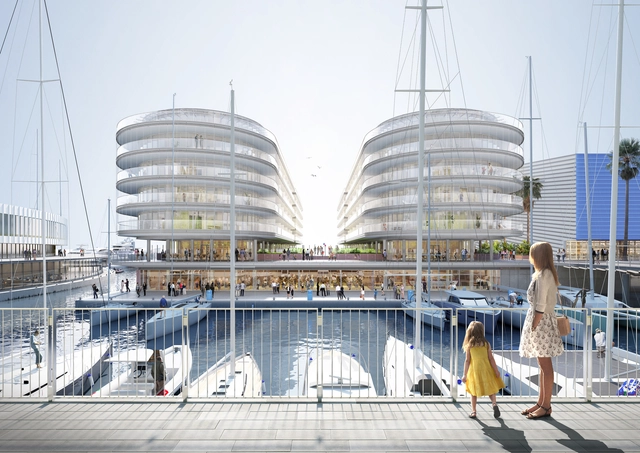
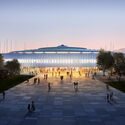
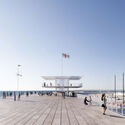
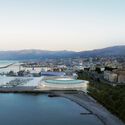
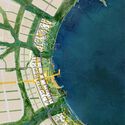
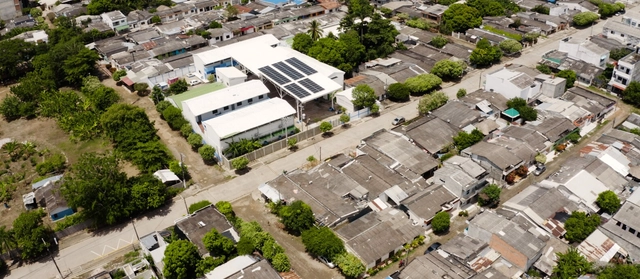
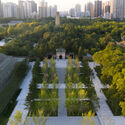
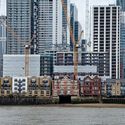
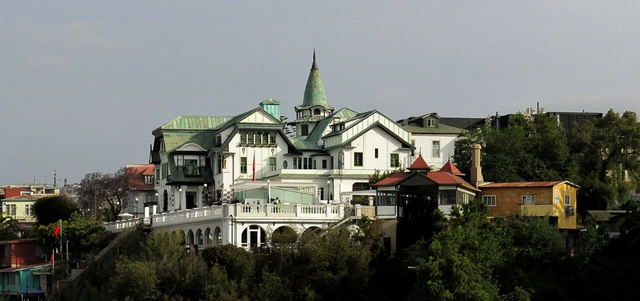
First drafted by Renzo Piano and developed by RPBW and OBR, the Waterfront di Levante is a project that aims to transform what was previously the back of a port into a new urban front on the sea. The development is planned to become a new landmark on the seafront of Genoa, Italy, by bringing new urban and port functions, both public and private, to an underutilized area. By controlling the built-to-open area ratio, it also seeks to enhance the connection between the city and the sea. The project introduces functions such as the new Urban Park, a new dock, residences, offices, student housing, retail facilities, apart-hotels, and a new sports hall.
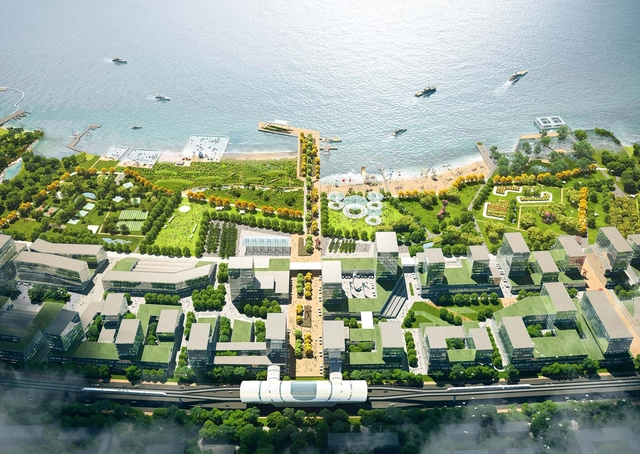
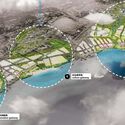
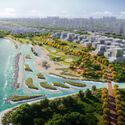
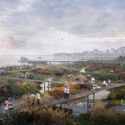
KCAP won the design competition for the Coastline of Yantai, Shandong Province, south of Beijing. As one of China's top 10 ports and a gateway city for communication between Japan and South Korea, Yantai Seafront Garden will transform the underused coastal area into an influential economic and technological development zone in Northeast China. The conceptual proposal was selected by its vision of 4 stages along the 95km of waterfront, including water conservation zones, a "sponge city" community, and a resident tidal shoreline.
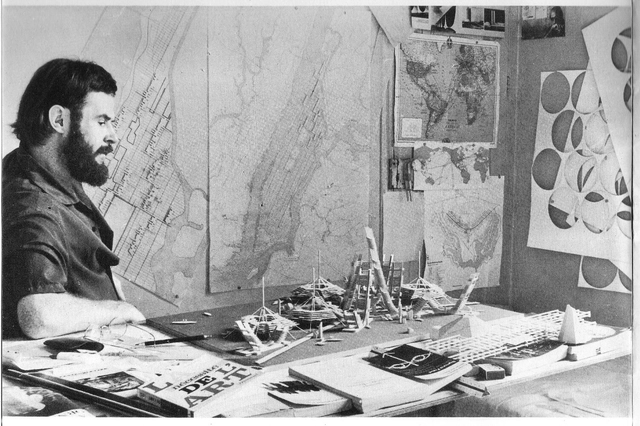
Thimel y su proyecto para Rio de Janeiro. Image Cortesía de Ricardo Rocha
Ricardo Rocha writes about the German-Brazilian architect Hartmut Thimel. Forgotten by canonical historiography, he worked with Georges Candilis, Yona Friedman, and later with Oscar Niemeyer. His work is a bridge between 1970s Brazil, addressing the international avant-garde - Team X, Metabolism, Spatial Urbanism, and Prospective, among others.
Widely recognized as being responsible for 8% of global CO2 emissions, concrete should be a blacklisted material, relegated to the shameful annals of architectural history. Rapid global urbanization, however, will ensure its unequaled production simplicity and structural strength help retain concrete’s firm grip on the construction industry.
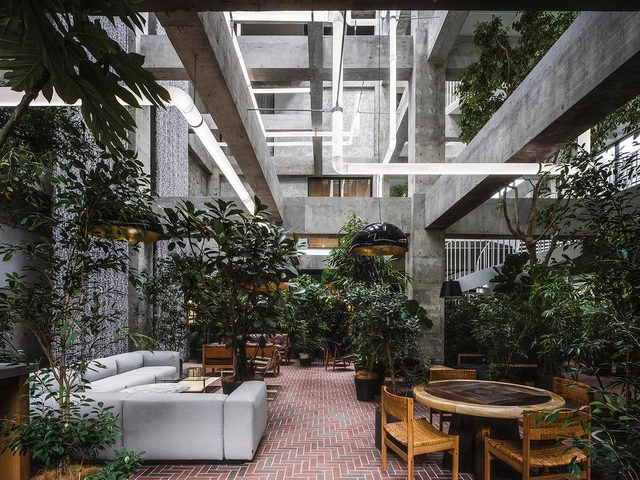
If you can’t beat it, improve it: is the industry’s mantra on innovation, currently developing various alternatives to concrete or its constituent parts and admixtures. So with a concrete set for the environmental green list, the concrete revolution –using the material as an aesthetic exterior facade, interior decoration and fittings, or even in furniture and lighting, as well as a structural framework– is free to continue.
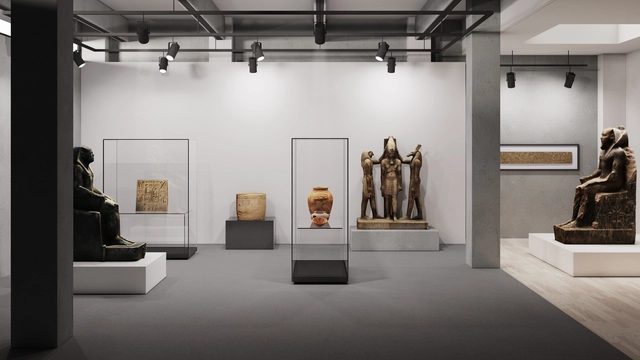
Museums play a critical role in preserving local cultures, promoting a better understanding of our collective heritage, and fostering dialogue, curiosity and self-reflection. In recent years –and largely driven by the Covid-19 pandemic– technological advances have enabled users from all over the world to visit exhibitions virtually, at any time and from the comfort of their own home. However, although online tours are a good way of increasing accessibility, there is something about the in-person museum experience that will never get old: the ability to witness, embrace and closely admire artefacts, paintings and sculptures in their true form, as well as the chance to experience the unique ambiance and essence of a traditional museum setting. Viewing the Mona Lisa virtually will never live up to appreciating it face-to-face at The Louvre, for instance.
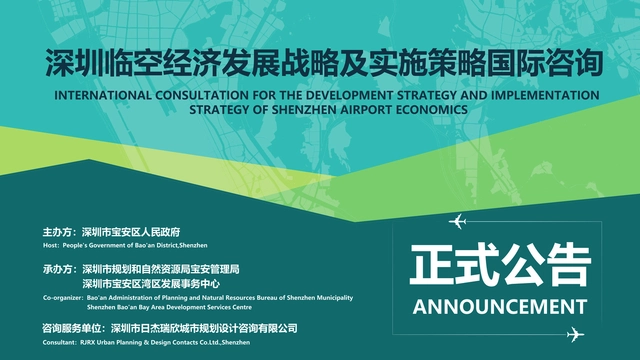
In order to collect global intelligence and advanced ideas, and provide advice for the development of Shenzhen airport economics, the International Consultation for the Development Strategy and Implementation Strategy of Shenzhen Airport Economics was launched. Registration is now open to outstanding consultation institutions and planning and design institutions all over the world.
According to the American Society of Heating, Refrigerating and Air-Conditioning Engineers (ASHRAE)—which organizes global data and supports research in this field—thermal comfort is defined as the condition of the mind that expresses satisfaction with the thermal environment. Why is it important to study adaptive comfort in Latin American climates? Given that 40% of the population lives in the tropics, designing architecture capable of adapting to tropical climates is essential. Consequently, in line with human-centered design, strategies must be tailored to the specific local conditions in which they are implemented.
Franco Morales, technical director of EBP Chile, who plays a cross-cutting role across the company's various departments (construction, climate change, and local energy), frequently collaborates with the CEELA Project. Following his participation in the energy retrofitting project for the Juan XXIII School in Montería, Colombia, and identifying a widespread challenge—namely, schools built without an architecture suited to their climatic context—he has begun developing a sustainable design manual for educational institutions in hot-dry and hot-humid climates.
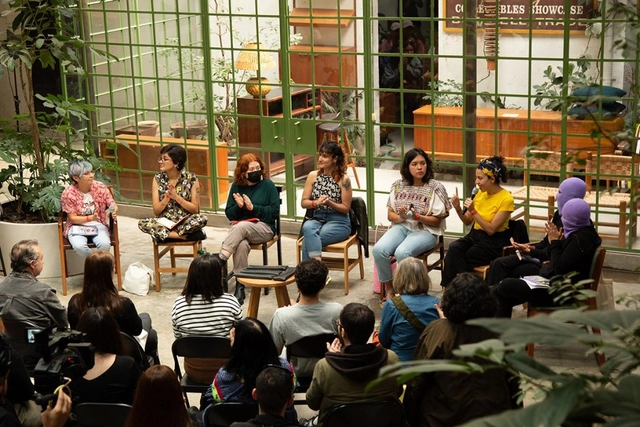
On October 19, 21, and 22, Laguna in Mexico City hosted the second edition of the first design festival created by Coolhuntermx, conceived by and for projects led by cis women, trans women, and dissident communities. This festival was conceived with an inclusive, diverse, and collective approach, curated by designers Andrea Soler and Taina Campos. Following a first edition filled with key learnings and shared knowledge, the objective remains the same: to serve as an inclusive platform for design proposals and other creative expressions seeking alternative dialogues to those taking place during Design Month. This year, various forums were held to address topics such as "Social and Community Impact," "Representation and Decision-Making," "Activism for Transformation," and "Design of Care." In addition, the "Voces Estudiantiles" (Student Voices) exhibition showcased posters addressing various contemporary topics being explored in universities. Similarly, a mural by Artsynonym and Flaminguettes captured some of the core concepts and guiding principles of the festival. The event also featured 'Mujeres de la Tierra' (Women of the Earth), a collective of Indigenous women who defend the land and their lives against violence: "we stand in solidarity with the struggle by planting, cooking, and sharing knowledge." Attendance and participation during the event were highly diverse, enriching the panels to foster a horizontal dialogue addressing specific concerns. It is increasingly necessary to create these spaces to bring visibility to the collective struggles resisting day-to-day dynamics. Therefore, if you were unable to attend, the full talks are available below on coolhuntermx's Twitch channel; simply click on the link for each session. DAY 1 Panel: Social and Community Impact WATCH THE RECORDING HERE The panel featured Alessandra Cireddu (Moderator): National Director of the Architecture Program, Tecnológico de Monterrey (@alitac); Talachas Girl (Speaker): EXCLUSIVE SERVICE FOR WOMEN AND LGBTQ+. Remodeling, interior design, recycling, savings, construction, and creation (@talachas.girl); CACEH. Marcelina Bautista (Speaker): Domestic worker for 22 years, currently director of CACEH, a civil society organization that empowers and professionalizes domestic workers (@caceh_nacional); and Colectiva Argamasa (Speaker): A women's collective seeking to coordinate the presence of women in spaces through cross-cutting architectural interventions (@colectiva_argamasa). Panel: Representation and Decision-Making WATCH THE RECORDING OF THE TALK HERE The panel featured Vulvísima, Avelina Fonseca (Moderator): Feminist activist, B.A. in Political Science from UNAM, specializing in emancipatory feminist economics and the social organization of care. Creator of Vulvísima (@vulvisima); AshbySolano (Speaker): Creative Direction. Digital Fabrication Jedi. Multidimensional creative being (@ashbysolano); GirlUp (Speaker): Passionate advocates for gender equality, sexual and reproductive rights, climate action, mental health, and other social injustice issues (@girlupmx); Marbella Figueroa (Speaker): Co-creator and collaborator of Afrochingonas, a self-managed project addressing and problematizing Afro-descent and racism in Mexico (@marbellabrilhinho); and Astra Lem (Speaker): Graphic designer and trans activism (@astra.lem). DAY 2 Panel: Activism for Transformation WATCH THE RECORDING OF THE TALK HERE The panel featured Dora Bartiloti (Moderator): Multimedia artist. She explores the material qualities of textiles and electronics as tactical mediums for feminist activism and collective action (@dorabartilotti); Zines por Morras (Speaker): The project aims to share experiences of harassment against lesbian and bisexual women in Mexico City (@zinespormorras); Alina Kiliwa (Speaker): "As a lettering artist, I seek to reclaim the sign-painting tradition and revalue the practice through participatory processes" (@alinakiliwa); Mi calle Nuestra Calle (Speaker): Urban laboratory of participatory futures [futures + feminist urbanism + community art] (@micalle_nuestracalle); and MOFA (Speaker): Feminist collective of young women from the urbanism, landscape, architecture, and industrial design programs at the Faculty of Architecture, UNAM (@mujeres_organizadas_fa). Panel: Design of Care WATCH THE RECORDING OF THE TALK HERE The panel featured Sofía Probert (Moderator): Illustrator. Through her work, she invites political and philosophical questioning around socio-environmental issues (@sofia.probert); Jovenas Comuneras de Milpa Alta. Daniela Moreno (Speaker): "We are a space for meeting and constructing action-participation to defend and care for our territories, land, and our existence within them" (@jovenascomuneras); Eli Caballero (Speaker): Environmental care and support for ADHD (@hazcompitas); Madres desobedientes (Speaker): Mothers parenting and transforming the world. Disseminating women's artistic projects and supporting feminist parenting (@madresdesobedientes); and Mariana Robles (Speaker): Gynecologist with a feminist perspective. Non-conscientious objector. Health at Every Size. Mom of two (@dra.mariana.robles). For more information, visit Diseña Mexicana.
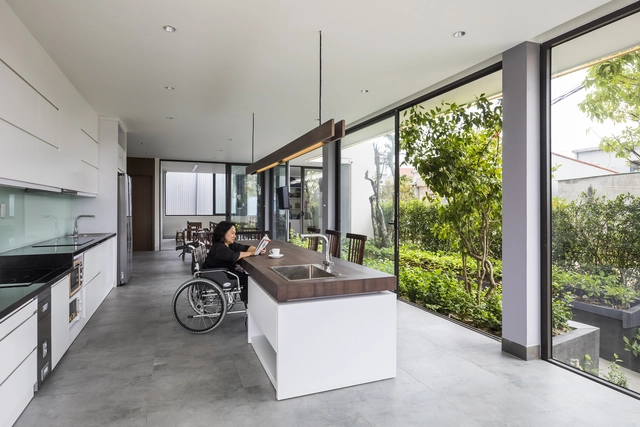
Over 13 million Brazilians live with a physical disability. Data from the Ministry of Health indicates that roughly 6% of the population has some form of compromised mobility and overall coordination due to the complete or partial impairment of one or more body segments. Designing more inclusive environments is key to eliminating architectural barriers, ensuring the integration of this entire demographic into social and cultural activities. During the month of the National Day of Persons with Physical Disabilities, we aim to combat prejudice and present universal design alternatives as a tool for change for architecture and urban planning professionals.
https://www.archdaily.com/1132138/designing-for-people-with-physical-disabilities-for-more-inclusive-and-accessible-spacesArchDaily Team
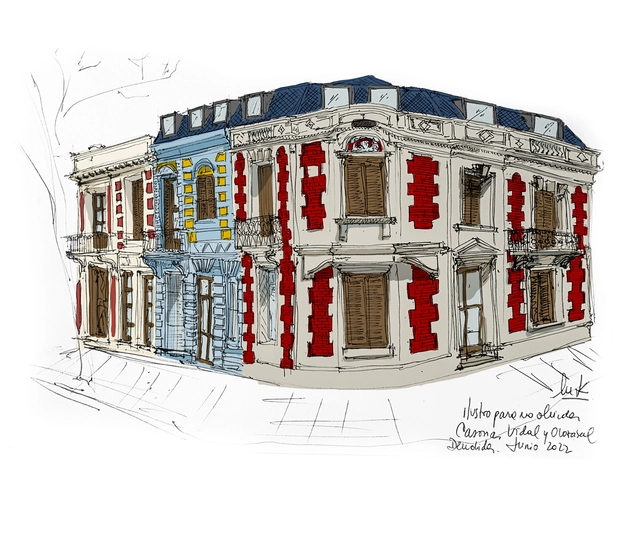
Ilustro para no olvidar is a documentation, research, and registration initiative led by architect Natalia Karbabian that aims to illustrate heritage architecture that has been demolished or is at risk within the city of Buenos Aires. Serving as a testament and a form of protest, this artistic project seeks to honor these buildings of architectural, cultural, and emotional heritage value that define our identity, belonging, and the narrative of our history as a city and its citizens, understanding Buenos Aires as a melting pot of eras, cultures, and social classes. Currently, the project has recorded more than 50 illustrations, with over 250 still left to draw.
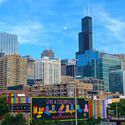
The 1970’s were a dark time for New York City. While the economy was down, crime rates were at an all-time high. The negative public image also kept tourists away, driving the city into a financial crisis. To change perceptions about The Big Apple, the New York State Department for Economic Development approached advertising firm Wells Rich Greene to create an inviting marketing operation. After 45 years, the resulting I Love NY campaign remains fresh in the minds of locals and tourists, successfully revamping New York City’s brand. Cities across the world like Paris, Amsterdam and Jerusalem have similarly invested heavily in constructing magnetic brands for themselves.
In an effort to expand the debate around the issues and opportunities facing urban environments worldwide, UN-Habitat has designated October 31 as “World Cities Day”, an event celebrated annually since 2014. This year the events are centered around the theme “Act Local to Go Global”, with the aim to share experiences and approaches to local actions, the initiatives that were successful and those that were not, and to seek to understand ways in which local and regional governments can help create greener, more equitable and sustainable cities.
The theme was chosen based on the understanding that local actions are of critical importance in achieving the sustainable development goals set for 2030. The 2030 Agenda sets out the UN ambition to contribute to creating cities and human settlements more inclusive, safe, resilient, and sustainable. The world’s largest cities are often the most unequal. This year’s theme suggests that there is a path forward through incremental changes and localized actions. By adapting to site-specific conditions, these actions can better respond to the individual needs of the communities, and the natural conditions of climate and topography and can help strengthen the cultural identity of urban environments.
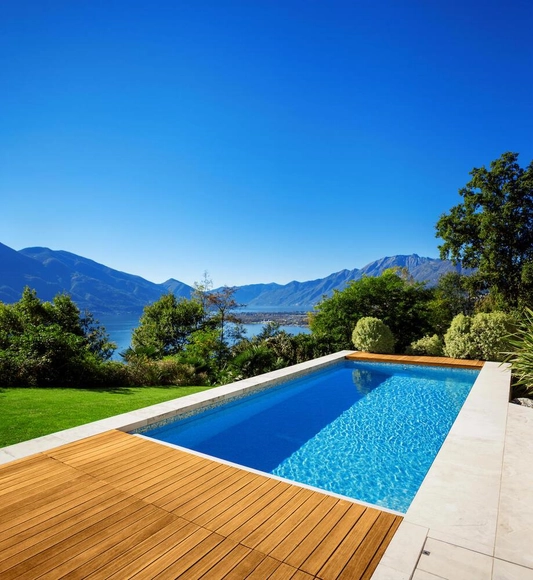
Beyond its shape, size, and location, the process of building a swimming pool involves selecting various technologies, solutions, and materials to achieve proper waterproofing. While we often focus on the exterior aesthetics of a pool, are we aware of what lies beneath its finishes? Much like an "iceberg effect," pool design and construction companies such as CREST have developed a range of essential products that lie below ground level, applied through four specific steps: surface preparation, finish installation, grouting, and maintenance.
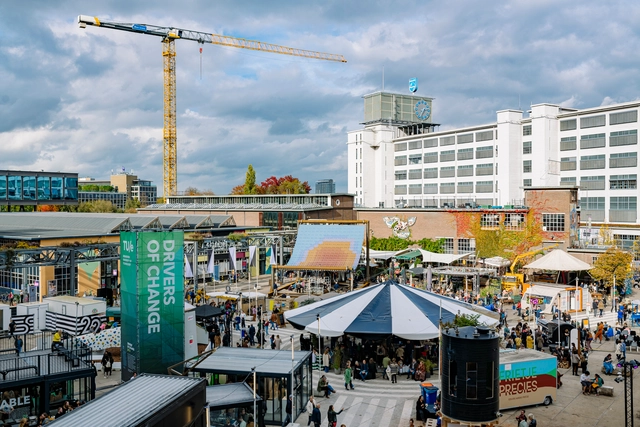
Under the motto "Get Set," the 2022 DDW exhibited more than 50 art and architectural installations to call out designers and communities for a shift from preparation to action facing the challenges of our time. Led by Miriam van der Lubbe, Creative Head of DDW, with Marjan van Aube and Formafantasma as ambassadors, the 21st edition of the Dutch Design Week took place the last week of October in Eindhoven, the Netherlands closing with a Graduation Show of over 200 students of the Design Academy Eindhoven.
Inspiring designers to incorporate innovation and sustainability and familiarize the public with all the technology has to offer, ArchDaily has selected 9 relevant works focused on bio-materials and modular systems. Highlighting ongoing design research, the list underlines projects that reinvent how we deal with nature and the space we live in.
We often walk through the city without knowing the value of the buildings around us. In Chile, there is an architectural multiculturalism that has molded the cities with buildings that, to this day, are awarded a heritage title and are not recognized as such by the inhabitants and visitors.
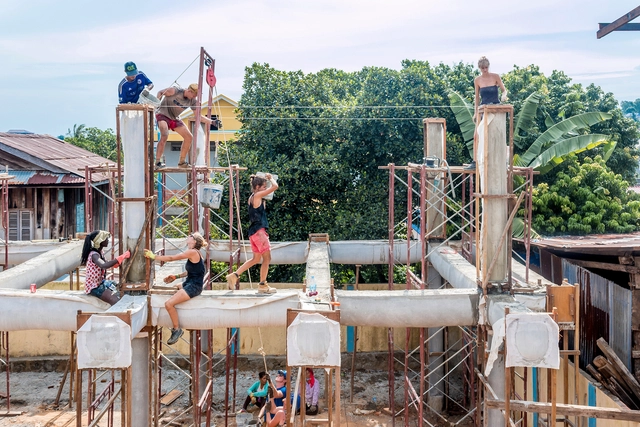
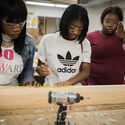
Site work has always been and remains a pivotal stage in forming our built environment. Most architects, designers or engineers have at one point or another been on the grounds and understand the importance of presence within the project development phases. Working on construction sites can be a valuable learning experience and allows different inputs from diverse experts to be considered in forming a better urban, living, and working environment for all. Starting from this idea, and as we delve into Women in Architecture as part of our ArchDaily topics, we published an invitation, encouraging our readers to share their opinion on gender-based discrimination on the construction site.
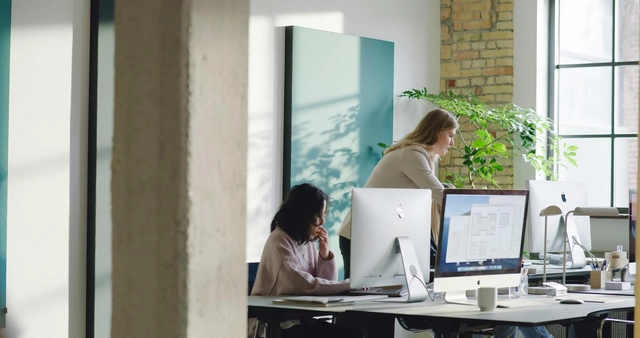
Rockfon Canva Wall Panels in various shades of green and blue create a harmonious atmosphere on the office walls – and the best acoustics. Image Courtesy of Rockfon
Even if you have never engaged with the ins and outs of a building’s acoustics, you will, no doubt, have had many a meeting or passing conversation eased by Rockfon’s sound-absorbing solutions. They may have invisibly clad a ceiling above you in tile form or seamlessly formed the white walls that surrounded you. Rockfon – a part of Rockwool Group – specialises in banishing acoustic bounce with sound absorbing products made from organic stone wool. The products have been part of the fabric of our public spaces – offices, schools, restaurants and libraries – for more than 60 years.
https://www.archdaily.com/991357/leading-the-way-by-sight-not-sound-the-changing-image-of-acoustic-designEmma Moore
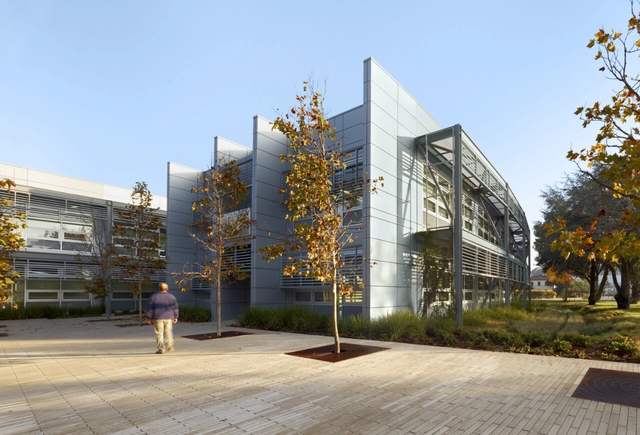
NASA Sustainability Base / William McDonough + Partners and AECOM. Courtesy of William McDonough + Partners
The term “cradle to cradle” was coined by American architect William McDonough and German chemical engineer Michael Braungart in their manifesto-book Cradle to Cradle: Remaking the Way We Make Things, published in 2002. This theory is not merely architectural; rather, it applies to any product, promoting a biological approach to manufacturing in which components are considered nutrients in a “healthy metabolism.”
The Ministry of Transport, Mobility and Urban Agenda (Mitma), in collaboration with the Higher Council of Spanish Architects' Associations (CSCAE) and supported by the Arquia Foundation, has launched a two-stage selection process to choose the curatorial team for the XVI Spanish Biennial of Architecture and Urbanism (BEAU). The deadline for submitting proposals for the first stage is December 14, 2022.
These days, wellness is a commonly-used word in design and other areas, but what does it truly mean? According to the National Wellness Institute, the concept is defined as "an active process through which people become aware of, and make choices toward, a more successful existence." It can be viewed from different perspectives, such as environmental, intellectual, spiritual and physical factors. Although these elements can be integrated separately into one’s life, they can also complement each other and work together. For example, exercise does not only provide physical benefits; it contributes to emotional wellness as well.
IE University, in collaboration with All Things Urban, would like to invite you to our "Cities and Jobs Series". A series of webinars are being hosted by the two organizations, for the launch of IE’s new Bachelor program in Urban Studies (for which applications are now open). The multidisciplinary program examines urban issues in a holistic way to prepare the future generation of urbanists to tackle the pressing challenges of our cities.
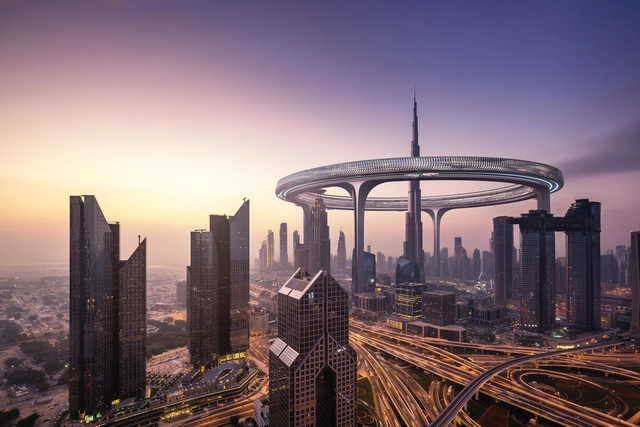
Cities only occupy 2% of the planet’s surface, but they accommodate more than 50% of thepopulation. They consume 75% of global energy, produce 80% of global CO2 emissions, and generate more than 80% of the global GDP today.These numbers put cities at the center of any discussion about global warming, urbanization, progress, and social issues.
The three online webinars will tackle conversations from “Urban Artificial Intelligence: how can we urbanise technology?” to “Urban Green Infrastructure: How can nature save cities” and “Urban social inequalities: How can cities include people?”
Sensory urbanism is a form of investigation of how non-visual information defines a city's character and affects its livability. Using methods that range from sound tracks and smell maps, wearables and virtual reality, researchers in this area have introduced other senses to urban centers.
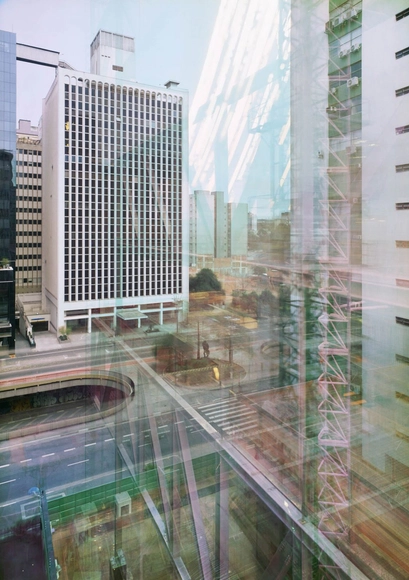
Is it possible to photograph time through transformations in urban space? To accumulate past and present in a single image, inviting the viewer into a visual and archaeological investigation? The Betoneira Podcast spoke with German photographer Michael Wesely about photography and cities. A pioneer of long-exposure photography, Wesely developed a technique that allows a single negative to be exposed for hours, days, or even years. The result is the condensation of the entire exposure period into a single photograph, producing poetic images of profound visual impact.
If we previously brought in before and after plans of apartment refurbishments, we now focus on residential projects that have received needed improvements. In addition to the plans, the information contained in the memorial of each project helps to better understand the attitude taken in each architectural design. After all, each work brings with it different demands: deadlines, budgets, legislation and pre-existing conditions.