Former ArchDaily's Managing Editor. BA in Architecture from Newcastle University, and interested in how overlooked elements of architectural culture —from the media to competitions to procurement processes can alter the designs we end up with.
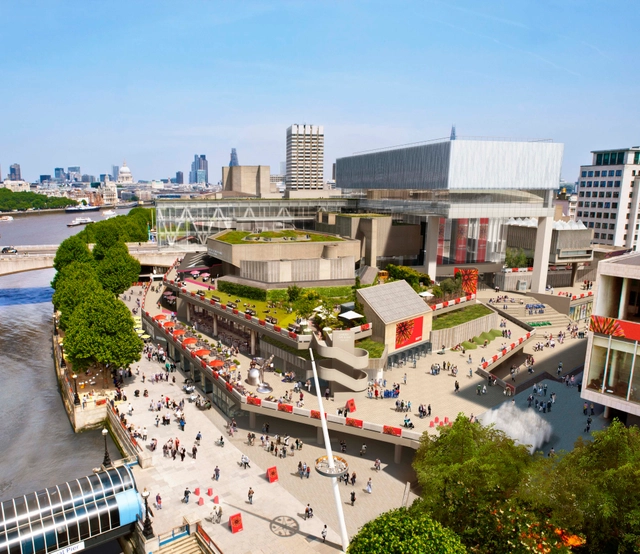
Earlier this month, Feilden Clegg Bradley Studios released new images of the Southbank Centre, the most detailed renderings yet of the highly controversial redevelopment. Among the most significant alterations are a change to the exterior of the crowning glass box, a slight reduction in the size of the "liner" building (to preserve views of the Houses of Parliament from the neighboring National Theatre), and adjustments to various columns to preserve routes through the site.
Read on to find out more about the changes to the design..
As part of their annual survey of the world's largest architecture practices, this year BD has also included a survey to help them quantify which countries are best suited for women with careers in architecture - particularly those who wish to work for large companies. In order to create these rankings, they found the ratio of male to female architects in various countries, and also sought out publicly available data on maternity and paternity leave requirements, and the average cost of childcare as a percentage of average wage. You can read more about their sometimes surprising results after the break.
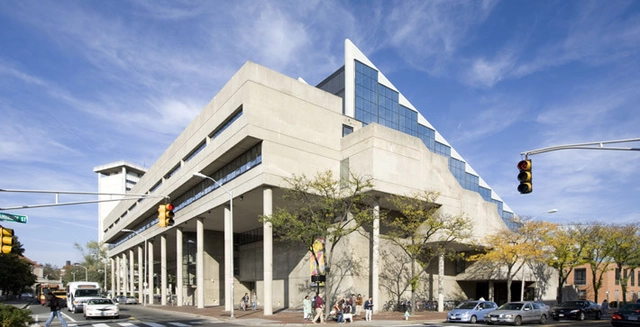
After the controversial lampooning of Zaha Hadid's Al Wakrah Stadium in Qatar, Anthony Flint of the Atlantic Cities casts a critical eye over how the internet, and the swarms of would-be architecture critics that reside there, have changed the way that buildings are designed. Tracking the trend for this form of criticism from Le Corbusier's "two pianos having sex" (aka the Carpenter Centre at Harvard) to the hyper-reactive culture of modern online criticism today, he looks at how architects - and PR companies - are responding. You can read the full article here.
Santiago, Chile took the top spot on the list. Image via Plataforma Urbana
In this article for Fast Company, Boyd Cohen counts down the top 8 smart cities in Latin America. Using publicly available data and his own comprehensive framework to evaluate how smart a city is, he has generated a list which even he admits features a couple of surprises in the top spots. To see the list and discover what each city has achieved to deserve its ranking, you can read the full article here.
For his thesis project, Javier Lloret turned a building into a giant, solvable Rubik's Cube. Making use of the media facade of the Ars Electronica in Linz, Austria, he projected the world's most famous handheld puzzle onto a huge scale - inviting passers-by to solve the puzzle. In the process, Lloret transformed the nearby area, showing that (when used correctly) technology can make the urban environment more fun.
In this interesting report in the Ottawa Citizen, Maria Cook exposes the plan to renovate the Arthur Erickson-designed Bank of Canada Building in Ottawa. The existing building, which features a public atrium complete with a tropical garden, is being extensively remodeled to improve security and building performance, although arguably at great cost to the design. Cook exposes how the bank turned down a prestigious design award in 2011 as it was already at that point privately considering the changes, and explains how its privileged position - related to the government but not controlled by it - effectively means that the bank has nobody it has to answer to who might stop these plans. You can read the full article here.
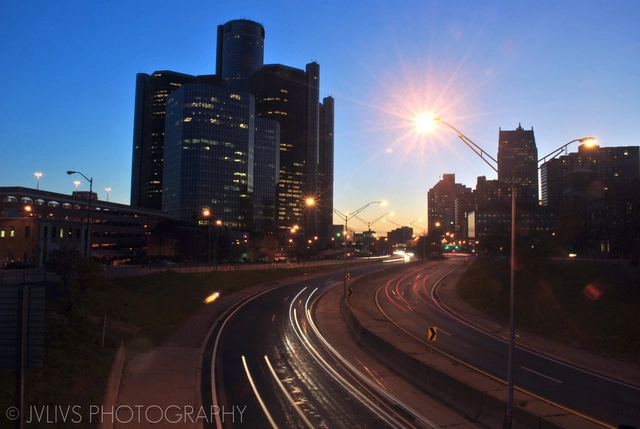
Detroit's I-375. Via Flickr CC User. Used under Creative Commons
According to John Gallagher of the Detroit Free Press, Detroit may soon be removing one of its downtown freeways, the I-375, and converting the trench-like road into a more pedestrian friendly surface level street. The change could be a boon to residents of nearby areas such as Lafayette Park and Eastern Market, which were cut off when the road was built in 1964, and follows a wider trend of cities removing freeways in order to regenerate downtown areas. The city government is currently working with major stakeholders to investigate the potential effects of the change, with a proposal due for summer 2014. You can read the full article here.
At the annual Greenbuild International Conference in Philadelphia last week, the US Green Building Council (USGBC) finally announced the latest version of LEED. Aiming to make a larger forward step than previous versions, LEED v4 is described by Rick Fedrizzi, the CEO and president of USGBC as a "quantum leap". But what are the key changes in the new LEED criteria, and what effect will they have? Furthermore, what problems have they yet to address? Read on to find out.
With the news earlier this year that The Cooper Union in New York will, for the first time in 155 years, begin charging tuition fees to students in 2014, the existing students at its Irwin S. Chanin School of Architecture are taking steps to ensure that it stays true to the meritocratic principles on which it was founded. To achieve this, they have launched the One Year Fund, an attempt to crowdsource $600,000 in order to cover the tuition fees of the incoming students in 2014.
Read more about the One Year Fund, and how it fits into the students' larger aims, after the break.
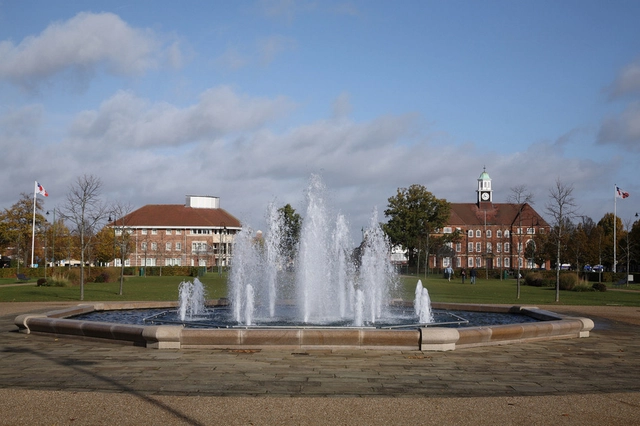
Town square in Letchworth Garden City, one of the UK's first. Via Flickr CC user. Used under Creative Commons
After the Wolfson Economics Prize announced a challenge to deliver new garden cities in the UK for the 21st Century, Feargus O'Sullivan of Atlantic Cities responds, calling the attempt to bring back garden cities "misguided". His article gives a comprehensive rundown of why garden cities were popular during the 20th century, why they are becoming popular again and, ultimately, why they are a bad idea that will not succeed this time around - finishing with some ideas from The Netherlands and Sweden that would be much more appropriate. You can read the full article here.
Screenshot of a Revit Model. Via Flickr CC user. Used under Creative Commons
This article on Line/Shape/Space by Jeff Yoders discusses how BIM can be used to good effect by bringing different professionals together early on in a design project. By utilizing the shared BIM model over the cloud - or even by providing a dedicated "Computer-Aided Visual Environment" or "BIM CAVE" (seriously) - clashes can be detected early, design priorities can be more balanced, and ultimately the time and cost requirements of a project can be significantly reduced. You can read the full article here.
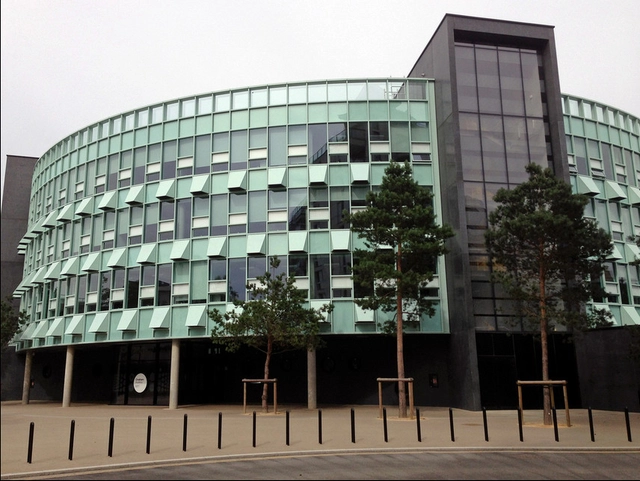
In this article for The Guardian, Oliver Wainwright reviews Chobham Academy, a new school built as part of East London's Olympic Legacy by architects AHMM. While he finds the school impressive and ambitious, Wainwright questions whether the campus, which acts as the 'fulcrum' between the poverty-stricken streets of Leyton and the high end flats of the former Athlete's Village, will be able to bring the two parts of this community together. You can read the full article here.
In Design Intelligence's annual rankings of US Architecture Schools, released earlier this month, there is certainly a lot to talk about. Of course, plenty will be said about what is shown immediately by the statistics, and rightly so - but just as interesting is what is revealed between the lines of this report, about the schools themselves and the culture they exist within. By taking the opinions of professional architects, teachers and students, the Design Intelligence report exposes a complex network which, when examined closely enough, reveals what some might see as a worrying trend within architectural education.
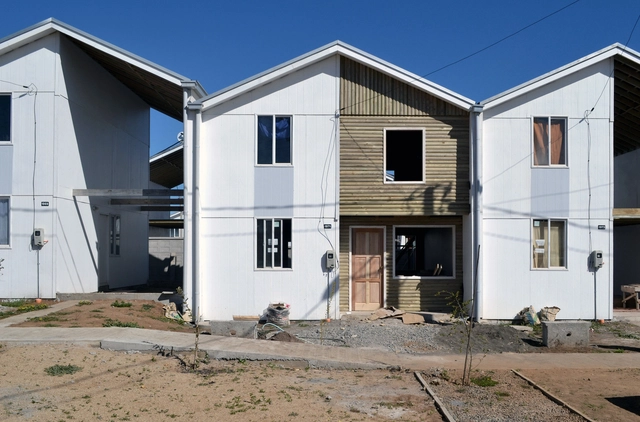
Since they first developed the typology for their Quinta Monroy project in Iquique, Chile, the "half-finished home" has become something of a signature for ELEMENTAL: they have used the technique in multiple cities in Chile, as well as their Monterrey Housing project in Mexico. The typology began life as a way of dealing with extremely low budgets, allowing governments to provide housing to citizens at incredibly low prices, but nevertheless creating homes that would provide for the needs of residents and even gain value over time. Now, they have applied the theory to their Villa Verde Housing project, published just last week on ArchDaily.
Read more about the typology, and how it has been applied at Villa Verde, after the break...
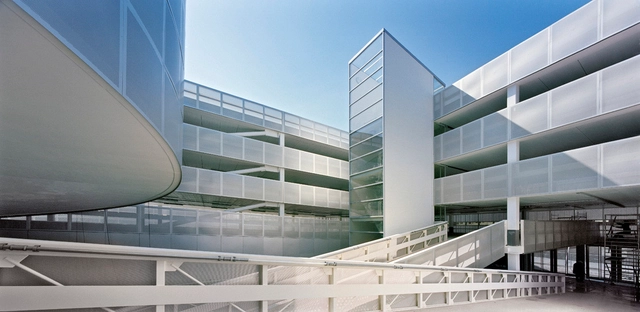
This intriguing article on The Atlantic Cities highlights a growing trend as cities become more focused on pedestrians, bicycles and public transport: parking garages that are designed with alternative uses in mind. Developers are ensuring that these garages have "good bones", such as comfortable ceiling heights, that will allow them to be easily converted into apartments or offices in a future when many city-dwellers don't own cars. You can read the full article here.
The Infinity Tower by GDS Architects. Image Courtesy of fastcodesign.com
Last week Time Magazine released their list of the top 25 inventions of 2013. The list covers both fun and life-changing new ideas, covering everything from the Cronut to the Artificial Pancreas - but there are also four architectural innovations that made the prestigious list. Find out more about them after the break.
If the discussions recently held at the Battle of Ideas are any indication, it seems that we in the architecture community are living a certain crisis of confidence.
Not one new utopian vision has been presented in the past 30 years, lamented Theodore Dounas; all these pop-ups popping up are just evidence, said Pedro Bismarck and Alastair Donald, of architecture's fearful reluctance to tackle complex problems or act as a legitimate agent for change at all; and then there’s the problem, voiced by Rory Olcayto, of architects being bullied by their clients into executing questionable agendas.