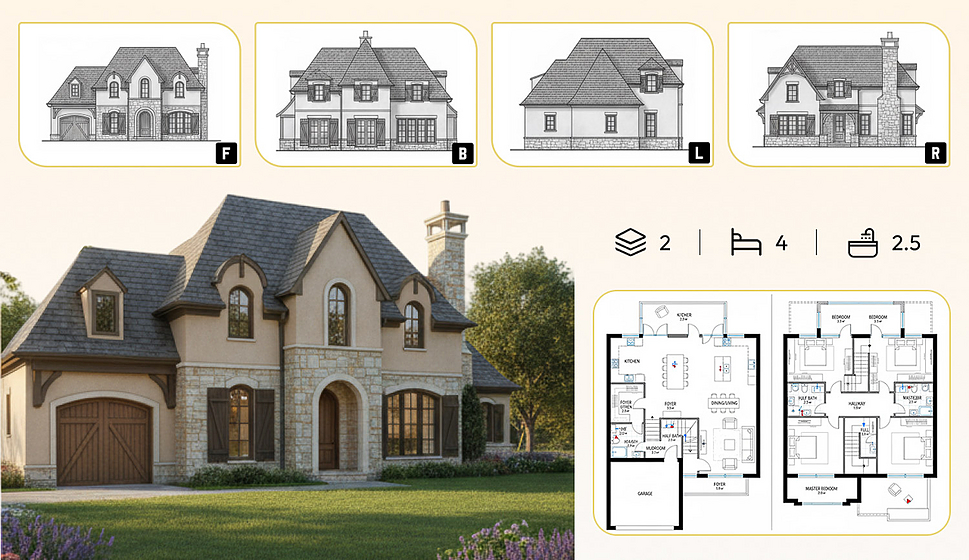
This guide covers a workflow that moves from project parameters to generated floor plans, 3D perspective views, exterior design exploration, and site context visualization, using AI tools in place of preliminary CAD and rendering work.
This guide covers a workflow that moves from project parameters to generated floor plans, 3D perspective views, exterior design exploration, and site context visualization, using AI tools in place of preliminary CAD and rendering work.

Most of Europe's future housing already exists, yet renovation continues to happen too slowly to address climate, housing, health and resource challenges at the scale required. Re:Living explores how renovation can move from isolated projects to a scalable approach for transforming existing buildings. At the heart of the initiative is a new research project, The Housing We Need for the Future We Want, which examines how better use of the existing building stock can unlock new opportunities for architects, cities and communities.

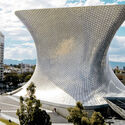
Mexico City is a sprawling metropolis of layered temporalities, where architecture operates as a continuous negotiation between deep-seated history and intense urban mutation. Built over the aquatic traces of Tenochtitlan, the city's fabric is an ongoing dialogue between eras: the monumental scale of the Pre-Hispanic Templo Mayor and the Viceroyalty architecture of the Catedral Metropolitana coexist with the modern and contemporary impulses that define its skyline. This dense juxtaposition creates a unique urban canvas where sacred geography, colonial imposition, and 20th-century ambition intersect.
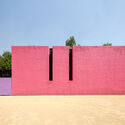
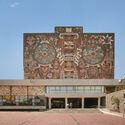
The mid-century marked a definitive era of experimentation, forging a Mexican Modernism that masterfully synthesized international structural rationalism with local identity and materiality. This synthesis is epitomized by the sweeping, plastic integration of art and architecture at the Ciudad Universitaria, the structural poetry of Félix Candela's hyper-parabolic shells, and the raw, monumental brutalism of Teodoro González de León and Abraham Zabludovsky. Parallel to this, the intimate, introspective mastery of Luis Barragán and Juan O'Gorman redefined domestic space, experimenting with light, vernacular color, and tectonic honesty to create spaces of profound spatial stillness.

An experiential rebellion takes center stage in the fourth episode of the Room For Dreams podcast, hitting directly at the heart of today's screen-deep, image-obsessed design culture. Recorded live at Milan Design Week 2026 in cooperation with INDX|GLOBAL, host Claire Broadka sits down with four Indian architectural voices — Indrajit Kembhavi, Manish Gulati, Sanjay Singh, and Sidhartha Talwar — to explore a critical question: have we sacrificed the soul of architecture for the sake of a picture-perfect Instagram post?

Cities are increasingly designed to mitigate risk, and by doing so, need to collect data on climate, infrastructure, biodiversity, and social fragmentation so that the language of resilience becomes a fixture of planning. Yet the underlying conditions that produce polarization, civic disengagement, and ecological breakdown often remain unquestioned. The tools that dominate urban practice tend to address only one register of human experience, while the emotional and imaginative dimensions of transformation are not treated as reliable solutions.
Philosopher Felix Guattari proposed that sustained ecological transformation depends on simultaneous attention to three distinct ecologies: the ecology of the mind, the ecology of society, and the ecology of the environment. Mainstream environmental politics tends to concentrate on one or two of the three, flattening a complex condition into a defined problem with a clear answer. Ancient rituals remind us that transformation depends on practices that simultaneously engage the body, the community, and the environment.

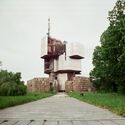
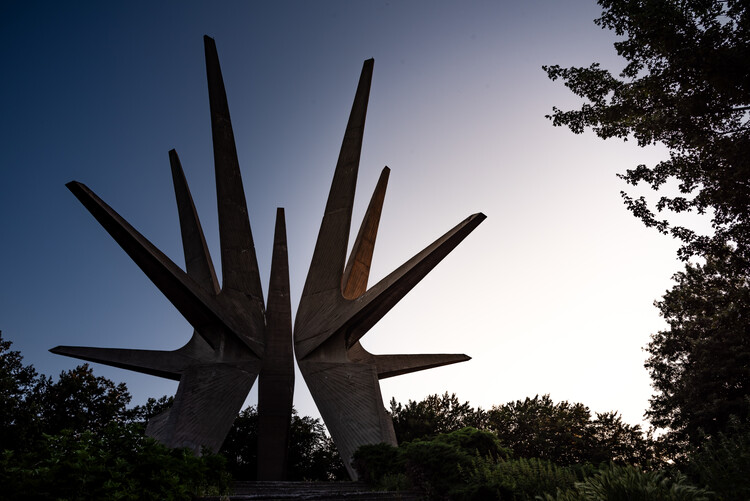
A monument is usually the most conservative building a state will commission. It is expected to stabilize memory, to make history legible, and to give public form to a shared narrative. Eastern Europe's twentieth century produced an entire body of work from the Baltic to the Balkans that resisted precisely those expectations, challenging the conventional relationship between monument, memory, and representation. Commonly grouped under the name spomeniks, these architectural exercises are perhaps the best-known examples of a much broader landscape of memorial architecture that emerged across the region. These were societies emerging from occupation, civil conflict, or revolution, and none of them possessed a single symbolic language capable of accommodating the complexity of their histories. Rather than searching for new heroes or new icons, many architects and artists turned to space itself as the medium through which remembrance could be constructed.
These monuments occupy an unusual position between sculpture and architecture. At one scale, they read as deliberate abstract compositions arranged with the clarity of a drawing by Kandinsky. At another, they seem less resolved, as if testing the limits of a spatial language still in formation. Their forms often appear caught between certainty and experimentation, the same monument readable as a controlled geometric object and as an open-ended search for how collective memory might inhabit space. But these readings coexist and give many of these works their enduring ambiguity.

One of the defining qualities of contemporary interiors is flexibility. Offices, education facilities, hotels, and cultural venues need to be adaptable. They require spaces that can expand, divide, open, and close according to different activities, without sacrificing comfort, or accoustics. How a space is subdivided, then, is no longer a secondary decision, but a central component of architectural performance.

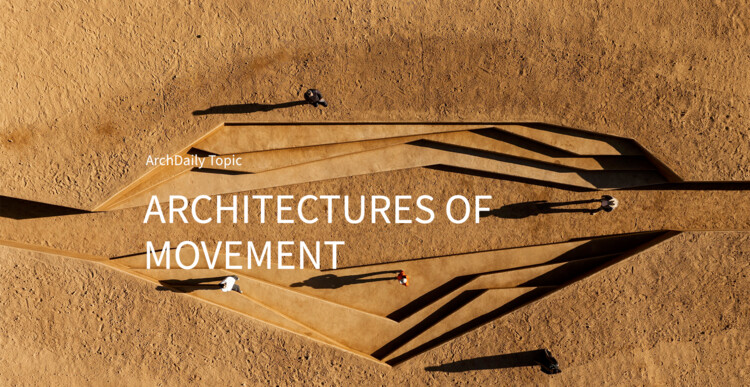
Every twelve years, the banks of the Ganges at Prayagraj become one of the largest cities on Earth — and then disappear. The Maha Kumbh Mela draws over 400 million pilgrims across six weeks, requiring the construction of a full urban infrastructure: pontoon bridges, field hospitals, kilometers of temporary roads, a grid of tent cities visible from space. When the festival ends, it is dismantled entirely. No gathering in human history produces a more complete architecture of movement; built for arrival, engineered for transience, and designed to leave no permanent trace. The Kumbh Mela is exceptional in scale, but not in condition: movement has become a defining spatial problem of the century.
This month, ArchDaily explores Architectures of Movement: Land, Borders, and the Politics of Belonging, a theme that examines how mobility reshapes architecture's relationship to territory, ownership, and identity. The topic does not treat movement as a crisis to be managed, but as a fundamental lens through which to reconsider what buildings, cities, and borders actually do: who they accommodate, who they exclude, and what they make permanent.

A building material rarely begins where architecture encounters it. By the time concrete reaches a construction site, its limestone has already been quarried, processed, and transformed. Timber arrives long after the forest. Glass appears detached from the sand from which it was made. By the time materials enter construction, much of the landscape and industry that produced them has already disappeared from view.
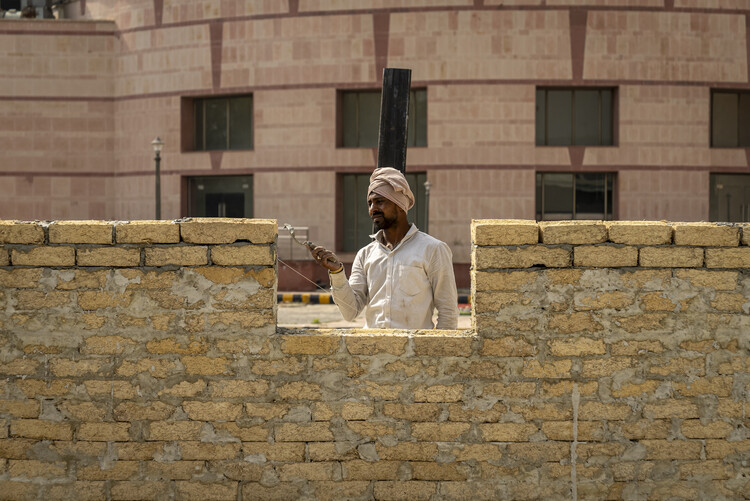
Across India and the SWANA region, another material supply chain is becoming visible. Rice husks, coconut fibres, sugarcane bagasse, and date palm residues, once treated as agricultural leftovers, are increasingly entering architecture as insulation, composite panels, fibreboards, and cement substitutes. Rice mills, coconut plantations, sugar factories, and date farms are increasingly becoming part of the architectural supply chain.

In 1743, a small cabin suspended by ropes was installed in a courtyard of the Palace of Versailles for the private use of King Louis XV. Manually operated by servants hidden from view, the so-called "flying chair" allowed movement between floors without stairs, and unknowingly introduced one of the central questions of modern architecture: how to move people vertically in a way that is efficient, safe, and integrated into the building.
The mechanization of this principle, with the introduction of a safety elevator in the early 1850s, paved the way for an unprecedented urban transformation. Without the elevator, the skyscrapers of Chicago and New York in the 1880s would have been unfeasible not because of structural limitations, but because of access. The elevator made it possible to build higher, and it also defined the logic of how these buildings would operate, where their cores would be placed, how their lobbies would be organized, and who could reach which spaces.

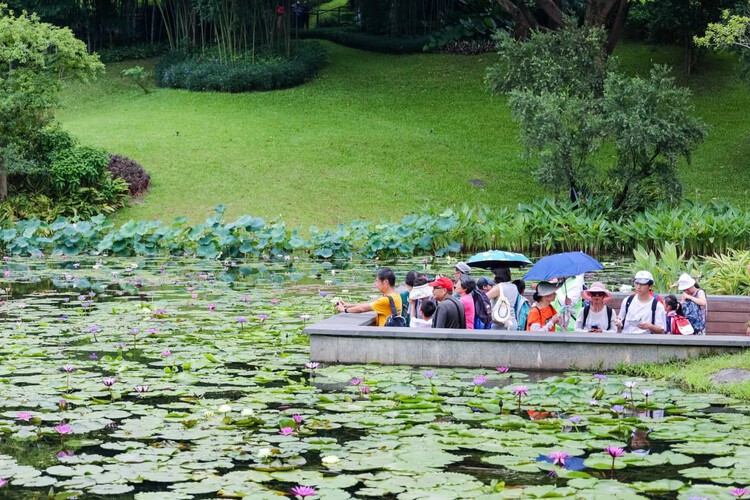
While human life depends heavily on plants for the medicines, building materials, and fuel they provide, they also play a vital role in many ecological processes. From climate regulation through carbon dioxide absorption to soil fertility and the purification of air and water, plant diversity offers opportunities to address some of the most pressing challenges of this century, including food security, energy availability, climate change, and habitat degradation. In this context, botanical gardens act as living refuges that foster innovation, adaptation, and human resilience. But what can architectural practice learn from botany and its methods?

For some time now, it has become common to wonder where the things we consume come from. We check labels, seek out local producers, and investigate supply chains in an attempt to understand the impact of our habits, whether on our own health or on the planet.
In the field of architecture, however, this question remains relatively marginal. We often know who designed a building, its finishes, the manufacturer of its frames, the brand of its wall coverings, and even its energy performance, but we almost never ask where the tons of material that made its existence possible actually came from.

Set on the banks of the Sava River in Belgrade, Serbia, the site of a former cement factory became the starting point for the 21st edition of the Saint-Gobain Architecture Student Contest. Organized in cooperation with the World Green Building Council, OneClick LCA, the City of Belgrade, the Academic Yachting Club Belgrade, the Serbia Green Building Council, and the Green & Blue Corridors Association, invited students to imagine a new Sports and Recreation Hub capable of transforming an industrial waterfront into a year-round public destination. More than 200 universities from 34 countries participated in this 21stedition of the Architecture Student Contest.

The third episode of the Room For Dreams podcast confronts one of the most pressing dilemmas in modern urban planning: how to breathe in new life into old structures without erasing their history. Recorded live at Milan Design Week 2026 in cooperation with INDX|GLOBAL, this dynamic session gathers a panel of architects — Kiran Gala, Vivek Gupta, and Carl Bhesania — to unpack the complex realities of adaptive reuse.

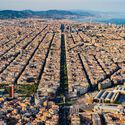
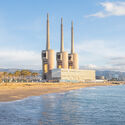
Barcelona is the first city in the history of the UIA World Congress of Architects to host the event twice. The 1996 edition, Present and Futures: Architecture in Cities, arrived at a charged moment, when the post-Olympic city was consolidating an urban model that would become one of the most studied and contested in contemporary urbanism, and when architecture was learning to think through the large metropolis as its primary site of inquiry. Thirty years later, the same city reopens the question under a different condition: one in which the built environment can no longer be understood as a self-contained object, but only through the wider ecological, material, and political systems that sustain it. The theme of the 2026 Congress — Becoming. Architectures for a Planet in Transition — does not abandon the urban concerns of 1996; it reopens them from a planetary scale.
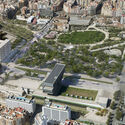
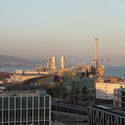
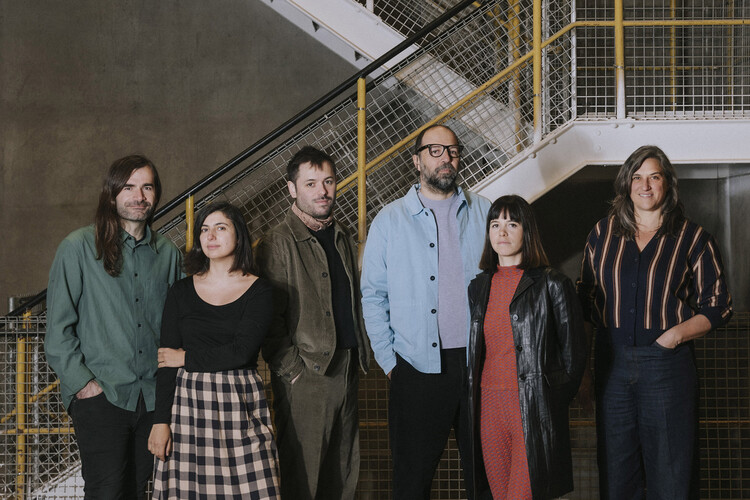
The curatorial team behind this edition, formed by Pau Bajet, Maria Giramé, Mariona Benedito, Tomeu Ramis, Pau Sarquella, and Carmen Torres, approaches architecture as a critical and transformative tool rooted in territory, working across practice, research, and teaching. Their program structures the Congress around six interconnected thematic lines (Becoming More-than-human, Becoming Circular, Becoming Embodied, Becoming Interdependent, Becoming Hyper-Conscious, and Becoming Attuned) and distributes it across three venues of very different characters — Les Tres Xemeneies del Besòs, the Disseny Hub at Glòries, and the CCIB — each chosen for what it represents as much as for what it can hold.

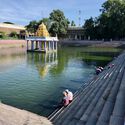
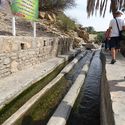
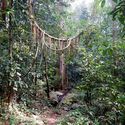
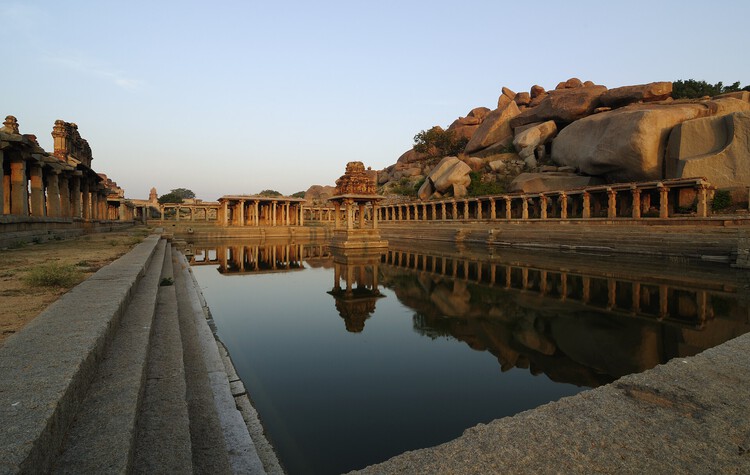
Architecture often speaks about ecological design as though it were a recent discovery. Biodiversity corridors, regenerative landscapes, sponge cities, and more-than-human urbanism are presented as emerging responses to contemporary environmental crises. Across India and the SWANA region, landscapes shaped through religious practice have long organized relationships between people, water, vegetation, and animals. Long before ecological performance became a design metric, temple tanks stored monsoon water, sacred groves protected biodiversity, and oasis settlements sustained life in some of the world's most arid environments. Few of these places emerged from explicit environmental agendas. They emerged through cultural and spiritual practices. Their environmental logic remains highly relevant today. Many of the conditions now discussed through more-than-human design have existed for centuries within landscapes architects rarely study as ecological infrastructure.

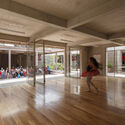
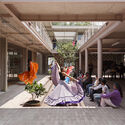
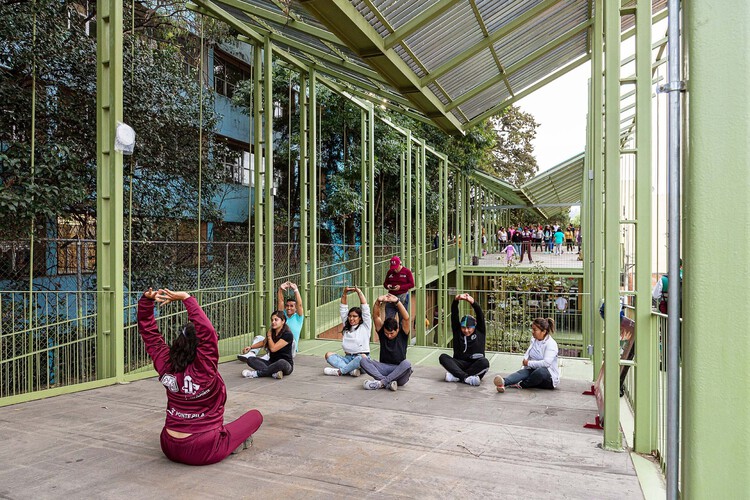
In many Latin American cities, peripheral neighborhoods have historically had less access to the resources that make urban life more than just livable. Housing, transportation, and public services are the usual markers of that gap. But there is another gap that is harder to quantify: the absence of places where people can gather, learn, rest, and participate in collective life. When those spaces do not exist, the city not only fails to provide a service. It fails to acknowledge a presence.
In recent decades, a growing number of projects have tried to address that absence directly. Rather than focusing only on physical infrastructure, they invest in spaces designed to support education, culture, recreation, and community, often merging several of those functions within a single building in neighborhoods where those spaces are otherwise limited.

Long before it becomes a matter of performance, comfort, or energy efficiency, natural light is a way of giving presence to architecture. It reveals the texture of a wall, the depth of an opening, and the silent passage of time within a space. In works as distinct as those of Tadao Ando and Alvar Aalto, daylight appears as an essential material of design: in some cases, guiding the eye toward contemplation; in others, making spaces feel more human, welcoming, and connected to everyday life.

In an industry defined by building codes, climate urgency, and the pressures of the real estate market, the architectural competition has quietly become one of the discipline's most generative spaces. Unburdened by budgets, clients, or city regulations, competition entries allow architects to think at the edge of what the built environment could be, and increasingly, that speculative work is being taken seriously as a cultural and intellectual contribution in its own right. Buildner's Unbuilt Award, now in its second edition, is one of those efforts, by treating the unbuilt project as a platform for architects and designers to share concepts that challenge boundaries and inspire future possibilities. In this way, competitions like this allow architecture professionals and students to showcase ideas and visions that, even without being constructed, reflect the spirit of exploration and ingenuity in architecture.

The second episode of the Room For Dreams podcast series introduces a compelling dive into how architecture can embrace the future without losing its soul. Recorded live at Milan Design Week 2026 in cooperation with INDX|GLOBAL, this episode features architects Arun Sharma and Jaskaran Singh as they unpack the true meaning of the digital vernacular.

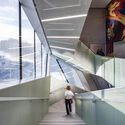
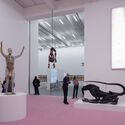
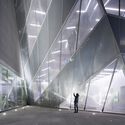
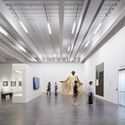
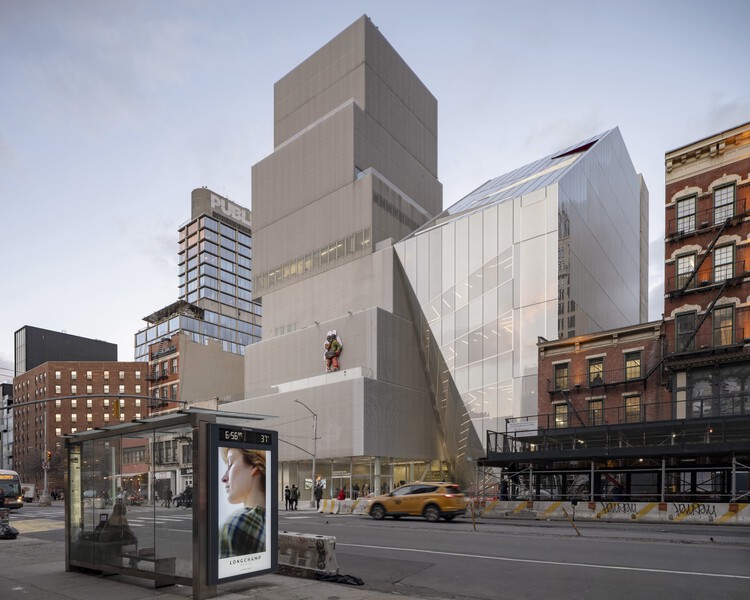
When the New Museum's original SANAA-designed building, a stack of shifted opaque boxes wrapped in a metal mesh skin, opened in 2007, it already seemed destined for some form of expansion to relieve the vertical pressure created by its constrained circulation and limited footprint. In March, the museum unveiled its long-anticipated addition, designed by OMA's Shohei Shigematsu and Rem Koolhaas. The angular and slightly set-back companion building doubles the museum's exhibition capacity while reshaping the institution's relationship to the city and to the original SANAA structure by Kazuyo Sejima and Ryue Nishizawa.
At the building's press opening, Koolhaas described the project "not simply as an extension but as a complement or counterpart." Shigematsu later elaborated: "We thought about designing a pair composed of two distinct and yet highly connected buildings. One is more vertical and introverted. The other is more horizontal and extraverted."

At Salone del Mobile 2026, MARA presented its latest collection within a fair-stand concept designed by Italian architect and designer Ferruccio Laviani. Conceived as a micro-abstraction of an arena, the installation placed visitors at the center of an ascending spatial composition, where the brand's newest products were displayed across stepped tiers.
The setting was inspired by the idea of the Greek theatre as a place of encounter, exchange, and collective observation. The stand proposed a kind of architectural landscape in which visitors could sit, move through the space, observe the objects from different angles, and engage with the brand in a more direct and experiential way.

ReGreeneration is a Horizon Europe-awarded project working across nine cities to advance urban regeneration through nature-based solutions, participatory governance, and integrated approaches to climate resilience and social equity. The nine cities in the project portfolio span a range of urban typologies, scales, and planning traditions, forming a living laboratory for rethinking sustainable urban transformation in practice. Each city brings distinct challenges and ambitions to the collaboration, and this series of articles explores what each city is doing and what the broader design community can learn from it.

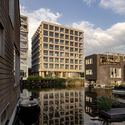
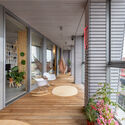
With forty-eight psychogeriatric beds and sixty-eight wheelchair-accessible apartments, accommodation for informal caregivers, and space for bedside care, the De Keyzer building opened in Amsterdam in 2011. Its program had been conceived entirely for elderly people requiring assistance, but shortly after completion, the building was sold to an investment fund, and the apartments began to be rented to young families with children.
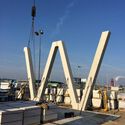
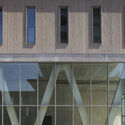
For the project's architects, Tom Frantzen and Karel van Eijken, the episode could have been interpreted as a failure of prediction. Instead, it became a confirmation. "It showed, very clearly, that buildings can end up being used in completely different ways than originally intended," Frantzen recalls. The transformation was only possible because the apartments were generous and because the structure allowed for uses more diverse than those anticipated in the original program. Had the building been designed solely for its initial function, the change of use would likely have required a destructive renovation or, in the extreme, demolition.

Interior designers who find themselves facing project parameters, budget constraints, client demands, and the maintenance of a design aesthetic have a lot to juggle. Tight turnaround schedules put pressure on designers when clients request multiple revisions. A mismatch between drawings and renderings undermines the delivery of a cohesive design plan. In today's competitive, digitally driven architectural field, success follows when designers can provide technical details from concept to construction by leveraging advanced technology and strategic tools within a single modeling software.