Get a better understanding of Richard Meier in PLANE-SITE’s latest short film in their series, Time-Space-Existence. The series focuses on the principles behind each architect they feature. Known for his pristine white, geometric buildings, Meier talks about architectural context, timelessness, universal color, and his only black building.
Videos
Richard Meier On Color in Architecture and His Only Black Building
https://www.archdaily.com/887078/richard-meier-on-color-in-architecture-and-his-only-black-buildingLindsey Leardi
Renzo Piano: "Creativity is Only Possible When You Share Creativity"
If you are missing the capacity to create emotion, then it doesn’t work, it’s not enough.
– Renzo Piano
In this in-depth biographical video by the Louisiana Channel, Renzo Piano talks about his earliest influences, why traveling is essential, the pleasures of drawing, what creativity really means, how “computers are a bit stupid,” the way “beauty can change the world,” and more.
https://www.archdaily.com/886603/renzo-piano-creativity-is-only-possible-when-you-share-creativityZoya Gul Hasan
Astoundingly Colorful Chilean Sunset Captured In Timelapse Photo Series
With over 10,000 followers, Juan Cristóbal Lara's (@eljuancri) Instagram account has become a go-to photographic essay of Chile's capital city, Santiago. His images show an urban area in which the giant Andes mountains, the city's hills, and the Mapocho River are the stars of the show. As the buildings and natural elements harness and reflect the changing light of the sun, Santiago has certified itself as one of the most photogenic cities around.
To commemorate the end of 2017, Lara published his first timelapse—a video filmed over a period of days that shows the Santiago sunset from the San Critóbal and Calán hills.
https://www.archdaily.com/886612/astoundingly-colorful-chilean-sunset-captured-in-timelapse-photo-seriesArchDaily Team
Architecture That is Good Enough to Eat at LA Restaurant Vespertine
“As soon as we were able to get into the space we wrote the entire menu in basically a day. It was being in the building itself that had this creative charge about it,” said chef Jordan Kahn.
At LA chef Jordan Kahn’s new fine dining adventure, it was the architecture which informed the menu.
https://www.archdaily.com/886456/architecture-that-is-good-enough-to-eat-at-la-restaurant-vespertineLindsey Leardi
TED Talk: Christian Benimana of MASS Design Group on Founding a Design School for Africa
Are we going to follow a model of unsustainable building and construction similar to what I witnessed in China—or can we develop a uniquely African model of sustainable, and equitable development? I'm optimistic we can.
In this recent TED Talk, Christian Benimana talks about his journey as an architect—growing up in Rwanda, studying in China, and finally returning to Africa to see the beginnings of a building boom very similar to what he witnessed in Shanghai. Given this background, he then explains why he and MASS Design Group founded the African Design Center, a school and innovation center that intends to be a catalyst for positive urban development on the continent.
https://www.archdaily.com/886325/ted-talk-christian-benimana-of-mass-design-group-on-founding-a-design-school-for-africaRory Stott
Kengo Kuma Explains How His Architectural Style was Formed by Financial Crisis
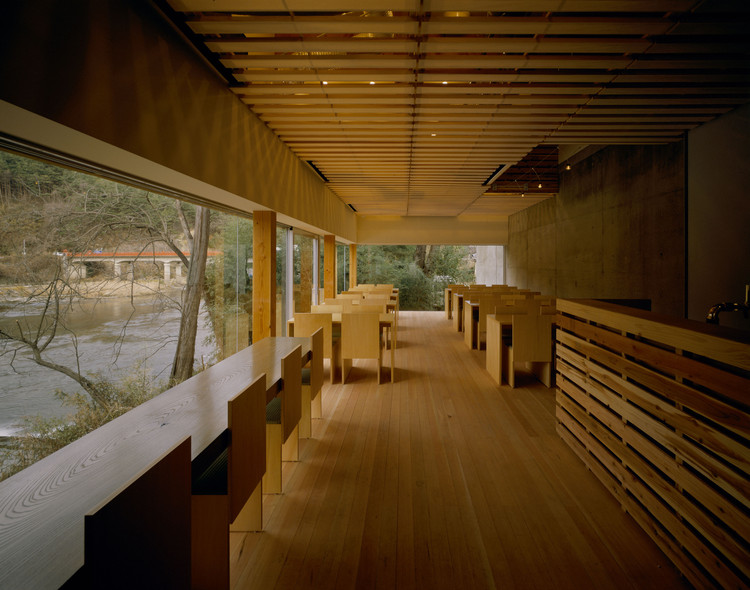
Japan's renowned architect Kengo Kuma is the latest to feature in PLANE—SITE's video series Time-Space-Existence, exploring the inner workings of his Tokyo office and how the Japanese financial crisis of the early 1990s shaped his firm.


https://www.archdaily.com/885980/kengo-kuma-explains-how-his-architectural-style-was-formed-by-financial-crisisElla Thorns
A “Christmas Tale of a Post-Quake Reconstruction”: Stefano Boeri Architetti’s Community Rebuilding in Amatrice
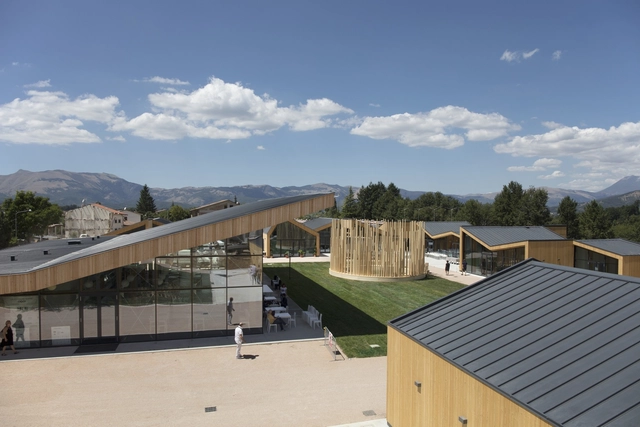
In August 2016, a powerful 6.2-magnitude earthquake struck central Italy, resulting in the loss of nearly 300 lives and the destruction of centuries-worth of historic architecture. At the center of the destruction was Amatrice, a beautiful hill town set in the Latium Apennines, which was reduced to mere rubble, leaving hundreds dead or injured and the survivors homeless.
But the community could not be held down. Shortly after the disaster, rebuilding efforts began, with the assistance of some of Italy’s top architects, including Renzo Piano and Stefano Boeri Architetti, who were able to construct a brand new canteen in just a few weeks time.



https://www.archdaily.com/885925/a-christmas-tale-of-a-post-quake-reconstruction-stefano-boeri-architettis-community-rebuilding-in-amatricePatrick Lynch
Bjarke Ingels: "Great Buildings Blatantly Express Their True Essence to the World"
Great buildings blatantly express their true essence to the world
In this interview from the Louisiana Channel, Bjarke Ingels shares the personal moments of his life that have influenced the graphic, playful and humanistic architectural style for which he is now world renowned.
https://www.archdaily.com/885761/bjarke-ingels-great-buildings-blatantly-express-their-true-essence-to-the-worldPatrick Lynch
Federico Babina's IKONICITY Takes You Around The World In 21 Illustrations
The clever Italian artist, Federico Babina is at it again, and this time he's taking us around the world in 21 animated illustrations. Hear the ringing of Big Ben, sirens in New York, seagulls of Amsterdam, and Havana drums as you find yourself adding to your travel bucket list. You'll have to watch this animation more than once to catch all of the details Babina captures about an entire city culture in one illustration. Or view each illustration individually below.
https://www.archdaily.com/885430/federico-babinas-ikonicity-takes-you-around-the-world-in-21-illustrationsLindsey Leardi
Renzo Piano: Instinctive Pleasure in Lightness
“Lightness and transparency are very close friends. You start from something and then you take off, you take off, you take off... And at a certain point you have to stop taking off, otherwise, everything falls down. If you do this you find that there’s a kind of beauty there. It’s a beauty that is profound, it’s not cosmetic.”
In this video by Luis Fernández-Galiano, Italian architect Renzo Piano talks about his path to finding beauty in lightness and transparency. This clip is a part of a full documentary and interactive booklet series by Fundación arquia and produced by White Horse.
https://www.archdaily.com/885000/renzo-piano-instinctive-pleasure-in-lightnessLindsey Leardi
Documentary Hopes to Save Chicago's "Starship," the Thompson Center, from Demolition
In the midst of the tall, rectilinear skyscrapers which make up downtown Chicago appears a short, sloped glass curtain wall, topped by a protruding truncated cylinder structure: Helmut Jahn’s Thompson Center. Opened in 1985, the building was to be home for a variety of agencies of the State of Illinois, and its design was a play off of the traditional American statehouse, updated with glass walls symbolizing government transparency and an immense atrium evoking the atrium spaces found in most United States’ statehouses. The interior spaces, however, stirred further contention with the public. Unconventional red, blue, and white paints coat the interior elements—a design choice many believed to be provocative and even jarring.
https://www.archdaily.com/884106/documentary-hopes-to-save-chicagos-starship-the-thompson-center-from-demolitionAlya Abourezk
This Mesmerizing Drone Footage Showcases the Success of the New Chicago Riverwalk
One year on from the Chicago Riverwalk’s completion, designers Sasaki Associates have released mesmerizing footage of the Riverwalk from a new perspective. Using a drone to give an overview of the project, the video captures the successful integration of the Riverwalk into the urban landscape as it changes shape and form, defining a unique experience for the public. Global design firm Sasaki led the team as prime consultant on the last two phases of the Riverwalk, working in close collaboration with local firm Ross Barney Architects.


https://www.archdaily.com/884294/this-mesmerizing-drone-footage-showcases-the-success-of-the-new-chicago-riverwalkElla Thorns
Tatiana Bilbao: Creating Spaces with Relevance Means "Enhancing Someone's Life"
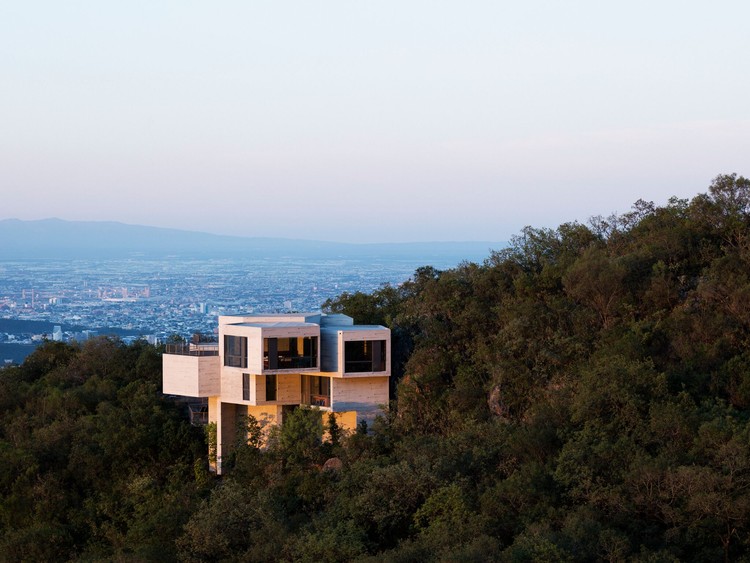
In the second film from this year's series of PLANE—SITE's Time-Space-Existence videos, Mexican architect Tatiana Bilbao shares her philosophy of how architecture should be designed with the user’s experience in mind, rather than for standalone aesthetic qualities. In the video she discusses how architects should to some extent let go of their artistic intentions for a more practical approach to serve the needs of people, discussing how architecture has become detached from its key purpose over the last fifty years due to the influence of capitalism.


https://www.archdaily.com/884284/tatiana-bilbao-creating-spaces-with-relevance-means-enhancing-someones-lifeElla Thorns
Explore Peter Zumthor's 1986 Shelter for Roman Ruins in Quiet Solitude
In 1986, Peter Zumthor completed one of his first projects: a shelter over an Ancient Roman archaeological site in Chur, (Graubünden, Switzerland). Now over three decades old, this film by ArcDog captures the building and the preserved excavations that it sits around with a quiet sophistication. With only timber lamella to allow in light and ventilative air, the project stands as a testament to Zumthor's sensitive architectural approach.
https://www.archdaily.com/884003/explore-peter-zumthors-1986-shelter-for-roman-ruins-in-quiet-solitudeAD Editorial Team
Inside the Production of the Massive Miniature Models Used to Film Blade Runner 2049
You may not have guessed that the dystopian state of Los Angeles filmed in Blade Runner 2049 is a real place, just smaller. The scenes, from Los Angeles to the Trash Mesa and Wallace Tower were built to scale in Wellington, New Zealand by Weta Workshop, the massive ‘miniature’ sets were then filmed by cinematographer Alex Funke.
https://www.archdaily.com/883749/inside-the-production-of-blade-runner-2049-s-massive-model-worldSamantha Buckley
Hiroshi Sambuichi: "I Take Something that People Already Like, and Make Them Even More Aware of It"
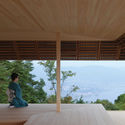
In this extended interview from the Louisiana Channel, Japanese architect and experimentalist in sustainable architecture Hiroshi Sambuichi explains how he integrates natural moving materials—sun, water and air—into his architecture. A rare symbiosis of science and nature, each of his buildings are specific to the site and focus on the best orientation and form to harness the power of Earth’s energy, particularly wind. Two of his projects displayed in the video, the Inujima Seirensho Art Museum and the Orizuru Tower, force a contraction of air to make it flow faster and circulate with you through the building, while the Naoshima Hall takes a more sensitive approach due to the nature of the building, reducing the wind’s velocity as it passes.

https://www.archdaily.com/883718/hiroshi-sambuichi-i-take-something-that-people-already-like-and-make-them-even-more-aware-of-itElla Thorns
Rare Footage Reflects the Complications of Construction of Early Skyscrapers
This silent film, ‘The Skyscrapers of New York’ bears rare footage of the construction of a skyscraper from over one hundred years ago, shared by the Library of Congress as part of their ‘Early Films of New York’ collection. The first scenes include real work crews and the early construction methods that made the first skyscrapers possible; the steel framework the men can be seen clinging onto was a technical innovation that provided the strength and stability for buildings to be built over twenty floors high. It is startling to imagine their lack of concern for health and safety as the men are pictured dangling off a crane line in the sky.
https://www.archdaily.com/883645/rare-footage-reflects-the-complications-of-construction-of-early-skyscrapersElla Thorns
How to Build a Home in a Hurricane Zone
If you live in a hurricane zone, how can you construct a home which can withstand and survive some the strongest winds on Earth? In this film, presented by The Verge's "Home of the Future" series in collaboration with Curbed, designs drawn up by North Carolina-based prefabricated home builder Deltec show a house specifically able to deal with extremely hostile weather conditions. This film demonstrates how it fared against Hurricane Harvey.
https://www.archdaily.com/883581/how-to-build-a-home-in-a-hurricane-zoneAD Editorial Team