Polished concrete is a versatile material that is easily customizable in its appearance, using stunning aggregates, quartz, and colors to create a sense of industrial sophistication in both homes and commercial buildings. Its reflective surface creates an evocative quality under light, which can be suitable for a variety of programs.
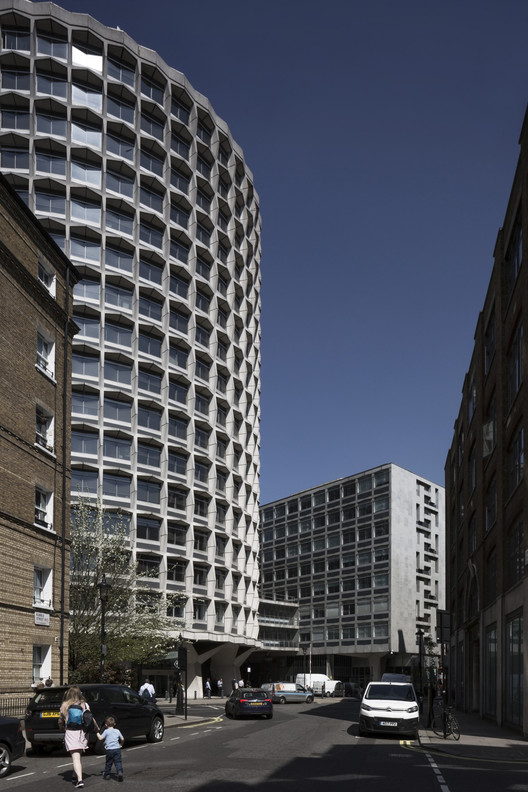
Appreciated within the industry but often maligned by the general public, brutalism came to define post-war architecture in the UK, as well as many countries around the world. In his 1955 article The New Brutalism, Reyner Banham states it must have “1, Formal legibility of plan; 2, clear exhibition of structure, and 3, valuation of materials for their inherent qualities as found.”
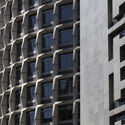
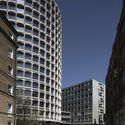
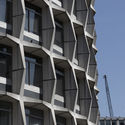
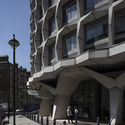
One Kemble Street, a 16-story cylindrical office block originally named "Space House" and designed by George Marsh and Richard Seifert, clearly exhibits all of these characteristics, creating a landmark in the heart of London that remains as striking today as it was upon its completion in 1968. Photographing the Grade-II listed building throughout the day, photographer Ste Murray manages to beautifully capture the building’s essence, celebrating its 50 year anniversary while also highlighting the intrigue of its form in a way that suggests parallels to contrasting ideologies.
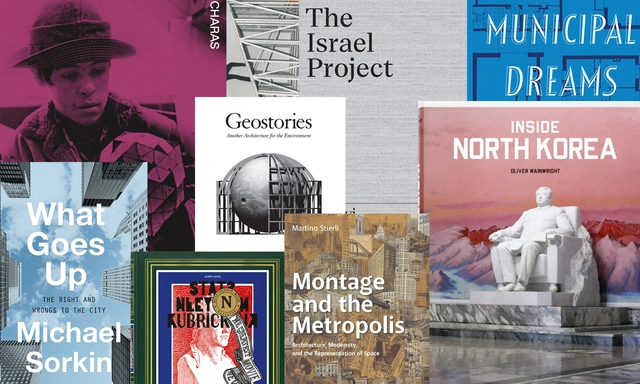
Metropolis Magazine has released a curated list of 19 new books to read this spring, with topics ranging from the evolution of social housing to Stanley Kubrick's unfilmed masterpiece to a fascinating tome on the architecture of Zionism. Not simply volumes detailing well-tread histories, these chosen titles explore every niche category through the lens of architecture. Ever wondered how Buckminster Fuller inspired six former gang members to construct his geodesic dome? Or what metro stations in North Korea look like?
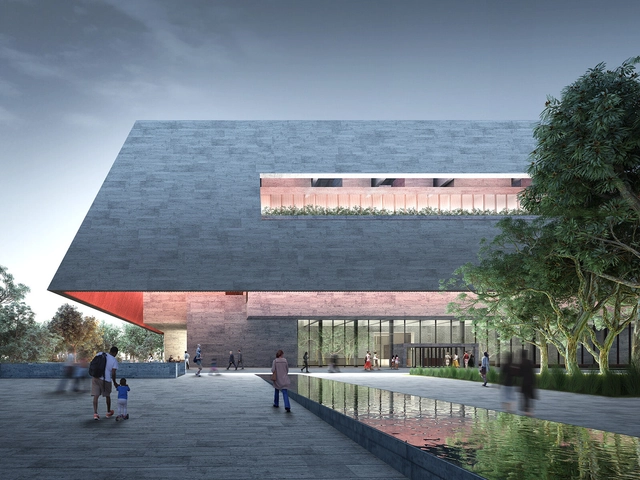
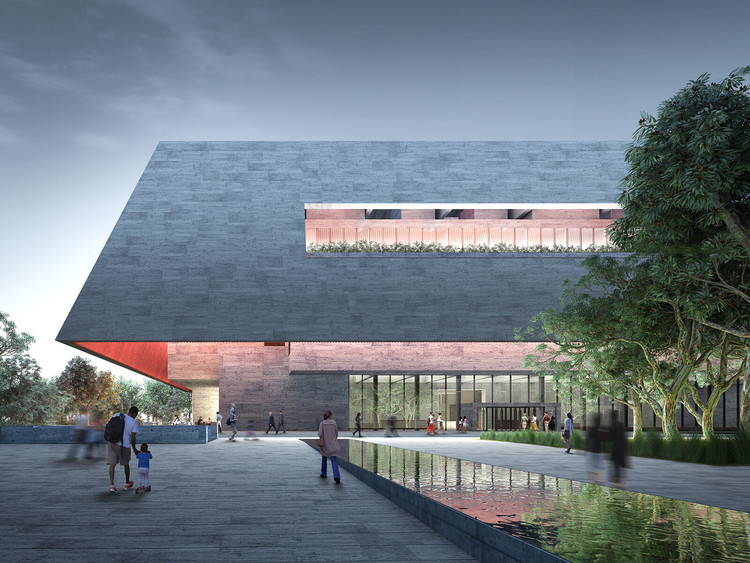
The Adelaide Contemporary is planned to transform the site of the former Royal Adelaide Hospital (oRAH), and will feature exhibition, research, and education spaces situated in a public sculpture park and community meeting place. The museum will also notably host the Gallery of Time, a first-of-its-kind space to exhibit Aboriginal art alongside art from Europe and Asia, inviting visitors to see Australian art in a global context. The six designs are now being displayed in an online gallery created by competition organizer Malcolm Reading Consultants, and in a public exhibition being held in Adelaide at the Art Gallery of South Australia.
Published in partnership with The Greenhouse Talks, the following essay by Aaron Betsky examines limbo spaces and the opportunities presented by these ambiguous areas.
In the spaces where we wait, tarry, or just while away the time, the strictures and structures of good architecture dissolve. In the waiting rooms at airports, government bureaucracies, or doctors' offices, in the places to where we escape to do little to nothing, and in the cocoons we create by using either the latest technology or ancient meditation techniques to come to ourselves, boundaries dissolve. We spend more and more of our time in such spaces. They are the purgatory between the hell of everyday reality and the seamless heaven of virtual social space—or the other way around. What is the architecture of such not-quite-free spaces, and how should we design what is meant to fade away? What do such spaces tell us about the future of architecture?
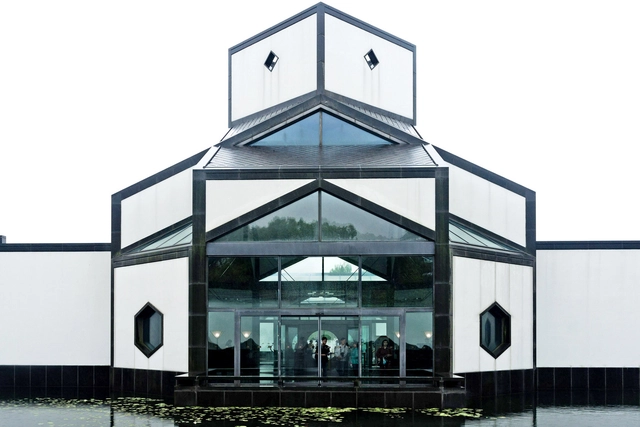
As one of the latest built works of acclaimed Pritzker architect I.M. Pei, Suzhou Museum was built in the heart of his hometown, Suzhou, China. As one of the last surviving modernists, the architect strove to bring together both his modernist sensibilities as well as the Suzhou vernacular. Sited on the northeast section of the historic quarter of Suzhou, the museum is adjacent to the landmarked Zhong Wang Fu, a complex of 19th-century historical residences, and the Garden of the Humble Administrator, a 16th-century garden listed as a UNESCO World Heritage site. [1]
Images in this article were captured in 2016 by Rome-based photographer, Chenxing Mi. Read the full article after the break.
Surrounded on all sides by "business blocks of architectural beauty and metropolitan dimensions," the intersecting planes of Pershing Square in Los Angeles provide a modernist retreat for many Angelinos in the downtown area. While to some, the square's large stucco tower and aqueduct-like water feature serve as a cultural landmark, the park has drawn negative press due to its lack of green space and abundance of drug-related activity. John Moody purposefully concentrates on the perception, memory, and identity of the space in his documentary Redemption Square—winner of the Best Urban Design Film 2017 at the New Urbanism Film Festival. Using the voice of strangers, residents and those who used to call it home, Moody guides you from the park’s formation in 1866 to its impending renewal: a “radically flat” redesign courtesy of Agence Ter and Gruen Associates.
The 20 winners of the Awards for International Excellence hail from 16 countries, ranging from large urban infrastructure schemes, cultural destinations and educational buildings to civic spaces, private homes, and places of worship. The schemes also form a longlist for the RIBA International Prize 2018, which will be narrowed to four buildings in September 2018, and ultimately a winner in November.
In China's newly emerging constellation of famed architects, few firms elicit the sense of surprise caused by the work of Atelier Deshaus. With projects ranging from awe-inspiring to humble, their work does not adhere to any stylistic rules, but all of their projects exude an enigmatic aura. In this interview, the latest in Vladimir Belogolovsky’s “City of Ideas” series, principals Liu Yichun and Chen Yifeng discuss the role of identity in their work and how they try to connect their buildings to the landscape.
Vladimir Belogolovsky:Is it true that you each design different projects in the studio? Why is that?
Liu Yichun: This has been true since 2010. Before that we always designed everything together. We used to have endless discussions and too many disagreements and arguments. That’s why we decided to pursue two parallel paths. This approach led to greater efficiency and it helped us to formulate clearer ideas of our independent views of architecture. It also helps us to diversify our work and to avoid forming one recognizable style.
Chen Yifeng: It is important for us to express our solutions differently, even though, fundamentally, we are working in one direction and pursuing one family of ideas.
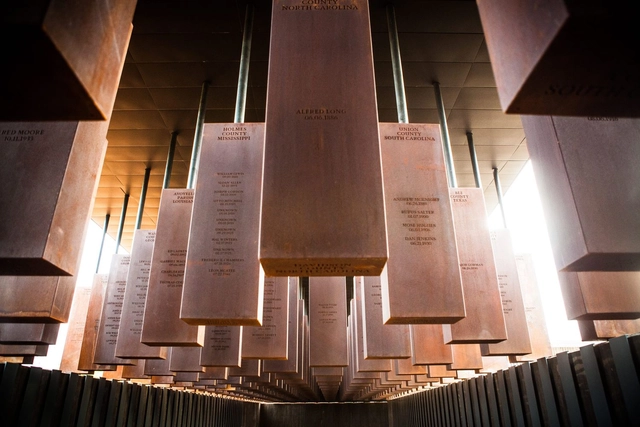
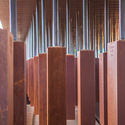
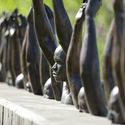
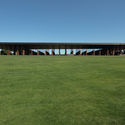
The "National Memorial for Peace and Justice," designed in collaboration with MASS Design Group, has opened in Montogomery Alabama. Commissioned by the Equal Justice Initiative, the scheme is America’s first memorial dedicated to “the legacy of enslaved black people, people terrorized by lynching, African Americans humiliated by racial segregation and Jim Crow, and people of color burdened with contemporary presumptions of guilt and police violence.”
The memorial's April 23rd opening coincided with the opening of the Equal Justice Initiative's Legacy Museum, addressing similar injustices.
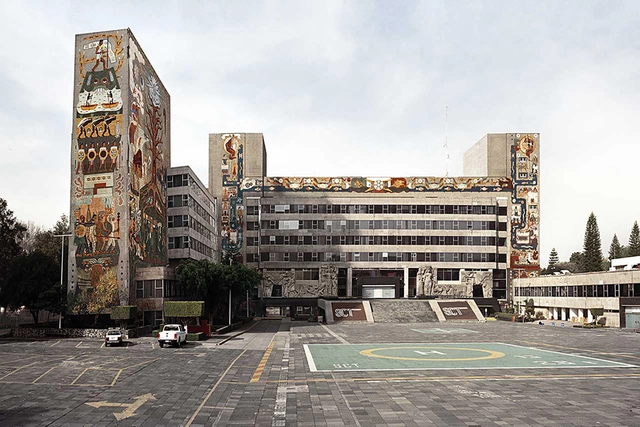
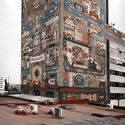
Centro SCOP in Mexico City was shuttered after a series of devastating earthquakes. A new exhibition proposes rehousing its historically significant murals. Image Courtesy of Pablo López Luz/ Archivo Diseño y Arquitectura
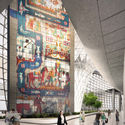
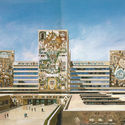
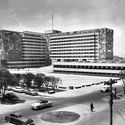
It’s a slate-gray day in Mexico City’s Colonia Narvarte neighborhood and mounting gusts signal imminent rain. Centro SCOP, a sprawling bureaucratic complex, rises sharply against this bleak backdrop. The building is a masterful, if not intimidating, example of Mexican Modernism, an H-shaped assemblage of muscular concrete volumes designed by architect Carlos Lazo, covered in an acre-and-a-half of vibrant mosaic murals.
At its peak, the building accommodated more than 3,000 workers for the Secretariat of Communications and Transportation (SCT). Today, save a security guard in its gatehouse, it is empty.
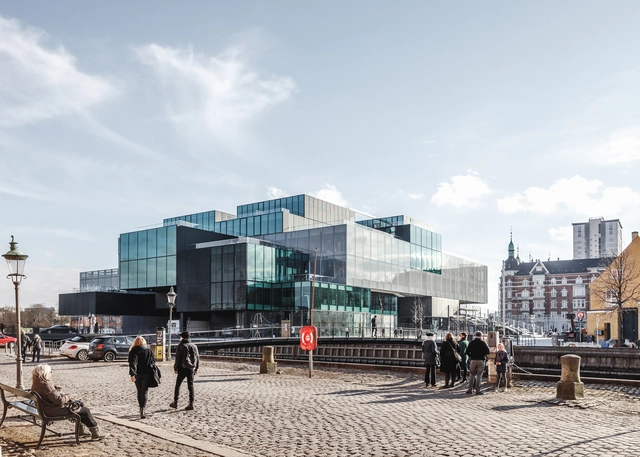
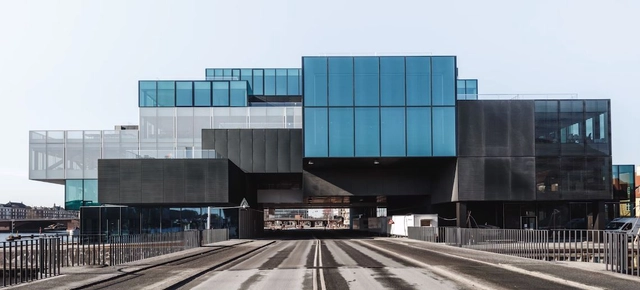
On Saturday, at the opening of her latest building, Ellen van Loon sat on the terrace of BLOX in Copenhagen exuding the satisfaction and fulfillment that comes with finishing a major public building. A day of opening activities concluded, van Loon spoke with ArchDaily about the 27,000-square-meter mixed-use building. Built for client Realdania, it’s the Danish Architecture Center’s new home on the edge of the harbor, located on an incredibly challenging site that is bifurcated by a busy street.
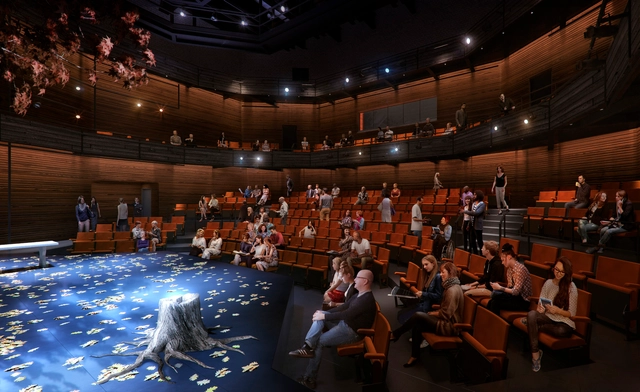
It’s no mystery why we put people in our designs. People are the quickest way to an emotional connection. With the right visual cues, you can evoke deep feelings, turning a simple image into a source of awe or aspiration. In architectural visualization, we try to shape those feelings, working off the perceptions most of us share. While we are all creatures of circumstance, using our experiential knowledge to guide us day-to-day, a lot of our conditioning is the same. Which is why it is so important to consider how you use people when you create visualizations of your designs.
Entourage are your visual guides, alerting the viewer to the story or feelings you want to convey. Sometimes that story is one of usage, an explanation of how someone interacts or moves about a space. Other times, it’s a bit more abstract. Whatever the direction, the art of entourage is really a study of composition, conditioning, and narrative. The more you know about each topic, the better your visualization will turn out—especially when you have a complicated brief.
In this piece, I’d like to show you how we approach entourage at Kilograph. Since our backgrounds are diverse—artists, architects, brand experts, and VR technicians—we are constantly having discussions about how to make people stand out, from a psychological and aesthetic perspective. Here’s what we’ve found.
A lot of things are said about Smiljan Radic. Some say that he belongs to an architecture that borders on the sculptural. It is also said that both his aesthetic and his silence is admired by his peers. It is also said that he is so hermetic that he doesn’t even have a website to promote his work. All these things are said about the 52 years old Chilean architect, before he starts his talk "more or less a year," at the Puerto de Ideas Festival in Valparaíso (Chile), where he reviews his latest projects.
"Saying something -and saying something else- has always seemed impossible or very difficult for me. I always collect things from everywhere. And that's what I do. There isn’t much more to it than that: there is little invention. In spite of everything, one has to end up talking, saying things. And today we are going to talk about what I could and could not do in the past year", he says at the beginning of his talk at the Cousiño Palace in Valparaíso.
Not many architects will come across the challenge of building in outer space, but who knows what the future will hold... asteroid mining and space photobioreactors? In a recent article, Metropolis Magazine looks into the design of the International Space Station, examining how our conventional rules of architecture become obsolete in zero gravity. Walls, ceilings, and floors can be interchangeable, and "form follows function" is taken to the extreme.
2018 marks 20 years since construction first began on the International Space Station. The satellite is made up of 34 separate pieces, each of which was either delivered by space shuttle or self-propelled into space. With absolutely no room for error, the 13-year construction of the space station was perhaps one of the big success stories of the millennium, seeing 230 astronauts, cosmonauts and space-tourists visit over the past two decades.
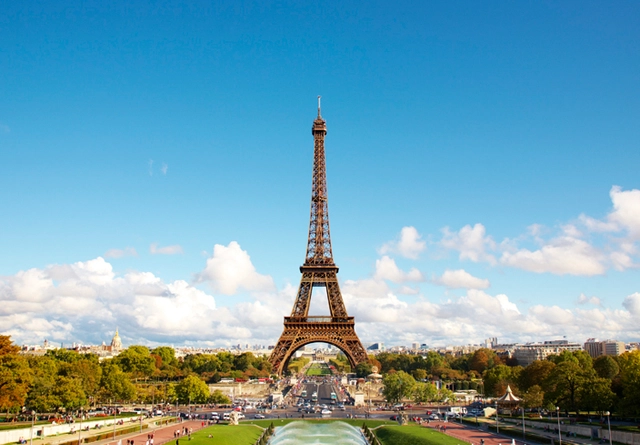
Amanda Levete is among one of four teams to be shortlisted for a competition to reimagine the visitor experience for the famous Eiffel Tower in Paris. The four teams, chosen from 42 entries, will be tasked with rethinking the ways in which people discover and interact with the tower, working in collaboration with the City of Paris government.
Titled “Discover, Approach, Visit,” the competition site covers 54 hectares of land on both sides of the River Seine, with the Eiffel Tower site located at the center. In preparation for Paris’ hosting of the 2024 Olympic Games, the competition asks teams to spend 10 months exploring how to enhance the visitor experience at the base of the tower, strengthen existing connections across the site, reconfigure public transport routes.
https://www.archdaily.com/893829/shortlist-announced-for-competition-to-redesign-the-eiffel-tower-visitor-experienceNiall Patrick Walsh
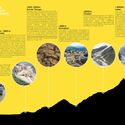
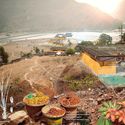
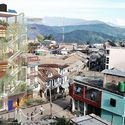
KTK-BELT Studio, a not-for-profit organization based in rural Nepal, is currently working with local communities to create a fascinating "Vertical University," which will teach students about biodiversity and environmental conservation in 6 "living classrooms" positioned along a vertical forest corridor that stretches from 67 meters above sea level to the top of an 8,856-meter peak. These 6 stops encapsulate the 5 climatic zones of Eastern Nepal: tropical, subtropical, temperate, subarctic and arctic.
The project explores the specific impacts of climate change in each climatic zone, creating “classrooms” where students can walk from Koshi Tappu to Mt. Kanchenjunga, the third tallest peak in the world, and learn onsite from indigenous farmers about the biological diversity of each area. By teaching place-based skills in these micro-conservation hubs, the project aims to conserve and activate local knowledge. Each of these “classrooms” responds to the visual and cultural cues of its unique landscape, with one campus focusing on a flood-proof design in a heavy monsoon area, and another mimicking the semi-nomadic lifestyle of local yak-herders.
Louisiana Channel has released a new video interview with Ellen van Loon, the Dutch “design duchess” of OMA. In the interview, available to watch below, van Loon discusses the concept of “architectural contamination” behind OMA's new mixed-use "BLOX" scheme, home of the Danish Architecture Center in Copenhagen.
Van Loon discusses the process of “re-invention” needed for the scheme’s realization, in terms of both function and location. Situated on an old brewery site, the scheme seeks to embed architects and visitors in their own field of study, “placing them in the center of the building, which meant they would contaminate all other functions.”
https://www.archdaily.com/893754/omas-ellen-van-loon-discusses-the-firms-new-danish-architecture-centerNiall Patrick Walsh




.jpg?1525869515 "Urban Man Cave / Inhouse Brand Architects. Image © Riaan West")









.jpg?1525882733&format=webp&width=640&height=580)


.jpg?1525882733)


.jpg?1525797611 "Kwame Akoto Bamfo Exhibit at the National Memorial for Peace and Justice. Image © Equal Justice Initiative / Human Pictures")