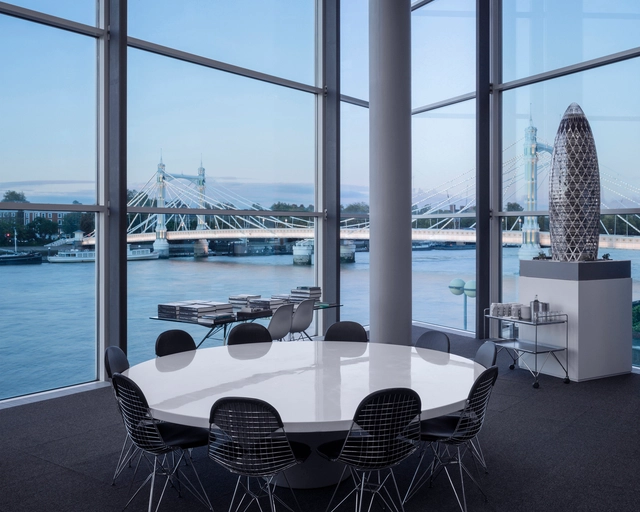
It is so refreshing to hear the words: “We do everything differently. We think differently. We are still not a part of any system or any group.” In the following excerpt of my recent conversation with Liz Diller and Ric Scofidio at their busy New York studio we discussed conventions that so many architects accept and embrace, and how to tear them apart in order to reinvent architecture yet again. In New York the founding partners of Diller, Scofidio + Renfro have shown us exactly that with their popular High Line park, original redevelopment of the Lincoln Center, sculpture-like Columbia University Medical Center in Washington Heights, and The Shed with its movable “turtle shell” that’s taking shape in the Hudson Yards to address the evolving needs of artists because what art will look like in the future is an open question.
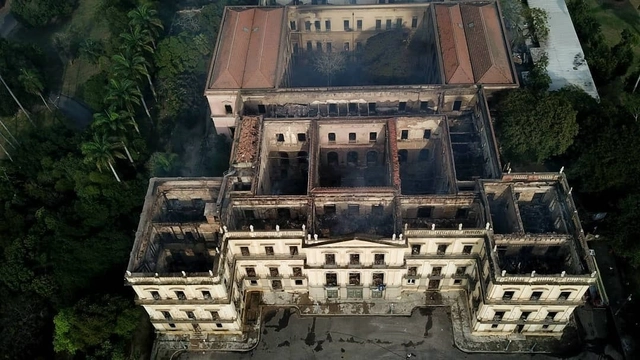
It is in moments of disaster - natural, military, or otherwise - that the value of our built environment as a form of cultural identity comes most noticeably and tragically to light. The fire that ripped through Brazil’s Museo Nacional on Monday night destroyed not just invaluable historic artefacts, but a building that stood as a symbol for both a country and a people. The erasure of the urban landscape is the erasure of identity, culture, and people.
https://www.archdaily.com/901663/this-week-in-architecture-buildings-as-identity-lost-and-foundKatherine Allen
One of the few incontrovertible truths to emerge from the 16th International Architecture Exhibition, which opened in Venice on May 26 and runs through November 25, is that sensitivity and skill in making architecture do not necessarily transfer to the work of organizing an architecture exhibition.
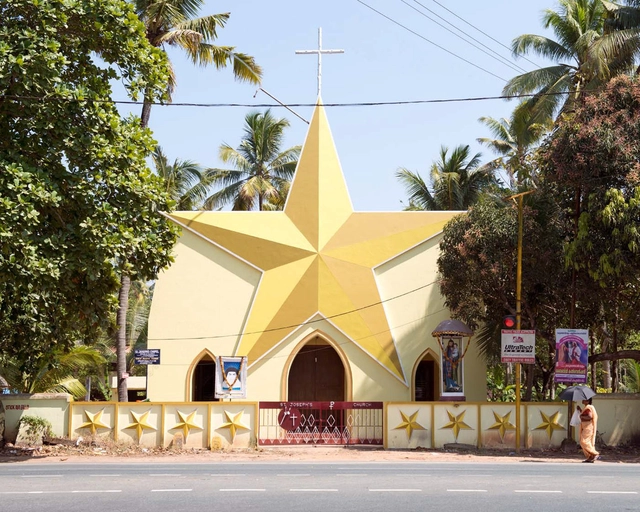
As August draws to a close and our holidays - be they from work or school - already start to feel like distant memories, perhaps it's a good moment to reflect on our faith in what we do. Sometimes design affords us the ability to oversee massive and exciting change. Sometimes projects don't work out, despite our best efforts. And sometimes, design isn't as capable of making change as we believe it to be. This week's stories touched on our faith in design in a range of ways, from the literal (such as the bright churches of Kerala) to the more abstract (how much good taste in fast food design actually equates to good tastes.) Read on for this week's review.
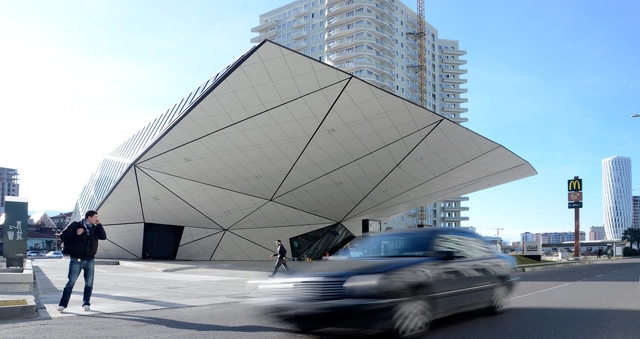
Some restaurants don’t need a review to get attention. You might know them for their longevity, their presence, or even just their advertisements. But most importantly, whether it’s their grand luminous logo, or the building’s prominent architecture and color palette, these franchises are more or less the same (the menu, the music, the interior design…), wherever you are, be it London, Lima, or Lahore.
Recently, however, a few of these places have begun to shift away from the “architectural stamp” that they use in all their branches, hiring design firms to rebrand their restaurants - and by extension, their image. This bespoke approach can result in outposts that are atypically site-specific, understated, and individual. For users, it may be a point of curiosity; a reason to revisit what you think you already know. For the brand, it's an attempt to cater to evolving tastes (culinary and otherwise) without having to alter the core product.
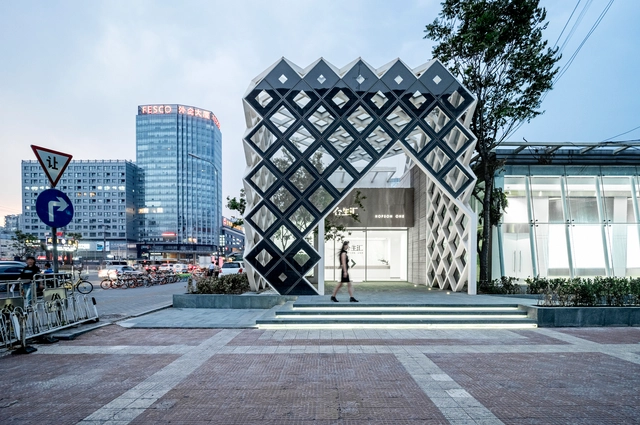
Manuel N. Zornoza grew up in Alicante, Spain and, following studies in Madrid (UAX) and London (the AA), relocated to China in 2010 to avoid the economic crisis stifling architectural work in his home country. Over the last eight years, the young architect’s small but thriving studio has built more than a dozen projects, from shops, to factory space conversions, to a traditional Chinese hutong - all in China. But that’s not to say Zornoza’s left his roots behind. He now also maintains a small practice in Madrid, which handles projects in both China and Spain.
This interview was conducted on a bullet train ride from Beijing to Tianjin, where we ventured in search of the recent architecture that has brought so much media attention to this emerging metropolis.
It is rare for a father and son to share the same birthday. Even rarer is it for such a duo to work in the same profession; rarer still for them both to achieve international success in their respective careers. This, however, is the story of Eliel and Eero Saarinen, the Finnish-American architects whose combined portfolio tells of the development of modernist architectural thought in the United States. From Eliel’s Art Nouveau-inspired Finnish buildings and modernist urban planning to Eero’s International Style offices and neo-futurist structures, the father-son duo produced a matchless body of work culminating in two individual AIA Gold Medals.
Drone photography has been one of the biggest advancements in aerial photography and cinematography. Drones began making a huge impact on filmmaking in the early 2000s, but vast advancements in aerial and camera technology have dramatically increased the use of and demand for aerial footage in nearly every industry focused on digital content.
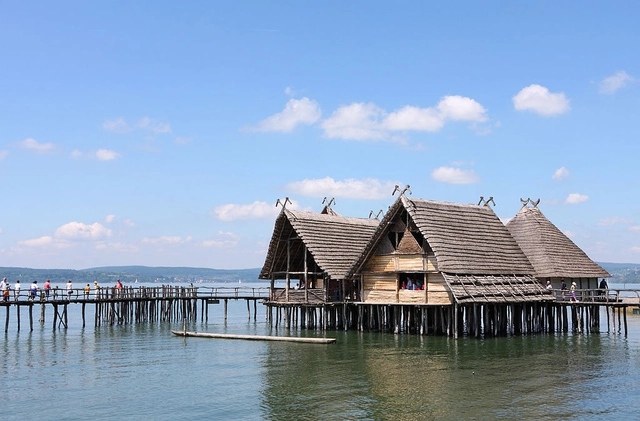
Where do people live around the world? It seems self-evident that most residential architecture is not as focused on aesthetics as the pristine, minimalist villas that cover the pages of design magazines (and, admittedly, websites like this one). As entertaining as it is to look at those kinds of houses, they’re not representative of what houses look like more generally. Most people live in structures built in the style of their region’s vernacular—that is, the normal, traditional style that has evolved in accordance with that area’s climate or culture. While strict definitions of residential vernacular architecture often exclude buildings built by professional architects, for many people the term has come to encompass any kind of house that is considered average, typical, or characteristic of a region or city. Check out our list below to broaden your lexicon of residential architecture.
Cornell University has named J. Meejin Yoon as the next dean for the School for Art, Architecture and Planning. Yoon, co-founder of Boston-based practice Höweler + Yoon, is the first woman to be named dean in the school’s 122-year history. She moves to Cornell after serving as dean for the architecture School at MIT, where she has been on faculty since 2001.
https://www.archdaily.com/898920/j-meejin-yoon-to-serve-as-first-female-dean-in-cornell-aaps-122-year-historyKatherine Allen
You wouldn’t think it looking at Mexico City today—a densely populated metropolis, where empty space is hard to come by—but decades earlier, following a devastating earthquake on September 19, 1985, more than 400 buildings collapsed, leaving a collection of open wounds spread over the cityscape.
Exactly thirty-two years later, the anniversary of that disaster was ominously commemorated with an emergency evacuation drill. Then, in one of those odd occurrences in which reality proves to be stranger than fiction, a sudden jolt scarcely two hours after the drill led to what would be yet another of the deadliest earthquakes in the city’s history. Buildings once again collapsed, leaving a rising-by-the-hour death toll that eventually reached 361, as well as swarms of bewildered citizens wandering the streets, frantically attempting to reach their loved ones through the weakened cell phone reception. “We’d just evacuated for the drill,” people said, like a collective mantra. “How could this happen again?”
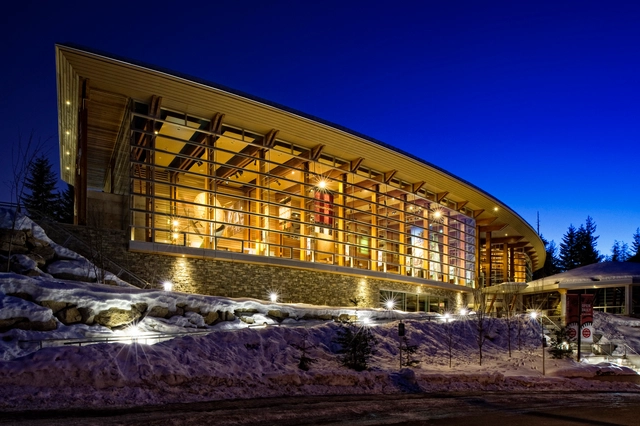
Indigenous co-design—a more specific form of the general concept of co-design in which an architect collaborates with a stakeholder community—is a collaborative design process between architects and the Indigenous community as the client. The Royal Architectural Institute of Canada (RAIC) recently released a unique resource aimed at designers, clients, funders and policymakers looking for a guide in Indigenous co-design.
Four Case Studies Exemplifying Best Practices in Architectural Co-design and Building with First Nationsbuilds on the success of the RAIC International Indigenous Architecture and Design Symposium held in May 2017. The four case studies set out to explore best practices in Indigenous co-design in the context of three First Nations and one Inuit community in Canada, with one case study selected from each of the four asset classes: "schools, community and cultural centers, administration and business centers, and housing."
About a month before he unveiled his eighth album Ye in June, Kanye West re-entered architectural conversation with the unexpected and mostly unexplained announcement that he intends to hire architects and industrial designers to staff an architecture practice connected to his Yeezy brand. An outspoken fan and admirer of contemporary architecture, Kanye’s fashion and design projects have been a major focus for him since shortly after the prodigious producer started making his own rap albums. Kanye’s architectural ambitions have been an interesting factor in the relationship between architecture and rap culture, which seems to be just coming into focus through programs like the Hip Hop Architecture Camps organized by Michael Ford’s Urban Arts Collective, and the research of Sekou Cooke. Architecture and rap music have influenced each other in ways we’re just starting to notice—with the connection between the two even revealed as consciously and conspicuously as rappers including references to notable architects in their lyrics.
Images of Los Angeles present an limitless city, whose roads sprawl far into the horizon and whose lights never seem to dim. But there is also intimacy to be found in the urban sprawl, not to mention a cutting-edge catalogue for design and architecture. In the new book, California Captured, authors Emily Bills, Sam Lubell, and Pierluigi Serraino show this side of Los Angeles through the lens of photographer Marvin Rand. Rand's spare and understated images of architecture helped define and spread the distinctive Californian mid-century modern style across the world - and introduced viewers to a Los Angeles beyond the lights. Read an excerpt from California Captured here after the break:
https://www.archdaily.com/898584/chasing-the-light-marvin-rands-photographs-of-mid-century-modern-californiaEmily Bills, Sam Lubell and Pierluigi Serraino
Sometimes an architect’s best intentions get lost along the way. Sometimes they get value-engineered out; sometimes they were never really there to begin with. That's where Ugly Belgian Housescomes in. The blog, run by discerning Belgian Hannes Coudenys, documents some of his home country's architectural misadventures - all with a sense of humor, of course!
Today, to celebrate Belgium's National Day, we asked the man behind the blog to select some beautiful Belgian houses. His choices - with a few words from him and the architects - after the break.
The process of becoming an architect can be as confusing as it is extensive. In this article, we'll demystify a crucial component of the path to a career in architecture: what degree you should get. Specifically, we’ll lay out the difference between two common, somewhat comparable degrees: the B.Arch and the M.Arch.
When learning about architecture, there is no replacement for practical experience: seeing how materials can be joined together, how structural elements respond to the stresses placed upon them, or how construction techniques can alter the finished project. For this reason, it is a good idea to give students a chance for some hands-on experience building real structures—something that, due to budgetary constraints and the academic culture of many architecture schools, has sadly been uncommon in the past.
However, in recent years, this culture has started to shift, with increasing numbers of architecture schools finding ways for students to be involved in construction projects, from small, temporary interventions and pavilions, to larger permanent buildings. In order to show the excellent work that can be done in an educational context, for the fourth timeArchDaily is calling on students and professors to submit the design-build projects they have completed in the past year. As always, we're teaming up with allofArchDailyen Español,ArchDaily Brasil, and ArchDaily China, in the hope that we can present the best work from students worldwide to a worldwide audience. Read on to find out how you can take part.
https://www.archdaily.com/898457/the-foster-plus-partners-led-trailblazer-apprenticeships-bring-overdue-relief-for-disenfranchised-architecture-studentsNiall Patrick Walsh






_preview.jpeg.jpg?1535984024&format=webp&width=640&height=580)















_MWAA.jpg?1534522436 "© MWAA")

_Ezra_Stoller.jpg?1534522458 "© <a href='https://www.flickr.com/photos/gabyu/305710396'>Ezra Stoller via Flikr user gabyu</a> licensed under <a href='https://creativecommons.org/licenses/by-nd/2.0/'>CC BY-ND 2.0</a>")
















.jpg?1531492981&format=webp&width=640&height=580)