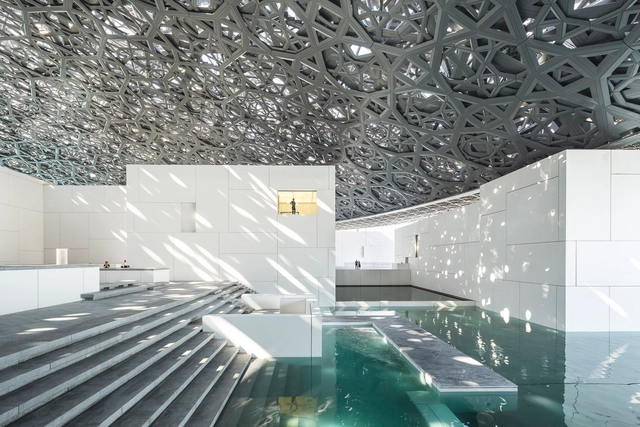
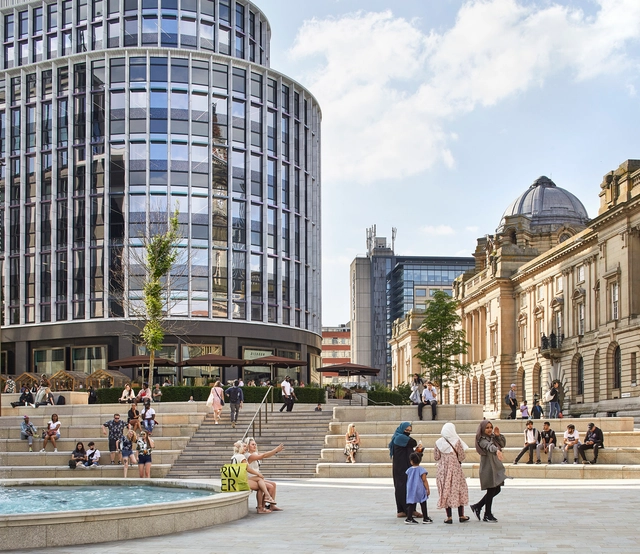
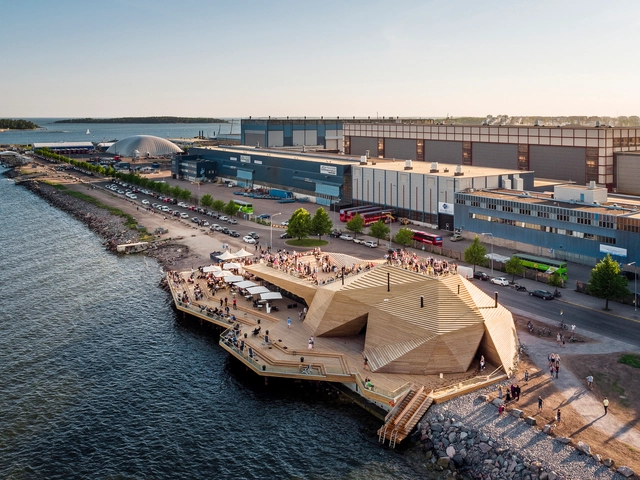
Architecture has always had a complementary - occasionally codependent - relationship with water. The Roman Domus, the Baths of Diocletian and Caracalla in Rome, and Villa Adriana in Tivoli are some prominent historical examples of how water influenced the design of compositional architecture. In a more modern context, Frank Llyod Wright designed a residential retreat in which water is its protagonist, redefining the relationship between man, architecture, and nature. Nowadays, as architects shifts their focus towards a more contextual, sustainable, and user-oriented practice, the use of water in architecture has become indisputable; cooling interior spaces, providing natural air conditioning when combined with plants, exuding a sense of tranquility, and serving as an organic decorative element.
In his latest TED Talk, Thomas Heatherwick decries a condition affecting areas of the city defined by monotonous buildings, or what he calls “an epidemic of boringness.” While recognizing the functionality which drove these designs, he states that functionality alone cannot ensure that the structures become active parts of urban life, as they often fail to provoke an emotional response from passers-by. Heatherwick explains that, in his view, this emotional function, or the ability of buildings to mean something to their users and visitors, is essential. When it succeeds, architecture can positively contribute to the quality of life and well-being of its residents, promote social cohesion and contribute to a sense of identity. So how can architecture provoke a positive emotional connection and provide an enjoyable backdrop to the communities it serves?
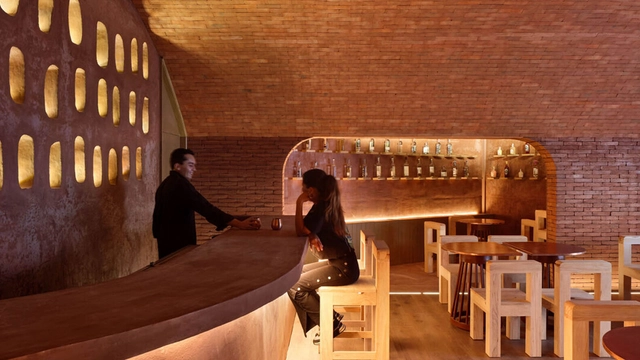
Mezcal is a Mexican beverage that has gained great popularity in the last decade. Its history dates back to pre-Hispanic times when cultures consumed various drinks derived from the agave plant in different ways. During the pre-Columbian period, this plant was used for various purposes, ranging from food to the production of fibers and medicines. However, within the different processes, they discovered that they could ferment and distill the juice of the agave to obtain an alcoholic beverage, which they called "pulque".
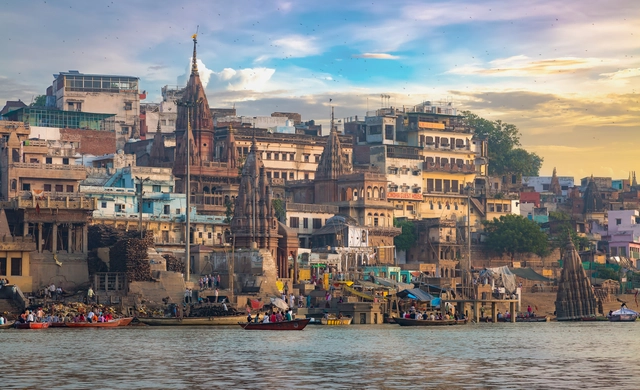
Water, with its religious connotations as a symbol of purification and life, holds great significance in many cultures. Nowhere is this respect for water more evident than in India, a country that reveres its rivers as holy. Water bodies serve as a testament to the veneration and use of water in religious rituals, embodying cultural heritage as public spaces, ritual sites, and places for cremation. Central to daily life in India, water and water architecture intertwine spirituality, and cultural traditions, offering a glimpse into the rich traditions of communities.
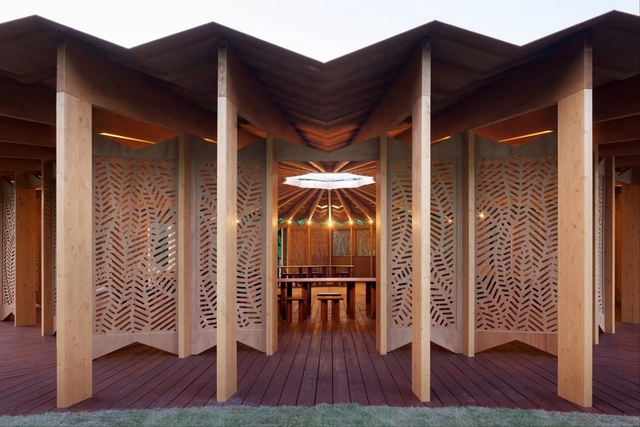
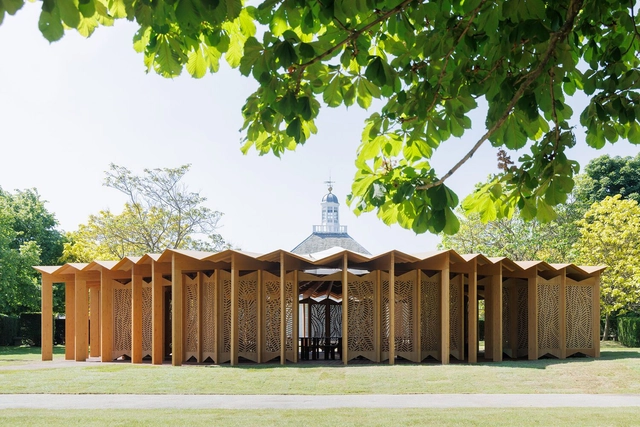
As you make your way through the symphony of wooden colonnades, leafy screen walls, and unfurled roofing, towards the converging veins of flooring and ceiling ribs leading to the light, it feels like a space that was always meant to be there. Part of the park, the pavilion complements the nature around it, reflecting its patterns, and illuminates a main interior feature: a concentric set of tables and stools that inspire people to sit at the moment, hold conversations, and connect with each other. This narrative tells the tale of this year's Serpentine Pavilion, designed by French-Lebanese architect Lina Ghotmeh.
Titled, À table, It draws inspiration from the designer’s connection with nature growing up and is reminiscent of the French call to sit together at a table, share a meal and enter a dialogue. It foregrounds the table as a laboratory of ideas, concerns, joys, connections, and essentially brings people together. It further reflects on the architectural ideals that can provoke and welcome moments of collective conversations.
The Serpentine has announced the official opening of the 22nd Pavilion, designed by French-Lebanese architect Lina Ghotmeh, at Serpentine South on June 9th, 2023. The Pavilion is titled À table, a French invitation to sit down together at a table and engage in an open dialogue while sharing a meal. The interior space of the pavilion is defined by the large table that encircles the perimeter, offering an opportunity for conviviality and the sharing of ideas, concerns, joys, and traditions. The 300-square-meter structure, inspired by the architect’s Mediterranean heritage, is designed to be lightweight and fully demountable to ensure a minimal carbon footprint. The Serpentine Pavilion will be open and free of charge every day from June to October 2023.
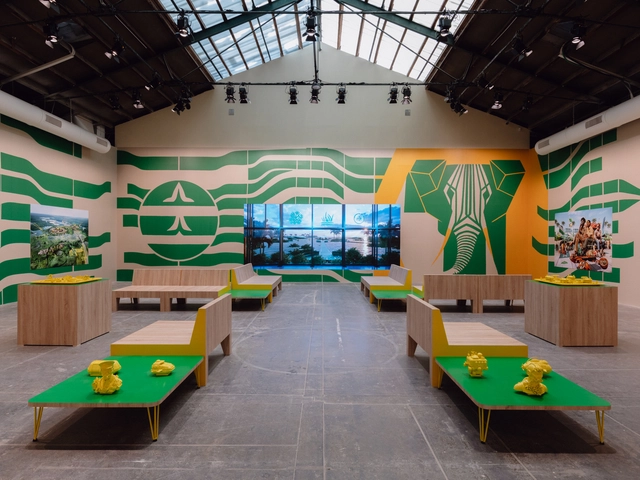
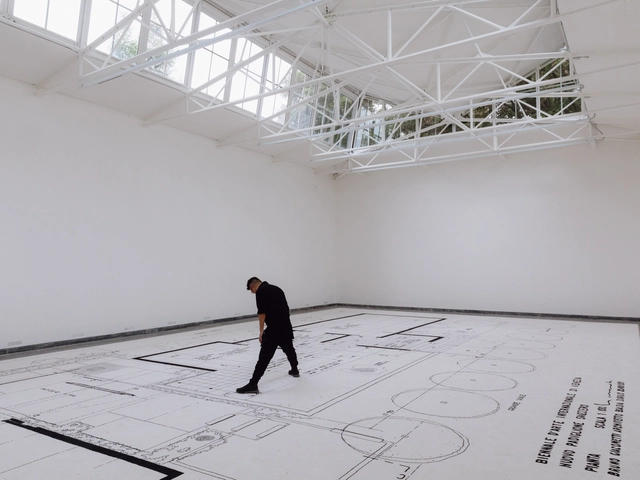
At the beginning of 2022, curator Lesley Lokko announced the title of the 18th International Architecture Exhibition – La Biennale di Venezia: “The Laboratory of the Future.” The theme’s intention is to highlight the African continent as the protagonist of the future, a place “where all these questions of equity, race, hope, and fear converge and coalesce,” in the words of the curator. As the fastest urbanizing continent, Africa is viewed as a land of potential, but also of challenges, where matters of racial equity and climate justice are played out with a significant impact on the world at large.
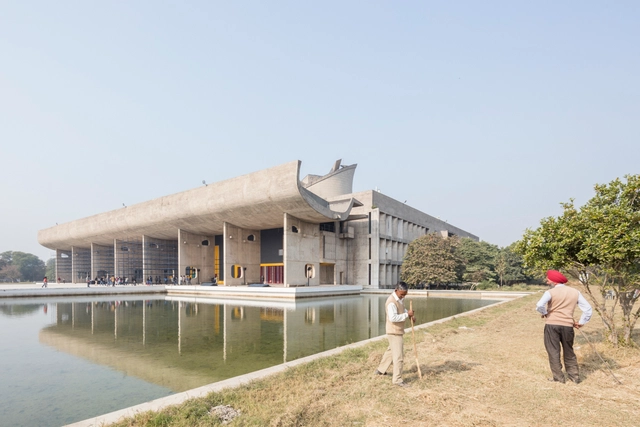
Yet in the late 1950s, another laboratory of the future was taking shape, one where the novel ideas of Modernism produced grand monumental designs and complete urban structures at an unprecedented scale: India. In the search for a modern and democratic image, the newly independent country welcomed Western architectural masters such as Le Corbusier and Louis I. Kahn and entrusted them with a wide range of commissions, from the urban layout of Chandigarh and its major governmental buildings to universities, museums, and smaller scale domestic projects. The result is a mixture of cultures, influencing one another to unexpected results.
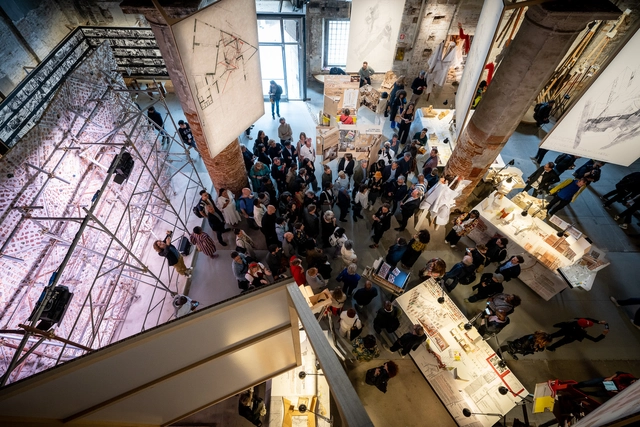
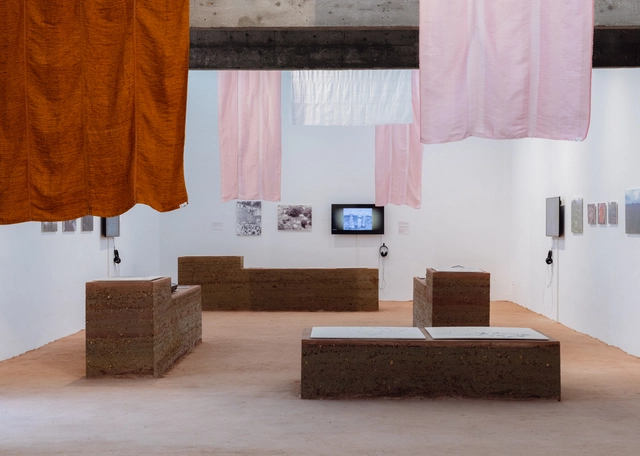
Taking a broader perspective on architecture, the exhibition shifts its focus towards the discipline rather than just the profession. It’s not “about building buildings per se”, explains the curator to ArchDaily. Instead, it seeks to question our conventional understanding of architecture, and with that, architectural exhibitions. The 2023 Biennale is a laboratory in every sense of the word, a global platform of experimentation, and a space to explore new ideas in the absence of spaces that allow us to do so. "It borrows its structure and format from art exhibitions, but it differs from art in critical ways which often go unnoticed", states Lesley Lokko in her initial statement.
As Venice Architecture Biennale presents its 18th edition titled "The Laboratory of the Future", it centers on Africa as a place of exploration that will offer a template for solutions to the world. According to its curator Lesley Lokko, the Biennale explores entrenched concepts such as climate, land rights, decolonization, and cultures. It challenges us to question how Africa's history can be a radical tool for imagination and reminds us of Stephen Covey's statement: “Live out of your imagination, not just your history.” The biennale's title is probably the most ambitious question in years. It forces us to revisit all boundaries of the continent's historical societies, explore the influence of imposed colonial borders on them, and examine the dual identities they gave birth to. We must consider how these identities can be instruments of creativity, and, more importantly, recognize that every African society has a unique point of view. This viewpoint yearns for cross-cultural collaboration as a powerful tool for imagination.
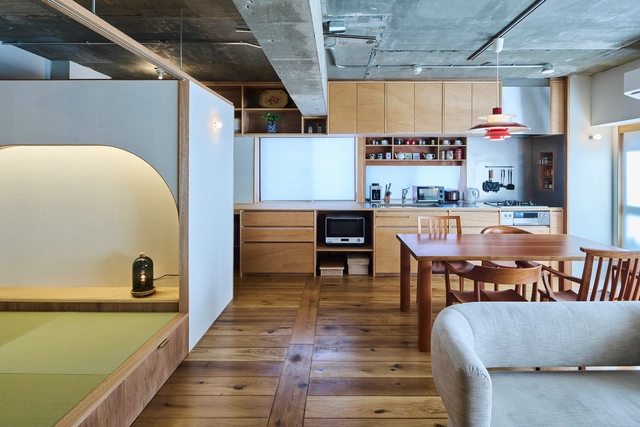
room206 Apartment / Daiki Awaya. Image Courtesy of Daiki Awaya
Kitchens encapsulate the essence of culture, acting as dynamic museums that preserve age-old recipes, processes, and traditions. Influenced by ethnic practices and culinary customs, kitchen architecture varies greatly across continents. In this context, kitchens transcend their domestic role and become insightful manifestations of cultural, societal, and regional factors. They not only serve as functional spaces for cooking and meal preparation but also stand as reflections of the rich tapestry of culture and lifestyles embraced by the individuals who inhabit them.
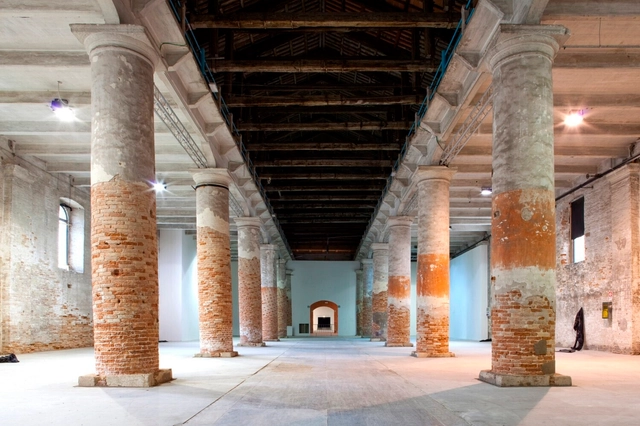
Titled The Laboratory of the Future and curated by Lesley Lokko, the 2023 Venice Architecture Biennale will be holding the 18° International Architecture Exhibition from May 20 to November 26, 2023.
The 2023 edition of the Biennale will include 63 national participants allocated in the Giardini, at the Arsenale, and in the historic city center of Venice, Italy. Additionally, the exhibition will welcome Niger for the first time, along with Panama, which will have its own pavilion. The Holy See will also return to the Biennale Architettura with a pavilion on the island of San Giorgio Maggiore.
Please find below the full list of national participants at the 2023 Venice Architecture Biennale.
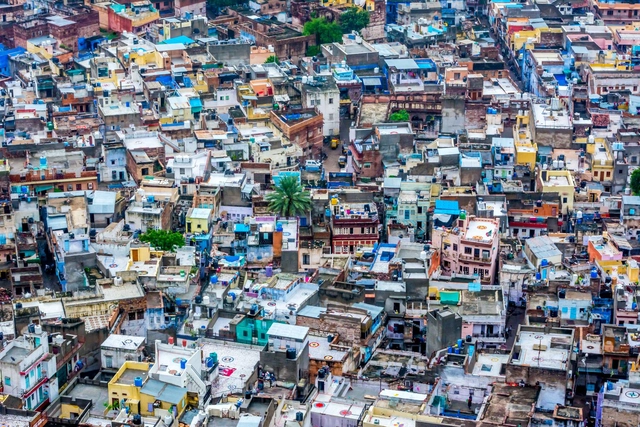
In April 2023, India achieved a significant milestone that will shape the trajectory of its urbanization going forward. According to data from the United Nations, the South Asian subcontinent is now home to over 1.4286 billion people, overtaking the former leader China’s count of 1.4257 billion. With a population boom that is estimated to grow at a 0.7% rate annually, India faces several challenges and opportunities in its path to becoming a global power.How will India’s rising demography influence its built environment?
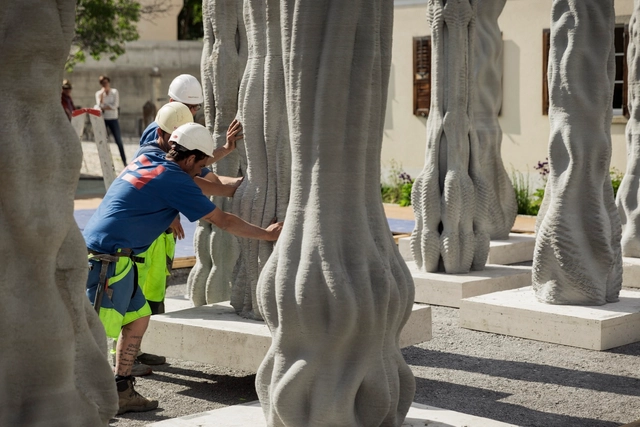
Professionals in the AEC industry are well aware of the issues that grapple the built environment. That the construction industry is the largest consumer of materials and is responsible for 40% of all carbon emissions is a commonplace fact. Construction work is also a large waste generator and could greatly benefit from circular design principles. Almost three-quarters of all construction projects tend to be over budget, and nearly half of the spending on buildings goes into the overheads. In a fast-paced world with multi-faceted challenges, technology, and digitization seek to deliver significant solutions.
Wivi Lönn (1872-1966) established and ran her own architectural office in Finland, becoming the first woman to do so. Lönn designed a number of significant public facilities and received widespread professional recognition, serving as a role model for aspiring female architects. And in May 1942, while a group of female architects gathered to commemorate Wivi Lönn's 70th birthday, they founded Architecta, the Finnish Association of Women Architects. At that point, up to a hundred women architects had already graduated in Finland. To celebrate the 150th birthday of architect Lönn and the 80th anniversary of the organization, Architecta commissioned interviews that highlight the different types of careers pursued by women in the field. Discover the profiles of 11 female Finnish architects with texts by Paula Holmila, journalist and architecture critic at Helsingin Sanomat, translated by Pirkko-Liisa Schulman.
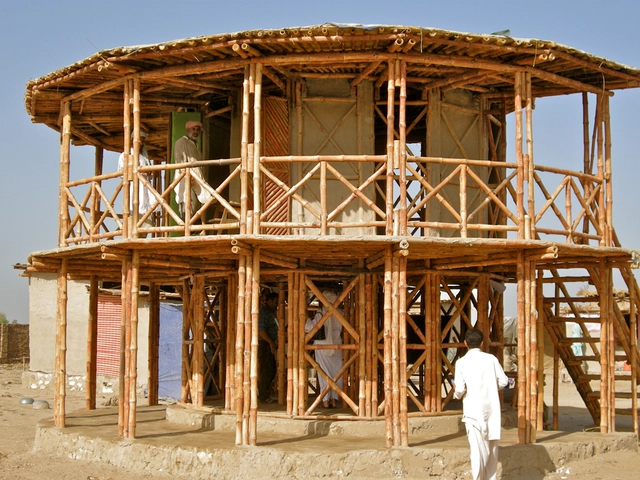
Yasmeen Lari, recognized as the first female architect in Pakistan, has had a significant impact both in her home country and internationally due to her innovative and socially conscious approach to architecture. Through a systemic approach, Lari’s work takes into consideration local culture, site-specific opportunities, and challenges. Born in Pakistan in 1941, Yasmeen Lari moved to London with her family at the age of 15. After graduating from Oxford Brooks School of Architecture, she returned to Pakistan at the age of 23 to establish Lari Associates with her husband, Suhail Zaheer Lari. The couple settled in Karachi. Here, she began to study Pakistan’s ancient towns and the vernacular architecture of earth buildings, igniting her interest in the architectural heritage and traditional techniques of her country. In 1980, she co-founded the Heritage Foundation of Pakistan with her husband, becoming instrumental in the preservation of her country’s rich cultural heritage.