As part of the Shenzhen Architecture Biennale, Finnish practice Lassila Hirvilammi Architects entered into a collaboration with Chinese architect Gigi Leung to explore the themes of copying, authenticity and knowledge transfer between cultures. Working with master craftsmen, they created two versions of the same space (each influenced by their respective cultures), intentionally blurring the line between copying and taking inspiration.
Read on for more on this lesson in sharing differing architectural understandings
The RIBA's recent report "City Health Check: How Design Can Save Lives and Money" looks at the relationship between city planning and public health, surveying the UK's 9 largest cities in a bid to improve public health and thereby save money for the National Health Service. The report includes useful information for city planners, such as the idea that in general, it is quality and not quantity of public space that is the biggest factor when it comes to encouraging people to walk instead of taking transport.
Read on for more of the results of the report - and analysis of these results - after the break
Videos
At LAX, it was important to create "a positive experience after the stress of the departure experience," says Melissa Weigel. Image Courtesy of Moment Factory
In this interview, originally published by Metropolis Magazine as "Q&A: Melissa Weigel of Moment Factory", Leslie Gallery-Dilworth talks with Weigel about the challenges of devising multimedia installations for public spaces, as in their recent installation for the Bradley International Terminal at LAX.
Montreal’s Moment Factory, a new media and entertainment studio, is best known for creating and producing multimedia environments that combine video, lighting, architecture, sound, and special effects. You may have seen their work at Cirque du Soleil, Madonna’s 2012 Superbowl Half Time Show, Disney's E3 booth, or Jay Z's Carnegie Hall debut. Perhaps you were there when they lit up the facade of the Sagrada Familia or Montreal's Quartier des Spectacles district. Or maybe you saw that they were included in Apple's recently launched 30th anniversary timeline.
Moment Factory was the main content provider for the interior concept and media features in the newly opened Bradley International Terminal at LAX, designed by Fentress Architects. It was a large collaboration consisting of several partners, including Mike Rubin with MRA International, Marcela Sardi of Sardi Design, Smart Monkey, Digital Kitchen, and Electrosonic with installation by Daktronics and Planar.
In this intriguing and often insightful two-part interview with Section D, Monocle's weekly design radio show, Sir Terry Farrell discusses at length the findings of his review into UK architecture as well as his views on the current state of architecture in the UK and the world. Looking to the future of the profession, Farrell says he sees architects as one of the key contributors to the world's social future: "We live in what we've built, we're an urban-building creature... I call it the urbi-cultural revolution."
Read more about the interview, and listen to both parts of the interview, after the break
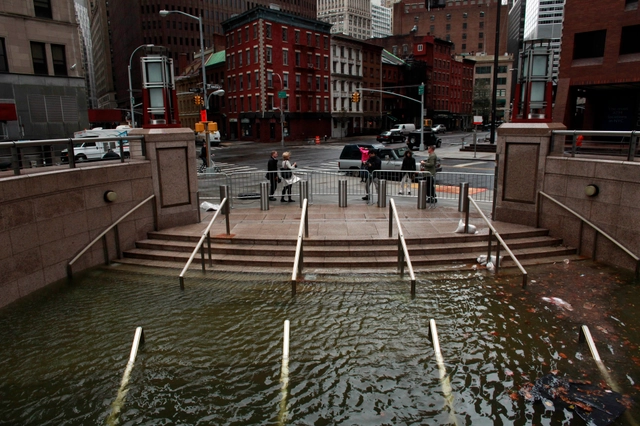
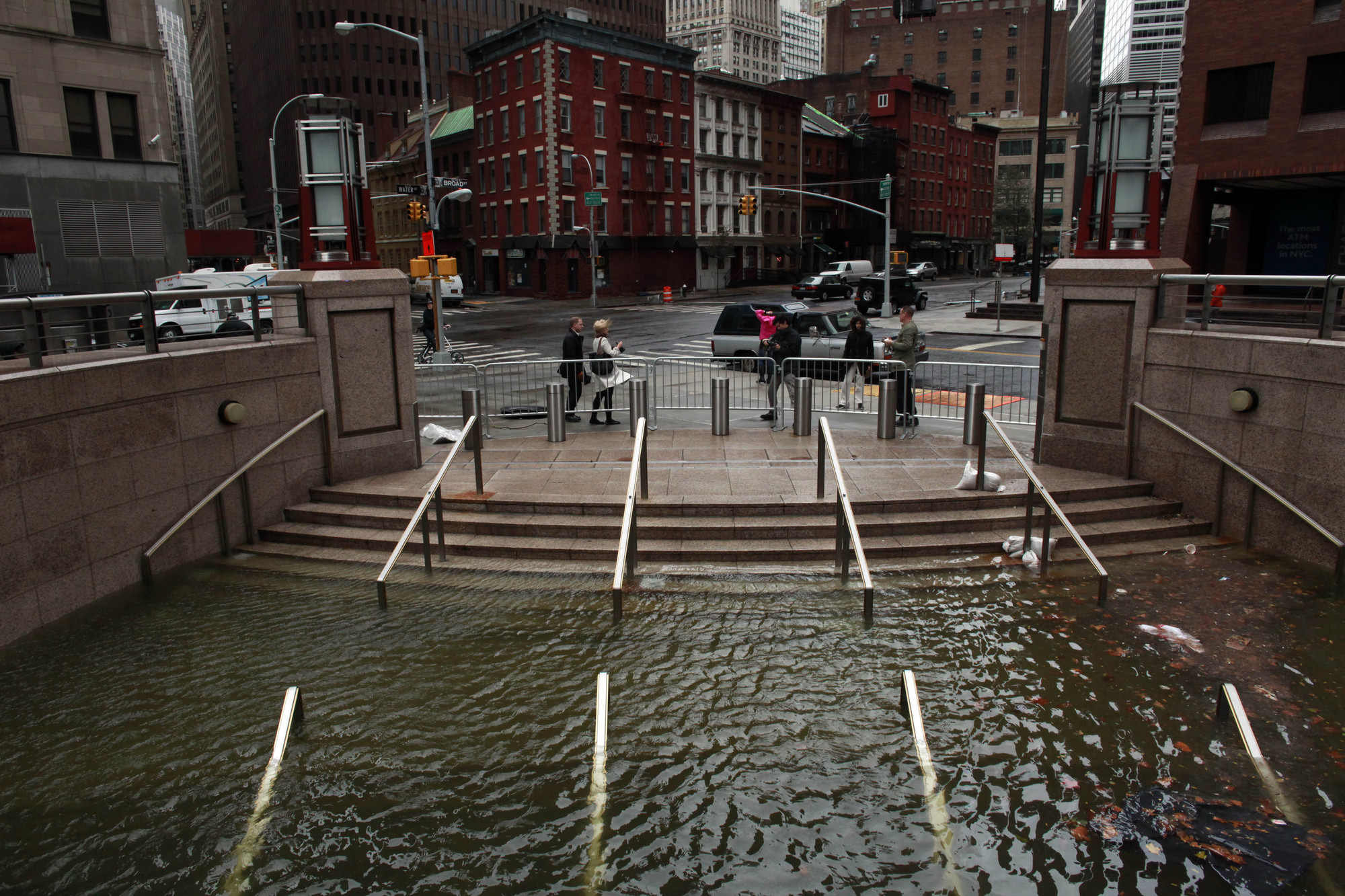
The challenges of sea-level rise cross boundaries of all sorts: geographic, political, social, economic. Proposed mitigation strategies will also necessarily shift and overlap. Here, we present five case studies from across the globe that offer intriguing ways—some operational, some philosophical—to address the threats associated with climate change. Drawing on a research initiative focused on vulnerabilities in Boston, a team at Sasaki Associates developed these additional design-strategy icons to illustrate the layered approaches. They are adaptable, the better to meet the unique demands of each coastal community.
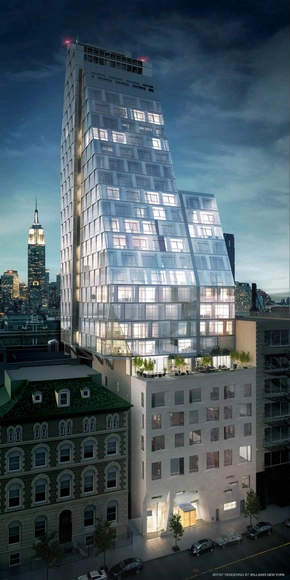
New York City’s notoriously space-hungry real estate market is converting the cantilever – perhaps made most famous in Frank Lloyd Wright’s floating Fallingwater residence of 1935 – from a mere move of architectural acrobatics to a profit-generating design feature. Driven by a “more is more” mantra, developers and architects are using cantilevers to extend the reach of a building, creating unique vistas and extended floor space in a market in which both are priced at sky-high premiums.
https://www.archdaily.com/472009/the-new-york-city-cantilever-if-you-can-t-go-up-go-outJose Luis Gabriel Cruz
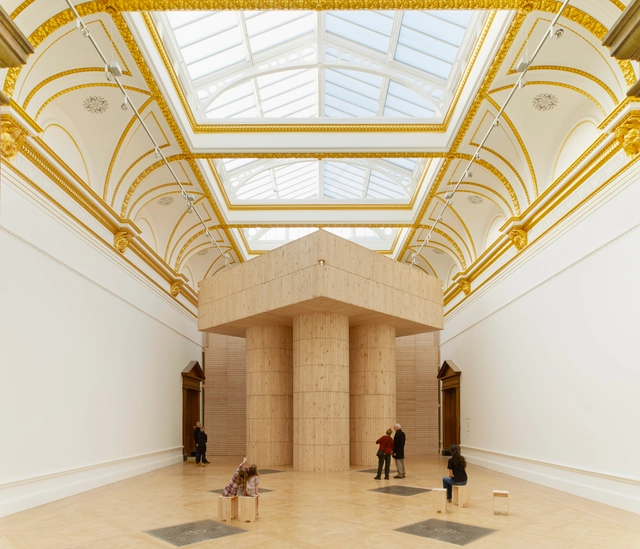
This past week London’s Royal Academy of Arts (RA) celebrated the opening of, what many claim to be, one of the most “epic” and “enchanting” exhibitions of 2014: Sensing Space: Architecture Reimagined. With a series of large scale installations by some of profession’s most acclaimed architects, such as Eduardo Souto de Moura, and Kengo Kuma, the immersive exhibition creates an atmosphere that encourages visitors to become part of the experience and open their minds to the sensory realm of architecture.
"Architecture is so often the background to our lives," stated curator Kate Goodwin. "We often don't think about it - it's practical and functional, but when does it do something more?"
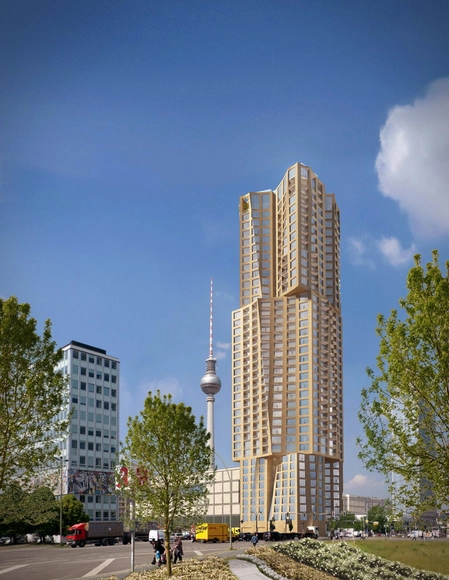
Gehry Partners has been selected over David Chipperfield, Adjaye Associates and seven other practices in an invited competition for a 300-unit residential tower in Berlin. The winning proposal, deemed “the most compelling” by jury for its rotating stacks of sculptural, stone-clad cubes that rise up to 150 meters, is expected to be Berlin’s tallest skyscraper and Germany’s tallest residential tower.
“Gehry’s design is strong in visual expression and introduces an unusually eccentric, new pattern for this location. Nevertheless, the façade radiates agreeable tranquility. In addition, the design blends well with the neighborhood and conveys all aspects of metropolitan living,” commented Regula Lüscher, Senate Building Director.
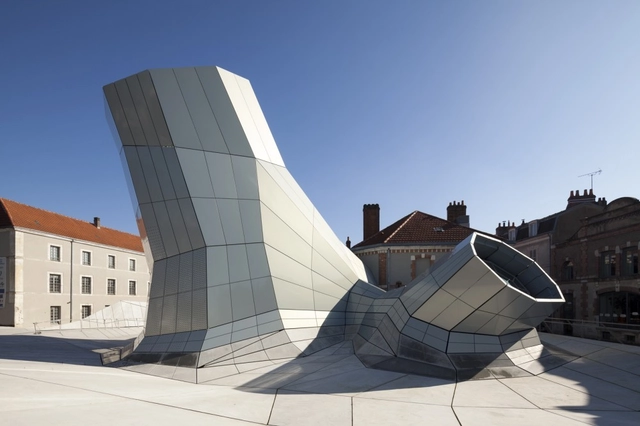
This past September marked the commencement of ArchiLab 2013 at the newly completed FRAC Centre in Orleans, France. Forty architects, designers and artists gathered for the annual architectural exposition and conference’s ninth edition to discuss the deepening overlap between digital architecture and the sciences, particularly molecular biology. Under the theme “Naturalizing Architecture,” two international symposiums took place which provided the opportuntiy for architects and scientists to present, and debate, the latest research revolving this subject and its ever-evolving role within the living world.
To encourage the continuation of discourse, we have complied a video list of all the discussions from the symposium for your viewing pleasure. Enjoy them, after the break, and feel free to share your thoughts in the comment section below.
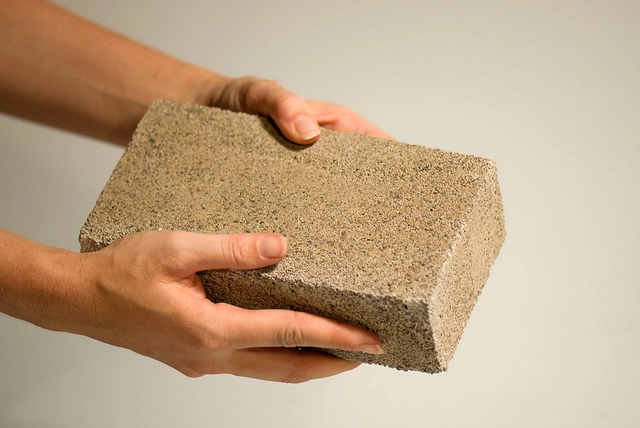
A unique biotechnology start-up company have developed a method of growing bricks from nothing more than bacteria and naturally abundant materials. Having recently won first place in the Cradle to Cradle Product Innovation Challenge, bioMason has developed a method of growing materials by employing microorganisms. Arguing that the four traditional building materials - concrete, glass, steel and wood - both contain a significant level of embodied energy and heavily rely on limited natural resources, their answer is in high strength natural biological cements (such as coral) that can be used "without negative impacts to the surrounding environment."
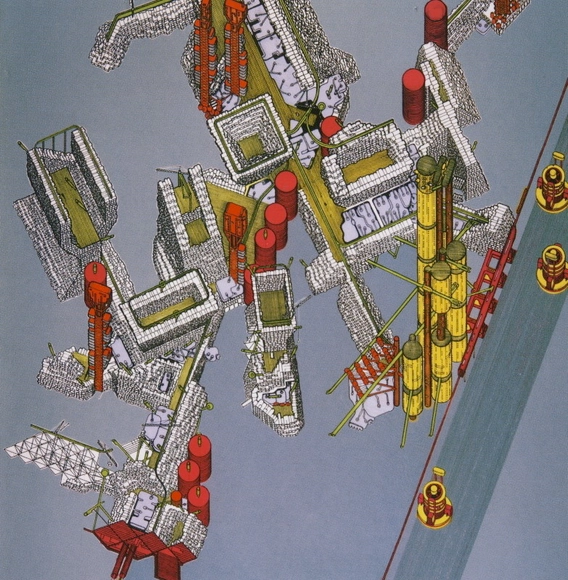
In the following interview, which originally appeared in Zawia#01:Utopia (published December 2013), Sir Peter Cook, one of the brilliant minds behind Archigram, sits down with the editors of Zawia to discuss his thoughts on utopia - including why he felt the work of Archigram wasn’t particularly utopian (or even revolutionary) at all.
ZAWIA: It is perhaps difficult to discuss our next volume's theme - “utopia" - without first starting with archigram and the visions that came out of that period. How do you view the utopian visions of archigram during that specific moment of history in relation to the current realities of our cities and the recent political and social waves of change ?
PETER COOK: Actually... at the time I was probably naive enough to not regard it as Utopian.
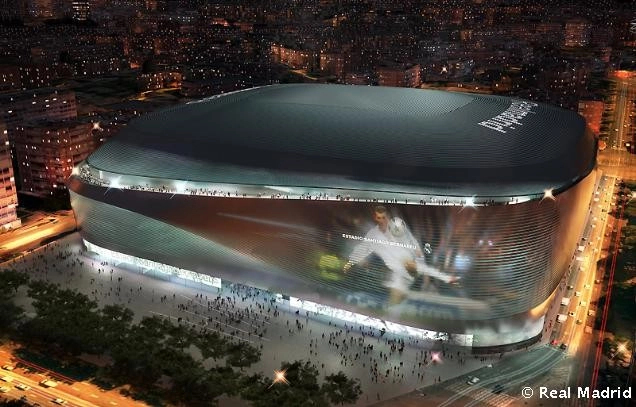
A proposal by gmp Arquitectos, L35 Arquitectos andRibas & Ribas has been announced as winner of an international competition to revamp Real Madrid’s Santiago Bernabéu Stadium in Spain. Selected over an impressive shortlist of candidates including Foster & Partners, Herzog & de Meuron and Populous, the winning gmp-led team is expected to “transform the Santiago Bernabéu into the most advanced and developed stadium of the 21st century,” as described gmp owner Volkwin Marg.
“This building is undoubtedly the most important project of our careers.," Marg added.
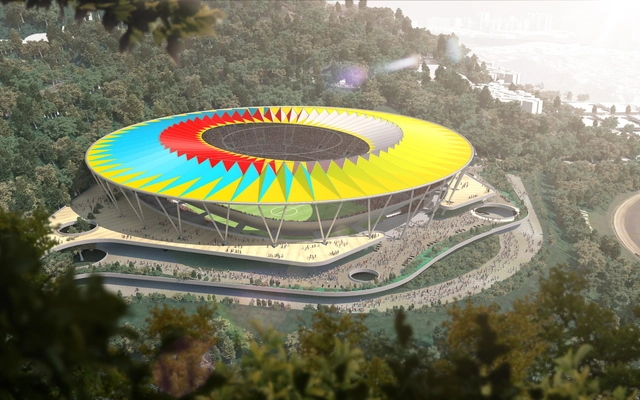
Following our recent news that confirmed Rogers Stirk Harbour + Partners (RSHP) will oversee the design and construction of two new stadiums within Caracas' Hugo Chavez Park, details have emerged regarding the Estadio Nacional de Fútbol de Venezuela. Designed by RSHP, in collaboration with Arup and Schlaich Bergermann und Partners, the project will be the practice’s first ever football stadium.
We are happy to present the winners of the 2014 ArchDaily Building of the Year Awards, a peer-based, crowdsourced, architecture award where the collective intelligence of 60,000 architects filter and recognize the best architecture featured on ArchDaily during the past year.
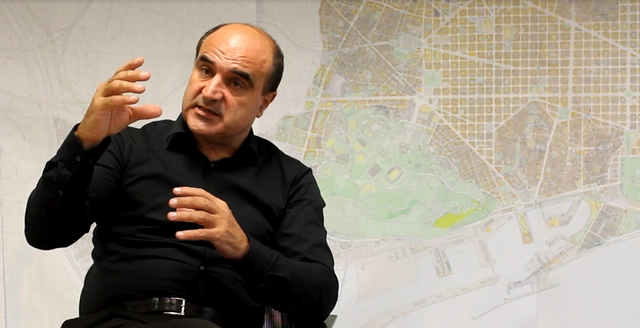
In the following article, originally published in Polish in theDecember 2013 issue of A&B, Ewa Szymczyk interviews Vicente Guallart, the Chief Architect of Barcelona since 2011 as well as the founder of Guallart Architects and IAAC (Institute of Advanced Architecture in Catalunya). Szymczyk questions Guallart about his experience in urban design, asking: how can you measure a city's success?
Ewa Szymczyk: When measuring the contemporary city’s success we typically use economic measures. In this sense Barcelona ranks very high, being a top tourist destination and managing its budget in times of global crisis. But there are many other ways to measure its success. What in your opinion makes a city a good city? Isn’t it much more than economic prosperity?
Vincente Guallart: A good city is a place where the citizens live well. So the best measure for a good city is how the citizens live. The truth is that the city is a physical representation of a social agreement. If you think for instance about Phoenix in Arizona, maybe people live there the way they want and the way they like to live. Obviously there are also questions related to cost. I mean, questions related to environmental and economic costs. Therefore the cost of a city like Phoenix is very different from the cost of a city like Hong Kong, which is the densest city and probably the most efficient urban structure in the world. So the question is the economic efficiency and also the quality of life of the citizens. And the best way to know is to ask citizens how happy they are to live in a place like this. The truth is that if you are a citizen of Barcelona you are quite happy. We have been evaluating this over the past few years and the average rating is seven out of ten. So that is in general very good! The people are proud to live in a place like this.
Kaap Skil, Maritime and Beachcombers’ Museum, Winner of the Daylight Award 2012. Image Courtesy of Mecanoo Architecten
Daylight is a highly cost-effective means of reducing the energy for electrical lighting and cooling. But architectural education often reduces the aspect of daylight to eye-catching effects on facades and scarcely discusses its potential effects - not just on cost, but on health, well-being and energy.
This Light Matters will explore the often unexplored aspects of daylight and introduce key strategies for you to better incorporate daylight into design: from optimizing building orientations to choosing interior surface qualities that achieve the right reflectance. These steps can significantly reduce your investment as well as operating costs. And while these strategies will certainly catch the interest of economically orientated clients, you will soon discover that daylight can do so much more.
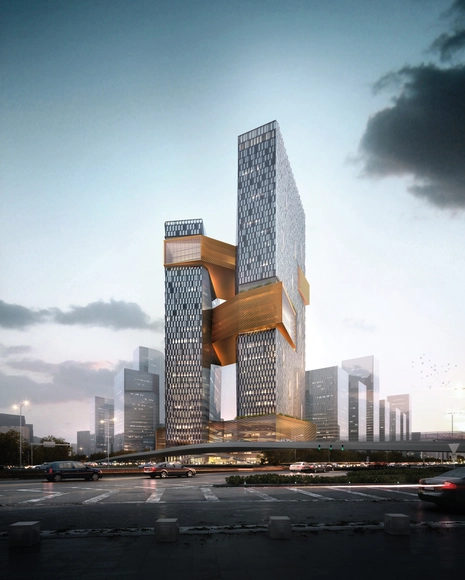
NBBJ has unveiled a 250-meter-high, two-tower campus that will become Tencent’s main headquarters at the Shenzhen High-Tech Industrial Park upon completion in 2016. As the world’s third-largest internet corporation, and 2013’s most innovative Chinese company according to FastCo, Tencent hopes the new campus will serve as a vibrant workplace for an expanding workforce of 12,000 employees.


_Tuomo_Tammenpa%C3%8C%CB%86a%C3%8C%CB%86.jpg?1391784293&format=webp&width=640&height=580)
_Tuomo_Tammenpa%C3%8C%CB%86a%C3%8C%CB%86.jpg?1391784314 "© Tuomo Tammenpää")
_Pekka_Turunen.jpg?1391784061 "© Pekka Turunen")
_Tuomo_Tammenpa%C3%8C%CB%86a%C3%8C%CB%86.jpg?1391784144 "© Tuomo Tammenpää")
_Tuomo_Tammenpa%C3%8C%CB%86a%C3%8C%CB%86.jpg?1391784245 "© Tuomo Tammenpää")
_Tuomo_Tammenpa%C3%8C%CB%86a%C3%8C%CB%86.jpg?1391784293)

.jpg?1391602667&format=webp&width=640&height=580)


.jpg?1391095745&format=webp&width=640&height=580)