1. ArchDaily
  2. Editor's Choice

Editor's Choice

Adjaye Among 7 Asked to Submit Proposals for Barack Obama Presidential Center

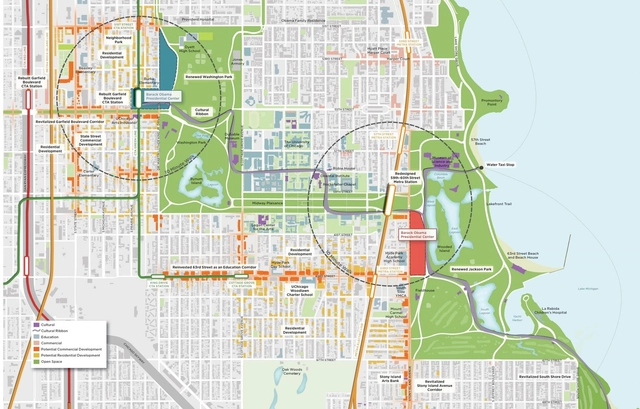
Confirming the speculation, Adjaye Associates has been asked alongside six others to submit design proposals for the Barack Obama Presidential Center planned for Chicago's South Side. Diller Scofidio + Renfro, John Ronan Architects, Renzo Piano Building Workshop, SHoP Architects, Snøhetta and Tod Williams Billie Tsien Architects complete the list; all are expected to provide designs for both considered sites - Jackson Park and Washington Park.

“These finalists offer a variety of backgrounds and styles, and any one of them would be an excellent choice,” Obama Foundation chairman Martin Nesbitt, according to CBS Chicago. “We are excited to see this process moving forward because the Obama Presidential Center will be so much more than a library – this facility will seek to inspire citizens across the globe to better their communities, their countries, and their world.”
Connected Lighting: From Ethernet to Li-Fi Internet

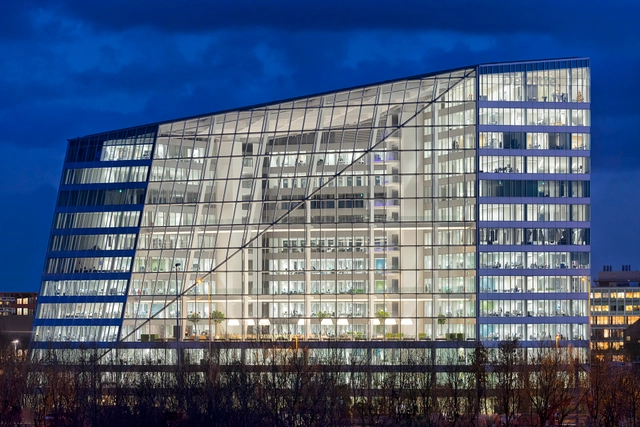
How will our buildings change when your mobile device can receive huge amounts of data flowing from the luminaires above you? Not only has LED brought us a highly efficient light source, but a promising instrument for visible light communication (VLC) as well. Therefore light will not only be a medium to support vision, but it will also be an essential means of data communication. With the low energy consumption of LED one can even set up luminaires without mains cables for the power and just install Ethernet cables. Welcome to the world of digital lighting.

These Drone Photographs Reveal the Hidden Geometries of Late Soviet Modernism

Subscriber Access | 

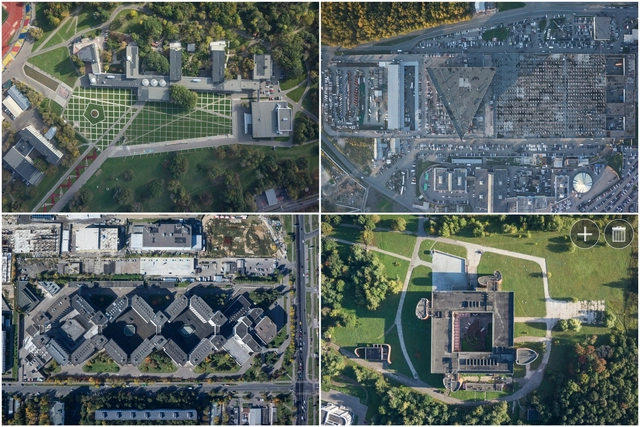
Though the ahistorical dogma of modernism would seem a perfect fit for the Soviet Union’s mandated break with traditions, the architectural history of the USSR was somewhat more complex. Stalin’s neoclassically-inflected socialist realism superseded the constructivist heyday of the early Soviet Union, only to be replaced by a return to modernism under Khrushchev, facilitated by an opening to the West. Architectural photographers Denis Esakov and Dmitry Vasilenko recently used a drone to capture photographs of several landmark structures of the Khrushchev-era return to modernism, focusing on how these aerial views reinforce their rational geometries and regimented forms. Until the recent advent of satellite imagery and commercially available drones, these were views that were only ever seen by the architects, and the officials who reviewed the plans. Even so, the photographer notes that these methodical forms must have been very attractive to the state officers tasked with implementing Khrushchev’s mandated aesthetic.

The photographs, taken in and around Moscow, include works by several prominent Soviet architects. Leonid Pavlov’s long career spanned the full spectrum of state-sponsored architectural styles, starting as a constructivist, and moving into more historicist designs under Stalin, before emerging as one of the Soviet Union’s most prominent post-war modernists. Similarly, Yuri Platonov’s work received extensive state recognition, earning him the title of “People’s architect of the USSR,” as well as awards such the Silver Medal of the Arts Academy of the USSR, the USSR State Prize, and the State Prize of Russia.

These Drone Photographs Reveal the Hidden Geometries of Late Soviet Modernism - Image 6 of 4These Drone Photographs Reveal the Hidden Geometries of Late Soviet Modernism - Image 7 of 4These Drone Photographs Reveal the Hidden Geometries of Late Soviet Modernism - Image 8 of 4These Drone Photographs Reveal the Hidden Geometries of Late Soviet Modernism - Image 9 of 4These Drone Photographs Reveal the Hidden Geometries of Late Soviet Modernism - More Images+ 28

Abeer Seikaly’s Structural Fabric Shelters Weave Refugees’ Lives Back Together

Subscriber Access | 

Whether from political unrest or natural disaster, refugee crises around the world seem to fill the headlines of late. These events inspired interdisciplinary designer Abeer Seikaly’s conceptual emergency shelter, entitled “Weaving A Home,” which received a Lexus Design Award in 2013. The collapsible structural fabric shelter can adapt to various climates, while also providing the comforts of contemporary life such as heat, running water, and electricity.

Abeer Seikaly’s Structural Fabric Shelters Weave Refugees’ Lives Back Together - Image 1 of 4Abeer Seikaly’s Structural Fabric Shelters Weave Refugees’ Lives Back Together - Image 2 of 4Abeer Seikaly’s Structural Fabric Shelters Weave Refugees’ Lives Back Together - Image 3 of 4Abeer Seikaly’s Structural Fabric Shelters Weave Refugees’ Lives Back Together - Image 4 of 4Abeer Seikaly’s Structural Fabric Shelters Weave Refugees’ Lives Back Together - More Images+ 9

4 Photographers Speak on the Role of Photoshop in Architecture

Subscriber Access | 

One of the most controversial stories to hit the architectural news last week was the revelation by Blair Kamin of the Chicago Tribune that one of the winners of the AIA Chicago chapter's Design Excellence Awards was given on the basis of an image in which unsightly elements of the building's design had been removed in Photoshop.

The "war on reality" (as one commenter ironically referred to it) is a topic that polarizes even the most level-headed people, with many arguing over the effect that such Photoshop trickery has on our perception of our world. However, with many people unaware of what goes on behind the scenes, we decided to reach out to some photographers for a candid look at exactly what role Photoshop has in the everyday processes of architectural photography, and where they draw the line regarding the ethical documentation of buildings. Read on to find out what they had to say.

Architecture’s Most Inspiring Leaders, Projects & People in 2015

Subscriber Access | 

5,000 3D cameras to help preserve the architecture of a country torn by war; A team of Latin American architects that moved into Venezuela’s most dangerous neighborhoods in order to design and build with the community; A legendary architect who understood architecture’s relationship to the transformation of technology -- and whose projects have celebrated technology across a trajectory of multiple decades. These are the projects, initiatives and people who have proven to be leaders in 2015.

ArchDaily’s editorial team wanted to recognize these projects for their commitment to promoting practices in architecture that serve many, in all corners of the globe -- from Bolivia to London, from Chicago to Venice, from public spaces in favelas to projected drone-ports in Africa. These are the stories that have inspired us in 2015, and whose influence we hope to continue to see into 2016.

The 15 Best Articles of 2015

Subscriber Access | 

In 2015, we've focused on expanding ArchDaily's editorial content in a number of different directions. We've opened new avenues to bring high-quality architectural content to our readers - whether that's through our many fantastic publishing partnerships with organizations such as The Architectural Review and Metropolis Magazine, by working more closely with our sister sites in Spanish, Portuguese and Chinese to bring articles with a global outlook such as our article celebrating "The Best Student Work Worldwide," or by reaching out to people who have expressed strong opinions on our stories, as was the case when we published Mark Hogan's article "What’s Wrong With Shipping Container Housing? Everything."

We've also experimented with article formats, including a combined infographic and feature article in "7 Architects Designing a Diverse Future in Africa," two complementary articles to mark the first anniversary of MVRDV's Markthal in Rotterdam, and articles that amplify the voices of our readers in our AD Discussion series. And of course, we've also continued to bring our readers more traditional articles and interviews, with responses to trending debates such as Matthew Johnson's article "Architecture Doesn’t Need Rebuilding, It Needs More Thoughtful Critics" and standout examples of favorite series such as our AD Classics section.

With all of these developments, it was a challenge to narrow down a full year's worth of articles to just 15 shining examples. Read on to find out which lucky 15 made the cut.

ArchDaily's Top 20 Most Read Articles of 2015

Subscriber Access | 

Over the past 12 months at ArchDaily, we've been working hard to bring our readers more articles that will interest, inspire and aid them, and our most read articles of the year reflect a few trends that have characterized the year. Firstly, they show the success of our attempts to bring our readers’ favorite articles from the past back into the limelight through social media and other means, with 7 of our top 20 articles from the year published earlier than 2015. Secondly - perhaps more obviously - it shows the continuing popularity of lists. And what do we do when 75 percent of our most popular articles of the year are lists and rankings? Why, we make a list of them of course. So put your countdown cap on and keep reading to see our top 20 most read articles of the year - including everything from the world's top 100 universities, to 19 notable former architects, to 22 websites you didn't know would be useful to you.

3TI Progetti's Civic Center in Villacidro is Inspired by Italian Poetry

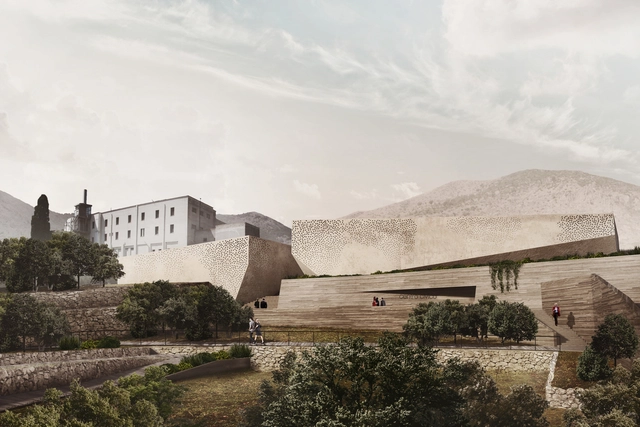
The new Civic Center by 3TI Progetti in Villacidro, Italy, is sited at an important reference point for the city, due to both its history and natural features. Located in the "historic garden of the Episcopal Palace," the new center re-interprets the surrounding urban elements, redefining the relationships between its urban and natural surroundings. Read more about this project after the break.

Mark Foster Gage's Manhattan Skyscraper Takes Gothic Architecture to New Heights

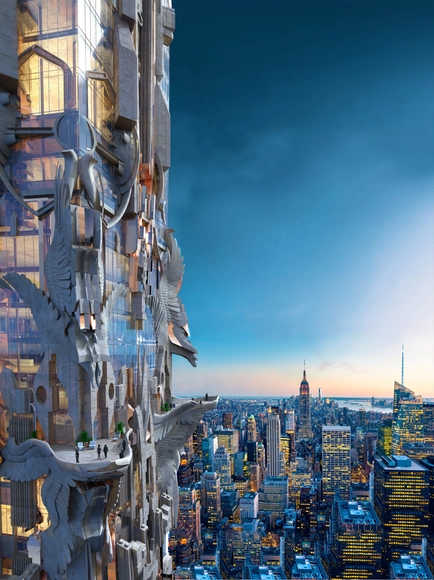
This isn't your typical New York skyscraper; Mark Foster Gage has been commissioned to design a 1492-foot-tall luxury tower in Manhattan - 41 West 57th Street. Described by Skyscraper City as the "missing link between Beaux Arts, Art Deco, Expressionism, Gaudi-Modernisme and Contemporary architecture," the outlandish design boasts a uniquely carved facade cloaked in balconies custom tailored for each of its 91 residential units.

"I think that many of the supertall buildings being built in New York City are virtually free of architectural design - they are just tall boxes covered in a selected glass curtain wall products. That is not design," said Gage.

What Should Architecture Schools Teach Us? ArchDaily Readers Respond

Subscriber Access | 

Architecture is a subject that takes decades to master. Just look at the field’s consensus masters - it is not uncommon for an architect to work through his or her fifties before receiving widespread acclaim. So it should come as no surprise that architecture schools simply don’t have the time to teach students all there is to know about architecture. School is the place where future architects are given a foundation of skills, knowledge and design sensibility that they can carry with them into their careers - but what exactly that foundation should contain is still a hot debate within the field.

In an attempt to come closer to pinpointing what an education should give you, we asked a group of people with a wide range of experience as students, professionals and teachers - our readers - "what do you wish you had learned in architecture school?"

Who Should Win the 2016 Pritzker Prize?

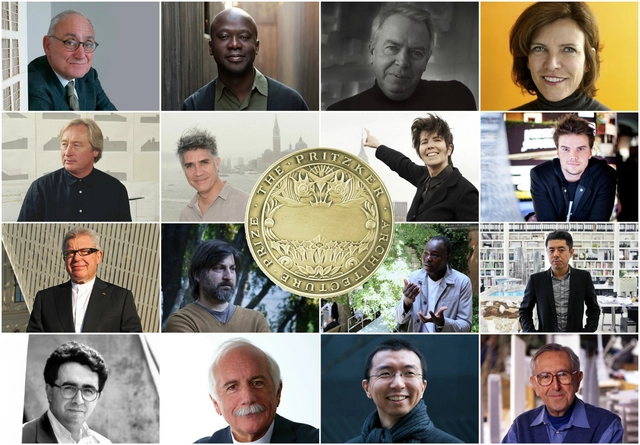
The Pritzker Prize has announced that it will be revealing its 2016 laureate on the 13th of January, starting what is sure to be a month of intense speculation about who the next winner of architecture's most prestigious prize might be. Will the jury honor an influential member of the old guard, as they did this March when they gave the award to the late Frei Otto? Or will they recognize a young architect who has made a big splash? Will they reward virtuoso spatial design, or will they acknowledge the role of social impact, as they did in awarding the prize to Shigeru Ban in 2014? And will the award go to an individual or to two or more architects working together, as it did in 2010 when SANAA scooped the prize?

We want to hear from our readers - not just about who probably will win the prize, but about who should win the prize and why. Read on to cast your vote in our poll, and let us know in the comments whose name you'd like to hear announced on January 13th.

INTERIORS: Star Wars

Subscriber Access | 
INTERIORS: Star Wars - Image 4 of 4
Courtesy of INTERIORS Journal

Interiors is an online film and architecture publication, published by Mehruss Jon Ahi and Armen Karaoghlanian. Interiors runs an exclusive column for ArchDaily that analyzes and diagrams films in terms of space. Their Official Store will carry exclusive prints from these posts.

Star Wars (1977) is more than a film. It’s a worldwide phenomenon. The Star Wars saga is its own universe, and with such distinct characters and mythology, even talking about Star Wars: Episode IV - A New Hope as a standalone film (which is part of such a larger whole) is a fascinating exercise. It’s quite remarkable that for a film that takes place in space, in worlds outside of ours, it still holds up, architecturally.

A Skyscraper, a Stadium, and a Sixties Throwback For London

Subscriber Access | 

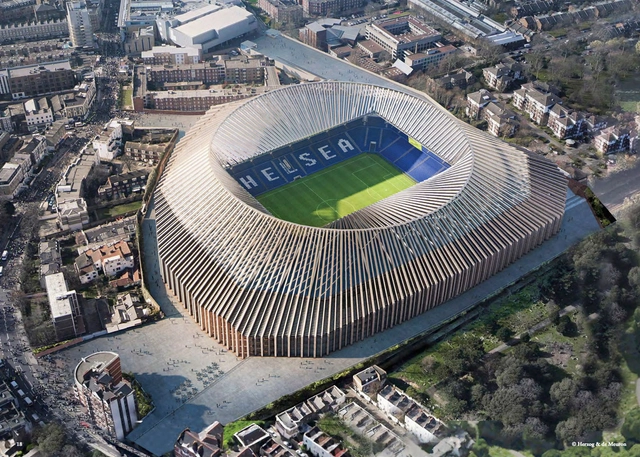
In the past two weeks, it seems all the big stories have been emerging from London: this week, the crowning tower of the City of London’s skyscraper cluster, a restrained design by Eric Parry Architects, was unveiled; last week, it was the Chelsea Stadium plans by Herzog & de Meuron that grabbed attention; and almost as if to demand attention for a brief that wouldn’t otherwise make headlines, at the start of the month Will Alsop’s aLL Design unveiled a characteristically outlandish residential tower in Vauxhall.

The resulting conversations from our readers touched on everything from the coherence of London’s future skyline to Will Alsop’s design lineage. Read on to find out what they had to say in the latest installment of our "ArchDaily Readers Debate" series.

People, Place, Purpose: How Mecanoo's Architecture Aspires to More than Style

Subscriber Access | 
People, Place, Purpose: How Mecanoo's Architecture Aspires to More than Style - Image 8 of 4
In 1996 Mecanoo transformed a former Lutheran church in the heart of Amsterdam into a theatre for De Trust. Image © Christian Richters

In "People, Place, Purpose," the latest monograph of her Delft-based firm Mecanoo, Francine Houben explores the unique work which has enabled the firm to take their place among the world-renowned pantheon of Dutch architects. In the following excerpt from the book, Herbert Wright presents an introduction to the monograph and the themes running through Mecanoo's work in general, breaking down an architecture that is defined not by style or ego but by three overarching responsibilities - and perhaps a dash of color.

On a computer screen, architects can move virtual walls around with just a few clicks, but surely only superheroes can shift an actual wall around physically with their bare hands? So it was quite a surprise, while standing in the Saint Mary of the Angels Chapel in Rotterdam, to see Francine Houben, founding partner of Mecanoo, do precisely that. After some gentle fussing and tidying around the lectern and candles where the priest conducts ceremonies, she walks to a wall, and puts her hands firmly to it. It recedes to let in the sound of tree branches swaying in the wind passing through the cemetery outside.

People, Place, Purpose: How Mecanoo's Architecture Aspires to More than Style - Image 6 of 4People, Place, Purpose: How Mecanoo's Architecture Aspires to More than Style - Image 7 of 4People, Place, Purpose: How Mecanoo's Architecture Aspires to More than Style - Image 9 of 4People, Place, Purpose: How Mecanoo's Architecture Aspires to More than Style - Image 10 of 4People, Place, Purpose: How Mecanoo's Architecture Aspires to More than Style - More Images+ 7

New LEGO® Collection Lets You Recreate Skylines

New LEGO® Collection Lets You Recreate Skylines - Image 3 of 4
New York City. Image © LEGO®

Venice, Berlin and New York City are the first to be featured in LEGO®'s new Architecture Skyline Collection. Unlike its single-building series, these new kits will allow you to recreate famous skylines by constructing up to 5 of each city's most iconic buildings.

New York City's skyline will be represented by the One World Trade Center, Empire State Building, Chrysler Building, Statue of Liberty, and Flatiron Building. Venice will feature the Rialto Bridge, St. Mark’s Basilica, St. Mark’s Campanile, St. Theodore and the Winged Lion of St. Mark, and the Bridge of Sighs. And Berlin's skyline will include the Reichstag, Victory Column, Deutsche Bahn Tower, Berlin TV Tower, and Brandenburg Gate.

The Architecture Software Revolution: From One Size Fits All to DIY

Subscriber Access | 

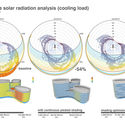
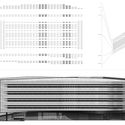
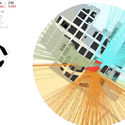
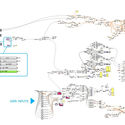
We’ve always been a profession of hackers. Every building is a one-off made up of countless elegant hacks, each bringing disparate materials and systems together into a cohesive whole. But when it comes to the software that designers have come to rely on, most of us have been content with enthusiastic consumerism, eagerly awaiting the next releases from software developers like Autodesk, McNeel (Rhino) and Bentley (MicroStation).

It’s been 5 years since we officially launched our research program at the Yazdani Studio of Cannon Design, and during that period we’ve come to understand the evolution of our process reflects the larger, changing relationship architects have with their means of production. Specifically, we've noticed that in late 2007 something changed. McNeel introduced a visual programming plugin called Grasshopper, and more and more architects began to hack their tools as well as their buildings.

The Architecture Software Revolution: From One Size Fits All to DIY - Image 1 of 4The Architecture Software Revolution: From One Size Fits All to DIY - Image 2 of 4The Architecture Software Revolution: From One Size Fits All to DIY - Image 3 of 4The Architecture Software Revolution: From One Size Fits All to DIY - Image 4 of 4The Architecture Software Revolution: From One Size Fits All to DIY - More Images+ 2

ArchDaily Architect’s Holiday Gift Guide 2015 (Part I)

ArchDaily Architect’s Holiday Gift Guide 2015 (Part I) - Featured Image
ArchDaily Architect's Holiday Gift Guide 2015. Image

Still searching for the perfect gift for that hard to please architect in your life? No need to look any further, we've compiled a list of items any architect would love to receive. Read on to see ArchDaily’s top 16 gifts for architects! 

You've started following your first account!

Did you know?

You'll now receive updates based on what you follow! Personalize your stream and start following your favorite authors, offices and users.