"People tend to forget that play is serious." - David Hockney
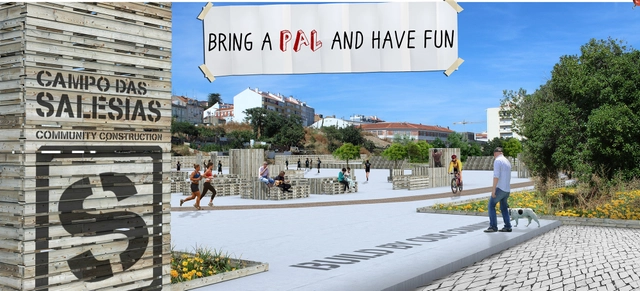
PLAYscapes, an international design competition launched earlier this year asking people to "submit a plan or proposal to turn a neglected forgotten part of your city into a playscape," has announced their winning entries. Set up by Building Trust International, the competition called for "professional and student architects and designers from cities around the world to propose ideas which encouraged public interaction and turned redundant city spaces into fun creative places."
Find out more about the winning professional entry from the City of Cape Town, entitled Cape Town Gardens Skatepark, along with the winning student entry from the Lusiada University of Lisbon, entitled Bring a Pal and Have Fun, after the break...
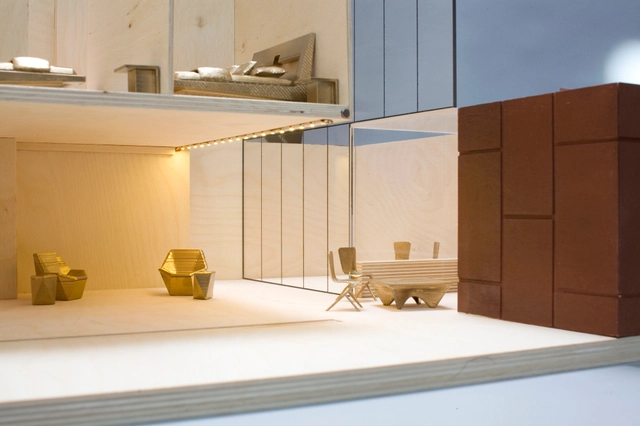
Adjaye Associates. Image Courtesy of A Dolls' House
Inspired by the dolls’ house that Edwin Lutyens designed for The British Empire Exhibition in 1922, twenty British practices are each designing a contemporary dolls’ house in aid of the disabled childrens’ charity KIDS. Each version will sit on a 750mm square plinth to be auctioned at Bonham's on the 11th November and contains one feature which would make life easier for a disabled child. Among the participating practices is Zaha Hadid Architects and Rogers Stirk Harbour + Partners. FAT will also be working with Turner Prize recipient Grayson Perry CBE, and Studio Egret West with artist Andrew Logan.
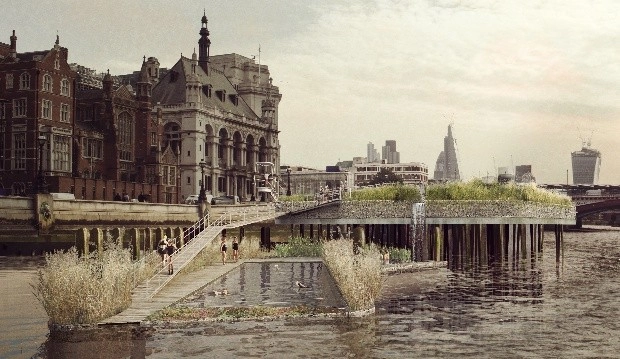
Five proposals for reconnecting Londoners with the River Thames have gone on display at London's Royal Academy of Arts (RA). The competition, organised by the Architecture Foundation, "launched an open call for multidisciplinary design teams to put forward new ideas and visions for self-selected sites along the Tidal Thames" earlier this year. The five selected teams were shortlisted earlier this year and recently discussed their designs at a public design workshop. The schemes are now being exhibited as part of the Richard Rogers RA: Inside Outexhibition.
In a recent article for the Financial Times, Edwin Heathcote explores the 'Skyscraper Index', an informal term that suggests a correlation between the construction of a big company's ambitious headquarters and subsequent financial crisis: "Think of the Empire State Building opening into the Wall Street crash of 1929, the Twin Towers being completed as New York City was flirting with bankruptcy or the Petronas Towers in Kuala Lumpur taking the mantle of the world’s tallest building and presaging the Asian financial crisis." Heathcote goes on to describe the latest generation of headquarters being constructed for our current, tech-oriented goliaths - like Apple's monolithic "donut", by Foster + Partners, and Facebook's Gehry-designed Menlo Park campus - and wonders: "if skyscrapers can tell us something about the temperature of an overheating economy, what do these groundscraping new HQs say?" Read the full article here.
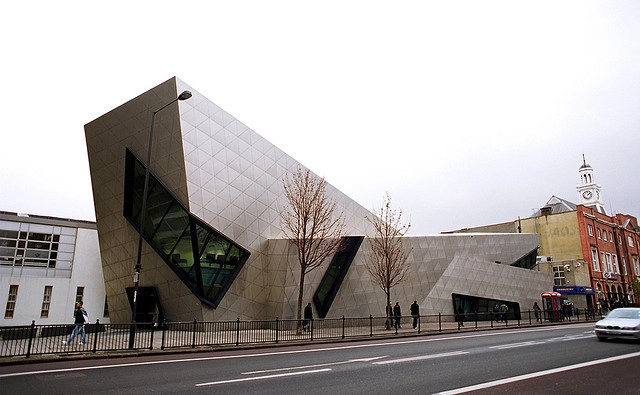
Following the news in 2010 that Daniel Libeskind was to design a "landmark" building for the UK's University of Essex, it has been announced that the plans have been abandoned. What was known as the Institute for Democracy and Conflict Resolution (IDCR) "was intended to become the ‘anchor’ to a new Knowledge Gateway research park at the university’s Colchester Wivenhoe Campus".
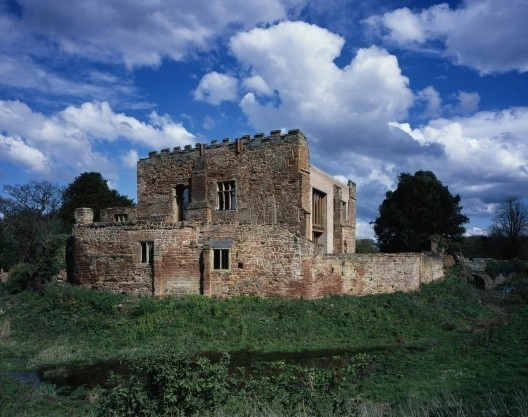
Following the news that the 2013 RIBA Stirling Prize was been won by Witherford Watson Mann for Astley Castle at a ceremony in London last week, the critical response to the project has been extremely positive. Joseph Rykwert (who recently won the RIBA Gold Medal) said that "Witherford Watson Mann have been gentle surgeons, saving the essential, eliminating the incidental". Check out the critical responses from The Financial Times' Edwin Heathcote, The Guardian's Oliver Wainwright, Building Design's Ellis Woodman, and the Architects' Journal's Rory Olcayto after the break...
The 2013 RIBA Stirling Prize has been won by Witherford Watson Mann for Astley Castle (Nuneaton, Warwickshire). The winner was just announced at a ceremony at London's Central Saint Martins, a building designed by last year's winner Stanton Williams. Astley Castle was also voted as BBC readers' favourite earlier this week. Jury-member Stephen Hodder stated that "engaging with the building was such a surprise for [the jury]," and described it as an "unassuming" building with great "rigour."
With the news earlier this year that San Francisco's Presidio Trust was planning a new cultural centre on the former site of a military base, now a national park, further details have emerged on the three finalists. The competition has attracted proposals from George Lucas (for the Lucas Cultural Arts Museum), WRNS Studio and the Chora Group (for 'The Bridge'), and the Golden Gate National Parks Conservancy (for the Presidio Exchange). Each proposals offer different visions for the eight acre site, the ex-military building of which currently hosts the retailer Sports Basement.
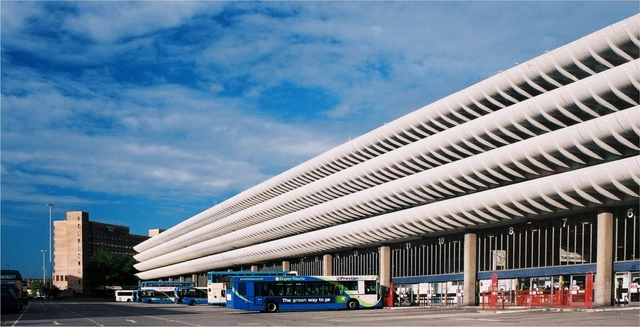
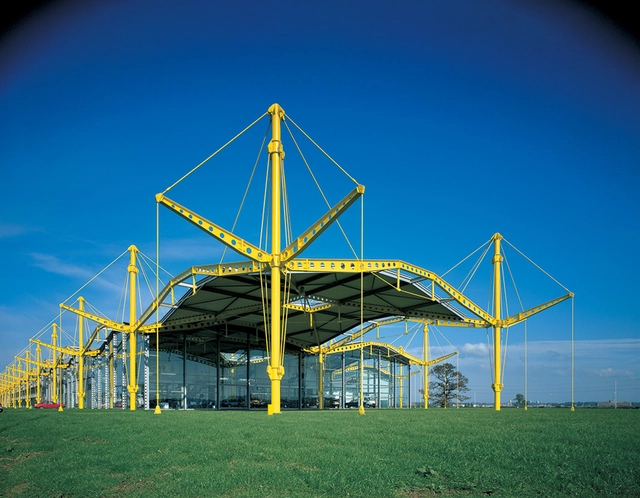
Four post-war buildings, including the Spectrum Building by Norman Fosterand Capel Manor House by Michael Manser, have been elevated to the Heritage List by the UK's Architecture and Heritage Minister Ed Vaizey. Upon announcing the news, the Minister commented that in spite of England's "fine and wonderful built heritage it's sometimes forgotten that we have many outstanding modern buildings too." His listings show that "architecture in this country is very much alive and well in the modern world."
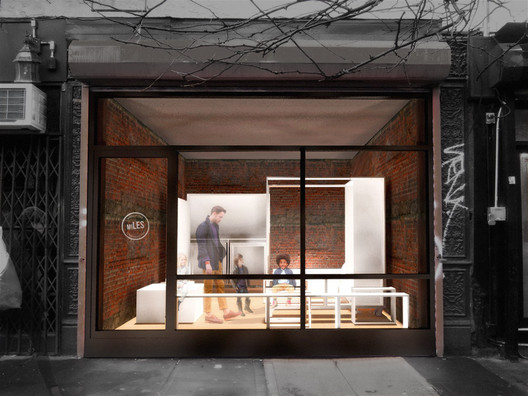
In an attempt to activate a vacant storefront in New York's Lower East Side, the miLES Storefront Transformer - a 6ft cube designed to "program any storefront" - is a versatile, movable set of furnishing and amenities designed by Architecture Commons. Seven individual pop-up interventions, curated by a collection of creative minds, would inhabit empty shops between November 4th and December 22nd 2013 if their Kickstarter campaign is successful.
“Architecture is too complex to be solved by any one person.”
Richard Rogers is an architect who understands the significance of collaboration. As a man with an intense social mind and a thirst for fairness in architectural and urban design, Rogers’ substantial portfolio of completed and proposed buildings is driven by the Athenian citizen’s oath of “I shall leave this city not less but more beautiful than I found it.”
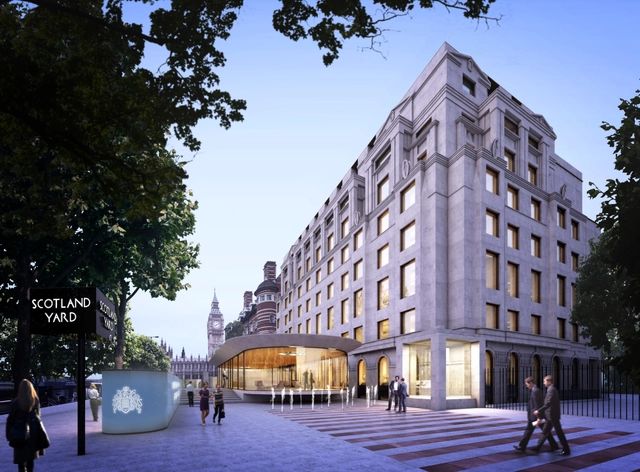
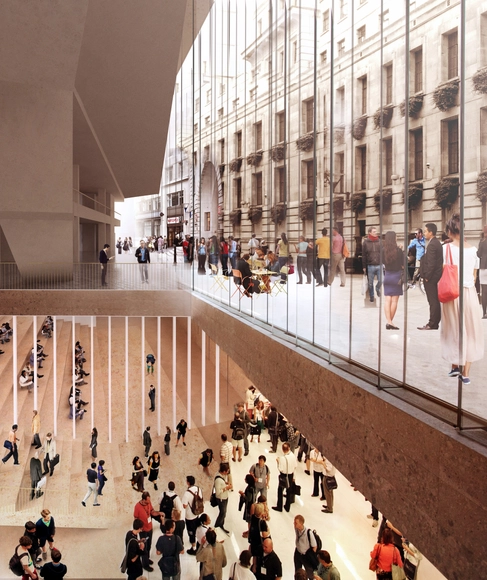
In honor of his success, London’s Royal Academy (RA) is currently playing host to a vast retrospective of Richard Rogers’ work, from his collaborations with Norman Foster and Renzo Piano, to the large-scale projects that define Rogers Stirk Harbour + Partners (RSHP) today. The RA’s extensive exhibition has been condensed into a series of motifs that have defined his architectural work, punctuated by memorabilia which offer personal insights into how Rogers’ career has been shaped by the people he’s worked with and the projects that he has worked on.
Continue after the break for a selection of highlights from the exhibition.



_Landmark_Trust.jpg?1380664454)