The EU costs you the same as Netflix - is it worth it? Rem Koolhaas thinks so.
Articles
Why the EU Membership is Worth it According to Rem Koolhaas and Stephan Petermann
https://www.archdaily.com/917823/why-the-eu-membership-is-worth-it-according-to-rem-koolhaas-and-stephan-petermannDima Stouhi
The Petty Crimes of Architects
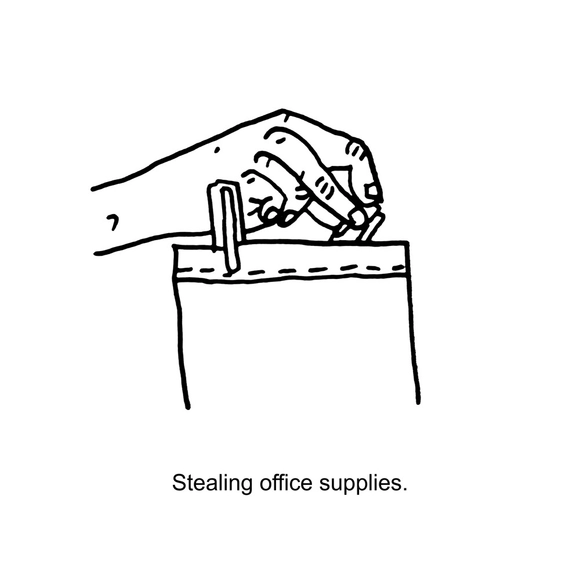
Everyone is blameworthy for at least one bad habit / behavior at his/her workplace: talking on the phone too loudly, stealing someone else's mug, walking around the office with a very odorous lunch...
After a little reunion with her friends who work in the architecture field, illustrator Chanel Dehond couldn't help but notice a few "crimes" that almost all architects are guilty of.
Take a look at Dehond's illustrations of the petty crimes done by architects and designers.
https://www.archdaily.com/917495/the-petty-crimes-of-architectsDima Stouhi
Are the E-Scooters Taking Over Cities Safe? A Look at the Evidence

Scooters are the latest trend in the new mobility landscape. You have likely seen someone riding one of these small yet agile two-wheeled vehicles in a major city. Following the explosive growth of ride-hailing apps and bike-sharing systems, it is now the turn of scooters, which logged 38.5 million trips in the United States in 2018 alone.
https://www.archdaily.com/1121964/are-the-e-scooters-taking-over-cities-safe-a-look-at-the-evidenceAlejandro Schwedhelm, Anna Bray Sharpin e Claudia Adriazola-Steil
15 Projects of Steel Stealing the Show
.jpg?1558681492&format=webp&width=640&height=580)
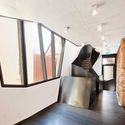
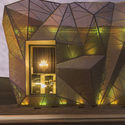
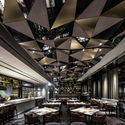
The use of steel in architecture is considered as one of the most innovative construction developments in history, allowing architects to create structures in scales they never thought they could. Fast-forward a few centuries, and steel remains as one of the most crucial materials in architecture. But there is a lot more to the material than just tensile strength and durability, some architects were well-aware of steel's potential and transformed it into lighting fixtures, facades, decorative elements, and finishes.
Here are 15 projects where architects looked beyond steel as structural support and explored its diverse possibilities in architecture.
.jpg?1558680317 "© Ket Kolektif")
.jpg?1558681492)
https://www.archdaily.com/917778/15-projects-of-steel-stealing-the-showDima Stouhi
João Luís Carrilho da Graça and the Power of Curiosity in Architecture

Past, Present, Future is an interview project by Itinerant Office, asking acclaimed architects to share their perspectives on the constantly evolving world of architecture. Each interview is split into three video segments: Past, Present, and Future, in which interviewees discuss their thoughts and experiences of architecture through each of those lenses. The first episode of the project featured 11 architects from Italy and the Netherlands and Episode II is comprised of interviews with 13 architects from Spain, Portugal, France, and Belgium.
https://www.archdaily.com/917617/joao-luis-carrilho-da-graca-and-the-power-of-curiosity-in-architectureDima Stouhi
Iphan Dictionary of Cultural Heritage: What Is "Gentrification"
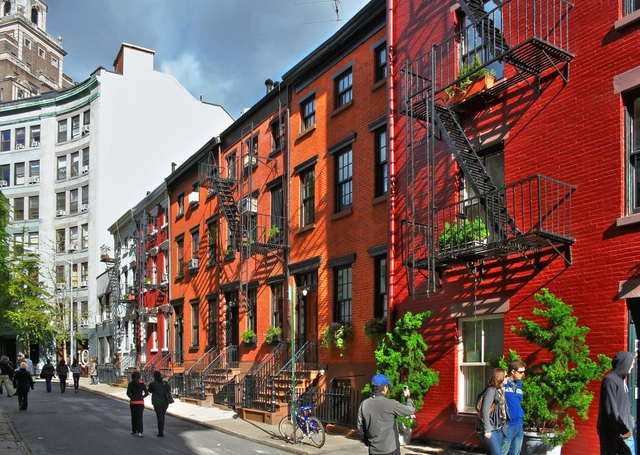
The word “gentrificação” is the Portuguese rendering of the English term gentrification, first used, in all likelihood, by British sociologist Ruth Glass in her book London: Aspects of Change (1964), where the author described and analyzed certain changes in the spatial organization of the city of London. The term gained popularity after its use in academic works on the subject, accompanying an urban phenomenon present across various periods and spaces: the gradual or sudden displacement of residents and users living in precarious conditions from a given street, urban area, or neighborhood to another location, making way for the appropriation by residents and users of higher economic and cultural status.
https://www.archdaily.com/1122424/iphan-dictionary-of-cultural-heritage-what-is-gentrificationIphan
Social media in the collective construction of urban memory: the case of #RobinHoodGardens
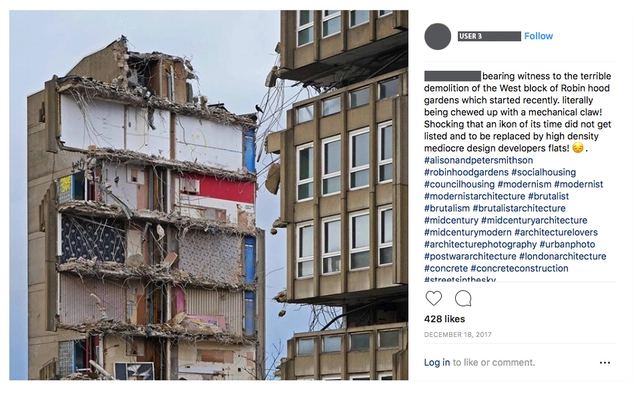
In this article, Beatriz Coeffé Boitano presents a portion of her Master’s thesis in Arts and Cultural Management at King’s College London, titled “Brutalism Revival: media as active spaces of urban memory.” The piece reflects on the documentation and construction of a collective discourse around urban memory through social media platforms, focusing on the demolition of the brutalist Robin Hood Gardens complex by Alison and Peter Smithson.
https://www.archdaily.com/1120198/social-media-in-the-collective-construction-of-urban-memory-the-case-of-number-robinhoodgardensBeatriz Coeffé Boitano
Seoul City Machine / Liam Young for the Shenzhen Biennale (UABB) 2019
What happens when the sensor-imbued city acquires the ability to see – almost as if it had eyes? Ahead of the 2019 Shenzhen Biennale of Urbanism\Architecture (UABB), titled "Urban Interactions," ArchDaily is working with the curators of the "Eyes of the City" section at the Biennial to stimulate a discussion on how new technologies – and Artificial Intelligence in particular – might impact architecture and urban life. Here you can read the “Eyes of the City” curatorial statement by Carlo Ratti, the Politecnico di Torino and SCUT. If you are interested in taking part in the exhibition at UABB 2019, submit your proposal to the “Eyes of the City” Open Call by May 31st, 2019: www.eyesofthecity.net
https://www.archdaily.com/917723/seoul-city-machine-liam-young-for-the-shenzhen-biennale-uabb-2019Liam Young
'Cool Working' by Actiu: A methodology for designing spaces that promote well-being

The new workplace paradigm, driven by digital transformation, is introducing significant changes to employee profiles and the roles people perform within their work environments. At Actiu, these shifts represent an opportunity to turn workspaces into strategic levers of change, allowing organizations to align their transformation goals with the well-being and satisfaction of their workforce.
https://www.archdaily.com/1121132/cool-working-by-actiu-a-methodology-for-designing-spaces-that-promote-well-beingRene Submissions
Digital Marketing for Architects: Common Mistakes You Should Avoid
The architecture industry is a shadow of its former self. In a world where most services are acquired online, architects who ignore digital marketing are digging their own graves. Those who thrive leverage technology and digital marketing tools effectively, establishing a stronger online presence and securing more potential leads—opportunities that will surely pass you by if you are making the following six mistakes:
https://www.archdaily.com/1120643/digital-marketing-for-architects-common-mistakes-you-should-avoidMoisés Osío
From Modernity to Walls of Air: Three Brazilian Pavilions at the Venice Biennale
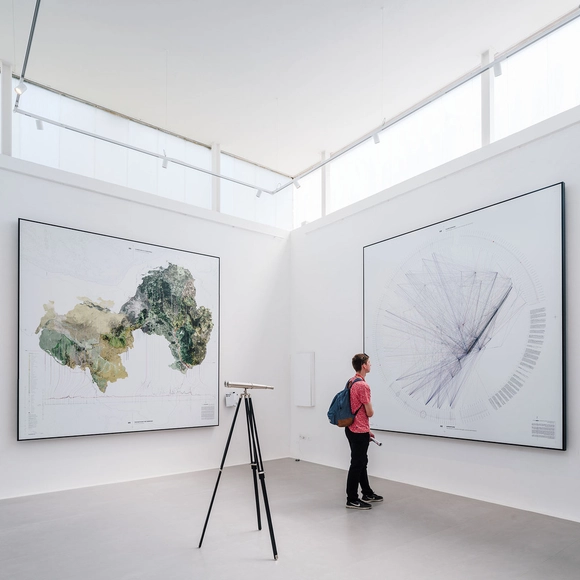
Since 1980, with the first exhibition dedicated exclusively to architecture, titled The Presence of the Past and directed by Paolo Portoghesi, the Venice Biennale has positioned itself as a turning point in the history of contemporary architecture. Since then, 16 editions have occupied the spaces of the Giardini and the Arsenale, addressing themes ranging from the fundamental elements of architecture to the future of the discipline.
https://www.archdaily.com/1121622/from-modernity-to-walls-of-air-three-brazilian-pavilions-at-the-venice-biennaleRomullo Baratto
ArchDaily's Sustainability Glossary : D-E-F
It is expected that within the next few of decades, Earth will have absolutely nothing left to offer whoever/whatever is capable of surviving on it. Although the human race is solely responsible for the damages done to the planet, a thin silver lining can still be seen if radical changes were to be done to the way we live on Earth and how we sustain it.
Since architects and designers carry a responsibility of building a substantial future, we have put together an A-Z list of every sustainability term that you might come across. Every week, a new set of letters will be published, helping you stay well-rounded on everything related to sustainable architecture and design. Here are the terms that start with letters D, E, and F.
https://www.archdaily.com/916886/archdailys-sustainability-glossary-d-e-fDima Stouhi
Brazilian Apartments: 10 Apartments with Exposed Concrete Slabs
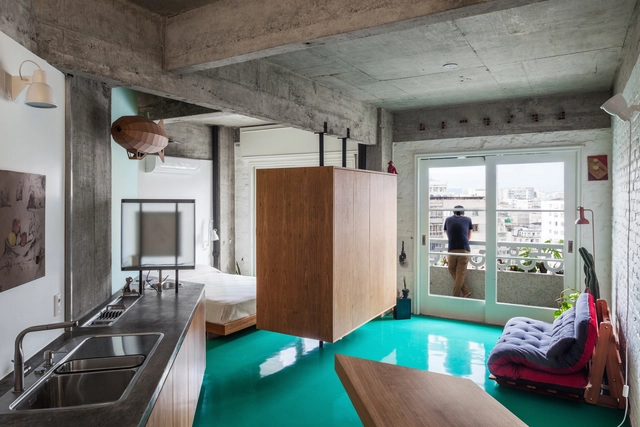
For several months, we have been publishing compilations of Brazilian residential projects across various themes in our Casas Brasileiras series. With this in mind, and considering the diverse challenges and scales that shape architectural practice—and, above all, contemporary living—we are launching our first article in the *Brazilian Apartments* series today. In it, we will explore the design challenges, innovative solutions, and new materialities of this housing typology.
https://www.archdaily.com/1122609/brazilian-apartments-10-apartments-with-exposed-concrete-slabsMatheus Pereira
Primary Habitat Care Clinics: A Politico-Pedagogical Experience in a Social Housing Complex in Buenos Aires
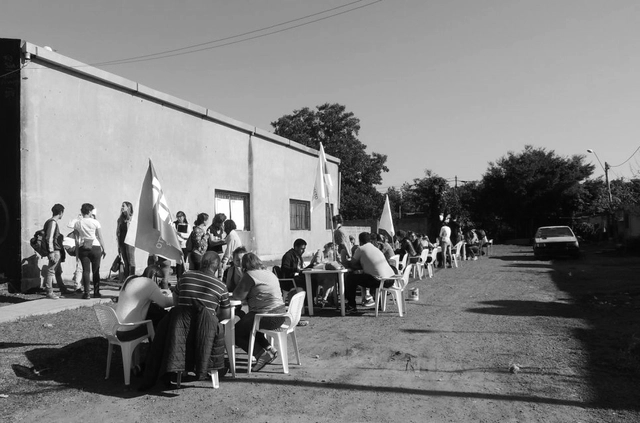
On this occasion, Camila Costa Curta shares her experience with the Proyecto Habitar (PH) collective alongside Julian Salvarredy and Clara Mansueto, addressing the housing crisis in the metropolitan area of Buenos Aires and the teaching and learning processes in contexts of inequality through the 'Primary Habitat Care Clinics' project. Read the full story below.
https://www.archdaily.com/1120989/primary-habitat-care-clinics-a-politico-pedagogical-experience-in-a-social-housing-complex-in-buenos-airesCamila Costa Curta
Coati Restaurant by Lina Bo Bardi and Lelé, through the lens of Manuel Sá
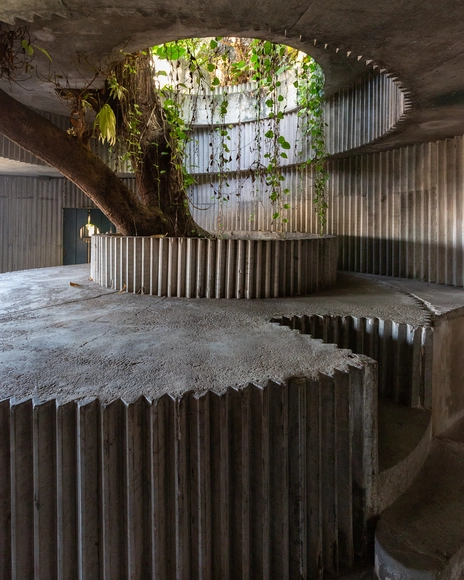
Photographer Manuel Sá shared with us his perspective on the Coati Restaurant, designed in 1987 by Lina Bo Bardi, João Filgueiras Lima - Lelé (precast reinforced mortar), Marcelo Ferraz, and Marcelo Suzuki.
The entire complex—comprising a restaurant, a bar, and three historic houses converted into nine apartments with ground-floor commercial space—is located in the Pelourinho district of Salvador, and is part of the pilot project for the Bahia Historic Center Recovery Plan proposed by Lina. The restaurant is unfortunately abandoned and falling into disrepair, as is the rest of the complex.
https://www.archdaily.com/1121142/coati-restaurant-by-lina-bo-bardi-and-lele-through-the-lens-of-manuel-saPedro Vada
Coati Restaurant, designed by Lina Bo Bardi and Lelé, through the lens of Manuel Sá
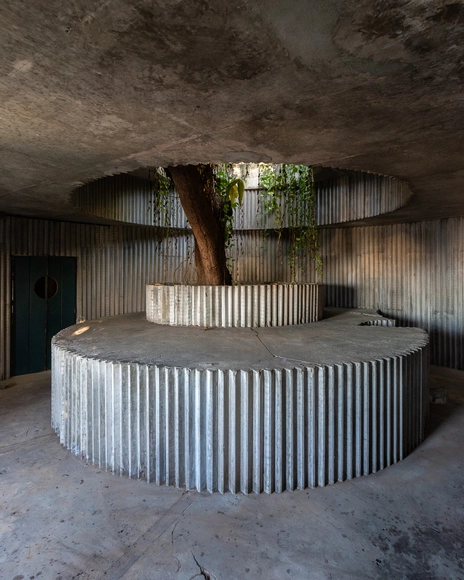
Photographer Manuel Sá shared with us his photo essay of the Coati Restaurant, designed in 1987 by Lina Bo Bardi, João Filgueiras Lima - Lelé (precast reinforced mortar), Marcelo Ferraz, and Marcelo Suzuki. The complete complex—comprising a restaurant, a bar, and three historic houses slated to be converted into nine apartments with ground-floor commercial space—is located in Salvador's Pelourinho district and is part of the Pilot Project for the Recovery Plan of the Historic Center of Bahia, proposed by Lina. Unfortunately, the restaurant is currently abandoned and falling into ruin, as is the rest of the complex.
https://www.archdaily.com/1122300/coati-restaurant-designed-by-lina-bo-bardi-and-lele-through-the-lens-of-manuel-saPedro Vada
The Architecture of Prada Poole: "Why is it this way and not otherwise?"

Many pioneers are ill-timed, arriving too early. José Miguel de Prada Poole [1938-present] is no exception, occupying his place in history as one of the most unique, unconventional, and highly individualistic architects of the 20th century in Spain. A pioneer of pneumatic architecture, his approach was undoubtedly shaped by the pop trends of the era, represented by figures like Archigram, Archizoom, or Team 10. He was always peculiarly interested in the avant-garde's “mobile and deployable work,” specifically exemplified by structures capable of providing variable responses to changing uses. Ultimately, he can be considered one of the first architects to introduce concepts like "sustainability" into a purely architectural context: all of his works minimized energy consumption or were capable of generating microclimates on their own.
https://www.archdaily.com/1120042/the-architecture-of-prada-poole-why-is-it-this-way-and-not-otherwiseBorja Fernández
From Trash to Luxury: Surfacing Products Made from Waste
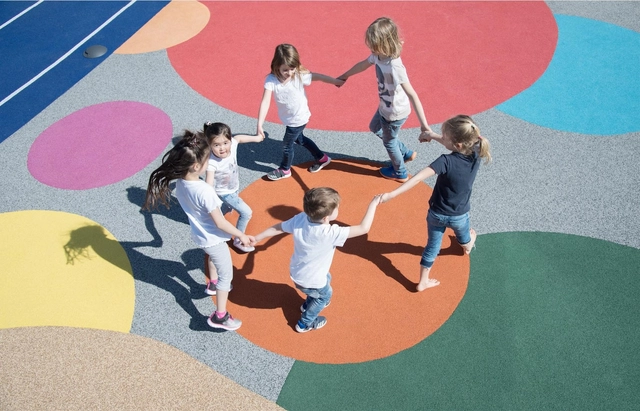
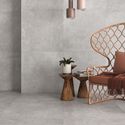
The construction industry drives considerable economic activity worldwide, generating countless jobs and substantial revenue. At the same time, it also carries significant negative impacts, ranging from the depletion of natural resources to high levels of waste generation during both construction and demolition phases. To put this in perspective, in Brazil, Construction and Demolition Waste (CDW) is estimated to account for 61% of all waste generated, while household waste represents 28% [1].
.jpg?1557928245 "Cortesia de Santa Luzia")

https://www.archdaily.com/1122423/from-trash-to-luxury-surfacing-products-made-from-wasteEduardo Souza
What is Healthy Lighting?
| Sponsored Content
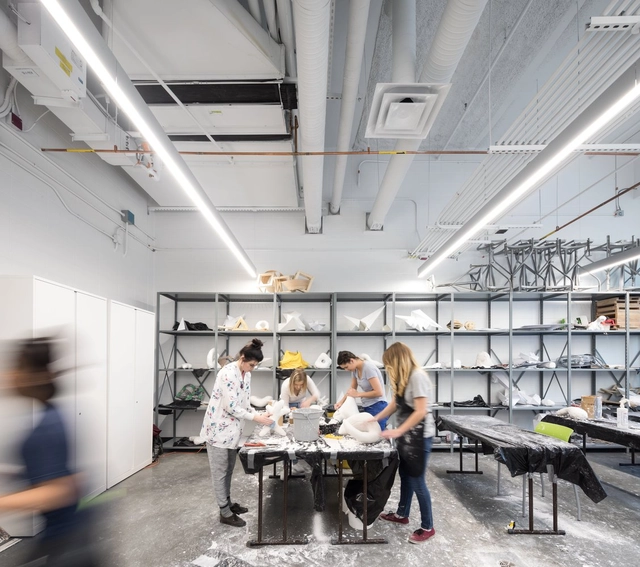

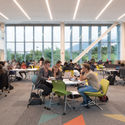

Talieh Ghane researches the interaction between light and health at the California Lighting Technology Center. We talked about the biological vs. visual system of light, how to synchronize your circadian clock for better health, how light is like a drug, and why you shouldn’t be on your phone right before bed (guilty).
https://www.archdaily.com/917345/what-is-healthy-lightingSponsored Post
Autonomous Futures: Are Universities Incorporating New Construction Technologies into Their Agendas?
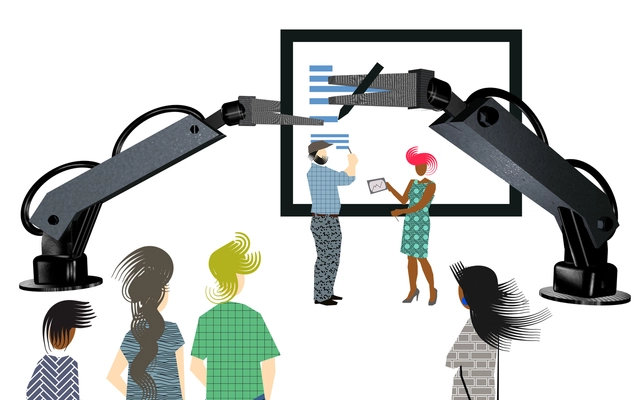
In the article "trends that will influence architecture in 2019," we identified a digital future for the construction sector. Growing search volumes for both BIM systems, modular and prefabricated systems, as well as 3D Printing, Automation and Artificial Intelligence point to upcoming shifts in construction methods. Is architectural academia preparing for this future of human-free construction?
https://www.archdaily.com/1120526/autonomous-futures-are-universities-incorporating-new-construction-technologies-into-their-agendasFabian Dejtiar
The Impact of the "Happiness Industry" on Architecture
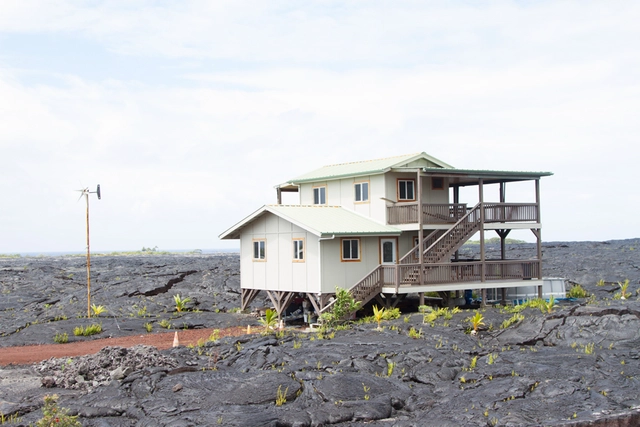
Although The Architecture of Happiness did not gain momentum after its publication in the mid-2000s, the ideology of architecture and well-being has remained a topic of intrigue until today. To further explore this ideology, the Canadian Centre for Architecture (CCA), with the curation of Francesco Garutti, have put together an exhibition that explores how the "happiness industry" has controlled every aspect of contemporary life after the 2008 financial crash.

Our Happy Life, Architecture and Well-being in the Age of Emotional Capitalism is a non-archival show that exhibits work from architects, artists, and photographers. Metropolis' Samuel Medina spoke to Garutti to discuss the notion behind the exhibition, social media, and architecture's new spaces of meaning.
https://www.archdaily.com/917319/the-impact-of-the-happiness-industry-on-architectureDima Stouhi
Paul Goldberger on Ballpark: Baseball in the American City
This article was originally published on Common Edge.
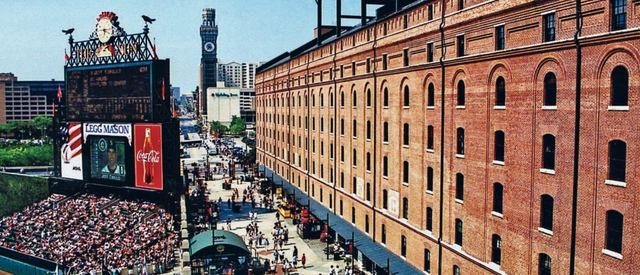
Paul Goldberger has a new book out, released just this week, entitled Ballpark: Baseball in the American City. Taking a page from the Ken Burns playbook, the book looks at a particularly American building type as a lens for looking at the broader culture of cities. Goldberger’s premise is a good one: Ballparks do parallel, to a remarkable degree, trends in American urbanism. They start as an escape from the city, then the city builds up around them. Post–World War II, they escape to the suburbs, then decades later return to the city. Today, privatization of the public realm and real estate development are driving the agenda. Recently I talked with Goldberger about the new book and a whole slew of magical ballparks, both living and long gone.

https://www.archdaily.com/917330/paul-goldberger-on-ballpark-baseball-in-the-american-cityMartin Pedersen
16 Temporary Pavilions that Reflect on Public Space

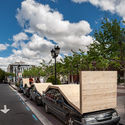
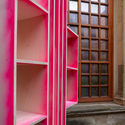
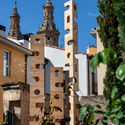
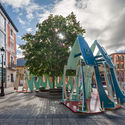

The International Festival of Concentric Architecture and Design is characterized by its temporary displays that take place throughout the city. For this year's festival, 16 exhibits have been created that seek to experiment with spaces both within and outside the city of Logroño, bringing with them a whole new way to see and experience the urban surroundings.
https://www.archdaily.com/916145/16-temporary-pavilions-that-reflect-on-public-spaceDanae Santibañez
Alejandro Aravena Gives His Advice to Young Architects
In a new video released by Louisiana Channel, Pritzker Prize winner Alejandro Aravena shares his advice to young architects. The acclaimed Chilean architect directs those just starting out to be as nerdy, free, and rebellious as possible. By absorbing and understanding as much as you can and then using that knowledge to approach a project with freedom from convention or imagined constraints, Aravena states that it’s a cycle that continually feeds itself. Listening, and particularly listening with an open mind and without preconceptions, is Aravena’s second major piece of advice. “We are not consultants, we are authors...That means to take the risk of doing proposals,” Aravena continues, describing the practice of architecture.
https://www.archdaily.com/917291/alejandro-aravena-gives-his-advice-to-young-architectsMegan Schires