

Produce personalized presentation boards that distill complex concepts into simple visual representations with a few helpful tools and effects.
Articles
How to Create Architectural Presentation Boards
| Sponsored Content
https://www.archdaily.comhttps://www.archdaily.com/catalog/us/products/37234/how-to-create-architectural-presentation-boards-lumion
Veiled in Brilliance: How Reflective Facades Have Changed Modern Architecture
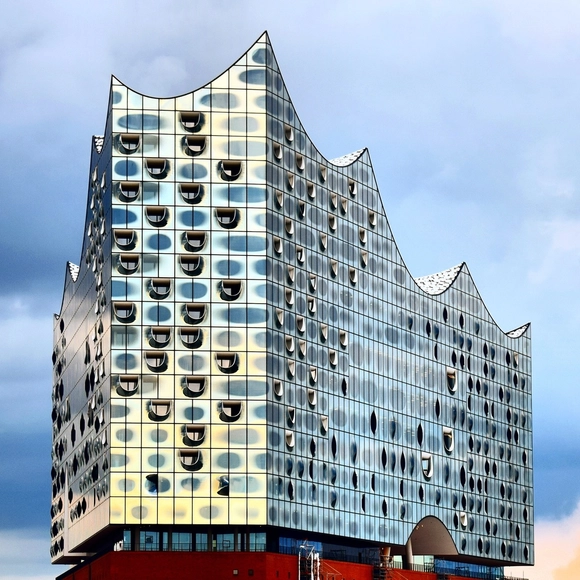
Even as modernism promoted the transparency of glass architecture, many within the movement were conscious of the monotony of large glass facades, with even Mies van der Rohe using elements such as his trademark mullions to break up his facades. But in the years since, countless uniform structural glazing skyscrapers have emerged and bored urban citizens. In response to this, unconventional reinterpretations of facades have gained interest.
Accompanied by the belief that light and brilliance could help in creating iconic architecture and a better human world, glass and metal have been innovatively transformed to create crystalline images. As a result, the locus of meaning in architecture has shifted from the internal space-form towards the external surface.
https://www.archdaily.com/796974/veiled-in-brilliance-how-reflective-facades-have-changed-modern-architectureThomas Schielke
8 Tips on Becoming Successful as a Sole Practitioner

This article was originally published on Redshift as "Go Your Own Way: 8 Tips for a Sole-Practitioner Architect to Build Credibility."
If you’re a sole-practitioner architect, you’ve probably already thought long and hard about the pros and cons of working solo, and don’t feel the burning desire to work in a bustling office environment with large-scale projects and constant collaboration. There are plenty of upsides to running your own practice. “I have it pretty good as a sole practitioner,” says Portland, Oregon architect Celeste Lewis. “I love the flexibility it provides with having a child, parents who are ill, and my passion for being involved in the community.”
But along with the benefits come challenges. One of the biggest is proving you’re worth your salt in a competitive marketplace alongside larger, bigger-reputation firms. Here are eight tips to help sole practitioners—who make up nearly 25 percent of AIA-member firms—build credibility.

https://www.archdaily.com/796973/8-tips-on-becoming-successful-as-a-self-employed-solo-practitioner-architectTaz Loomans
Steven Holl and Jessica Lang’s “Tesseracts of Time” Explores the Relationship Between Architecture and Dance
“Writing about music is like dancing about architecture”
This well-known quote, most often attributed to comedian Martin Mull, compares attempting to explain music’s complex auditory intricacies with words to trying to interpret architectural forms through the motion of the human body – the underlying implication, of course, that it’s fruitless.
But take a closer inspection of the analogy. Music and writing may be media for disparate senses, but, at their height, dance and architecture share a realm of space and light; both perform as formal exercises that relate to the human proportion of the body. Must dancing about architecture truly be an exercise in futility?
A year after premiering at the 2015 Chicago Architecture Biennial, last week Steven Holl and dance choreographer Jessica Lang’s “Tesseracts of Time” made its New York debut at the City Center mainstage. The 21-minute performance, designed as a part of Holl’s ‘Explorations of IN’ project, explores the relationship between performance and environment through four phases, which the designers liken to the passing of the four seasons.
https://www.archdaily.com/797079/steven-holl-and-jessica-langs-tesseracts-of-time-explores-the-relationship-between-architecture-and-dancePatrick Lynch
The Strange Habits of Top Architects

Well-known architects are easy to admire or dismiss from afar, but up close, oddly humanizing habits often come to light. However, while we all have our quirks, most people's humanizing habits don't give an insight into how they became one of the most notable figures in their field of work. The following habits of several top architects reveal parts of their creative process, how they relax, or simply parts of their identity. Some are inspiring and some are surprising, but all give a small insight into the mental qualities that are required to be reach the peak of the architectural profession—from an exceptional work drive to an embrace of eccentricity (and a few more interesting qualities besides).
https://www.archdaily.com/796815/the-strange-habits-of-top-architectsSharon Lam
Project of the Month: Yellow Submarine Coffee Tank
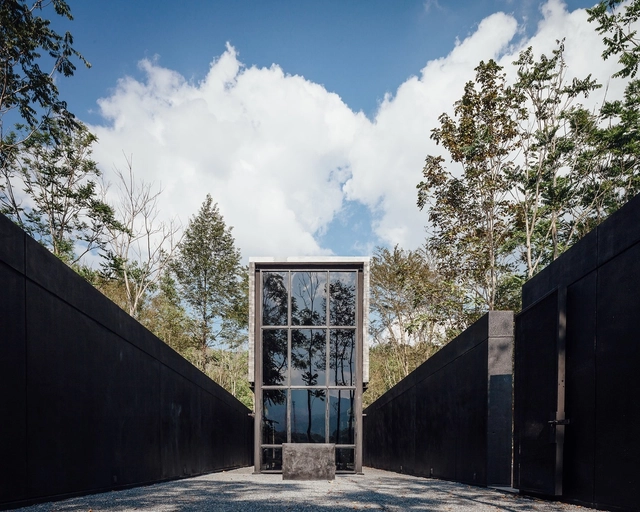
One of the ways that architecture must be integrated into its natural context is by maintaining the sensory experience of the place itself. This can be achieved by assigning value to a site's spatial qualities, textures, and even by generating contrasts, to enhance and differentiate existing elements from man-made ones.
This month we want to highlight Secondfloor Architects, who turn their focus towards the interior of their project and invite us to experience the natural environment as something that is above architecture. They do this not only by designing a building that is settled in the plot, but also by creating a central element which relates to the verticality of the existing trees, while the building's horizontal elements offer a powerfully contrasting material expression.
https://www.archdaily.com/796696/project-of-the-month-yellow-submarine-coffee-tankAD Editorial Team
How Combining Traditional Asian and African Design Could Minimize Diseases in Rural Tanzania
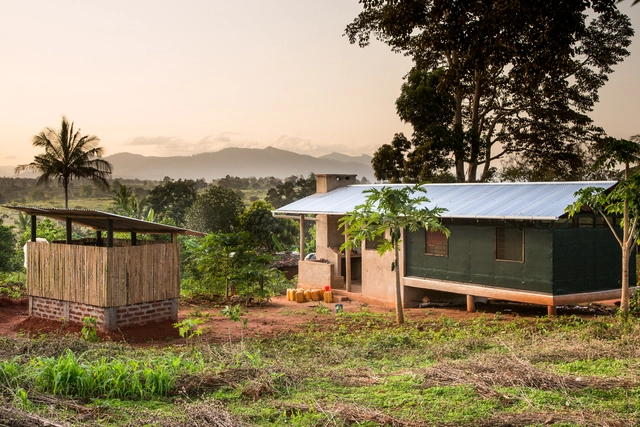
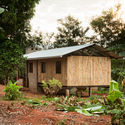
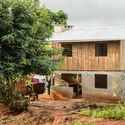
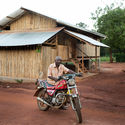
Architecture firm Ingvartsen Architects has turned their gaze towards “cultural exchange architecture”—not with the aim of exploring identity or experimenting with aesthetics, but with a practical purpose in mind: to minimize the spread of diseases. The Magoda Project combines Asian elements with traditional rural African building methods in the village of Magoda, in the Tanga region of Tanzania, taking shape in the form of eight prototype homes. The design goes to show that cultural exchanges in design and architecture can make great contributions towards problem solving for a humanitarian purposes, not only to improve health and hygiene, but also comfort and happiness.

https://www.archdaily.com/796540/how-combining-traditional-asian-and-african-design-could-minimize-diseases-in-rural-tanzaniaAriana Zilliacus
This Kickstarter Campaign is 3D Printing Tokyo in 100 Pieces
Have you ever wanted to look over an entire city from the comfort of your own desk? Do you have a sentimental relationship with the city of Tokyo? If you answered "yes" to these questions, iJet Inc, a 3D print solutions company, along with DMM.com Ltd, have launched a Kickstarter that might be for you.
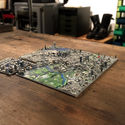
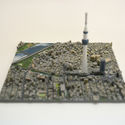
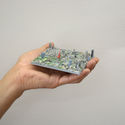
One Hundred Tokyo is a project aiming to reproduce Tokyo’s urban landscape in the form of one hundred ten by ten centimeter 3D printed models. All of the data and equipment needed to gather visual information of the city has been provided by ZENRIN Co Ltd, who traveled around the landscape in specialized vehicles. The 3D models created by this process are then printed on 3DSystems printers, using gypsum powder that is coated in a special resin in order to harden, and then coated once again in resin paint to achieve the full-color skyline.


https://www.archdaily.com/796922/this-kickstarter-campaign-is-3d-printing-tokyo-in-100-piecesAriana Zilliacus
These Stunning Photos Commemorate the 50th Anniversary of Alvaro Siza's Pool On The Beach
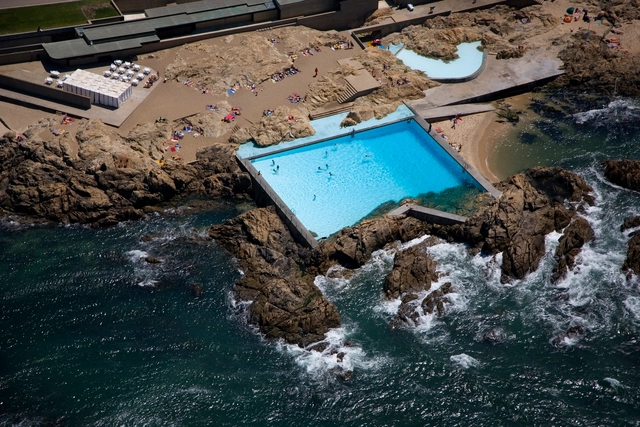
To commemorate the 50th anniversary of Alvaro Siza Vieira’s Piscinas de Marés (Pools on the Beach) in Leça de Palmeira, Portugal, photographer Fernando Guerra shared an interesting photo shoot project with us.
The young Álvaro Siza Vieira, then 26, was called to make salt water pools along the shore at Leça da Palmeira in Matosinhos, Portugal. The facility, which was completed in 1966, is made up of changing rooms, a café and two pools- one for adults and one for children - and became one of Siza Vieira’s most recognized projects, classified as a National Monument of Portugal in 2011.
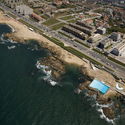
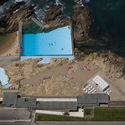
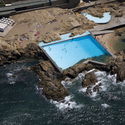

https://www.archdaily.com/796767/these-stunning-photos-commemorate-the-50th-anniversary-of-alvaro-sizas-pool-on-the-beachEduardo Souza
The Tallest Timber Tower Yet: Perkins + Will's Concept Proposal for River Beech Tower

As part of a masterplan along the Chicago River, the River Beech Tower is a residential high-rise which, if built, would be taller than any existing timber building. The collaborative team behind River Beech consists of architects Perkins+Will, engineers Thornton Tomasetti and the University of Cambridge. Currently a conceptual academic and professional undertaking, the team state that it could potentially be realized by the time of the masterplan’s final phases.
https://www.archdaily.com/796649/the-tallest-timber-tower-yet-perkins-plus-wills-concept-proposal-for-river-beech-towerSharon Lam
Welcome to Futureland – Volume #49: Hello World!
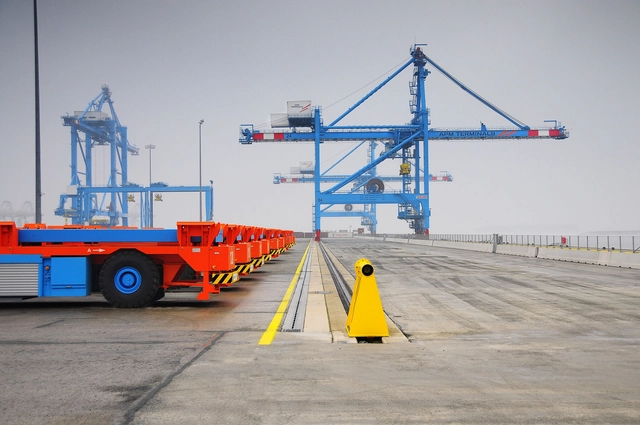
The FutureLand Express departs once daily—three times on Sunday—in front of FutureLand, the information center of the latest extension of the Port of Rotterdam. The bus tours Maasvlakte 2, as the area is called, for seventy-five minutes, showing visitors 2,000 hectares of artificial ground for port activities and ‘nature’. The dredging of 240 million cubic meters of sand for land reclamation was just beginning in 2008; back then, this was, literally, future land. However, FutureLand’s promise of witnessing the future through a bus window goes beyond sightseeing record-breaking civil engineering works. Maasvlakte 2 is also home of the two most technologically advanced container terminals in the world.

https://www.archdaily.com/796810/welcome-to-futureland-volume-number-49-hello-worldVictor M. Sanz
Dream Jobs: Take Our Workplace Culture Survey

Late last year the New York Times published a thought-provoking article about the importance of workplace culture. Adam Grant, professor of management and psychology at the Wharton School of the University of Pennsylvania, explains
When it comes to landing a good job, many people focus on the role. Although finding the right title, position and salary is important, there’s another consideration that matters just as much: culture. The culture of a workplace — an organization’s values, norms and practices — has a huge impact on our happiness and success.
What aspects of workplace culture do our readers most value? What are the elements of office culture that are important to you and push you to be more creative and efficient?
https://www.archdaily.com/796467/dream-jobs-take-our-workplace-culture-surveyAD Editorial Team
Soar over Paris, Madrid, Mexico City and More With These Incredible 360-Degree Panoramas
Since 2009, Mario Carvajal has captured amazing panoramic photographs from his hometown in Colombia as well as top destination spots around the globe. He has climbed the Empire State Building in New York and Colpatria Tower in Bogota, Colombia. Carvajal has captured the geographical beauty of Iceland as well as the intensity of Paris at night.
As Carvajal mentioned in an interview with ArchDaily, images in 360 degrees "allow the viewer to dive into an attractive and interesting 'virtual world' to experience immersive sensations". Of course, with the new surge in popularity these types of pictures have experienced with the hardware becoming more readily available and these images being shared more and more every day through Facebook, Carvajal's work reaches new levels, allowing thousands of people to see the world from above.
Below, we invite you to see his best shots of iconic buildings and landscapes around the world. For a complete experience, we recommend using Google Cardboard.
https://www.archdaily.com/796335/soar-over-paris-madrid-mexico-city-and-more-with-these-incredible-360-degree-panoramasNicolás Valencia
How Barcelona's "Superblocks" Pedestrian Plan Hopes to Return the Streets to the People
Cars have reshaped cities across the world, largely at the cost of everyone outside of a private vehicle. In recent years the "grid city" of Barcelona has been suffering from clogged roads and choked air quality, with urban traffic contributing to the 3500 premature deaths caused by air pollution each year. Beginning in the district of Eixample, proposals laid out in the 2014 Urban Mobility Plan aims to diffuse traffic congestion and reduce air pollution in the city. In a recent film Vox have picked up on one of a number of potential schemes: the Superblock concept (known as superilles in Catalan). According to Salvador Rueda, the Director of the Urban Ecology Agency of Barcelona who developed the plan, these are "grid[s] of nine blocks [in which] the main mobility happens on the roads around the outside, [...] and the roads within are for local transit only."
https://www.archdaily.com/796252/how-barcelonas-superblocks-pedestrian-plan-hopes-to-return-the-streets-to-the-peopleAD Editorial Team
Studio Gang Creates 7 Strategies to Reimagine Civic Spaces As Vibrant Urban Hubs

The Nolli Map made history when it was created in 1748, largely because of its focus on public spaces. With it, Giambattista Nolli highlighted the fact that public places don’t exclusively exist in the forms of streets and parks, but also in enclosed spaces. Yet the importance of our communal areas is constantly being undermined. Our public areas exist to promote inclusion and equal opportunities, but despite that they are being forgotten and abandoned, debilitating their ability to bind communities together.
Given that the main goal of Studio Gang’s newly released, free, downloadable booklet, Reimagining The Civic Commons has been to “help communities everywhere activate their civic commons,” then, it is unsurprising that the booklet includes graphic maps reminiscent of Nolli’s visual aim. The booklet, which arose from work funded by the Kresge Foundation and Knight Foundation, focuses on the advancement of 7 types of “existing assets”: libraries, parks, recreation centers, police stations, schools, streets and transit. Since the start of Studio Gang's research, a larger, $40 million initiative has begun—funded by the JPB Foundation, The Knight Foundation, The Kresge Foundation and The Rockefeller Foundation along with a multitude of local donors—with plans taking shape in Philadelphia, Chicago, Detroit, Memphis and Akron. The graphic guide is designed to offer adaptable, cost-effective and flexible approaches to these spaces, so that it can be implemented over time and in a variety of different communities. Read on for our summary of the report’s 7 strategies for improvement.
https://www.archdaily.com/795905/studio-gang-creates-7-strategies-to-reimagine-civic-spaces-as-vibrant-urban-hubsAriana Zilliacus
White Elephants: Over-Budget, Unsuccessful, and Embarrassing Architecture Projects From Around the World
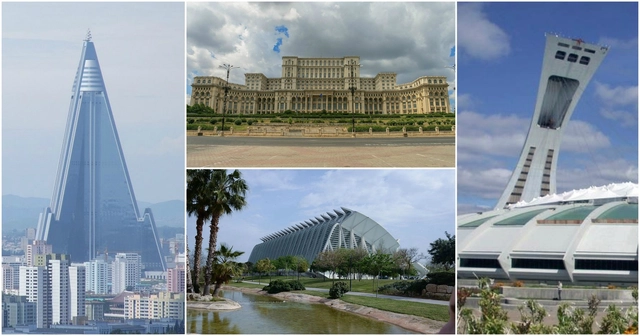
Not every piece of architecture can be an economic and social success. But there is one dreaded term reserved for only the mot wasteful of projects: "white elephants." The term comes from a story of the kings of Siam, now Thailand, who would reportedly gift sacred albino elephants to courtiers they didn't like. Refusing the gift from the king would have been unacceptable, but being sacred, these animals were forbidden from work, leading the courtier to financial ruin—a fact the kings knew all too well.
Of course, in architecture the term "white elephant" is used frequently to disparage certain projects, and whether a project is deserving of such infamy is usually a matter of perspective. Often eyesores or reminders of poorly spent funds, these projects refuse to be forgotten despite few wanting to remember them. Dotted around the world and across history, they all have the same thing in common: although they may (or may not) have once looked good on paper, they probably should have just stayed on paper.
https://www.archdaily.com/795913/white-elephants-over-budget-unsuccessful-and-embarrassing-architecture-projects-from-around-the-worldSharon Lam
Could We Soon Be Living in a Metamaterial World?
Simply put, metamaterials are materials that behave according to their structure, rather than their base material composition. By manipulating their internal microstructures, metamaterials can exhibit properties that would not otherwise be found in a naturally occurring material.
To date, the term has mostly been used to refer to materials which can manipulate electromagnetic waves with an unnatural refractive index. But recently, a different way of looking at metamaterials has been studied by a team at the Hasso Plattner Institute (HPI), who suggest that “so far, metamaterials were understood as materials – we want to think of them as machines.” A series of objects created by HPI that perform mechanical functions through their metamaterial configuration demonstrate this concept of “metamaterial mechanisms.”
https://www.archdaily.com/795723/could-we-soon-be-living-in-a-metamaterial-worldSharon Lam
How 'Little Architect' is Connecting Children With the Future of Their Cities
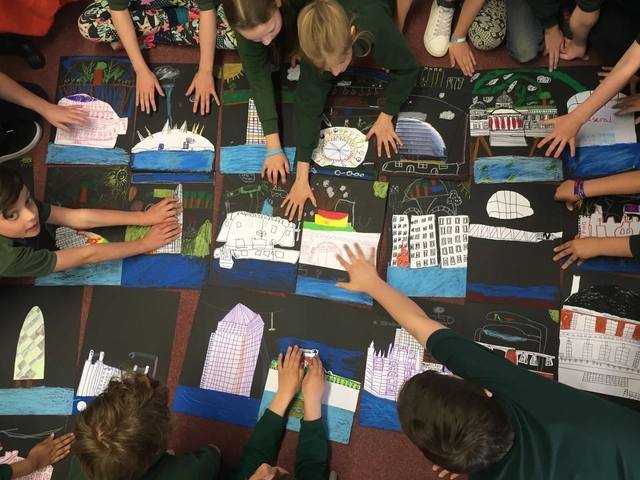
Little Architect is a program at the Architectural Association School of Architecture in London. Created in 2013, the program is focused on teaching architecture to primary school-age children, obtaining amazing results with more than 2,400 children from different backgrounds receiving architectural lessons. They are especially focused on running their program in low-income areas and state schools in London.
"Our responsibility as architects is not just to design but also to bring architecture to society and to create an awareness about urban issues and contemporary architecture within the people who inhabit it," says Dolores Victoria Ruiz Garrido, author and director of the program.
https://www.archdaily.com/794775/how-little-architect-is-connecting-children-with-the-future-of-their-citiesJosé Tomás Franco
Step Inside Zaha Hadid Architects' Antwerp Port House With Thomas Mayer's Photos
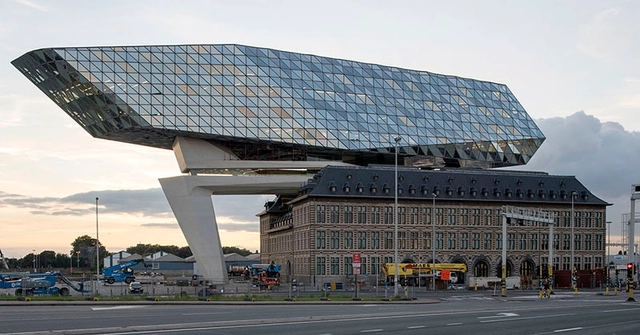
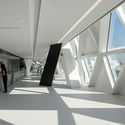
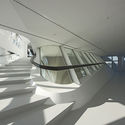
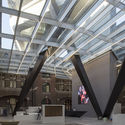
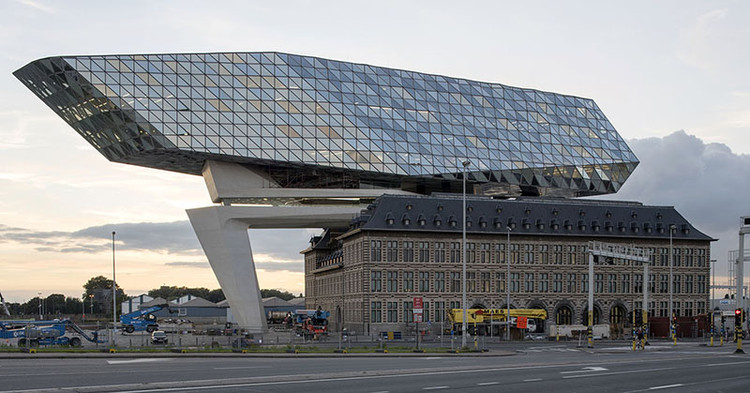
Opening to much fanfare earlier this week, Zaha Hadid Architects' Port House holds a commanding presence over the port of Antwerp. The design combines a listed and formerly derelict fire station, which was restored as part of the project, with an eye-catching glass extension which rises out of the older building's courtyard and thrusts itself towards the water in a dramatic cantilever. In the context of the port, where large infrastructure and colossal machines form the backdrop to everyday functions, the building boldly stakes its claim as the operational centerpiece, providing a space for the Port of Antwerp's 500 employees. Photographer Thomas Mayer visited the building, capturing its striking external presence and investigating how its structural gymnastics translate to the building's internal space.
https://www.archdaily.com/795920/step-inside-zaha-hadid-architects-antwerp-port-house-with-thomas-mayers-photosAAA
5 Initiatives That Show the Rise of Open Source Architecture
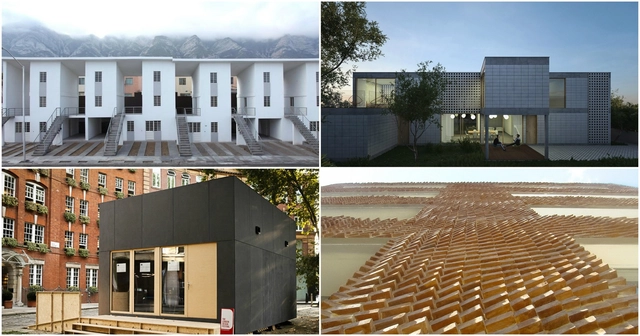
In architecture, perhaps the most remarkable change heralded by the 20th was the radical rethinking of housing provision which it brought, driven by a worldwide population explosion and the devastation of two world wars. Of course, Modernism’s reappraisal of the design and construction of housing was one part of this trajectory, but still Modernism was underpinned by a traditional process, needing clients, designers and contractors. Arguably more radical were a small number of fringe developments, such as mail-order houses in the US and Walter Segal’s DIY home designs in the UK. These initiatives sought to turn the traditional construction process on its head, empowering people to construct their own homes by providing materials and designs as cheaply as possible.
In the 21st century, the spirit of these fringe movements is alive and well, but the parameters have changed somewhat: with a rise in individualism, and new technologies sparking the “maker movement,” the focus has shifted away from providing people with the materials to construct a fixed design, and towards improving access to intellectual property, allowing more people to take advantage of cheap and effective designs. The past decade has seen a number of initiatives aimed at spreading open source architectural design--read on to find out about five of them.
https://www.archdaily.com/795959/5-initiatives-that-show-the-rise-of-open-source-architectureRory Stott
Comic Break: "Overnight Renderings"
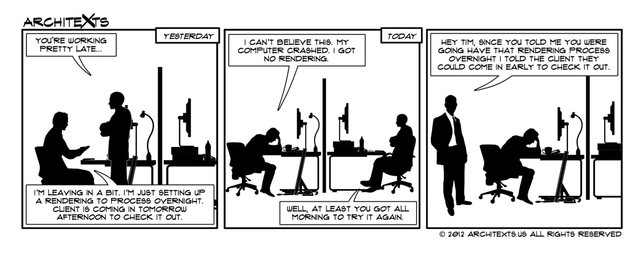
Murphy’s Law, right? The thing is, since technology moves so fast, chances are you’re using slow and/or outdated hardware to build and render your models. Of course, those software crashes always get you when a client needs to see your work. And yet, when you tell the bosses you need better hardware, or updated software, they often scoff and lecture you about the costs. Perhaps one day they’ll understand the struggle of the production staff, but it seems like for now, not so much. So, good luck at the office today, hopefully, everything will work.

https://www.archdaily.com/795893/comic-break-overnight-renderingsArchitexts
Experience the "Brutal Faith" of Gottfried Böhm's Pilgrimage Church in Neviges

This exclusive photo essay by Laurian Ghinitoiu was originally commissioned for the fifth issue of LOBBY. Available later this month, the latest issue of the London-based magazine—published in cooperation with the Bartlett School of Architecture—examines the theme of Faith as "a fervent drive, a dangerous doctrine, a beautifully fragile yet enduring construct, an unapologetic excuse, a desperate call for attention and a timely consideration on architectural responsibility."
In 1986 the Pritzker Architecture Prize announced their first German laureate. In a speech at the ceremony in London’s Goldsmiths’ Hall, the Duke of Gloucester suggested that the prize “may not guarantee immorality,” inferring, perhaps, that not even the most prestigious award in architecture could compete with an œuvre so compact, focussed and enduring as that of Gottfried Böhm – a “son, grandson, husband, and father of architects.”
.jpg?1474570511 "Courtesy LOBBY Magazine. Image © Laurian Ghinitoiu")
.jpg?1474569951 "Courtesy LOBBY Magazine. Image © Laurian Ghinitoiu")
.jpg?1474569428 "Courtesy LOBBY Magazine. Image © Laurian Ghinitoiu")
.jpg?1474569212 "Courtesy LOBBY Magazine. Image © Laurian Ghinitoiu")

https://www.archdaily.com/795837/lobby-magazine-5-brutal-faith-gottfried-bohm-pilgrimage-church-mariendom-neviges-germanyAD Editorial Team
The Sociology of Coliving: How WeLive Creates a "Third Place"
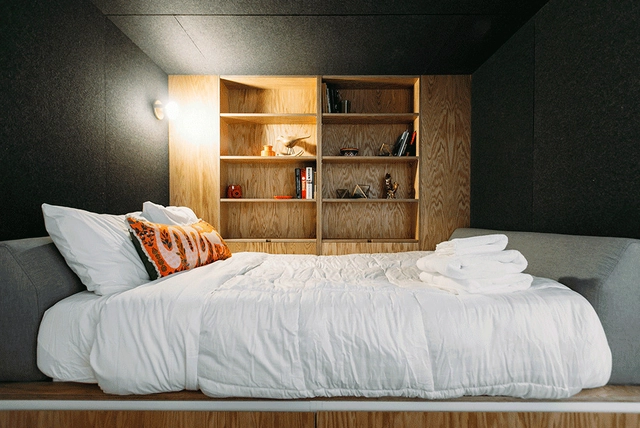
This article was originally published on Autodesk's Redshift publication (formerly known as Line//Shape//Space), under the title "Live, Work, Play: WeLive’s Live-Work Spaces Reveal a 'Third Place.'"
According to urban sociologist Ray Oldenburg, people need three types of places to live fulfilled, connected lives: Their “first place” (home) for private respite; their “second place” (work) for economic engagement; and their “third place,” a more amorphous arena used for reaffirming social bonds and community identities.
This third place can be a barbershop, neighborhood bar, community center, or even a public square. The desire for these three separate spheres drives how human environments are designed at a bedrock level, but increasing urbanism—as well as geographic and economic mobility—are collapsing these multiple spaces into one. The result is a new hybrid building type: a live-work multiunit dwelling that is home, office, and clubhouse.
https://www.archdaily.com/795620/the-sociology-of-coliving-how-welive-creates-a-third-placeZach Mortice
Architecture After the Event Horizon – Volume #49: Hello World!
The following essay by Kazys Varnelis was first published by Volume Magazine in their 49th issue, Hello World! You can read the Editorial of this issue, Going Live, here.
During the last decade, the idea of a technological singularity has passed from science fiction to a plausible prediction of the proximate future. In its simplest terms, a technological singularity will take place when an artificial general intelligence (AGI), capable of modifying its own code, advances so rapidly that subsequent technological progress (and as a result history itself) become as unpredictable and unfathomable as what happens within a black hole. In the most radical vision, the ‘hard takeoff’, within hours or even minutes of artificial intelligence developing the capacity for recursive self-improvement, the intelligence advances so greatly that it fundamentally transforms life on Earth.

https://www.archdaily.com/795795/architecture-after-the-event-horizon-nil-volume-number-49-hello-worldKazys Varnelis
Critical Round-Up: The National Museum of African American History and Culture
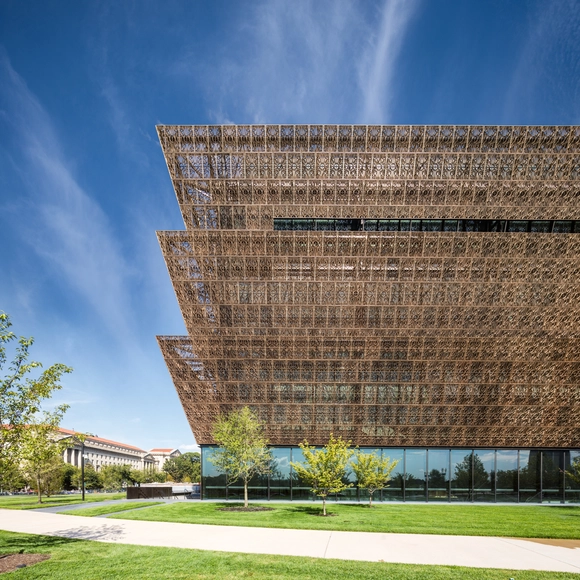
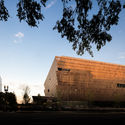
A century since the founding of the National Memorial Association and the start of a campaign by African-American war veterans for a monument of African American culture, the National Museum of African American History and Culture will finally be opened on September 24th. The Museum took $540 million and four years to build, resulting in a striking, and refreshingly unorthodox, architectural construction on Washington DC’s National Mall. The Freelon Adjaye Bond/SmithGroup JJR team, led by Ghanaian-British architect David Adjaye, defiantly broke the white-marble-Corinthian-column convention, opting instead for a bronze-coated aluminum façade bound to provoke a reaction from the critics.

https://www.archdaily.com/795650/critical-round-up-the-national-museum-of-african-american-history-and-cultureAriana Zilliacus