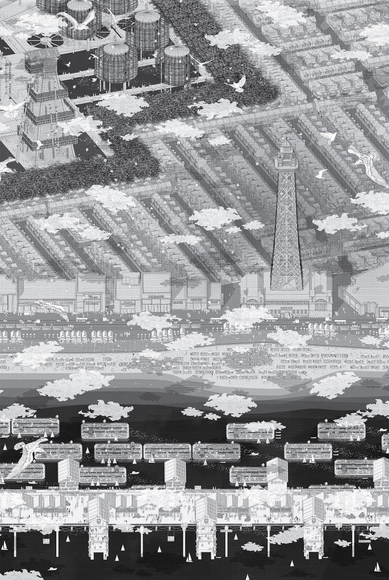
Jason Lamb, a recent graduate from London's Bartlett School of Architecture, has developed a project which centres around the legacy of hydraulic fracturing in the British coastal city of Blackpool. The theoretical thesis, which employs the possibility of Chinese investment prompting the transitory integration of hydraulic fracturing within the city for the exploitation of shale gas, features a number of interesting explanatory illustrations.
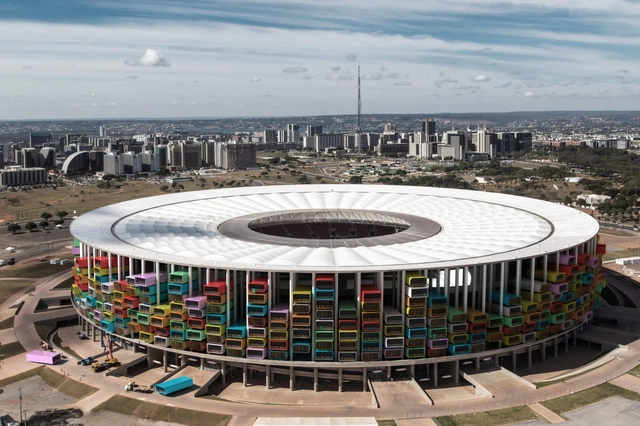
Render of the National Stadium of Brazil, based on a photograph by Tomás Faquini
In these hypothetical designs entitled "Casa Futebol", Architects Axel de Stampa and Sylvain Macaux of 1Week1Project have proposed a reappropriation of Brazil's World Cup venues by inserting housing units of approximately 105 square meters into the existing structures. The designs are tailored to each stadium, allowing them to continue to operate smoothly, with part of the money raised by ticket revenue used to finance the construction and maintenance of dwellings. By either replacing part of the stands with the prefabricated units or by occupying the external facade, Casa Futebol adds a human scale to these monumental buildings.
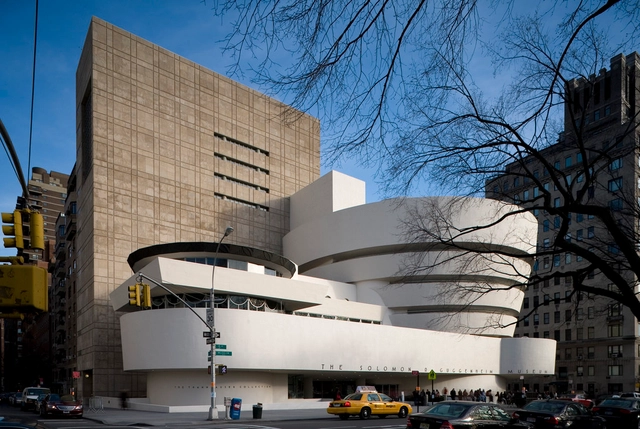
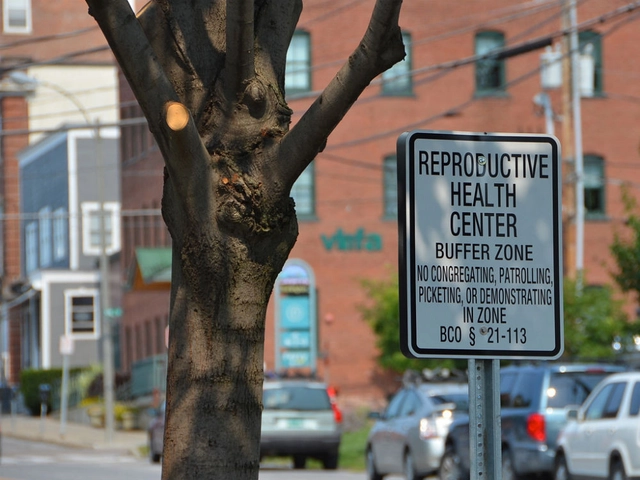
Unable to afford architectural services, many abortion clinics in the US constantly struggle to create a buffer between themselves and the often radical anti-abortion protesters outside their walls (indeed, physical barriers - such as sprinkler systems - are often the only things that make clinic workers and their patients feel safe). To learn more about how architecture can help protect them, head over to Fast CoDesign for their fascinating article.
Every month, INTERIORS Journal analyzes and diagrams the spaces in various films, producing detailed plans for our viewing pleasure. But have you ever wondered just how they do it? If you have, check out their short video on making the plan from Spike Jonze's feature film Her above.
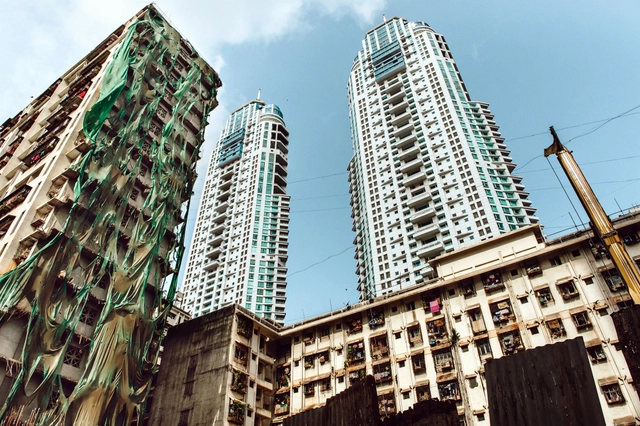
"The Indian poor live in perpetual darkness, while the Indian rich live in perpetual light." This fact is obviously embedded in Mumbai, where luxury condominiums rise in the middle of slums. Many of these extravagant buildings were designed by India's most commercially successful architect, Hafeez Contractor, who believes his arrestive work is the beginning of slum redevelopment. Learn about his crusade and how he's been criticized in this New York Times article by Daniel Brook.
A Rose Fellow working on a community design project. Image Courtesy of Enterprise Community Partners
Shelter is a basic human need, but over 11 million families cannot afford a safe and stable place to live. In a crusade to change this sad fact, the Enterprise Rose Fellowship gives socially-minded architects the tools they need to pursue careers in affordable housing and community development. For more on the learning opportunity, head over to Next City and click here.
In celebration of the Brazil World Cup, architect and illustrator André Chiote has created a series of illustrations featuring the tournament's most iconic stadiums. Comparing the social importance of these stadiums to cathedrals, Chiote believes that "the new architectural objects are landmarks in the cities that will perpetuate in the future as a cultural and social legacy," and there are few better ways to envision this legacy than to treat the structures with his abstracted, colorful aesthetic - in Brazilian green and yellow, of course. Check out the full illustration set after the break.
Radio Broadcasting Station, Detroit by Knud Lonberg-Holm. Image Courtesy of Metropolis Magazine
In one of his final interviews, Knud Lonberg-Holm quipped, "I've always been annoyed by rummaging through the past; the future interests me much more." Not one to promote himself, the modernist architect all but disappeared after retirement, seemingly taking his contributions to architecture with him. After years of neglect, investigative research has finally unearthed just how influential Lonberg-Holm was. To learn about how he shaped information design (among many other things), continue reading Paul Makovsky's exclusive article on Metropolis Magazine.
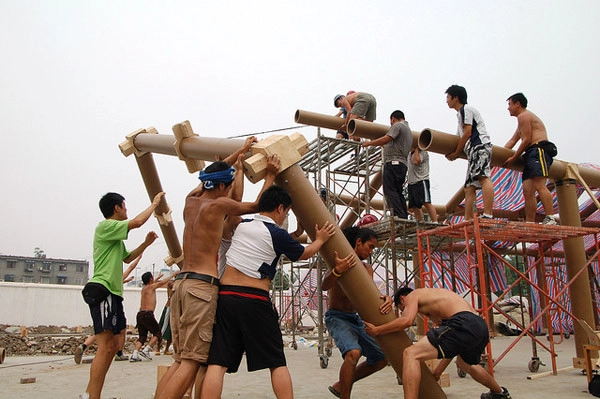
Workers in Chengdu, China, assemble the Hualin Temporary Elementary School, designed by the Japanese architect Shigeru Ban after the 2008 Sichuan earthquake. Image Courtesy of Forgemind ArchiMedia
British writer Tim Abrahams finds Shigeru Ban's architecture "kooky, Middle Earthy, Hobbity" – an opinion which earns him the title of "idiot" in the eyes of newly appointed Architecture for Humanity Executive Director Eric Cesal. In an article for the Boston Review, Stephen Phelan uses the pair's opposing opinions to illustrate the Pritzker Prize winning architect's perceived failures and successes. Read his very engaging take, here.
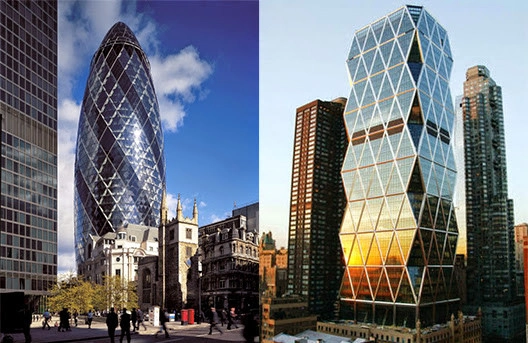
Gherkin, left. Hearst Tower, right. "Norma Foster's Hearst Tower in New York seems less at home than does Britain's 'Gherkin' in London"
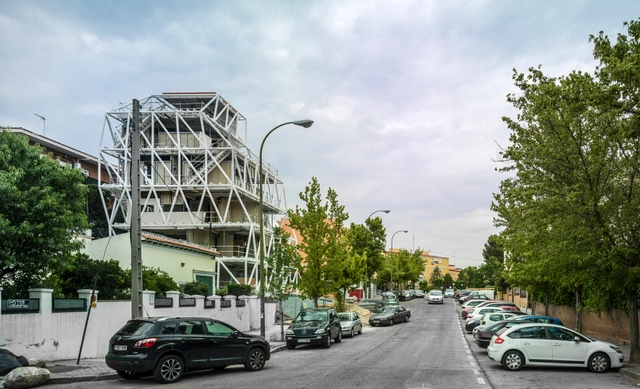
"Today, European architects regularly work in the United States, Americans work in Europe, and everybody works in Asia. This globalization of architecture would seem like a good thing for us and it's obviously good for (many) architects. [...] Architecture, however, is a social art, rather than a personal one, a reflection of society and its values rather than a medium of individual expression. So it's a problem when the prevailing trend is one of franchises particularly those of the globe trotters: Renzo, Rem, Zaha and Frank. It's exciting to bring high-powered architects in from the outside. [...] But in the long-run it's wiser to nurture local talent; instead of starchitects, locatects."
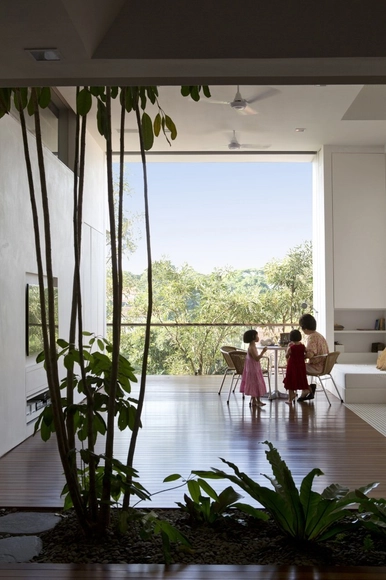
Multigenerational homes are nothing new. But with life expectancy increasing, young people staying longer in their childhood homes, and Baby Boomers aging, children, parents, and grandparents under the same roof might soon become the norm. To explore this possibility, Metropolis Magazine asked four design firms to consider what multigenerational living might look like in the future. Check out each unique take on sharing resources and space by reading the article here.
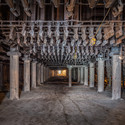
Ten years after closing its doors, the Brooklyn Domino Sugar Refinery's iconic forty-foot tall yellow sign is still legible along the waterfront, even from parts of Manhattan. The refinery, built in 1882, was once the largest in the world, producing over half of the sugar consumed in the United States. Sadly, the historic landmark will soon be demolished, making room for luxury living — and a handful of apartments for affordable housing, at mayor Bill de Blasio's insistence. As time runs out, a photographer, photography editor, and historian are vying for the opportunity to thoroughly document the site and publish a book entitled Sweet Ruin: Fossils and Stories of the Brooklyn Domino Sugar Refinery.
The photographer, Paul Raphaelson, was recently given a day's worth of access to the site by its owner, real estate development company Two Trees Management. Raphaelson was able to visit and photograph three of the refinery's buildings, capturing the sugar-coated interiors of the hauntingly cavernous spaces. He hopes to revisit the site before it's too late to take more photographs with the guidance of his two collaborators, photography editor Stella Kramer and historian Matthew Postal. For the compelling images and more details about the future publication, keep reading after the break.
Before starting down the arduous path of the life of a designer, those who have been there before you will insist on one thing: you must be passionate about what you do. Music brought Nathanael Balon to California, where he ended touring with his neighbor Sonny Moore (you probably know him as Skrillex). But 40 days into his second world tour he woke up wishing he were doing something else. Nathanael dreamed of building.
His desire to "build beautiful things" culminated in the creation of WoodSmithe, a company that designs and constructs retail environments, window displays and trade-show booths. Get a glimpse into Nathanael's courageous move in the short video above and read on to find out about a group of people who have made bold decisions to follow their dreams.


_920_613_80.jpg?1403469613&format=webp&width=640&height=580)

.jpg?1403035475&format=webp&width=640&height=580)