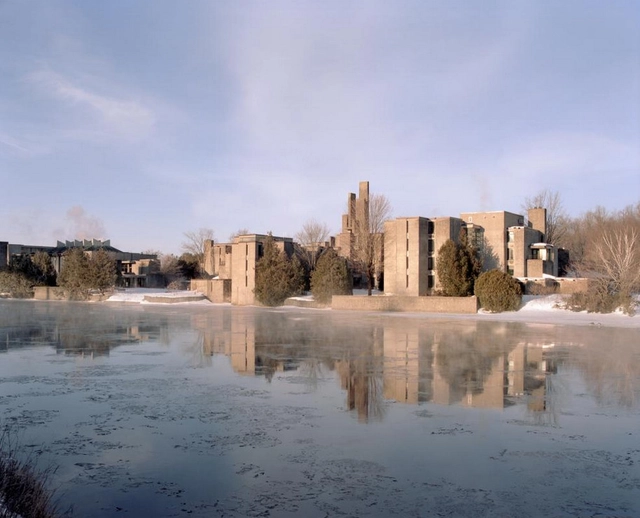
“You don’t need big and flashy starchitecture to make a statement; the most powerful architecture is often that which blends into the landscape and reveals itself slowly.” In this article on Monocle, written by Nelly Gocheva, the late Canadian architect Ron Thom is remembered for just this reason. To learn more about Thom's architectural approach and works, including his masterplan for Trent University, which celebrates its 50th anniversary this year, read the article here.
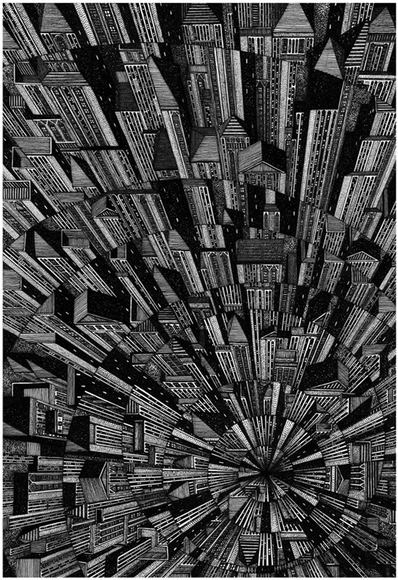
Vertigo by Tom Radclyfe. Image Courtesy of drawingarchitecture.tumblr.com/
Tumblr is full of well curated blogs featuring creative works from architecture students, professionals, and enthusiasts; Drawing ARCHITECTURE is one of these blogs we’ve found to be particularly intriguing. From charcoal masterpieces to computer renderings, the architectural drawings featured on this Tumblr are stunning.
Check out some of our favorite selections, after the break...
On April 21st, ArchDaily tweeted about watching keynote speaker Shigeru Ban kick of the Cities for Tomorrow conference in New York. In his first appearance since winning the Pritzker Prize, he addressed how we should approach urban planning and development today with architecture critic Michael Kimmelman. To watch videos - of Ban as well as speakers such as Vishaan Chakrabati, Shaun Donovan, and Janette Sadik-Kahn discussing the future of our cities - click here.
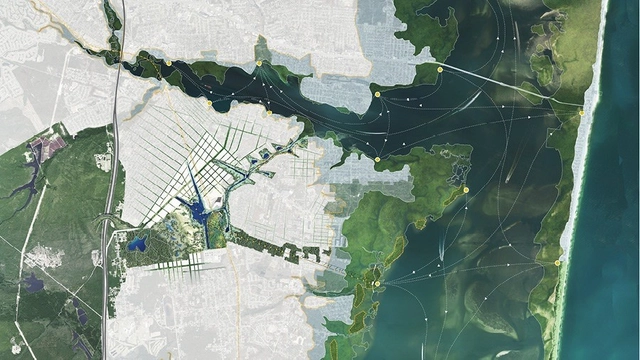
An aerial rendering from the Sasaki/Rutgers/Arup team shows Barnegat Bay, New Jersey. A threatened barrier island is visible on the right, and in the middle is a redeveloped area where people could, in theory, move. Image Courtesy of The Atlantic Cities
If you lived in a region repeatedly devastated by storms, would common sense be enough to make you leave your memories behind? Two of the ten proposals for the Rebuild by Design competition (which included proposals from OMA and BIG) tackle this issue, providing designs that compel communities to move to safety. To learn more about this sensitive and increasingly relevant social and political issue, known as "Managed Retreat," check out James Russell's article on The Atlantic Cities.
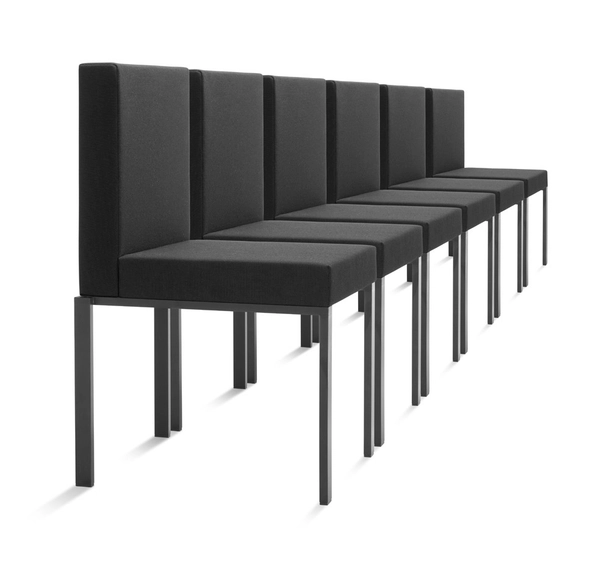
JeanNouvelDesign, the studio led by French architect Jean Nouvel, presented their new collection of furniture during Paris Design Week. Among them is the Oxymore chair, designed by JeanNouvelDesign and produced by specialty group-seating manufacturer Figueras International Seating. This fetishistic chair, a result of research conducted at the Figueras Design Centre, has a singular cubic appearance that provides extreme comfort, softness. It is precisely this unapparent relationship between look and feeling that gives the seat its name—since an oxymoron means a union of contradictory elements.
A collection of 41 interviews conducted by students at the Strelka Institute, entitled Future Urbanism, is now available online. The interviews feature architects, urban planners, sociologists, researchers, and other professionals from fields related to urban studies, emphasizing the Strelka Institute's mandate for interdisciplinary thinking. To take a look at the interviews, see here.
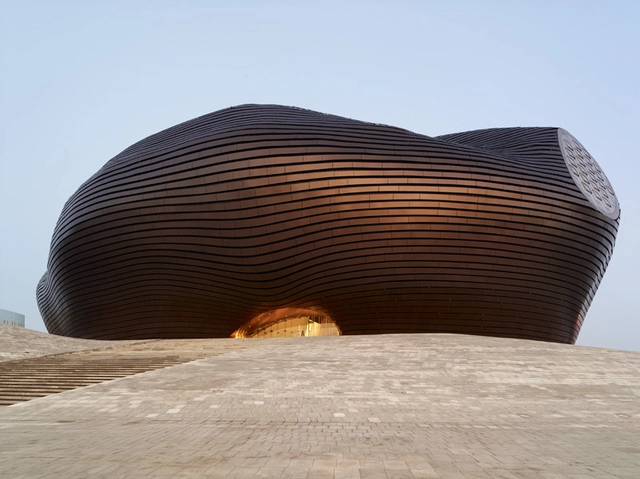
"I have to believe that one day, the only people doing architecture in China will be Chinese architects. That’s one trend I watch, because I’m not a Chinese architect!" This is the declaration Ben Woods, an American architect living and working in China, made during a recent interview with Forbes. In honour of his prediction, work, and personal commitment to never design a skyscraper, we've rounded up a list of fitting cultural projects in China by Chinese architects. See Pritzker Prize winner Wang Shu's Ningbo Historic Museum, MAD Architect's Ordos Art & City Museum, the Jinchang Cultural Centre, the Oct Design Museum, and the Spiral Gallery II. For more information on this post's inspiration, check out the full interview and article here.
The Noguchi Museum will be honoring architect Norman Foster and contemporary artist Hiroshi Sugimoto as the first recipients of the Isamu Noguchi Award on Tuesday, May 13. The award acknowledges individuals whose work relates to landscape architect and artist Isamu Noguchi, who promoted a multi-disciplinary, collaborative approach to the arts and was committed to innovation, global consciousness, and Japanese/American exchange. For more information on the benefit, see here.
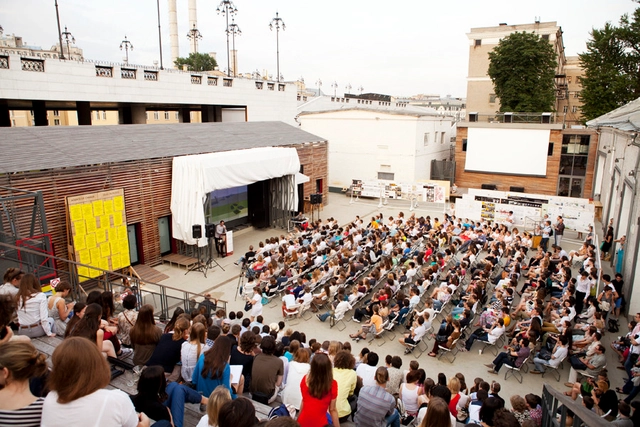
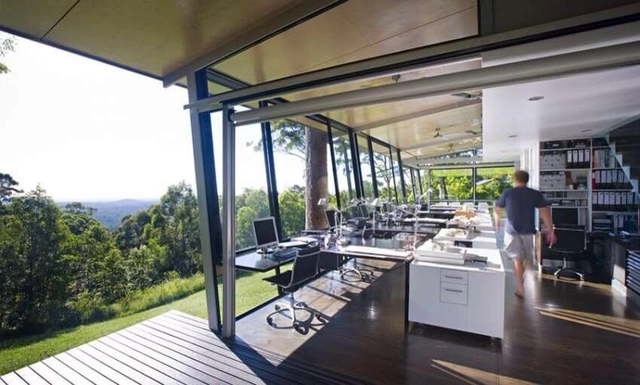
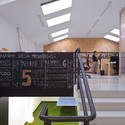
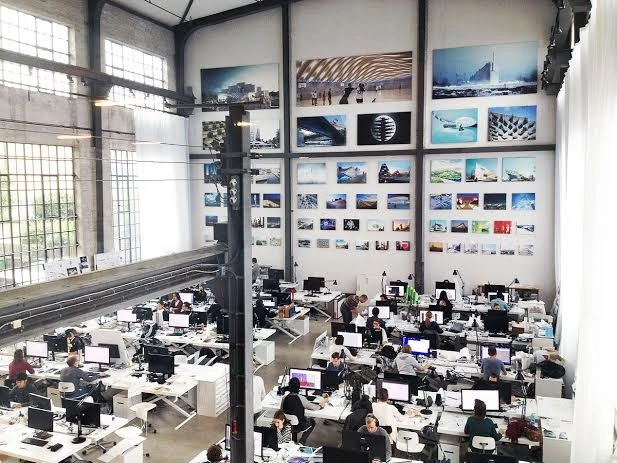
In 2009 we wanted to find out where our readers work and create. We asked, you responded, and the results gave us a fascinating insight into your daily lives. And so, a few weeks ago, we once again asked our readers to send us pictures of their workspaces. We received submissions from all over the world – from beachside desks to a stark warehouse space to a stunning gallery.
Take a look at these creative spaces - you may even recognize your own workplace, or one quite like it - and keep following and participating by using the #wherewework hashtag on Facebook or Twitter. Thanks for your help!
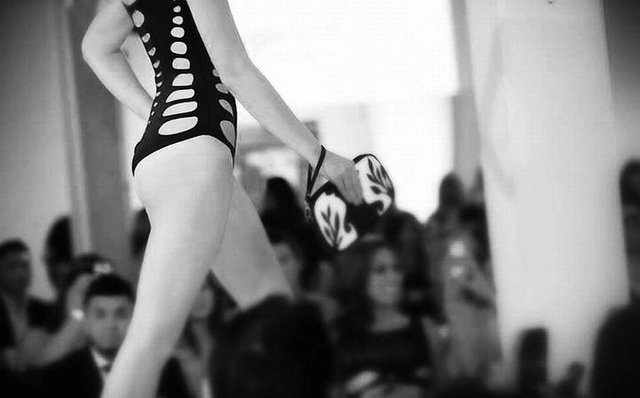
Le Corbusier donned signature glasses; Frank Gehry designed footwear; early twentieth-century architect Adolf Loos even wrote "Why A Man Should Be Well-Dressed." Now Zaha Hadid is making her way into swimwear. But are the nuances of fashion too much for architects to dip their feet into? Read the full article at the Telegraph.
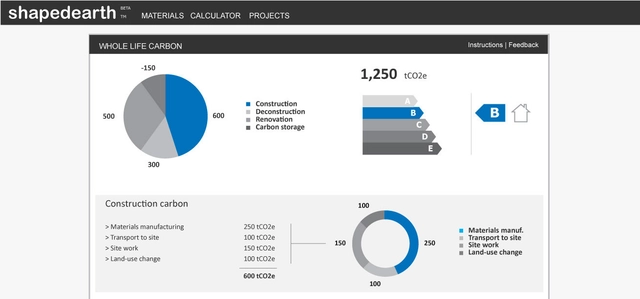
“Green” measures nothing. Which is greener: a building that saves water or a building that uses certified carpet? There is no obvious answer to this question - this is why trying to quantify “green” is biased and leads nowhere. Using carbon as a metric, on the other hand, makes sense. This is something you can accurately measure and therefore reduce. Going “low-carbon” not only contributes to fighting climate change but also totally redefines construction (choice of materials, energy sources, etc.).
This is why shapedearth.com, the first free online calculator for assessing the whole life embodied carbon of building projects, is such a useful tool.
In 2009 we reached out to our readers across the globe and asked "What does your office look like?" From transparent tubes (like Selgas Cano's popular studio) to wide-open spaces (like BIG's offices in Copenhagen), we learned that the projects we publish every day are produced in all kinds of settings. But has anything changed over these few years?
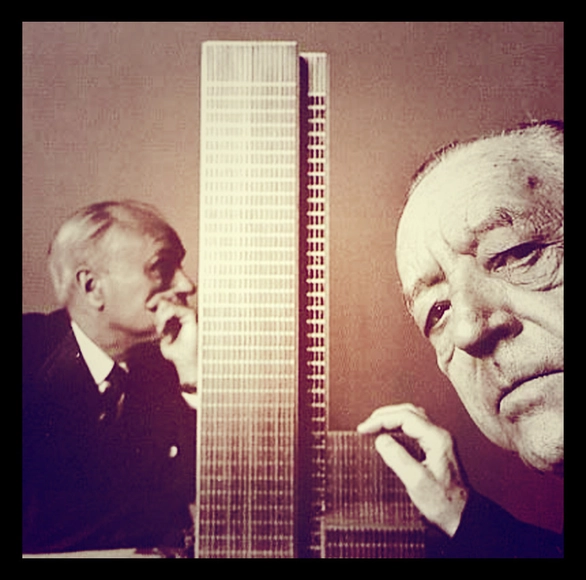
Mies van der Rohe & Philip Johnson in front of a model of the Seagram Building in 1955. Image Courtesy of Society of Architecture Photography (SAP)
In response to the recent popularity of "selfies" in social media, The Society of Architecture Photography (SAP) has racked their archives to release a few rare images of what the society is calling "architecture selfies" - images taken by architects in front of their works. SAP's Director, Chantelle Archambault, told us: "We weren't sure if we would find any at all, but we were pleasantly surprised to find seven - even one of Le Corbusier at Chandigarh in 1961. I suppose it's only natural - architects consider travel an integral part of their creative process, and a pilgrimage to a built work is one of the most rewarding experiences an architect can claim."
See all the newly released "architecture selfies" - including photographs of Mies van der Rohe, Louis Kahn, and more - after the break...
Federico Babina, the illustrator behind the extremely popular ARCHIST and ARCHICINE, has just released his latest project: ARCHIPORTRAIT, "an artistic representation of 33 architects, in which the faces and the expressions are made of their architecture." As Babina says, "The intent is to display the likeness, personality, and even the mood of the protagonist through his aesthetic."
See all the portraits - from Corbu to Foster to Gehry and more - after the break.