"We prepared carefully and picked an appropriate date, the Chinese New Year day. At that time the security was less watchful, workers were on vacations, and cranes did not work. We got to the crane at around midnight. [...] The result you can see in our new video."
Those are the rather unassuming words of Vitaliy Raskalov, a Ukrainian "roof-hacker, urban-explorer, blogger" who has just pulled off an extraordinary, jaw-dropping stunt (way more incredible than his humble words would suggest).
Raskalov and Russian photographer Vadim Mahora broke into and climbed the Gensler-designed Shanghai Tower, soon to be China’s tallest and the world’s second tallest skyscraper at 632 meters (2,074 feet) high. Although the tower will eventually boast the world's fastest elevators (reaching 40mph), the pair had to climb the 120 flights of stairs by foot (taking them about two hours); they then spent another 18 hours sleeping and waiting for the weather to clear. The staggering resulting images show not just the dizzying heights, but also fantastic views of the adjacent Jin Mao Tower and Shanghai World Financial Center (together, the trio of buildings that are re-defining the Shanghai skyline).
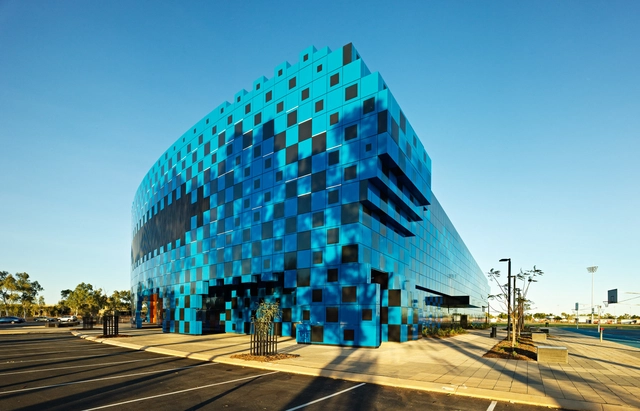
In honor of the 48th annual NFL Super Bowl, we at ArchDaily are rounding up 5 astounding arenas for your viewing pleasure (way more captivating than those silly commercials): the lavishly leviathan Lasesarre Football Stadium by NO.MAD, the curiously colossal BBVA Compass Stadium by Populous, the daintily dolloped Ice Dome Bolshoy by SIC Mostovik, the tetragonally titanic Olympic Tennis Centre by Dominique Perrault Architecture, and the whimsically whopping Wanangkura Stadium by ARM Architecture. For more Stadium Round Ups, follow this link.
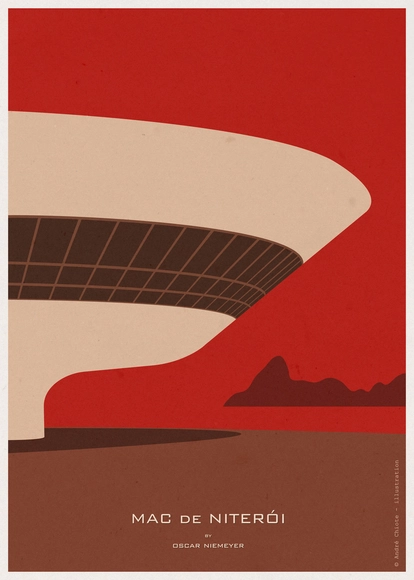
André Chiote, a Portuguese architect renowned for designing illustrations that represent some of architecture’s most iconic buildings, has agreed to give five lucky winners a copy of their favorite print. To participate, browse through Chiote’s collection on his online shop and tell us which illustration you like the best in the comment section below.
You have until Wednesday, January 29th to submit your comments. Winners will be contacted the following day. Good luck!
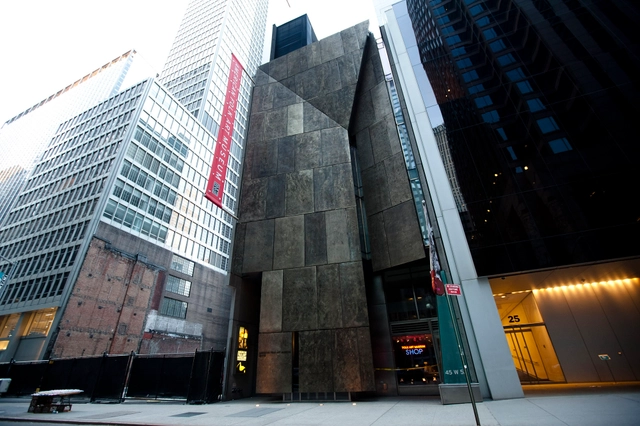
The flurry of criticism that erupted when MoMA announced its plans to demolish the American Folk Art Museum (in its new plans for expansion, designed by Diller Scofidio + Renfro) has yet to settle. After the break, we offer a more complete round-up of the critics' reactions - including Paul Goldberger's of Vanity Fair, Michael Kimmelman's for The New York Times, and more...
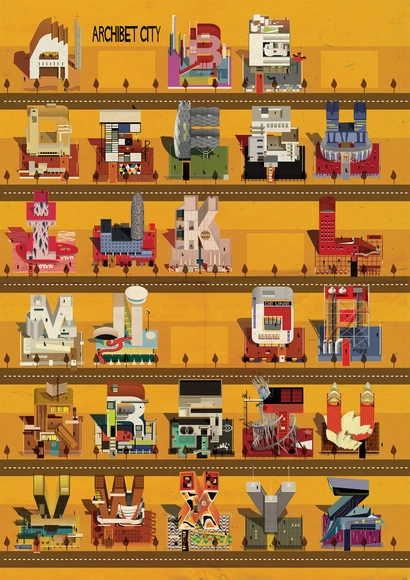
Barcelona-based architect and graphic artistFederico Babina is at it again, this time creating an imaginary “Archibet City” guided by the language of architecture. From Alvar Aalto’s Riolo Parish Church to Zaha Hadid's Library and Learning Centre in Vienna, the collection reimagines 26 famous works of architecture into a set of letters that, as Babina describes, expresses the “heterogeneity of forms and styles” that make up our profession. Each letter is drawn according to the interpretation of an architect’s style, forming part of the cityscape that Babina refers to as “Archibet”.
Architectural photographer Yohan Zerdoun has sent us this lovely video that explores the Peres Center for Peace, by architects Massimiliano & Doriana Fuksas, in Tel Aviv. With a keen eye for detail and an understanding of the building's human scale, Zerdoun sets up each shot so that the architecture - and its gorgeous context - can be truly appreciated. Enjoy!
Gautam Bhatia is an architect based in New Delhi and one of the most well-known architectural writers in India, having written for The New York Times, Outlook magazine and Indian Express.
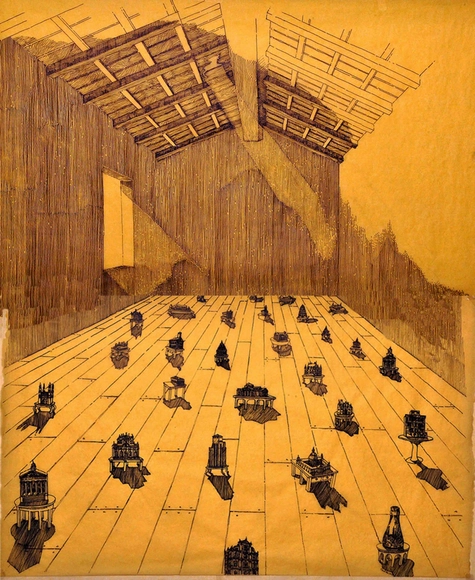
We live today the way we do because we know no other. Our lives fit the defined patterns of homes, streets, neighborhoods, cities. As an architect I try to understand and explore - through drawing - different possibilities of building and landscape. More and more, drawing has taken me away from the conventions of architecture, into more abstract realms. Drawing has helped define space as it doesn’t exist, and perhaps as it should. Not in a utopian way, but one that tries merely to describe a different way we may live.
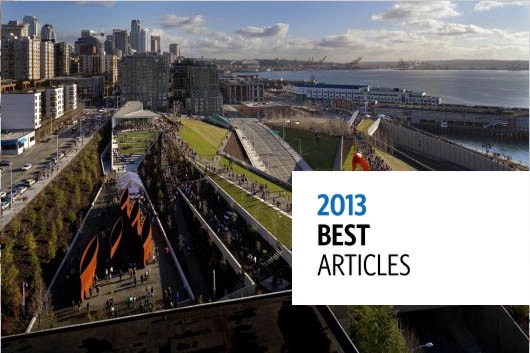
The following 20 articles are what we at ArchDaily consider the Best of 2013. They may not have received the most traffic, but they posed fascinating theories about the state of architecture and urbanism today, they gave us insight into the creative processes of innovative architects (from Bjarke Ingels to Peter Zumthor) and, most of all, they provoked us to question: What does architecture mean? For us architects, and for the world?
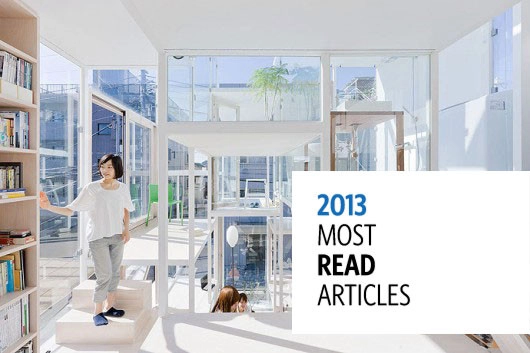
It's that time of year again! The time when we round-up what you, our dear readers, most enjoyed this year. The following ten articles - from fun lists (30 Architecture Docs to Watch in 2013) to thought-provoking looks into the state of the architecture profession (Are Renderings Bad for Architecture?) - caught your attentions and provoked some great comments. See them all - including our record-breaking #1 article - after the break.
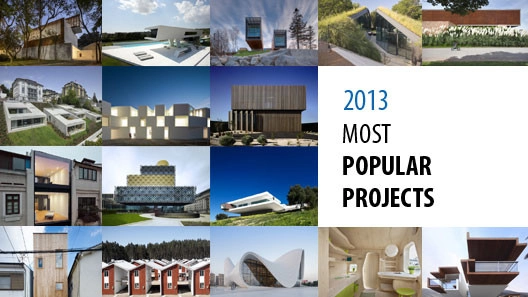
From Zaha Hadid to Sou Foujimouto, from houses to pavilions, from South America to Europe; here are–as you were probably expecting–the 20 most popular projects of 2013.
ArchDaily is in need of an architecture-obsessed, history buff to delve into the world of ArchDaily Classics for Spring 2013 (January 15th – May 15th)! If you want to spend your days researching/writing about the best architecture around the globe – and work for the world’s most visited architecture website – then read on after the break…
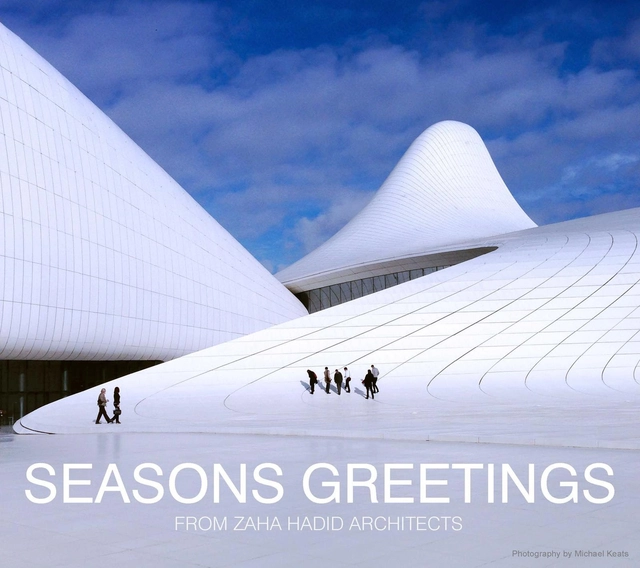
Every year architects from around the world share their holiday greetings with us, applying their architectural creativity to an e-card format. Here we share some of our favorites from this year.
Happy holidays from all of us at ArchDaily to you!
Courtesy of http://www.archimelie.com/ - built with IM Creator
It’s unavoidable. In today's world, in order to reach out to your target audience and promote your services, you need to have a website. And just any won’t do. Keep in mind that if you are an architect, people expect creativity out of you and from your website. An efficient, well-built, and good-looking website is the most convincing marketing tool you have at your disposal.
So, we’ve come up with five tips that explain (1) why a good website is so important; (2) what you should have in mind when creating your website (including what to avoid!); and (3) how to get started immediately, after the break...
https://www.archdaily.com/455207/5-tips-for-creating-the-perfect-website-for-your-firmSponsored Post
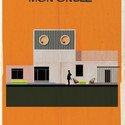
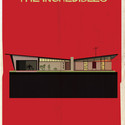
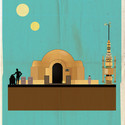
Federico Babina, the mastermind behind ARCHI-PIX (Parts One and Two) has come up with a fun new series - ARCHICINE - representing iconic works of architecture that have played protagonists on film. We've rounded up all the illustrations -check them out after the break!
When I was student in New York City, I would often spend hours thumbing through the titles of books at the Strand Bookstore. One day I came across Latin American Architecture Since 1945. The black and white book, written by Henry-Russell Hitchcock in 1955, showed a world of precise modernism. The buildings, situated in a tropical climate, set atop pilotis with gardens flowing in and under them, with brise soleils filtering the strong equatorial light, were perfect. I often would stare into the pages and attempt to create similar projects on my drafting board.
Fifteen years later, on a journey to Brazil, I sought out the projects that were indelibly written into my memory. I expected, or hoped, to find them as they were on the pages. But what I found instead are buildings that are used and worn, showing age like the yellowing pages of the book itself. Despite this, the buildings were very much alive. Children were kicking a ball around in the housing bar and patients were still healing in Neimeyer’s hospital. These projects were not the crisp sun drenched modernism of my imagination, but they exceeded my expectation with an unexpected vibrance.
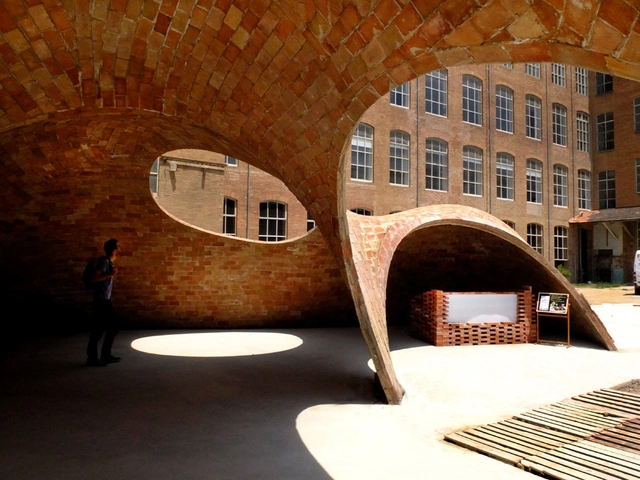
Bricktopia, by the architects of the international collective Map13, is the winning project in the "Build-it" category of the Eme3 International Architecture Festival, held on June 27-30, 2013, in Barcelona. The pavilion can be visited throughout the summer at the square of the former spinning mill Fabra i Coats in the Sant Andreu district.
This intervention sets a new square which can house different activities, both under the pavilion and around it. Public spaces for bathrooms, sun, bar and stage for enjoying the summer 2013. It is a brick domed structure that employs the traditional construction system of a partitioned vault (or "Catalan vault") computed with new digital tools for the structural optimization of the geometry.
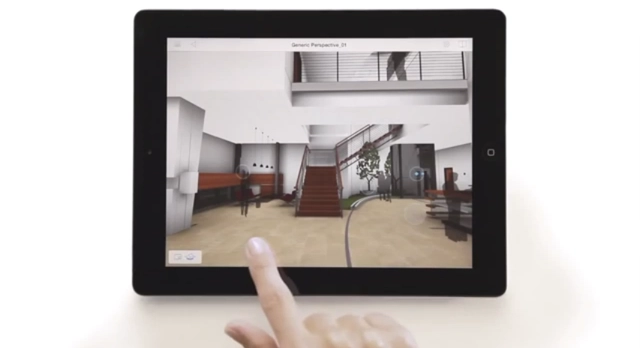
GRAPHISOFT’s latest iPhone and iPad App, a companion to ArchiCAD, has just been released. The heart of the technology, designed for easy BIM project viewing, is the “Hyper-model,” which enables the full integration of 2D and 3D plans. This makes navigation not only more intuitive, but a magnitude smoother and faster than most other construction-related model or documentation viewer mobile apps.
Get a more detailed look at the technology in action, after the break...
https://www.archdaily.com/441492/the-latest-app-from-graphisoft-bimx-docsSponsored Post






.jpg?1386258546&format=webp&width=640&height=580)