It’s a topic that cannot be avoided for any longer. The ongoing Paris Climate Conference has seen an unprecedented amount of participation - even before the summit began, over 150 countries submitted national plans of action to the United Nations - and there seems to now be a global consensus that we must cut back on our energy use and reliance on carbon polluting fossil fuels, or risk causing irreversible damage to our planet. By the end of the conference, an agreement will likely outline energy-reducing strategies by which all countries must abide. For architects, this means fundamentally changing the ways we design buildings and determine their success. Traditional building and construction methods consume large quantities of natural resources and account for a significant portion of the greenhouse gas emissions that affect climate change. In the United States, the building sector accounts for 41 percent of the country’s energy usage, according to the U.S. Green Building Council.
But this information is hardly new, and thankfully, our profession has been preparing for this change for some time. In 2006, the American Institute of Architects became the first adopters of the 2030 challenge, a call for all new buildings, developments, and major renovations to reach carbon-neutrality by 2030, with milestone goals of reduced dependence at 10-year intervals along the way. Each year, the AIA releases a progress report outlining the current standing of energy consumptions and take-aways from their findings. This year’s key conclusion? We must start integrating energy modeling techniques earlier into the design process.
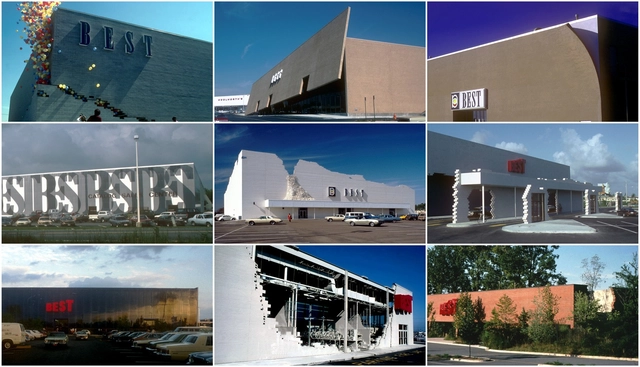
According to one survey, images of the BEST Products Showroom in Houston, Texas, designed by SITE (Sculpture in the Environment), appeared in more books on 20th-century architecture than any other building. The intentionally crumbling brick at that Houston store, known as “Indeterminate Façade,” and the eight other showrooms SITE designed, were simultaneously iconic and controversial, and most importantly for BEST, they brought in customers. Although SITE-founder James Wines never considered himself a Postmodernist architect, his designs for BEST, completed between 1972 and 1984, steeped in whimsical social commentary, came to symbolize the essence of Postmodernism. Today, all but one of the BEST showrooms have been demolished or altered beyond recognition, but they set a lasting precedent, and continue to influence the use of architecture in corporate branding today.
It's become a familiar sight: glossy renderings from big-name architects promoting new luxury condo towers. But in this case the setting is unexpected, rather than New York, Chicago, or Los Angeles, these new towers are cropping up in a gentrifying area of Honolulu known as Kaka'ako, nestled between the resorts of Waikiki, and the Downtown business district. For its latest offering, Ward Village, one part of a massive redevelopment plan for the entire Kaka'ako neighborhood, has enlisted Prizker Prize-winner Richard Meier, and Bohlin Cywinski Jackson (best known for the Fifth Avenue Apple Store in New York), to design iconic towers that will no doubt attract premium prices to match their architects' celebrity cachet. And while most people celebrate the influx of new housing units in a region of limited supply, some may be wondering who these new condos are really for.
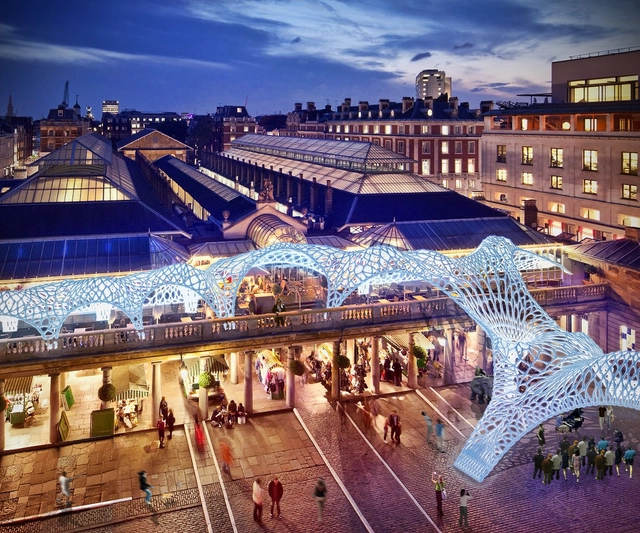
Architecture can be built with compressive elements and with tensile elements, but few materials have the ability to be stretched and also retain compressive strength. In a new project from Architectural Association DRL students Soulaf Aburas, Maria Velasquez, Giannis Nikas, and Mattia Santi, one of those materials, Polycaprolactone, a biodegradable polyester, is used to create framework from temporary pavilions and installations. Constructed using programmable robotic arms, the resulting product is a joint-less, self-supporting mono-material that shares a visual similarity to the structure of bones - giving the project its name, Osteobotics.
Cabral examines a model of the tea chapel. Image Courtesy of Gloria Cabral and Peter Zumthor/Rolex Mentor and Protégé Arts Initiative
In May last year, the Rolex Mentors & Protégés initiative announced a surprising partnership in its name: Paraguayan architect Gloria Cabral was to spend a year working alongside the famously elusive Swiss master Peter Zumthor. The differences between the two architects - from the languages they spoke to the age of their respective careers - were obvious from the outset. But as explored in this article by Paul Clemence, originally published by Metropolis Magazine as "Intuitive Connection," over the past year they've been discovering that the things that they have in common run far deeper.
It was an unlikely pair. He is a well-established architect with a long career, working out of a small town tucked deep in the mountainous Graubünden canton in Switzerland; she is at the beginning of a promising career in Asunción, Paraguay’s capital and largest city. They did not even share a common language, yet they connected through something more binding than the spoken word: an intuitive sense of space—and their work ethic.
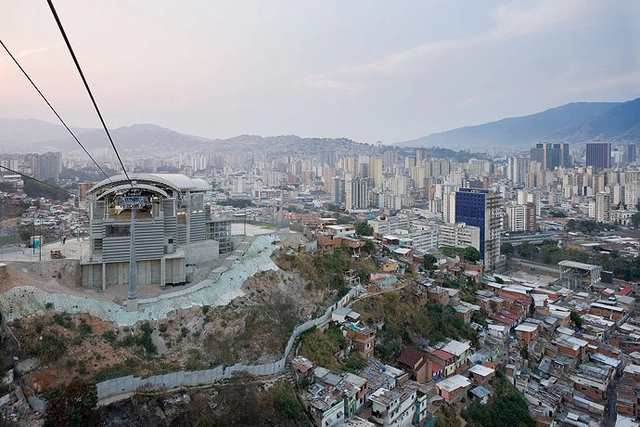
Earlier today in Shenzhen the 6th Bi-City Biennale of Urbanism/Architecture (UABB) opened its doors to public. Under the overall theme "Re-Living the City," curators Alfredo Brillembourg and Hubert Klumpner of Urban Think Tank headed up the "Radical Urbanism" exhibit in the main venue. Brillembourg and Klumpner invited the exhibition participants to show how we can learn from ad-hoc and "bottom-up" initiatives for alternative urban solutions. In the following essay - originally printed in the UABB 2015 catalogue - the curators call for us to "rethink how we can operate within the city, learn from its emerging intelligence and shap[e] its outcomes to radical and tactical ends."
The notion of a radical urbanism draws us unavoidably into the realm of the political. Imagining a more equitable and sustainable future involves an implicit critique of the spatial and societal conditions produced by prevailing urban logics.[1] As such, we are not only reminded of Le Corbusier’s famous ultimatum, “architecture or revolution,” but its generational echo in Buckminster Fuller’s more catastrophic pronouncement, “utopia or oblivion.”[2] Both were zero-sum scenarios born of overt social disjuncture, whether the deprivations and tensions of the interwar period, or the escalating conflicts and ecological anxiety of the late 1960s. While the wave of experimental "post utopian" practices that emerged in the early 1970s positioned themselves explicitly in opposition to perceived failures of the modern movement, these disparate groups shared a belief – however disenchanted – with their predecessors in the idea that radical difference was possible, as well as a conviction that a break was necessary.
Architecture is in some ways a paradoxical profession. On one hand, it projects a popular image of the lone, creative genius, taking control over all aspects of a building project and forming them to their creative ideals. But in reality, most projects take a huge team of people, all working together to produce a building which usually represents the creative input of not only many different people, but many professions too.
One way to find a balance between these two extremes is to take more creative control over the decisions of the group - in other words, to start your own practice, guided by your creative input alone. But is that goal worth the difficulty it might take to get there? This was the question we had in mind when we asked our readers to let us know the pros and cons of starting your own firm last month. Interestingly, not a single commenter left any response about the joys of working for someone else, and the consensus was firmly that running your own practice is preferable - provided you can deal with the significant problems of doing so. Read on to find out what they had to say.
Without a doubt, it’s among the most famous houses in Los Angeles. The house is easy to describe: a steel framed L-plan, divided into bedrooms and the communal living spaces, all wrapped around a turquoise pool seemingly impossibly poised above the city. But words don’t do it justice. Julius Shulman’s 1960 photograph of Pierre Koenig’s Case Study House 22, perhaps better known as Stahl House, changed the fantasies of a generation.
https://www.archdaily.com/778021/a-virtual-look-into-pierre-koenigs-case-study-house-number-22-the-stahl-houseMadlaina Kalunder and David Tran, Archilogic
In the early days of the architectural profession, teaching and practice were neatly aligned: the elements of the various styles could be taught and put into practice in the field. However in the 20th century, while the business of construction was becoming increasingly technocratic, architectural theory became equally pluralistic and esoteric. Ever since, the dichotomy between architectural education and practice has been a controversial subject. Many in the business say that education fails to prepare students for the real world, while some academics equally contend that architecture schools have given up too much ground to technical considerations, and no longer teach enough important theory.
In the 21st century, that dichotomy is increasingly being bridged by the internet, offering a convenient alternative to universities and practices where architects can teach themselves. With that in mind, we wanted to open a discussion up to our readers: what are the things you wish you learned in school but never had the chance? Was there an element of history and theory that is vital to your understanding of architecture that you only learned after graduation? Or perhaps a technical consideration that you had to learn the hard way?
Candles shaped like icebergs that melt to increase awareness for global warming. Reconstructions of Brutalist playgrounds. Geometric overalls with patterns representing the taste buds. These are just a few of the projects tackled by the young minds selected by Metropolis Magazine as their “7 Designers to Watch.” The list includes architects RAAF, LAB.PRO.FAB and Assemble Studio, alongside furniture designers, industrial designers and a design strategist.
The past two weeks have seen a number of high-profile designs unveiled, including OMA in Manchester, SANAA in Budapest, Libeskind in Vilnius, Foster + Partners in Chicago and two projects involving BIG in Pittsburgh and New York. As ever with such renowned practices scooping up work, opinions flew and in some cases also produced reasoned debate over the new projects. Read on to find out what people had to say about them.
If there’s one thing that can get the architectural community up in arms, it’s the threat of demolition being placed over a much-loved building. Whether it’s a 44-year-old bus station, a 38-year-old hospital, or even a 12-year-old art museum, few other news stories can raise such a sustained outcry. And recently, some have started to turn their eyes toward the next wave of preservation battles: the upcoming crop of Postmodern buildings which are increasingly being placed under threat. But in all of these heated debates about preservation, do people really know what they’re arguing for?
To talk about architecture and construction without ever mentioning cost overruns is not an easy thing to do. These kind of unforeseen problems happen in the majority of projects, as the dynamics of architecture and construction are extremely complex and often present challenges that aren't 100% controllable. Over the years, project management consultants have been integrating cost management into their services, making an effort to fill this market gap with a proper solution. Still, most of this work is performed by consultants with a financial background and little knowledge of architecture and construction solutions and processes.
With this increased attention to budgetary issues, the cost performance of projects has been steadily improving, but usually at the expense of the project’s aesthetic concept and final quality. Would it be possible to put architects in control of this kind of management? After all, they’re the ones with the conceptual sensibility and the technical knowledge necessary to perform this work in a truly integrated way.
In this day and age, innovation is occurring at a faster rate than ever before. And while a majority of ideas may make a small impact before fading away, some inventions are able to slip through the cracks and become a real game changer in their field. Our field, of course, is architecture, and this year there have been no shortage of inventions that may change the way we live and work forever. In TIME magazine’s annual release of inventions of the year, at least 6 may have an impact on the world of architecture, encompassing inventions within the field of architecture itself and developments that could change how we design and experience space. Read on for those projects and what they might mean for our future.
When you consider the practical properties of polyvinyl chloride (PVC) - durability, versatility and low price - it is easy to understand how it has become such a common construction material, with applications as roofing membranes, siding, pipes and plumbing, conduit, window frames, window blinds, molding and trim, and fencing. But perhaps it’s time to be more cautious about its use. According to a new whitepaper report by Perkins+Will, "What’s New (and What’s Not) With PVC," in spite of recent advances in plastic chemistry PVC is still responsible for a range of environmental and human health hazards created in multiple stages of its manufacturing process.
Videos
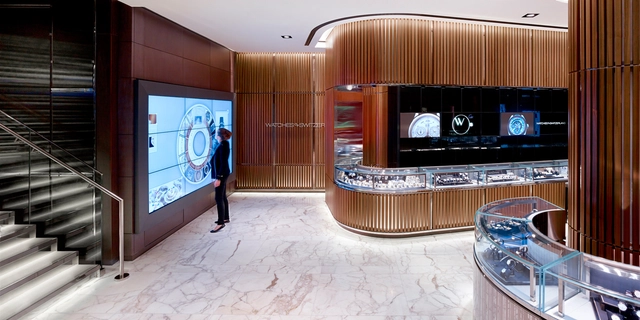
The new Watches of Switzerland store in London designed by Callison. Image Courtesy of Callison
With the rise of the internet, old-fashioned brick-and-mortar stores have struggled, as online ordering services have increasingly made it unnecessary to actually go to a store. The answer for the physical stores of the future? Make spaces not for purchasing the things people need, but experiencing the things people want, as explored in this article by Matt Alderton originally published on Autodesk's Redshift publication as "How Technology and Big Data in Retail Are Shaping Store Designs of the Future." Alderton looks at how forward-looking stores are being designed to appeal to customers, finding that the same technology revolution that threatened to make stores obsolete might also play a key role in saving them, too.
Shopping used to be stimulating. Although its end was sales, its means was a mix of status and spectacle. It was social commerce in which partakers transacted not just cash, but also cachet.
Nowhere was this more evident than in the earliest department stores, whose architects designed them to be destinations. In London, for instance, Harrods boasts the motto “Omnia, Omnibus, Ubique”—Latin for “All Things for All People, Everywhere.” Established in 1849, it has seven floors, comprising more than 1 million square feet across more than 330 departments. The store installed one of the world’s first escalators in 1898, opened a world-famous food hall in 1902, and sold exotic pets such as lion cubs until the 1970s.
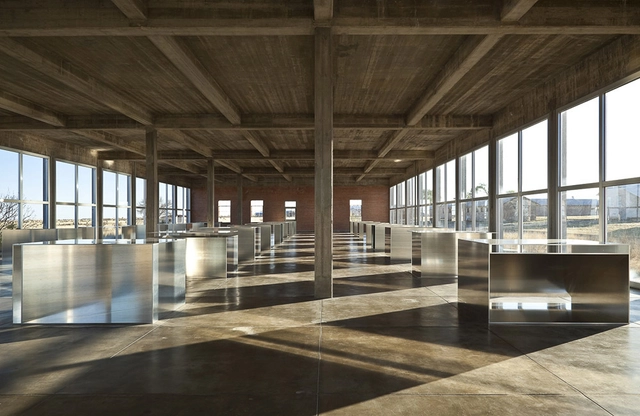
Completed in 1986, Donald Judd's 100 aluminum boxes offer one of the most exciting locations to study the grace of minimalism. His vision at Marfa in Texas has transformed a piece of military history into a peaceful and unique environment for art and architecture. Here, the shimmering material transcends the formal strictness of plain patterns and the narrow concepts of minimalism. The multiple reflections of light and space create an illusionary atmosphere beyond ascetic ideas.
























.jpg?1448657238&format=webp&width=640&height=580)







.jpg?1448462729 "Owen Launch by Tacklebox Architecture. Image © Juliana Sohn for OWEN")