Traditionally, the start of a new year is a time for making plans and optimism for the future. As a result, it's a time when many architects might start dreaming of moving their career to an unfamiliar and exciting country. But as Brandon Hubbard explains in this article, originally published on The Architect's Guide as "Is Working Abroad Bad For Your Architecture Career?" there are many reasons that you shouldn't be so hasty to cross borders and seas in an attempt to advance your career.
Architecture, perhaps more than any other profession, is filled with people who want to live and work abroad.
Some architecture students get a taste for travel while in school. Study abroad programs in the US are quite common. Often when students finish their degree they are drawn to the idea of living abroad.
A doctor can easily find a person wandering nearby. An accountant can easily find an excel spreadsheet. Architects don't have the luxury of buildings coming to us (that would be cool though). We have to go to them. This has inspired generations of architects to pack their sketchbooks and travel.
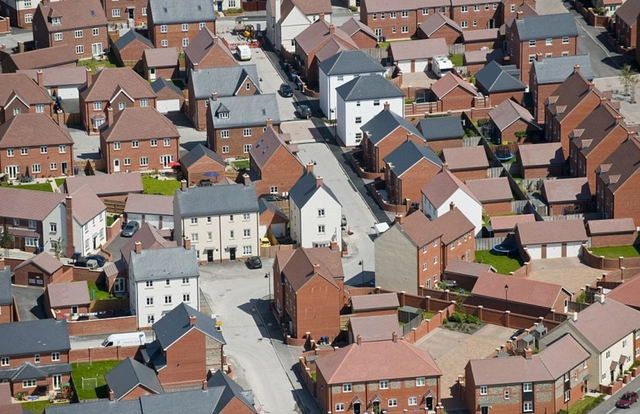
In his essay "Figures, Doors and Passages", the architectural historian Robin Evans described how "it is difficult to see in the conventional layout of a contemporary house anything but the crystallization of cold reason. Because of this," he asserted, "we are easily led into thinking that a commodity so transparently unexceptional must have been wrought directly from the stuff of basic human needs." His words, which highlight the passive approach of designers, developers and dwellers when it comes to the vast majority of British housing being built today, were first published in 1978 – two years before the Conservative government under Margaret Thatcher introduced the 1980 Housing Act.
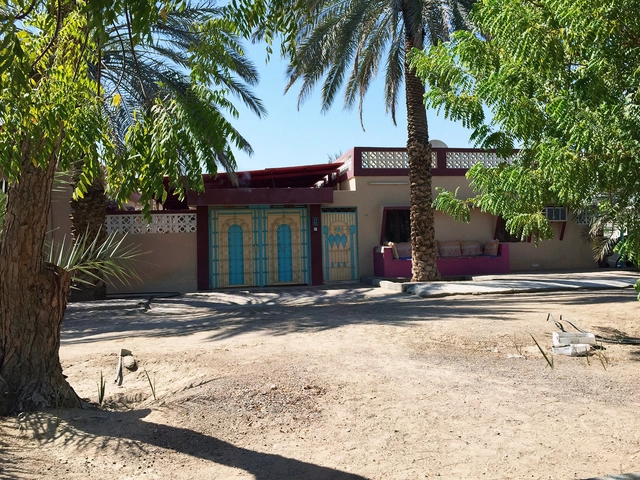
Entrance to a National (Sha’abi) House in the Salamat neighborhood in Al Ain. Photography by Yasser Elsheshtawy. Image Courtesy of National Pavilion UAE la Biennale di Venezia
As announced in October 2015, UAEU professor Yasser Elsheshtawy has been selected to curate the United Arab Emirates pavilion for the 2016 Venice Biennale. Following the Biennale’s theme of Reporting from the Front, Elsheshtawy—who runs the blog Dubaization, a term he coined in 2004 to depict the influence of Dubai on the urban discourse—has chosen to highlight the country’s social housing program, known as Sha’abi housing, which began in the 1970s and continues on to today.
ArchDaily was given the opportunity to speak to Elsheshtawy about the history of the United Arab Emirates’ Sha’abi housing, and what role it might play in informing the urban future of a country that has become renowned for a very different type of architecture. Continue reading for our exclusive interview with Elsheshtawy on this year’s UAE pavilion.
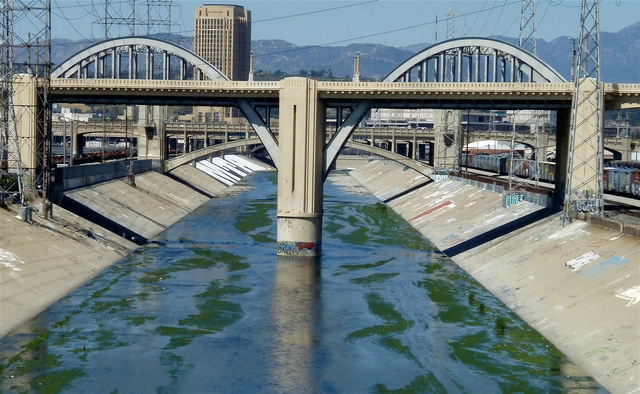
A river is not usually the province of an architect. Cities grow around rivers, and buildings are built near rivers, but rarely is the river itself the subject of a design problem. Ever since news broke that Frank Gehry is leading a master plan effort for the Los Angeles River, there has been a marked increase in discussion of the river, though rarely with much historical background. Joseph Giovannini tries to correct this omission with his recent piece in the Los Angeles Review of Books, laying the groundwork from when the Army Corps of Engineers decided to line the river in concrete in the late 1930s to prevent flooding, and introducing all of the major players who have been working more recently to return the river to a more natural state.
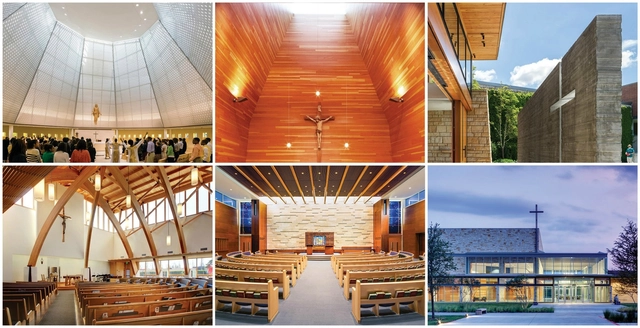
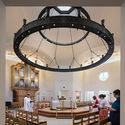
Religious buildings make up many of the highlights of architectural history, and the Religious Architecture Awards from Faith & Form magazine and the Interfaith Forum for Religion, Art, and Architecture celebrate the latest entries in this category. As trends in religious practices and the buildings that house them have changed, this year’s awards celebrate a wide variety of structures, including a growing number of renovation and restoration projects, as well as the first-ever award for a building in the “megachurch” category. From a total of 44 entries, 16 projects received awards in one of five categories: New Facilities, Renovation, Restoration, Adaptive Reuse/Repurpose, and Liturgical/Interior Design.
Read on to see all the winners of the Religious Architecture Awards.
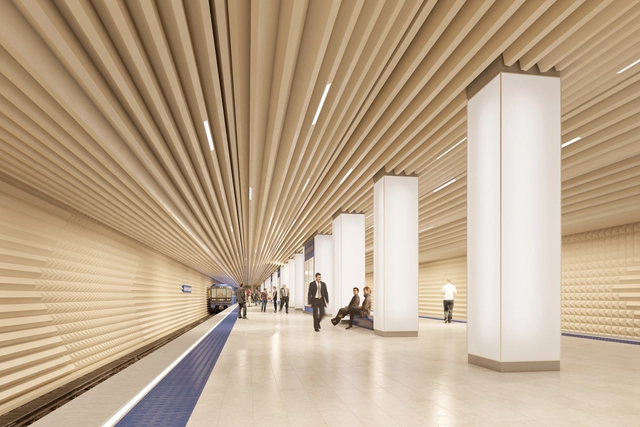
With their Moscow Metro proposal, Variant Studio attempted to design "the world's quietest metro platform". Image Courtesy of Variant Studio
"During the Middle Ages, smell was the unspoken plague of cities," writes New York Times architecture critic Michael Kimmelman. "Today it is sound." In his latest article, entitled "Dear Architects: Sound Matters," Kimmelman breaks down an often-overlooked element of architectural design, explaining how space shapes sound, and how sound shapes our experience of a space - and imploring architects to put more thought into the sonic environments created by their designs.
This has been an intense year at ArchDaily, and I’d like to look back and share what we’ve done during 2015, and give you a glimpse of what will come during 2016.
We started this project in 2008 in a very instinctive way, but always understanding that we should provide value to architects. Today, we are publishing in 4 languages (including the new ArchDaily China!), reaching more than 400,000 daily readers who are viewing 120 million pages every month - and bookmarking thousand of projects on My ArchDaily. This scale has made us understand what is adding value - and what is not - to architects in a very insightful, data-driven way. Our analysis for our end of the year posts has shown us how important it is for you to have access to technology and resources than can help you on your work.
As I have touched on in the past many times, context is what transforms an artistic rendering into a photorealistic visual that accurately portrays a building. Seemingly minute details such as the warmth of interior lighting in night renders can actually make a dramatic impact on how the image is received by a potential client or investor. With this in mind, and in a continual attempt to improve the accuracy of renderings while increasing the value they provide to architects, some rendering artists are now taking advantage of readily available Unmanned Aerial Vehicle (UAV) platforms – more commonly referred to as drones – to gain a unique vantage point of land slated for development.
In the past capturing aerial photographs of an area could only be achieved from planes or helicopters, both of which come at a hefty price tag, even to rent. Drones equipped with the same capabilities can now be purchased for a fraction of the cost, making aerial photography more attainable. Aside from capturing standard video or images, drones have given rendering artists access to software that allows them to accurately map the topography of an area slated for development, adding a new level of context and accuracy to the rendering.
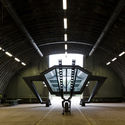
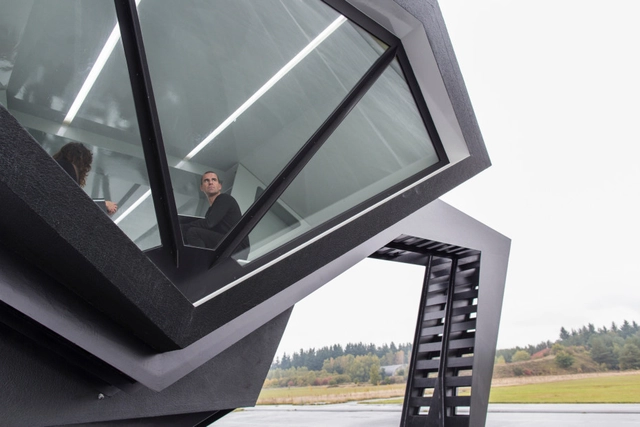
Whether it's a bisected war bunker, an office space that forbids sitting down or a hulking yet ultimately purposeless machine of war, the chances are that if you've seen a project by RAAAF, it provoked some questions. But while their work may appear merely idiosyncratic, it is informed by a deep understanding and questioning of culture. Originally produced and published by Freunde von Freunden as "Experiments In Spatial Dynamics: RAAAF," Leonie Haenchen delves into the architecture and philosophy that drives the unconventional Dutch practice.
It’s pouring without mercy, but at Soesterberg Airbase this is highly appreciated. “We like this weather,” says Ronald Rietveld, co-founder of RAAAF, as he greets us at the entrance of what appears to be an enormous post-apocalyptic amusement park. “The rain suits this atmosphere much better.”
RAAAF stands for Rietveld Architecture-Art-Affordances, which doesn’t really prepare one for what’s revealed behind the doors of Shelter 610. A monstrous arthropod made out of steel with two spindly legs stares vacuously out of its white glassy eyes. Every attempt to name this mechanical being fails, it merely appears as a collision of past and future—science fiction in flesh and blood. “Everything we do should be an in-the-moment experience, something that people can feel physically. If this object was only presented on paper, it would simply not be as strong,” says Ronald and grins mischievously. “I am sure you will still remember this moment in five years.”
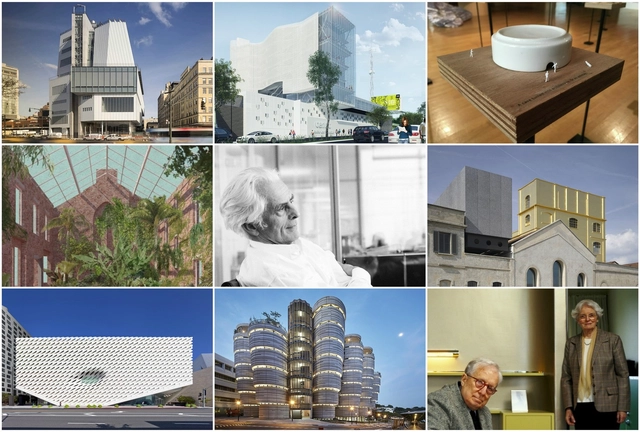
If there's one word that sums up our most popular projects of 2015, it's "diversity." The list features architects ranging from old favorites such as SANAA, Diller Scofidio + Renfro and OMA down to newer names like Sculp[IT] and Tropical Space; it also includes everything from museums to multi-family housing and spa retreats to chapels - along with the usual smattering of private residences. Interestingly, this year's list also shows the symbiosis between great architecture and great photography, with no less than 4 projects also appearing in our most bookmarked images from this year's World Photo Day. But despite their diversity, there's one thing all of these 20 projects have in common: great architecture. So settle in, relax and read on - here's our 20 most popular projects of 2015.
https://www.archdaily.com/779474/the-20-most-popular-projects-of-2015AD Editorial Team
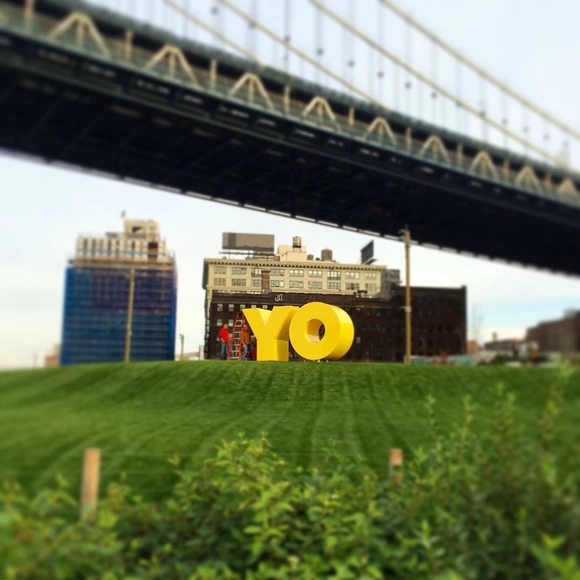
In his latest article for Vulture, art critic Jerry Saltz celebrates the latest crop of public art in New York City, such as Deborah Kass' OY/YO sculpture, sitting near the Manhattan Bridge in Brooklyn, commenting on the success of such pieces even though (or perhaps because) many of them have been curated by art-world insiders rather than publicly accountable arts commissions or community engagement processes. But for Saltz, this new wave of high-quality public art has come at the expense of quality public space. Despite his admiration for the art installations, he expresses skepticism of the privately-funded public spaces that house them, such as the much-celebrated High Line, designed by Diller Scofidio + Renfro (DS+R) and James Corner Field Operations, as well as future projects such as Pier 55 by Heatherwick Studio, and the "Culture Shed" at the Hudson Yards development also by DS+R. His critique even references a phrase from DS+R that belongs on our list of words only architects use. Read Saltz's full discussion of public art and public space here.
The past 12 months have given us plenty to talk about: 2015 saw the opening of several marquee new museums, and the field took an introspective turn with the “State of the Art of Architecture” at the Chicago Biennial. Now it’s December, and that means it’s time for many critics to look back at the triumphs and failures of the year past and make predictions for the year to come.
It has been over fifty years since Jane Jacobs' book, The Death and Life of Great American Cities, revolutionized discourse on urban planning, and her words still carry a huge influence today. But in the intervening decades New York City has changed in ways Jacobs could never have imagined when she was writing in the 1960s. In a recent article for City Journal, Judith Miller tries to imagine how Jane Jacobs would have responded to some of New York City's recent projects - taking as examples the imminent domain actions and tax breaks that made Brooklyn's Atlantic Yards (now also known as Pacific Park) possible, the cluster of skyscrapers and public venues planned for Hudson Yards on the west side of Manhattan, and the supertall luxury condo towers that are beginning to cast their long shadows over Central Park. Read Miller's article in full here.
Back in September, we asked our readers to help us make the definitive list of weird words used by architects, and we got an astonishing response. The resulting article, 150 Weird Words that Only Architects Usewas one of our most popular of the year, ranking highly in our most read articles of 2015 and our editors' picks of the best articles of the year. But while it was well received, a number of people commented that something was missing in our list: definitions of all the words, to both aid readers' comprehension of the list and to debate over how different people had interpreted the same word. With that in mind - and considering that it is the time of year for generosity - we've revisited our list to bring you fun definitions for all 150.
If you're looking for an architectural reference dictionary, we assure you that this isn't it. But we hope you'll have fun all the same.
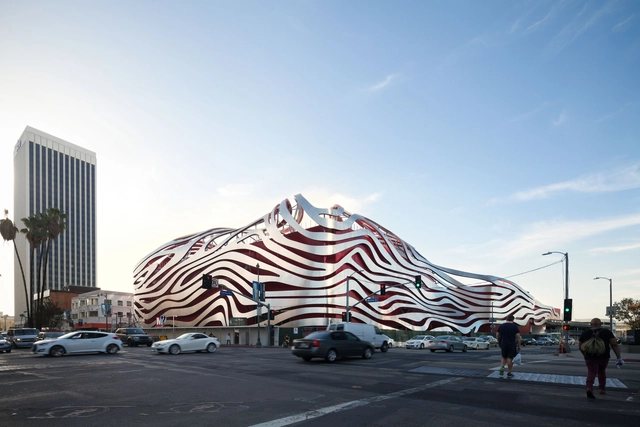
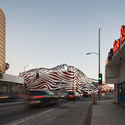
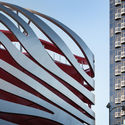
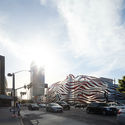
It’s a rare event when a public building is striking enough to grab the attention of most Angelenos. It’s even more curious when that building is almost unanimously panned by the critics. Barring the so-called “iconic” buildings that our city has collected over the last 15 years, Los Angeles seldom received exciting public architecture. Because of this, every new major addition gets placed under a cultural microscope. Now, with Kohn Pedersen Fox’s redesign of the Petersen Automotive Museum nearing completion, architecture critics have sharpened their knives: reviewers have called it “kind of hideous,” "the Edsel of architecture," and “the Guy Fieri of buildings.” But these gripes completely miss the point of what a car museum on the Miracle Mile should be.
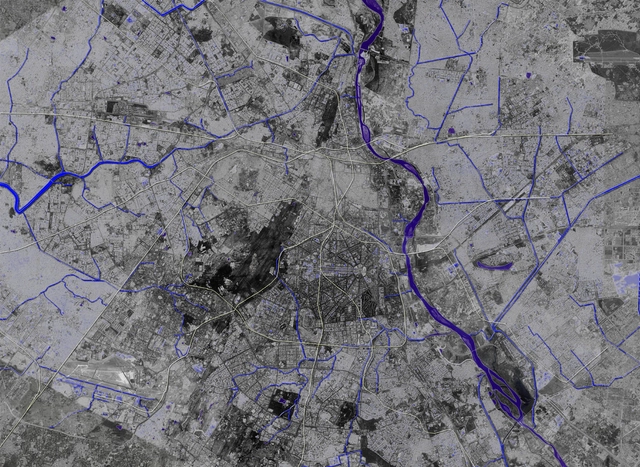
Map of Delhi's nullah network. Image Courtesy of Morphogenesis
The city of Delhi has a transportation problem. The streets are crowded and dangerous, and with 1,100 new vehicles being added to the roads each day the city is suffering from the consequences. Last year, New Delhi was rated the most polluted city in the world by the World Health Organization, with nearly 3 times the particulate matter of Beijing. Noise levels throughout the city consistently exceed regulations set by the Indian Central Pollution Control Board, and heavy traffic means increased travel times and perilous pedestrian conditions. Even walking the last mile from a bus stop to a destination has become a game of chance.
At the same time, the river upon which the city was founded, the Yamuna (a main tributary of the Ganges), has been polluted to the point where it has become little more than a glorified sewer drain. Illegal settlements without sewage systems pollute the river directly, and even within the regulated systems, 17 sewage drains empty directly into the Yamuna. For a city already struggling with water shortages, polluting a main water source is akin to throwing salt into a wound. However, a proposal by Dehli-based Morphogenesis Architects attempts to tackle all of these issues through the revitalization of the river and its canals, known as nullahs.
“Ever wanted something more?” asks Robert Laing, the character played by Tom Hiddleston in the new trailer for “High Rise” - an upcoming film based off of the 1975 novel by new wave science fiction author J.G. Ballard. Filmed as a advertisement for the brutalist tower, the complex boasts that with its numerous amenities, “there is almost no reason to leave,” prefiguring the story's unsettling premise.
Befitting the architecturally-inspired tale, the architecture seen in the snapshots shows off a concrete megastructure, with beautiful board-formed concrete walls elegantly highlighting and contrasting with the modernist furniture and shag surfaces of the interiors. Not unlike the real-life brutalist residential megastructure The Barbican, the High Rise features a supermarket, gym, swimming pool, spa, and school. Perhaps that is why Laing describes the film’s setting as “distinctly and definitively British.” Watch the video for a first look at film, to be released in theaters in 2016, and find out more at the tongue-in-cheek website for the building's fictional designer, anthonyroyalarchitecture.co.uk.






.jpg?1451393990 "The End of Sitting (2014). Image © Jan Kempenaers")