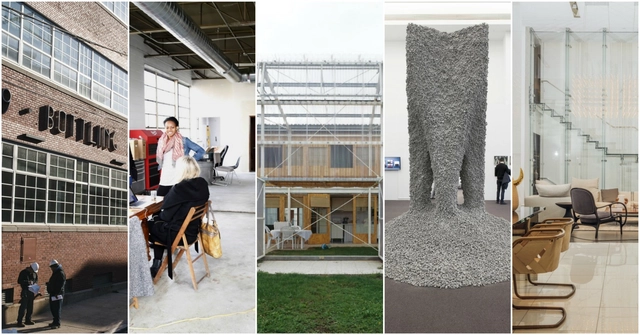
Metropolis has released their list of five design thinkers leading the world in innovation for their 2016 Game Changers issue. The Metropolis Game Changers issue was created in 2011 to showcase transformational changes that are national in scope, but global in impact, and can be awarded to individuals, firms, projects or ideas within the various spheres of design. Past nominees from the realm of architecture include Michael Maltzan, MASS Design Group, Edward Mazria, Vincent Scully, SOM’s Great Lake Century Project, and former SHoP Principal Vishaan Chakrabarti.
With two architectural firms, an architecture curator and a co-working space driving urban renewal all making the five-strong list, this year's Game Changers issue offers plenty of interest for architectural readers.
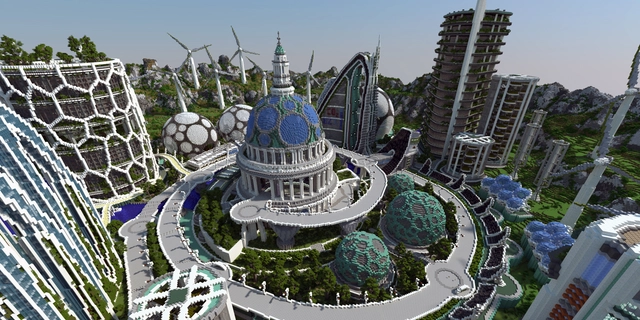
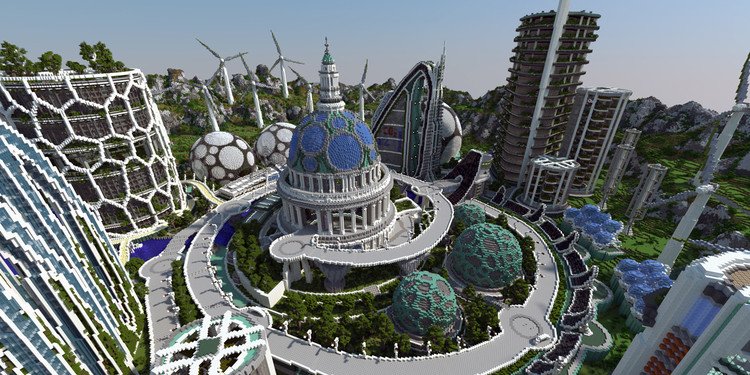
For many architects, an obsession with design came at a very young age - often, an architectural career begins with toys such as wooden blocks or that old classic, LEGO. In recent years though, a new contender has emerged to inspire young architectural minds: Minecraft. In this article, originally published on Autodesk's Redshift publication as "Minecraft Architecture: What Architects Can Learn From a Video Game," Kim A O'Connell looks into the growing influence of Minecraft in architectural design and education, including the growing presence of the global "Blockworks" team.
Since it burst onto the gaming scene in 2009, Minecraft has become one of the world’s most popular video games—so much so that Microsoft bought the game and its parent company for a whopping $2.5 billion in 2014.
Today, the world-building platform has also garnered the attention of architects and designers. Could a video game actually change the way architecture is taught and practiced?
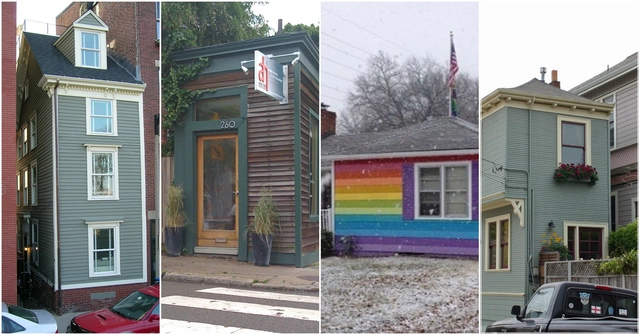
There are many good reasons to build a house: shelter, economics, or self-expression. But spite? In this article, originally published on Curbed as "Spite Houses: 12 Homes Created With Anger and Angst," Patrick Sisson delves into the "small but ignoble tradition" of people who constructed houses to enrage their neighbors, family members or the authorities.
What's not to love about a building called a "spite house?" In an essay in the New York Times, writer Kate Bolick discusses her dream of owning the Plum Island Pink House, a forlorn, decaying structure in Newbury, Massachusetts set in the middle of a salt marsh. The romantic, reclusive home stands alone for a reason; built by a recently divorced husband for his ex-wife as a condition of their separation, it's an exact duplicate of their shared home, just uncomfortably moored in the middle of remote wetlands and constructed without any running fresh water. The square loner is part of a small but ignoble tradition of spite houses, buildings created for malice instead of comfort meant to irritate or enrage neighbors, or occasionally piss off anyone unfortunate enough to be dwelling inside. Normally built to block a neighbor's light or access, they can be found as early at the 18th century. Here are some examples of homes or apartment that were built, or painted, out of anger.
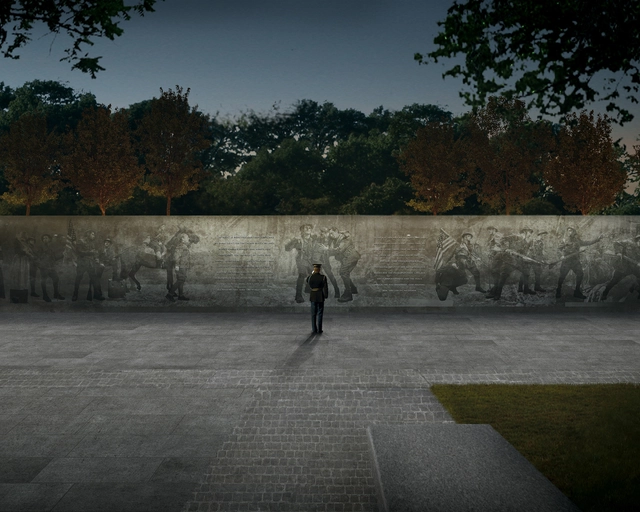
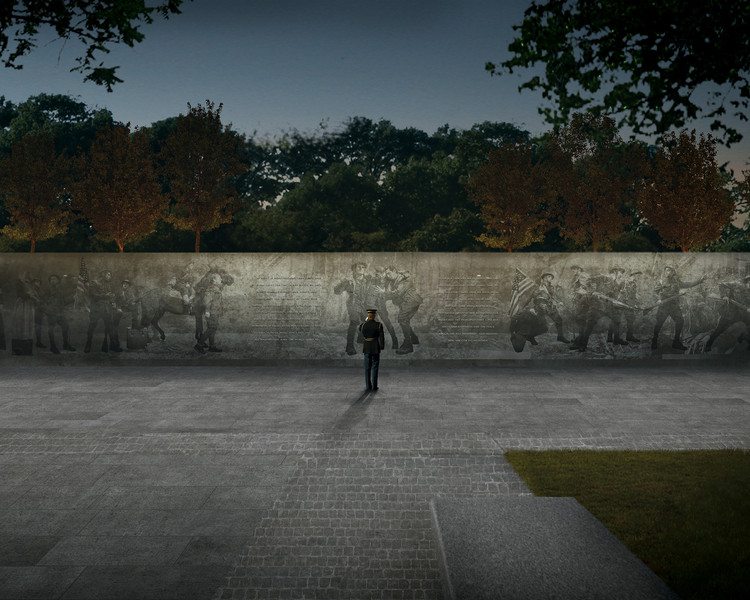
Last week, the World War I Centennial Commission announced architect Joseph Weishaar and sculptor Sabin Howard as the winners of the WWI Memorial Competition held to redesign Washington, DC’sPershing Park for the 100th anniversary of the conflict. For Weishaar, a 25-year-old project architect at Chicago firm Brininstool + Lynch, the key to the design was to integrate elements of both a park and a memorial into a cohesive whole; his design, "The Weight of Sacrifice," incorporates a raised lawn surrounded on three sides by memorial walls with sculptures designed by Howard. ArchDaily was given the opportunity to sit down with Weishaar to learn more about his winning memorial design, his response to the park’s critique, and what the future could hold for the young architect.
The new digital state of mind has affected almost every industry as we know it, from music to health. Meanwhile, architecture remains unaltered, trapped in its physical container. In our opinion Virtual Reality has come to stay, and it will transform the way we relate to spaces forever.
Our reality is a construction with multiple forms of expression - each culture, economy and geography produces its own model. Multimedia society has created a hybrid and complex reality where material formations are complemented by fictional ones like movies, videogames, advertising, avatars… Special effects are now part of our lives, and VR is one of them. It's not an independent and isolated dimension of actual reality, but part of it. In order to operate in this amplified scene, it is urgent to deploy new architectural skills. Platforms like Oculus Rift, Gear VR, Google Cardboard, HTC Vive, and Hololens combined with softwares like Unity or Unreal open a whole new design field.
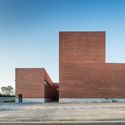
Architecture photographer Joao Morgado just shared with us images of Alvaro Siza's newest project in Barcelona -designed in collaboration with local office Aresta Arquitectura- the Public Auditorium in Llinars del Vallès.
The project is conformed by two red brick buildings, one which houses an auditorium with capacity for 300 seats and a second building with all the offices and technical spaces associated to the theater.
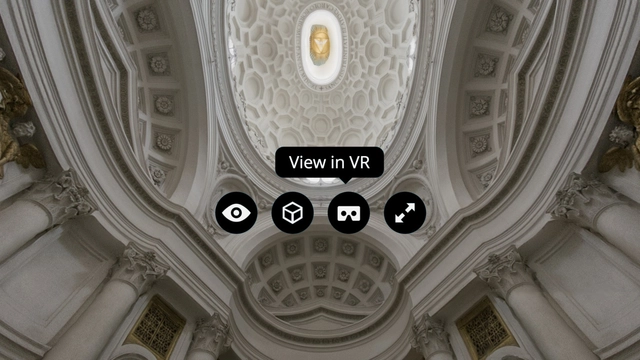
Image adapted from screenshot of San Carlo alle Quattro Fontane model by Matthew Brennan
Earlier this month, Sketchfab announced a new feature which would allow any 3D model on their platform to be viewed in virtual reality on a device such as Google Cardboard. At ArchDaily, we think this is a huge step in defining how we will view and share architectural design in the future, and one of the best things about the new feature is how seamlessly it blends into Sketchfab's existing model sharing platform. At the same time, it's worth bearing in mind that creating a model for VR may take some extra consideration. In this post originally published on the Sketchfab Blog as "How to set up a Cardboard VR scene for Sketchfab," Bart Veldhuizen explains what designers can do to make their models as VR-friendly as possible.
With our new Cardboard VR button, Sketchfab has become the easiest way to view your designs in Virtual Reality. You can now literally publish your model to Sketchfab and view it on your Cardboard in under a minute.
As Cardboard relies on mobile devices, there are some extra things to keep in mind. In addition to displaying a regular Sketchfab model on the lighter hardware of your phone or tablet, we now render each image twice (once for each eye). So it won’t come as a surprise that you need to keep some things in mind when designing a Cardboard scene.
This tutorial will give you an overview of the most important limitations and will help you to quickly teleport yourself into your first Cardboard experiment.
Unsurprisingly 5468796 Architecture, who disagreed with much of the article's conclusions, wrote a response to the editor of Guardian Cities in the hope that their "letter to the editor" would provide some balance to the story. After The Guardian declined to publish the letter, the firm reached out to ArchDaily to ensure that their side of the debate was heard. Here is that letter in full.
We are writing to you in response to the Guardian article concerning Centre Village and many of the comments and re-posts over the last week. We believe the story that was published was inaccurate and provide the following for your information:
https://www.archdaily.com/781246/5468796-architectures-response-to-the-guardian-over-their-failed-social-housing-projectColin Neufeld, Johanna Hurme & Sasa Radulovic
When it comes to scrutinizing architectural materials for their energy efficiency, one offender stands out above the rest: glass. Windows and curtain walls act as one of a building’s main outlets for heating and cooling losses, and as society advances into its more environmentally-conscious future, new, passive solutions will need to be developed to mitigate buildings’ energy footprints. In recent years, various smart glass technologies have been designed to automatically regulate light and heat based on environmental conditions. Yet their high price tags have prevented them from achieving widespread application. Now, a team of MIT researchers may have discovered an alternative to smart glass that could come at an affordable price.
Winners of last year's Building of the Year Awards
Yesterday, we launched our 2016 Building of the Year awards, inviting you to vote for your favorite buildings that we published in 2015. Now in its 7th year, this global, user-driven awards process has allowed us to break down the traditional barriers in the architectural community, making awards a democratic and representative endeavor. But while taking the collective votes of thousands of architects is an excellent way to find the projects worthy of an award, it's not always the best way to understand why certain projects are deserving of praise; qualitative feedback can be just as important as the quantitative data.
So, as we embark on the Building of the Year journey once again, we wanted to supplement the award with more qualitative input. We'd like you to tell us which is the best project you've seen published on ArchDaily, and why? Whether your favorite building on ArchDaily is a sensitive response to its context, an intelligent use of materials or an intriguing and unexpected form, we want to hear about it! Let us know in the comments below, and the best responses will be featured in a future article.
“I’d like you to join me in hell” declared Catherine Slessor, the first female editor of The Architectural Review in her opening speech for the design debate series Turncoats in late November. What followed was a blistering, hilarious and poetic assault on the world of vanity publishing confided to an audience of 200 critics, architects and designers in SelgasCano’s Second Home. Normally a review such as this one might be accompanied with a film of the event itself, but in this case that is impossible due to Turncoats’ blanket ban on digital recording equipment (including phones) - one of numerous theatrical twists which have made this unassuming project one of the hottest tickets in town.
Turncoats is the creation of former AR Deputy Editor and current Deputy Director of the Architecture Foundation Phineas Harper, Studio Weave and Interrobang founder Maria Smith, and esteemed educator Professor Robert Mull, backed by the Cass architecture and art school. The series is like a hedonistic mash-up of an old school debating society and a ritualistic drinking game. Vodka shots, comedy warm up acts, sexy venues and mischievous polemical propositions make every Turncoats event a surreal and thought-provoking evening. The masterstroke is that not every invited panellist is speaking their mind – some are purely playing devil’s advocate. This reality-bending twist naturally invites a theatricality which blurs the line between argument and arguer, enabling a frankness of architectural debate rarely seen in our nervously polite industry.
Aerial photograph of Shannon Airport (1959) set within its rural context. Image Courtesy of Shannon Group plc
At the dawn of the age of transatlantic commercial aviation, Shannon, a small town on the west coast of Ireland, was thrust into the spotlight. By 1959 it had been developed as the world’s first Free Trade Zone and New Town, providing a new—and persistent—business model for US multinationals seeking cheaper ways to operate in Europe. On the other side of the world, China was beginning to develop its urbanisation policy and was interested in how Shannon had successfully decentralised its administration from Dublin. After many visits in the early 1980s by Chinese leaders to study this model, under the direction of Deng Xiaoping, the Shannon planning system was used as a template in the formation of Shenzhen and has since been rolled across China.
New Horizon_architecture from Ireland is the flagship exhibition programme for Irish architecture and the built environment as part of Irish Design 2015. Shan-Zhen was first presented at the Bi-City Biennale of Urbanism\Architecture in 2015.
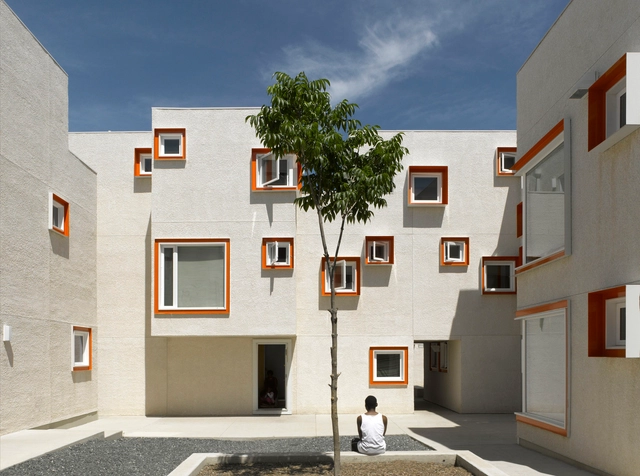
When reading about the work of Alejandro Aravena, it can sometimes seem like two distinct discussions: one about his widely praised social housing innovations, and another about his impressive (albeit more conventional in scope) buildings for universities and municipalities. In this post originally shared on his Facebook page Hashim Sarkis, the Dean of the MIT School of Architecture and Planning, connects the two apparently separate threads of Aravena's architecture, discovering the underlying beliefs that guide this year's Pritzker Prize winner.
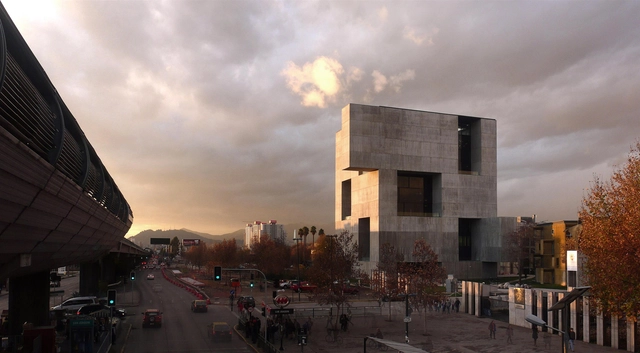
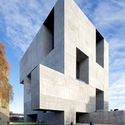
Much of the work of Alejandro Aravena, whether designed alone or with the group ELEMENTAL, embodies a eureka moment, a moment where after a careful interrogation of the program with the client, the architect comes up with a counterintuitive but simple response to the charge. (For the computer center at the Catholic University, the labs have to be both dark and well-lit. For the social housing in Iquique, instead of a full good house that you cannot afford, you get a half good house that you can). In turn, these simple equations are embodied in buildings that usually acquire similarly simple forms. The clients and occupants repeat the “aha” with Aravena’s same tone and realization. “If I cannot convincingly convey the design idea over the phone, then I know it is a bad idea,” he says.
Sketchfab, the browser-based platform for sharing and viewing 3D models, has announced a new feature on their software that turns any of their models into a virtual reality experience when viewed on a smartphone and combined with a simple headset like Google Cardboard. Sketchfab allows users to upload a wide variety of 3D model file types that could then be shared and viewed in any web browser, or embedded on websites or social media, without the need for any additional software or plug-ins. As a result, over the past few years they've built up a huge database of over half a million 3D models, and this new VR feature allows viewers to experience those models in a whole new way.
The announcement of the Pritzker Prize is often the biggest news story of the year in architecture. This year it seems will be no different: the accolade went to Alejandro Aravena, with the jury paying particular attention to his social housing work, and with the Aravena-directed Venice Biennale right around the corner, it seems that this year we'll be talking a lot about the 48-year-old Chilean.
That discussion has already begun in our comments section, where readers debated the pros and cons of the decision by the Pritzker Jury. Read on to find out what our readers had to say about Aravena and the other big stories of recent weeks.
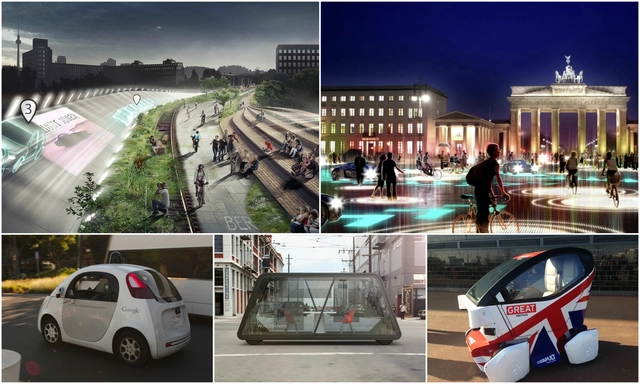
In the race to bring driverless cars from a futuristic fantasy to a present-day reality, developers have touted a plethora of advantages, from reduced traffic congestion on roads to improved safety thanks to the elimination of human error. But the potential widespread implementation of driverless cars could also have profound impacts on the form of our urban environments, fundamentally reshaping infrastructure and land use. As recently as a year ago, this new technology was seen as decades away; however, recently Elon Musk, CEO of electric car maker Tesla, predicted that driverless cars will be capable of making cross-country treks within about two years, and a pilot program in the United Kingdom city of Milton Keynes plans to launch a fleet of driverless pod-taxis by 2018, matching Musk’s timeline.
The driverless car future could be just around the corner, and the normally slow-changing infrastructure of cities could be forced to apply quick fixes to adapt. At the same time, the full potential of driverless cars cannot be realized without implementing significant changes to the urban fabric. So how will driverless cars change how our cities work, and how will our cities adapt to accommodate them?
Videos
Oblong Voidspace - Jene Highstein & Steven Holl. The Snow Show, Lapland, 2003 and 2004. Image Courtesy of Fung Collaboratives, Photo Credit: Kostamoinen
Winter is the perfect time to build structures with ice, a time and a technique that together offer the possibility of a pure white architecture. With a cloudy sky the condition culminates into an impressive whiteout: white architecture, the landscape and the sky dissolve into a diffuse unity without a visible horizon. If clear skies emerge a subtle contrast of warm and cool white appears with yellowish sunrays against the blue sky. However, the ice itself has striking effects as well: The surface appearance ranges from crystal clear glass to soft opaque impressions. And, for the long nights, illumination achieves an additional magical glow and extends the short daylight time.
Worldwide, snow shows, ice hotels and festivals have attracted numerous visitors with glistening snows and stunning lighting solutions. Futhermore, this frozen water strategy presents a sustainable solution par excellence, where the manufacturing and even disposal causes no harm to the environment. Read on to explore the coolest projects and events featuring architects and artists from Finland to China.
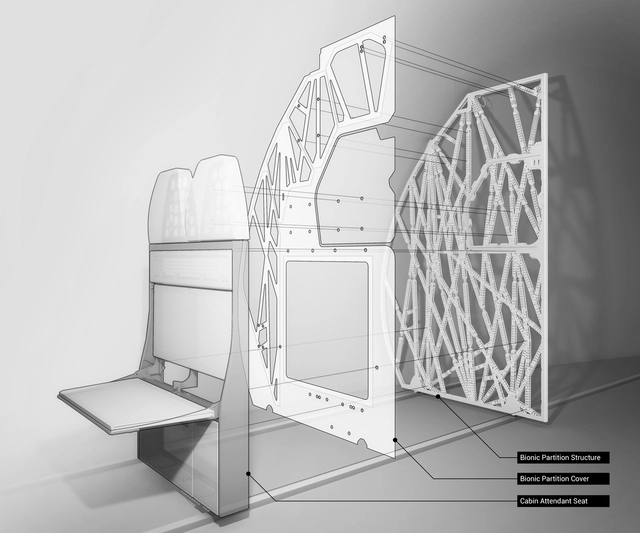
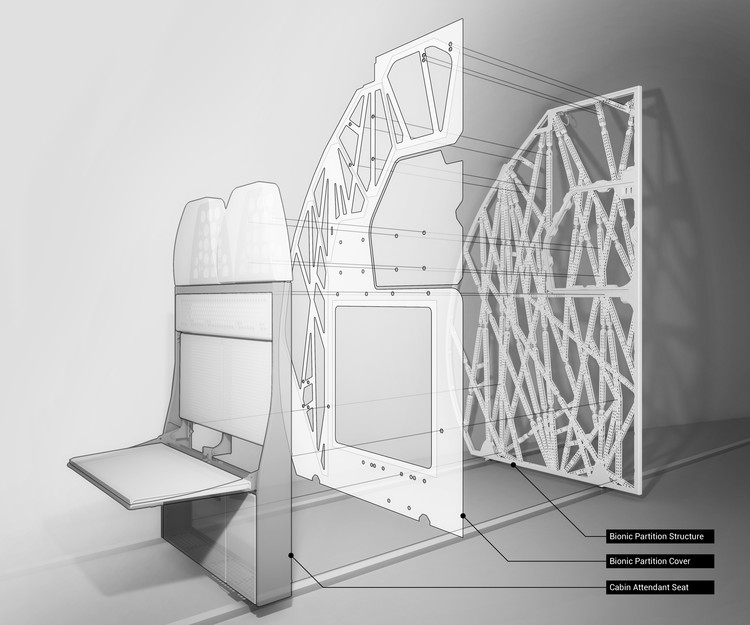
You’ve probably never given much thought to the seemingly basic interior partitions of an airplane, but building codes are a walk in the park compared to the exacting standards of aviation design. Those thin panels that separate the seats from the plane's galley must also be capable of supporting the weight of flight attendant jumpseats and providing a removable section to accommodate emergency stretchers - not to mention the rigorous safety standards and crash testing that aviation components must satisfy. With all of these challenges in mind, The Living, an Autodesk Studio, in collaboration with Airbus and APWorks, have developed the Bionic Partition Project, which harnesses generative design and 3D printing to maximize the structural efficiency of the panel, reducing the weight of an aircraft, and saving fuel. And while this particular application is specific to a single aircraft type, the technological advances could have far-reaching implications.



















.jpg?1453730339 "Quinta Monroy housing. Image Courtesy of ELEMENTAL")