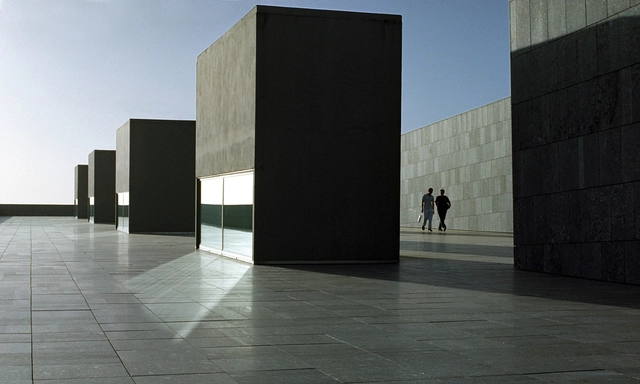
This week we present the Faculty of Architecture of the University of Porto through the lenses of Fernando Guerra. Here we share a complete series from the photographer of this iconic work, along with a brief text on the subject. The University of Porto plays a major role in the world's architectural landscape, always among the highest in rankings and boasting great architects like Eduardo Souto de Moura (Pritzker 2011), Fernando Távora and Álvaro Siza Vieira (Pritzker 1992).
The interplay of tantalizing eroticism continues within Christian Grey’s luxury tower in the recently-released film sequel, Fifty Shades Darker. In the first film, Grey’s plush apartment played an integral role in undressing the personas of Anastasia Steele, who liberates herself from her chaste existence, and Christian, who exposes the seething and fiery carnal desires and fetishism behind his glorified masculine beauty, charm, and appearance.
Grey's penthouse, which resonates with his unyielding and intimidating Heathcliff undertones in the first part of the trilogy, turns over a new leaf in the sequel. There is ambient warmth in the penthouse; nevertheless, the high level of sophistication prevails in his penchant for singular tastes and fastidiously-selected objects and it remains unapologetically lush.
Last year I had the opportunity to visit Studio Gang, one of the most prestigious and inspiring firms around led by architect Jeanne Gang. I was able to talk with her team about the workspace, some of her projects, about the future of architecture, the role of women in the profession and even about the inspirations behind the United States Embassy in Brasilia.
As the American Dream dies, we must rethink our suburbs, homes, and communities. Seen here: ,L’Abri de la Bourgeoisie, after L’Abri du Pauvre, Claude-Nicolas Ledoux, 1804, from Atlas of Another America, Park Books, 2016. Image Courtesy of Keith Krumwiede
Americans define themselves through work; it builds character, or so we believe. The American Dream is premised on individual achievement, with the promise that our labor will be rewarded and measured by the things we collect and consume. For many, the sine qua non of the dream, our greatest collectible, is the single-family house. Of all our products, it is the one we most rely upon to represent our aspirations and achievements.
American graphic designer Peter Dovak is passionate about urban transportation. He has creates colorful designs that represent transit systems in a much more instructive way so that people can interpret them more easily.
One of his last projects, called 220 Mini Metros, was based on metro and light rail networks from 220 cities of the world.
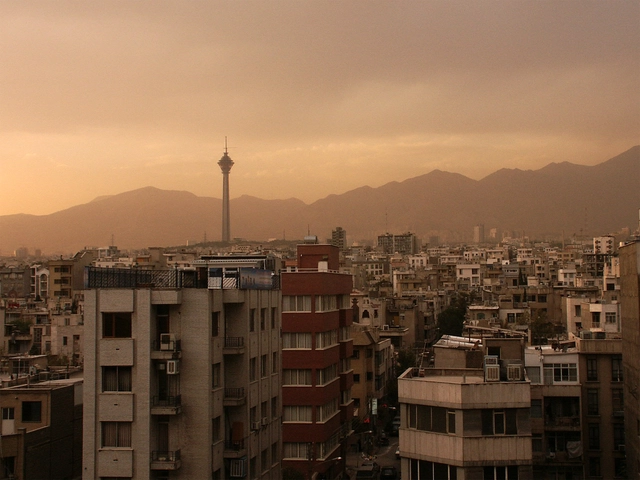
Taking a taxi from Tehran Imam Khomeini International Airport into the city, one cannot help but look at the seemingly random distribution of buildings along the road; an array of mismatched concrete blocks, worlds away from the images of Sheik Lotfollah Mosque that typically adorn the covers of Iran travel guides. “My observations about architecture in Iran are like that of many other countries that have changed in terms of architectural characteristics; Iran has changed too,” says Tehran-based architect, M. Reza Karfar. “Now we are in a time where everything is mass produced and we are just using and using, but not making memories with anything. That sense of belonging will, of course, go away. You see a 50 or 60, or 200-year-old house that just gets demolished and replaced by a 4 or 5-story building, and in 5 years they will demolish that 4 to 5-story building too.”
Not to say that Iran should be an exhibit for tourists, only consisting of beautiful tiled buildings, but this fear of memories fading in disappearing public spaces is one that, despite the numerous historical sites preserved around the country, is noticeable in Iran’s big cities. And while the subject is particularly pertinent in Iran, as Karfar points out this phenomenon is not unique to just one country. As a result, Iran might offer something of a case study for other countries around the world.
University Library of Vigo Alberto Noguerol & Pilar Diez Architects. Image Courtesy of Cluster del Granito
Rediscover a natural, unique and original material, with multiple applications for current architecture and design immovable over time, granite is a jewel of nature capable of providing exclusivity to any contemporary construction or finish. Its wide range of varieties and the incorporation of new cutting technologies and those giving a surface finish, provide us with infinite design possibilities.
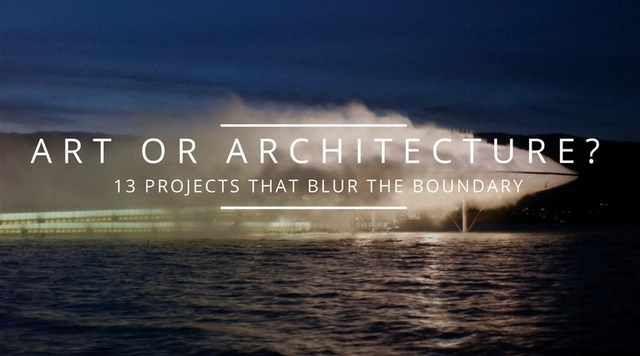
Whether architecture is a form of art or not has often been a controversial topic of conversation within the architecture world. If one goes by the general definition of the word "art," architecture could potentially fit within the umbrella term: "the expression or application of human creative skill and imagination, typically in a visual form such as painting or sculpture, producing works to be appreciated primarily for their beauty or emotional power." As anyone involved in the architectural discipline probably knows, there is an abundance of varying definitions of the word "architecture," so whether its primary purpose is to achieve beauty or to organize space is evidently up for discussion.
Ask Jay A. Pritzker, founder of the Pritzker Prize, and he may say that "architecture is intended to transcend the simple need for shelter and security by becoming an expression of artistry." Ask The Guardian's Jonathan Jones and he may tell you that "architecture is the art we all encounter most often, most intimately, yet precisely because it is functional and necessary to life, it's hard to be clear about where the 'art' in a building begins." But this ambiguity is part of what makes the field of architecture challenging and exciting. To celebrate this complicated aspect of architecture, below we have collected a list of just some of the works that could be seen as art, architecture or both, depending on who’s looking, to provide some context to those blurry boundaries.
Bricks are as old as the hills. An enduring element of architectural construction, brick has been a material of choice as far back as 7000BC. Through the centuries, bricks have built ancient empires in Turkey, Egypt, Rome and Greece. Exposed stock brick came to define the Georgian era, with thousands of red brick terraces still lining the streets of cities such as London, Edinburgh and Dublin.
South Korea presents an interesting case for the changing face of brick, with a preference for dark, grey masonry striking a heavy, brutalist, yet playful tone. Like many countries, South Korean brick architecture has questioned conformity, experimenting with stepped, perforated, permeable facades, and dynamic, curved, flowing walls. Below, we have rounded up 12 of their most interesting results.
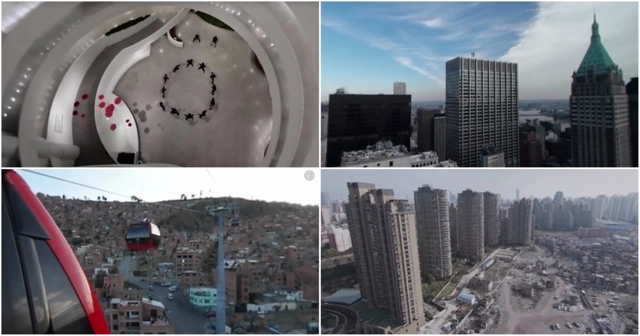
With 360 camera technology, the ability to transport people into a space through film has become all the more immersive. Viewers are able to turn the viewport in every direction to see the whole scene, or even to put on a headset for a more natural way of viewing a scene. Of course, this has important implications for viewing architecture, which many believe has become too image based, and therefore two-dimensional. 360 videos leave no corners conveniently hidden, as a traditional video or image would, perhaps providing a fuller picture of a place - could this perhaps open up a more human-scale understanding of space?
The New York Times have treated their Facebook followers to some great architectural insights through their Daily 360, getting more than their money’s worth out of their 360 camera equipment. Some of these must-see videos include a dance rehearsal taking place in the Guggenheim Museum’s rotunda, as well as an aerial view of La Paz, Bolivia. Read on to take a peek into the richness of earth’s urban spaces:
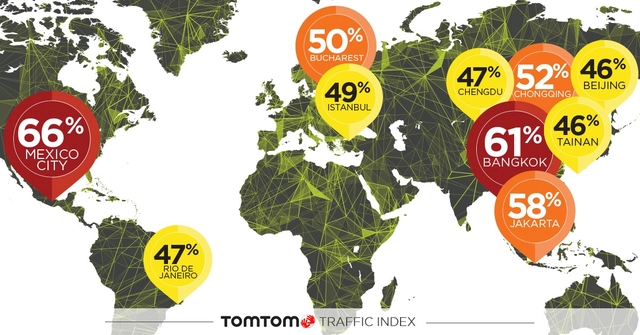
Earlier this year, Dutch company TomTom(TOM2) released a detailed report that uncovered the cities around the world *that have the most traffic congestion, based on the results of the TomTomTraffic Index 2017. According to the latest analysis, Mexico City will retain its crown as the "most traffic congested city" in the world. Drivers in the Mexican capital are expected to spend an average of 66% extra travel time stuck in traffic any time of the day, and up to 101% in the evening rush hours adding a whopping 227 hours of extra travel time per year.
Next in the global rankings are Bangkok (61%), Jakarta (58%), Chongqing (52%) and Bucharest (50%), making up the top five most congested cities in the world. You can find out more about TomTom's Traffic Index and discover where your home city ranks at after the break.
In a recent TED Talk, architect Siamak Hariri takes the audience inside his design process for the Bahá'í Temple of South America. Responding to an open call in 2003 to design the last of the faith's continental temples in Santiago, Chile, Hariri recalls a moment as a student at Yale when he learned about the transcendent power of architecture, a moment he tried to recreate in the twelve-year project.
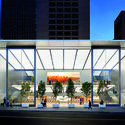
Yesterday, the Apple Store Dubai officially opened to the public, becoming the tech giant’s 494th retail store to debut since the opening of their very first brick-and-mortar store in 2001 in Fairfax County, Virginia. Since that first occasion, their stores have become synonymous with ground-breaking, transparent design, with Apple even receiving patents for their iconic flagship store and glass staircase designs.
With their newest stores, Apple has tried to build what they call a “modern-day town square,” where visitors come not just to shop, but to be inspired, learn and connect with others in an inviting community space.
To mark the Dubai store’s opening, we’ve rounded up 11 of the most iconic Apple stores from around the globe.
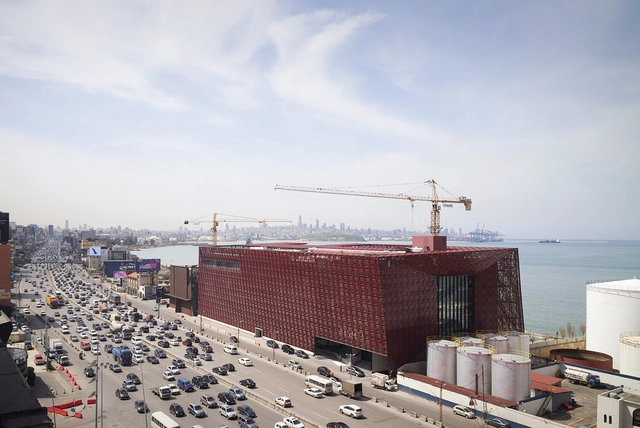
In this series, photographer Julien Lanoo turns his camera toward Adjaye Associates' Aishti Foundation in Beirut, a shopping center and museum showcasing the private contemporary art collection of Tony Salamé, the founder of Lebanese luxury retailer Aishti.
Located on a coastal brownfield site in central Beirut, the building integrates the two distinct programs by establishing what the architects call a "celebration of views into the spaces as well as a homogenising tiled design that presents a language throughout the building’s floor, façade and roof." Interior spaces are organized around a reflective central atrium, while an undulating landscape along the water reclaims seaside public space, and opens up views over the city of Beirut.
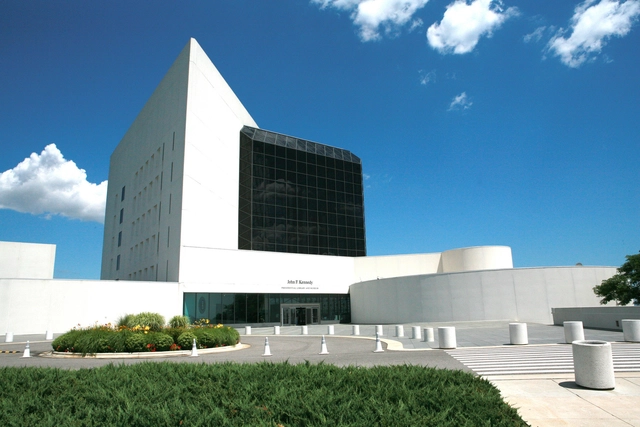
Today, April 26th 2017, marks I.M. Pei’s 100th birthday. The occasion offers a wonderful opportunity to take a retrospective look at one of the most significant and productive architects of the past 100 years, with many organizations hosting events, celebrations, and symposiums to talk about Master Pei and his notable projects. However at these events, just as throughout I.M. Pei’s career, there is unlikely to be much intellectual conversation about Pei’s architectural legacy. The main discussion around I.M. Pei is still focused on his design talent and intriguing narratives about the charisma he used to convince clients to continue through tough projects.
Though I.M. Pei himself has never talked at length about his design theory or the intellectual basis of his projects, these simple narratives leave certain questions unanswered: Where does I.M. Pei’s inspiration for architectural form come from? How did his architectural design affect his peer group of architects and artists, and contribute intellectually to the contemporary art world?
https://www.archdaily.com/870059/im-peis-inspiration-a-comparison-of-masterful-architecture-with-minimalist-artTianci Han
Imagine having a world famous architect be the first inhabitant of your debut solo architecture project - and not just any architect, butI.M. Pei, who turns an incredible 100 years today. This unlikely turn of events actually happened to Costa Rican architect David Konwiser 7 years ago when Pei rented out Konwiser’s Villa Punto de Vista for New Years, although the unbelievable chance encounter almost didn’t become a reality. Just two and a half months prior to Pei’s arrival, the villa was more construction site than materialized building. Understandably, those two and a half months were, in Konwiser's own words, "the most difficult... of my career - and likely my life," as the architect writes in an article for the Architectural Digest. Despite that immense pressure, or perhaps because of it, the villa was ready for its first, and arguably its most important, visitor.
What's behind our current obsession with all things Superheroes, from the Marvel and DC comics spinoffs for TV and Film, to the more eccentric offerings on Netflix from the Wachowski’s Sens8 to the cosmic supernature of The OA? Critics see the classic superhero expressing the desire to re-establish order in the face of chaos (Batman/Joker) but some of our more recent superheroes are about the power of change, of remaking the world through a kind of ‘superempathy’. The power of the superhero depicted as an eccentric group of people reskilling with new forces and energies – think the aerobics-physics of The OA which invents and designs a new collective body and superpower and the transcultural/transtemporal superempathy of Sens8.
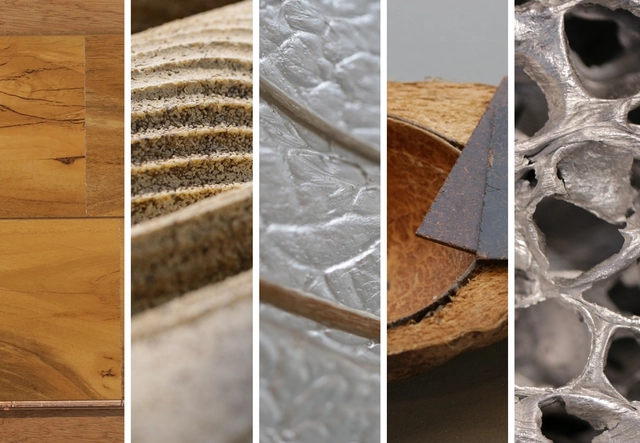
Something of this otherworldly capability of the new wave of superheroes is tangible at SuperMaterial exhibition at The Building Centre in London. It's about materials and the built environment, how these SuperMaterials will radically transform our relationship to the world around us through the superpower of material empathy, either adapting and changing to the environment, or being so efficient to produce and upcycle that they diminish the need to lay waste to the environment in the extraction of resources.













_Nigel_Young-_Foster___Partners_2278_FP596851_indesign.jpg?1493322942 "© Nigel Young")
_Nigel_Young-_Foster___Partners_Zorlu.jpg?1493340357 "© Nigel Young")