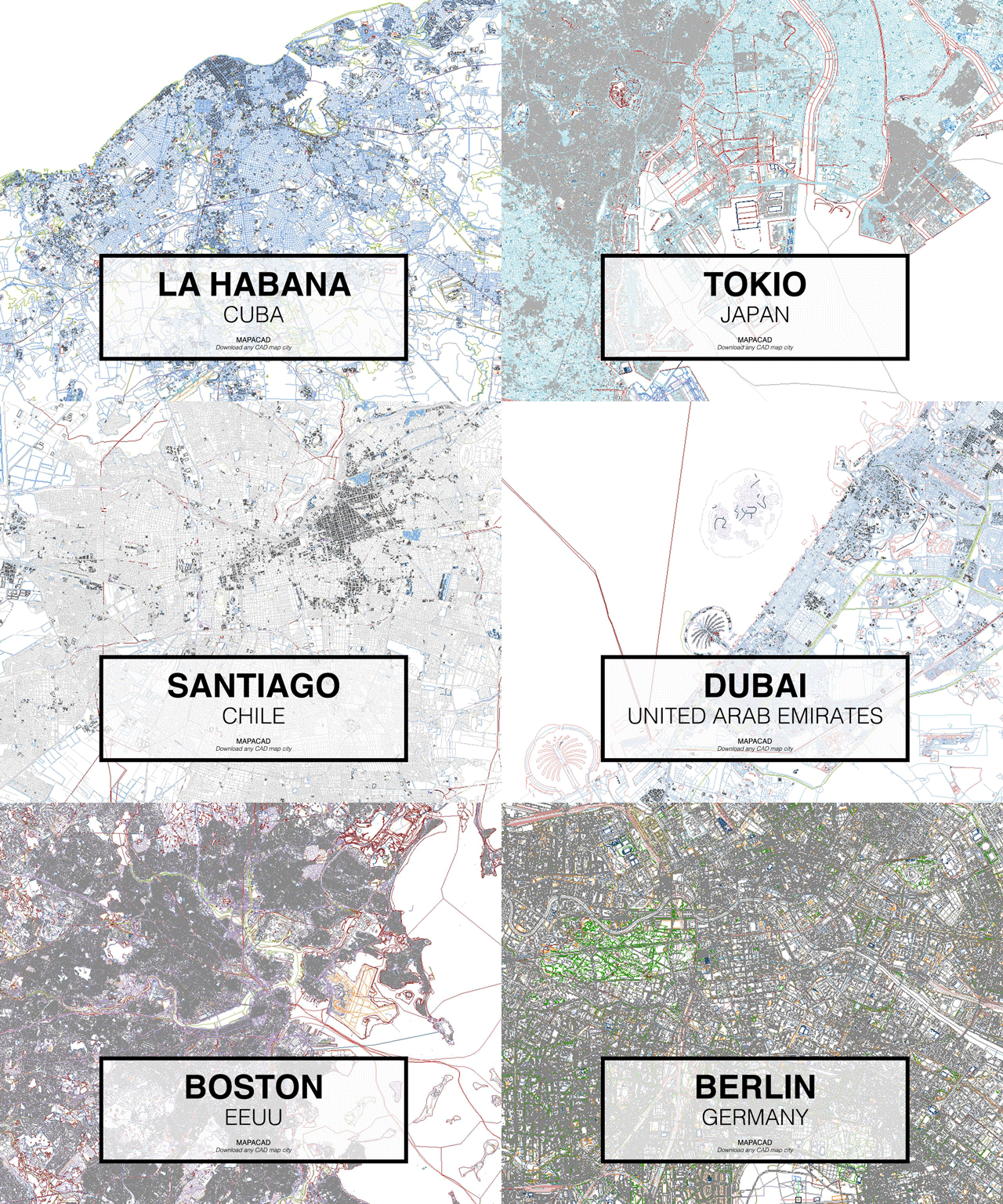
Mapacad is a website that offers downloads of .dwgs of dozens of cities. With 200 metropolises in their database, the founders have shared a set of their most-downloaded cities.
The files contain closed polyline layers for buildings, streets, highways, city limits, and geographical data--all ready for use in CAD programs like Autocad, Rhino, BricsCad and SketchUp.
Architectural projects are only as successful as an architecture firm’s ability to work together. Experience means nothing if projects aren’t rooted in creative collaboration.
For more than 30 years, residential architects Stuart Cohen and Julie Hacker have produced a series of exquisitely designed and crafted homes in Chicago’s northern suburbs. Although known for their distinctly different personalities, this husband and wife duo has effectively created an environment where clients can be heard and understood. They know how to design together from start to finish, and that’s what makes their project results so remarkable.
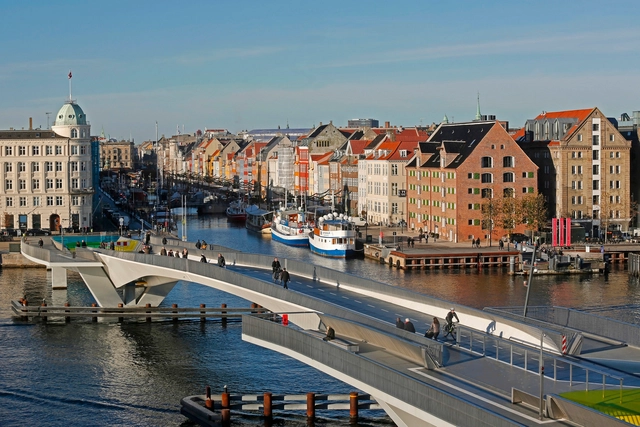
It's no secret that Copenhagen continues to invest massively in bicycle infrastructure like no other city on the planet. The network is already comprehensive and effective but the City continues to add important links, especially over the harbor and the canals. One of the more recent additions is the Inner Harbor Bridge—Inderhavnsbroen in Danish—that spans Copenhagen Harbor at a key, strategic and iconic point. It links the city center at the end of the postcard picture perfect Nyhavn with the Christianshavn neighborhood and the southern neighborhoods beyond. It is one of a series of 17 new bridges or underpasses for bicycle traffic that have been added to the City's transport network in the past few years.
The Inner Harbour Bridge was riddled with problems and was extremely delayed, as you can read here. Now, however, it's been open since July 2016. Let me be clear: I'm thrilled that we have a new, modern link over the harbor to accommodate bicycle traffic and pedestrians. I am over the moon that the number of cyclists crossing daily exceeds all projected numbers. The City estimated that between 3,000–7,000 cyclists would use the bridge but the latest numbers are 16,000. It's a massive success. But sometimes you can see the forest for the trees. I'm sorry, but Inderhavnsbro is a stupid, stupid bridge.
Despite being aimed toward a common goal, the different perspectives of the architect and the client can sometimes lead to a tense working relationship. But where there is conflict, there is humor – in these strips, Tristan Comics manages to address the topic in a truthful yet humorous way. They say laughter is the best medicine, and through comics, Tristan manages to shed light on those pertinent issues that all those in the world of architecture can relate to.
Every company wants to establish a brand on a local, regional, national or even international level. A company strives for an image that is recognizable by potential customers no matter where they are in the world. In fact, the first face-to-face interaction with a customer might be at a company’s own location. This initial impression can make or break the customer’s willingness to spend their money. Maintaining a well-loved and respected brand appearance is imperative to a company’s success.
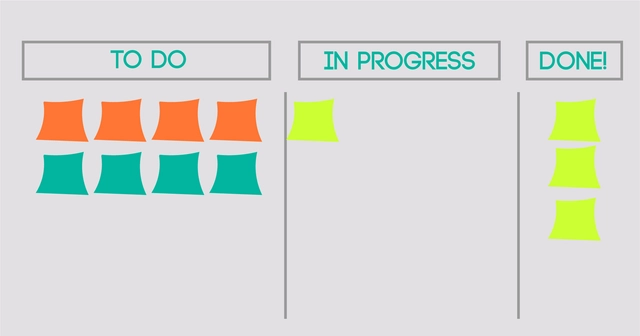
If you're reading this, you likely work in the design world, and as a result you may have heard of Scrum. It’s a design method originally introduced by Hirotaka Takeuchi and Ikujiro Nonaka in the 1980s to describe a process for product development, and later formalized for software development by Jeff Sutherland in 1995. It relies on the organization of a team and its tasks around the principles of focus and flexibility: focus on a singular task within a given time period, and flexibility in response to changing client demand, user feedback, and design challenges. Scrum keeps a project on schedule with the Sprint, where the entire team is working towards one important milestone within set dates, and continuously communicating potential impediments to hitting the deadline.
If we think about how the educational system worked in the past, we can quickly see that both the teaching style in schools as well as the school’s infrastructure were very different from the current system. The educational model of the twentieth century could be defined as being similar to the "spatial model of prisons, with no interest in stimulating a comprehensive, flexible and versatile education."
However, we are now at a time when social, economic and technological developments have created a more global society and where information and learning are becoming more affordable. This radical change has transformed the societies in which we live, leaving the current educational model based on a rigid and unidirectional teaching obsolete.
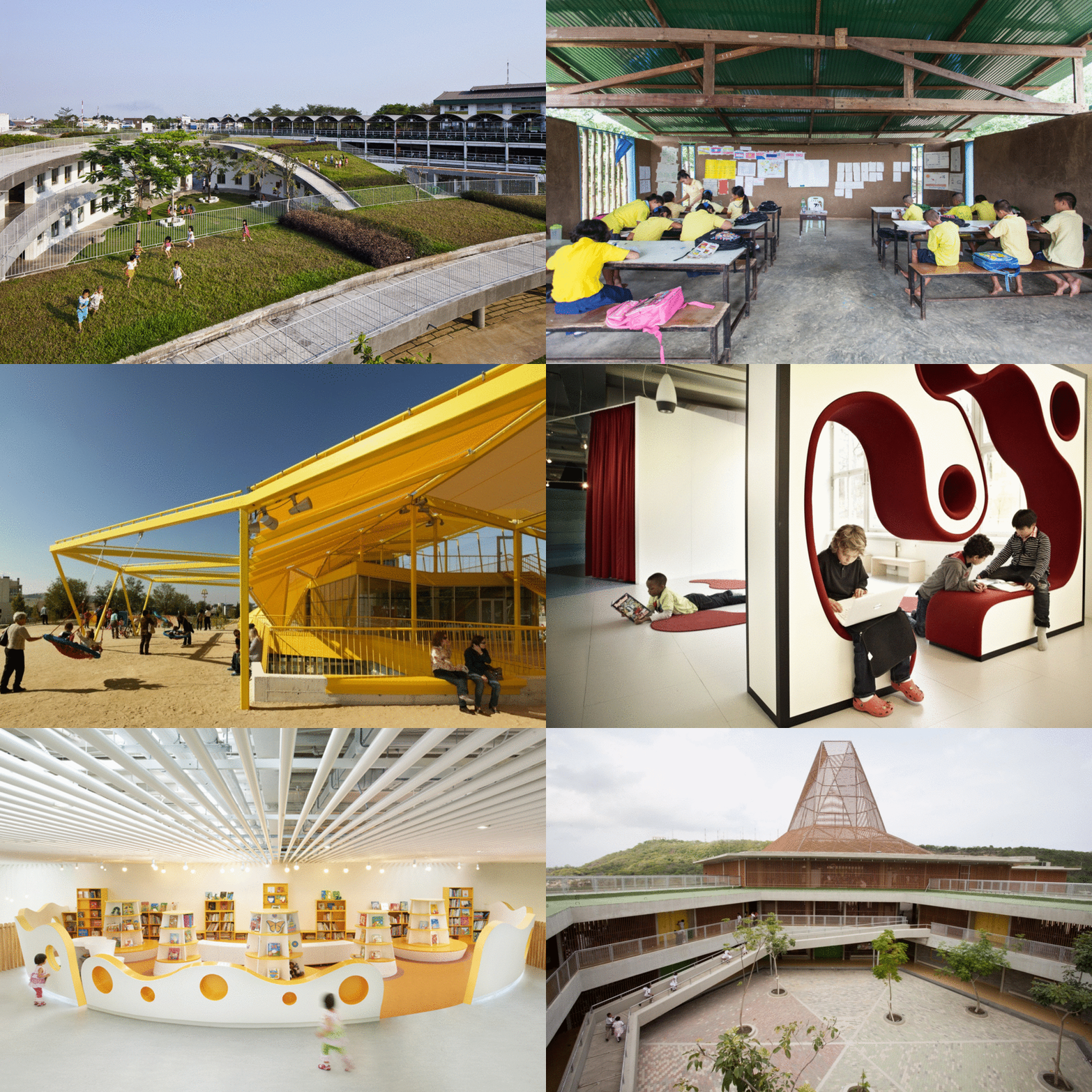
As such, there are schools that have not only broken the mold of traditional teaching but have formed new educational standards, exploring new paradigms and opening up new possibilities within the design of educational spaces. Since architecture and educational models often reflect the ideology of a society, how is the school of 21st century defined?
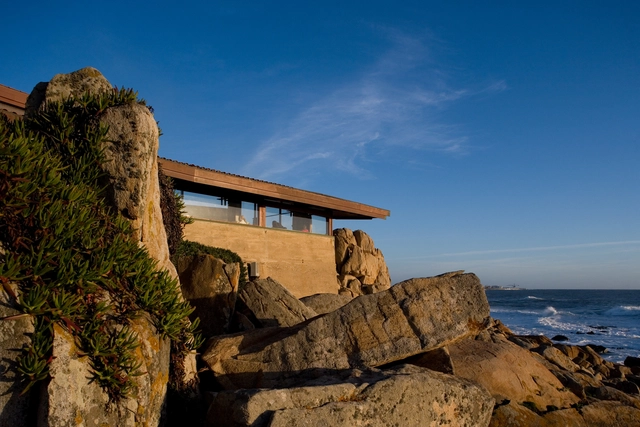
The following photo set by Fernando Guerra focuses on Boa Nova Tea House, a project by Portuguese architect Álvaro Siza Vieira. Completed in 1963, it was one of the first works done by the 1992 Pritzker Prize winner. Built on the rocks that hang over the sea in Leça da Palmeira, the tea house is in close proximity to another iconic project by the same architect, the Leça Swimming Pools, both classified as National Monuments in Portugal.
Videos
Award-winning ‘Badabing Badaboom’ by Jason Tan (Singapore) presents a Gold House in Dunkwa, Ghana, to house the Gold Exchange and the Miners Union. This ‘gift’ from the Chinese is a metaphor for China’s neo-colonial presence in Ghana and Africa. Image Courtesy of Archiprix International
Once every two years architecture schools around the world are invited to submit their single, finest graduation project to the ArchiprixInternational competition and exhibition. This year, the event selected Ahmedabad, in India, to exhibit the results. Here Arjen Oosterman, Editor-in-Chief of Volume, reviews the event and the work on display. You can read an interview with the Director ofArchiprix, Henk van der Veen, here.
From its inception at the dawn of the millennium (2001), Archiprix International has proved to be an adventure with enormous ambition. To collect, once every two years, the very best graduation projects from architecture, landscape architecture, and urban design schools around the world is no small feat. To comprehensively exhibit this material is also a challenge, and to create a meaningful and productive event around the award session—giving center stage to the selected graduates and their projects—is a task akin to walking a tightrope. And yet, this is what they are achieving.
Primary School Tanouan Ibi. Image Courtesy of LEVS Architecten
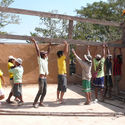
In our article in February, "11 Vernacular Building Techniques That Are Disappearing," we discussed vernacular techniques that, through the introduction of modern building and the waning prevalence of traditional lifestyles, were slowly becoming lost forms of knowledge. What we didn't discuss, though, was that few of the techniques were disappearing without some form of resistance. After the article was published we were contacted by Dutch architecture firm LEVS Architecten, who highlighted their efforts work in the Dogon region of Mali, where they work with local communities to continue--and improve--the vernacular Dogon tradition.
Despite the fact that LEVS Architecten has worked extensively within this tradition, they still consider themselves modern architects who are simply looking for responsible, alternative solutions, and have even found opportunities to utilize this knowledge for architecture projects back in the Netherlands. As Jurriaan van Stigt, partner at LEVS Architecten and chairman of Partners Pays-Dogon, explained in an interview with ArchDaily, vernacular architecture is “in the undercurrent of our thinking and approach to the tasks that lay behind every project.”
Starting in September 2017, the University of Luxembourg launches a two-year, English-taught Master program on Architecture, European Urbanization, and Globalization. The program is situated within an interdisciplinary environment, where the design studio as the core of the study program will be constantly fed by surrounding fields, such as geography and geospatial analysis, regional and urban development, circular economy, sustainable transport systems, energy performance of built environments, and other themes.
Over the years, one unique tradition has been growing among architecture students: building a pizza oven. To help maintain this tradition, we decided to share this small guide for a 1.20m diameter mini-oven. Follow these easy steps and quick tips to build your own crust-worthy oven.
https://www.archdaily.com/867598/build-your-own-pizza-oven-the-crust-worthy-guide-you-didnt-know-you-kneadedEquipe ArchDaily Brasil
The situation was dire: People were flocking to cities for work, but scarce land and lack of new construction were driving up rent prices. Middle-income residents couldn’t afford the high-end housing stock, nor did they want to enter cramped—sometimes illegally so—apartments. Luckily, a new housing solution appeared: In exchange for small, single-occupancy units, residents could share amenities—like a restaurant-kitchen, dining area, lounge, and cleaning services—that were possible thanks to economies of scale. Sound familiar?
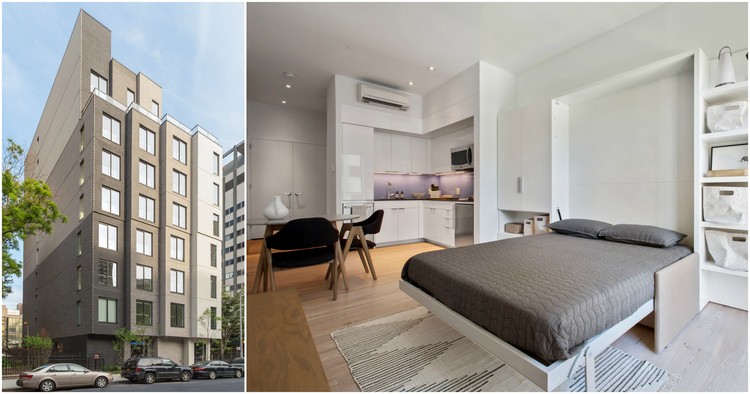
It should: It’s the basic premise behind Carmel Place, a micro-apartment development in Manhattan’s Kips Bay that recently started leasing. The development—whose 55 units range from 260 to 360 square feet—was the result of Mayor Bloomberg’s 2012 adAPT NYC Competition to find housing solutions for the city’s shortage of one- and two-person apartments. Back then, Carmel Place needed special legal exceptions to be built, but last March the city removed the 400-square-foot minimum on individual units. While density controls mean another all-micro-apartment building is unlikely, only building codes will provide a de facto minimum unit size (somewhere in the upper 200 square foot range). What does this deregulation mean for New York City’s always-turbulent housing market? Will New Yorkers get new, sorely needed housing options or a raw deal?
Professors: for many of us, they're the windows through which we first glimpse the huge breadth and depth of the subject of architecture. They're our guides and our mentors--but they're often also strange, unpredictable and infuriating (although there is a silver lining to even the most frustrating of teachers). Of course, every different person brings their own quirks to the job of teaching architecture students, but the likelihood is that you've come across at least one professor that fits each of the following descriptions:
“An image is a sight which has been recreated or reproduced. It is an appearance, or a set of appearances, which has been detached from the place and time in which it first made its appearance and preserved – for a few moments or a few centuries. Every image embodies a way of seeing.” - John Berger / 1972 / Ways of seeing
Digital tools have given architecture the ability to manipulate information, allowing architects to interact with existing information and reshape it in a different way according to the author’s ideals or thoughts about architecture.
Representation becomes a project itself; it is a graphic manifesto of what the author wants to deliver, a critical vision of a design intervention in a particular context.
In this path, collage has become an active tool to facilitate the reproduction of multi-layered atmospheres made by the curated assemblage of different forms to create a complex stage for an architectural idea.
A collage engages all senses to define the experience of a space. The symbolic and tactical associations between fragments of images provide a way to understand all the stories behind a space, transgressing the limits of perception to reach an intuitive process that exhibits the atmosphere of a project.
Here we introduce 12 architecture offices that describe atmospheres by using complex collage compositions to express social, cultural and political environments for their designs.
As creators, we all go through stages of creativity. Some phases are more severe than others, but getting emotionally involved is, in most cases, unavoidable. In many cases, the emotional intensity of design can be so intense, it begins to resemble another well-known emotional process—one that generally includes the stages of denial, anger, bargaining, depression, and acceptance. Design may not literally be as difficult as losing a loved one, but it's little coincidence that in the architecture profession, one's best concepts are often referred to as their "babies," and any design process will involve a fair amount of letting them go.
To paraphrase the existing psychological literature, "as long as there is creativity, there is hope. As long as there is hope, there is creativity." So join us as we explain the architect's path through the five stages of griefcreativity experienced in any design process.
At a time when so much of what we do happens online, there is a lot we can learn from tracking the way we use the web. Alexa is an Amazon company that sells data insights from millions of Internet users aimed at business owners (we'll save the data ethics discussion for a different day). A selection of Alexa's data is available to the public, with the company presenting a list of sites with the highest average daily visitor and pageview counts—including a list of the biggest websites in the architectural world, from yours truly on down.
But which is the most popular architectural firm, school, or individual building? Continue reading to find the top architecture websites for each category based on Alexa's count of the past month's traffic—there may be some surprises!
A year after her untimely passing, we take a look back on one of the hallmarks of Zaha Hadid's career as an architect: her sketches. In October we wrote about how her paintings influenced her architecture. Now, we examine her most emblematic sketches and the part they played in the initial formal exploration of her design process.



.jpg?1491856633&format=webp&width=640&height=580)

.jpg?1473841941 "Vittra Telefonplan / Rosan Bosch. Image")