A recent independent survey of more than 2000 architectural visualization professionals revealed an intriguing trend. More than 20% of these designers and architects are using real-time rendering as part of their presentation workflows right now, with another 40% trying it out for adoption.
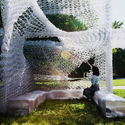
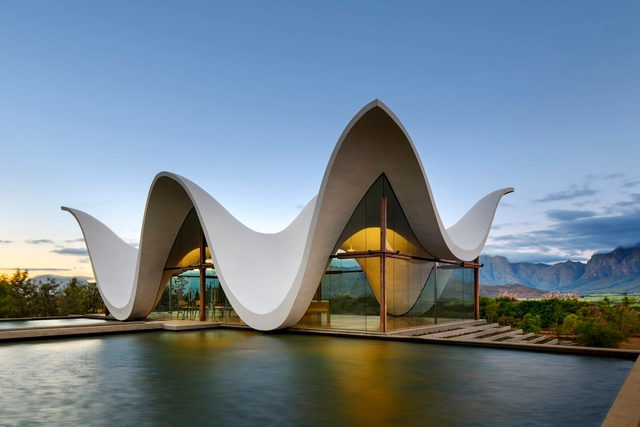
In the town of Moukhtara, Mount Lebanon, L.E.FT Architects have transformed a 100-square-meter structure into a symbolic, picturesque mosque. The Amir Shakib Arslan mosque is a rendition of old versus new with a white steel structure overlaid onto an existing building of cross-vaulted masonry. The angular geometry of the steel plates is a result of the structure’s alignment in relation to Mecca.
Lebanese architectural photographer Bahaa Ghoussainy has released a new series of images which accentuate the contrast that lies between the architectural design of the mosque and the traditional representation of Islamic mosques and prayers. The juxtaposition of an Islamic holy place built in a non-Islamic town is translated into the architecture’s design, merging two dissonant styles into one complementary structure.
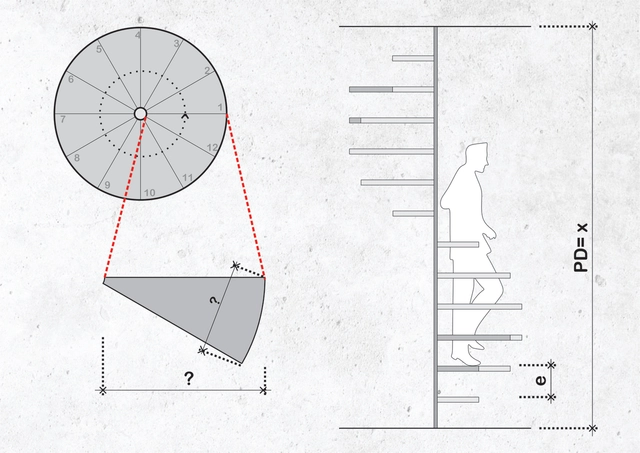
Spiral staircases save valuable square meters because they occupy a much smaller area than a conventional staircase. With daring shapes and diverse configurations, they can also be iconic objects in projects. However, the design of these staircases requires careful attention so that you can prevent an uncomfortable or dangerous outcome. Although BIM software simplifies this process, it's always important to understand the restrictions and the underlying concepts.
Architecture schools and the students they house have a particularly unique and interesting building-user relationship. Architecture students value the buildings of their school not only for providing the valuable work space necessary for constructing studio projects but also as an example and model of a building in use. As the buildings are the places where students first learn how to read and understand architecture, design schools become full-scale teaching tools that help new designers grasp structure, details, how materials perform and interact, and so many of the other core concepts of architecture. While the scrutiny of students and faculty can be exhaustive, architects have embraced the challenge of creating engaging works of architecture that both suit the specific needs of a school and take on the pedagogical challenge of educating students by example.
As architects we are often conflicted: what do we do when we have clients who want really big houses, houses that by any measure surpass anything they could really need? How do we walk them back from the idea that they need 3,500 square feet of home for a family of four?
On one hand, we want to design it for them. In fact, a bigger project keeps us employed and financially solvent much longer. On the other hand, how do we reconcile that with the idea of sustainability and the architect's responsibility to promote it?
https://www.archdaily.com/888993/the-case-for-a-smaller-house-talking-clients-out-of-the-big-house-they-want-to-buildHenry Louis Miller
The Venice Biennale, one of the most talked about events on the architectural calendar, has opened its doors to architects, designers, and visitors from all around the globe to witness the pavilions and installations that tackle this year’s theme: "Freespace." The curators, Irish architects Yvonne Farrell and Shelley McNamara of Grafton Architects, described the theme as “a focus on architecture’s ability to provide free and additional spatial gifts to those who use it and on its ability to address the unspoken wishes of strangers, providing the opportunity to emphasize nature’s free gifts of light—sunlight and moonlight, air, gravity, materials—natural and man-made resources.” As the exhibition launched at the end of May, the architecture world rushed to Venice to be immersed in what the Biennale has to offer. But while the 2018 Biennale undoubtedly had its admirers, not everyone was impressed.
Read on to find out what the critics had to say on this year’s Venice Biennale.
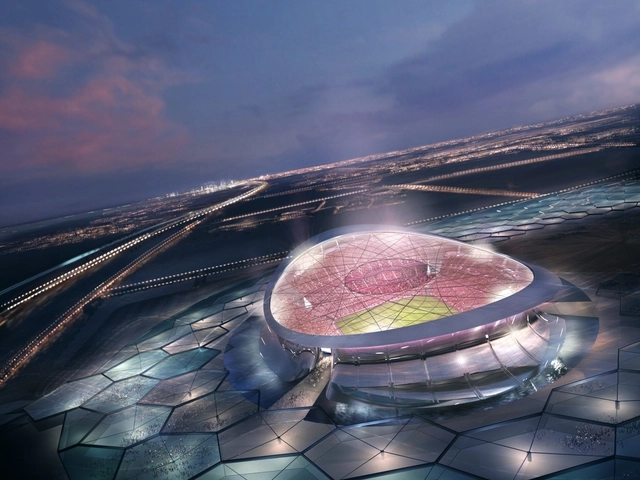
When the Greeks carved stone steps into the side of a hill, they were aiming to create a seated area for people to rest and from which to have an excellent view of the stage at the amphitheater's center. over two millennia later, these objectives are still key to stadium design principles, however, with an ever-increasing global reach and the need for multiple functions, the goal posts for what makes a successful arena are always being moved. As you prepare to watch the 2018 World Cup hosted in Russia, take a look at this list of notable stadium designs in World Cup history which have influenced the evolution of stadium design.
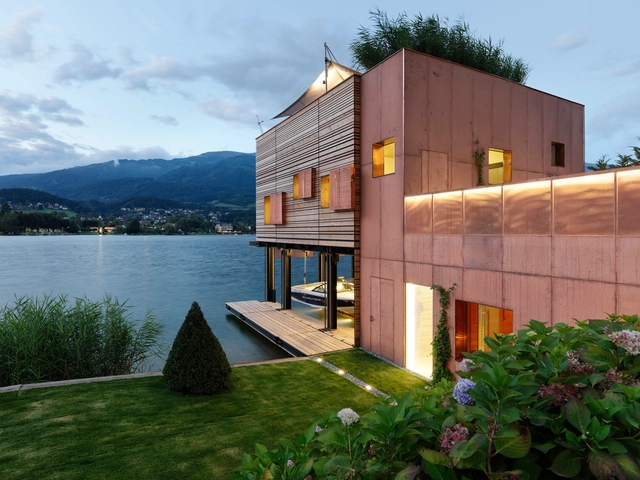
Whether lining a river bustling with rowing crews or sitting calmly at the edge of a lake, boathouses have a storied history and an inexplicable romance to match their unusual program. Designed for use as a training facility for elite rowers, a vacationer’s waterfront playground, shoreline retreat, or even as a historical preservation project, boathouses captivate the imagination as they transcend the limits of the land-form relationship on their site.
Let's think of a paper sheet. If we tried to stiffen it from its primary state, it couldn't support its own weight. However, if we bend it, the sheet achieves a new structural quality. The shells act in the same way. "You can't imagine a form that doesn't need a structure or a structure that doesn't have a form. Every form has a structure, and every structure has a form. Thus, you can't conceive a form without automatically conceiving a structure and vice versa". [1] The importance of the structural thought that culminates in the constructed object is then, taken by the relationship between form and structure. The shells arise from the association between concrete and steel and are structures whose continuous curved surfaces have a minimal thickness; thus they are widely used in roofs of large spans without intermediate supports.
In structural terms, they are efficient because they resist compression efforts and absorb at specific points on their surface, especially near the supports — small moments of flexion.
We already know that the ramp, aside from its different design possibilities, allows—without forgetting the notion of promenade architecturale—its users to overcome physical barriers in the urban and architectural context.
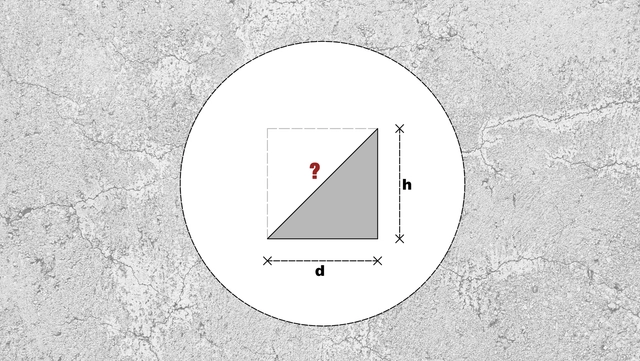
Although it basically consists of a continuous surface with a particular angle of slope, it is necessary to point out the many constructive specifications, which of course may vary due based on the standards of different governing bodies. The following clarifications are intended to assist and determine the appropriate dimensions for comfortable and efficient ramps for all, based on the concept of universal accessibility.
To what extent can the slope of a ramp be modified? How can we determine its width and the space needed for maneuvering? What considerations exist regarding the handrails? Here we review some calculations and design examples for different ramps, below.
Red is everywhere. From stop signs to bricks and lipstick to wine, our constant use of the color in everyday objects has slowly taken over our subconscious. Red is a color that always blends with the context, telling us how to feel or what to think, but why are we attracted to it? Why did cavemen choose ochre-based paint to draw on their walls? Why do revolutions always seem to use red to stir support? Why do we parade celebrities down red carpets, when green or blue would surely do the same job? While the answers to these questions may be vague and indefinite, red’s use in architecture is almost always meticulously calculated.
Videos
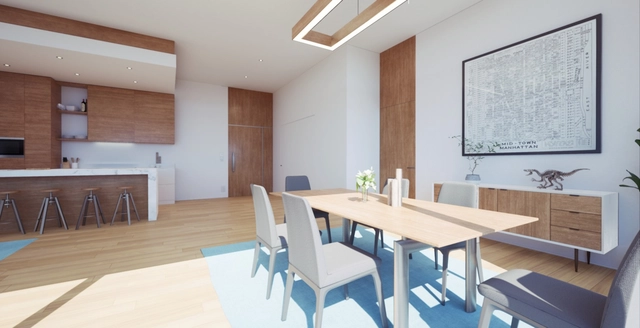
A virtual apartment created by REinVR - Real Estate in Virtual Reality
REinVR, Real Estate in Virtual Reality, is a Canadian company that uses advanced video game technology to create photo-realistic visuals and animation to beautifully showcase real estate projects that have not yet been built. REinVR is a industry leader in the Virtual Reality industry and is regarded as having the highest quality visuals of any company working in Virtual Reality. We spoke to founder Nathan Nasseri about the success of his firm, and his unique background in video game design and new home sales.
It’s no secret that architects and designers prefer an all-glass entrance system to a bulky, full-framed counterpart. The reasons are clear: more glass and less visible hardware means unobstructed views, better daylighting, and a high-end, minimalist aesthetic. Unfortunately, increasingly stringent energy and air infiltration codes—such as California Title 24—pose a challenge when specifying exterior entrance systems with all-glass visuals. This includes monolithic heavy-glass doors. It becomes a give and take scenario that can ultimately result in selecting standard, aluminum-framed thermal doors that don’t have much to offer in terms of attractive aesthetics.
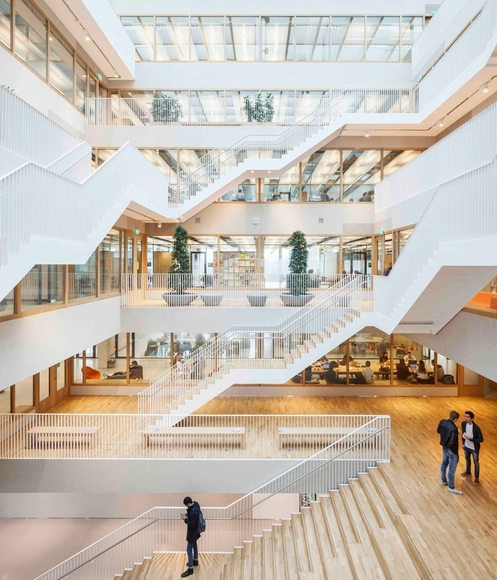
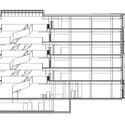
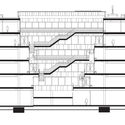
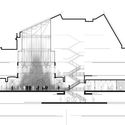
Offices and cultural buildings both offer the perfect opportunity to design the atrium of your dreams. These central spaces, designed to allow serendipitous meetings of users or to help with orientation in the building, are spacious and offer a lot of design freedom. Imposing scales, sculptural stairs, eccentric materials, and indoor vegetation are just some of the resources used to give life to these spaces. To help you with your design ideas, below we have gathered a selection of 15 notable atriums and their section drawings.
Let’s face it. You can spot a design enthusiast from miles away thanks to his or her remarkably unique style. Whether it’s their one-of-a-kind backpack or customized sneakers, they’ll make sure they turn heads wherever they go. While some love to "go big or go home" with their outfits and accessories, others choose a more subtle approach to their styling. Thankfully, some creative minds have stretched their love of architecture and geometry and developed unique jewelry pieces inspired by their interests.
To all the architects, designers, artists, expressionists, and people outside the design world with really good taste, here’s a list of architecture-inspired jewelry that will undoubtedly stand out. Get those credit cards out because we promise, you won’t be able to resist.
Colors and their perceptions are responsible for a series of conscious and subconscious stimuli in our psycho-spatial relationship. Despite its presence and its variations, it is present in all places. Have you ever wondered what its role is in architecture?
As well as the constructive elements that make up an architectural object, the application of colors on surfaces also influences the user's experience of the space. According to Israel Pedrosa, "a colorful sensation is produced by the nuances of light refracted or reflected by a material, commonly the word color is designated to those shades that function as stimuli in a chromatic sensation." [1]
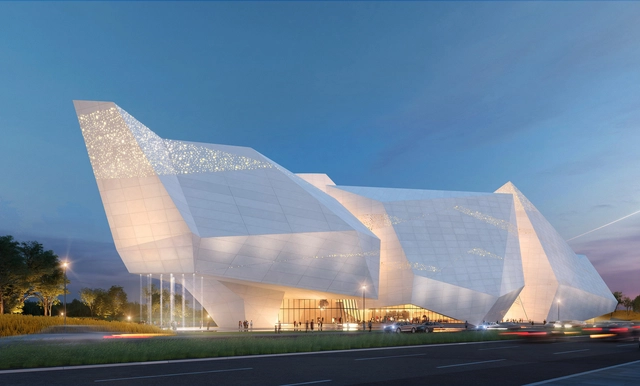
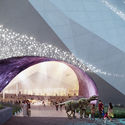
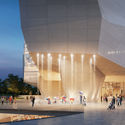
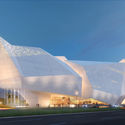
Pelli Clarke Pelli Architects has won an international contest for the Chengdu Natural History Museum in China, seeing off competition from firms such as Zaha Hadid Architects and FUKSAS. With a form inspired by the geological impact of shifting tectonic plates, and reflecting pools inspired by ancient irrigation systems, the scheme makes heavy reference to the surrounding natural landscape, while dominant features such as a tall central atrium form a visual connection with the built environment. Below, the architects offer their own description of the winning scheme.
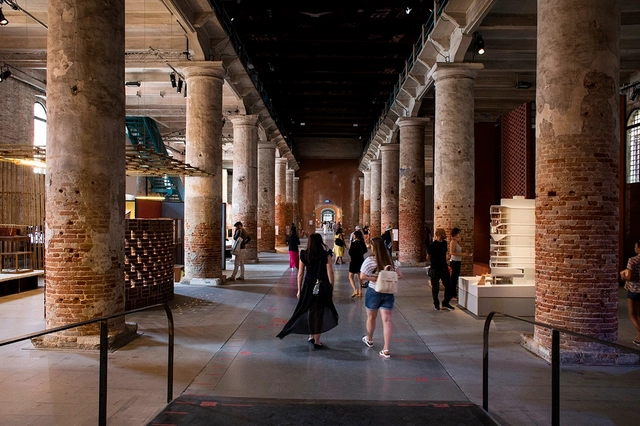
Arsenale. Image Courtesy of la Biennale di Venezia
As always, this year’s edition of the Venice Architecture Biennale is brimming with exhibitions and installations—the result of thousands upon thousands of hours of research and work. When arriving at the Arsenale or Giardini, the overwhelming amount of "things to see" are neatly tucked into the national pavilions, or, in the case of the Arsenale, hidden on the sides of the sweeping corridor. In the likely event that you have limited time to enjoy all that FREESPACE has to offer, ArchDaily's editors have selected our favorite works displayed at the 16th International Architecture Exhibition.
Here, presented in no particular order, are some of our top suggestions from across the Biennale sites.
https://www.archdaily.com/895621/11-must-see-exhibitions-at-the-2018-venice-biennaleAD Editorial Team


-HD.jpg?1529269555&format=webp&width=640&height=580)
.jpg?1527226454&format=webp&width=640&height=580)
.jpg?1527225607 "© Bahaa Ghoussainy")
.jpg?1527225807 "© Bahaa Ghoussainy")
.jpg?1527226615 "© Bahaa Ghoussainy")
.jpg?1527227695 "© Bahaa Ghoussainy")
.jpg?1527226454)

_preview.jpeg.jpg?1528220112 "Australia Pavilion. Image © Rory Gardiner")










.jpg?1528724681)
.jpg?1528473909&format=webp&width=640&height=580)