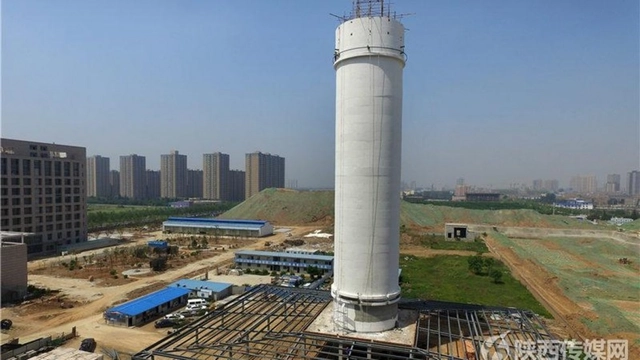
The 100-meter-tall air purification tower in Xi’an, China – believed to be the world’s largest air purifier. Image via South China Morning Post
A 100-meter-tall air purification tower in Xi’an, China – believed to be the world’s largest air purifier – has significantly improved city air quality, results from its preliminary run suggest.
According to researchers from the Institute of Earth Environment at the Chinese Academy of Sciences, the tower has managed to produce more than 10 million cubic metres (353 million cubic feet) of clean air per day since it was launched a few months ago. In the 10-square-kilometer (3.86-square-mile) observed area of the city, smog ratings have been reduced to moderate levels even on severely polluted days, an improvement over the city’s previous hazardous conditions.
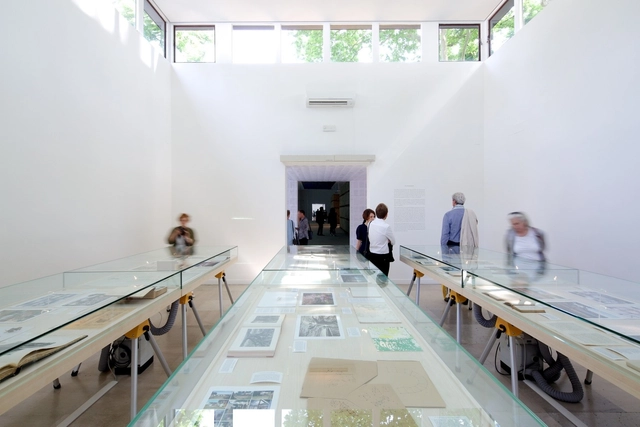
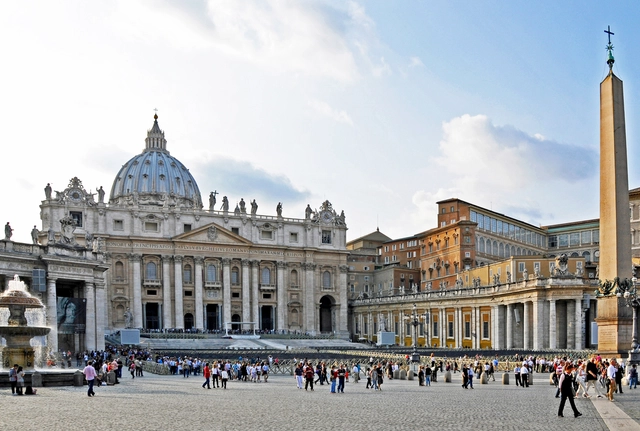
In 2018 the Vatican will participate in the Venice Architecture Biennale for the first time. Ten international architects will construct 10 different chapels as part of the representation of the city-state in the Italian architecture event. The news was confirmed by Paraguayan media outlets ABC y Última Hora, who revealed that one of the participants was local architect Javier Corvalán.
The elite group of architects was selected by Francesco Dal Co, an Italian architecture historian and curator. The designers have been instructed that their chapels must be able to be relocated so that they can be deployed around the world, in places that are in need of these spaces of worship.
The architects who will build chapels in the 2018 Venice Architecture Biennale:
Architecture lovers and amateur archaeologists take note – or rather, get ready to take notes.
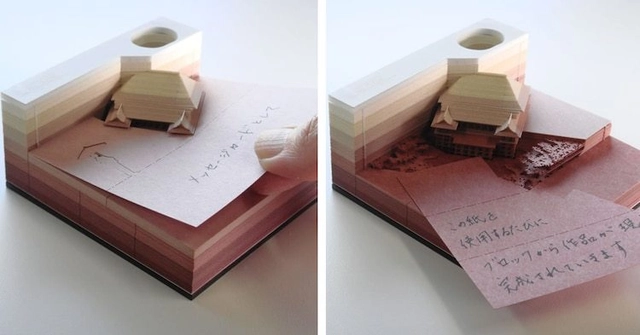
Japanese model making company Triad has released a new series of notepads called the Omoshiro Block (loosely translated to “fun block”) that slowly reveal intricate architectural sites as they are used. Appearing at first as a regular square of paper note cards, each block is specifically laser cut to produce a 3-dimensional model of some of Japan’s most recognizable buildings, such as Kyoto’s Kiyomizudera Temple, Tokyo’s Asakusa Temple and Tokyo Tower.
While the exterior of Philip Johnson’s iconic AT&T awaits its fate in an upcoming New York City landmarks designation hearing, demolition of its granite-clad interior lobby has already begun.
Citing the fact that the lobby had already been altered in the 1990s – including the removal of the “Golden Boy” statue – when the building switched tenants from AT&T to the Sony Corporation, the Landmarks Preservation Commission decided last month that the interiors were not deserving of landmark status.
Lord Norman Foster speaking at the Royal Fine Art Commission Trust’s annual lecture in Manchester last year. Image Courtesy of Royal Fine Art Commission Trust
Lord Norman Foster has been named the next President of the UK’s Royal Fine Art Commission Trust, an independent charity aimed at promoting “visual awareness and public appreciation of high-quality design” within the United Kingdom.
Chaired by one of architecture’s foremost patrons, Lord Peter Palumbo, the organization was established in 1987 as a complement to the Royal Fine Art Commission (since absorbed into the UK Design Council), the Government’s advisor on matters affecting public amenity and aesthetics in England and Wales.
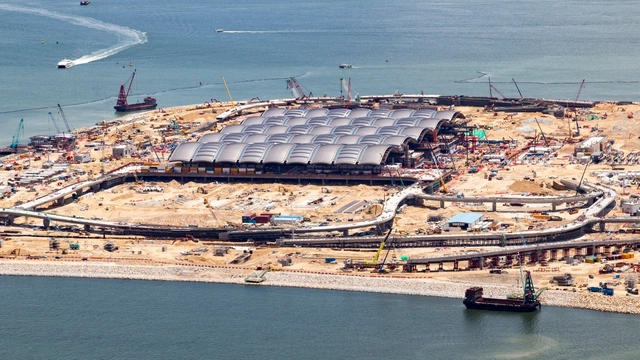
Rogers Stirk Harbour + Partners (RSHP) and Aedas have unveiled the design of a new boundary crossing that will serve as an important transportation exchange point within the Pearl River Delta, linking Hong Kong, Macau and mainland China. Already under construction, the project is expected to be completed in 2019.
Thomas Heatherwick is touching the New York Architecture Scene again, revealing his design for a pair of residential towers in a pair of renderings. The two towers will flank either side of the New York High Line, located at 18th Street, it will situate itself adjacent to Frank Gehry’s IAC Headquarters building.
Videos
Courtesy of Eindhoven University of Technology
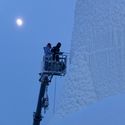
Beyonds igloos, sculptures, and Sweden’s ICEHOTEL, ice is not often seen as building material. An international team of Dutch-end Chinese students and professors from Eindhoven University of Technology (TU/e), Summa College, and the Harbin Institute of Technology (HIT) have used the freezing material to construct “Flamenco Ice Tower” in Harbin, China - the home of the International Ice and Snow Sculpture Festival.
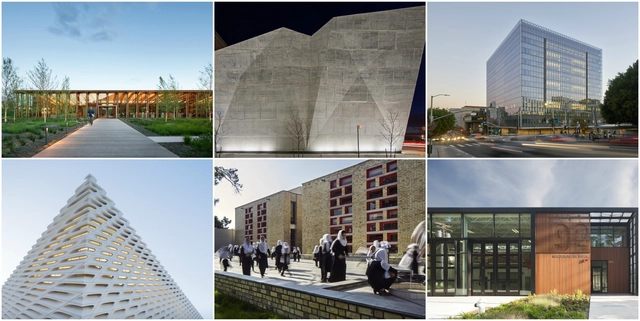
Seventeen projects chosen by the American Institute of Architects (AIA) have been selected for this year’s Institute Honor Awards for Architecture, an award known to be the profession’s highest recognition of works in America that exemplify an excellence in architecture, interior architecture and urban design.
Out of 500 submissions, the 17 recipients will be honoured with the award at the AIA Conference on Architecture in New York City in June.
The 2020 skyline, photo by Andrew Campbell Nelson, rendering by Jose Hernandez. Image Courtesy of YIMBY
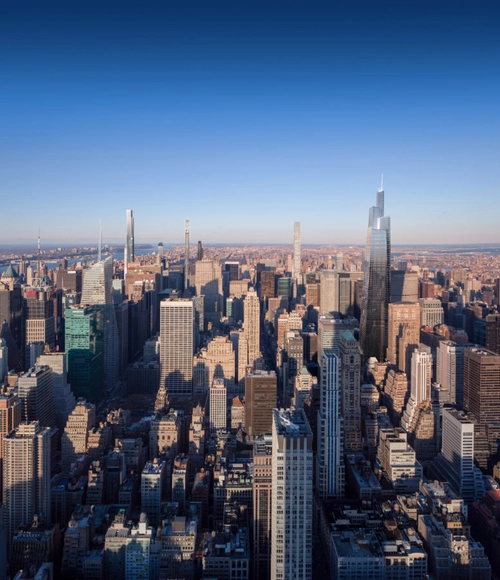
2017’s building applications has seen a rise in both Brooklyn and the Bronx, according to YIMBY’s construction report on New York. Despite a drop within Manhattan and Queens, the number of new building applications over the five boroughs seems to be stabilising; 2016 saw the number of multi-family units decrease by over 40% to 19,356, a pattern which fortunately appears to have stopped as 2017 saw fillings for 19,180. After the last two years of massive drops, this couldn’t be more welcomed by New York.
We are starting the new year with an announcement from the American Institute of Architects that there will be no winner for their Twenty-five Year Award in 2018. This will be the first time this has occurred since the award was officially established in 1971. The AIA award recognises buildings that have “stood the test of time for 25-35 years and continues to set the standards of excellence for its architectural design and significance.”
The new social housing project by Stefano Boeri Architetti is the first to integrate a vertical forest into an affordable residential skyscraper, improving the living conditions often incurred within such developments. 5,200 shrubs and 125 trees will be planted up the 75m tall structure in Eindhoven.
Trudo Vertical Forest will contain 125 social housing units over 19 floors to house lower income social groups, particularly young people. Each apartment will include a balcony filled with an array of trees, plants and shrubs for a forest soaring into the city's sky.
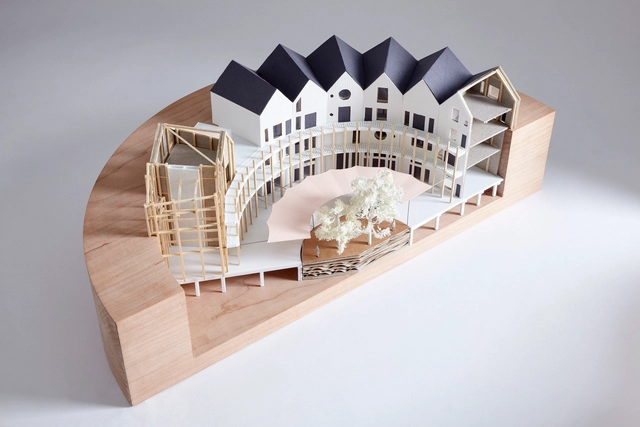
The RIBA have announced the winner of their competition in collaboration with the National Grid to give function to the sub-terrain voids left behind when the steel frame of a gasholder is dismantled. Outpost, the winning London studio, proposed a mixed-use scheme for a ring of four storey buildings descending into the well below. The other shortlisted teams included CF Architects, 318 Studio, Max Architects, Wilson Owens Owens Architects and Jan Verhagen and Priscille Rodriguez of Unit Architects.
Outpost’s proposal solves Britain’s shortage of affordable housing and creates an opportunity for flexible workshops, studios and workspaces to be integrated into the structure. The simple, economical vision makes full use of the gasholder base and presents a familiar domestic setting on street level, appearing as one storey.
In an alternative universe, architects would have the ability to design every single aspect of their building in line with their architectural vision. There would be no mechanical, structure, or government regulations to worry about. Back in the real world though, this could not happen—many people have to be involved in the creation of a building in order for it to function. From the government to structural consultants, everyone thinks they know best, and the role of the architect sometimes becomes that of a negotiator, trying to please the third parties while maintaining their aspirations for the project. Architects must stand strong, however, because who really knows what would happen if we let someone else be in charge.
The new year is here! And with it, a new slate of documentaries we're dying to see.
Of all the media forms, film seems to be the most adept at making a personal connection with viewers, offering a behind-the-scenes look into the lives of a great architect, the construction, and performance of a project or an issue that is confronting the entire architecture community. This year's films are no exception, as we get the chance to learn about the daily routines of Bjarke Ingels and Paulo Mendes da Rocha, projects by Tadao Ando and Glenn Murcutt, and the troubles of urbanization and gentrification.
The Danishpavilion at the 2018 Venice Architecture Biennale will demonstrate the power of collaborative innovation through large-scale installations. Architect and Head of Institute of Architecture & Technology at The Royal Danish Academy of Fine Arts, Natalie Mossin was selected to be the Danish pavilion curator by several prestigious organizations including The Danish Architecture Centre, The Danish Ministry of Culture, Realdania and the Danish Arts Foundation.
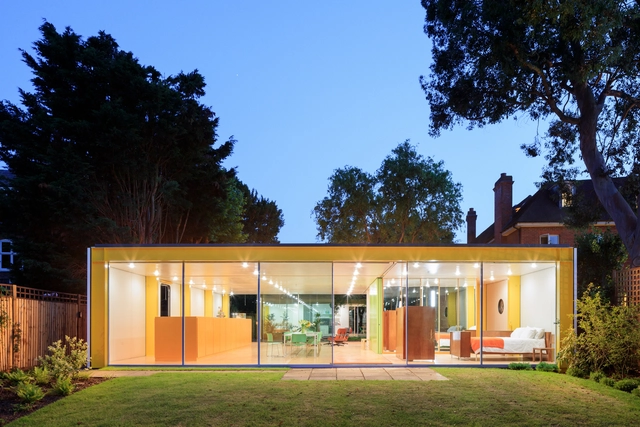
Harvard Graduate School of Design (GSD) has announced the six recipients of their 2018 Richard Rogers Fellowship program. Inspired by Lord Richard Rogers’ “commitment to cross-disciplinary investigation and engagement,” the Fellowship established last year to support individuals “whose research will be enhanced by access to London’s extraordinary institutions, libraries, practices, professionals, and other unique resources.”
The six winners will be given the opportunity to live and research at the Wimbledon House in London, which was designed by Rogers for his parents in the late 1960s. In 2015, Rogers gifted the home to Harvard for Fellowship use. This year’s winners will receive a three-month residency as well as travel expenses to London and $10,000 cash.




.jpg?1516086194&format=webp&width=640&height=580)