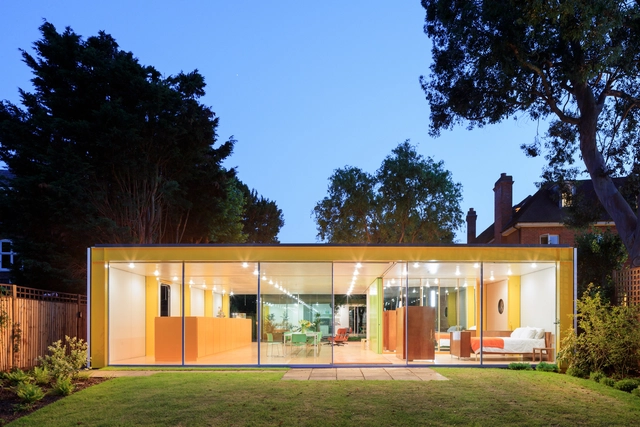
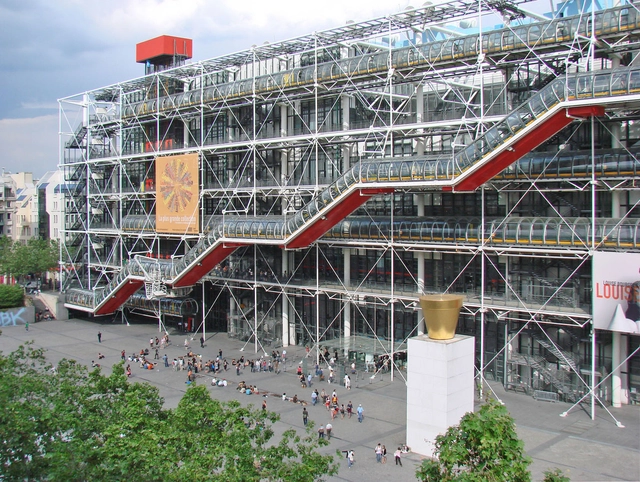
Harvard Graduate School of Design (GSD) has announced the six recipients of the 2019 cycle of the six recipients of their Richard Rogers Fellowship program. Inspired by Lord Richard Rogers’ “commitment to cross-disciplinary investigation and engagement,” the Fellowship established last year to support individuals “whose research will be enhanced by access to London’s extraordinary institutions, libraries, practices, professionals, and other unique resources.”
The 2019 winners were chosen from a pool of more than 140 applicants hailing from around the world. As in previous years, the fellowship allows the winners to spend a three-and-a-half month residency at the Rogers' Wimbledon House in London. The recipients also receive funding to cover their travel to London and $100,000 cash.
https://www.archdaily.com/907431/harvard-announces-the-2019-richard-rogers-fellowsKatherine Allen
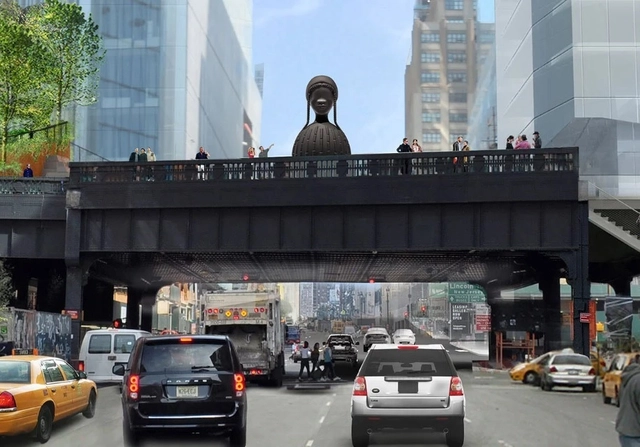
The Spur & The Plinth. Image Courtesy of James Corner Field Operations and Diller Scofidio + Renfro
Next year New York's iconic High Line will open a new public space for art designed by James Corner Field Operations and Diller Scofidio + Renfro, with artwork by Simone Leigh. The public space will be the newest section of the elevated park dedicated to a rotating series of contemporary art commissions. The first art project in the space will be Brick House, a sixteen-foot-tall bronze bust of a black woman by Brooklyn’s Simone Leigh.
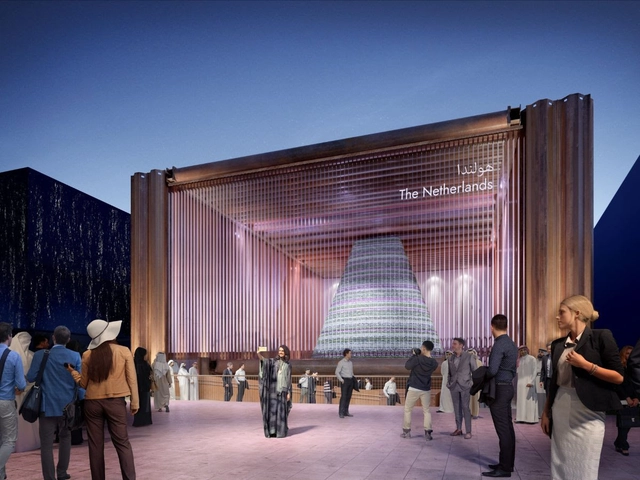
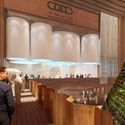
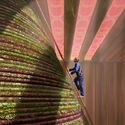
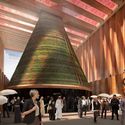
The Dutch pavilion for Expo 2020 Dubai has been unveiled, designed by a consortium, made up of Expomobilia, Kossmann.dejong, V8 Architects and Witteveen+Bos. The scheme has been designed “as a closed-loop climate system in which private and business visitors will enjoy an intense sensorial experience.”
Based on the Netherlands' chosen theme of “uniting water, energy, and food” the pavilion will be built using a construction method prioritizing closed-loop circularity, local materials, and a post-use recyclable agenda.
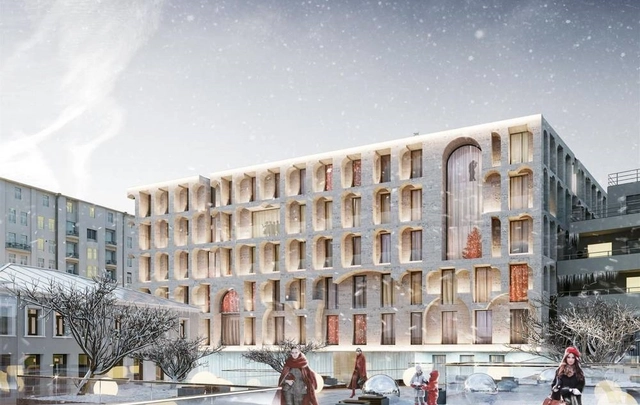
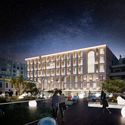
Allegoria Mosca. Image Courtesy of Kleinewelt Architekten
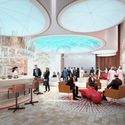
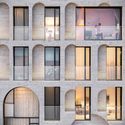
Russian practice Kleinewelt Architekten have designed a mixed-use housing block for Moscow that features a carved stone-relief facade. Inspired by historic Russian chambers and Italian palazzos, the project combines a residential building with cultural spaces and social care functions. Called Allegoria Mosca, the design draws upon the site's history and features an open-air art space, conference and lecture halls, as well as a transformable exhibition hall.
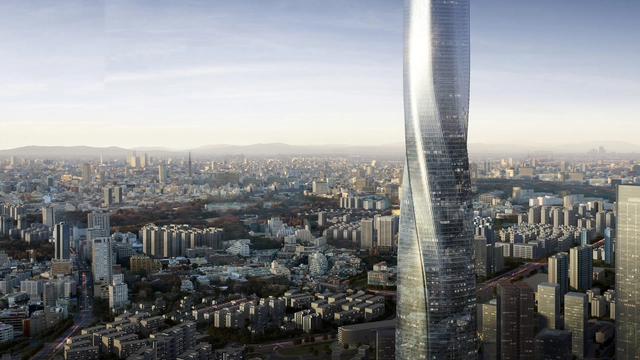
Shimao Fuzhou Tower. Image Courtesy of EID Architecture
EID Architecture was selected earlier this year as one of the two finalists in an international competition to design a 518 meter-tall tower in Fuzhou, China. Located on a prominent riverfront site in Fuzhou, Shimao North Riverfront Tower was made to be the centerpiece of a new business district within the city. The tower's design explores what supertall building means today. In contrast to many form-driven towers, Shimao Fuzhou aims to integrate architecture and structure to create an iconic and futuristic landmark with remarkable efficiency.
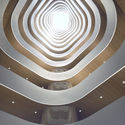
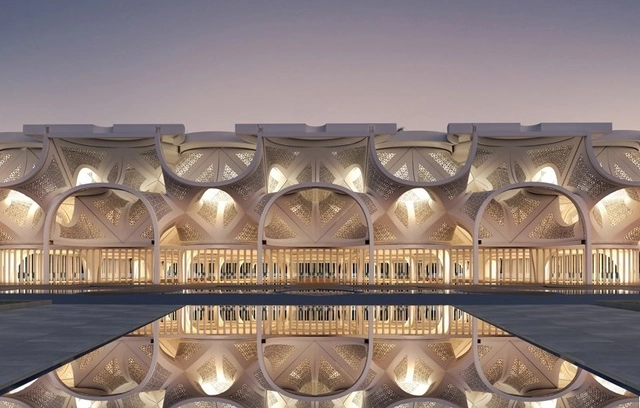
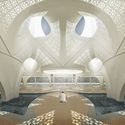
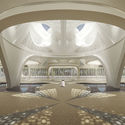
Mumbai-based NUDES architecture office have revealed a new design called "Mosque of Light" as their entry in the Dubai Creek Harbor competition. The project was designed as a play in light with a multi-layered geometrical form to filter daylight softly into the prayer hall. The mosque explores the combination of light and built form around a spiritual experience.
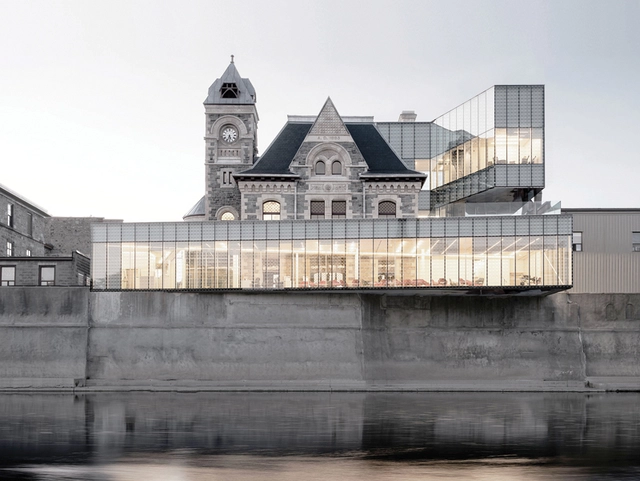
Idea Exchange Old Post Office / RDH Architects. Image via Canadian Architect Magazine
Canadian Architect has announced the winners of its annual Awards of Excellence program. Now in its 51st year, the awards are “the highest recognition for excellence in the design stage in the Canadian architectural sector.” Celebrating unbuilt and student work, the awards place emphasis on design ambition, innovation, and social and environmental sustainability.
This year, fourteen entries were recognized from a pool of 190 professional and student submissions. The winners, featured below, were divided into Awards of Excellence, Awards of Merit, Student Awards of Excellence, and the inaugural Photo Award of Excellence.
https://www.archdaily.com/907307/canadas-best-architecture-of-2018-recognized-by-canadian-architect-magazineNiall Patrick Walsh
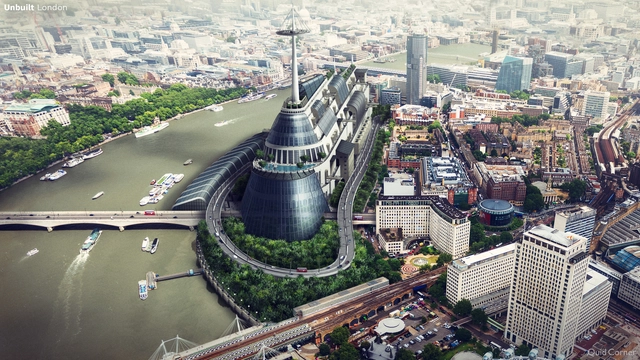
A historic hotbed of architectural styles and a current architectural capital of the world, cities in the United Kingdom are awash with iconic buildings from the Georgian, Neoclassical, and contemporary era. Such buildings, from the Clifton Suspension Bridge in Bristol to the Southbank in London, have come to define the cities in which they stand, drawing the eyes of tourists and designers alike from around the world.
It is therefore an interesting exercise to examine what these cities would look like if such structures didn’t exist. To this end, Neomam Studios has partnered with QuickQuid to produce a series of images demonstrating what six British cities could have looked like, resurrecting some of Britain’s most surprising unbuilt structures.
https://www.archdaily.com/907301/what-6-british-cities-could-have-looked-likeNiall Patrick Walsh
The International VELUX Award 2018 sought to highlight the work of architecture students around the globe who challenge the use of daylight in built environments. The award, titled “Light of Tomorrow,” was launched in 2004 and is awarded biennially for creative interpretation, exploration, and investigation of daylight in built environments. This year, the winners were selected from over 600 submissions.
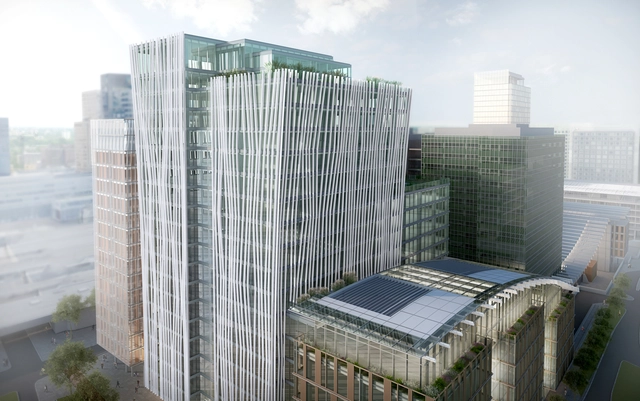
PLP Architecture’s Tower Ten, the new expansion of the World Trade Center Amsterdam, officially began construction last week. The ground breaking ceremony was launched by deputy director Sandra Thesing of the City of Amsterdam and Ronald van der Waals of CBRE Global Investors. Located in the Zuidas central business district, the project will create a radically different appearance from its predecessor, adding 32,000 sqm of new office space and amenities in the process.
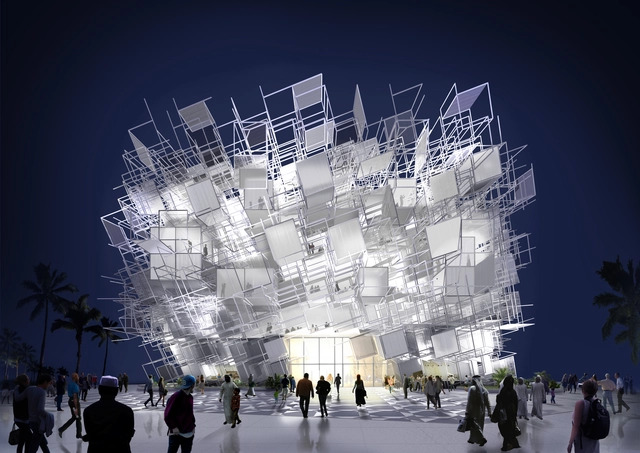
Elusive Boundary Pavilion. Image Courtesy of Yong Ju Lee Architecture + Atelier KJ
Yong Ju Lee Architecture and Atelier KJ have created "Elusive Boundary" for the Korean Pavilion at Expo 2020 Dubai. The project is designed as a place for radical encounters in different fields. The main theme of the Korean Pavilion, Mobility, is defined as a new space of possibility created by movement between territories and escape/expansion to new territories. The movement defined by new mobility is not linear, but a simultaneous event between territories.
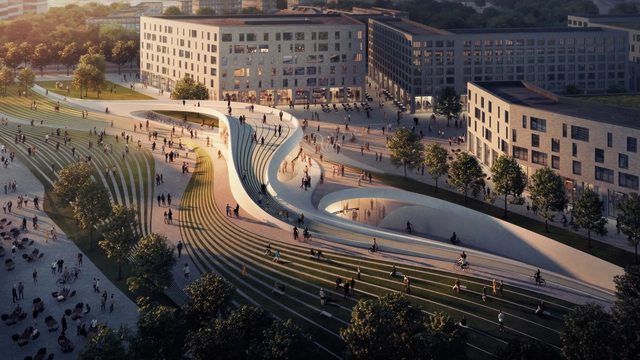
UNStudio has released images of their proposed Lyric Theatre complex in the West Kowloon Cultural District of Hong Kong. Intended as a “celebration of the world of theater,” the mixed-use scheme will house three theaters, rehearsal room, and dining, retail, and entertainment functions.
Designed to be open, inclusive, and welcoming, the compact scheme is comprised of a series of stacked transparent elements making the arts accessible to the general public. Open displays draw visitors inside from a series of reactivated plazas surrounding the scheme, supported by “an additional programme for the public to enjoy that is independent of performance timetable.”
Honoring “an individual or pair of architects whose significant body of work has had a lasting influence on the theory and practice of architecture,” the AIA Gold Medal is often considered the highest honor awarded in the United States for architecture.
Zaha Hadid Architects and A-Lab have been announced the winner of a competition to design two new metro stations in Oslo. The stations, Fornebu Senter and Fornbuporten, are to be part of Oslo's new Fornebubanen line, connecting a major existing rail interchange to the Fornebu Senter, a major shopping center in the city.
The Museum of Modern Art and MoMA P.S.1 have announced the five finalists of their 2019 Young Architects Program (YAP). The competition was founded to offer emerging architectural talent the opportunity to design a temporary, outdoor installation within the walls of the P.S.1 courtyard for MoMA’s annual summer “Warm-Up” series. Architects are challenged to develop creative designs that provide shade, seating and water, while working within guidelines that address environmental issues, including sustainability and recycling.
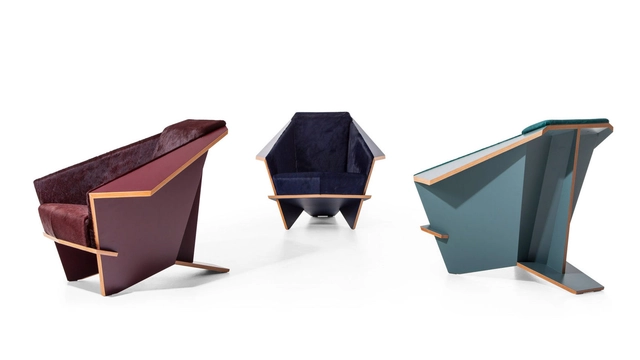
Italian furniture brand Cassina has reissued an iconic piece of Frank Lloyd Wright-designed furniture, the Taliesin 1 chair. The chair was designed by Lloyd Wright in 1949 for the Garden Room in Taliesin West. The iconic chair didn’t enter mass production until the late 1980s, but was discontinued in 1990 as it was seen as “too avant-garde.” The Taliesin 1 is constructed from a single piece of folded plywood, and will release in its original beech plywood with a cherry wood veneer.
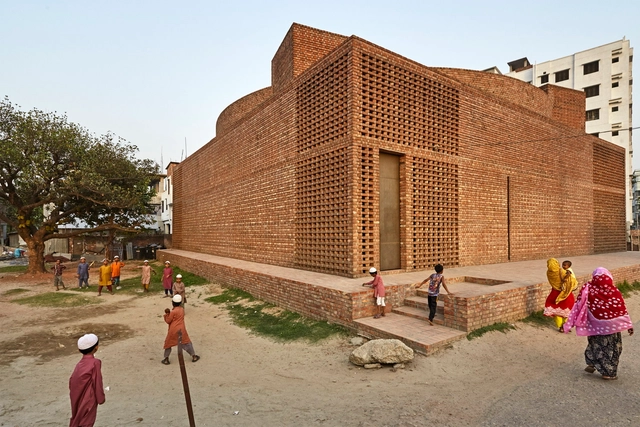
The Aga Khan Award for Architecture has announced the master jury for the 2017-2019 award cycle. The jury, a diverse and global group comprising architects, academics, and theorists, will select the recipients of the award, each of whom will, in turn, receive a USD $I million prize for their winning work.
https://www.archdaily.com/907212/jury-announced-for-2019-aga-khan-award-for-architectureKatherine Allen
Bjarke Ingels Group has revealed new images for their King Street West condo community in Toronto. The development was formed as sets of pixels extruded upwards to create space for housing, retail and boutique offices. The concept was made to avoid the footprints of heritage buildings that already exist on site. The latest renderings revealed both interior and exterior images of the striking new development.