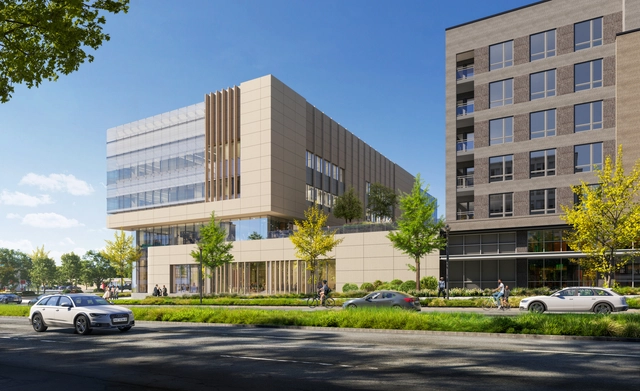
Ballinger and Ennead Architects have teamed up for the development of Inova Oakville, a new medical facility that will be an extension of Inova Alexandria Hospital. As part of Alexandria’s Oakville Triangle neighborhood redevelopment, the project is a multi-campus initiative of Inova Health System that aims to anchor the facility with the nearby residential developments and Mt. Jefferson park.
In this episode of Design and the City - a podcast by reSITE on how to make cities more liveable – Trey Trahan, founder of Trahan Architects, discusses the importance of designing spaces that foster human connection and encourage self-reflection. With ecology and the poetics of space as core values, the work of Trahan Architects focuses on creating impactful cultural venues and in this podcast, Trahan argues for a design centred around elevating the human experience.
Grimshaw's first permanent Eden Project outside the United Kingdom has reached a construction milestone with the completion of the project’s centerpiece Storm Forest Biome. The single-space biome structure, which is larger than the domes at the Eden Project in Cornwall, encloses a planted space of over 27,000 square meters and uses water as the "life blood of nature, culture, and civilization".
FCBStudios' redevelopment plans for St Mary le Port Bristol received planning approval, spearheading the transformation of the key site into a vibrant piece of the urban fabric. The scheme embraces the historical importance of St Mary le Port church tower and ruins, reinstates pre-WWII street patterns while reconnecting the area with the city centre. Featuring office and commercial spaces, the project is set to improve central Bristol's working and shopping experience.
Five finalists of the open call were announced on the 9th of December to determine the project that would be in charge of the XII BIAU: Ibero-American Biennale of Architecture and Urbanism 2021 - to be held in Mexico during September 2022 with the collaboration of the Architecture and City Festival, MEXTRÓPOLI.
On the 13th December, the winning project to curate the new edition was announced: 'Habitar al Margen' (Living on the Edge), presented by Anna Vergés and Guillem Augé (undo, Spain), and Raúl Cárdenas and Ana Martínez (ToroLab, Mexico).
The Ministry of Culture, Art, and Heritage, and the College of Architects of Chile have announced the results of the open call for two exhibitions that will house the 2022 Chile Architecture Biennial.
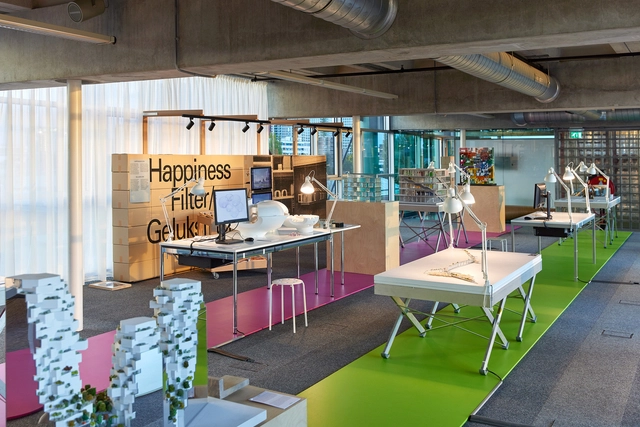
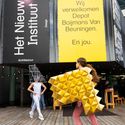
Hosted at the top floor of Het Nieuwe Instituut in Rotterdam, the Netherlands, the “MVRDVHNI: The Living Archive” exhibition showcases 30 years of MVRDV’s work, looking into the design philosophy of each project and future visions. The exhibition, which sits right next to the firm's latest project, the Depot Boijmans Van Beuningen, highlights the creative process behind each project, how they were developed, and the challenges of preserving their materials and approaches for future generations.
The city of Budapest, though Budapest Development Agency (BFK), launched an international design competition this autumn for the comprehensive renewal of the Budapest Nyugati Railway Station and its surroundings. The initiative seeks to expand the train station's capacity in order to reach Budapest's railway transport goals of doubling the number of trains on the suburban and metropolitan network. After an initial phase that attracted 36 participants, 12 practices were shortlisted for the second round of the competition, among which are Benthem Crouwel Architects, Grimshaw Architects, Zaha Hadid Architects, Foster + Partners, Kengo Kuma & Associates and Sweco.
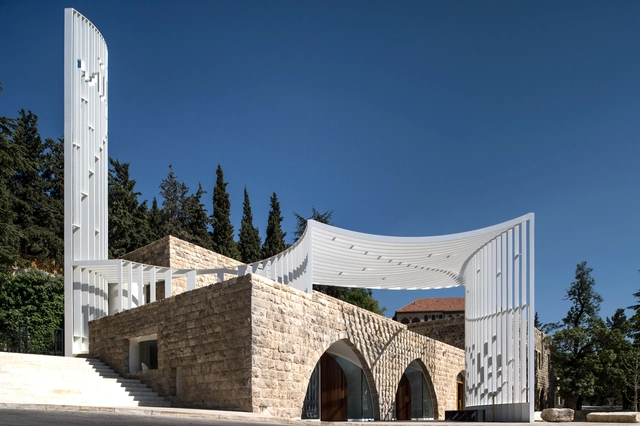
Amir Shakib Arslan Mosque / L.E.FT Architects. Image Courtesy of Abdullatif Alfozan Award for Mosque Architecture
The Abdullatif Alfozan Award for Mosque Architecture has honored seven awarded mosques in its third cycle under the theme "Mosque architecture in the twenty-first century", evaluating their unique architectural concepts as well its connectivity with local communities.
https://www.archdaily.com/974298/projects-in-saudi-arabia-lebanon-and-indonesia-among-the-winners-of-the-iii-abdullatif-alfozan-award-for-mosque-architectureArchDaily Team
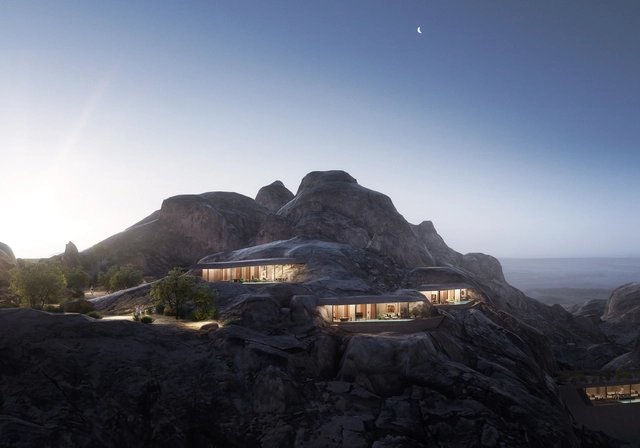
Oppenheim Architecture and Saudi developers The Red Sea Development Company (TRSDC) have unveiled the design of a new mountain resort nestled in the wadi vistas of western Saudi Arabia. Titled Desert Rock, the project draws inspiration from the surrounding geography, allowing guests to connect with the nature and the local culture of the region through a fully nature-integrated architecture.
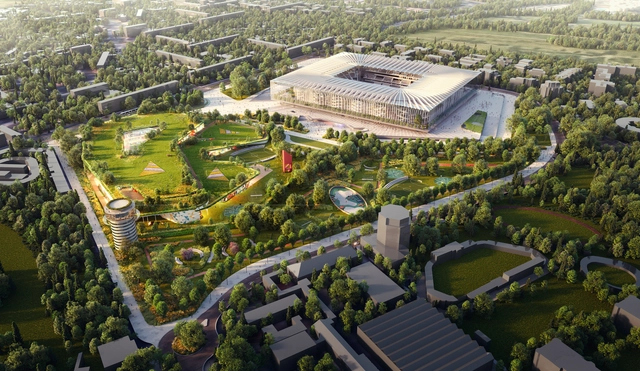
Football clubs AC Milan and FC Internazionale Milano will have a new home stadium designed by architecture practice Populous. “The Cathedral” takes inspiration from the city’s architectural landmarks -the Duomo di Milano and the Galleria Vittorio Emanuele – while incorporating technological and material innovation to create a carbon-neutral structure. The project, which replaces the Giuseppe Meazza Stadium, also known as San Siro, is set to revitalize a key urban area of Milan into a district dedicated to sports and leisure.
Five emerging architecture studio profiles from Slovenia, France, Spain, Italy, and the United Kingdom have been chosen by New Generations, a European platform that analyses the most innovative emerging practices at the European level, providing a new space for the exchange of knowledge and confrontation, theory, and production. Since 2013, New Generations has involved more than 300 practices in a diverse program of cultural activities, such as festivals, exhibitions, open calls, video-interviews, workshops, and experimental formats.
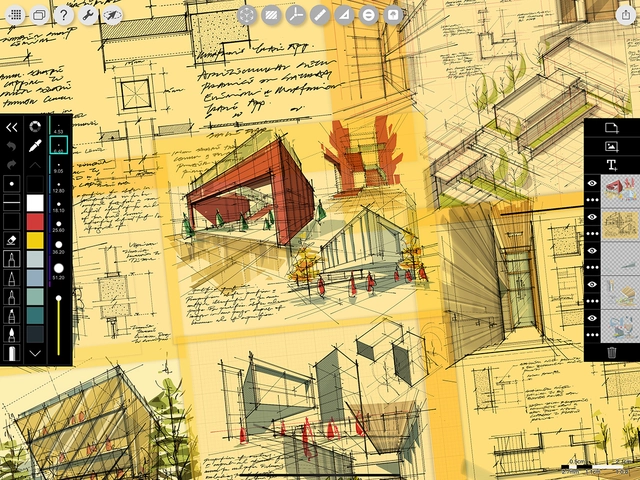
Amin Zakaria, Architectural Designer, Kuching, Malaysia. Image Courtesy of Morpholio
Morpholio Trace, the team who brought the architects’ canary yellow trace paper into the digital world, has been on a ten-year mission to help foster a drawing renaissance for Architects. “Drawing is a form of thought, and the iPad was crucial in re-centering sketching as a primary means of generating and sharing ideas,” says Mark Collins, Architectural Designer and Morpholio Co-Founder.
Today, ArchDaily celebrates this drawing resurgence with a look at those who have dedicated their careers to drawing exploration, advancement, and most importantly…education! To start drawing alongside these renowned architectural sketch educators, download Trace here.
Following news of Edelburg Development's plans to completely remodel the modernist facade of Dytiachyi Svit (Kids’ World), one of Kyiv's most notable modernist buildings from the Soviet era, and replace it with an "unrecognizable" vibrant and contemporary design, members of the community and activists protested against the intervention, forcing all parties to agree on a design competition to restore the historical facade. Dmytro Aranchii Architects was selected as the winner of the competition, with a proposal that "traces the transition from the original building to the new one" in a minimalistic and recognizable stylization, preserving the original facade and complimenting it with a contemporary intervention.
Czech practices UNIT Architekti, A69 - Architekti, and British firm Marko & Placemakersproposetransforming the largest brownfield site neighbouring Prague's historic city centre into a dynamic urban hub. The masterplan, selected within a 2-stage international competition comprising 57 entries, envisions "a multifunctional urban framework" that mediates the infrastructural complexity of the site, establishing a new identity for the area.
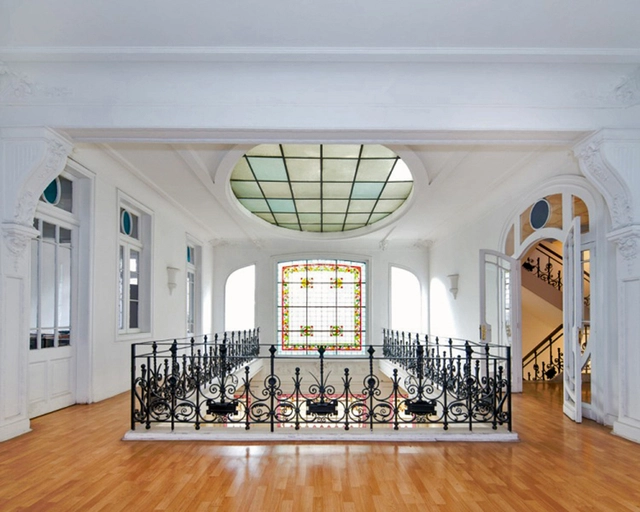
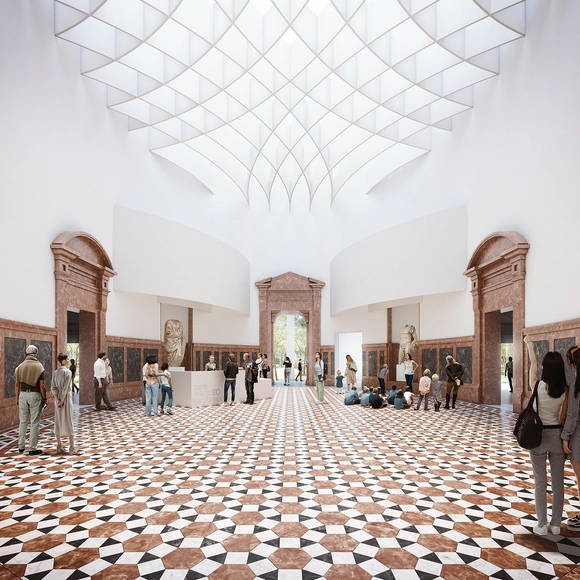
The remodeling project of the Archeological Museum of Seville, Spain, won in a national competition in 2009 by architectural firm Vázquez Consuegra, was finally presented to the authorities on Monday 29th November 2021. The start of the construction is scheduled for 2022 and has a budget of 20 million euros.
Snøhetta+Hassell were announced as the winners of an international competition to transform Sydney's Harbourside in Darling Harbour into a new mixed-use destination. The design was selected by the jury for how it envisioned a place that brings people together, featuring an all-inclusive shopping, hospitality, and entertainment center, an exclusive 42-storey residential tower, as well as a redesign of the public spaces on the waterfront.
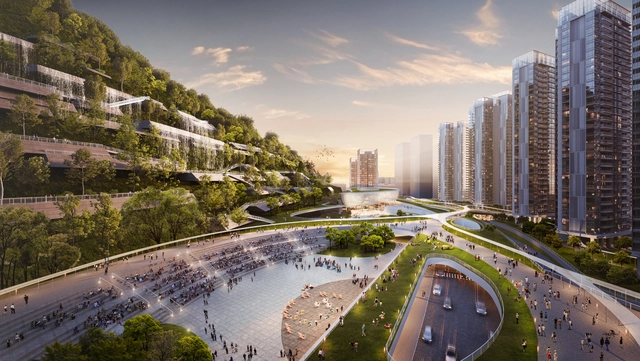
Ronald Lu & Partners designed a new transit-oriented development (TOD) in Shenzhen, reshaping a former industrial zone near Chiwan Port. The project builds on the firm's extensive experience with green architecture and TODs, proposing a biophilic development that restores nature in the area. Featuring a mixture of residential, business, commercial, and educational facilities, the design is set to become a key urban environment within the Greater Bay Area connecting Guangdong Province, Hong Kong and Macau.




.jpg?1640854916&format=webp&width=640&height=580)
.jpg?1640854889 "Courtesy of Grimshaw")
.jpg?1640854863 "Courtesy of Grimshaw")

.jpg?1640854909 "Courtesy of Grimshaw")
.jpg?1640854916)




.jpg?1640769856 "© Florine van Rees")













.jpg?1640334099&format=webp&width=640&height=580)
.jpg?1640334099 "Courtesy of Wax")


.jpg?1640334099)