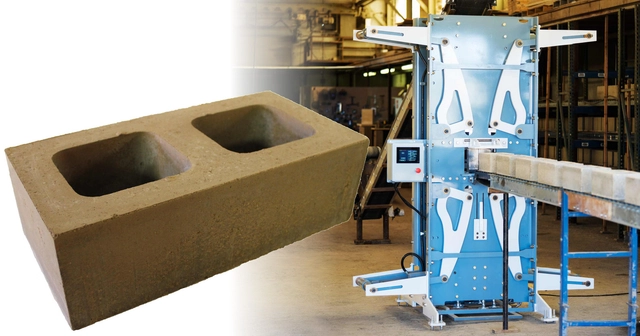
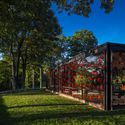
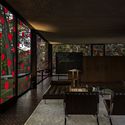
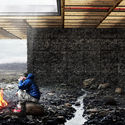
Excavation is usually a bane for real estate developers. To make way for new buildings, truckloads of excavated waste are removed from site in a noisy, time-consuming and gas-guzzling process. Exploring a more sustainable solution, the California-based company Watershed Materials have developed an onsite pop-up plant which repurposes excavated material right at the job site to create concrete masonry units (CMUs) used in the development. By eliminating truck traffic, reusing waste and reducing imported materials, the result is a win for the environment.
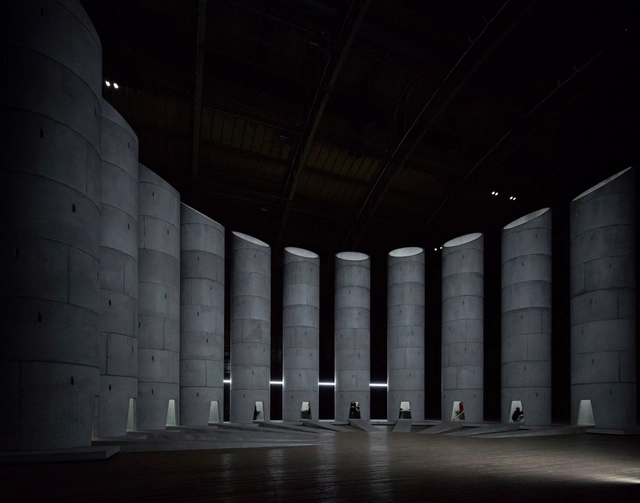
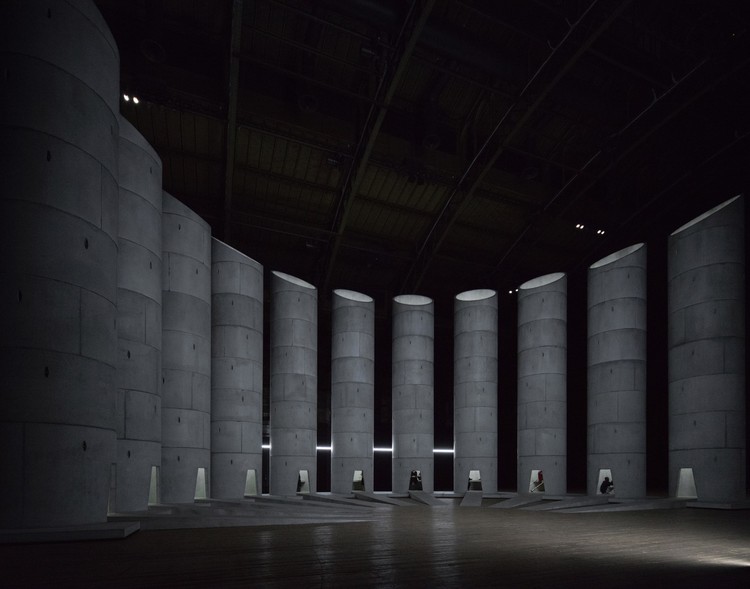
Artist Taryn Simon in collaboration with OMA/Shohei Shigematsu has designed An Occupation of Loss, a major new performance work choreographed around an OMA-designed monumental sculptural setting consisting of 11 concrete wells. Located at Park Avenue Armory’s Wade Thompson Drill Hall, and co-commissioned by the Armory and Artangel, London, the performance piece focuses on “the anatomy of grief and the intricate systems that we devise to contend with the irrationality of the universe.”
In line with their playful spirit, BIG has teamed up with programmers Ruby Studio to release an alternate version of their icon-filled homepage that allows visitors to play a version of the classic arcade game Arkanoid.
Videos
Cais das Artes / Paulo Mendes da Rocha & METRO. Image Courtesy of Paulo Mendes da Rocha
The Japan Art Association (JAA) has named Brazilian architect Paulo Mendes da Rocha as the winner of the 2016 Praemium Imperiale International Arts Award. Often credited as a founder of the Brutalist movement in São Paulo, 2006 Pritzker Prize Winner Mendes da Rocha was praised by the jury for his commitment to honoring “locality, history and landscape” in his projects and his ability to utilize “simple materials like concrete and steel to structure space to maximum effect.”
On the 15th anniversary of 9/11 yesterday, the skylights at Santiago Calatrava’s Oculus at the World Trade Center opened for the first time, allowing light to fill the massive space as a memorial to the attacks on the twin towers. Following the masterplan laid out by Daniel Libeskind, Calatrava’s design used the angle of light as a guiding principle for orienting the transportation hub – so that at precisely 10:28 am each September 11th (the time of the collapse of the North Tower), a beam of light would pass through the opening in the roof and project all the way down the center of the Oculus floor.
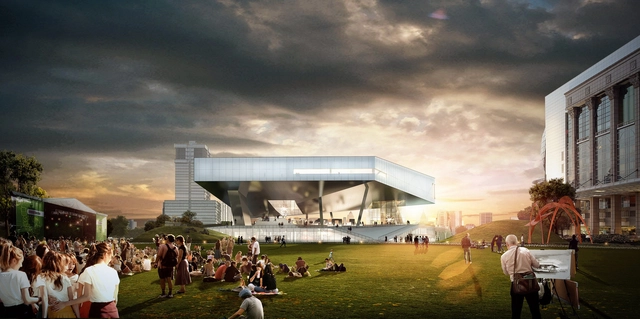
Recently, Shanghai organized an international competition for the new Art Museum of Pudong. The site of the project is located at a prominent spot on the tip of Pudong’s Lujiazui CBD area directly below the Oriental Pearl Tower. Looking across Huangpu River from the Bund, the iconic skyline of Lujiazui has been such a symbolic image of modern Shanghai that any addition or alteration to this image is extremely sensitive. So the site has been deliberately left vacant for years, awaiting a significant cultural institute and meaningful contribution to the urban life at the megapolis.
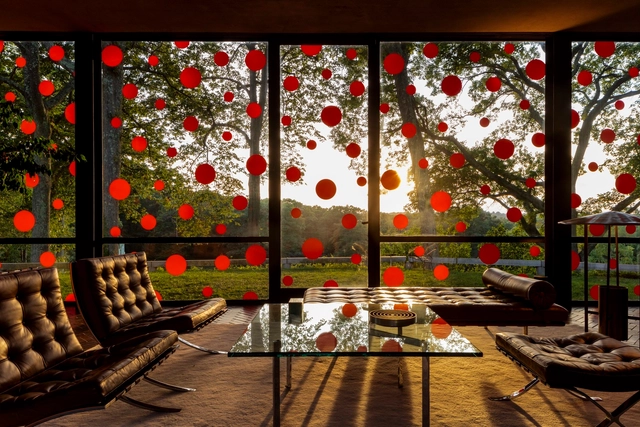
Artist and writer Yayoi Kusama has created an installation for the Glass House that will be on display in celebration of the 110th anniversary of Philip Johnson’s birth, as well as the 10th anniversary of the opening of the Glass House site to the public.
From September 1 through 26, Dots Obsession – Alive, Seeking for Eternal Hope will be on display, with the Glass House itself covered with polka dots. “Visitors who attend the exhibition during this time will be offered the unique experience to simultaneously see the world through the eyes of both Philip Johnson and Yayoi Kusama.”
The winning proposal, entitled Elytra, is an “eye-catching, cutting-edge, [and] unconventional” design that will tower over Moscow’s Tverskoy District, an area which features a burgeoning artistic scene.
Inspired by the forewings of insects—called elytra—the project opens upwards as a protective shell, and will feature both public and private space.
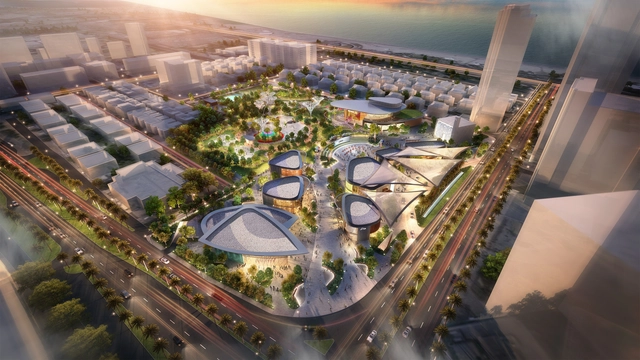
Benoy’sUAE studios best known for their work in the MENA region have released the plans for Abu Dhabi’s upcoming Sheikha Fatima Bint Mubarak Park. In a redefinition of the former Khalidya Ladies Park, the renovation—as a portion of the AED94 million renovation—was commissioned by The Department of Municipal Affairs and Transport at Abu Dhabi City Municipality to “fuel discovery and support the core tenets of the Abu Dhabi Vision 2030.”
The open-air project centers on the concepts of sustainability, economic diversification and growth, improved social and community facilities, the promotion of Arab and Emirati culture, and a focus on contemporary living.
This article is part of our new series "Material Focus", which asks the architects to reflect on the thought process behind their choice of materials and illuminates the steps needed for constructing buildings.
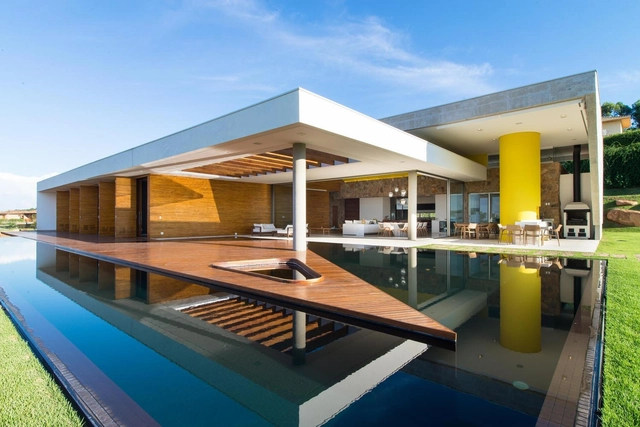
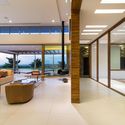
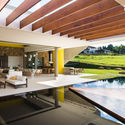
The RPII Residence was designed by Gustavo Arbex Architects. The almost 1000m2 project was built in Sao Paulo. We spoke with the architect Gustavo Arbex to learn more about the choices of materials and the challenges of the project.
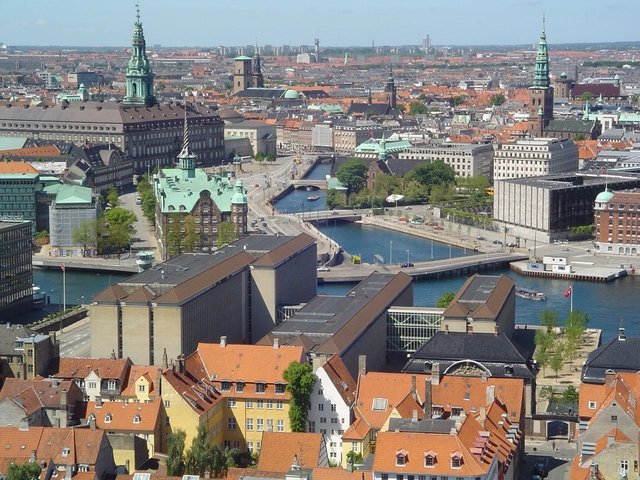
Metropolis Magazine has released their 2016 rankings of the world's most "livable" cities. Acknowledging that what makes a city "livable" can often be subjective, the team at Metropolis emphasizes that in creating the list they "focused on the concerns at Metropolis’ core—housing, transportation, sustainability, and culture." The result of this research was last year's top prize-winner Toronto dropping to the number 9 spot and Copenhagen, which last year took the number 4 spot, jumping to the top. Rounding out the top three are Berlin and Helsinki.
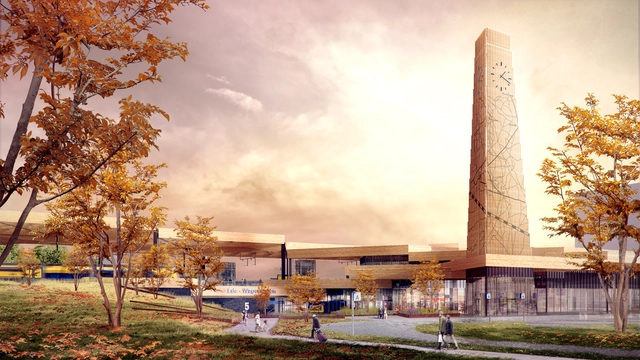
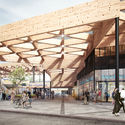
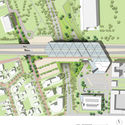
Mecanoo has unveiled the designs for the new Ede Wageningen Train Station in the city of Ede in the Netherlands, after winning the competition for the design of the project in 2014. As a gateway to the Veluwe National Park, the transport hub is designed to support future expansion in response to growth in passenger numbers.
Inspired by the local Veluwe landscape—its topography, typologies, and existing buildings and monuments—the Station building is nestled in the slopes of the moraine between the Veluwe Massif and the Gelderse Valley.
The wooden clock tower and roof of the project serve as the station’s hallmark. Consisting of a series of wooden triangles, the roof cascades over the bicycle parking, retail space, and other station facilities, ending as the overhang of the main entrance and connecting all quadrants of the hub in a uniform manner.
Courtesy of As.Architecture-Studio and VHA Architects
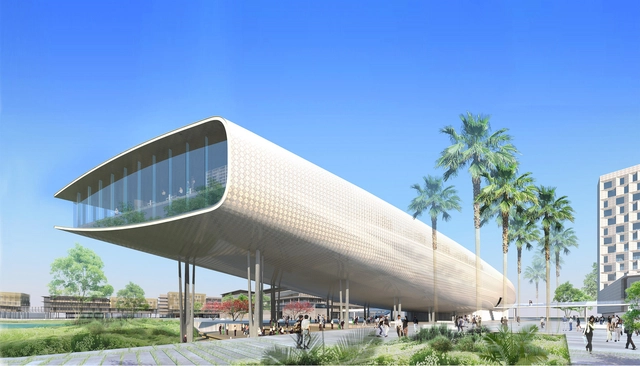
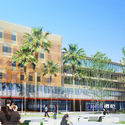
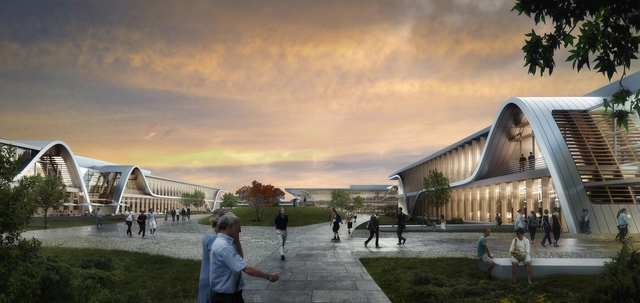
As.Architecture-Studio and VHA Architects have unveiled their plans for the urban design and architecture of a new campus at the University of Science and Technology of Hanoi (USTH) in Vietnam. Located 30 kilometers east of Hanoi City, the new campus is designed to be a “New Model University,” and will feature facilities for administration, teaching, research, housing, student activities, services, and infrastructure.
Through its position around and across existing lakes, the project aims to offer researchers and students a living area structured by landscape. “The presence of water, along with the tropical architecture of the buildings and their specific technologies, will embody the unique character of the USTH being a Vietnamese University leading in sustainability and renewable energy.”
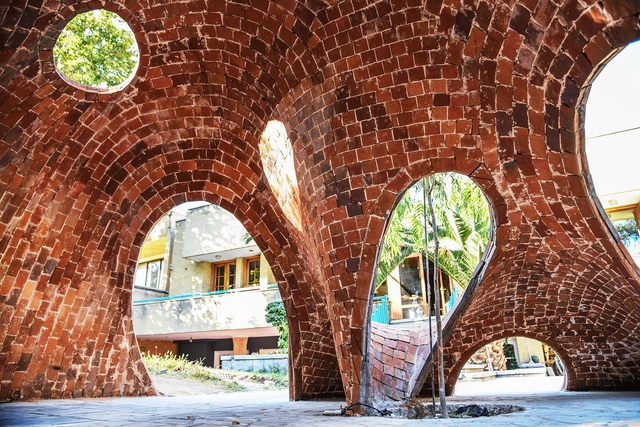
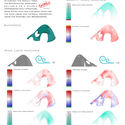
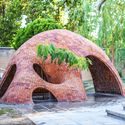
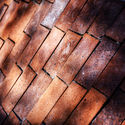
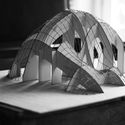
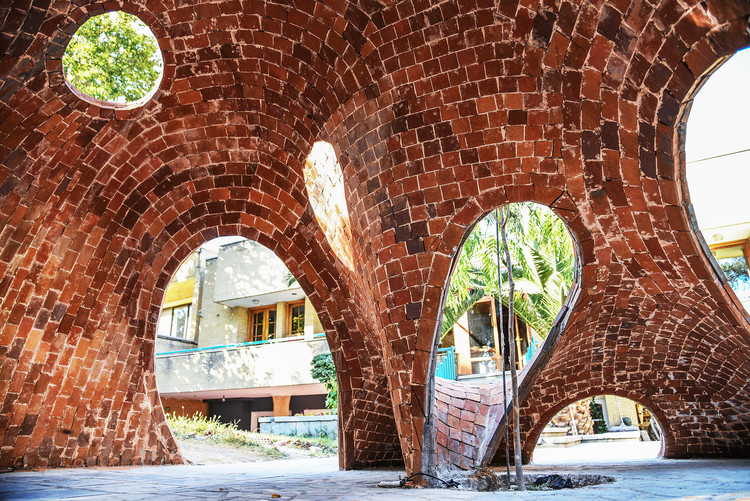
Using an array of programs available for public use, a group of young architects called ADAPt have designed and realized a unique free-form brick structure in Iran. The complexity of the structure is broken down into several layers and elements, all guided by the analysis and output of their digital toolbox. This iteration, titled "FaBRICKate" is the first in what is intended to be a series of investigations of this contemporary design method.
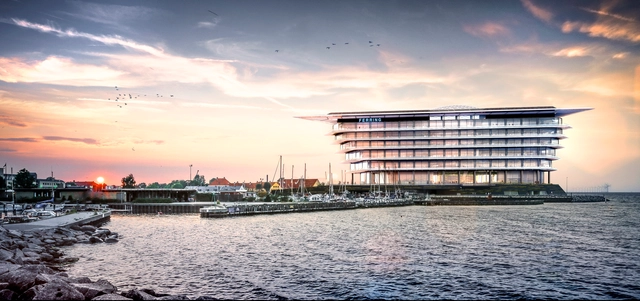
Foster + Partners has broken ground on the new headquarters for Ferring Pharmaceuticals A/S in Copenhagen, Denmark. Located on the urban fringe of Copenhagen in Kastrup, the 39,000-square-meter project occupies a waterfront site along the Øresund crossing between Copenhagen and Malmö near the Copenhagen International Airport.
With this location and neighborhood of predominantly low-rise development, the new company offices will feature expansive views towards Malmö and the Swedish coast, where the company was founded.
Have a little extra time this fall and looking to expand your knowledge of architectural history? Massachusetts Institute of Technology (MIT) is offering a 12-course online course titled “A Global History of Architecture” that will cover everything from architecture’s origins 100,000 years ago all the way up to 1600 C.E – and the best part? It’s totally free.
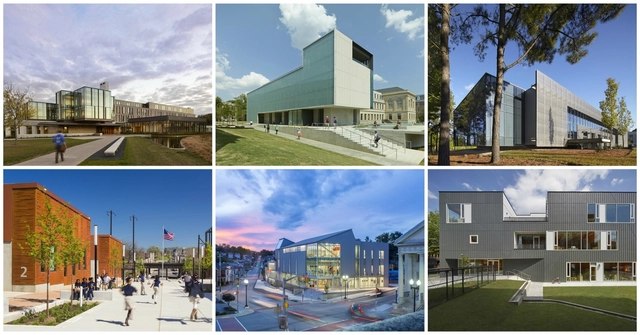
This year's theme was “Visioning and Re-Visioning," which focused on "the ways in which pedagogical innovation and cutting-edge design impact and influence each other." The AIA also notes that education facility design may now be more important than ever, as recent studies have indicated that a positive learning environment can affect a child’s academic progress over a year by as much as 25%.
Find out which projects received awards, after the break.
This article is part of our new series "Material in Focus", where we ask architects to share with us their creative process through the choice of materials that define important parts of the construction of their buildings.
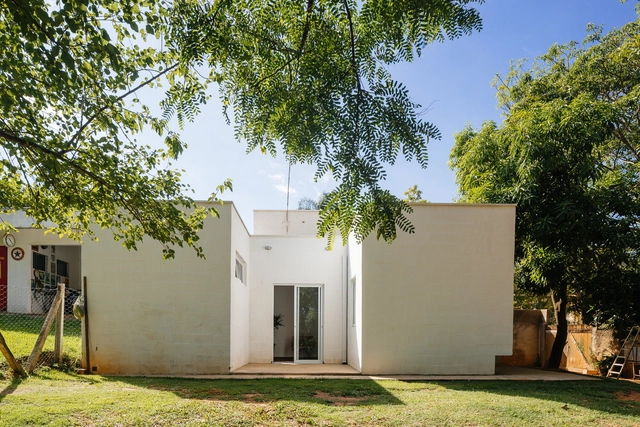
Casa dos Caseiros was designed by architectural firm 24.7. The project is 70 meters square and was a private order for a large-scale social steel framed housing project to be built in some cities in the state of Rio de Janeiro. We talked with the architect Giuliano Pelaio to learn more about material choices and challenges of the project.
Form4 Architecture’s project, Innovation Curve Technology Park, has been honored by the Green Good Design Awards presented by The European Centre for Architecture, Art, Design, and Urban Studies, in collaboration with The Chicago Athenaeum’s Museum for Architecture and Design.
The project, which recently broke ground in Palo Alto, California, “celebrates the creative process of invention” through its sweeping metal curves, which represent the highs and lows of exploratory research and development. The tall, two-story curves “rise to represent the crescendo of the creative spark and pragmatic analysis of ideas, and descend to transition into long, horizontal bands symbolizing the implementation phase of invention.”
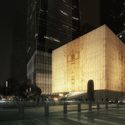
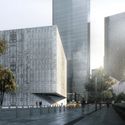
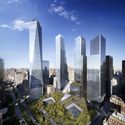
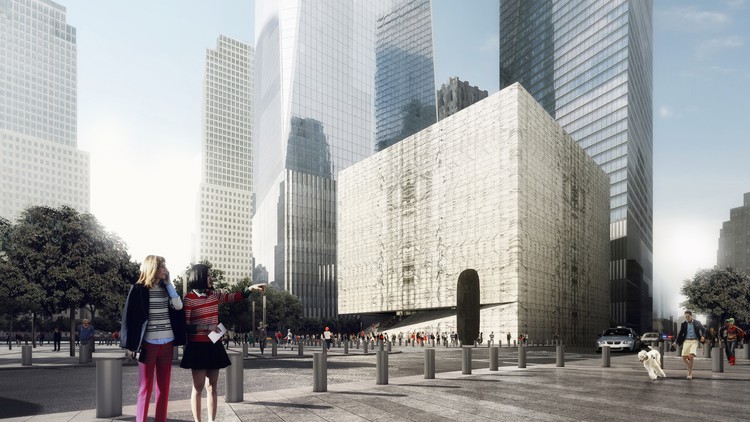
REX has released images of the future Ronald O. Perelman Performing Arts Center (The Perelman Center), located on the World Trade Center site in New York City. Located between the gleaming glass tower of One World Trade and the future Two World Trade Center, the Perelman Center takes on a solid, pure form as it is set to become a new home for theater, dance, music, film, opera, and multidisciplinary works for visitors and residents of Lower Manhattan.
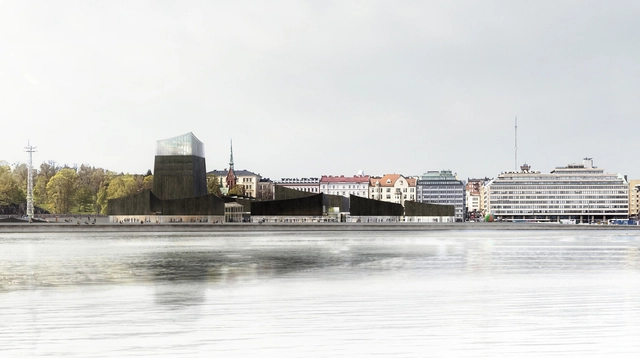
For a few months spanning from 2014 to last year, the Guggenheim Helsinki museum competition was the hottest topic in architectural media. Even as Moreau Kusunoki's more contextually-driven design was selected as the competition winner, debate raged on over whether the search by yet another city for an iconic building to call their own was ultimately good or bad for architecture as a whole. But now, funding for the project has been rejected by the Finnish government, putting the museum in danger of not being built at all.
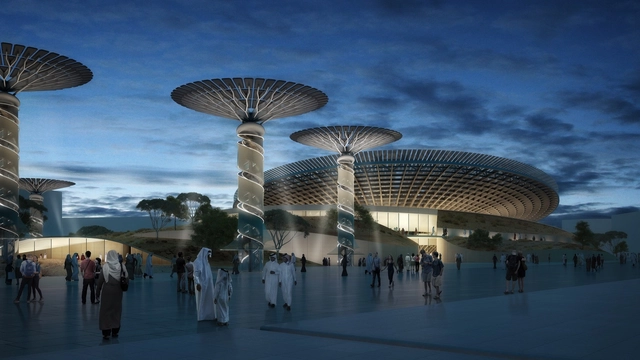
Grimshaw has released new images and a video of their design for the Sustainability Pavilion at Expo 2020 Dubai. Striving to “illuminate the ingenuity and possibility of architecture as society looks to intelligent strategies for sustainable future living,” the Sustainability Pavilion joins designs from Foster + Partners and BIG to make up the three main structures on the Expo's HOK-designed masterplan.
In the time since the fire—which was caused accidentally by improperly extinguished candles—church officials have been working with city government agencies and have determined that the addition of metal beams and other small reinforcements will be sufficient to salvage the remaining structure of the church.
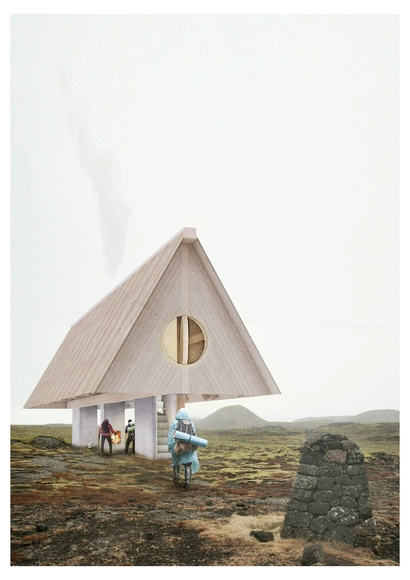
Architecture competition organizer Bee Breeders has announced the winners of the international Iceland Trekking Cabins competition, which called for entries to design a cabin with provision for enclosure, place, and social collectivity. As a structure for nomads and backpackers, Iceland Trekking Cabins are associated with cultural folklore and exist within the context of fjords, lava fields, glaciers, mountains, and the respective trekking ethos.
The competition furthermore sought projects that are “a supple and dexterous yet protected architecture, sensitive to the landscape though guarded against its severity, accommodating for the community, but in the company of strangers.”
The winners of the Iceland Trekking Cabins Competition are: