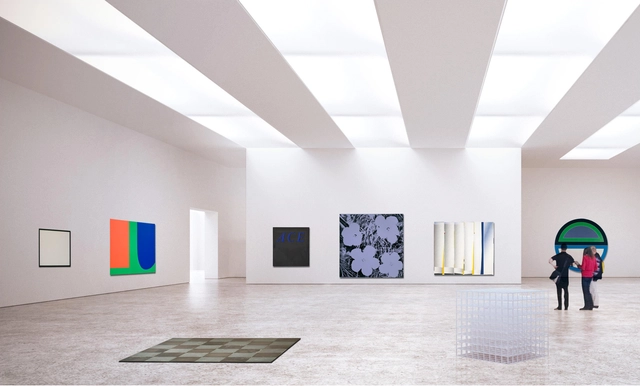
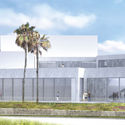
The Museum of Contemporary Art San Diego (MCASD) first opened in 1941 in the oceanfront La Jolla home of philanthropist Ellen Browning Scripps. In the half century that followed, the museum saw three distinct expansions; now, as it turns 75, MCASD anticipates its latest addition, a flexible new multipurpose design by Selldorf Architects that will quadruple the current gallery space.
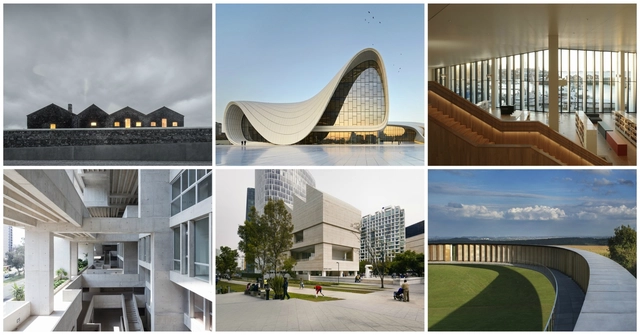
The Royal Institute of British Architects (RIBA) has announced the shortlist of six finalist projects in the running for the inaugural RIBA International Prize. The first RIBA Award open to any qualified architect in the world, the International Prize seeks to name the world’s “most significant and inspirational” building. Criteria for consideration include the demonstration of “visionary, innovative thinking and excellence of execution, whilst making a distinct contribution to its users and to its physical context.”
The six finalists were named from a longlist of 30 buildings, from which a further selection of 21 projects have been recognized by the jury for the RIBA Award for International Excellence. The jury has also named the winner of the RIBA International Emerging Architect prize recognizing “the achievement of architects in the earlier stages of their career who are working on global projects.”
"Our panel of jurors have been particularly impressed by the way in which each building reacts to, resolves and assimilates into the varying geographies and contexts - from dense urban cities to a small town in the Arctic Circle," said RIBA President Jane Duncan on the naming of the finalists. "Each project resolves the complex demands of its context with ingenuity, exceptional detail and finishing and a sensitivity to the needs of the users and communities which will inhabit these spaces."
Apple has unveiled a new version of their professional-level portable computer, the MacBook Pro, making steps towards defining the laptop as a tool for those in the creative industries. With a full 500 days since these devices were last refreshed by the company, the standout feature of this latest incarnation is a new, application-specific Touch Bar – a touch-sensitive display band at the top of the keyboard which becomes an “intuitive” part of the user interface, which also includes a Touch ID fingerprint sensor. Oh – and there’s still a headphone jack!
https://www.archdaily.com/798287/apple-releases-macbook-pro-with-integrated-touch-bar-that-works-seamlessly-with-photoshopAD Editorial Team
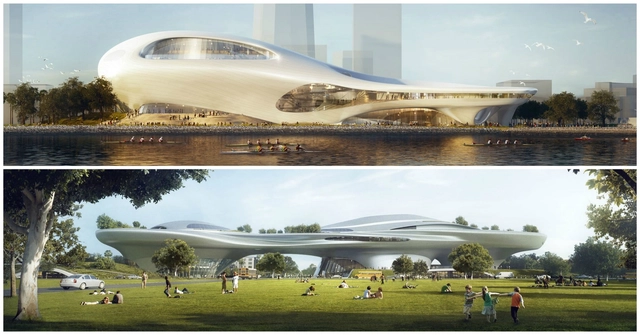
In the latest episode of what has become a dramatic narrative worthy of its own space opera, The Lucas Museum of Narrative Art has revealed plans for their two newest hopes: prospective museum designs, one in Los Angeles and one in San Francisco, that could serve as the new home of filmmaker George Lucas’ eclectic personal collection of artworks, costumes and artifacts.
After their failed proposal for a mountain-shaped museum along the Chicago Waterfront, the museum has again tapped architect Ma Yansong and his firm, MAD Architects, to design both proposals for the California sites, the first along the water on Treasure Island in San Francisco Bay, and the second for a site in Exposition Park in Los Angeles, adjacent to the city’s Natural History Museum and the Coliseum.
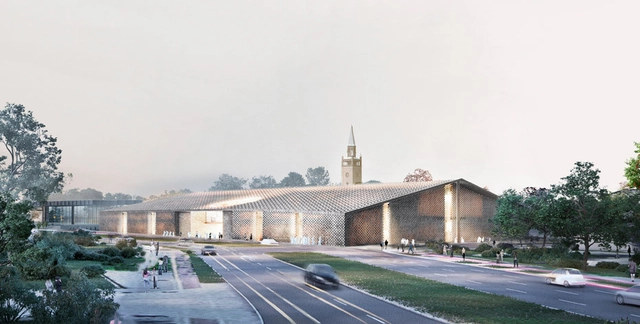
Three winning firms have been selected in the competition for the Museum of the 20th Century to be located in the heart of the Berlin Cultural Forum in Berlin, Germany. The 200 million euro building and site plan will serve as the new home of multiple internationally significant art collections, including the National Gallery’s Marx and Pietzsch collections, sections of the Marzona collection, and a collection of works from the Kupferstichkabinett (Museum of Prints and Drawings).
In 2015, the competition was launched, aimed at finding a design scheme that would encompass the site layout, architecture and landscaping around the museum.
Facing stiff competition from a list of 42 renowned finalists, Herzog & de Meuron together with Vogt Landscape Architects has emerged victorious for their brick, warehouse-inspired design. Runner up prizes were given to Lundgaard & Tranberg Architects with SCHØNHERR A / S, and Bruno Fioretti Marquez with Capatti Staubach Landscape Architects, while four jury recognitions were awarded to proposals from OMA, SANAA, Staab Architekten, and Aires Mateus e Associados.
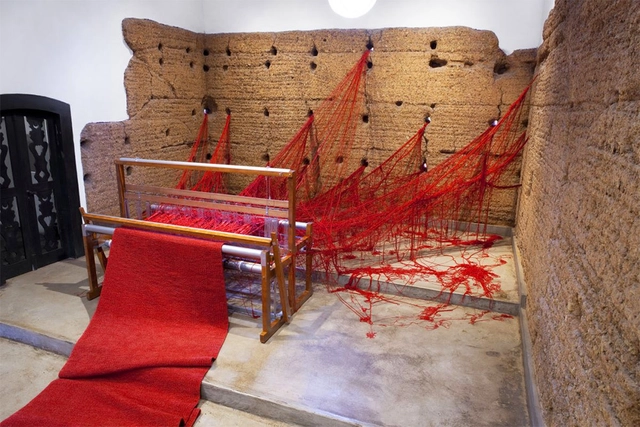
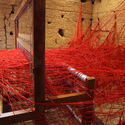
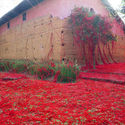
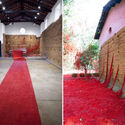
Made from a combination of tangled and woven red wool, Brazilian artist Tatiana Blass’ installation, “Penelope,” flows inside and out of the Chapel of Morumbi in São Paulo, Brazil.
The installation was inspired by the Greek myth of Penelope, who was Odysseus’ wife in Homer’s Odyssey. In the story, Penelope weaves and destroys a burial shroud for her husband, in a tribute to the power of love and to weaving.
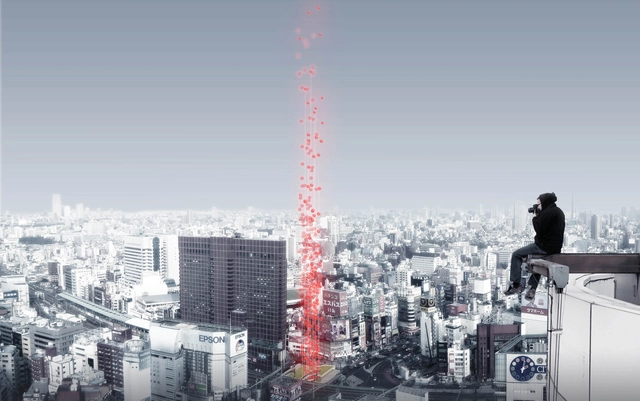
Architectural research initiative arch out loud has announced the winners of Tokyo Vertical Cemetery, its international open ideas competition that sought solutions to Tokyo’s rising issue of burial space.
Sited in the Shinjuku district of Tokyo, the competition challenged architects and designers to develop proposals for a vertical cemetery that explores the relationship between life and death in the city while taking into account the cultural identity that is tied to death.
From 460 proposals representing 54 countries and six continents, one winner and three runners-up were selected by a jury including David Adjaye, Tom Wiscombe, Alison Killing, and more.
The winners of the Tokyo Vertical Cemetery competition are:
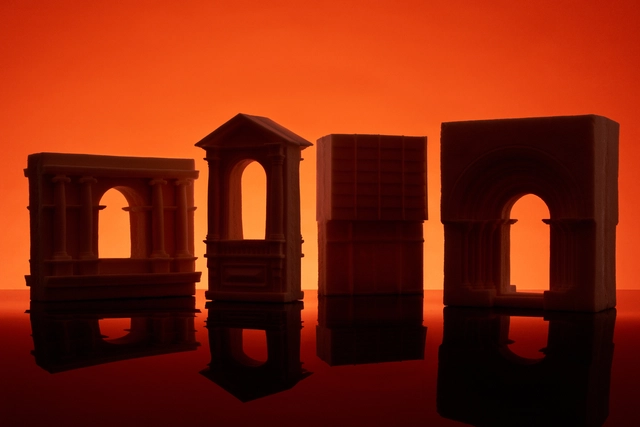
One of the key challenges faced by the European currency union, the Euro, was that of their design. In 2002, when the banknotes entered circulation across large parts of the European Union, the imagery that they possessed had to represent a continent of cultures. The answer: to create fictitious illustrations or, as the European Central Bank states, "stylised illustrations [of windows, doorways and bridges], not images of, or from, actual constructions." In a recent exhibition architect Anna Pang, in collaboration with Johan Holkers and Rolf Stålberg, have attemped to present the "fictive architecture" of the Euro as sugar sculpture.
https://www.archdaily.com/797607/the-fictive-architecture-of-european-banknotes-sculpted-from-sugarAD Editorial Team
The emergence of virtual reality applications for architecture has been one of the big stories of the past few years – in the future, we’ve been told, VR will become an integral part not just of presenting a project, but of the design process as well.
That future may now be upon us, thanks to new tool from New York City startup IrisVR. The company has released Iris Prospect, a program that enables you to send your plans and models directly into VR with a single click.
A beta version of the software is currently available for free download from their website, making VR accessible to anyone.
Today, Microsoft announced the latest in their Surface family of personal computers. Called the Surface Studio, the device is essentially a 28-inch touchscreen drawing board which the company is targeting specifically at creative professionals, potentially placing it at the top of many architects' wish lists.
The winners of the 2016 LEAF Awards have been announced. Founded in 2001, the awards ceremony honors innovative architecture projects in 14 different categories dedicated to various aspects of building, including best façade design and engineering, best future building, and public building of the year. The winning projects are recognized as “setting the benchmark for the best in the industry.”
Wall thickness, color, scale, solar dynamic, spaces built with a subtle metaphor immersed around the meaning of life, seem to be elements found throughout all of Luis Barragán's architecture. Elements of an enduring legacy, away from the ephemeral world of fashion, textiles and haute couture; however, it’s the search for the heightening of the senses, present in the architecture of Barragán, that inspired designers to put the name of the architect on catwalks and the world of apparel.
Transcending his architecture to a particular line of design, major names in the clothing industry have used the mystical language of Barragán. A language in which fashion manages to live a furtive beauty in geometry, color, texture, but especially a totally emotional search.
Check out 10 labels whose collections have been partially inspired by Barragán's work and ideas .
Videos
Courtesy of Arkitema Architects & Arkitektgruppen Cubus
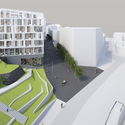
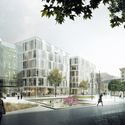
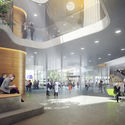
Danish firm Arkitema Architects, in collaboration with Arkitektgruppen Cubus, has won the competition to design a new Life Science building—called EnTek—at the University of Bergen (UiB) in Norway. As an Energy and Technology building, the project is designed to ensure collaboration between UiB’s faculty and the energy and technology industry.
The 17,500-square-meter building will become a southern gateway to the university, connecting the school to the city via a new street that will also become a central meeting point for both researchers and citizens.
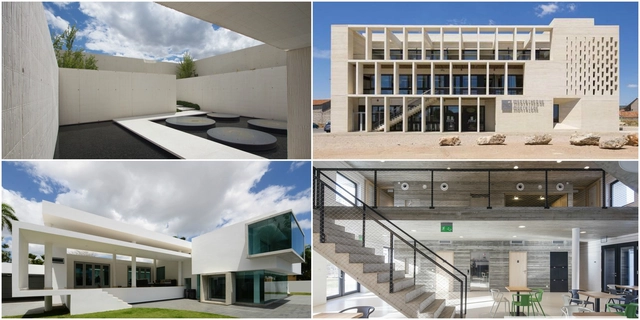
For the International Edition of the CEMEX Building Award 2016, 62 finalists from 20 different countries in North America, South America, Asia and Africa will compete in 5 main categories and and 4 special prize categories. The award, given by CEMEX— the Mexican multinational building materials company—recognizes the best architecture and construction projects that highlight innovation aesthetic and constructive uses of concrete.
The projects that are now set to compete at a global level range from a cultural center in Poland to a school and Spain and even a dam in the US. See this year's finalists below and see the previous winners here.
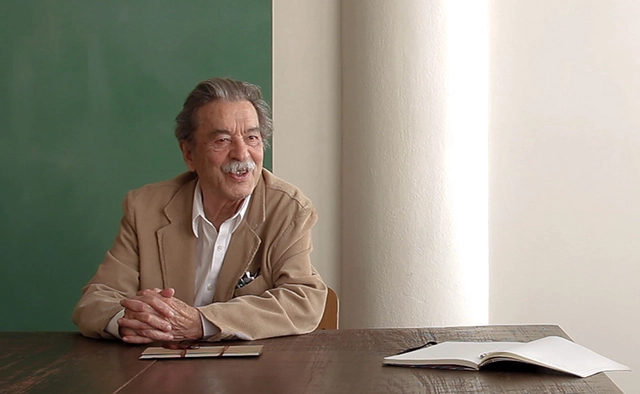
- Do you know who I'm presenting the conference with this afternoon? - Of course I do. Paulo, one of the best architects in Brazil. - For me, the best worldwide.
I heard by chance this conversation between Eduardo Souto de Moura, 2011 Pritzker Prize, and Joanna Helm, our Content Director from ArchDaily Brazil, in the gardens of Ibirapuera Park, as I waited to enter the auditorium for the activities of X Ibero-American Architecture and Urbanism Biennial (X BIAU). In that same afternoon, a small crowd occupied all the seats to watch and hear Souto de Moura and Paulo Mendes da Rocha sharing the stage.
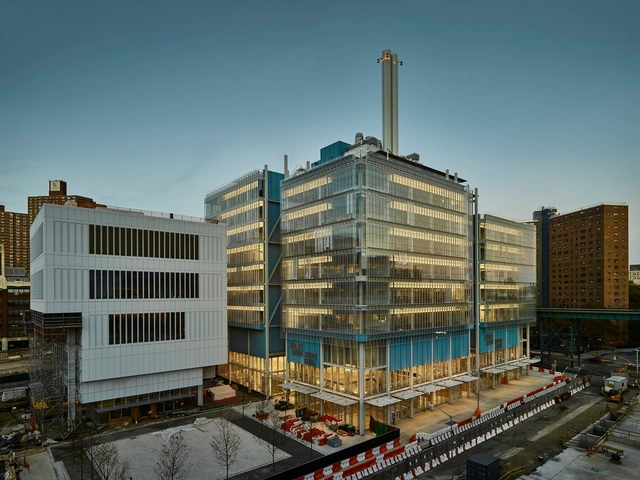
The first stage of Columbia University’s new Manhattanville Campus, consisting of two buildings by Renzo Piano Building Workshop, is nearly complete, with a move-in and grand opening slated for spring 2017.
The Piano-designed Jerome L Greene Science Center and Lenfest Center for the Arts are the first two buildings to be completed within the larger campus masterplan, conceived by Piano in collaboration with SOM, that will eventually encompass nearly 19-acres between 125th and 133rd streets in northwestern Manhattan.
In this latest photoset, photographer Laurian Ghinitiou turns his lens toward JDS Architects’ Maison Stéphane Hessel, a recently-completed, competition-winning mixed-use building in Lille, France. Containing space for a 70-cradle nursery, a 200-bed youth hostel and an office for socioeconomic innovation, the expressively playful building has been designed to respond to the three stages of human growth, from birth, through adolescence and into adulthood. The building volume lifts at its entrances to create public space and invite the entire community to use the building as a retreat from the bustling city, while inside, carved spaces with built-in, soft-edged furniture provide the ideal setting for learning and development.
Alongside designer Paul Tinker and developer Esteban Almiron, UK-based illustrator Sam Chivers has created a series of animations visualizing the sustainable development of airports for a recent Guardian piece. The animations, which describe the topics of transport, alternative energy, noise reduction, airport terminal design, biodiversity, and fuel efficiency, capture the passage of time from morning to evening in Heathrow Airport in London.
New York’s Architecture Research Office (ARO) has been selected to lead in the renovation and master planning of the Rothko Chapel in Houston, Texas. The project aims to modernize and improve the renowned structure, which houses 14 monumental paintings by Mark Rothko in an interior space designed to meet the artist’s precise specifications, and its surrounding plaza and reflecting pool. The original building was largely designed by Rothko himself, with consult from a trio of architects including Philip Johnson.
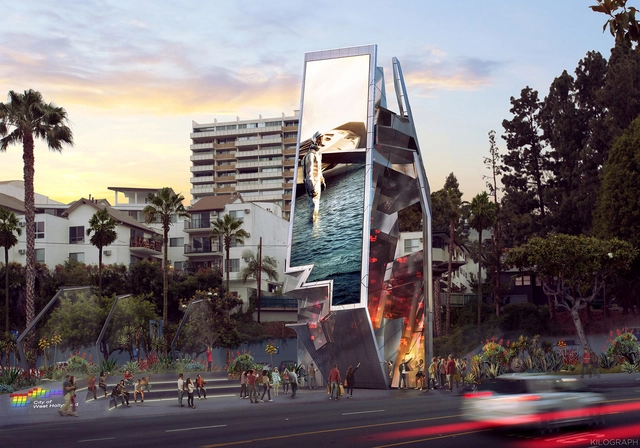
The team led by Tom Wiscombe Architecture has been selected as the winner of the Sunset Spectacular Billboard Competition, which tasked firms to design a multi-dimensional, kinetic billboard to “bring creativity and originality back to the Sunset Strip.”
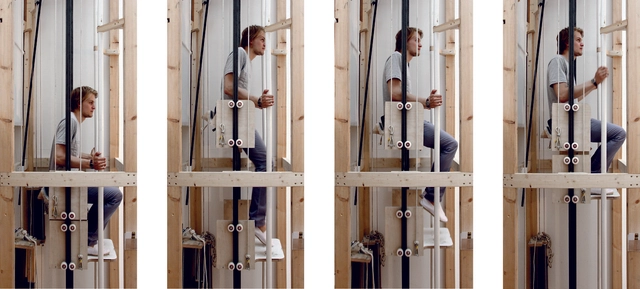
Vertical Walking, an experimental prototype by Rombout Frieling Lab designed "to move ourselves between floors in a building," exploits the potential of the human body, materials and intelligent design to require less than 10% of the effort required by taking a flight of stairs – and without the need for any sort of ancillary power supply. The ultimate aim of the designers is to allow people to "move harmoniously through our vertical habitats of the future."
https://www.archdaily.com/797993/vertical-walking-prototype-aims-to-replace-the-stairAD Editorial Team
The official opening date for Caen's new public library, designed by Rotterdam-based practice OMA, has been slated for January 13, 2017. The Bibliothèque Alexis de Tocqueville will serve as the main library for the metropolitan region of Caen la Mer (in Normandy, France), with 12,000sqm of freely accessible multimedia space. Positioned on the tip of a peninsula that extends from the city to the English Channel, the site is part of a larger area of redevelopment. The ambition is for the library to become "a new civic center" for the city.
Zaha Hadid Architects has won a competition for the design of the Urban Heritage Museum Administration Centre in Diriyah, Saudi Arabia. The center will serve as the head office of the Heritage Museum, an educational institution established to preserve the historic UNESCO world heritage sites of Diriyah and the surrounding Wadi Hanifah valley.
Videos
Villa Verde in Constitución, Chile by Elemental. Image via 99 Percent Invisible
In Chile, a middle-class family may inhabit a house of around 80 square meters, whereas a low-income family might be lucky enough to inhabit 40 square meters. They can’t afford a large “good” house, and are henceforth often left with smaller homes or building blocks; but why not give them half a “good” house, instead of a finished small house? In the 1970s a professor by the name John F.C. Turner, teaching at a new masters program at MIT called “Urban Settlement Design In Developing Countries”, developed an idea surrounding the concept that people can build for themselves. 99% Invisible has covered a story, produced by Sam Greenspan, on how this idea has evolved, and what it has turned into: Half A House.










.gif?1470677526)






.jpg?1477400767&format=webp&width=640&height=580)
.jpg?1477400756 "© Laurian Ghinitoiu")
.jpg?1477400056 "© Laurian Ghinitoiu")
.jpg?1477400087 "© Laurian Ghinitoiu")
.jpg?1477398338 "© Laurian Ghinitoiu")
.jpg?1477400767)