Update:As anyone who clicked the "buy now" button discovered, this was of course a good-humored prank for April Fools' Day. ArchDaily has no plans to expand into print media, and we haven't been stalking Bjarke Ingels via his social media—honest! Our thanks to those who took it in good humor, including "the BIG man" himself for helping spread this "news" to his followers!
One year ago today the Editors of ArchDaily conceived of a project which has consumed a small and dedicated team ever since. After drawing the best talent following an international (and highly secretive) recruitment drive in 2016, a special task force was engaged with the challenge of developing our company’s first printed publication.
“The decision to break into print was not one we took lightly,” explains ArchDaily’s Managing Editor of Books, Lea Brary. “However, we are confident that this endeavor will please architecture fans and bibliophiles worldwide.”
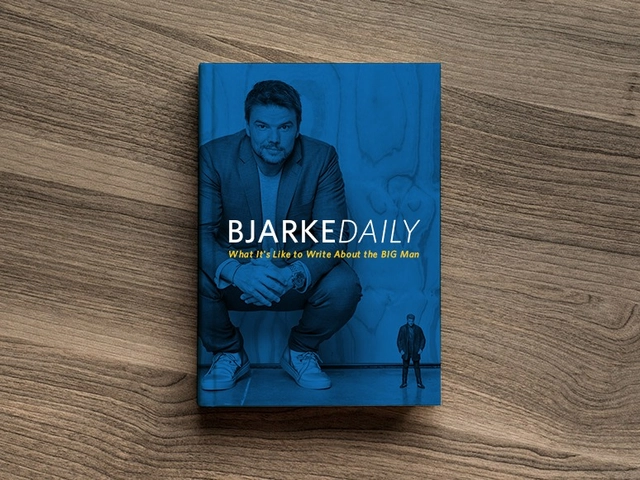
Following twelve months of intense work and production we are proud to reveal BjarkeDaily: What It's Like to Write About the BIG Man – the first comprehensive biographical study of Bjarke Ingels and BIG; an homage to the architect and practice who have become a quotidian feature of our platform for over half a decade.
https://www.archdaily.com/868270/announcing-first-comprehensive-biography-of-bjarke-ingelsAD Editorial Team
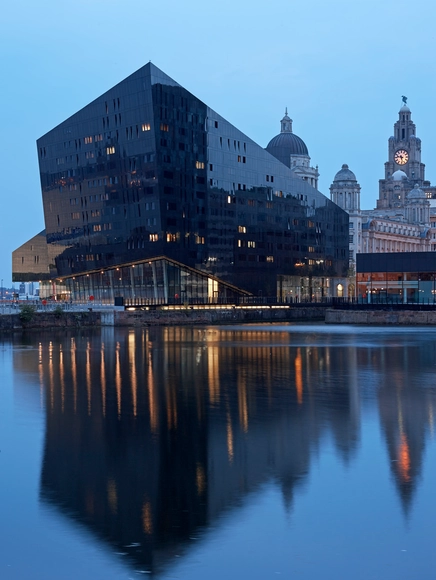
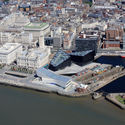
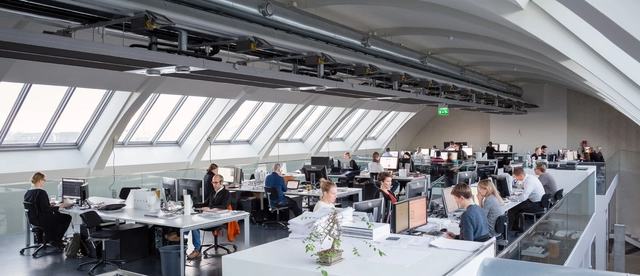
“At RIBA North, we have a building with museum conditions which will offer a magnificent opportunity to view RIBA’s world-renowned historic collections showing hundreds of years of the UK’s extraordinary architectural history,” explained RIBA President Jane Duncan. “We are particularly proud to strengthen our cultural and creative offering in the north of England, and to enable many more people to explore and understand the enormous impact that architecture and design has on all our lives.”
https://www.archdaily.com/868036/ribas-new-national-architecture-centre-will-celebrate-liverpools-architectural-historyOsman Bari
In recent years, timber construction has surpassed its previous limit of two or three stories to create buildings of much greater height. This is not only due to wood's intrinsic strength, stability, and flexibility, but also to a number of new technologies that have further increased its performance, including cross-laminated timber (CLT), nail laminated timber (NLT) and glued laminated timber (glulam).
In order to inform architects, engineers, developers, industry professionals, students, and other interested parties, reThink Wood has launched the reThink Wood Research Library, an online and open resource that will be updated frequently with information about the latest product and timber construction systems around the world, as well as showing where there are gaps that could be covered in the future.
https://www.archdaily.com/868328/learn-about-large-scale-timber-construction-with-rethink-woods-online-libraryArchDaily Team
The US News and World Report has released their 2017 list of “Best Jobs,” based on a variety of criteria including salary, employment rate, growth potential, future job prospects, stress level and work-life balance.
Despite describing the job outlook for architects as “very solid,” overall, architecture finished outside out of the top 100, coming in 7th (out of 8) in the “Engineering Jobs” category. Find out the expected salaries for architects and which cities pay their architects the best, after the break.
https://www.archdaily.com/868330/us-news-and-world-reports-best-job-ratings-find-very-solid-outlook-for-architectureAD Editorial Team
The Sony World Photography Awards has announced the winners of the architectural category of their 2017 Open Category awards program. Taking home the top prize was Tim Cornbill of the United Kingdom, for “Oculus,” his capture of a geometric concrete facade found along the River Spree in Berlin.
“As an architect, I’m passionate about capturing buildings, and I’m always on the lookout for photogenic designs. I was really struck by the sheer scale of this façade and the visual impact of the circle, which I hope I’ve been able to convey in this everyday street scene,” ,” said Cornbill of his winning image. “I am truly thrilled to have been recognised in the world’s largest photography competition and it will be amazing to see the photo exhibited in London.”
Available to enter for any photographer, the Open competition received more than 105,000 entries across ten categories ranging from wildlife to street photography. Check out all the shortlisted images for the architecture category after the break.
The American Institute of Architects (AIA) has announced the addition of former First Lady Michelle Obama to the lineup of keynote speakers presenting at the 2017 AIA National Conference on Architecture in Orlando, Florida.
Obama will participate in Day 1 of the conference, on Thursday, April 27. Her event is billed by the AIA as “A Conversation with Former First Lady Michelle Obama,” where it is expected she will speak about the key initiatives she led during her time in the White House.
https://www.archdaily.com/868321/michelle-obama-joins-list-of-keynote-speakers-for-2017-aia-national-conventionAD Editorial Team
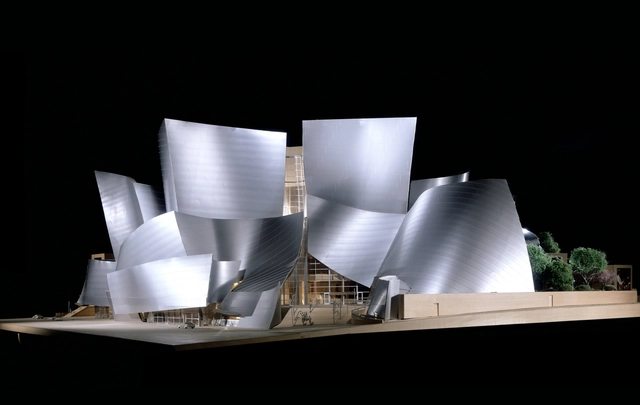
The Getty Research Institute has announced their acquisition of the Frank Gehry Papers, a major archive covering work from the architect’s career, including drawings, partial and complete models, project documentation, correspondence, photographs, slides and related materials pertaining to 283 projects from Gehry’s early to mid career.
“Frank Gehry is undoubtedly the world’s most famous living architect. This extensive archive, covering the first three decades of his illustrious career, offers an in-depth look at the genesis of Gehry’s distinctive style and includes many of the projects for which he is internationally known,” said Thomas W. Gaehtgens, director of the Getty Research Institute.
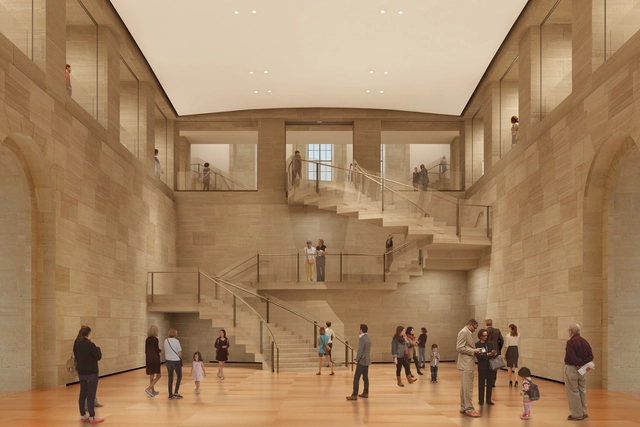
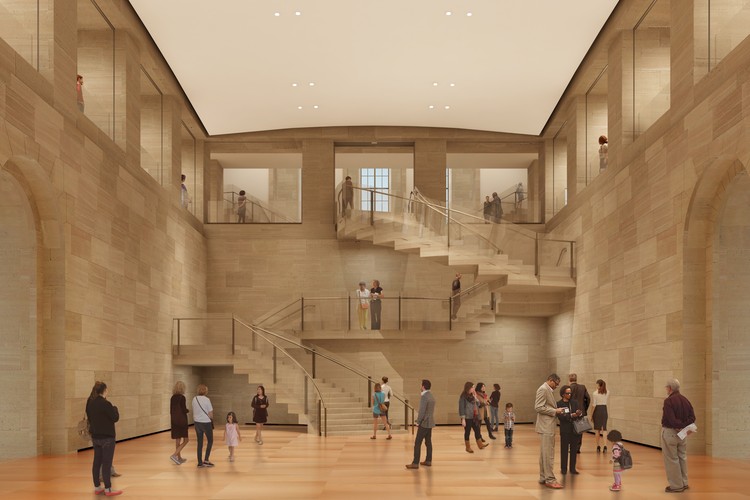
AFTER: The Forum, looking west and up to Lenfest Hall. The Forum extends from Level A to Level C and will be one of the most highly trafficked and recognizable areas created during the Core Project. This stunning space will serve as a venue for performances and events, as well as a welcoming spot for visitors to socialize or orient themselves. Architectural rendering by Gehry Partners, LLP and KX-L. Photo courtesy Philadelphia Museum of Art.
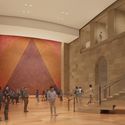
The Philadelphia Museum of Art has broken ground on the Core Project, a $196 million transformation of its main building led by Frank Gehry. In total, the renovation will add a total of 90,000 square feet to the museum, including 67,000 square feet of new public space, 11,500 square feet of gallery space for the museum’s American Art collection, and another 11,500 square feet of contemporary art display space.
As suggested by its name, The Core Project will focus on the heart of the museum; the main circulation of the building will be completely reorganized and museum infrastructure will receive much-needed upgrades, improving access to the community and enhancing the visitor experience.
Described by Richard Meier as an architect whose "groundbreaking ideas" have "had a major impact on the thinking of designers and architects," Austrian artist, architect, designer, theoretician and Pritzker Prize laureate Hans Hollein worked in all aspects of design, from architecture to furniture, jewelry, glasses, lamps—even door handles. Known in particular for his museum designs, from the Abteiberg Museum in Mönchengladbach to the Museum of Modern Art in Frankfurt to Vienna's Modernism.
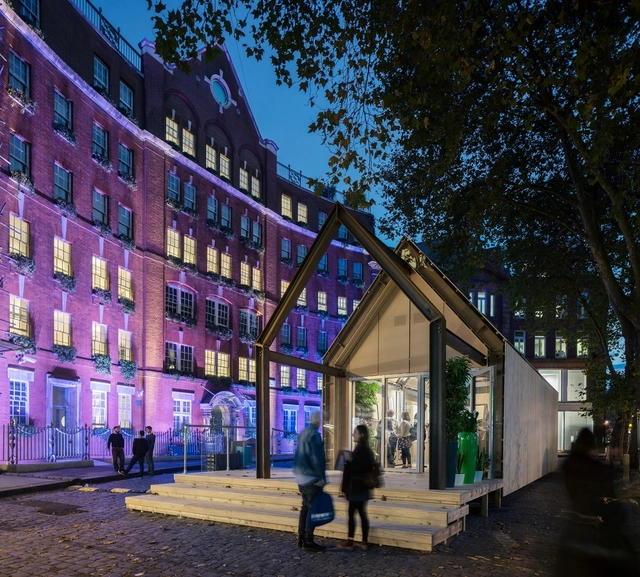
In a prototype developed for the 2016 London Design Festival, Arup Associates designed The Circular Building, one of the first buildings in the UK built to satisfy Circular Economy principles, in which “all components need to be implemented and utilized to their full potential and to the duration of their life cycle, while creating a comfortable and aesthetic environment for the user.”
In order to achieve these goals, designers and engineers worked together to refine the application of prefabricated construction techniques, producing details that utilize finely tuned engineering rather than mechanical fixings. Through this methodology, the team was able to create a low-waste, self-supporting, and demountable structurally integrated panel (SIPs) wall system (which used cladding provided by Accoya) with reusable clamp connections between the wall and recycled steel frame elements, as well as sustainably sourced, heat treated timber for the cladding and decking.
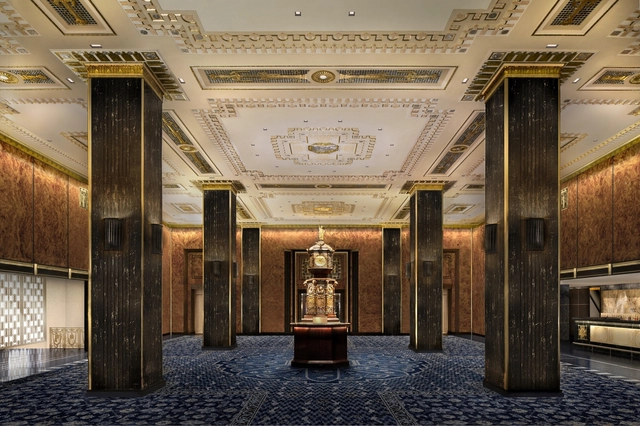
The Waldorf Astoria New York has released plans for a top to bottom restoration and revitalization of the building’s historically landmarked exterior and interior space, to be carried out by architects Skidmore, Owings & Merrill (SOM) and interior designer Pierre-Yves Rochon (PYR). If approved by the New York City Landmarks Preservation Commission, the restoration will be among the most complex and intensive landmark preservation efforts in New York City history.
Videos
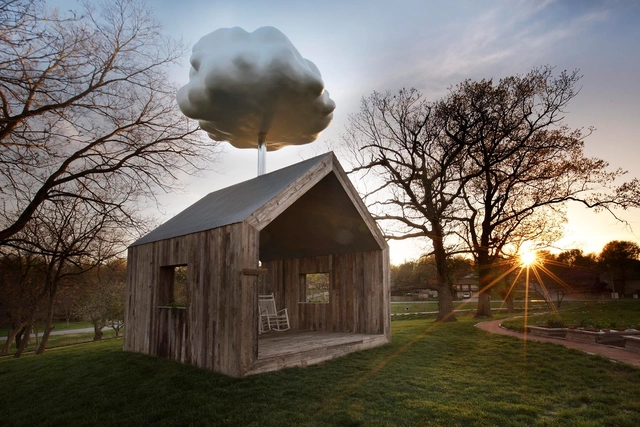
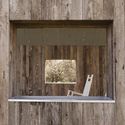
The barn has been constructed of timber and metal salvaged from an abandoned farm. Image Courtesy of Matthew Mazzotta
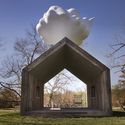
Few sounds in this world are quite as satisfying as that of fresh rainwater falling on a tin roof. However, this soothing sensation is just one element of the Cloud House, a unique, interactive rainwater-harvesting system created by designer Matthew Mazzotta in Springfield, Missouri. From the comfort of a wooden rocking chair, the user is immersed in a rural farm experience, offering passers-by a moment to slow down, enjoy fresh edible plants and, as promised, bask in the sound of rain striking a tin roof.
New renderings and information have been revealed for SHoP and West 8’s Schuylkill Yards masterplan envisioned for University City in Philadelphia. Announced last March, the project comprises 14 new buildings on a 14-acre site off the Schuylkill River and around 30th Street Station, the country’s third busiest Amtrak station.
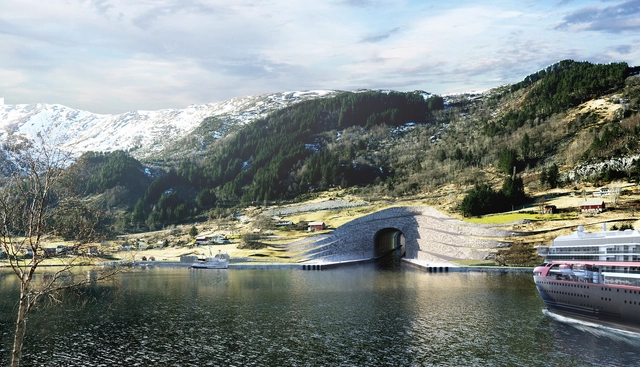
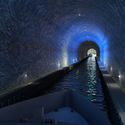
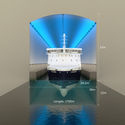
The Norwegian Coastal Administration has revealed visualizations of the world’s first full-scale ship tunnel that would link two fjords on either side of the Stad Peninsula in Norway, allowing ships to bypass the “most exposed, most dangerous” waters on the Norwegian coast. With the project now in the feasibility stage, architecture studio Snøhetta has produced a series of rendered design concepts to help the project gain traction within the Norwegian government.
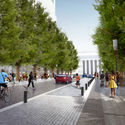
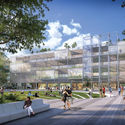
Gensler New York has revealed designs for a 200,000-square-foot renovation of the recently landmarked 601 Lexington Avenue, commonly known by its former title, Citicorp Center. The plans will update the entry plaza as well as add a new atrium space housing a range of dining and retail options, giving the site a rejuvenated space for the entire neighborhood to utilize.
The Ross Development Trust, in collaboration with the City of Edinburgh Council and Malcolm Reading Consultants, has announced the seven finalists teams that will compete for the design of the new Ross Pavilion in the heart of Edinburgh, Scotland. Located in West Princes Street Gardens below Edinburgh Castle and at the intersection of the UNESCO World Heritage recognized Old and New Towns, the £25 million project will feature a landmark pavilion to replace an existing bandstand, a visitors center with cafe, and a subtle reimagination of the surrounding landscape. The new pavilion will host a range of cultural arts programming.
From an entry pool of 125 teams, the following seven were unanimously selected to continue on to the second stage of the competition:
In this fifth episode of GSAPP Conversations, Jorge Otero-Pailos, Director of Columbia GSAPP’s Historic Preservation Program, speaks with Carlos Bayod Lucini and Adam Lowe (Factum Arte). Based between Madrid, London and Milan, the practice was founded by Lowe and has become internationally renowned for setting new standards in digital documentation and redefining the relationship between originality and authenticity. Here they discuss Factum Arte’s work, including the creation of the first high resolution digital record of the Tomb of Seti I in Luxor, Egypt, the importance of teaching students not only practical skills but also a conceptual understanding of how new technologies can be applied, and the importance of recording of artefacts during times of peace.
https://www.archdaily.com/868024/columbia-gsapp-conversations-5-factum-arte-adam-lowe-carlos-bayod-lucini-preservation-recording-recreationAD Editorial Team
Designed by Kohn Pedersen Fox Associates (KPF), the Ping An Finance Center is located in the heart of Shenzhen’s Fuitan District. The building contains over 100 floors of office space located above a large public podium, with a multi-story atrium providing retail, restaurants and transit options to the city and greater Pearl River delta region.
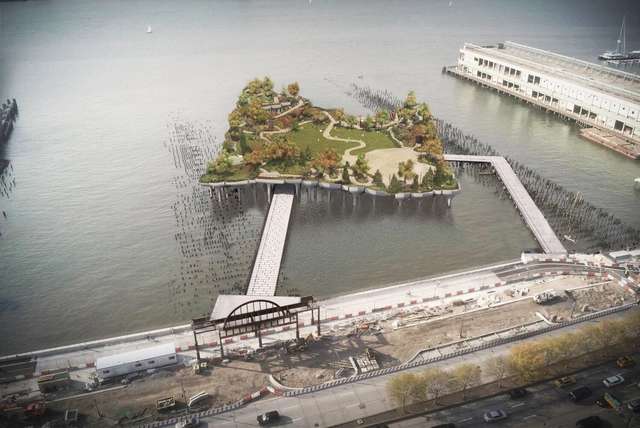
Construction on Heatherwick Studio’s undulating Pier 55 in New York has come to a screeching halt, following a ruling by a United States District Court judge last week that will require the project to undergo an intense wildlife impact review.
Last April, the U.S. Army Corps of Engineers gave the project, located on the Hudson River in West Chelsea, the go-ahead, allowing initial construction to begin. But the district judge found that the Army Corps of Engineers had failed to properly consider the wide effects of the projects on the river wildlife.
https://www.archdaily.com/867951/construction-halted-on-heatherwicks-pier-55-in-new-yorkAD Editorial Team
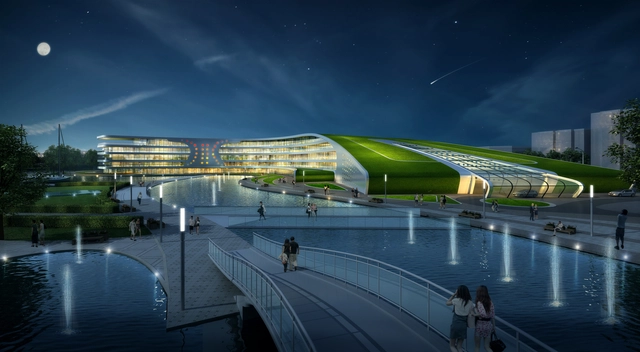
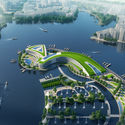
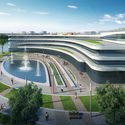
With their design approach treating the site as a work of art, GroupGSA’s proposal for a new hotel in Shanghai’s Fengxian District has been awarded 2nd prize in a recent competition. Located in the predominantly undeveloped Nangiao New City and part of the Yangtze River delta in south Shanghai, the Wanda Jinhai Lake Hotel aims to garner new interest in the region through the creation of a new social, cultural, and economic landmark.
At the center of the Jinhai Lake, the new hotel integrates into the site and provides scenic vistas of the surrounding waterscape. “Inspiration stemmed from the concept of Chinese Calligraphy, the stroke of a brush with its ink dripping in the water,” say the architects. “Our site is merely a piece of art and we plan to leave our mark via our architecture which is painted on the site following the lines and the movement of the surrounding context.”
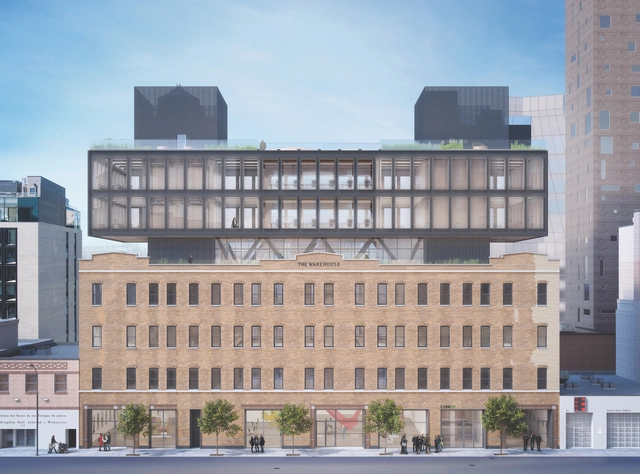
Elijah Equities, LLC has unveiled plans for the redevelopment of The Warehouse in New York City, a property currently occupied by car parking and art galleries, which will be transformed into 100,000 square feet of rentable office and retail space designed by Morris Adjmi.
Situated next to the High Line, the building currently at the site is a four-story, 65,000-square-foot former apparel-manufacturing warehouse. The redevelopment will add a three-story, steel-framed, cantilevered addition, resulting in a seven-story building with over 18,000 square feet of rooftop and outdoor amenity space.
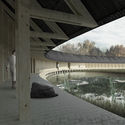
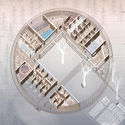
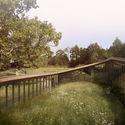
First Prize: Blue Clay Country Spa / João Varela, Ana Isabel Santos, João Tavares, and Paulo Dias. Image Courtesy of Bee Breeders
Bee Breeders has released the results of their Blue Clay Country Spa competition, which asked participants to design a non-urban ecotourism facility in Latvia. The competition invited students and professionals to “interrogate the inherent tensions between subject and object, [and] building and site,” as well as to “engage the agency of typological form—including, for instance, the courtyard, shed, garden, and pavilion.”
The winners of the Blue Clay Country Spa competition are:
Videos
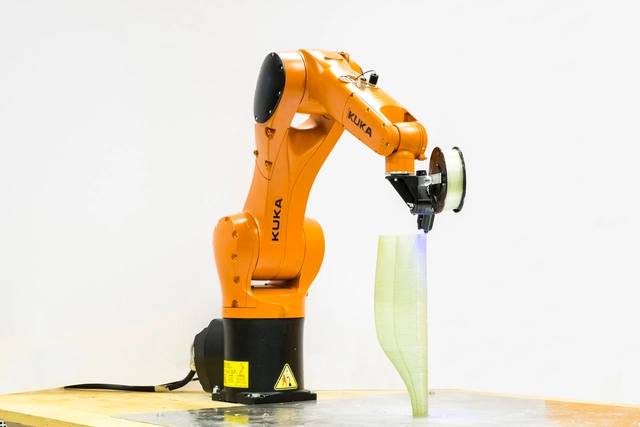
Atropos was developed by architects and engineers at the Politecnico di Milano's +Lab. Image Courtesy of Politecnico di Milano
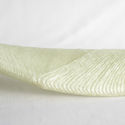
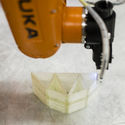
A team of architects and engineers at the Politecnico di Milano in Italy have unveiled Atropos, a six-axis robotic arm capable of printing continuous fiber composites. The one of a kind robot was developed by +Lab, the 3D printing laboratory at the Politecnico, who have taken inspiration from fibres found in the natural world. Through a technology known as Continuous Fiber Composites Smart Manufacturing, Atropos has the potential to create large, complex structures to aid the design and construction process.
Utrecht University’s Urban Futures Studio have announced the 10 finalists for their Post-Fossil City Contest, judged by a jury which included MVRDV co-founder Winy Maas. Each of the successful submissions responded to the contest’s call for the design of a sustainable city no longer reliant on non-renewable energy sources. Designers and makers were invited to envision this new future, which “will reshape our cities and everyday lives so radically that it is hard to imagine what it might feel, taste, smell, and look like.”
Out of the 250 total entries, below are the 10 selected finalists along with a snippet of their proposed futures as described by the competition website.
https://www.archdaily.com/867678/post-fossil-city-contests-10-finalists-share-visions-of-a-sustainable-futureOsman Bari









.jpg?1490895765 "BEFORE: The Van Pelt Auditorium, shown here in 2016, is being demolished to create the Forum. The auditorium was not part of the original design for the building, which opened in 1928; it was added in 1959. Photograph by Elizabeth Leitzell. Photo courtesy Philadelphia Museum of Art.")
.jpg?1490895731 "BEFORE: The Van Pelt Auditorium, shown here in 2016, is being demolished to create the Forum. The auditorium was not part of the original design for the building, which opened in 1928; it was added in 1959. Photograph by Elizabeth Leitzell. Photo courtesy Philadelphia Museum of Art.")












_Gensler_2.jpg?1490675418&format=webp&width=640&height=580)
_Gensler_2.jpg?1490675418 "© Gensler")
_Gensler_3.jpg?1490675440 "© Gensler")
_Gensler_4.jpg?1490675430 "© Gensler")
_Gensler_1.jpg?1490675453 "© Gensler")
_Gensler_2.jpg?1490675418)
_Malcolm_Reading_Consultants_and_David_Springford.jpg?1490671842&format=webp&width=640&height=580)
_Malcolm_Reading_Consultants__David_Springford.jpg?1490671931 "© Malcolm Reading Consultants / David Springford")
_Malcolm_Reading_Consultants__David_Springford.jpg?1490671898 "© Malcolm Reading Consultants / David Springford")
_Malcolm_Reading_Consultants_and_David_Springford.jpg?1490671842 "© Malcolm Reading Consultants / David Springford")
_(c)_Malcolm_Reading_Consultants__David_Springford.jpg?1490671862 "© Malcolm Reading Consultants / David Springford")
_Malcolm_Reading_Consultants_and_David_Springford.jpg?1490671842)


PingAnFinanceCenter.jpg?1490644691&format=webp&width=640&height=580)