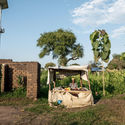
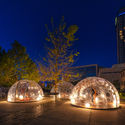
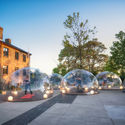
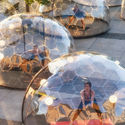
Strelka hosts online public presentations of The Terraforming 2020 program to showcase the results of five months of research, investigation and creative exploration.
The two events will premiere projects by 9 multidisciplinary teams and 4 research fellows. The work presented will cover a range of topics of space and sci-fi, artificial food and landscapes, geo- and macro-engineering, and range from speculative design proposals, to cinema, to legal frameworks, to practical propositions for intervention.
The presentations will be accompanied by keynotes from the faculty of The Terraforming – Benjamin Bratton, Lisa Messeri, Jussi Parikka, Helen Hester and Kim Stanley Robinson.
https://www.archdaily.com/942719/the-terraforming-watch-strelka-2020-research-project-presentationsStrelka Institute
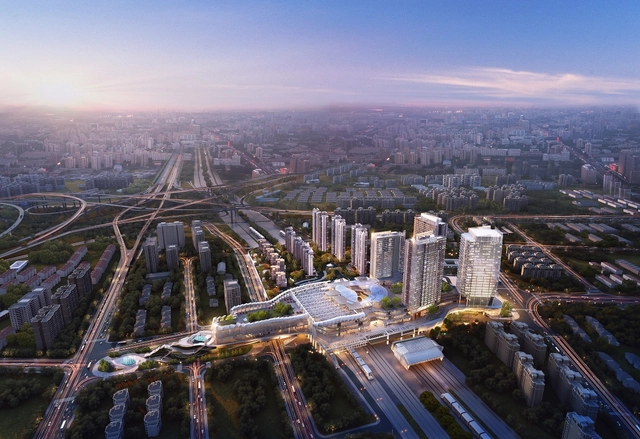
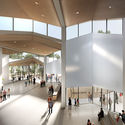
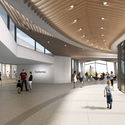
Ronald Lu & Partners has announced the completion of phase one of Tianhui TODTOWN: China’s first transit-oriented development, after 13 years of collective effort. The project promoting sustainability, mass transit, and community in Shanghai, takes the concept of public transit-oriented development (TOD) important in the development of China’s urban areas to the next level.
The Russian Federation Pavilion announced that its exhibition Open! will "move to an entirely online presence". Coping with the recent outbreak of COVID-19 that led to the postponement of the Venice Biennale 2020, the pavilion will transform into a digital platform, to ensure the continuation of the projects.
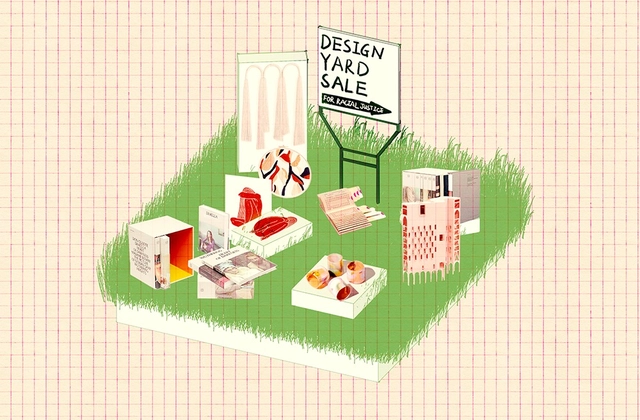
Students and alumni from the Harvard Graduate School of Design are launching an online Design Yard Sale to raise funds in support of the movement against systemic anti-Black racism. The team will sell and auction creative works donated by the design community, and all net proceeds will go towards the Bail Project and Colloqate Design. Among Design Yard Sale’s offerings will be works donated by renowned designers, artists, and scholars such as Toshiko Mori, Oana Stanescu, Rachel Israela, Jeanne Gang, Billie Tsien, Snarkitecture, Jerome Byron and VERV LONDON.
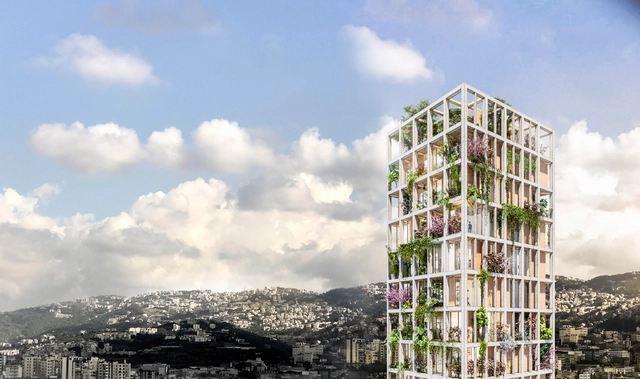
Vertical Eco-Village: Urban Lung of Beirut . Image Courtesy of Anastasia Elrouss Architects
Anastasia Elrouss Architects has imagined the MM Residential Tower, a vertical eco-village in the fast-developing suburbs of Beirut, Lebanon. Labeled Urban Lung, the project, sitting on a 900-square-meter rectangular site, generates 14 stacked floor plates around a central and open planted core. The ground floor and basement level, rented by Warchee NGO, will encompass farming and carpentry workshops for women.
The National Association of City Transportation Officials (NACTO) has released guidelines to provide cities with strategies “to redesign and adapt their streets for new uses both during the COVID-19 crisis and in the recovery”. Streets for Pandemic Response and Recovery highlights the most updated street design approaches cities are using, around the world.
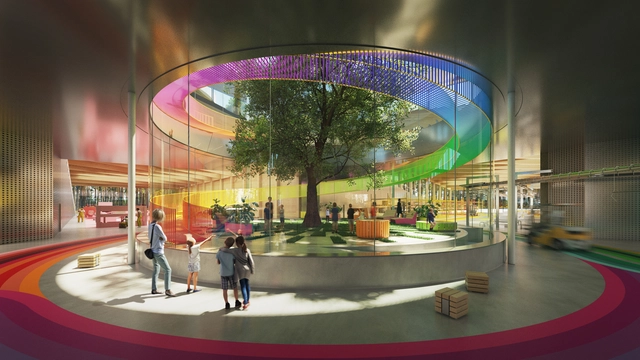
Bjarke Ingels Group and Norwegian manufacturer Vestre have unveiled The Plus, a new project set to become the world’s most sustainable furniture factory. Sited in Magnor, Norway, the factory was envisioned as a village for a community dedicated to the clean, carbon neutral fabrication of urban and social furniture. The Plus aims to be a global destination for sustainable architecture and high-efficiency production.
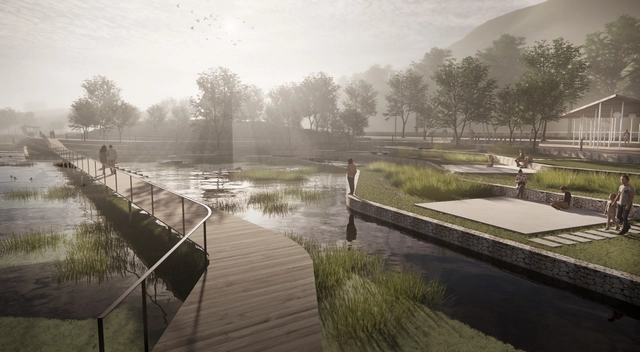
White Arkitekter has won a competition to design a new beach park and sea bath in Bergen, Norway. The waterfront proposal entitled “True Blue” generates “a new meeting place where residents will be challenged to experience the water’s qualities throughout the year”. Inspired by water, the most tangible element in Bergen, the winning project creates a sustainable park, upon the competition’s brief.
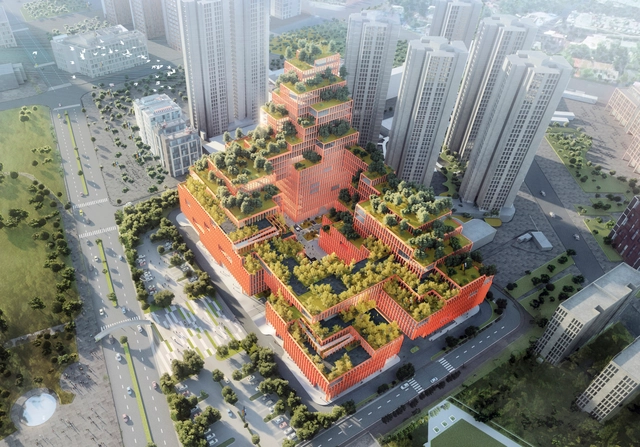
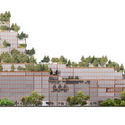
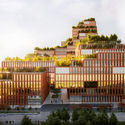
Stefano Boeri Architetti has won the international competition for the construction of the largest and most innovative Rehabilitation Centre in Shenzhen, China. With his Chinese office, SBA was selected by a jury composed of local and international figures such as Peter Cook and Sou Fujimoto. Planned to be built in the next three years, the project will put in place “a set of green terraces and overlapping spaces in a sustainable system combining nature, architecture and biodiversity and including internal gardens dedicated to rehabilitation”.
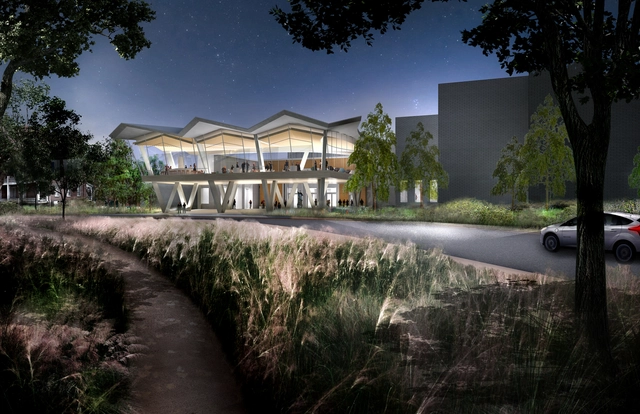
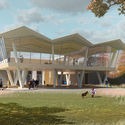
Arkansas Art Center. Image Courtesy of Studio Gang and SCAPE
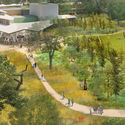
Studio Gang and SCAPE are working in collaboration with Polk Stanley Wilcox Architects on the Arkansas Arts Center currently under construction in MacArthur Park, Little Rock. The work is being realized through a public-private partnership, with a $31 million commitment from the City of Little Rock, funded through a hotel-tax revenue bond. The project will house the Arkansas Arts Center Foundation Collection, which includes 14,000 works of art from around the world.
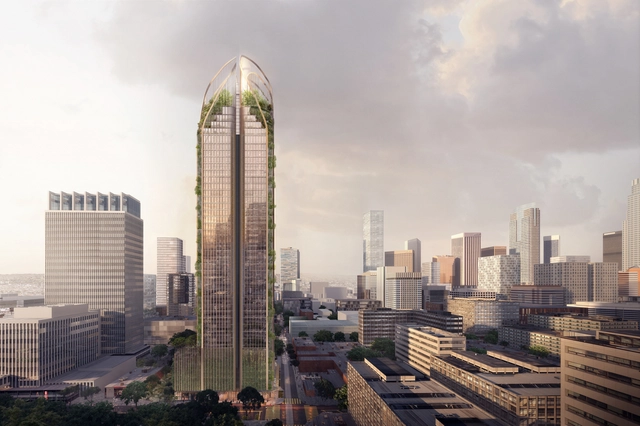
Koichi Takada has designed a 43-story mixed-use development, in downtownLos Angeles, inspired by “California’s natural beauty and iconic redwoods”. Hoping to create the healthiest place to live in L.A., the proposed building humanizes the concept of high-rise through the use of natural materials, vertical landscaping, engaging public elements, and creating a between artificial and natural environments.
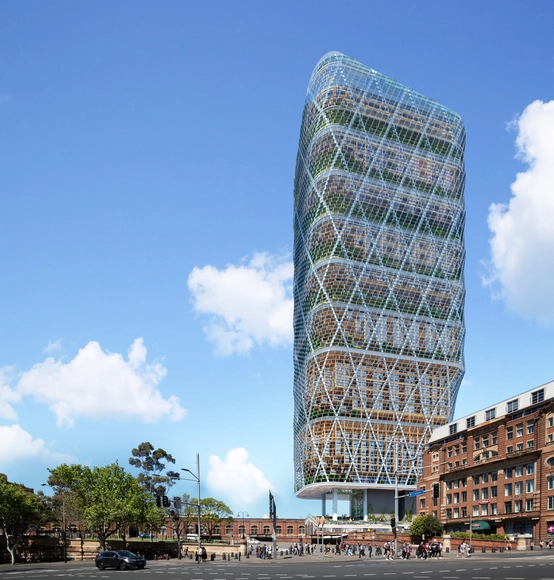
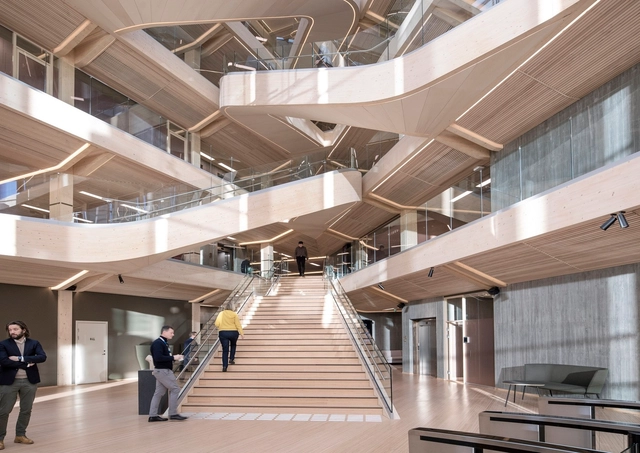
The Atlassian Sydney Headquarters, the soon to be “world’s tallest hybrid timber building” is being built in Sydney, Australia. Designed by SHoP in partnership with BVN, the 40-story high tower will provide, once completed in 2025, a new and innovative space for technology giant Atlassian.
MuseLAB has won the Coronavirus Design Competition hosted by GoArchitect. The competition's challenge was to design a way to help people stay healthy, both in body and mind. The competition was made to recognize that COVID-19 has affected billions of lives, of every nationality, if not physically than economically and mentally.
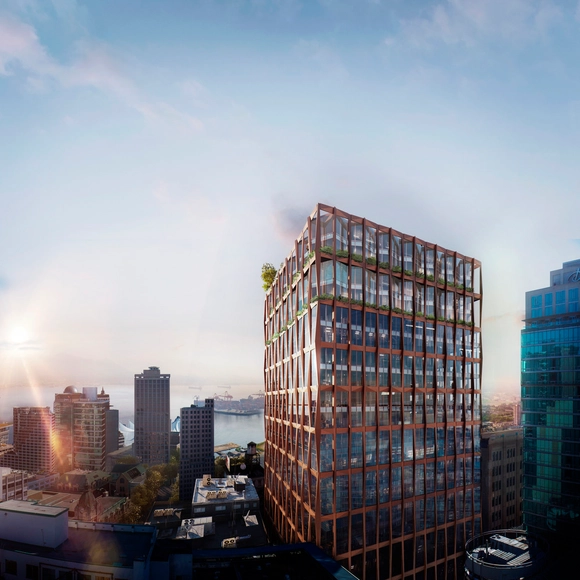
The KPF-Designed 601 West Pender Street was granted approval by the Vancouver City Council. Located next to the city’s historic Rogers Building, the project generates an urban oasis within the city, replacing a six-story parking structure in the Central Business District.
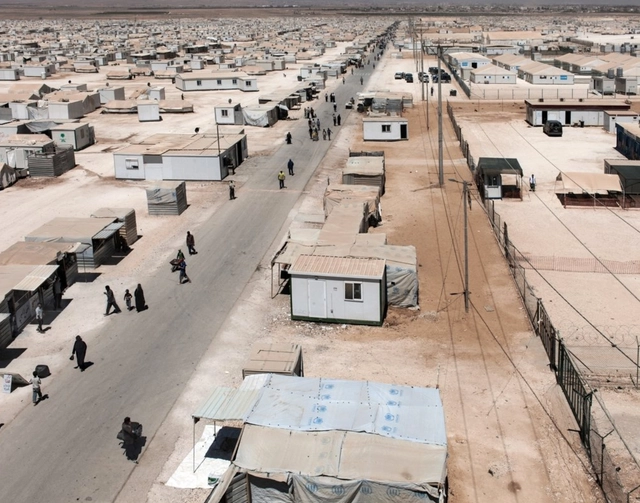
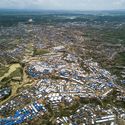
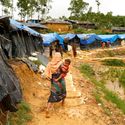
Now in its fourteenth year, the 2020 RIBA Norman Foster Travelling Scholarship has been awarded to Iulia Cistelecan, from the London School of Architecture, for her project “Life Between Shelters: Refugee camps of today becoming cities of tomorrow”.
The National Council of Architectural Registration Boards (NCARB) has released its annual Survey of Architectural Registration Boards, which provides exclusive insight into data collected from the architectural licensing boards throughout the United States. Based on the new data, the number of architects licensed in the United States has increased over the last two years.
The choice of materials and products made by an architect during their design and specification process is key to defining how a project will look after its completion and over time, as it ages. Choosing materials that are not appropriate could result in projects with both aesthetic and functional issues.
This is what makes the specification stage so essential in achieving expected results. During this phase, the professional in charge of specification becomes an essential part of the team and needs to have sufficient knowledge of the materials and products available in their region. But do all architecture offices have the same specification processes? Is the same importance given to this stage of the project as to the initial design phase? How close is the architect’s relationship with the materials really?
https://www.archdaily.com/941827/how-do-architects-and-industry-professionals-specify-different-materials-and-productsPola Mora
Bodybuilding, SO – IL and Ana Prvački, L’air pour l’air, Chicago, 2017. Photograph by Laurian Ghinitoiu
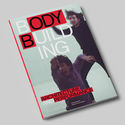
Six months after the release of the namesake book during the latest installment of the biennial, PERFORMA has launched Bodybuilding, which features thirty-five architecture studios who engage with performativity.
Is architecture a period or a comma? Are built forms hermetic bodies or catalysts for action? PERFORMA curator Charles Aubin and architect Carlos Mínguez Carrascor, published Bodybuilding: Architecture and Performance, during the most recent installment of the PERFORMA 19 biennial in New York City last November. Noticing a lack of a comprehensive, multigenerational survey on the subject, the duo’s interest in investigating the ways architects engage with performance goes as far back as a symposium they co-organized at the Performa 17 Hub in 2017. The book, which features essays by Mabel O. Wilson and Bryony Roberts, Lluís Alexandre Casanovas Blanco, and Victoria Bugge Øye, seeded the fundamental approaches now deeply rooted in the online exhibition: the impact of movement on systematic urbanization, the body’s relationship to buildings and monuments, and architecture’s role in action, be it physical or sociopolitical.
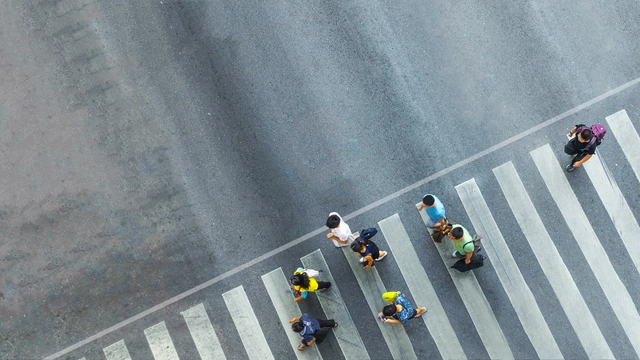
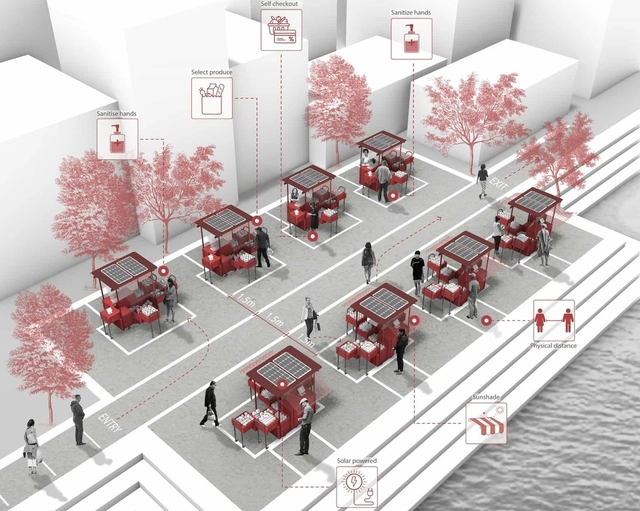
In order to ensure a proper transition into post COVID-19, architects, public health experts, and engineers are generating design guidelines to provide people with new secure, and efficient resources. Finding a balance between optimizing operations and keeping people safe, the strategies tackle the built environment that surrounds us, from restaurants and outdoor dining, to streets, offices, and retail.
Addressed to city officials, owners, and employers, the tools developed help to reopen the world, while reducing the risk of COVID-19 transmission, promoting social distancing standards, and enhancing wellbeing. Discover in this article a roundup of design guidelines securing a safe post coronavirus transition.
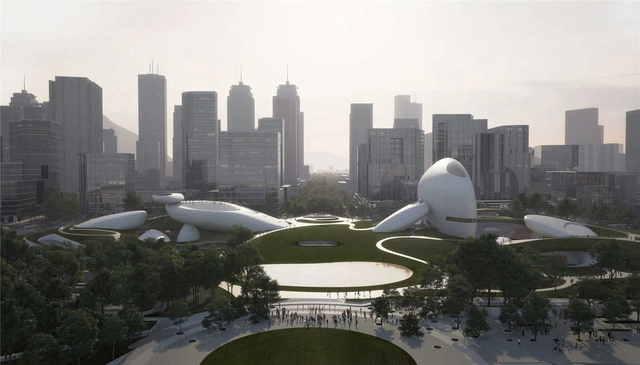
MAD Architects has unveiled its design for the Shenzhen Bay Culture Park along the waterfront in Shenzhen, China. The masterplan puts in place a 51,000 square meters cultural complex that includes the Creative Design Hall, the Shenzhen Science and Technology Museum, and a vast public green space.
The American Institute of Architects (AIA) has just released strategies, illustrations, and 3D design models in order to help reduce the risk of COVID-19 in schools. In an effort to assist education officials with reopening schools during the pandemic, the design guidelines are part of the AIA’s initiative “Reopening America: Strategies for Safer Buildings”.
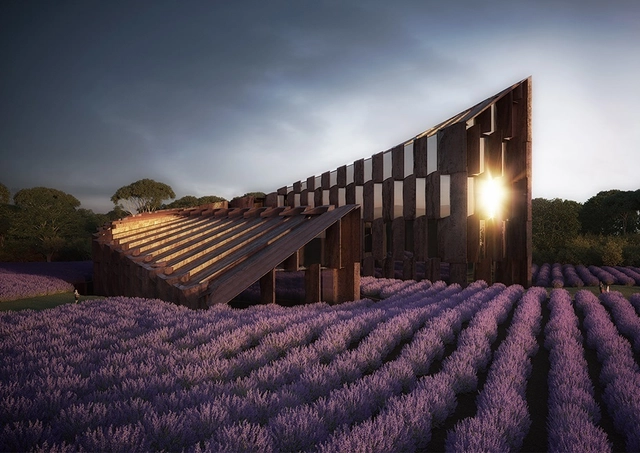
Hachem Architects have designed a new $65 million hotel within a lavender farm in Australia's Yarra Valley. Design as a boutique retreat, the project will also include a facility for infusing lavender into gin. Dubbed Voco, its horseshoe layout is focused towards the Valley’s views and wraps itself around a private courtyard. The design was made to capture the imagination of a new generation of travelers.
We at ArchDaily have a great passion for building and broadening the worldwide architecture community and supporting architects from every corner on our Planet. Unfortunately, sometimes there are obstacles on our way, such as lack of communication, language barriers, or simple uncertainty of some peers from our community about the value of their potential contribution to the architecture scene. And here is where we need help from you, our readers — active, crucial elements of the ecosystem we are all building together. Joining forces, we will be able to give the necessary reassurance to the ones that have been unfairly overlooked and let them know that we can't wait to hear their voices, opinions, and ideas.
We call for you to let us know about your favorite architecture publications with local focus -- whether they are created by you or you just think they are worth checking out -- for a potential Content Exchange Partnership with ArchDaily. This will help us create a strong network of local architecture communities, so we can all learn from each other and spread the word about the little steps on our way to a better world, internationally.
https://www.archdaily.com/942252/submit-your-local-website-for-a-potential-partnership-with-archdailyAD Editorial Team
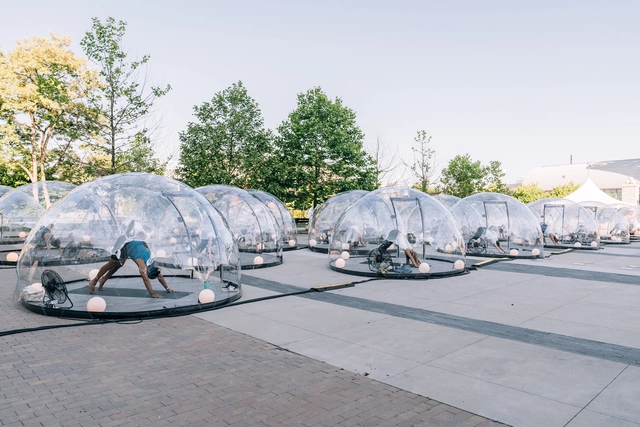
A new pop-up intervention installs 50 private, clear, frameless, geodesic domes in the open spaces of Toronto, Canada. Created by Lmnts Outdoor Studio, the project aims to bring Yoga and fitness workouts safely, to an outdoor setting, while respecting social distancing measures.